




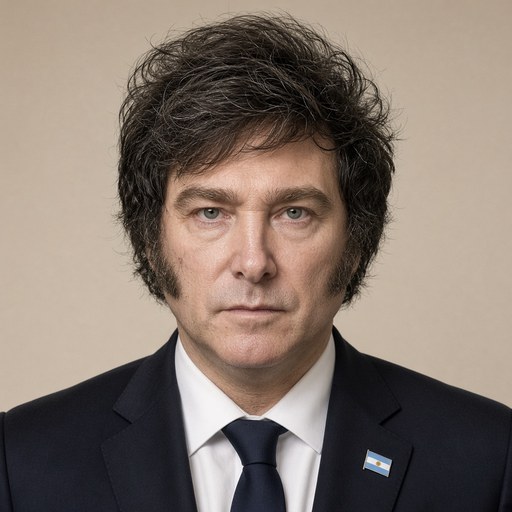
Words of the President of the Nation, Javier Milei, at the International Livestock, Agriculture, and Industry Exhibition, at La Rural.
 Javier Milei · President of Argentina
- Context
- Milei addressed producers and industry leaders at the 2024 La Rural International Livestock, Agriculture, and Industry Exhibition in Buenos Aires on July 28, 2024.
- Main themes
- Agricultural and livestock sector, Argentine economic history, freedom and economic liberalism, rural producers as national heroes, agro-export model, decline from statist policies, taxation of the countryside, industrialization failure, civilizational role of agriculture, national identity and pride
- Duration
- ~35 min
- Words
- 4,257
- Sentences
- 168
- Readability
- 46
- Grade
- 13.0
- Syntax
- 3.23
- Vocabulary
- 2.24
Translated from Spanish
The broad sphere of national life a sentence belongs to. Every sentence has an Arena, so it is the denominator the other indices are read against.
Other168 sentences in 20 paragraphs
Good morning everyone. To begin, I want to thank the authorities of the Argentine Rural Society for inviting me here to speak among you. It is a pride to stand in this arena, where, for 136 years, the best specimens of livestock activity have paraded, and at a global level, it is an honor. But not only that, but that podium and that institution have been protagonists of our history, which is why being here today fills me with pride, but also with a profound sense of responsibility and duty. I want to congratulate you for once again holding this exhibition, which truly represents the soul of the national economy. Above all, I want to greet and express my admiration to all agricultural and livestock producers, large, medium, and small, who go out every day to work the land and produce food for 500 million human beings.
I also take this opportunity to highlight the developers of cutting-edge agricultural technology, which is in demand all over the planet; the creators of the best horses in the world; and so many who participate in this exhibition. All of you are the great protagonists of the Argentine economic life. You are the ones who pull the country’s cart forward, despite the hill that has been increasingly steep, and for that, you undoubtedly deserve to be called heroes. It is simply a fact, an undeniable truth, that the happiest days in Argentine history were the happiest days in the history of the countryside, and that the saddest days in Argentine history were also the hardest moments for agricultural activity. When the Argentine countryside did well, all Argentines did well; when the Argentine countryside did poorly, we all did poorly. It is a fact that, in the 19th century, when we pacified the country, adopted a political, economic, and social system guided by the ideas of freedom, we quickly went from being a country of barbarians to one of the richest in the world. It is a fact that the economic expansion was so resounding that we reached a total gross domestic product higher than the sum of Brazil, Mexico, Paraguay, and Peru combined, and if we look at it in per capita terms, we had the highest per capita GDP in the world, even higher than that of the United States. It is also a fact that social and cultural development made us the first people in human history to eradicate illiteracy. It is also a fact that the great protagonist of that golden Argentine era and the economic engine of those models was the countryside, to such an extent that for decades that period of Argentine glory was qualified as the era of the agro-export model. And to think that some refer to that model pejoratively.
That is why being here and reading the historic words that watch over the grounds is, without a doubt, a bath of humility and a reminder that we are standing on the shoulders of giants. "To cultivate the soil is to serve the homeland" is a motto that I cannot think of as more appropriate for our nation. Because working the land or raising livestock are ancient and vital activities; it is a task of admirable ontological optimism. We are talking about people who, at one point, saw an empty wasteland at the end of the world and said: "Here I can make a life, here I can make a home." It is an activity that brings out the best in men because working the land and domesticating the wild is nothing other than making civilization. It was agricultural activity that allowed us to occupy the expanse of Argentine territory and dominate the frontier, and many of those here with us have the pride of being the great-grandchildren and great-great-grandchildren of those heroes. It is also a fact that the process of national economic decline began when politicians turned their backs on the agricultural sector. Instead of justly compensating the countryside for what it had done for the country, politics punished it with taxes, abusing the wealth it generated to finance its dirigiste adventures. They promised that those taxes were to industrialize the country, that the industrial sectors needed help to compete with imported manufactures. They promised that, over time, they would achieve genuine and equal competition and that there would be more and better jobs. This was accompanied by an incessant process of defamation against the agricultural sector. All of us present here grew up listening on television to leaders and opinion makers speak ill of agriculture, calling them everything from oligarchs and cipayos to everything in between. This is, with siren songs and unfulfillable promises, what led society to endorse the constant punishment of the goose that lays the golden eggs of our Argentina. But, after 100 years, that sustainable industrialization never came to fruition and revealed itself as a true chimera. Instead of becoming the industrial country they promised us, they squandered all the wealth we had accumulated and sank us into misery until we hit rock bottom on December 10 of last year, delivering us a country where seven out of ten children under 14 years old are poor. Along the way, they suffocated the countryside and all of Argentina. Everyone here must know someone who went bankrupt due to the abuses of the State; they tied their hands and deprived them of reaching their potential. They left us without countryside and without industry, and the only ones who ended up winning were the politicians and their patronage friends. At the base of this tragic error in our national history lies the fatal arrogance of the leadership. Through ignorance, negligence, or even bad intentions, they failed to recognize that it was the very freedom of the agricultural sector and the other genuinely dynamic sectors of the economy that had engendered the prosperity of the country and the common Argentine. That is the sad story of our century of humiliation, Argentina.
It is time to start over, to redefine what is true and what is not, and to recommit ourselves to some elementary truths. A hundred years ago, politics told us that, to have a thriving economy, industrial development had to come at the expense of the countryside. That was the excuse to drown them in taxes and to impose as many obstacles as possible, because they understand the economy as a zero-sum game, where for one to win, another must lose, which is a significant conceptual blunder. Since, if the economy were a zero-sum game, there would never be growth. This savagery can only be the product of the mind of a socialist or a lunatic, which is another way of calling socialists. Or as Hayek also said: "If socialists knew about economics, they wouldn't be socialists." Let’s see if they understand once and for all, there is no contradiction between agriculture and industry; the sector has already demonstrated that industrialization and technological innovation are a natural consequence of its development. In fact, it is no coincidence that the period of greatest expansion and industrialization in Argentine history was during the agro-export model and not as some liars say, the failed import substitution model.
Only thanks to the revolution of direct seeding and genetic innovation, of which Argentina has always been a proud protagonist, can we today produce food for 500 million people, something that should almost be a miracle. This reminds me of the famous case of Norman Borlaug. Borlaug was an American scientist who was responsible for introducing hybrid seeds in agricultural production in Mexico, Pakistan, and India. Considered by many as the man who saved a billion lives, thanks to the increases in production that his research implied. That man, who for many is the father of modern agriculture, received the Nobel Peace Prize in 1970 for having contributed to eradicating hunger for a billion human beings.
Meanwhile, here in Argentina, some enlightened individuals rant against the technological advances of the countryside and want to return to pre-Cambrian agriculture to feel good about themselves, from an air-conditioned floor in the middle of Recoleta. There are many myths about the countryside; there has been much intellectual dishonesty in public discussion, much lying to defend sectoral interests. One of them is that agriculture does not generate jobs, when, currently, in our country, the participation of the agro-industrial sector in formal employment is approximately 25%, including the processing of its raw materials, trade, and derived services.
It is also not true that agricultural production is harmful to the environment. And I tell you more: even if it were, poverty and hunger are infinitely more harmful. Although some actors with an evident ideological agenda hide behind well-meaning banners, I want to tell you that this administration will always stand by the Argentine countryside and will not be intimidated by imported slogans that have nothing to do with our identity.
The most elementary truth of all, which was ratified on July 9 in Tucumán, when many of us signed the Pact of May, is that trading with the world is good, it is not bad. And the more open we are to trade, the better it will go for all of us, not worse. Trade has never bankrupted anyone. How can it be that such an elementary truth has been taboo in Argentina for so long? How can it be that for decades our children have been taught that the agro-export model was something bad? Argentina must be a protagonist in global trade. A closed economy only serves to help the friends of power sell lower quality products at a higher price, and, moreover, with the incalculable cost of preventing the development of our activities and competitive minds, blocking the possibility of thousands of well-paid jobs in our country. Free trade, so denigrated in Argentina, is the engine of the world's progress. There is no possibility of growth if we do not open ourselves to trade and if we do not dedicate ourselves to competing seriously.
We have a very clear north; we have always said the same thing: three years ago in my first campaign, last year when I asked for your vote, and now, eight months after taking office. We come to limit the arbitrary power of the government; we come to free the private sector; we come to lift the suffocating boot of the State off the producers. And, in fact, that is how we are doing it, because the true burden that the private sector has to bear is the weight of the public sector within the economy. This government has made a 30% reduction in real terms in the size of the public sector; it is the largest fiscal adjustment in the history of humanity, only comparable to those made after the war, and they do not even reach this level. Therefore, we are indeed lifting the boot off and stopping suffocating you so that the private sector can once again produce and generate wealth. And we do this because we understand that entrepreneurs are social benefactors and that, in their pursuit of profit, they result in a benefit for society as a whole, because, whether they like it or not, Adam Smith was right.
In short, we come to once again provide the ideas that, 150 years ago, made Argentina the richest country in the world. And that is why I am here today, at the historic headquarters of the Rural Society, to renew the vows of society with the Argentine countryside. Because we want the countryside to be at the center of this new social contract that we are establishing with Argentines, just as it was at the center of the social contract that, at the end of the 19th century, made Argentina a world power.
But freeing ourselves from this new form of tyranny, which has been the model of the present State, and returning to the path of freedom, will take enormous effort and time, because the inherited situation was too grave for an immediate solution. Just to raise awareness of the challenge we face, we were in December on the brink of what would have been the greatest crisis in Argentine history. In fact, elements of the three worst crises that Argentina has had were combined. In the monetary sphere, we had an imbalance that was double what we had in 1975, a situation that ended in what was called the Rodrigazo. Within the balance of the Central Bank, we had the institution absolutely bankrupt. In fact, the loss we had to recognize throughout this year was equivalent to 45 billion dollars, due to the disasters caused by the previous government. Additionally, in the social sphere, we had indicators that were worse than those of 2001, in a framework of twin deficits of 17 points of GDP: a Treasury deficit of 7% of GDP and a quasi-fiscal deficit of 10% of GDP, which put us on the brink of hyperinflation. In fact, some intellectually dishonest people deny that this was happening; however, in December, wholesale inflation reached 54% monthly, which, in annualized terms, is equivalent to 17,000% annually. After six months, the wholesale inflation of the last month was 2.7%, that is, 35% annualized. This means that this government has reduced inflation from 17,000% to 35%. That is, there is still a long way to go, but we have made a lot of progress.
Moreover, later in the speech, I will talk about the lifting of the restrictions, because I know how important that is. That is why I also want to make an additional note: that inflation of 2.7% that we have had in wholesale prices, if you take away what corresponds to the agreed devaluation rate from the Central Bank's policy, which is 2%, it would bring inflation down to 0.7%. In other words, today the real inflation in Argentina is running at 8% annually and will continue to decrease. We will not stop until we exterminate inflation, and when we achieve that, we will end up lifting the restrictions.
That is why I want to pause to be clear with you on this: we are serious about this. We are willing to make a profound change, we have clearly demonstrated that in these first eight months, because what we want to change is this impoverishing model of the country. And for the new model to be successful, it must be, above all, sustainable. It is useless to make changes that cannot be sustained over time. We have already lived that story: governments that rush to provide solutions that they cannot sustain and end up causing worse damage than what they started with. When the starting point is catastrophic, as it is for us, achieving sustainability takes time. To say otherwise is to lie to you, and I did not come to lie to you. I came to tell you the truth, because I prefer a hard truth over a comfortable lie. No one is as eager as we are to get out of this disastrous model, where the State, through withholdings and restrictions, expropriates 70% of what the agricultural sector produces. And I repeat, no one is as eager as we are, and I in particular, to get out of this disastrous model where the State, through withholdings and restrictions, expropriates 70% of what the agricultural sector produces. That will come to an end once and for all. But we must also know that removing the patches without first solving the underlying problem would only exacerbate the crisis we inherited, which is why we do not care how much pressure there is and where it comes from; we will not rush demagogically, we will respect the achievement of macroeconomic balance and we will advance as this is achieved, we are doing it and we will continue to do it. The economic program has timelines and conditions; it is necessary to look at the whole picture and not just the snapshot.
In the meantime, until we can resolve the heavy burdens that the agricultural sector bears, we will continue to advance steadily in our agenda of deregulation and trade opening. We eliminated discretionary controls on imports; the era in which a bureaucrat handpicked who imported what and when is over. We eliminated distorting regulations on foreign trade, such as the shelf law and the supply law. We eliminated the resolution that prohibited the export of seven cuts of meat. We reduced tariffs on herbicides and eliminated key tariffs to lower the cost of fertilizers, which reduced the price of those inputs. For example, the price of urea has decreased from $830 on February 15 to $588 today. We are opening international markets for our agricultural products and derivatives; we achieved that China reduced tariffs on 143 Argentine agro-industrial products and expanded the supply of vaccines against foot-and-mouth disease so that 200,000 livestock producers no longer depend on a single laboratory and can access cheaper vaccines. But in addition to these issues, in the short term, we are advancing with some additional measures for the sector, such as eliminating the DEX for cows in categories A, B, C, D, and E. We will advance in the elimination of 25% of the DEX for animal protein, which affects the sector transversally. We will deregulate grain trade by eliminating the need to register in the RUCA. We will indefinitely extend the elimination of the DEX for the dairy sector. In addition, we plan to advance in a regime of accelerated depreciation for capital goods in the sector. We will modify the accounting treatment of livestock so that profits are taxed on sales and not on fattening. We will implement an irrigation regime for marginal areas. We will also advance in a regime of accelerated depreciation for bulls with genetic value, to encourage innovation and investment. And, above all, we are fulfilling the most important objective of all: to end inflation and restore the balance of the Central Bank, so that we can finally put an end to inflation, the restrictions, and exchange rate unpredictability.
In this regard, I want to show how I am keeping my word and how I will continue to keep it, with some issues that sometimes go unnoticed, but that dear Nicolás does not overlook, and he knows and sees them. We said we would eliminate the restrictions; every day we eliminate regulations. We only pay 15% of imports; today 80% of imports are paid, and every day we are closer to lifting the restrictions. We said that fiscal balance was necessary, and we adjusted the public sector. In one month, we achieved financial balance, even while paying debt. Not only that, but we recently eliminated the quasi-fiscal deficit because we eliminated all the interest-bearing liabilities from the Central Bank's balance sheet. We also ended the torture of the puts, so that no one can run and skate in a currency run in one day, the equivalent of $2 billion. But not only that; now we are on a zero-emission program, so that we accelerate the convergence of inflation towards the exchange rate target. Then, we will lower the exchange rate target, and once inflation approaches 0%, we will finally lift the restrictions once and for all. Furthermore, we had said that the increase in the Country Tax was absolutely temporary, and in September we will lower it to 7.5%, and we will eliminate it in December.
At the same time, another very important fact: throughout the discussion of the Basic Law, there was enormous pressure to share the withholdings. However, we remained stoic; we did not give an inch, and the withholdings remain in the hands of the National Executive Power, so they can indeed be eliminated. And that is my commitment. I have also said that in order to lower taxes, I first had to achieve improvements in activity and collection. There is a fact that goes unnoticed or is not wanted to be shown, and that is the fact that Argentina achieved financial surplus in the midst of a recession. This means that when the Argentine economy starts to rebound, Argentina will have a substantial financial surplus, and from there, we will continue to reduce taxes. That recovery is based, if you look, on how real wages are improving, which are already in positive territory for this year. The same goes for pensions, and this is deepened with the recovery of the stock cycle. Argentina is facing a cyclical recovery.
But, in addition, the tax cuts will also occur with economic growth, and in this we have also made significant contributions. The reduction of the fiscal deficit by 15 percentage points of GDP means that savings return to the productive sector. Remember that in December we were discussing hyperinflation, and today we are discussing 30-year mortgage loans, and only eight months have passed. In that context, where savings increase, there will be an increase in investment, and that increase in investment will cause the economy to grow. Given our willingness not to increase public spending, this will improve public accounts and allow us to continue lowering taxes. We will work to ensure that the State does not weigh more than 25 percentage points of GDP, as we have committed to in the signatories of the May Pact.
And this will also be enhanced by the reforms promoted by the Basic Law. To have a sense of magnitude: the reform that Menem made in the 1990s was the largest reform in Argentine history. Our Basic Law is five times larger than that reform, and if we add the DNU and the reform we carried out with 15% of the Chamber of Deputies and 10% of the Senate, it is eight times larger than the largest structural reform in Argentine history. Believe it or not, we are making history. These reforms allow us to climb 90 places in the index of economic freedom, meaning that we are starting to do things to, in the long term, resemble countries like Germany, France, or Italy, those that are now developed countries. However, our reform agenda does not end with these 800 structural reforms. We have 3,200 more reforms pending, meaning we will make 4,000 structural reforms and make Argentina the freest country in the world, so that it can be the foundation for us to be the most prosperous country in the world. Ultimately, step by step, we are doing what we came to do: removing the State from the way, opening markets to lower costs, and promoting foreign trade, because we know that, in the long run, the more the agricultural sector exports, the better it will be for the country.
I know that no one has the right to ask you for anything; I know that you have been plundered for decades, decades in which politicians have used the dollars you generate to engage in cheap populism. But if we do not support with all our effort the changes that all Argentines are undertaking, the destiny is to be the largest slum in the world. That is why I thank dear Nicolás for your words of tolerance and patience, because the reforms will come, they are on the way, and soon you will see them become a reality. At the same time, because you already know what the alternative is; you have lived it for decades. That is why I trust that, although today's reality is currently insufficient, you will weigh what is best for you and your families, and for the well-being of all Argentines. Because, ultimately, we and you want exactly the same thing: we want to return to the country of your grandparents, great-grandparents, and great-great-grandparents, the country of the generation of '80, a free country. But not only that; we want to be the freest country in the world, where what belongs to each person is theirs, and where the agricultural sector will regain its rightful place in Argentine society, which politics has denied it for 100 years: to be the leading sector in the economic and social development of society as a whole, to be the spearhead and to be celebrated for it, and not punished. But it is essential to understand that there are only two paths: either we return to the model of freedom sustainably, which unleashed the productive vigor of the agricultural sector and made us a great country, or we continue to sink into the misery of the long Argentine night and the model of the present state. There are no third ways, there is no other alternative. There are only two visions of the country, there are only two visions for the agricultural sector. For the first time in 100 years, we have a government that wants exactly the same country that you want. Let us go together hand in hand, let us seize the opportunity, let us take the bull by the horns and bet on Argentina. I say this because we have the opportunity to forever turn the page on this sad chapter of Argentine history that was impoverishing populism; the opportunity to leave behind the century of Argentine humiliation and inaugurate a new golden century for the nation.
With these words and with much gratitude, I declare the 136th Argentine Rural Exhibition inaugurated. Finally, and to close: may God bless the Argentines and may the forces of heaven accompany us. Long live the Argentine countryside! Long live freedom, damn it! Thank you very much.
The original Spanish. The tags above are read on the English translation's sentences.
Buenos días a todos. Para comenzar, quiero agradecer a las autoridades de la Sociedad Rural Argentina por convocarme aquí a hablar entre ustedes. Es un orgullo estar parado en esta arena, sobre la cual, desde hace 136 años, desfilan los mejores ejemplares de la actividad ganadera y a nivel mundial, es un honor. Pero no solo eso, sino que ese podio y esa institución han sido protagonistas de nuestra historia, con lo cual estar hoy aquí me llena de orgullo, pero también de un profundo sentido de responsabilidad y deber. Quiero felicitarlos por realizar una vez más esta exposición, que representa verdaderamente el alma de la economía nacional. Sobre todo, quiero saludar y manifestar mi admiración a todos los productores agrícolas y ganaderos, grandes, medianos y chicos, que todos los días salen a trabajar la tierra y producen alimentos para 500 millones de seres humanos.
Así también, aprovecho para destacar a los desarrolladores de tecnología agrícola de punta, que es demandada en todo el planeta; a los creadores de los mejores caballos del mundo; y a tantos que participan de esta exposición. Todos ustedes son los grandes protagonistas de la vida económica argentina. Son quienes tiran para adelante del carro del país, a pesar de la colina que ha estado cada vez más empinada, y por eso, sin duda, merecen ser llamados héroes. Es simplemente un hecho, una verdad inobjetable, que los días más felices de la historia argentina fueron los días más felices de la historia del campo, y que los días más tristes de la historia argentina fueron también los momentos más duros para la actividad agropecuaria. Cuando al campo argentino le fue bien, a todos los argentinos nos fue bien; cuando al campo argentino le fue mal, a todos nos fue mal. Es un hecho que, en el siglo XIX, cuando pacificamos el país, adoptamos un sistema político, económico y social guiado por las ideas de la libertad, pasamos prontamente de ser un país de bárbaros a ser uno de los más ricos del mundo. Es un hecho que la expansión económica fue tan rotunda que alcanzamos un producto bruto interno total superior a la suma de Brasil, México, Paraguay y Perú juntos, y si lo miramos en términos per cápita, teníamos el PBI per cápita más alto del mundo, incluso más alto que el de Estados Unidos. Es un hecho también que el desarrollo social y cultural nos convirtió en el primer pueblo de la historia humana en erradicar el analfabetismo. Es un hecho también que el gran protagonista de aquella era dorada argentina y el motor económico de esos modelos fue el campo, a tal punto que durante décadas se calificó ese período de gloria argentina como la época del modelo agroexportador. Y pensar que algunos hacen referencia a ese modelo de manera peyorativa.
Por eso, estar aquí y leer las históricas palabras que velan sobre el predio es, sin duda, un baño de humildad y un recordatorio de que estamos parados sobre los hombros de gigantes. "Cultivar el suelo es servir a la patria" no se me ocurre un lema más apropiado para nuestra nación. Porque trabajar la tierra o criar ganado son actividades atávicas y vitales; es una labor de un optimismo ontológico admirable. Hablamos de gente que, en un momento, vio un páramo vacío en el fin del mundo y dijo: "Acá puedo hacer una vida, acá puedo hacer un hogar". Es una actividad que saca lo mejor de sí de los hombres porque trabajar la tierra y domesticar lo salvaje no es otra cosa que hacer civilización. Fue la actividad agropecuaria la que nos permitió ocupar la extensión del territorio argentino y dominar la frontera y muchos de quienes están aquí con nosotros tienen el orgullo de ser los herederos bisnietos y tataranietos de aquellos héroes. También es un hecho que el proceso de declive económico nacional comenzó cuando los políticos le dieron la espalda al sector agropecuario. En vez de pagar con justicia al campo por lo que había hecho por el país, la política lo castigó con impuestos, abusando de la riqueza que generaba para financiar sus aventuras dirigistas. Prometieron que esos impuestos eran para industrializar el país, que había que ayudar a los sectores industriales a competir con las manufacturas importadas. Prometieron que, con el tiempo, lograrían competir de forma genuina e igualitaria y que así habría más y mejor trabajo. Esto fue acompañado por un incesante proceso de difamación al sector agrario. Todos los aquí presentes nos criamos y crecimos escuchando en la televisión a dirigentes y formadores de opinión hablar pestes del agro, llamándolos desde oligarcas y cipayos, hasta todo lo que hay en el medio. Esto es, con cantos de sirena y promesas incumplibles, lo que logró que la sociedad avalara el castigo constante a la gallina de los huevos de oro de nuestra Argentina. Pero, después de 100 años, esa industrialización sustentable nunca terminó de ocurrir y se reveló como una verdadera quimera. En vez de convertirnos en el país industrial que nos prometían, se dilapidaron; toda la riqueza que habíamos acumulado y nos hundió en la miseria hasta tocar fondo el 10 de diciembre del año pasado, entregándonos un país donde siete de cada 10 menores de 14 años son pobres. En el camino, ahogaron al campo y a toda la Argentina. Todos aquí deben conocer a alguien que quebró producto de los abusos del Estado; los ataron de manos y los privaron de alcanzar su potencial. Nos dejaron sin campo y sin industria, y los únicos que terminaron ganando fueron los políticos y sus amigos prebendarios. En la base de este error trágico en nuestra historia nacional está la fatal arrogancia de la dirigencia. Por ignorancia, por negligencia o, inclusive, por mala intención, ellos desconocieron que había sido la misma libertad del sector agropecuario y de los demás sectores genuinamente pujantes de la economía aquello que había engendrado la prosperidad del país y del común de los argentinos. Esa es la triste historia de nuestro siglo de humillación, Argentina.
Es hora de volver a empezar, de volver a definir qué es cierto y qué no, y de volver a comprometernos con algunas verdades elementales. Hace 100 años, la política nos decía que, para tener una economía pujante, el desarrollo industrial debía darse pisoteando al campo. Esa fue la excusa para ahogarlos en impuestos y se les puso cuanta traba fuera posible, porque entienden la economía como un juego de suma cero, donde para que uno gane, otro debe perder, lo cual es una burrada conceptual importante. Ya que, si la economía fuera un juego de suma cero, nunca habría crecimiento. Esta salvajada solo puede ser producto de la mente de un socialista o de un energúmeno, que es otra forma de llamar a los socialistas. O como también decía Hayek: “si los socialistas supieran de economía, no serían socialistas”. A ver si entienden de una vez, no hay contradicción entre campo e industria, el sector ya demostró que la industrialización y la innovación tecnológica son una consecuencia natural de su desarrollo. De hecho, no por nada el periodo de mayor expansión e industrial de la historia argentina fue durante el modelo agroexportador y no como dicen algunos mentirosos como el modelo fracasado de sustitución de importaciones.
Solo gracias a la revolución de la siembra directa y la innovación genética, de la cual Argentina siempre fue una orgullosa protagonista, es que hoy podemos producir alimentos para 500 millones de personas, algo que casi debería ser un milagro. Esto me recuerda el famoso caso de Norman Borlaug. Borlaug era un científico americano que fue responsable de haber introducido las semillas híbridas en la producción agrícola en México, Pakistán e India. Considerado por muchos como el hombre que salvó mil millones de vidas, gracias a los aumentos de producción que sus investigaciones implicaron. Ese hombre, que para muchos es el padre de la agricultura moderna, recibió en 1970 el Premio Nobel de la Paz por haber contribuido a erradicar el hambre de mil millones de seres humanos.
Mientras tanto, acá en Argentina, algunos iluminados despotrican contra los avances tecnológicos del campo y quieren retornar a la agricultura precámbrica para sentirse bien consigo mismos, desde un piso con aire acondicionado en plena Recoleta. Hay mucho mito sobre el campo; ha habido mucha deshonestidad intelectual en la discusión pública, mucha mentira para defender intereses sectoriales. Una de ellas es que el agro no genera trabajo, cuando, actualmente, en nuestro país, la participación del sector agroindustrial en el empleo formal es de aproximadamente el 25%, incluyendo el procesamiento de sus materias primas, el comercio y los servicios derivados.
Tampoco es cierto que la producción agropecuaria sea nociva para el medio ambiente. Y les digo más: aún si lo fuera, es infinitamente más nociva la pobreza y el hambre. Aunque algunos actores que tienen una agenda ideológica evidente se oculten detrás de banderas bien pensantes, quiero decirles que esta administración siempre estará del lado del campo argentino y no se dejará amedrentar por consignas importadas que nada tienen que ver con nuestra identidad.
La verdad más elemental de todas, que fue ratificada el pasado 9 de julio en Tucumán, cuando muchos firmamos el Pacto de Mayo, fue cuando la enorme mayoría de las autoridades políticas firmamos el Pacto de Mayo, es que comercializar con el mundo es bueno, no es malo. Y cuanto más abiertos seamos al comercio, mejor nos irá a todos, no peor. El comercio nunca fundió a nadie. ¿Cómo puede ser que una verdad tan elemental haya sido tabú en Argentina durante tanto tiempo? ¿Cómo puede ser que durante décadas se haya enseñado a nuestros chicos que el modelo agroexportador fuera algo malo? Argentina tiene que ser protagonista del comercio global. Una economía cerrada solo sirve para ayudar a los amigos del poder a vender productos de peor calidad a un mayor precio, y, además, con el costo incalculable de evitar el desarrollo de nuestras actividades y las mentes competitivas, bloqueando la posibilidad de miles de puestos de trabajo bien remunerados en nuestro país. El libre comercio, tan denostado en Argentina, es el motor del progreso del mundo. No hay ninguna posibilidad de crecimiento si no nos abrimos al comercio y si no nos dedicamos a competir en serio.
Nosotros tenemos un norte clarísimo; siempre dijimos lo mismo: hace 3 años en mi primera campaña, el año pasado cuando les pedí el voto, y ahora, a 8 meses de haber asumido el gobierno. Venimos a limitar el poder arbitrario del gobierno; venimos a liberar al sector privado; venimos a sacarle de encima la bota asfixiante del Estado a los productores. Y, de hecho, es así como lo estamos haciendo, porque la verdadera carga que tiene que soportar el sector privado es el peso del sector público dentro de la economía. Este gobierno ha hecho una reducción del 30% en términos reales del tamaño del sector público; es el ajuste fiscal más grande de la historia de la humanidad, solo comparable con los que se hicieron después de la guerra, y tampoco alcanzan este nivel. Por lo tanto, efectivamente les estamos sacando la bota de encima y los estamos dejando de asfixiar para que vuelva a ser el sector privado el que produzca y genere riqueza. Y lo hacemos porque entendemos que los empresarios son benefactores sociales y que, en su búsqueda de ganancia, redundan en un beneficio para el conjunto de la sociedad, porque, mal que les pese, Adam Smith tenía razón.
En definitiva, venimos a brindar nuevamente las ideas que, hace 150 años, hicieron de Argentina el país más rico del mundo. Y por eso hoy estoy aquí, en la sede histórica de la Sociedad Rural, para renovar los votos de la sociedad con el campo argentino. Porque queremos que el campo esté en el centro de este nuevo contrato social que estamos entablando con los argentinos, tal como estuvo en el centro del contrato social que, a fines del siglo XIX, hizo de Argentina una potencia mundial.
Pero al liberarnos de esta nueva forma de tiranía, que ha sido el modelo del Estado presente, y volver a la senda de la libertad, llevará un enorme esfuerzo y tiempo, porque el cuadro de situación heredado era demasiado grave para una solución inmediata. Solo para que haya conciencia del desafío con el que nos encontramos, estábamos en diciembre al borde de lo que hubiera sido la crisis más grande de la historia argentina. De hecho, se combinaban elementos de las tres peores crisis que tuvo Argentina. En el plano monetario, teníamos un desequilibrio que era el doble de lo que teníamos en el año 75, situación que terminó en el llamado Rodrigazo. Dentro del balance del Banco Central, teníamos la institución absolutamente quebrada. De hecho, la pérdida que debimos reconocer a lo largo de este año fue por el equivalente a 45.000 millones de dólares, debido a los desastres que hizo el gobierno anterior. Además, en el plano social, teníamos indicadores que eran peores que los del 2001, en un marco de déficits gemelos de 17 puntos del PBI: déficit del Tesoro del 7% del PBI y un déficit cuasifiscal del 10% del PBI, que nos ponían al borde de una hiperinflación. De hecho, algunos deshonestos intelectualmente niegan que eso estaba ocurriendo; sin embargo, en el mes de diciembre, la inflación mayorista tocó el 54% mensual, lo cual, en términos anualizados, es equivalente al 17.000% anual. Después de 6 meses, la inflación mayorista del último mes fue del 2,7%, es decir, 35% anualizada. Quiere decir que este gobierno ha bajado la inflación del 17.000% al 35%. Es decir, falta mucho, pero hemos hecho un montón.
Es más, en una parte más adelante del discurso voy a hablar de la salida del cepo, porque sé lo importante que es eso. Por eso también quiero hacer una nota adicional: esa inflación del 2,7% que hemos tenido en mayoristas, si uno le quita lo que corresponde a la tasa de devaluación pactada desde la política del Banco Central, que es del 2%, estaría llevando la inflación al 0,7%. Es decir, que hoy la verdadera inflación en Argentina viene viajando al 8% anual y va a seguir bajando. No vamos a parar hasta exterminar la inflación, y cuando lo logremos, vamos a terminar levantando el cepo.
Por eso quiero detenerme para ser claro con ustedes en esto: nosotros vamos en serio. Estamos dispuestos a hacer un cambio profundo, lo hemos demostrado claramente en estos primeros ocho meses, porque lo que nosotros queremos cambiar es este modelo de país empobrecedor. Y para que el nuevo modelo sea exitoso, debe ser, ante todo, sustentable. De nada sirve hacer cambios que no pueden ser sostenidos en el tiempo. Ya hemos vivido esa historia: gobiernos que se apuran en dar soluciones que luego no pueden sostener y terminan generando un daño peor que el que habían iniciado. Cuando el punto de partida es catastrófico, como el que nos tocó a nosotros, lograr la sustentabilidad lleva tiempo. Decir lo contrario es mentirles, y yo no vine a mentirles. Yo vine a decirles la verdad, porque prefiero una verdad dura antes que una mentira confortable. Nadie tiene tantas ganas como nosotros de salir de este modelo desastroso, donde el Estado entre retenciones y cepo, le expropia al campo el 70% de lo que produce. Y lo vuelvo a repetir, nadie tiene tantas ganas como nosotros, y yo en particular, de salir de este modelo desastroso donde el estado entre retenciones y cepo le expropia al campo el 70% de lo que produce. Se va a terminar con eso de una vez. Pero también debemos saber que quitar los parches sin antes solucionar el problema de fondo sería grabar la crisis que heredamos, por eso no nos importa cuánta presión haya y de dónde venga, nosotros no vamos a apresurarnos demagógicamente, nosotros vamos a respetar el logro del equilibrio macroeconómico e iremos avanzando conforme esto sea logrado, lo estamos haciendo y lo vamos a seguir haciendo. El programa económico tiene tiempos y condiciones, hace falta mirar la película y no tanto la foto.
En el interín, hasta que podamos resolver las grandes cargas que el campo soporta, seguiremos avanzando sin pausa en nuestra agenda de desregulación y apertura comercial. Eliminamos los controles discrecionales a las importaciones; se terminó la era en la que un burócrata elegía a dedo quién importaba qué y cuándo. Eliminamos normas distorsivas del comercio exterior, como la ley de góndolas y la ley de abastecimiento. Eliminamos la resolución que prohibía la exportación de siete cortes de carne. Bajamos los aranceles a los herbicidas y eliminamos aranceles claves para abaratar el costo de los fertilizantes, lo cual redujo el precio de esos insumos. Por ejemplo, el precio de la urea se redujo de 830 dólares, el 15 de febrero, a 588 dólares en la actualidad. Estamos abriendo mercados internacionales para nuestros productos agropecuarios y derivados; logramos que China reduzca aranceles a 143 productos agroindustriales argentinos y ampliamos la oferta de vacunas contra la fiebre aftosa para que 200.000 productores ganaderos ya no dependan de un solo laboratorio y puedan acceder a vacunas más baratas. Pero, además de estas cuestiones, en el corto plazo avanzamos con algunas medidas adicionales para el sector, como eliminar las DEX a las vacas de categorías A, B, C, D y E. Vamos a avanzar en la eliminación del 25% de las DEX a la proteína animal, que afecta de manera transversal al sector. Vamos a desburocratizar el comercio de granos, eliminando la necesidad de inscribirse en la RUCA. Vamos a extender de forma indefinida la eliminación de las DEX al sector lácteo. Además, planeamos avanzar en un régimen de amortización acelerada para los bienes de capital del sector agro. Vamos a modificar el manejo contable del ganado, de modo tal que se pague ganancia sobre la venta y no sobre el engorde. Vamos a implementar un régimen de riego para zonas marginales. También avanzaremos en un régimen de amortización acelerada de los toros con valor genético, para incentivar la innovación y la inversión. Y, sobre todo, estamos cumpliendo el objetivo más importante de todos: terminar con la inflación y sanear el balance del Banco Central, para así acabar de una vez por todas con la inflación, el cepo y la imprevisibilidad cambiaria.
En este sentido, quiero mostrar cómo estoy cumpliendo mi palabra y cómo voy a seguir cumpliéndola, con algunas cuestiones que a veces pasan de largo, pero que al querido Nicolás no se le pasan, y él sabe y las ve. Nosotros dijimos que íbamos a eliminar el cepo; todos los días eliminamos regulaciones. Pagamos solamente el 15% de las importaciones, hoy se paga el 80% de las importaciones, y cada día estamos más cerca de abrir el cepo. Dijimos que era necesario el equilibrio fiscal, y ajustamos el sector público. En un mes logramos el equilibrio financiero, aun pagando deuda. No solo eso, sino que eliminamos recientemente el déficit cuasifiscal porque eliminamos todos los pasivos remunerados del balance del Banco Central. También terminamos con la tortura de los puts, de modo tal que ningún vivo pueda correr y patinar en una corrida cambiaria en un día, el equivalente a 2.000 millones de dólares. Pero no solo eso; ahora estamos con un programa de emisión cero, de modo tal que aceleremos la convergencia de la inflación hacia la meta cambiaria. Luego, modificaremos a la baja la meta cambiaria y, una vez que la inflación se acerque al 0%, terminaremos de liberar el cepo de una vez por todas y para siempre. Además, habíamos dicho que la suba del Impuesto País era absolutamente transitoria, y en el mes de septiembre lo bajaremos al 7,5%, y lo eliminaremos en el mes de diciembre.
A su vez, otro dato muy importante: en toda la discusión de la Ley de Bases, hubo una presión enorme para coparticipar las retenciones. Sin embargo, nos mantuvimos estoicos; no cedimos un milímetro y las retenciones quedan en poder del Poder Ejecutivo Nacional, de modo tal que sí podrán ser eliminadas. Y ese es mi compromiso. También he dicho que, para poder bajar impuestos, antes tenía que lograr mejoras en la actividad y en la recaudación. Hay un dato que pasa desapercibido o que no se quiere mostrar, y es el hecho de que Argentina alcanzó el superávit financiero en medio de una recesión. Esto significa que, cuando la economía argentina empiece a rebotar, Argentina pasará a tener un abultado superávit financiero y, a partir de ahí, vamos a seguir con la reducción de los impuestos. Esa recuperación está basada, si ustedes se fijan, en cómo están mejorando los salarios reales, los cuales ya están en terreno positivo para este año. Lo mismo pasa con las jubilaciones, y esto se profundiza con la recuperación del ciclo de stocks. Argentina se encuentra frente a una recuperación cíclica.
Pero, además, la baja de impuestos también se va a dar con el crecimiento económico, y en esto también hemos hecho aportes importantes. La reducción del déficit fiscal en 15 puntos del PBI significa que el ahorro vuelve al sector productivo. Recuerden que en diciembre discutíamos acerca de la hiperinflación, y hoy se discuten los créditos hipotecarios a 30 años, y solamente han pasado 8 meses. En ese contexto, donde aumenta el ahorro, habrá un aumento de la inversión, y ese aumento de la inversión hará que la economía crezca. Dada nuestra voluntad de no aumentar el gasto público, esto mejorará las cuentas públicas y nos permitirá seguir bajando los impuestos. Vamos a trabajar para que el Estado no vuelva a pesar más de 25 puntos del PBI, como nos hemos comprometido los firmantes del Pacto de Mayo.
Y esto, además, va a ser potenciado por las reformas que impulsa la Ley de Bases. Para tener un orden de magnitudes: la reforma que hizo Menem en los años 90 fue la reforma más grande de la historia argentina. Nuestra Ley de Bases es cinco veces más grande que esa reforma, y si le sumamos el DNU y la reforma que llevamos a cabo con el 15% de la Cámara de Diputados y el 10% de la Cámara de Senadores, es ocho veces más grande que la reforma estructural más grande de la historia argentina. Crean o no, estamos haciendo historia. Estas reformas nos permiten escalar 90 puestos en el índice de libertad económica, es decir, que estamos empezando a hacer cosas para, a largo plazo, parecernos a países como Alemania, Francia o Italia, aquellos que hoy son países desarrollados. Sin embargo, nuestra agenda de reformas no termina con estas 800 reformas estructurales. Tenemos pendientes 3.200 reformas más, es decir, vamos a hacer 4.000 reformas estructurales y haremos de Argentina el país más libre del mundo, para que sea la base de que seamos el país más próspero del mundo. En definitiva, paso a paso estamos haciendo lo que vinimos a hacer: sacar al Estado del medio, abrir mercados para abaratar costos y promover el comercio exterior, porque sabemos que, a la larga, cuanto más exporte el sector agropecuario, mejor le irá al país.
Yo sé que nadie tiene derecho a pedirles nada; sé que han sido saqueados durante décadas, décadas en las que los políticos han usado los dólares que ustedes generan para hacer populismo barato. Pero si no apoyamos con todo nuestro esfuerzo los cambios que todos los argentinos estamos emprendiendo, el destino es ser la villa miseria más grande del mundo. Por eso, agradezco al querido Nicolás tus palabras de tolerancia y paciencia, porque las reformas van a llegar, están en camino, y pronto las van a ver hechas realidad. Al mismo tiempo, porque ya saben cuál es la alternativa, la han vivido durante décadas. Por eso confío en que, aunque la realidad de hoy por ahora sea insuficiente, sabrán ponderar qué es lo mejor para ustedes y sus familias, y para el bienestar de todos los argentinos. Porque, en definitiva, nosotros y ustedes queremos exactamente lo mismo: queremos volver al país de sus abuelos, bisabuelos y tatarabuelos, el país de la generación del 80, un país libre. Pero no solo eso; queremos ser el país más libre del mundo, donde lo de cada uno es de cada uno, y donde el campo recuperará el lugar en la sociedad argentina que, por derecho, le corresponde y que la política le niega desde hace 100 años: ser el sector líder en el desarrollo económico y social del conjunto de la sociedad, ser la punta de lanza y ser celebrado por ello, y no castigado. Pero es fundamental entender que solo hay dos caminos: o retomamos el modelo de la libertad de manera sustentable, que liberó el vigor productivo del campo y nos hizo un país grande, o seguimos hundiéndonos en la miseria de la larga noche argentina y el modelo del estado presente. No hay terceras vías, no hay otra alternativa. Solo hay dos visiones de país, solo hay dos visiones para el campo. Por primera vez en 100 años, tenemos un gobierno que quiere exactamente el mismo país que quieren ustedes. Vayamos juntos de la mano, aprovechemos la oportunidad, tomemos el toro por las astas y apostemos a la Argentina. Digo esto porque tenemos la posibilidad de dar vuelta para siempre esta triste página de la historia argentina que fue el populismo empobrecedor; la oportunidad de dejar atrás el siglo de humillación argentina e inaugurar un nuevo siglo de oro para la nación.
Con estas palabras y con mucho agradecimiento declaro inaugurada la centésima trigésima sexta Exposición Rural Argentina. Finalmente, y para cerrar: que Dios bendiga a los argentinos y que las fuerzas del cielo nos acompañen. ¡Viva el campo argentino! ¡Viva la libertad, carajo! Muchas gracias.