




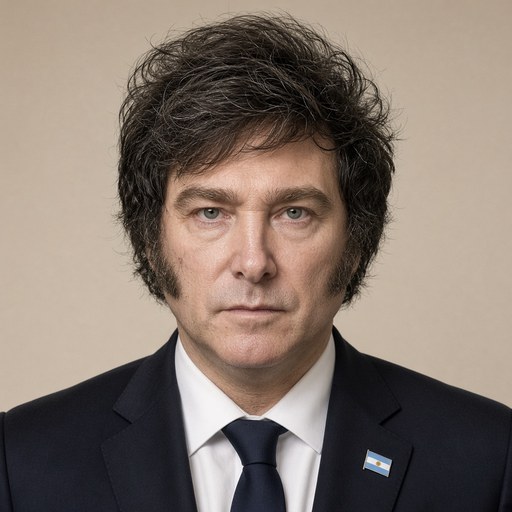
Words of the President of the Nation at the Real Estate Investment Congress
 Javier Milei · President of Argentina
- Context
- Milei addressed the Real Estate Investment Congress on August 15, 2024, defending his government's economic record and criticizing the Kirchnerist opposition's intellectual dishonesty.
- Main themes
- Economic inheritance crisis, inflation and monetary imbalance, poverty and homelessness, Kirchnerism criticism, real estate and economic recovery, formal vs informal employment, public sector employment, GDP stagnation, Argentina's economic history, fiscal and monetary reform
- Duration
- ~78 min
- Words
- 9,349
- Sentences
- 348
- Readability
- 55
- Grade
- 12.0
- Syntax
- 3.29
- Vocabulary
- 2.12
Translated from Spanish
The broad sphere of national life a sentence belongs to. Every sentence has an Arena, so it is the denominator the other indices are read against.
Other348 sentences in 73 paragraphs
I see that the effects of the recovery are becoming noticeable; we are all happy.
Well, basically, in light of what the debate is, today I am going to give a talk that is more technical than political, given the dirtiness of the debate. In particular, regarding society and the intellectual dishonesty with which the orcs debate, or how they try to install topics. Because it seems that now they are very concerned about poverty, about the homeless, but it seems that in the previous four years there were neither poor nor homeless, and when they had been in government before, they had hidden them under the carpet because they said it was stigmatizing.
That is why, although I believed that we should stop talking so much about the inheritance or something, unfortunately, the intellectual dishonesty of Kirchnerism and its political partners forces us to recount why what we are doing in the rest of the world is considered a miracle, while here they are starting to find things that did not exist until eight months ago, as if the problem of poverty and homelessness were a problem that is generated in a single day.
In that sense, when we came to power, we were facing the worst inheritance that any government has received in the entire history of Argentina. We combined elements of the three worst crises that Argentina has had in history. In terms of the monetary aspect, we had a monetary surplus, a monetary imbalance as a consequence of capital controls, which manifested itself in a gap of 3 to 1 with the exchange rate, that is, a gap of 200%. The monetary surplus was double that which existed before the Rodrigazo. A crisis that meant that, at the time of having to chisel the external accounts, it multiplied the inflation rate by six.
With Kirchnerism bringing inflation around 250%, that alone as a floor would have put inflation in terms of 1500%. And, in fact, given that the imbalance was also double, at least that alone would have taken the inflation rate to levels of around 3000%.
Not only that, but also, as if all this were not enough, we combined it with a Central Bank balance that was even worse than that which existed during the early days of 1989, that is, prior to Alfonsín's hyperinflation, who had to flee from power with an inflation rate of 5000% per year. In that situation, the ratio of interest-bearing liabilities to what relates to the monetary base was four times. This means that we would have multiplied the inflation rate by four times, which means that, as if nothing, we would have gone to inflation levels of 12,000%.
And as if all this were not enough, we also had social indicators that were worse than those of 2001. Therefore, we were facing a true catastrophe, truly facing a lamentable social, economic, and financial situation.
To this picture, some additional elements are added: the Argentine economy had not genuinely grown since 2011, that is, it had fluctuations around the same level, which had peaked in 2011 and had never been surpassed. This implies that, at the time of coming to power, we were with a per capita GDP between 13 and 15% below the level that had been observed in 2011. Not only that, formal employment was stuck at 6 million people, at 6 million jobs, and that number had not moved. The only thing that had increased significantly was informal employment. That is to say, those who boast of caring for and protecting workers generated a larger informal employment sector than that in the formal sector; there were eight million people in the informal sector compared to the formal sector. What a nice way to care for workers the national workers' movement has.
As if that were not enough, since not even sufficient formal employment was being generated, the number of public employees was raised to 4 million people; that is, a covert way of lying about the unemployment rate, whose counterpart was the fall in real wages. It is no coincidence that when they left power, there were 40% poor, 10% indigent, two out of three children were already poor; it is not something new, they were already poor, and one of the greatest offenses generated by Kirchnerism was that one-third of workers, when historically work had been an element of upward social mobility, one-third of workers were poor even while working. Not only that, but also, in addition to that lamentable picture of activity, employment, wages, poverty, and indigence, it was accompanied by a rising inflation rate. It seems they discovered that inflation has now appeared. It is very interesting because, after what was the successful convertibility program, which was the best economic program in history - except for the fact that we are improving it - basically Kirchnerism had different levels of inflation. Néstor Kirchner brought inflation to an average of around 10%; Cristina Fernández de Kirchner, in her first government, brought it to 20; in her second government, she brought it to 30; Macri brought it to 40; and Alberto Fernández ended up leaving with around 250% inflation. That is to say, look at the dynamics in which the inflation rate was accelerating.
Not only that, but also, in December of last year, in the first week, inflation was traveling at a rate of 1% daily, that in annualized terms, and I warn you that the inflation rate is calculated in exponential terms, that is, that implies, or if you want a geometric growth for those who want to do it in discrete terms. And that means an inflation of around 3700 annually; not only that, but as if this were not enough, when you calculated two weeks of December, that is, already when we were about to take office, that rate had accelerated to levels of 7500% annually. And this, which seems like an exaggeration, I remember that when we had to take office, one of the things, beyond the "there is no money," I explained the risk of hyperinflation, and in that context, wholesale inflation, which tends to lead, showed a monthly index of 54%; 54% monthly, I tell you, annualized is 17,000%.
Therefore, this is how the macro dynamics was coming. There will always be someone who says that this scenario was not translatable, and in reality, what made it translatable or not had to do with whether there was monetary validation, and not to mention that there were many who proposed that monetary validation. So, basically, the question is then, what did we find on the fiscal and monetary side that could enable such an aberration to become reality.
Or how the Soviet wants to make us believe, which is actually a fiction and just a matter of little calculations. The problem is that he does not know how to do it even with an abacus because he does not know how to add even with an abacus.
In that sense, more or less, when you study the literature on early crisis indicators, one of the indicators is twin deficits, that is, the combination of the fiscal deficit with what would be the current account deficit. In general, when you have twin deficits of four points of GDP, that is a yellow alert. When you have 8% of GDP, it is a red alert and you are going to take a tremendous hit. Well, we inherited twin deficits of 17 points of GDP. Not only that, of those 17 points of GDP, 15 were generated by the public sector, by the State, either by the Treasury and by the Central Bank, where of those 15, five corresponded to the national Treasury and 10 corresponded to the Central Bank. As you may have heard referred to as quasi-fiscal deficit. At the same time, we had debt maturities; we had 25 billion dollars in external debt maturities, where the vast majority of those maturities were with multilateral credit organizations; and here there was also a problem because Argentina had systematically violated what were the agreements with the Fund, the targets with the International Monetary Fund. In this, it would be unfair to blame everything on Kirchnerism because if there is something that has characterized Argentina throughout its history, it is not complying with the targets agreed upon with the International Monetary Fund.
On the other hand, to that same situation, there were debt maturities in pesos equivalent to 90 billion dollars. But not only that; there were other additional problems that basically had to do with the bankruptcy of the Central Bank. Basically, one of the things that the previous government did was leave us with about four monetary bases in the format of what are called interest-bearing liabilities or repos. But, instead of being the LELIQs, which had terms of 30, 60, 90, 120, 180, and so on, they left us all those interest-bearing liabilities for one day. That is to say, that in one day we could have quintupled the amount of money. Therefore, when you do the math before, it was not 3000 times four, but it was times five, a 15,000% inflation was underlying in all that monetary issuance.
But we also had stock problems, problems of debt within the Central Bank. One of the problems we had was the debt of the SIRA, which was the debt of importers, and imports were stalled, basically because the Central Bank had 11 billion dollars in negative international reserves. That is to say, the Central Bank was literally bankrupt. In fact, the reckoning was made during our management, and basically what we showed is that Kirchnerism broke the Central Bank equivalent to 45 billion dollars. A true scandal.
But we not only had the problem of the SIRA, which was blocking the problem of imports and, therefore, it became very difficult to produce, but also, of the imports, only 15% was being paid. Which imposed a very complicated cash logic for importers and producers. I warn you that today that number is already above 90. In addition, there were dividends held back equivalent to 10 billion dollars. And there was something hidden that, when you looked at the balance of the Central Bank, was not noticeable, which was a position of contingent securities that are the famous puts, a true irresponsibility, both of the previous government and the head of the IMF mission, who endorsed it. Because they were equivalent to four points of GDP. What happens is that you, those puts, were not recorded at the value of the contingency, but were recorded at the value of the contingent, that is, for the put itself, it is a matter of accounting. So, if they are to be exercised, you have a huge problem that is not manifested in the balance. That is to say, there was complicity to hide those four points of GDP inside the balance of the Central Bank, because as the previous government did not meet the monetary targets, did not meet the fiscal targets, did not meet the targets within the balance of the Central Bank, then they created a mechanism by which that debt was not visible.
So, what was the big bet, the big bet of the previous government. Basically, they did not believe that we were libertarian liberals; they believed that we were libertarian liberals, and the bet they made was that on the first day, ignoring the stock and flow problems, where I just described the mess that existed in terms of stocks and in terms of flows, we would liberate happily. I don't need to tell you that if we quintupled the amount of debt of the Central Bank in the monetary base, if we defaulted on commercial debt, if we defaulted on debt with dividends and defaulted on debt with the outside, let's say, all that issue would have generated the bases to create hyperinflation with five, with four monetary bases maturing in one day. Therefore, in one day we would have quintupled the amount of money, we would have unleashed a phenomenal mega crisis, this would have exploded in the middle of the holidays, and you know that the national and popular movement likes to stir up violence in December and January; you would have had again a Kirchnerist government that supposedly was going to come to save everything.
Fortunately, we did not give them that pleasure. From the very first moment, we were clear about the magnitude of the challenge we had. I remember that, in that first stage, in fact, we had cabinet meetings every day. I remember going to Casa Rosada every day, arriving at 8 in the morning and leaving around midnight. They were, the truth, very intense, very hard moments. But it is also true that it created a spirit of camaraderie with the entire cabinet, a cabinet of which I am absolutely proud and I am aware that we are carrying out a heroic feat that will be marked in textbooks because we are committed to making the best government in the history of Argentina.
Basically, then, the first objective that was clear: we had to avoid hyperinflation. We, convinced that inflation is always and everywhere a monetary phenomenon, were convinced that what needed to be done was to stop the issuance. And of those elements related to issuance, there were issues related to the fiscal deficit, and in issues related to the quasi-fiscal deficit, the quasi-fiscal had to be closed, and the Treasury had to be adjusted.
I remember that during the campaign, I campaigned with a chainsaw; in fact, there is a video of me, which is the most popular video on the planet and that today many liberals around the world use in their campaigns, which is the famous "out." That famous "out" emerged while I was on Joni Viale's program explaining how the adjustment would be. One of the things Joni had proposed to me was to put the structure of the State and, live, I would cross out each of the ministries we were going to eliminate. And, by the way, I say it here, I am proud that among the things we eliminated, we eliminated the sinister Ministry of Women and the sinister INADI, which were used to ideologically persecute.
In fact, I remember that when I said those State dependencies were dens of ideological persecution, I remember I was called all sorts of names. With the number of insults, I could have filled more dump trucks than those associated with the SIRA. But aside from that, these days I have been vindicated. I say this because a militant journalist said that the 'I believe you, sister' was a rhetorical question and a political action. That is to say, she ended up confessing that it was a way to persecute opponents, charging them with aberrant crimes that we later found out were the aberrant crimes they committed.
So, the first thing we did was to reduce the number of ministries. We started with the "out" and thus brought the number of ministries down to 9. Originally, we had the idea of reducing them to 8, but the dynamics required a certain structure, so it had to be brought to 9. Specifically, the Ministry of Health had to remain within Human Capital, but the dynamics imposed by the health sector and the perversion of Kirchnerism forced us to slightly change the original strategy.
And, in that sense, another thing we did was zero deficit. I remember some past econochanta with black dye saying that an adjustment of more than one point of GDP per year was impossible, was heroic, that obviously wanting to make an adjustment of five points of GDP was impossible. In other words, they basically called me a liar, saying that there would be no such thing as the chainsaw. In fact, when we went to make the agreement with the International Monetary Fund, all the econochantas, along with the one I mentioned, all said that the program was inconsistent. This is very funny because if there is something that the International Monetary Fund manages correctly and precisely, it is checking the consistencies of the programs. In that sense, the agreement that had already fallen with the previous government, the team, of which the textbooks will remember with the best Minister of Economy in history, Toto Caputo, and the President of the Central Bank, Santiago Bausili. A task that would have taken about three months, they achieved in a weekend.
So, when they said we had no plan, it seems we did have a plan, and if we hadn't had a plan, we would have blown up. Because if we had started reciting: comprehensive plan, comprehensive plan, let's say and do nothing, or do more of the same with a lot of timidity. Something like hot ice cream, let's say, the obese skeleton, no, we would have blown up. So, in that context, I remember that the Fund was asking us, 'well, at least meet the goals that the orcs did not meet,' so given the deviation they had left, it was already a challenge, and what surprised the International Monetary Fund was that we had set more ambitious goals, and, in fact, our goal was zero deficit. Imagine with all the econochantas here saying that the only thing that could be adjusted was one point of GDP, it seemed that they valued our drive, our strength, our will, but they seemed happy if we reached the Fund's number. We set ourselves the goal of zero deficit, which we wanted to achieve in 2024, that is, this year. The interesting thing is that this giant I have as Minister of Economy, of whom I am so proud, became so engrossed, he and his team, with the achievement of zero deficit. We did not have to wait to achieve it in December of this year; we achieved it in the first month of management in January.
Moreover, let me tell you an anecdote: one day we were in a cabinet meeting, and then Toto had to go to another meeting, and he left. When he left, I stayed with the rest of the ministers and said to them: "Look, the effort that man is making; it is enormous. I ask each of the ministers to also reduce spending by 10% in each of their ministries." It is surprising because within a week, all the ministries had brought me proposals to reduce the deficit. We were so committed to that that, in the initial phase, the adjustment did not end up being five points of GDP, but ended up being equivalent to 7 points of GDP. Obviously, there was an overreaction; we had to put the accounts in order. And today we have started to restore those items; today the result of zero deficit is a reality.
First, they questioned us that it was temporary; they found a financial surplus in January, in February, March. Then they said we weren't paying things, and when we started paying things, there was also one in April, there was also one in June, in May and in June. And I warn that, although the July number is negative, due to the heavy interest burden, because, just as you have the seasonality of the payment of the half bonus in June and December, which, against all odds, we had a financial fiscal surplus in June. When you take the accumulated, we have money left over. In fact, there is so much money left over that within the Central Bank account we have 17 trillion pesos accumulated. Therefore, the zero deficit program continues, and from now until the end of the year, we will also end up absorbing an additional 9 trillion pesos. Therefore, the fiscal result is guaranteed, and not only that, but we have already guaranteed the rollover of the debt for part of next year.
And not only that, but we also had the problem of remunerated liabilities, the quasi-fiscal deficit of ten points of GDP. This is interesting because no one talked about the quasi-fiscal deficit during the campaign; of course, it was a very important technical problem but distant from the public. So, no one talked about it. So I felt lonelier than Adam on Mother's Day raising that issue. But the order of magnitudes was staggering. If we knew that the fiscal problem was large and was five points of GDP, imagine the problem of the Central Bank: being ten points of GDP, it was double. That is to say, two-thirds of the problem were in the Central Bank.
And while no one had any solution and thought this would fix itself, something incredible, it would fix itself. Or those who proposed things suggested raising the interest rate. Something that, if we had actually done it, we would have tested with the traditional stabilization mechanism, instead of having a ratio of four remunerated monetary bases against one, today we would have about 10 monetary bases against one, and today we would be discussing the rollover of that debt and the carry trade, when hyperinflation would explode. However, in a titanic, cyclopean task by Santiago Bausili, he achieved what no one would have imagined, because not even the public debate part managed to eliminate the quasi-fiscal deficit. That is to say, he managed to make an adjustment of 10 points of GDP in 6 months.
Argentina made a fiscal adjustment in 6 months of 15 points of GDP, something that has never been seen in the history of humanity, and we did it. And in this way, we managed to stop hyperinflation. Because hyperinflation, when we came in December, in wholesale, we were traveling at 17,000%. The last wholesale data, which was from last month, was 2.7%. That is to say, if you annualize the 2.7%, we went from 17,000 to 35%. But since we also have a devaluation guideline of 2% per month, inflation has been traveling at less than 0.7. This means that, annualized, today inflation would be traveling purely at about 8% per year.
It must be for this reason that the world talks about the economic miracle in Argentina, and the misery of the econochantas and politicians does not allow them to recognize the heroic feat.
While I have the speech prepared in terms of everything we have achieved, now I will tell you what the next facets of the government program are and how this will translate into economic growth. I do not want to fail to mention the enormous work that has also been carried out in other areas.
In this sense, when we won the elections, I always say that it is as if I have a new job, yes, with a little more responsibility than normal, but my job description says to end inflation, to make the economy freer, basically to end insecurity and for the economy to grow again, that is what my job description says. By the way, the fiscal issue is not a minor issue, no, because in the last 123 years Argentina had a deficit for 113. That is, it only had a positive financial result in 10, but in those 10, they are cases where Argentina was in default, so it did not pay the interests, so it never had a positive financial result like the one we have. Therefore, it is something new in Argentine history for a government to have a financial surplus.
But going back to the job description, one of the things they asked me is to end insecurity, and there I want to highlight the enormous work of that monumental Minister I have in the security field, who is Dr. Patricia Bullrich, who has been very generous and that history will also give her recognition, not only for the support that she and President Macri gave us for the second round and that while the entire analog red circle, especially the perisobres, anticipated that Massa would win, we won 56 to 44, we beat him by 12.
So, not only did she have that gesture, but also together with Dr. Petri they basically decided to join the government. Dr. Petri is doing a truly superlative job, re-equipping the Armed Forces, as it had never been done in the last 50 years, and Dr. Bullrich, when I spoke with her, she pointed out to me that she was interested in another area because she had already been in Security, and I asked her that the problems were too big and that I needed her to return to cover the Security portfolio, and she is doing a brilliant job; not only did she have the greatness to accept the position, but she is exterminating insecurity and the blockades have ended, the damn blockades that ruined us every day.
On the other hand, basically the champions who cry so much for the shirtless, for the humble, for the vulnerable, which would be the most correct word to use, love the poor so much that all they did was multiply them; we from the Ministry of Human Capital are truly concerned with providing support. One of the things that happened is in the last quarter of last year, Kirchnerism. I say, GDP had already fallen by 2.5, basically in the first quarter it fell 2.6; if you take year against year it was 5.1. But think that something slightly similar was only done, not of these magnitudes during the second quarter of 2002, and there GDP had fallen 16%. That is to say, we must have done something right for the fall to be a third of that brutal fall, but that was done with Peronism in power, so there was no problem, and the supermarket looting that occurred in December when they took down De la Rúa, did not happen to Duhalde anymore.
That said, if social policy had indeed been bad, we would have had an explosion, and that did not happen. Because basically, one of the things that everyone complained about was the managers of poverty, and there we also fought a very strong battle with Minister Pettovello at the forefront, and we wanted to end the scam of the poverty managers. And this is not minor because the point was, we knew that the first quarter was going to be very tough, and we had to generate the mechanism of social containment, therefore, what happened within the Ministry of Human Capital was important, and one of the first things that Minister Pettovello resolved with great judgment - who was also very criticized for doing this - was to automatically eliminate what was called the counterpart of the plan.
Obviously, all the well-meaning progressive bolu-progressives came out to criticize it, because how are they going to give the benefit in exchange for nothing, and the reality is that in that counterpart was where corruption was hidden. Because basically, people received the plan, it is true, they received it from a card, but then they had to go and leave proof that they had given the counterpart, and that was where they took half of what they received. Specifically, they were given two plans, one they collected, and the other they gave to the criminal managers of poverty.
In fact, it was so strong when this impact occurred that Belliboni quickly came out to threaten us with a march, saying he was going to call 50,000 people, because they basically expected it to be 100,000. But the interesting thing about having removed the intermediaries was that people now received the same amount of money, but the most vulnerable received double the money. In addition, we set up a reporting line; I remember that when this happened there were about 18,000 reports, where basically, those who cut off did not get paid, and in that context, also with the work of the Minister of Infrastructure at that time, Dr. Ferraro, in combination with the Ministry of Security of Dr. Bullrich, an operation was undertaken, either to inform people in the means of transport about the policy designs of Minister Pettovello and the security setup of Minister Bullrich.
That day, when they expected to bring 100,000 people, they ended up bringing 3,000 people. There were six times more police officers than people in the march, and from that day on we began to win the fight against insecurity; and when we had to take charge of problems that were not ours, like the one in Rosario, the operation designed by Dr. Bullrich caused the number of homicides to drop by 70%, meaning we are also doing this in terms of security and social containment.
But another thing I committed to, and it is my goal, is for Argentina to be the freest country in the world. And with that, we started an agenda of deregulation, and we sent a DNU and sent the Base Law. Argentina's largest structural reform in its entire history was the one carried out during Carlos Menem's first government; it was the largest structural reform in Argentine history. If we consider the DNU and the Base Law, which we managed to pass despite having 15% of the Chamber of Deputies and 10% of the Senate, the combination of those two reforms is eight times larger than the reform Menem made. We have just made the largest reform in Argentine history.
Therefore, that also lays the groundwork for Argentina to grow in the long term. This implies a jump in economic freedom indicators of 90 places, meaning we are starting to resemble some European countries. But I have news for you: that is not enough for me. It is not enough for me to resemble Germany, it is not enough for me to resemble France, it is not enough for me to resemble Italy. I want Argentina to be the freest country in the world and we have 3,200 structural reforms pending.
That is, if what we did seems large to you, four times more is coming. In other words, there will be real freedom here. And I must also deeply thank another of the ministers I have the pride and honor to count among our ranks, who is that colossus named Federico Sturzenegger. I warn you that I am a fan of all my ministers. In fact, look at how wonderful what Minister Cúneo Libarona did recently with the jury trial; or Minister Mario Russo, who is so criticized for dengue, which has to do with decisions made a year ago. I tell you that Dr. Mario Russo has just completed all the dengue vaccinations for next year. It seems to me that one must think a lot to say that there is no management in this government. Those who understood it, understood it. It is not a jab at someone I hold in high esteem, I warn you. That is why I said: one must think a lot.
Let’s talk about what is to come. Basically, the two pillars, from here on out, are two. Sorry, I was naming the Soviet and it stuck with me. You can accuse me of being redundant, not of being stupid.
Aside from that, the first major element is zero deficit. For this budget, we are writing the budget presentation in a different way to ensure compliance with the zero deficit. Basically, how were budgets made until now? Expenses were determined, there was a certain expenditure; a hypothesis of income was presented based on estimated growth and estimated inflation. What that generated was a fiscal result, they took the interests and from that they derived the financial result. And given the financial result, they determined the financing and arranged the financing.
Well, that has ceased to be the way in which the budget is designed in Argentina. The government will present a budget that starts from the hypothesis of zero deficit; that is, zero deficit is the rule, there will no longer be any more fiscal financial deficit. This means that we will never again take on debt to finance the treasury; what you will find is the rollover of the debt, natural things, but there will be no more debt taken on to finance the financial deficit. This implies that, for the deficit to be zero, the primary result, that is, the operational result, must be equal to the interests. Once we ensure that the primary result is equal to the interests, which are determined by the previous debt and what is paid in interest, the income is determined. There will be a hypothesis of income, there must inevitably be a hypothesis of income; that hypothesis of income obviously has to do with a hypothesis of GDP growth and a hypothesis of inflation. But, since we are convinced that the inflation rate will continue to decrease, we do not want to create a budget that becomes unbalanced because we are successful in the inflation rate and we lower it faster than we thought.
In that sense, one of the things we do: we determine the income, there is a set of public spending items that move automatically, linked to those inflation and growth items. And the remainder, under that base scenario, is determined for the rest of the items. Therefore, public spending adjusts to the levels of income we have.
And, therefore, we ensure the primary result equal to the interests and that ensures the zero deficit. In case the numbers go down, the residual item, given the initial weights, is how they will adjust, so that the primary result is always maintained equal to the interests and the zero deficit. And in case the income goes up, get ready, because we will start with the tax cuts.
In fact, we have already started with the tax cuts. In September, the reduction of the PAIS tax from 17.5 to 7.5 will come into effect, and in December the PAIS tax will be eliminated.
Not only that, but also, those who have listened to my speech at the Rural will have seen the whole battery of measures we used for the agricultural sector, which are already underway. We said we would lower taxes and we are doing it. But not only that, we are lowering the most perverse tax of all, which is the inflation tax. The real burden that an economy has to face is the size of public spending. When I take the case of the national state and the Central Bank, we have returned to good Argentines 15 points of GDP. That is indeed a tax cut.
In fact, since you are in the real estate sector, aside from the fact that you cannot deny that it has been a true success to eliminate the rental law. While in December we were discussing whether we were going to hyperinflation or not, today mortgage loans have returned for 30 years. Indeed, we have made a radical change in that.
At the same time, in parallel, a policy of zero monetary issuance is already underway. Basically, when we arrived, we had four open monetary issuance taps, but in a flooding manner. Don’t tell me I don’t use metaphors well. There must be something that has made me a poet. But aside from this, we found ourselves with a source, with a tap, which was the fiscal deficit. One was the remunerated liabilities, another was the puts, and another was the external sector, and that was what generated monetary issuance in Argentina. The first step was the zero deficit and, therefore, from the beginning of the management, we cut off financing to the treasury, but that was not enough, because we had the problem of quasi-fiscal deficit and there, in a huge task between the president of the Central Bank, Santiago Bausili, and another colossus in our Secretary of Finance, Dr. Pablo Quirno, who began to rebuild the peso curve. It allowed us that by June-July we managed to end the burden and torment that was the issue of remunerated liabilities and the quasi-fiscal deficit. That is, this adjustment of 10 points of GDP. Another that will also have to be remembered by history, because what Dr. Pablo Quirno has done is truly monumental.
At the same time, that was not enough; I remember that I had to go to present at the Stock Exchange and we announced the monetary phase that has to do with zero excess supply. This is, money would only be issued for the external sector, assuming that issuance for the external sector is demand for money and that then, if one fixes the exchange rate or has a mechanism like the one we have, which is like fixing the exchange rate… which is the crawling peg, basically what you have is that when you give some characteristics of those, people go and buy pesos, because they basically need them to make transactions, so that money is being demanded and, therefore, supply and demand are mapped and consequently there is no pressure on prices.
When we were announcing that at the Stock Exchange, that we had the negotiation with the puts underway, we made the announcement and on Monday, when Dr. Caputo and Dr. Bausili were in a meeting with the banks at 10 in the morning, trying to close the problem of the puts, the treacherous stab from Banco Macro came, executing the equivalent of 2 billion dollars in one day, trying to generate a process of economic panic that would skyrocket the economic program and the government itself, and it is the first time in history that an Argentine government manages to face a daily run equivalent to 2 billion dollars. And that was done in this government, and they could not bring us down.
I still remember what we had to swing during that Monday with the economic team, with the Central Bank, to neutralize such a stab. But of course, the government’s financial position is so solid, this that I told you, that we have 17 trillion pesos from the Treasury deposited in the Central Bank, allowed us to remove those 2 trillion pesos that had to be paid to Banco Macro.
And since they failed, the following week they were talking about looking for an exchange rate between 1800 and 1000 and… sorry, at $2000. In the face of that situation, I remember that with Dr. Caputo we were in the United States, we were in Idaho, before I had to present in Sun Valley, and then we decided to launch the hardest and most aggressive stage of the monetary program, which was zero issuance. And basically, I tell this to correct the nonsense that economists say, who talk about intervention and all those things, when you have a non-intervention equilibrium, the exchange rate is free, the variation of reserves is null, and the variation of the amount of money is null.
In that context, where you generate that situation, obviously there will be no inflation, that is, it is calibrated, but it is with a free market. Now, what is the point, is that due to the fact that we still have stock imbalances we have controls and in that context, where we still have controls, the problem lies in that the dollars that are deposited in the… that are taken to the MULC, it is not that they are buying pesos, it is not that they want to buy pesos, but that they are forced to sell dollars. Therefore, that is not demand for money and, therefore, an excess supply of money is generated that continues to feed the delay in the inflation rate.
That is why, while we do not solve the stock problem, which is already much smaller than what we had at the beginning, what we decided to do is that those pesos that we threw into the street, through the purchases of the MULC, we withdrew by delivering part of the dollars and as there was a gap, of every 3 dollars we bought in the MULC, one remained in the Central Bank. In that sense, see that the previous intervention was 3 dollars, let’s suppose the case of 3 dollars and now there was an intervention of only one dollar, yes, but the variation of the amount of money that gave null, which was what we were looking for; that is, that in this equilibrium there is less intervention and there is less monetary issuance. That is to say, and this is what is going to do, is accelerate even more the fall of the inflation rate, you will see that this program has something that is unprecedented because it is a program that to stabilize did not generate hyperinflation before, which liquefied all financial assets, unlike what an idiot said who claimed there was a Bonex plan, there was none. What happens is that, of course, they predicted it during the campaign, so they had to say some kind of absurdity. And there is one who directly said the stupidity, which is coincidentally related to another who stabbed from behind, obviously, coward.
And not only that, but also, then, there was no hyperinflation, there was no expropriation, the exchange rate was not fixed, because there is a crawling peg, in that sense the 2% monthly, and, moreover, all this is done in a context of recomposition of relative prices. Because when you look at the picture of relative prices, the distortions are much smaller, therefore, it is already an unprecedented economic program in Argentine history and now, those who wanted the dollar between 1800 and 2000 are crying and walking like baboons, because the exchange rate today reached $1250. Naturally, this now leads us to the question that follows… well, now there will be a small part in which I will speak in Latin, as Professor De Pablo would say. That is to say, I am going to unleash a tremendous curse, that means, which has to do with the idiots who say: ‘Oh well, but now fewer reserves are being accumulated and since fewer reserves are being accumulated, the government will not be able to pay.’ Even though we have secured all payments for January, which is when the big maturities are, the big debt maturities are in January and July, it is when interest is paid and debt is paid. So, it is incredible, because what they are telling me is that I have to buy dollars with monetary issuance, that is to say, that bunch of sons of bitches, I warn you that I labeled them, but I have not justified it yet, the justification comes now: what they are telling me is that I should screw the Argentine people with inflationary tax to pay the debt, that is why they are tremendous sons of bitches.
If that argument were true, then all countries with a flexible exchange rate would be in default. But not only that, the dollars to pay the debt must be bought by the Treasury in the MULC with a fiscal surplus. That is the honest way to do it. Because if you buy them with monetary issuance without fiscal effort, what is going to happen? What they are saying is that later the treasury will go and defraud the Central Bank, it will take the dollars and you will be left with colored paper and you will be screwed again. And we are not going to do that.
Therefore, now the new question is: when do we come out of the capital controls? That is to say, they are so stupid that they do not understand that they are facing a liberal government. That thing about determining dates is very authoritarian collectivist dirigiste. That is to say, if I am taking a whole economic policy scheme in which I return freedom to the agents, I depend on meeting goals based on whether the agents want to achieve them.
And that, the capital controls, when are we going to come out of the capital controls? Look, this is interesting, “no, because they need so many dollars”; all that is a lie. I will tell you how it is. At the moment that the demand for money, as a consequence of economic growth —I remind you that the econochantas said we were going into a depression or that it was an “L” or I don’t know what—, the economy hit bottom between April and May, and today it is in strong recovery. But aside from that, what that does is that the demand for money is recomposed. That recomposition of the demand for money causes the demand for monetary base to rise. And as banks see that they are having demand for credit, what are they going to do? They are going to come out of the LEFI position and what are they going to start doing? Asking for money. And there, the monetary base in the traditional format will resemble the broad monetary base. The moment you see that, the counterpart is that, in addition, the inflation rate is going down. And when those two concepts of monetary base unify and become one, it means that we have finished cleaning the money overhang, the excess supply of money is over and I can open the capital controls. Why? Because basically there is no more money left in the economy. And with no more money left in the economy, it’s like giving you a gun without bullets: pull the trigger as much as you want, you have no bullets, you won’t be able to do anything.
Therefore, the day when the traditional monetary base maps with the broad monetary base, what you will have as a counterpart is that, having eliminated the excess supply of money, inflation is practically nil. For which reason I do not want to fix the budget in terms of spending, because my bet is to lower inflation more aggressively. In that context, the capital controls can be opened. Now, if you look, all that conversion is a market, it is impossible to know. Therefore, I cannot say “yes, it will be on such a day.” But I can say with complete certainty that the day this occurs, as a milestone, the capital controls make no sense. Therefore, let’s say we are also working on what is the exit from the capital controls.
But the campaign, look, the campaign had three things. No one can say that I deceived them: there was the chainsaw, I just described the chainsaw; I said I would pursue the corrupt, I pursue the corrupt; I said I would lower insecurity, and we are destroying it. But another thing I campaigned on was carrying a dollar, of course, they made a dollar with my face and I carried it proudly, which had to do with this idea of eliminating the Central Bank. That is to say, the idea of currency competition, which ultimately ends with the elimination of the Central Bank.
So, that also generates a sort of fear. Again, let’s see, if they are not trained in economics, what are they going to do? They will ask an economist; what they do not know, what you do not have incorporated, is that Argentine economists are so stupid. Not only those from Argentina, I warn you, there are others who are also stupid and have weight in decisions, and they also cause quite a few problems. Fortunately, they were sidelined.
But, aside from that, this is interesting because what happens now if we reach the situation where the money that exists is the money that has truly cleaned the monetary surplus? Therefore, now there is no excess money. And, what happens if now the economy continues to grow? There a problem arises, because the problem is that people will demand more money and it turns out that the amount of money is fixed. And what is the consequence of that? The consequence of that is that the economy, with economic growth, would have to enter deflation. The problem lies in that if the economy is not flexible enough at that moment, as financial assets travel faster than real assets, it could end up slowing down growth or directly sinking the economy into a depression or recession. So, how do we monetize the economy if the amount of money is fixed? Currency competition, where other currencies start to compete. What are we going to do? We are going to let Argentines, as the capital controls will no longer exist, be able to make their transactions in another currency. So, what happens? Those dollars, for example, that enter the system instead of issuing money to buy them, will be able to be used directly for transactions.
As the economy grows, the Argentines themselves who demand money will be monetizing the economy, bringing more dollars into the economy. And one of the things that happens is that, if dynamically the amount of pesos is fixed and the amount of dollars starts to grow—I say dollars to simplify the thing, because if not currency competition, competition and all the time, it’s like a polynomial that I have to be extrapolating all the time—, then, what is going to happen? At one point, you have the amount of pesos fixed and the dollars that start to grow and the truth is that at some point there will be so many dollars in the economy that perhaps that day we can close the Central Bank. And that day, if I am still in government, do not doubt that I will close it.
Finally, now I left the best, which is the issue of economic growth. So, what is going to generate economic growth in this economy, if I put it in the terminology used by the bastard children of Adam Smith, that is, those who do not know about growth and only look at the evolution of GDP, I could say that GDP will expand, I could say that GDP is growing, I will say expand, but they will manifest it as an increase in GDP. That increase in GDP, for example, one of the things you have is that for more than three months salaries have been outpacing inflation. That is to say, real wages are rising in Argentina. Not only that, but real wages in Argentina are rising, but pensions are also rising, today pensions are better than in December of last year, that is to say, there is a recomposition of salaries and a recomposition of pensions; fundamentally, we are having a recomposition of the wage mass that will transform into demand and that, given the idle installed capacity, allows us to expand the level of activity without price pressures. Therefore, one of the factors of expansion and rebound you will see there.
The other has to do with the stock cycle, the truth is that Argentines last year already saw the punch coming and one way you have to protect yourself from inflation is by accumulating stocks. So, what was done was to generate many stocks, in fact, an artificial situation of activity level was created, which, if it had not been, would have been much worse at the end of the K regime and in that context, one of the things that happened is that many stocks were accumulated to protect against inflation and those stocks, you cannot have them infinitely; so, they started to liquidate them in the first part of this year, which exacerbated the drop in the level of activity. But of course, they also cannot live with zero stock and the very recomposition of the stock cycle will also generate expansion, that is to say, that, in the short term, temporarily, GDP will rebound for two factors: due to the recomposition of salaries and pensions, and due to the recomposition of stocks.
But that is not enough, that is not genuine economic growth, that is a rebound. So, the question is: how do we grow, and also there the economists err again, which does not surprise me that they err in terms of growth, because the vast majority are Keynesians, therefore, they are stupid, therefore, they do not know about intertemporality. And in reality, what makes an economy grow is investment, but you have to finance investment and it is financed with savings. Well, the fact that the State has been removed from the middle and that we have reduced the fiscal deficit by 15 points of GDP, are 15 points of savings that return to the private sector to invest, to accumulate capital, to be more productive, for Argentine production to rise and for real wages to also rise, and thus reduce the number of poor and indigent people. That is a source of growth.
On the other hand, our firm commitment, with a policy of zero issuance, will make us stop suffering from inflation and that inflation stops distorting relative prices, and, therefore, that allows us to better and more efficiently guide investment within the private sector and, therefore, that will also generate a leap in economic growth. But also, very importantly, is the fiscal issue, because when we say zero deficit, it means that debt does not rise. And if debt does not rise, the debt-to-GDP ratio, even if GDP remains constant, is non-growing and if it is non-growing the country is solvent intertemporally, it means it can pay its debt. And if its debt falls or its debt-to-GDP ratio falls or does not grow, country risk falls. I remind you that when we took office it was at 2900 basis points. I give you the news that today it broke the line of 1500, despite the fiscal degenerates.
Naturally, as we continue with this, country risk will continue to fall. That country risk falling means that the interest rate will fall, it means that, in addition, capital accumulation will continue. And obviously when this happens GDP will increase, employment will increase, real wages will increase and obviously this will also reduce the number of poor and indigent people, making Argentina continue to grow and do so significantly. Another thing that I also forgot in the middle is that the elimination of capital controls removes a weight and a brake on economic activity, and by freeing that, that excess artificial supply as a counterpart to the excess demand in the foreign exchange market also generates a rebound effect.
And finally, let’s say, this is the last of the reflections regarding what generates growth. We, as I told you before, have undertaken the largest structural reform in the history of Argentina. In fact, it is the largest structural reform in Argentine history; it is 8 times larger than the one Menem did. But for us it is not enough, it is not enough to reach levels of economic freedom as I told you before, like those of Germany, France, and Italy. We want to be the freest country in the world. Every day we remove regulations; we have 3200 structural reforms pending and we are going to make Argentina the freest country in the world. Because those countries that are freer are 12 times richer than repressed countries, have 25 times fewer poor people in the standard format and 50 times fewer in the extreme format. Therefore, embracing the ideas of freedom will make Argentina the most prosperous country on Earth.
In short, I ask you not to accompany us as mere spectators, to enjoy how the Argentine miracle unfolds, which will make Argentina great again. I ask you to get involved and to be truly leading actors in this miracle that will make Argentina a great world power. That is why I ask that God protect the Argentines, that the forces of heaven accompany us, and long live freedom, damn it! Long live freedom, damn it! Long live freedom, damn it!
The original Spanish. The tags above are read on the English translation's sentences.
Veo que se están notando los efectos de la recuperación, estamos todos felices.
Bueno, básicamente, a la luz de lo que es el debate, hoy voy a dar una charla que tiene más de técnico que de político, dado lo sucio del debate. En especial, respecto a la sociedad y la deshonestidad intelectual con la que debaten los orcos, o cómo tratan de instalar temas. Porque parece que ahora están muy preocupados por la pobreza, por los indigentes, pero parece que en los cuatro años anteriores no había ni pobres ni indigentes, y cuando habían estado antes en el gobierno, los habían escondido debajo de la alfombra porque decían que era estigmatizante.
Por eso, si bien yo creía que había que dejar de hablar tanto de la herencia o algo, lamentablemente la deshonestidad intelectual del kirchnerismo y sus socios políticos nos obliga a tener que contar de vuelta por qué lo que estamos haciendo en el resto del mundo se considera un milagro, mientras que acá empiezan a encontrar cosas que no había hasta hace 8 meses, como si el problema de la pobreza y la indigencia fuera un problema que se gesta en un solo día.
En ese sentido, cuando nosotros llegamos al gobierno, estábamos frente a la peor herencia que recibió un gobierno en toda la historia argentina. Combinábamos elementos de las tres peores crisis que tuvo Argentina en la historia. En lo que tiene que ver en el plano monetario, teníamos un sobrante monetario, un desequilibrio monetario como consecuencia del control de capitales, que se manifestaba en una brecha de 3 a 1 con el tipo de cambio, es decir, una brecha del 200%. El sobrante monetario era el doble del que existía en la previa del Rodrigazo. Crisis que implicó que, al momento de tener que cincelar las cuentas externas, multiplicó por seis la tasa de inflación.
Con el kirchnerismo trayendo la inflación en torno al 250%, eso solamente eso de piso, hubiera puesto la inflación en términos del 1500%. Y, de hecho, siendo que además el desequilibrio era del doble, por lo menos eso solo ya hubiera llevado la tasa de inflación a niveles del orden del 3000%.
No solo eso, sino que, además, como si todo esto fuera poco, combinábamos con un balance del Banco Central aún peor que el que había durante los inicios de 1989, es decir, previo a la hiperinflación de Alfonsín, quien tuvo que huir del poder con una inflación del 5000% anual. En esa situación, la relación de pasivos remunerados respecto a lo que tiene que ver con la base monetaria era de cuatro veces. Esto quiere decir que hubiéramos multiplicado la tasa de inflación por cuatro veces, esto significa que, como si nada, nos hubiéramos ido a inflaciones del nivel del 12.000%.
Y como si todo esto fuera poco, además teníamos indicadores sociales que eran peores que los del 2001. Por lo tanto, estábamos frente a una verdadera catástrofe, verdaderamente frente a una situación social y una situación económica y financiera lamentable.
A esta pintura se le agregan algunos elementos adicionales: la economía argentina no crecía genuinamente desde el 2011, es decir, tenía fluctuaciones frente a un mismo nivel, que el nivel tope se había alcanzado en el año 2011 y nunca más se logró superar. Eso implica que, al momento de llegar al poder, estábamos con un PBI per cápita entre 13 y 15% por debajo del nivel que se había observado en el año 2011. No solo eso, el empleo formal estaba clavado en 6 millones de personas, en 6 millones de puestos de trabajo, y ese número no se había movido. Lo único que había aumentado significativamente era el empleo informal. Es decir, aquellos que tanto se jactan de cuidar y proteger a los trabajadores generaron un empleo informal más grande que el que había en el sector formal, había ocho millones de personas en el informal respecto al sector formal. Qué linda forma de cuidar a los trabajadores tiene el movimiento nacional de los trabajadores.
Como si fuera poco, como no se generaba ni siquiera empleo suficiente en el plano formal, la cantidad de empleados públicos fue llevada a 4 millones de personas; es decir, una forma encubierta de mentir la tasa de desempleo, cuya contrapartida era la caída del salario real. No por nada cuando se fueron del poder había 40% de pobres, había 10% de indigentes, dos de cada tres chicos ya eran pobres; no es algo nuevo, ya eran pobres, y una de las ofensas más grandes que generó el kirchnerismo que un tercio de los trabajadores, cuando históricamente el trabajo fue un elemento de movilización social ascendente, un tercio de los trabajadores eran pobres aun teniendo trabajo. No solo eso, sino que además a ese cuadro de actividad, empleo, salarios, pobreza e indigencia tan lamentable, se acompañaba con una tasa de inflación creciente. Pareciera que descubrieron que ahora apareció la inflación. Es muy interesante porque, luego de lo que fue el exitoso programa de convertibilidad, que fue el mejor programa económico de la historia - salvo por el hecho de que lo estamos mejorando nosotros -, básicamente el kirchnerismo tuvo distintos escalones de inflación. Néstor Kirchner llevó a la inflación a un promedio en torno al 10%; Cristina Fernández de Kirchner, en su primer gobierno, lo llevó a 20; en su segundo gobierno, lo llevó a 30; Macri lo llevó a 40; y Alberto Fernández se terminó yendo con cerca de 250% de inflación. Es decir, vean la dinámica en la cual venía acelerando la tasa de inflación.
No solo eso, sino que, además, en el mes de diciembre del año pasado, en la primera semana la inflación venía viajando a un ritmo del 1% diario, eso en términos anualizados, y les aviso que la tasa de inflación se computa en términos exponenciales, es decir, eso implica, o si ustedes quieren un crecimiento geométrico para el que lo quiere hacer en términos discretos. Y eso significa una inflación de entorno al 3700 anual; no solo eso, sino que como si esto fuera poco cuando ustedes computaban dos semanas de diciembre, es decir, ya cuando estábamos por asumir, esa tasa se había acelerado a niveles del 7500% anual. Y esto, que parece una exageración, yo recuerdo que cuando nos tocó asumir una de las cosas, más allá del no hay plata, expliqué el riesgo de la hiperinflación, y en ese contexto la inflación mayorista, que es la que suele adelantarse, mostró un índice del 54% mensual, 54% mensual les cuento que anualizado es 17,000%
Por lo tanto, así es como venía la dinámica macro. Siempre va a aparecer el que diga que ese escenario no era transpolable y en realidad lo que hacía que se fuera transpolable o no, tenía que ver con que existiera convalidación monetaria y ni que hablar que había muchos que proponían esa convalidación monetaria. Entonces, básicamente la pregunta es entonces, qué nos encontramos del lado fiscal y monetario que pudiera habilitar semejante aberración se volviera realidad.
O como quiera hacernos creer el soviético, que en realidad es una ficción y sólo una cuestión de cuentitas. El problema es que él no la sabe hacer ni siquiera con un ábaco, porque no sabe sumar ni con un ábaco.
En ese sentido, más o menos, cuando ustedes estudian la literatura de indicadores tempranos de crisis, uno de los indicadores son los déficits gemelos, es decir, la combinación del déficit fiscal con la que vendría a ser el déficit de cuenta corriente. En general, cuando ustedes tienen déficits gemelos por cuatro puntos del PBI eso es una alerta amarilla. Cuando tienen 8% del PBI es una alerta roja y se van a pegar una tremenda piña. Bueno, nosotros heredamos déficits gemelos por 17 puntos del PBI. No solo eso, de esos 17 puntos del PBI, 15 eran generados por el sector público, por el Estado, ya sea por el Tesoro y por el Banco Central, donde de esos 15, cinco correspondían al Tesoro nacional y 10 correspondían al Banco Central. Como lo habrán escuchado nombrar como déficit cuasifiscal. Al mismo tiempo teníamos vencimientos de deuda teníamos 25,000 millones de dólares de vencimientos de deuda externa, donde la gran mayoría de esos vencimientos eran con organismos multilaterales de crédito; y aquí también había un problema, porque Argentina sistemáticamente había violado lo que eran los acuerdos con el Fondo, las metas con el Fondo Monetario Internacional. En eso sí, caerle todo al kirchnerismo sería injusto, porque si hay algo que caracterizó a la Argentina a lo largo de toda su historia es no cumplir con las metas pactadas con el Fondo Monetario Internacional.
Por otra parte, a eso mismo había vencimientos de deuda en pesos por el equivalente de 90 mil millones de dólares. Pero no solo eso; había otros problemas adicionales que básicamente tenían que ver con la quiebra del Banco Central. Básicamente, una de las cosas que hizo el gobierno anterior, nos dejó cerca de cuatro bases monetarias en el formato de lo que se llaman pasivos remunerados o pases. Pero, en lugar de ser las LELIQs, que tenían plazos de 30, 60, 90, 120, 180, y así sucesivamente, nos dejaron todos esos pasivos remunerados a un día. Es decir, que en un día podríamos haber quintuplicado la cantidad de dinero. Por lo tanto, cuando hacés la cuenta antes, no era 3000 por cuatro, sino que era por cinco, un 15000% de inflación estaba subyacente en toda esa emisión monetaria.
Pero además teníamos problemas de stocks, problemas de deuda adentro del Banco Central. Uno de los problemas que teníamos era la deuda de las SIRA, que era la deuda de los importadores, y estaban frenadas las importaciones, básicamente porque el Banco Central tenía 11.000 millones de dólares de reservas internacionales negativas. Es decir, el Banco Central estaba literalmente quebrado. De hecho, el sinceramiento se hizo durante nuestra gestión y básicamente lo que mostramos es que el kirchnerismo le rompió al Banco Central el equivalente a 45.000 millones de dólares. Un verdadero escándalo.
Pero no solo teníamos el problema de las SIRA, que lo que estaba haciendo era trabar el problema de las importaciones y, por ende, se hacía muy difícil producir, sino que, además, de las importaciones solamente se pagaba el 15%. Con lo cual imponía una lógica de caja muy complicada para los importadores y para los productores. Les aviso que hoy ese número ya está por arriba del 90. Además, había dividendos pisados por el equivalente 10 mil millones de dólares. Y había algo escondido que, cuando ustedes miraban el balance del Banco Central no se notaba, que era una posición de títulos que era contingente que son los famosos puts, una verdadera irresponsabilidad, tanto el gobierno anterior como el jefe de la misión del Fondo Monetario Internacional, que lo avaló. Porque eran el equivalente de cuatro puntos del PBI. Lo que pasa es que ustedes, esos puts, no se anotaban por el valor de la contingencia, sino que se anotan por el valor del contingente, o sea, por el put en sí mismo, es una cuestión de contabilidad. Con lo cual, si están para ser ejercidos, ustedes tienen un problema enorme que no está manifestado en el balance. Es decir, hubo complicidad para esconder esos cuatro puntos del PBI adentro del balance del Banco Central, porque como el gobierno anterior no cumplía las metas monetarias, no cumplía las metas fiscales, no cumplía las metas adentro del balance del Banco Central, entonces crearon un mecanismo por el cual esa deuda no se veía.
Entonces, cuál era la gran apuesta, la gran apuesta del gobierno anterior. Básicamente, ellos no creían que nosotros éramos liberales libertarios, ellos creían que nosotros éramos liberales libertarados, y la apuesta que hacían es que el primer día, ignorando los problemas de stocks y flujos, donde acabo de describir el despiole que había en términos de stocks y en términos de flujos, liberáramos alegremente. No hace falta que les diga que, si quintuplicábamos la cantidad de deuda del Banco Central en la base monetaria, si se defaultea la deuda de comercial, si se defaultea la deuda con los dividendos y se defaultea la deuda con el exterior, digamos, toda esa cuestión, hubiera generado las bases para generar la hiperinflación con cinco, con cuatro bases monetaria venciendo un día. Por lo tanto, en un día hubiéramos quintuplicado la cantidad de dinero, hubiéramos desatado una mega crisis fenomenal, esto hubiera estallado en el medio de las fiestas y ustedes saben que al movimiento nacional y popular le gusta agitar la violencia en el mes de diciembre y en enero, hubieran tenido nuevamente a un gobierno kirchnerista que supuestamente iba a venir a salvar todo.
Afortunadamente, no les dimos el gusto. Desde el primer momento nosotros tuvimos claro la magnitud del desafío que teníamos. Recuerdo que, en esa primera etapa, de hecho, teníamos reunión de gabinete todos los días. Recuerdo todos los días yendo a Casa Rosada, llegando a las 8 de la mañana y yéndome cerca de las 12 de la noche. Fueron, la verdad, momentos muy intensos, muy duros. Pero también es cierto que también creó un espíritu de cuerpo con todo el gabinete, gabinete con el que estoy absolutamente orgulloso y estoy consciente de que estamos llevando a cabo una gesta heroica que va a quedar marcada en los libros de texto, porque estamos comprometidos en hacer el mejor gobierno de la historia de Argentina.
Básicamente, entonces, el primer objetivo que era claro: había que evitar la hiperinflación. Nosotros, convencidos de que la inflación es siempre y en todo lugar un fenómeno monetario, entonces estábamos convencidos de que lo que había que hacer era frenar con la emisión. Y de esos elementos vinculados a la emisión, había cuestiones vinculadas al déficit fiscal, y en cuestiones vinculadas al déficit cuasi fiscal, había que cerrar el cuasi fiscal, y había que ajustar el Tesoro.
Yo recuerdo que, durante la campaña, yo hacía campaña con una motosierra, es más, hay un video mío, que es el video más popular en el planeta y que hoy por hoy lo usan muchísimos liberales de todo el mundo en campaña, que es el famoso "afuera". Ese famoso "afuera" surgió, estaba en el programa de Joni Viale explicando cómo iba a ser el ajuste. Y una de las cosas que me había propuesto Joni era que pusiera la estructura del Estado y, en vivo, yo fuera tachando cada uno de los ministerios que íbamos a eliminar. Y, dicho sea de paso, lo digo acá, estoy orgulloso de que, dentro de las cosas que eliminamos, eliminamos el siniestro ministerio de la Mujer y el siniestro INADI, que se utilizaban para perseguir ideológicamente.
De hecho, recuerdo que cuando dije que esas dependencias del Estado eran antros de persecución ideológica, recuerdo que me han dicho de todo. Con la cantidad de insultos hubiera podido llenar más volquetes que los asociados con las SIRA. Pero, al margen de eso, estos días fui reivindicado. Digo, porque una periodista militante dijo que el ‘yo te creo, hermana’ era una cuestión retórica y de acción política. Es decir, terminó de confesar que era una forma de perseguir a opositores, cargándole delitos aberrantes que después nos enteramos que son los delitos aberrantes que cometen ellos.
Entonces, lo primero que arrancamos es a achicar la cantidad de ministerios. Empezamos con el "afuera" y así llevamos la cantidad de ministerios a 9. Originalmente, teníamos la idea de reducirlos a 8, pero la dinámica requería cierta estructura, entonces, hubo que llevarlo a 9. Concretamente, el ministerio de Salud tenía que quedar adentro de Capital Humano, pero la dinámica que imponía el sector de la salud y la perversión del kirchnerismo nos obligaba a cambiar un poco originalmente la estrategia.
Y, en ese sentido, otra cosa que hicimos es déficit cero. Recuerdo algún econochanta pasado de tintura negra que decía que un ajuste de más de un punto del PBI por año era imposible, era heroico, que obviamente querer hacer un ajuste de cinco puntos del PBI, era imposible. O sea, básicamente me trataban de mentiroso, es decir, que no iba a existir tal cosa como la motosierra. De hecho, cuando fuimos a hacer el acuerdo con el Fondo monetario Internacional que todos los econochantas, sumado al que mencioné, todos decían que el programa era inconsistente. Esto es muy divertido porque si hay algo que maneja el Fondo Monetario Internacional de manera correcta, precisa, es chequear las consistencias de los programas. En ese sentido, el acuerdo que ya venía caído con el gobierno anterior, el equipo, del que va los libros de texto, van a recordar con el mejor ministro de Economía de la historia a Toto Caputo y al presidente del Banco Central, Santiago Bausili. Una tarea que hubiera demandado cerca de tres meses, lo lograron en un fin de semana.
Con lo cual, cuando decían que no teníamos plan, parece que sí teníamos plan y si no hubiéramos tenido plan, hubiéramos volado por los aires. Porque si nos hubiéramos puesto a recitar: plan integral, plan integral, digamos y no hacer nada, o hacer más de lo mismo con mucha tibieza. Algo así como el helado caliente, digamos, el esqueleto obeso, no, hubiéramos volado por los aires. Entonces, en ese, en ese contexto recuerdo que el Fondo lo que nos pedía era ‘bueno, por lo menos cumplan las metas que los orcos no cumplieron’, con lo cual dado el desvío que habían dejado era ya un desafío y lo que le sorprendía al Fondo Monetario Internacional es que nosotros nos habíamos planteado metas más ambiciosas y, de hecho, nuestra meta era el déficit cero. Imagínese con todos los econochantas de acá diciendo que lo único que se podía ajustar era un punto del PBI, era como que parecía, valoraban nuestro ímpetu, nuestra fuerza, nuestra voluntad, pero les parece con que alcanzáramos el número del Fondo estaban contentos. Nosotros nos pusimos de todas maneras la meta de déficit cero, la cual queríamos alcanzar en el año 2024 o sea, en este año. Lo interesante es que a ese gigante que tengo como ministro de Economía y de quién estoy tan orgulloso, se compenetró tanto él, su equipo, con el logro, el déficit cero. No hubo que esperar a alcanzarlo en diciembre de este año, lo logramos en el primer mes de gestión en el mes de enero.
Es más, les cuento una anécdota: un día estábamos en una reunión de gabinete y, entonces Toto se tenía que ir a otra reunión y se va. Cuando se va, me quedo con el resto de los ministros y les digo: "Miren, el esfuerzo que está haciendo ese hombre; es descomunal. Le pido a cada uno de los ministros que además bajen el 10% el gasto en cada uno de sus ministerios”. Es sorprendente, porque a la semana, todos los ministerios me habían traído propuestas para bajar el déficit. Fue tanto lo que nos comprometimos con eso que, en la etapa de arranque, el ajuste no terminó siendo de cinco puntos del PBI, sino que terminó siendo por el equivalente a 7 puntos del PBI. Obviamente, hubo una sobre reacción; teníamos que poner las cuentas en orden. Y hoy hemos empezado a recomponer esas partidas, hoy el resultado del déficit cero es una realidad.
Primero nos cuestionaron que era transitorio; se encontraron con un superávit financiero en enero, en febrero, marzo. Después dijeron que no pagábamos cosas, y cuando empezamos a pagar las cosas, también lo hubo en abril, también lo hubo en junio, en mayo y en junio. Y aviso que, si bien el número de julio da negativo, por la gran carga de intereses, porque, así como tienen la estacionalidad del pago del medio aguinaldo en el mes junio y el mes de diciembre, que, de hecho, contra todo pronóstico, tuvimos superávit fiscal financiero en junio. Cuando ustedes toman el acumulado, nos sobra dinero. De hecho, es tanto el dinero que nos sobra que dentro de la cuenta del Banco Central tenemos 17 billones de pesos acumulados. Por lo tanto, el programa de déficit cero sigue y de acá a fin de año, además, vamos a terminar absorbiendo 9 billones de pesos adicionales. Por lo tanto, el resultado fiscal está garantizado y no solo eso, sino que ya hemos garantizado el rollover de la deuda para parte del año que viene.
Y no solo eso, sino que además teníamos el problema de los pasivos remunerados, el déficit cuasi fiscal de diez puntos del PBI. Eso es interesante porque nadie hablaba en campaña del déficit cuasi fiscal; claro, era un problema técnico muy importante pero que estaba lejano al público. Entonces, nadie hablaba de eso. Así que me sentía más solo que Adán en el Día de la Madre levantando ese tema. Pero el orden de magnitudes era estremecedor. Si sabíamos que el problema fiscal era grande y eran cinco puntos del PBI, imagínense el problema del Banco Central: siendo diez puntos del PBI, era el doble. Es decir, dos tercios del problema estaban en el Banco Central.
Y mientras nadie tenía ninguna solución y creían que esto se arreglaba solo, una cosa increíble, se arreglaba solo. O los que proponían cosas nos proponían subir la tasa de interés. Algo que, si efectivamente lo hubiéramos hecho, hubiéramos probado con el mecanismo de estabilización tradicional, en lugar de tener una relación de cuatro bases monetarias remuneradas contra una, hoy tendríamos cerca de 10 bases monetarias contra una, y hoy estaríamos discutiendo el rollover de esa deuda y el carry trade, cuándo estallaba la hiper. Sin embargo, en una tarea titánica, ciclópea, por parte de Santiago Bausili, logró lo que nadie se hubiera imaginado, porque ni siquiera la parte del debate público, logró eliminar el déficit cuasi fiscal. Es decir, logró hacer un ajuste de 10 puntos del PBI en 6 meses.
Argentina hizo un ajuste fiscal en 6 meses de 15 puntos del PBI, algo que no se ha visto nunca en la historia de la humanidad, y nosotros lo hemos hecho. Y de esa manera hemos logrado parar la hiperinflación. Porque la hiperinflación, cuando veníamos en diciembre, en mayorista, veníamos viajando al 17.000%. El último dato de mayoristas, que fue del mes pasado, fue 2,7%. Es decir, que ustedes anualizan el 2,7%, y pasamos de 17.000 entonces a 35%. Pero como nosotros además tenemos una pauta de devaluación del 2% mensual, la inflación viene viajando a menos del 0,7. Eso quiere decir que, anualizado, hoy la inflación estaría viajando de manera pura a eso del 8% anual.
Debe ser por eso que en el mundo hablan del milagro económico en Argentina y la miserabilidad de los econochantas y de los políticos no les permite reconocer la gesta heroica.
Si bien el discurso lo tengo armado en términos de todo lo que hemos logrado, ahora les voy a contar cuáles son las próximas facetas de lo que es el programa de gobierno y cómo esto se va a traducir en crecimiento económico. No quiero dejar de mencionar la tarea enorme que también se llevaron en otras áreas.
En este sentido, cuando nosotros ganamos las elecciones, yo siempre digo que es como que tengo un nuevo trabajo, sí, con un poquito de responsabilidad más grande que lo normal, pero mi job description dice, que termine con la inflación, que haga más libre a la economía, básicamente que termine con la inseguridad y que la economía vuelva a crecer, eso dice mi job description. Dicho sea de paso, el tema fiscal no es un tema menor, no, porque los últimos 123 años Argentina tuvo déficit durante 113. O sea, que solamente tuvo resultado financiero positivo en 10, pero en esos 10, son casos donde Argentina estuvo en default, con lo cual, no pagaba los intereses, con lo cual, nunca tuvo resultados financiero positivo como es el que tenemos nosotros. Con lo cual, es algo nuevo la historia Argentina un gobierno que tenga superávit financiero.
Pero volviendo al job description, una de las cosas que me pidieron es que terminemos con la inseguridad y ahí quiero destacar el enorme trabajo de esa monumental Ministro que tengo en el plano de seguridad, que es la doctora Patricia Bullrich, quién ha sido muy generosa y que la historia también le va a dar su reconocimiento, no solo por el apoyo que junto al presidente Macri nos dieron para la segunda vuelta y que mientras que todo el círculo rojo analógico, en especial los perisobres, anticipaban que ganaba Massa, ganamos 56 a 44, le ganamos por 12.
O sea, no solo tuvo ese gesto, sino que además junto al doctor Petri decidieron básicamente sumarse al gobierno. El doctor Petri está haciendo una tarea verdaderamente superlativa, reequipando a las Fuerzas Armadas, como nunca se había hecho en los últimos 50 años y la doctora Bullrich, cuando yo hablé con ella, ella me señaló que le interesaba otra área porque ya había estado en Seguridad y yo le pedí que los problemas eran demasiado grandes y que necesitaba que vuelva a cubrir la cartera de Seguridad y vaya que está haciendo un trabajo brillante; no solo tuvo la grandeza de aceptar el cargo, sino que está exterminando la inseguridad y se terminaron los piquetes, los malditos piquetes que nos arruinaban cada día.
Por otra parte, básicamente los abanderados que claman tanto por los descamisados, por los humildes, por los vulnerables, que sería la palabra más correcta para utilizar, aman tanto a los pobres que lo único que hicieron fue multiplicarlos; nosotros desde el ministerio de Capital Humano nos ocupamos verdaderamente de dar contención. Una de las cosas que sucede es en el último trimestre del año pasado, kirchnerismo. Digo, el PBI ya había caído dos cinco, básicamente en el primer trimestre cayó 2,6 si toman año contra año fue 5,1. Pero piensen que solamente se había hecho algo ligeramente parecido, no de estas magnitudes durante el segundo trimestre del 2002 y ahí el PBI había caído 16%. Es decir, que algo habremos hecho bien para que la caída sea un tercio de esa brutal caída, pero esa se hizo con el peronismo en el poder, entonces no había problema y los saqueos de supermercado que había en diciembre cuando se llevaron puesto De la Rúa, a Duhalde no le pasó más.
Dicho esto, si efectivamente la política social fuera mala, hubiéramos tenido un estallido y eso no ocurrió. Porque básicamente, una de las cosas que tanto se quejaron todos, era de los gerentes de la pobreza y ahí también dimos una batalla muy fuerte con la ministro Pettovello al frente, y queríamos terminar con el curro de los gerentes de la pobreza. Y esto no es menor, porque el punto era, nosotros sabíamos que el primer trimestre iba a ser muy duro y teníamos que generar el mecanismo de contención social, por lo tanto, lo que pasara dentro del ministerio de Capital Humano era importante, y una de las primeras cosas que con gran criterio resolvió la ministro Pettovello- que además fue muy criticada por hacer esto- fue automáticamente eliminar lo que se llamaba la contraprestación del plan.
Obviamente, toda la progresía bienpensante boluprogre salió a darle con todo, porque como van a dar la prestación a cambio de nada y la realidad es que en esa contraprestación era donde se escondía la corrupción. Porque básicamente las personas cobraban el plan, es cierto, lo cobraban de una tarjeta, pero después tenían que ir y dejar constancia de que habían dado la contraprestación y ahí era donde le sacaban la mitad de lo que recibían. Concretamente les daban dos planes, uno lo cobraban y el otro se lo daban a los delincuentes gerentes de la pobreza.
De hecho, fue tan fuerte cuando se hizo este impacto y es que rápidamente Belliboni salió amenazarnos con una marcha, decía que iba a convocar 50,000 personas, porque básicamente esperaban que fueran 100,000, pero lo interesante de haber sacado los intermediarios era que la gente ahora nosotros pagábamos la misma plata, pero a los más vulnerables le llegaba el doble de dinero. Además, pusimos una línea de denuncias, recuerdo que cuando pasó esto hubo cerca de 18,000 denuncias, donde básicamente además, el que cortaba no cobraba y en ese contexto, también con el trabajo del ministro de Infraestructura de aquel momento, el doctor Ferraro, en combinación con el ministerio de Seguridad de la doctora Bullrich, se encaró un operativo, ya sea para informar a la gente en los medios de transporte los diseños de política de la ministro Pettovello y el armado de seguridad de la ministra Bullrich.
Ese día que ellos, en rigor esperaban llevar 100,000 personas, terminaron llevando 3000 personas. Había seis veces más efectivos policiales que personas en la marcha, y a partir de ese día empezamos a ganar la lucha contra la inseguridad; y cuando tuvimos que hacernos cargo de problemas que no eran nuestros, como el de Rosario, el operativo diseñado por la doctora Bullrich hizo que la cantidad de homicidios caiga un 70%, es decir también lo estamos haciendo en materia de seguridad y en materia de contención social.
Pero otra cosa a la que me comprometí, y es mi objetivo, es que Argentina sea el país más libre del mundo. Y con eso empezamos una agenda de desregulación, y ahí enviamos un DNU y enviamos la Ley Bases. Argentina la reforma estructural más grande de toda su historia fue la que se hizo durante el primer gobierno de Carlos Menem; fue la reforma estructural más grande de la historia argentina. Nosotros, si contemplamos el DNU y la Ley Bases, que hemos logrado sancionar a pesar de tener 15% de la Cámara de Diputados y 10% de la Cámara de Senadores, la combinación de esas dos reformas es ocho veces más grande que la reforma que hizo Menem. Acabamos de hacer la reforma más grande de la historia argentina.
Por lo tanto, eso también deja las bases establecidas para que Argentina pueda crecer a largo plazo. Eso implica un salto en los indicadores de libertad económica de 90 puestos, es decir, empezamos a parecernos a algunos países europeos. Pero les tengo una noticia: a mí con eso no me alcanza. No me alcanza parecerme a Alemania, no me alcanza parecerme a Francia, no me alcanza parecerme a Italia. Yo quiero que Argentina sea el país más libre del mundo y tenemos pendiente 3.200 reformas estructurales.
Esto es, si lo que hicimos les parece grande, vienen cuatro veces más. O sea, va a haber en serio libertad acá. Y eso también debo agradecer profundamente a otro de los ministros que tengo el orgullo y el honor de contar en las filas, que es ese coloso que se llama Federico Sturzenegger. Aviso que soy cholulo de todos mis ministros. De hecho, miren qué maravilloso lo que hizo días atrás el ministro Cúneo Libarona con el juicio por jurados; o el ministro Mario Russo, que tanto lo critican por el dengue, que tiene que ver con decisiones de un año atrás. Te cuento que el doctor Mario Russo ya acaba de cerrar toda la vacunación del dengue para el año que viene. Me parece que hay que pensar mucho para decir que no hay gestión en este gobierno. El que lo entendió, lo entendió. No es un palo a quien yo le tengo mucha estima, aviso. Por eso dije: hay que pensar mucho.
Vamos a hablar de lo que se viene. Básicamente, los dos pilares, de acá hacia adelante, son dos. Perdón, es que estuve nombrando el soviético y se me pegó. Me pueden acusar de redundante, no de bruto.
Al margen de eso, el primer gran elemento es el déficit cero. Nosotros, para este presupuesto, estamos escribiendo de una manera distinta la presentación del presupuesto para asegurar el cumplimiento del déficit cero. Básicamente, ¿cómo se hacían los presupuestos hasta ahora? Se determinaban los gastos, había una erogación cierta; se presentaba una hipótesis de ingreso en función del crecimiento estimado y de la inflación estimada. Eso lo que generaba era un resultado fiscal, le tomaban los intereses y a partir de eso sacaban el resultado financiero. Y dado el resultado financiero, determinaban el financiamiento y armaban el financiamiento.
Bueno, eso dejó de ser la forma en la cual se diseña el presupuesto en Argentina. El gobierno va a presentar un presupuesto que parte de la hipótesis del déficit cero; es decir, el déficit cero es la regla, no va a haber más déficit fiscal financiero. Eso quiere decir que no vamos a tomar nunca más deuda para financiar al fisco, lo que van a encontrar es el rollover de la deuda, cosas naturales, pero no va a haber más toma de deuda para financiar el déficit financiero. Eso implica que, para que el déficit sea cero, el resultado primario, o sea, el operativo, tiene que ser igual a los intereses. Una vez que aseguramos que el resultado primario sea igual a los intereses, los cuales vienen determinados por la deuda anterior y lo que se paga de tasa, se determinan los ingresos. Va a haber una hipótesis de ingresos, inexorablemente tiene que haber una hipótesis de ingresos; esa hipótesis de ingresos obviamente que tiene que ver con una hipótesis de crecimiento del PBI y una hipótesis de inflación. Pero, como nosotros estamos convencidos de que la tasa de inflación va a seguir bajando, no queremos armar un presupuesto que quede descalzado porque en la tasa de inflación somos exitosos y la bajamos más rápido de lo que pensamos.
En ese sentido, una de las cosas que hacemos: determinamos los ingresos, hay un conjunto de partidas de gasto público que se mueven automáticamente, vinculadas a esas partidas de inflación y crecimiento. Y el remanente, bajo ese escenario base, es determinado para el resto de las partidas. Por lo tanto, el gasto público se va acomodando a los niveles de ingresos que tenemos.
Y, por ende, aseguramos el resultado primario igual a los intereses y eso asegura el déficit cero. En caso de que los números vengan para abajo, la partida residual, dados los ponderadores iniciales, es cómo se van a ajustar, de modo tal que siempre se mantenga el resultado primario igual a los intereses y el déficit cero. Y en caso que los ingresos vengan para arriba, prepárense, porque empezamos con la baja de impuestos.
Es más, de hecho, ya empezamos con la baja de impuestos. En septiembre va a empezar a regir la baja del impuesto PAIS del 17,5 al 7,5 y en el mes de diciembre se elimina el impuesto PAIS.
No solo eso, sino que, además, aquellos que hayan escuchado mi discurso en la Rural, habrán visto toda la batería de medidas que utilizamos para el sector agropecuario, que ya están en marcha. Dijimos que íbamos a bajar impuestos y lo estamos haciendo. Pero no solo eso, estamos bajando el impuesto más perverso de todos, que es el impuesto inflacionario. El verdadero peso que tiene que enfrentar una economía es el tamaño del gasto público. Cuando tomo el caso del Estado nacional y el Banco Central, le hemos devuelto a los argentinos de bien 15 puntos del PBI. Vaya que eso sí es una baja de impuestos.
De hecho, siendo que ustedes están en el sector de real estate, al margen que no me pueden negar que ha sido un verdadero éxito eliminar la ley de alquileres. Sino que, mientras en diciembre discutíamos si íbamos o no a una hiperinflación, hoy han vuelto los créditos hipotecarios a 30 años. Vaya que sí hemos dado un cambio radical en eso.
Al mismo tiempo, en paralelo, está ya en marcha implementando una política de emisión monetaria cero. Básicamente, cuando nosotros llegamos, teníamos cuatro grifos de emisión monetaria abiertos, pero de una manera inundante. No me van a decir que no uso bien las metáforas. Debe haber algo que me ha hecho un poeta. Pero al margen de esto, nosotros nos encontrábamos con una fuente, con un grifo, que era del déficit fiscal. Uno que era el de los pasivos remunerados, otro era el de los puts y otro era el sector externo y eso era lo que generaba la emisión monetaria en Argentina. El primer paso fue el déficit cero y, por lo tanto, desde el inicio de la gestión cortamos de cuajo el financiamiento al fisco, pero eso no alcanzaba, porque teníamos el problema del déficit cuasifiscal y ahí en una enorme tarea entre el presidente del Banco Central, Santiago Bausili y otro coloso en nuestro secretario de Finanzas, el doctor Pablo Quirno, que empezó a reconstruir la curva de pesos. Nos permitió que para el mes de junio- julio lográramos terminar con la carga y el tormento que fue el tema de los pasivos remunerados y el déficit cuasifiscal. Es decir, este ajuste de 10 puntos del PBI. Otro que también va a tener que ser recordado por la historia, porque lo que ha hecho el doctor Pablo Quirno verdaderamente es monumental.
A su vez, no alcanzaba con eso, recuerdo que me tocó ir a exponer a la Bolsa de Comercio y anunciamos la fase monetaria que tiene que ver con el exceso de oferta cero. Esto es, solamente se iba a emitir dinero por sector externo, asumiendo que la emisión por sector externo es demanda de dinero y que entonces, si uno fija el tipo de cambio o tiene un mecanismo como el que tenemos nosotros, que es como fijar el tipo de cambio… que es el crawling peg, básicamente lo que ustedes tienen es que cuando dan unas características de esas, la gente va y compra los pesos, porque básicamente los necesita para hacer transacciones, entonces, ese dinero está siendo demandado y, por ende, oferta y demanda se mapean y consecuentemente no tiene presión en precios.
Cuando nosotros estábamos anunciando eso en la Bolsa de Comercio, que teníamos encaminada la negociación con los puts, nosotros hacemos el anuncio y el día lunes, cuando el doctor Caputo y el doctor Bausili estaban en reunión con los bancos, a las 10 de la mañana, tratando de cerrar el problema de los puts, vino la puñalada artera del Banco Macro, ejecutando el equivalente a 2000 millones de dólares en un día, tratando de generar un proceso de zozobra económico que tira por las nubes al programa económico y al propio Gobierno, y es la primera vez en la historia que un gobierno argentino logra enfrentar una corrida diaria por el equivalente de 2000 millones de dólares. Y eso se hizo en este Gobierno, y no nos pudieron voltear.
Todavía recuerdo lo que hubo que hamacarse durante ese día lunes con el equipo económico, con el Banco Central, para neutralizar semejante puñalada. Pero claro, la posición del Gobierno financieramente es tan sólida, esto que yo les contaba, que tenemos 17 billones de pesos del Tesoro depositado en el Banco Central, nos permitió quitar esos dos billones de pesos que hubo que pagarle al Banco Macro.
Y como fallaron eso, a la semana siguiente estaban hablando de que iban a buscar un tipo de cambio entre 1800 y 1000 y… perdón, en $2000. Frente a esa situación, recuerdo que con el doctor Caputo estábamos en Estados Unidos, estábamos en Idaho, previo a que a mí me tuviera me tocara exponer en Sun Valley, y entonces decidimos lanzar la etapa más dura y agresiva del programa monetario que era emisión cero. Y básicamente cuento esto para acomodar las burradas que dicen los economistas, que hablan de intervención y todas esas cosas, cuando ustedes tienen un equilibrio de no intervención, el tipo de cambio es libre, la variación de reserva es nula y la variación de la cantidad de dinero es nula.
En ese contexto, donde ustedes generan esa situación, obviamente no va a haber inflación, o sea, se calibra, pero es con un mercado libre. Ahora, cuál es el punto, es que por una cuestión de que todavía tenemos desequilibrios de stocks nosotros tenemos cepo y en ese contexto, donde todavía tenemos cepo, el problema radica en que los dólares que se depositan en el… que se llevan al mulc, no es que están comprando pesos, no es que quieren comprar pesos, sino que están obligados a vender dólares. Por lo tanto, eso no es demanda de dinero y, por lo tanto, se genera un exceso de oferta de dinero que sigue alimentando que la tasa de inflación tarde en bajar.
Por eso, mientras que no arreglemos el problema de stocks, que ya es muchísimo más chico que el que teníamos de inicio, lo que decidimos hacer es que esos pesos que tirábamos a la calle, por las compras del mulc, los retirábamos entregando parte de los dólares y como había brecha, de cada 3 dólares que comprábamos en el mulc quedaba uno en el Banco Central. En ese sentido, vean que la intervención previa era de 3 dólares, supongamos el caso de 3 dólares y ahora quedaba una intervención de solo un dólar, sí, pero la variación de la cantidad de dinero que daba nula que era lo que nosotros buscábamos; es decir, que en este equilibrio hay menos intervención y hay menos emisión monetaria. Es decir, y esto es lo que va a hacer, es acelerar aún más la caída de la tasa de inflación, ustedes lo que van a ver, es que este programa tiene algo que es inédito porque es un programa que para estabilizar no generó la hiperinflación antes, que licuara todos los activos financieros, a diferencia de lo que dice un imbécil que dijo que hubo un plan Bonex, no lo hubo. Lo que pasa que, claro, lo pronosticaban durante la campaña, entonces tenían que decir algún tipo de barbaridad. Y hay uno que directamente ya la imbecilidad la dijo, que casualmente está relacionado con otro que metió otro puñal por la espalda, obviamente, cobarde.
Y no solo eso, sino que, además, entonces, no estuvo la hiperinflación, no hubo la expropiación, no se fijó el tipo de cambio, porque hay un crawling peg, en ese sentido el 2% mensual y, además, todo esto se hace en un contexto de recomposición de precios relativos. Porque cuando ustedes miran la película de los precios relativos, las distorsiones son mucho menores, por lo tanto, ya es un programa económico inédito en la historia argentina y ahora, aquellos que querían el dólar entre 1800 y 2000 lloran y caminan como mandriles, porque el tipo de cambio hoy llegó a $1250. Naturalmente esto ahora nos lleva, y la pregunta que sigue… bueno, ahora va a haber una pequeña parte en la cual voy a hablar en latín, como diría el profe De Pablo. Es decir, me voy a rajar una tremenda puteada, quiere decir eso, que tiene que ver con los imbéciles que dicen: ‘Ah bueno, pero ahora se acumula menos reservas y como se acumulan menos reservas, el gobierno no va a poder pagar’. Aun cuando tenemos asegurado los pagos todo de enero, que es cuando son los grandes vencimientos, los grandes vencimientos de deudas son en enero y julio, es cuando se pagan los intereses y se paga deuda. Entonces, es increíble, porque lo que me están diciendo es que los dólares los tengo que comprar con emisión monetaria, es decir, esa manga hijos de remil puta, les aviso que les puse rótulo, pero todavía no lo justifiqué, la justificación viene ahora: lo que me están diciendo es que yo le rompa el culo al pueblo argentino con impuesto inflacionario para pagar la deuda, por eso son unos tremendos hijos de remil puta.
Si ese argumento fuera cierto, entonces todos los países que tienen tipo de cambio flexible estarían en default. Pero no solo eso, los dólares para pagar la deuda los tiene que comprar el Tesoro en el MULC con superávit fiscal. Esa es la forma honesta de hacerlo. Porque si ustedes lo compran con emisión monetaria sin el esfuerzo fiscal, ¿qué es lo que va a pasar? Lo que están diciendo es que después va a ir el fisco y va a estafar al Banco Central, se va a llevar los dólares y ustedes se quedarán con los papelitos de colores y los volvieron a cagar. Y eso, nosotros no lo vamos a hacer.
Por lo tanto, ahora la nueva pregunta es: ¿cuándo salen del cepo? Es decir, son tan imbéciles que no entienden que están frente a un gobierno liberal. Eso de estar determinando las fechas es bien de colectivista autoritario dirigista. Es decir, si yo estoy tomando todo un esquema de política económica en el cual le devuelvo la libertad a los agentes, dependo de cumplir metas en función de que los agentes las quieran lograr.
Y eso, el cepo, ¿cuándo vamos a salir del cepo? Mire, esto es interesante, “no, porque necesitan tantos dólares”; es mentira todo eso. Yo les voy a decir cómo es. En el momento que la demanda de dinero, como consecuencia del crecimiento económico —les recuerdo que los econochantas decían que nos íbamos a una depresión o que era una “L” o que no sé qué cosa—, la economía tocó piso entre abril y mayo, y hoy está en fuerte recuperación. Pero al margen de eso, eso lo que hace es que se recomponga la demanda de dinero. Esa recomposición de la demanda de dinero hace que la demanda de base monetaria suba. Y en la medida que los bancos ven que están teniendo demanda de crédito, ¿qué es lo que van a hacer? Van a salir de la posición de LEFI y ¿van a empezar a qué? A pedir dinero. Y ahí, la base monetaria en el formato tradicional se va a parecer a la base monetaria amplia. El momento en el cual ustedes están viendo eso, la contrapartida es que, además, la tasa de inflación está bajando. Y cuando esos dos conceptos de base monetaria se unifican y es uno solo, quiere decir que terminamos de limpiar el money overhang, se terminó el exceso de oferta de dinero y puedo abrir el cepo. ¿Por qué? Porque básicamente no sobra más dinero dentro de la economía. Y al no sobrar más dinero en la economía, es como si les dé un arma sin balas: toquen el gatillo todo lo que quieran, no tienen balas, no van a poder hacer nada.
Por lo tanto, el día en el cual la base monetaria en el formato tradicional mapea con la base monetaria amplia, lo que van a tener como contrapartida es que, habiendo eliminado el exceso de oferta de dinero, la inflación es prácticamente nula. Motivo por el cual no quiero dejar fijo el presupuesto en términos de gasto, porque mi apuesta es bajar más agresivamente la inflación. En ese contexto, se puede abrir el cepo. Ahora, si ustedes se fijan, toda esa conversión es un mercado, es imposible saberlo. Por lo tanto, no puedo decir “sí, va a ser el día tal”. Pero sí puedo decir con toda seguridad que el día que esto ocurra, como hito, el cepo no tiene sentido de ser. Por lo tanto, digamos estamos trabajando también en lo que es la salida del cepo.
Pero la campaña, miren, la campaña tenía tres cosas. Nadie puede decir que los engañé: estaba la motosierra, acabo de describir la motosierra; dije que iba a perseguir a los corruptos, persigo a los corruptos; dije que iba a bajar la inseguridad, y la estamos destruyendo. Pero otra cosa con la que yo hacía campaña llevaba un dólar, claro, hicieron un dólar con mi cara y yo lo llevaba orgulloso, que tenía que ver con esta idea de eliminar el Banco Central. Es decir, la idea de la competencia de monedas, que a la postre termina con la eliminación del Banco Central.
Entonces, eso también genera una suerte de temor. De vuelta, a ver, si no están formados en economía, ¿qué van a hacer? Le van a preguntar a un economista; lo que no saben, lo que ustedes no tienen incorporado, es que los economistas argentinos sean tan burros. No solo los de Argentina, aviso, hay otros que también son burros y tienen peso en las decisiones, y también hacen bastantes problemas. Por suerte, lo apartaron.
Pero, al margen de eso, es interesante esto porque ¿qué pasa ahora si nosotros llegamos a la situación donde el dinero que hay es el dinero que verdaderamente ya limpió el sobrante monetario? Por lo tanto, ahora no sobra dinero. Y, ¿qué pasa si ahora la economía sigue creciendo? Ahí aparece un problema, porque el problema es que la gente va a demandar más dinero y sucede que la cantidad de dinero está fija. ¿Y cuál es la consecuencia de eso? La consecuencia de eso es que la economía, con el crecimiento económico, tendría que entrar en deflación. El problema radica en que si la economía no es lo suficientemente flexible en ese momento, como los activos financieros viajan más rápido que los activos reales, nos puede terminar ralentizando el crecimiento o, directamente, hundiendo la economía en una depresión o en una recesión. Entonces, ¿cómo hacemos para monetizar la economía si la cantidad de dinero está fija? Competencia de monedas, que empiezan a competir las demás monedas. ¿Qué es lo que vamos a hacer? Vamos a dejar que los argentinos, como además el cepo no va a existir más, los argentinos puedan hacer sus transacciones en otra moneda. Entonces, ¿qué pasa? Esos dólares, por ejemplo, que ingresen al sistema en lugar de estar emitiendo dinero para comprarlos, van a poder ser usados directamente para hacer transacciones.
En la medida en que la economía crezca, los propios argentinos que demanden dinero van a estar monetizando la economía, trayendo más dólares a la economía. Y una de las cosas que pasa es que, si en dinámica la cantidad de pesos está fija y la cantidad de dólares empieza a crecer—digo dólares para simplificar el coso, porque si no competencia de monedas, competencia y todo el tiempo, es como si fuera un polinomio que lo tengo que estar extrapolando todo el tiempo—, entonces, ¿qué va a pasar? En un momento, ustedes tienen la cantidad de pesos fijo y los dólares que empiezan a crecer y la verdad que en algún momento van a ser tantos los dólares que haya en la economía que quizás ese día podamos cerrar el Banco Central. Y ese día, si yo sigo estando en el gobierno, no tengan duda de que lo voy a cerrar.
Finalmente, ahora dejé lo mejor, que es el tema de crecimiento económico. Entonces, qué es lo que va a generar crecimiento económico en esta economía, si yo lo pusiera en la terminología que usan los hijos bastardos de Adam Smith, o sea, los que no saben de crecimiento y solamente miran la evolución del PBI, yo podría decir que el PBI va a expandirse, podría decir que el PBI crece, yo le voy a decir expandir, pero lo van a manifestar como un aumento del PBI. Ese aumento del PBI, por ejemplo, una de las cosas que ustedes tienen es que hace ya más de tres meses que los salarios le vienen ganando a la inflación. Es decir, está subiendo el salario real en la Argentina. No solo eso, que el salario real en Argentina está subiendo, sino que además también están subiendo las jubilaciones, hoy las jubilaciones están mejor que en diciembre del año pasado, es decir, hay recomposición de salarios y recomposición de jubilaciones; en el fondo, estamos teniendo una recomposición de la masa salarial que se va a transformar en demanda y que, dada la capacidad instalada ociosa, eso nos permite expandir el nivel de actividad sin presiones en el nivel de precio. Por lo cual, uno de los factores de expansión y de rebote lo van a estar viendo ahí.
El otro tiene que ver con el ciclo de stocks, la verdad que los argentinos el año pasado ya veíamos venir la piña y una forma que ustedes tienen para cuidarse de la inflación es acumulando stocks. Entonces, qué es lo que se hizo, se generaron muchos stocks, de hecho, se generó una situación artificial de nivel de actividad, que, si no hubiera sido todavía mucho peor sobre el final del régimen K y en ese contexto, una de las cosas que pasó es que se acumularon muchos stocks para protegerse de la inflación y esos stocks, ustedes no lo pueden tener infinitamente; entonces, lo empezaron a liquidar en la primera parte de este año, con lo cual, eso exacerbó la caída en el nivel de actividad. Pero claro, tampoco pueden vivir con stock cero y la propia recomposición del ciclo de stocks, también va a generar expansión, es decir, que, de corto plazo, coyunturalmente, el PBI va a rebotar por dos factores: por la recomposición de salarios y jubilaciones, y por la recomposición de stocks.
Pero eso no es suficiente, eso no es crecimiento económico genuino, eso es rebote. Entonces, la pregunta es: cómo se crece, y también ahí los economistas erran de nuevo, lo cual no me llama la atención que en términos de crecimiento le erren, porque la gran mayoría son keynesianos, por ende, son brutos, por ende, no saben de inter temporalidad. Y en realidad lo que hace crecer a una economía es la inversión, pero la inversión ustedes la tienen que financiar y se financia con ahorro. Bueno, el hecho de que se haya corrido el Estado del medio y que hayamos achicado el déficit fiscal en 15 puntos del PBI, son 15 puntos de ahorro que vuelven al sector privado para que invierta, para que acumule capital, para que sea más productivo, que la producción argentina suba y que los salarios reales también lo hagan, y así caigan los pobres y los indigentes. Esa es una fuente de crecimiento.
Por otra parte, nuestro compromiso férreo, con una política de emisión cero, lo que va a hacer es que dejemos de padecer la inflación y que la inflación deje de distorsionar precios relativos, y, por lo tanto, eso permita guiar de mejor manera y de manera más eficiente la inversión dentro del sector privado y, por ende, eso también va a generar un salto en el crecimiento económico. Pero también, muy importante es el tema fiscal, porque cuando nosotros decimos déficit cero, significa que la deuda no sube. Y si la deuda no sube, la relación deuda- producto, conforme aun cuando el PBI quedará constante, es no creciente y si es no creciente el país es solvente intertemporalmente, quiere decir, que puede pagar su deuda. Y si su deuda cae o su relación deuda-producto cae o no crece, cae el riesgo país. Les recuerdo que cuando nosotros asumimos estaba en 2900 puntos básicos. Les doy la noticia de que hoy rompió la línea de los 1500, a pesar de los degenerados fiscales.
Naturalmente, conforme continuemos con esto, el riesgo país va a seguir cayendo. Que caiga el riesgo país significa que la tasa de interés va a caer, significa que, además, la acumulación de capital va a continuar. Y obviamente que cuando esto se dé va a aumentar el PBI, va a aumentar el empleo, van a aumentar los salarios reales y obviamente también esto va a hacer que caiga la cantidad de pobres e indigentes, haciendo que Argentina siga creciendo y lo haga de manera importante. Otra cosa que también me olvidé en el medio es que la eliminación del cepo le quita un peso y un freno a la actividad económica, y al liberar eso, ese exceso de oferta artificial como contraparte del exceso de demanda en el mercado de divisas, también genera un efecto rebote.
Y, finalmente, digamos, esta es la última de las reflexiones respecto a lo que genera crecimiento. Nosotros, tal como les dije antes, hemos emprendido la reforma estructural más grande de la historia de Argentina. De hecho, es la reforma estructural más grande de la historia argentina; es 8 veces más grande que la que hizo Menem. Pero para nosotros no es suficiente, no nos alcanza ir a niveles de libertad económica como les dije antes, como los de Alemania, Francia e Italia. Nosotros queremos ser el país más libre del mundo. Todos los días sacamos regulaciones; tenemos pendientes 3200 reformas estructurales y vamos a hacer de Argentina el país más libre del mundo. Porque aquellos países que son más libres, son 12 veces más ricos que los países reprimidos, tienen 25 veces menos de pobres en el formato estándar y 50 veces menos en el formato extremo. Por lo tanto, abrazar las ideas de la libertad va a hacer que Argentina sea el país más próspero de la Tierra.
En definitiva, les pido que entonces no nos acompañen como meros espectadores, que disfruten cómo va ocurriendo el milagro argentino, que nos va a hacer a Argentina grande nuevamente. Les pido que se involucren y que ustedes sean actores verdaderamente protagónicos en este milagro que va a ser de Argentina una gran potencia mundial. Por eso pido que Dios proteja a los argentinos, que las fuerzas del cielo nos acompañen y ¡Viva la libertad, carajo! ¡Viva la libertad, carajo! ¡Viva la libertad, carajo!