




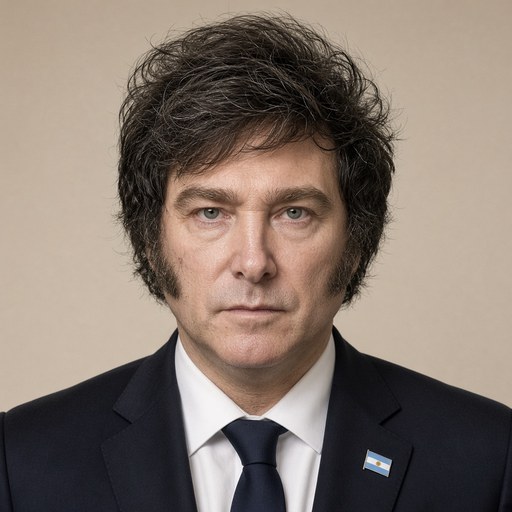
Words of the President of the Nation, Javier Milei, at the 30th edition of Agroactiva 2024, in the town of Armstrong, province of Santa Fe.
 Javier Milei · President of Argentina
- Context
- Milei addressed attendees at the 30th edition of Agroactiva 2024 in Armstrong, Santa Fe, on June 6, 2024, outlining his government's economic reforms.
- Main themes
- Economic crisis management, fiscal adjustment and deficit reduction, inflation reduction, libertarian economic policy, agricultural sector address, monetary policy, Argentina's economic recovery, public spending cuts, zero deficit program, historical economic comparisons
- Duration
- ~38 min
- Words
- 4,605
- Sentences
- 194
- Readability
- 60
- Grade
- 10.7
- Syntax
- 3.22
- Vocabulary
- 2.07
Translated from Spanish
The broad sphere of national life a sentence belongs to. Every sentence has an Arena, so it is the denominator the other indices are read against.
Other194 sentences in 33 paragraphs
PRESIDENT. - Thank you very much to everyone present, thank you, Professor Espert, and - as José Luis pointed out - when we took office, we were on the brink of what was designed to be the worst crisis in Argentine history. Basically, we had a monetary imbalance worse than that before the Rodrigazo; we had a bankruptcy situation in the Central Bank, even worse than that before 1989, during Alfonsín's hyperinflation, which - in wholesale terms - ended up around an inflation rate of 5000 percent annually. Sometimes it is necessary to mention these things to remember: some lived through it; others were told about it. And, on the other hand, we had social indicators worse than those of 2001.
In other words, we were facing what was going to be the worst crisis in all of Argentine history, and basically we did not complain about it, because we knew that the possibility of a libertarian liberal becoming president would not occur under normal conditions of pressure and temperature. So we were prepared for a situation where the previous government could explode, or if the previous government was successful and left the bomb for us. In that sense, we had different programs in place, and from day one, we got to work. To give you a rough idea of the magnitude, we received twin deficits of 17 points of GDP. And with that one might say: how serious is it or not? Look, when you have 4 points of twin deficits, in terms of GDP, it is a yellow alert; 8 means you are going to get hit, imagine what 17 is. That was the size of the monster that was coming at us. Just as José Luis points out, the price indices, in the first week of December, were running at a rate of 3700% annually, that is, 1% daily. In the second week, they accelerated to 7500%, and if you and we presented that there was a possible scenario where the planted inflation was 15,000%, and - indeed - the wholesale inflation for December, which anticipates retail inflation, was 54% monthly; annualized, that gives 17,000%. And if you look at April, the wholesale inflation was 3.4%, that is, annualized, 50%. I understand that 50% annually is a lot and obviously it frustrates me to have that level of inflation, but let’s agree that we are coming from 17,000%.
And achieving a reduction from 17,000 to 50% in 4 months has no historical records of having done something like that. Because at the same time, we achieved this without a prior explosion, as in other cases; we achieved it without expropriations, such as - for example - a Bonex Plan; we achieved it without controls or price agreements, and at the same time, we did not set the exchange rate, which is a mechanism to accelerate the reduction of inflation. Therefore, in terms of achievement, the achievement is enormous, despite whether certain political actors want to recognize it or not.
On the other hand, how did we do it? Basically, we faced those 17 points of twin deficits, where 15 were from the treasury, where 5 were in the Treasury, and 10 were in the Central Bank. In that sense, our economic program, like any economic program, has a fiscal leg, a monetary leg, and an external sector leg.
Regarding the fiscal leg, we went to a zero deficit program. I remember that many who criticize now, about the composition of the adjustment and so on, said that adjusting more than 1 point of GDP was impossible. In the first stage, we even thought about going to a zero deficit throughout 2024. And yet, Minister Caputo, with incredible courage, managed to steer the accounts and already, in January, we were in financial balance. That is, not only in primary balance, that is, operational, but also paying interest. And that has been repeated every month. May will also show a surplus, and although seasonally, due to the payment of bonuses, June is deficit, when you take the 6 months together, we are in surplus, meaning that the zero deficit remains in place, despite attempts to show that, without considering the seasonality of June, which is reasonable. But in order to smear, they are capable of saying that the zero deficit was even broken, when - in reality - the zero deficit remains in place, because you have to take into account how it accumulates and in that sense we will end with surplus accounts, also, in the consolidated 6 months. And that adjustment, which was made in the first stage, when the brake was put on, was equivalent, if annualized, to 7% of annualized GDP. Now we are on track to the levels we needed. I remember they told us: "Oh, but it has a lot of blender and cuts, it has scissors." So those who said it was impossible to achieve fiscal balance, now started saying that the issue was the blender and the scissors. Look, the truth is that 90% of the adjustment is chainsaw: we halved the number of ministries; we eliminated public works; we practically eliminated discretionary transfers to provinces and undertook a program of rationalization of social spending like never seen before, where - historically - we have called for the elimination of poverty managers, eliminating intermediaries, and we are indeed doing it. And we are indeed finding a lot of corrupt individuals and filling them with cases in the justice system.
Therefore, we are not only fulfilling the mandate from the polls to reduce inflation; we are fulfilling the mandate to put the streets in order, a great merit of Minister Bullrich, but we are also waging an unrelenting fight against the corrupt and those who sank this country, who use noble causes to hide behind the poor. And when you touch their racket, they accuse you of being insensitive, when in reality what is happening is that they are crying and screaming basically because their rackets are coming to an end and because they have a withdrawal from cash.
The other titanic part was the work of the Central Bank, having to face a quasi-fiscal deficit of 10 points of GDP. Several things were done in terms of monetary policy. On one hand, we had negative net international reserves of 11.5 billion dollars, almost 12 billion dollars. Additionally, we had an exchange gap of 200%, there was a 3 to 1 ratio. I remember when I, after the PASO elections, went to live at the Hotel Libertador, because living in Benavidez meant, at least, an hour of travel during non-peak hours, and during peak hours it could take two or three. So, for the sake of dynamics, I needed to stay in the Federal Capital. And I remember when we were at the Hotel Libertador, with “Toto” Caputo, with Santiago Bausili, and part of that wonderful team they put together. And it had to be said, in rigor, we could not exit the capital controls, because we basically had the problem of the SIRA debt, which was equivalent to 50 billion dollars; we had the problem of trapped dividends, we had the problem of remunerated liabilities. To show you the level of perversion of what the previous government left: all the remunerated liabilities were passed to one day.
This means that if we had opened up, cheerfully as they expected us to do, without being aware of all this, we would have quintupled the monetary base in one day. So, hyperinflation was evident. They would have started with their traditional policy of looting and attacking supermarkets and all those things that some journalists are promoting today, which constitutes a crime.
In that sense, they had planned to overthrow the government by December, so that by January they would already be there, and all the cost of the adjustment and the entire inflationary disaster would be paid by us and finish off - once and for all - liberalism in Argentina. In that sense, we knew we could not exit because we also had the equivalent of debt maturities in pesos of 90 billion dollars; we had maturities of foreign currency debt of 25 billion dollars, mostly with multilateral organizations, but we had fallen out of agreement with the Fund due to the fiscal disaster. To give you a rough idea of the disaster that this group generated - over the 4 years - they issued money equivalent to 28 points of GDP, which is the true scam of seigniorage, which then translates into the inflation tax, what Professor Espert was mentioning - very correctly - earlier.
Additionally, they issued 28 points of GDP, that is, they stole 28 points of GDP, because monetary issuance is a scam. But of those 28, they issued 13 points of GDP during the last year. What they did is a scandal, it is a scandal. And then I remember that, at that time, economists were saying that the exchange rate had to be brought to $600, and they had a scenario of inflation, the consensus, and everyone repeated that consensus quite a bit.
It is interesting because when we were there, I said to them: "Let’s set the exchange rate at a level that is similar to the market." That, now, I will explain why. But then, since we were contemplating the Country Tax, that meant it had to be set around $800, and we were heavily criticized. That is why now, those same people who criticized us, now those same people who are criticizing us and talking about exchange rate lag. They had made the scenario with a $600 exchange rate and with more inflation, and we set it at $800 and with much less inflation. That is why I say, it is quite funny the serial blunders, that are some economists, who consult so much. This allowed, for example, that we bought, from the beginning of the management, 17.5 billion dollars.
I love it when they come and criticize it, those who - in the meantime - looted the Central Bank for 45 billion dollars. At the same time, regarding the remunerated liabilities that generated 10 points of fiscal deficit, in terms of GDP, we have reduced that deficit to 1 point of GDP. That is, between the 7, which are now 6, that we did in the Treasury, and the 9, that we did in the Central Bank, the adjustment is 15 points of GDP. That is, and we are returning to the private sector 15 points of GDP. Where do you see that? That while, in December, we were discussing the hyperinflation that was coming; today we are discussing mortgage loans, for 30 years. If you do not believe that this, in 4 months, is not a lot, I do not know what dimension these people have of what time is in economics.
And another thing that was very interesting was how, then, because I just gave you a preview of how much we reduced the quasi-fiscal, but it is also very interesting how that was reduced, because what we did was arbitrate the rate in dollars, taking into account that Argentines, as a consequence of having been scammed, since 1935 onwards, with the local currency tend to want to buy dollars, that is, for the economy to be well immunized. It is not because Argentines are bad, it is because we have had a policy that is a complete mess.
And in that sense, we arbitrated the rate in dollars and that implied a negative interest rate in pesos, but in dollars it was enormous. And that was also heavily criticized. If we had listened to those who said that the interest rate had to be positive, I don’t know how much, in real terms; today we would have a ratio of remunerated liabilities of 8 to 1. We would be talking about carry trade and when hyperinflation explodes. And today, and this is very important for me, for you to keep in mind, the ratio of remunerated liabilities to monetary bases is 1.2 times, that is, we have them really against the ropes. But now I will tell you even nicer things, which is why we are very calm, despite what is happening in the exchange market, where some are taking advantage to make their apocalyptic predictions. And I am talking about the serial blunders.
Argentina has a monetary base of 15 trillion pesos and the remunerated liabilities are 18 trillion pesos. Now the interesting thing is that of those 18 trillion pesos, 12 trillion pesos are in the public sector, in public banks. Of those 12 trillion pesos, 7 trillion are in Banco Nación Argentina, where the National State also has 3.5 trillion. Another important part is in Banco Provincia, with the fiscal situation of the Province of Buenos Aires and the way Banco Provincia uses it, has the liquidity situation very tight, so they will not be able to touch that. What does that mean? That the problem of remunerated liabilities has been reduced to 6 trillion pesos, when we have already made placements of 11 or 12 trillion pesos, and the market had tried to bid for nearly 20 trillion pesos. What does that mean? That we have the remunerated liabilities against the ropes.
Why is it important that we have the remunerated liabilities under control? Because as long as we have the remunerated liabilities under control, which we will soon eliminate, we will not have a fiscal deficit, meaning there is no need to issue debt to finance the treasury. The day we resolve a problem left to us by the previous government, known as Puts, which is basically a mechanism through which the fiscal deficit was financed while the International Monetary Fund turned a blind eye and the banks did not want to finance the Treasury. So, they put it inside the Central Bank. The day we finish resolving that, we will be in a position to lift the capital controls and we are in negotiations with financial institutions to end the problem, basically, of the Puts. And the day we resolve the Puts issue, the capital controls will be over.
And also, how can we not control prices, the exchange rate will be free. But what is interesting is that since we are not going to issue pesos, neither to finance the treasury nor to buy dollars, nor to support the financial system, the amount of money will be fixed. And when we can determine the amount of money as fixed - as we believe that issuing money is a crime - we will send a Law of No Issuance.
This Law of No Issuance will mean that when there is monetary issuance, the President of the Nation, the Minister of Economy, the President of the Central Bank, and all its board members, as well as the deputies and senators, who defraud the people with monetary issuance, will go to jail.
Now it is true that some may say: "Well, but there were laws and they were ignored." Yes, that is true. Now it is also true that we will give this law the category of a crime against humanity, therefore, it is imprescriptible. So, another government could come and - suddenly - start issuing again and revert to the old ways, and surely they will want to change the law when they want to do that and will give a lot of very sentimental reasons, as they always do. But always, when inflation returns, people will remember that we liberals are the ones who exterminated inflation, and then - when another government returns - they will remind them that it was an imprescriptible crime, and they will put them all in jail. So we will move forward with that, because we will definitively, forever, end inflation in Argentina.
On the other hand, another thing we knew would happen is that, clearly, at the time of implementing a stabilization program, it generates an increase in savings and given the conditions that Argentina generates, there would be no counterpart for investment. Therefore, we knew there would be a decline in economic activity. The fact of having set the exchange rate very close to the market rate was to narrow the gap and by narrowing the excess demand for foreign currency, it reduced the excess supply in the bond market, which lowered the interest rate. In fact, we received a country risk of 2900, we reached 1100, and today, thanks to the policy, which only wants to break, because they know that if this works, the crooks will never return. So, now the country risk is at 1500, but now, - believe me - we will defeat that too.
Aside from that, one of the things we did was double the Universal Child Allowance (AUH). In fact, the AUH is at the highest level since it was first granted. If we add the Food Card, there has never been so much assistance to the vulnerable sector of the economy. Additionally, we provided assistance to the middle class through the provision of school supplies and financing for school fees. And although we fell in the first quarter, we fell much less than we should have under the conditions of the adjustment we are making. And the most interesting thing, and that is what has the politicians so nervous, is that not only is inflation decreasing, but economic activity has started to rebound. When you start looking at the economic indicators, it is true that - compared to the previous year - they show a decline, but when you look at the month-to-month seasonally adjusted figures, the vast majority of indicators are rising very strongly. Do you want an example? For instance, credit.
Credit is growing 650 percent - compared to the previous year - and is growing 45% - compared to last month - meaning the economy is rebounding and will rebound strongly. So, if today, despite having made the largest adjustment in the history of humanity, my image is still at the levels it was when we took office, when the intention to vote for our space is around 55%, that is, if we were to have a general election, we would win in the first round by a landslide. You know what? The crooks are nervous, the elite is scared and they are so scared that all they want to do is sabotage this government.
One of the clear signs… yes, that’s me. Why could that be? It’s not you, it’s not you, but wait a bit, I’m finishing the conference. So, look at this: what the fiscal degenerates in Congress are doing. They are constantly sending laws to try to sabotage the backbone of the economic program, which is the fiscal surplus. They gave a clear example of this yesterday. But besides that, they could not help but show that they are a filthy elite, because they raised their salaries by 80%. That is, to pass the structural reforms that we good Argentines need, they have been taking six months, but to approve the increase for themselves, they do it quickly. How efficient they are when it comes to their own!
And as if all this were not enough, the issue of eliminating privileged pensions was blocked. So I don’t care at all, because I am going to renounce my privileged pension because you know what? If I do my job well, I will be able to continue working in the private sector when I leave this position. But of course, they are used to making a mess for the last 100 years, so they have a safety net, which are the privileged pensions. No, enough, if you did things wrong, you deserve to starve, you son of a bitch, and that’s why they need to be eliminated.
Regarding the will to overturn the government’s economic program by the opposition and the center-left, the reality is that if they go against fiscal balance, we will veto everything that goes against fiscal balance. I will not allow a zero deficit in any way, and if they still seek a mechanism to continue breaking fiscal balance, I will cut public spending even more, until it hurts the politicians more. So do not doubt that the zero deficit is here to stay.
Finally, in terms of the macro, the exchange rate has jumped. Now, the reality is that we maintain that inflation is always, everywhere, a monetary phenomenon generated by an excess of money supply, either because the supply increases or because demand falls. And that causes the purchasing power of the peso to fall and all prices - expressed in monetary units - to rise. The dollar is just another price in the economy, so why does the dollar rise? So, one might say: "Well, the reality is that there is room for demand to fall, since January." Look, the truth is no, because when you take the monetary base - during the 21st century - on average it was 9-10% of GDP and today the monetary base is 2.8% of GDP. There is not much room for the demand for money to fall; moreover, they say: "Well, but there are the remunerated liabilities and they could…", let’s assume we take the total of the remunerated liabilities, which we already know would not be correct. Even if we took the total of the remunerated liabilities, we are at 6% of GDP.
Therefore, it does not relate to a demand problem, so the question is: does it relate to a supply problem? No, since we are not issuing to finance the treasury. So, why is this happening? Basically, it is due to the fiscal degenerates who are in Congress. What happens when the fiscal degenerates are trying to torpedo the fiscal surplus? What happens is that the perception is that if they succeed, the solvency condition of the state falls, the government falls. And therefore, the price of bonds falls. And why is this important? And that is what you see today with a country risk of 1500. Why is this important? Because today, as there are capital controls, you do not buy dollars directly, you do it indirectly. And in that sense, the indirect mechanism to do so is through bonds.
So, today in the price of bonds, what you are seeing is the problem of the fiscal degenerates trying to break the fiscal balance and it does not respond to a monetary problem. When you see the numbers for May, when you see the numbers for June and see that the fiscal result is solid and we are not going to give up the fiscal result, automatically, the numbers, the numbers of the bonds will adjust and automatically the exchange rate will adjust. That is why we are not nervous about what is happening with the exchange rate. And it amuses us quite a bit all the apocalyptic, serial blunders, who want things to go wrong to validate the lousy models they have always messed up.
So, the question is: OK, do we have the macro in order or are we ordering it? So, the question is, how are we going to grow? The first thing is, first, we are rebounding and that is going to manifest in an improvement in activity and employment. In fact, real wages - two months ago - have been rising and if you look at them - in terms of food - they have been rising much more, so the number of poor and indigent people will have to start going down when the new measures are taken, but aside from that, not those that still remain and have the impact of the first semester. So, we are seeing the rebound, in fact, it is being seen. Another element that will boost economic growth is that increasing savings by 15 points of GDP will translate into investment.
At the same time, an economy that has been under populism for 20 years and has destroyed capital - recklessly - means that the real returns of the economy are very high. Therefore, the economy has a lot of room to grow just because of the destruction of capital that has occurred. So, that is what will explain how the economy will start to rebound and grow in the short term. And on the other hand, even though it may seem that there are setbacks, the Bases Law has a chance of passing and the DNU is functioning. So, more or less, to give you an order of magnitude, the largest structural reform ever made in Argentina was done by Menem in the 90s. If you take the DNU and the Bases Law as it is today, this reform is eight times larger than the one that was made. It is the largest reform in Argentine history. And then they say we don’t have an economic program, which I find ridiculous, and I will quantify it. These reforms imply that we will rise - in economic freedom - 90 places. That is, we would stop being a country on the path to becoming Venezuela, and we are on the path to becoming a country similar to Germany, or France, or Italy.
But I want to tell you more: our goal is to be the country with the greatest economic freedom in the world. For example, something like what Ireland did at one time, which being the most miserable country in Europe, today has a per capita GDP 50% higher than that of the United States, or things like those in Switzerland, or those in Luxembourg. But since we have pending - after this - 3,200 more structural reforms, we are going to become the freest country on the planet. And that will mean that, in a span of 30 or 40 years, we will become the most prosperous country in the world, and that is the plan.
And finally, the most interesting thing is what we are going to do when the economy starts to grow, because then many fiscal resources will appear. Obviously, the fiscal degenerates, what do they want to do? Spend it themselves, but our idea is that when the fiscal surplus starts to be sustained, we will return it to the good people, to those who work, to those who are truly the great heroes of Argentina; we will return it with tax cuts.
And, obviously - as Professor Espert said - in our sights, we have the Country Tax, we have the withholdings, and we have the tax on bank debits and credits, which are super distorting. And - if you want - the greatest testimony that I want to lower them - effectively - and that I will lower them, when the economy starts to recover, do you know what it is? I never wanted to share the revenue. Because if I had shared it, we would not be able to remove it anymore. So, the best testimony I have to give you, and the best proof that - effectively - when the economy starts to grow and the fiscal surplus starts to be substantial, we will be lowering taxes, basically. Why? Because I never wanted to share the revenue. So that will give a new push to economic growth and - without a doubt - if we continue to embrace the ideas of Freedom, in 35 years we will be one of the great world powers. Thank you very much.
The original Spanish. The tags above are read on the English translation's sentences.
PRESIDENTE. - Muchas gracias a todos los presentes, gracias, profe Espert, y - tal como señalaba José Luis - nosotros, al momento de asumir, estábamos al borde de lo que estaba diseñado para ser la peor crisis de la historia argentina. Básicamente, teníamos un desequilibrio monetario peor que el de la previa del Rodrigazo; teníamos una situación de quiebra, en el Banco Central, aún peor que la que había en la previa de 1989, la hiperinflación de Alfonsín, que - en mayoristas - terminó rondando una inflación, del 5000 por ciento anual. A veces hay que mencionar estas cosas para recordar: algunos las vivieron; otros se las contaron. Y, por otra parte, teníamos indicadores sociales peores que los del 2001.
Es decir, estábamos frente a lo que iba a ser la peor crisis de toda la historia argentina, y básicamente nosotros no nos quejamos por eso, porque sabíamos que la posibilidad de que un liberal libertario, llegara a ser presidente, no iba a ser en condiciones normales de presión y temperatura. Así es que nosotros estábamos preparados tanto para una situación en la que explotara el gobierno anterior, o si el gobierno anterior era exitoso y nos dejaba la bomba a nosotros. En ese sentido, nosotros teníamos distintos programas planteados, y así es que - desde el día uno - nos pusimos a trabajar. Para que más o menos tengan un orden de magnitudes, nosotros recibimos déficit gemelos, por 17 puntos del PBI. Y con eso uno diría: ¿qué grave es o no? Miren, cuando ustedes tienen 4 de déficit gemelos, en términos de PBI, es una alerta amarilla; 8 es que se van a dar una piña, imagínense lo que es 17. Ese era el tamaño del monstruo que venía encima. Tal cual como señala José Luis, los índices de precios, en la primera semana de diciembre, venían corriendo a una tasa del 3700% anual, o sea, un 1% diario. En la segunda semana se aceleraron a 7500%, y si ustedes y nosotros presentamos que había un escenario de posibilidad de que la inflación plantada era de 15,000%, y - efectivamente - la inflación mayorista, de diciembre, que es la que se anticipa a minoristas, dio 54% mensual; eso anualizado da 17,000%. Y si ustedes se fijan, en el mes de abril, la inflación mayorista fue del 3,4%, es decir, anualizada, 50%. Yo entiendo que 50% anual es un montón y obviamente me revienta tener ese nivel de inflación, pero convengamos que venimos del 17,000%.
Y lograr una baja del 17,000 al 50%, en 4 meses, no hay registros históricos de haber hecho algo así. Porque al mismo tiempo, nosotros eso lo logramos sin que hubiera un estallido previo, como en otros casos; lo logramos sin que hubiera expropiaciones, llámese como - por ejemplo - un Plan Bonex; lo logramos sin controles ni acuerdos de precios, y al mismo tiempo, tampoco fijamos el tipo de cambio, que es un mecanismo para acelerar la baja de la inflación. Por lo tanto, en términos de logro, el logro es enorme, pese a que lo quieran reconocer o no determinados actores políticos.
Por otra parte, ¿cómo lo hicimos? Básicamente, nosotros enfrentamos esos 17 puntos de déficit gemelo, donde 15 eran del fisco, donde 5 estaban en el Tesoro, y 10 estaban en el Banco Central. En ese sentido, nuestro programa económico, como todo programa económico, tiene una pata fiscal, una pata monetaria, y una pata de sector externo.
En lo que tiene que ver con la pata fiscal, fuimos a un programa de déficit cero. Yo recuerdo que muchos que critican, ahora, sobre la composición del ajuste y demás, decían que ajustar más de 1 punto del PBI era imposible. Nosotros, en la primera etapa, es más, pensábamos ir a déficit cero, a lo largo del año 2024. Y sin embargo, el ministro Caputo, con un coraje increíble, logró encauzar las cuentas y ya, en el mes de enero, estábamos en equilibrio financiero. Es decir, no solo en equilibrio primario, o sea, el operativo, sino también pagando los intereses. Y eso se ha estado repitiendo, durante todos los meses. Mayo de vuelta va a dar también superavitario y si bien estacionalmente, por el pago de aguinaldos, el mes de junio es deficitario, cuando ustedes toman los 6 meses juntos, somos superavitarios, es decir, que el déficit cero sigue en pie, a pesar de que quieran mostrar que, como sin considerar que la estacionalidad del mes de junio, o sea, lo cual es razonable. Pero con tal de ensuciar, son capaces de decir que hasta se quebró el déficit cero, cuando - en realidad - el déficit cero sigue en pie, porque ustedes tienen que ir tomando cómo se va acumulando y en ese sentido vamos a terminar con las cuentas superavitarias, también, en el consolidado de los 6 meses. Y ese ajuste, que se realizó en la primera etapa, cuando se puso el freno, fue equivalente por el equivalente, si lo anualizas, a 7% del PBI anualizado. Ahora estamos encaminados a los niveles que necesitábamos. Recuerdo que nos decían: "Ay, pero tiene mucho de licuadora y de recorte, tiene tijerita". Entonces aquellos que decían que era imposible alcanzar el equilibrio fiscal, ahora empezaron con que el tema era la licuadora y la tijerita. Miren, la verdad es que el 90% del ajuste es motosierra: bajamos la cantidad de ministerios a la mitad; eliminamos la obra pública; prácticamente eliminamos las transferencias discrecionales a provincias y encaramos un programa de racionalización del gasto social como nunca se vio, donde - históricamente - hemos reclamado por eliminar a los gerentes de las pobrezas, eliminar los intermediarios, y vaya que lo estamos haciendo. Y vaya que estamos encontrando un montón de corruptos y que los estamos llenando de causas en la justicia.
Por ende, no solo estamos cumpliendo con el mandato, de las urnas, de bajar la inflación; estamos cumpliendo con el mandato de poner la calle en orden, gran mérito de la ministra Bullrich, sino que además estamos dando una lucha sin cuartel contra los corruptos y los que hundieron a este país, que usan las causas nobles para esconderse detrás de los pobres. Y cuando ustedes les están tocando el curro, los acusan de insensibles, cuando en realidad lo que está pasando es que están llorando y gritando básicamente porque se les están terminando los curros y porque tienen abstinencia de caja.
La otra parte titánica fue el trabajo del Banco Central, teniendo que enfrentar un déficit cuasi fiscal, por 10 puntos del PBI. Ahí se hicieron varias cosas en materia de política monetaria. Por un lado, nosotros teníamos reservas internacionales netas negativas por 11,500 millones de dólares, casi 12,000 millones de dólares. Además, teníamos una brecha cambiaria del 200%, había una relación de 3 a 1. Recuerdo cuando yo, después de las elecciones de las PASO, me fui a vivir al Hotel Libertador, porque como estaba viviendo, en Benavidez, eso implicaba, por lo menos, una hora de viaje en horas no pico, y en hora pico podía llegar a tardar dos o tres. Entonces, por una cuestión de la dinámica, necesitaba quedarme en Capital Federal. Y yo recuerdo cuando estábamos, en el Hotel Libertador, con “Toto” Caputo, con Santiago Bausili, y parte de ese equipo maravilloso, que han armado. Y había que decir, en rigor, no podíamos salir del cepo, porque básicamente teníamos el problema de la deuda de la SIRA, que era un equivalente a 50,000 millones de dólares; teníamos el problema de los dividendos atrapados, teníamos el problema de los pasivos remunerados. Para que vean el nivel de perversión de lo que dejó el gobierno anterior: pasaron todos los pasivos remunerados, a un día.
Esto quiere decir que si nosotros habríamos, alegremente como ellos esperaban que lo hicieran, sin tener conciencia de todo esto, íbamos a quintuplicar la base monetaria, en un día. Entonces, la hiper era evidente. Iban a empezar con su tradicional política de los saqueos y ataque a supermercados y todas esas cosas que hoy algunos periodistas andan promoviendo, lo cual constituye un delito.
En ese sentido, ellos tenían planeado derrocar al gobierno, para diciembre, para que ya - en enero - ya estuvieran, y todo el costo del ajuste y hacer todo el desastre inflacionario que lo pagáramos nosotros y terminar de matar - de una vez por siempre - al liberalismo. en Argentina. En ese sentido, nosotros sabíamos que no podíamos salir porque además teníamos el equivalente de vencimiento de deuda en pesos, por 90 mil millones de dólares; teníamos vencimientos de deuda en moneda extranjera por 25,000 millones de dólares, mayormente con organismos multilaterales, pero teníamos caído el acuerdo con el Fondo por el descalabro fiscal. Para que más o menos se den una idea del descalabro, que generó esta gente - a lo largo de los 4 años - se emitieron dinero por 28 puntos del PBI, que es la verdadera estafa del señoriaje, que después se traduce en el impuesto inflacionario, lo que estaba mencionando - muy correctamente - antes el profe Espert.
Además, emitieron 28 puntos del PBI, o sea, se afanaron 28 puntos del PBI, porque la emisión monetaria es una estafa. Pero de esos 28, emitieron 13 puntos del PBI, durante el último año. Esto es un escándalo lo que hicieron, es un escándalo. Y entonces recuerdo que, en aquel momento, los economistas decían que el tipo de cambio había que llevarlo a $600, y tenían un escenario de inflación, el consenso y todos lo repetían bastante ese consenso.
Es interesante porque cuando estábamos ahí, yo les digo: "Pongamos el tipo de cambio a un nivel que se asimile al del mercado". Eso, ahora, voy a explicar por qué. Pero entonces, dado que estábamos contemplando el Impuesto País, entonces eso daba que había que ponerlo en torno a $800, y nos criticaron muchísimo. Por eso ahora, esos mismos que nos criticaban, ahora esos mismos que nos están criticando y hablan del atraso cambiario. Ellos habían hecho el escenario con $600 de tipo de cambio y con más inflación, y nosotros lo pusimos en $800 y con mucho menos inflación. Por eso digo, es bastante gracioso los pifiadores seriales, que son algunos economistas, que tanto consultan. Eso permitió, por ejemplo, que nosotros compráramos, desde el inicio de la gestión, 17,500 millones de dólares.
Me encanta cuando vienen y lo critican, los que - en el medio - saquearon al Banco Central por 45,000 millones de dólares. Al mismo tiempo, lo que tiene que ver con los pasivos remunerados que generaban 10 puntos de déficit fiscal, en términos del PBI, hemos bajado ese déficit a 1 punto del PBI. Es decir, que entre los 7, que ahora quedaron 6, que hicimos en el Tesoro, y los 9, que hicimos en el Banco Central, el ajuste son 15 puntos del PBI. Es decir, y le estamos devolviendo al sector privado 15 puntos del PBI. ¿Dónde lo ven eso? Que mientras que, en diciembre, discutíamos la hiperinflación que se venía; hoy estamos discutiendo créditos hipotecarios, a 30 años. Si ustedes no creen que eso, en 4 meses, no es un montón, no sé qué dimensión esta gente tiene de lo que son los tiempos en economía.
Y otra cosa que era muy interesante era cómo, entonces, porque yo les acabo de adelantar el resultado de cuánto achicamos el cuasi fiscal, pero también es muy interesante cómo fue bajado eso, porque nosotros lo que hicimos fue arbitrar la tasa en dólares, es ir teniendo en cuenta que los argentinos como consecuencia de haber sido estafados, desde el año 1935 en adelante, con la moneda local tiendan a querer comprar dólares, es decir, que la economía sea bien inmunitaria. No es porque los argentinos son malos, es porque hemos tenido una política, que son una reverenda mierda.
Y en ese sentido, nosotros arbitramos la tasa en dólares y eso implicaba una tasa de interés en peso negativa, pero en dólares era enorme. Y eso también nos criticaron mucho. Si hubiéramos hecho caso a esos que decían que la tasa de interés tenía que ser positiva, en no sé cuánto, en términos reales; hoy tendríamos una relación de pasivos remunerados 8 a 1. Estaríamos hablando del carry trade y de cuándo estalla la hiperinflación. Y hoy, y esto para mí es muy importante, para que lo tengan en cuenta, la relación pasivos remunerados sobre bases monetarias es 1.2 veces, o sea, que los tenemos recontra contra las cuerdas. Pero ahora le voy a contar cosas todavía más lindas, motivo por el cual nosotros estamos muy tranquilos, a pesar de lo que está pasando, en el mercado de cambios, donde algunos están aprovechando para hacer sus predicciones apocalípticas. Y hablo de los pifiadores seriales.
Argentina tiene una base monetaria de 15 billones de pesos y los pasivos remunerados son 18 billones de pesos. Ahora lo interesante es que de esos 18 billones de pesos, 12 billones de pesos están en el sector público, en los bancos públicos. De esos 12 billones de pesos, 7 billones están en el Banco Nación Argentina, donde además el Estado Nacional tiene 3 billones y medio. Otra parte importante están en el Banco Provincia, con la situación fiscal de la Provincia de Buenos Aires y del modo que usa el Banco Provincia, tiene muy apretada la situación de la liquidez, con lo cual no van a poder tocar eso. ¿Qué quiere decir eso? Que el problema de los pasivos remunerados se redujo a 6 billones de pesos, cuando hemos hecho ya colocaciones por 11 o 12 billones de pesos, y el mercado había tratado de licitar por cerca de 20 billones de pesos. ¿Qué quiere decir eso? Que a los pasivos remunerados los tenemos contra las cuerdas.
¿Por qué es importante que tengamos los pasivos remunerados contra las cuerdas? Porque mientras que tenemos los pasivos remunerados contra las cuerdas, que ya próximamente los vamos a eliminar, no teniendo déficit fiscal, con lo cual no hay necesidad de emitir para financiar el fisco. El día que arreglemos un problema, que nos dejó el gobierno anterior, que se llaman Puts, donde básicamente es un mecanismo por el cual se financió el déficit fiscal haciendo la vista gorda el Fondo Monetario Internacional y los bancos no querían financiar al Tesoro. Entonces, lo metieron adentro del Banco Central. El día que terminemos de arreglar eso, estamos en condiciones de levantar el cepo y estamos en negociaciones con las instituciones financieras para terminar con el problema, básicamente, de los Puts. Y el día que terminemos el problema de los Puts se terminó el cepo.
Y además, cómo no vamos a controlar precios, el tipo de cambio va a ser libre. Pero qué es lo interesante, dado que nosotros no vamos a emitir pesos, ni para emitir para el fisco, ni para comprar dólares, ni para sostener al sistema financiero, la cantidad de dinero va a estar fija. Y cuando podamos determinar fija la cantidad de dinero - como creemos que emitir dinero es un delito - vamos a enviar una Ley de No Emisión.
Esa Ley de No Emisión va a hacer, que cuando haya emisión monetaria, vaya preso el presidente de la Nación, el ministro de Economía, el presidente del Banco Central y todo su directorio, y los diputados y los senadores, que estafen a la gente con la emisión monetaria.
Ahora es cierto que hay algunos que pueden decir: "Bueno, pero acá hubo leyes y se las llevaron puestas". Sí, es cierto. Ahora también es cierto que nosotros le vamos a dar a esta ley categoría de delito de lesa humanidad, por lo tanto, es imprescriptible. Entonces, sí va a poder venir otro gobierno y - de repente - volver a emitir y volver a las andadas, y seguro que van a querer cambiar la ley cuando quieran hacer eso y van a dar un montón de motivos muy sensibleros, como hacen siempre. Pero siempre, cuando vuelva la inflación, la gente va a recordar que los liberales somos los que exterminaron la inflación, y ahí - cuando vuelva otro gobierno - va a recordarles que ese era un delito imprescriptible, y los va a meter a todos presos. Así es que vamos a avanzar con eso, porque vamos a terminar definitivamente, para siempre, con la inflación en Argentina.
Por otra parte, otra de las cosas que nosotros sabíamos que iba a pasar es que, claramente, al momento de hacer un programa de estabilización, eso genera un aumento del ahorro y dadas las condiciones que te genera Argentina, no iba a haber contraparte de inversión. Por lo tanto, sabíamos que iba a haber una caída en la actividad económica. El hecho de haber puesto el tipo de cambio muy parecido al del mercado lo que hacía era achicar la brecha y al achicar el exceso de demanda de divisas, achicaba el exceso de oferta en el mercado de bonos, con lo cual hacía bajar la tasa de interés. De hecho, recibimos un riesgo país de 2900, llegamos a estar en 1100 y hoy, gracias a la política, que lo único que quiere hacer es romper, porque saben que, si esto funciona, no vuelven más los chorros. Entonces, ahora el riesgo país está en 1500, pero ahora, - créanme - que lo vamos a derrotar también.
Al margen de eso, una de las cosas que hicimos fue duplicar la AUH. De hecho, la AUH está en el nivel más alto desde que se empezó a otorgar. Si le sumamos la Tarjeta Alimentar, nunca hubo tanta asistencia al sector vulnerable de la economía. Además, dimos asistencia a la clase media vía entrega de útiles y vía financiamiento de la cuota de los colegios. Y si bien el primer trimestre caímos, caímos mucho menos de lo que deberíamos haber caído en condiciones al ajuste que estamos haciendo. Y lo más interesante, y eso es lo que tiene tan nerviosos a los políticos, porque no solo es que está bajando la inflación, empezó a rebotar la actividad económica. Cuando ustedes empiezan a mirar los indicadores económicos, es cierto que- contra el año anterior - dan caída, pero cuando miran el mes a mes desestacionalizado están la gran mayoría de los indicadores subiendo muy fuertemente. Quieren un ejemplo, por ejemplo, el crédito.
El crédito está creciendo 650 por ciento - respecto al año anterior - y está creciendo 45% - respecto al mes pasado - es decir, la economía está rebotando y va a rebotar fuerte. Entonces, si hoy, a pesar de haber hecho el ajuste más grande de la historia de la humanidad, mi imagen sigue estando en los niveles de cuando asumimos, cuando la intención de votos del espacio está en torno al 55%, o sea, con lo cual, si fuéramos a una elección general, ganaríamos en primera vuelta por escándalo. Saben qué los chorros están nerviosos, la casta tiene miedo y tiene tanto miedo que lo único que hace es querer sabotear este gobierno.
Una de las claras muestras… sí, ese soy yo. ¿Por qué será? No sos vos, vos no sos, pero esperen un poco, estoy terminando la conferencia. Entonces, fíjense esto: lo que hacen los degenerados fiscales, que están en el Congreso. Están todo el tiempo enviando leyes para tratar de sabotear la columna vertebral del programa económico, que es el superávit fiscal. Una muestra de ellos la dieron ayer. Pero además, no podían dejar de mostrar que son una casta inmunda, porque se subieron 80% las dietas. Es decir, para pasar las reformas estructurales, que necesitamos los argentinos de bien, llevan tomándose seis meses, pero para aprobar el aumento para ellos, rapidito lo hacen. ¿Qué eficiente que son cuando quieren con la de ellos?
Y como si todo esto fuera poco, se bloqueó el tema de eliminar las jubilaciones de privilegio. Así es que a mí me importa un rábano, pues yo voy a renunciar a mi jubilación de privilegio porque saben qué, si yo hago bien mi trabajo, después voy a poder seguir trabajando en el sector privado, cuando deje este puesto. Pero claro, estos están acostumbrados a hacer zafarrancho, durante los últimos 100 años, entonces tienen un seguro, que son las jubilaciones de privilegio. No, basta, si hiciste las cosas mal, mereces cagarte de hambre, por hijo de puta, y por eso hay que eliminarlas.
En cuanto a la voluntad de voltear el programa económico del gobierno por la oposición y por los Corea del centro, la realidad es que nosotros, si van contra el equilibrio fiscal, nosotros vamos a vetar todo lo que vaya contra el equilibrio fiscal. No voy a entregar el déficit cero de ninguna manera y si aun así buscarán el mecanismo para seguir rompiendo el equilibrio fiscal, voy a bajar más el gasto público, hasta que les duela más a la política. Así que no tengan dudas que el déficit cero quedó, está para quedarse.
Finalmente, en términos de la macro, está que saltó el tipo de cambio. Ahora, la realidad es que nosotros sostenemos que la inflación es siempre, en todo lugar, un fenómeno monetario que se genera por un exceso de oferta de dinero, ya sea porque sube la oferta o porque cae la demanda. Y eso hace que el poder adquisitivo del peso caiga y todos los precios - expresados en unidades monetarias - suban. El dólar es un precio más de la economía, entonces, ¿por qué sube el dólar? Entonces, uno dice: "Bueno, la realidad es que hay lugar para que caiga la demanda, de enero”. Miren, la verdad que no, porque cuando ustedes toman la base monetaria - durante el siglo XXI - en promedio fue 9-10% del PBI y hoy la base monetaria es 2.8 del PBI. No hay mucho lugar para que caiga la demanda de dinero, es más, dice: "Bueno, pero están los remunerados y se podrían…”, supongamos, que tomamos el total de los remunerados, que ya sabemos que no sería lo correcto. Aun cuando tomáramos el total de los remunerados, estamos en 6% del PBI.
Por lo tanto, no tiene que ver con un problema de la demanda, entonces, la pregunta es: ¿tiene que ver con un problema de la oferta? No, si no estamos emitiendo para financiar el fisco. Entonces, ¿por qué pasa esto? Básicamente, pasa por culpa de los degenerados fiscales, que están en el Congreso. ¿Qué es lo que pasa, cuando los degenerados fiscales están tratando de torpedear el superávit fiscal? Lo que pasa es que la percepción es que, si lo lograrán, la condición de solvencia del Estado cae, del gobierno cae. Y, por ende, el precio de los bonos cae. Y ¿por qué esto es importante? Y eso es lo que ustedes ven hoy con un riesgo país de 1500. ¿Por qué es importante esto? Porque ustedes, hoy, como hay control de capitales, no compran dólares de manera directa, lo hacen de manera indirecta. Y en ese sentido, el mecanismo indirecto para hacerlo son los bonos.
Entonces, ustedes hoy en el precio de los bonos lo que están viendo es el problema, de los degenerados fiscales tratando de romper el equilibrio fiscal y no obedece a un problema monetario. Cuando vean los números de mayo, cuando vean los números de junio y vean que el resultado fiscal es granítico y no vamos a entregar el resultado fiscal, automáticamente, los números, los números de los bonos se van a acomodar y automáticamente se va a acomodar el tipo de cambio. Por eso es que no estamos nerviosos con lo que está pasando con el tipo de cambio. Y nos causa bastante gracia a todos los apocalípticos, pifiadores seriales, que quieren que las cosas salgan mal para poder convalidar los modelos pedorros con los que pifiaron siempre.
Entonces, la pregunta es: ¿OK, tenemos la macro en orden o la estamos ordenando? Entonces, la pregunta es, ¿cómo vamos a crecer? Lo primero es, primero, estamos rebotando y eso va, se va a manifestar en una mejora en la actividad y en el empleo. De hecho, los salarios reales - hace dos meses - que vienen subiendo y si lo miran - en términos de alimentos - vienen subiendo muchísimo más, con lo cual el número de pobres indigentes va a tener que empezar a ir a la baja cuando se tomen las nuevas medidas, pero al margen de eso, no las que todavía quedan remanente y que tienen el impacto, del primer semestre. Entonces, estamos viendo el rebote, de hecho, se está viendo. Otro elemento, que va a potenciar el crecimiento económico, es que aumentar el ahorro en 15 puntos del PBI, eso va a tener una traducción en inversión.
Al mismo tiempo, una economía, que lleva 20 años de populismo y que destrozó el capital - a mansalva - hace que los retornos reales de la economía sean muy altos. Por lo tanto, la economía tiene mucho margen para crecer solo por la destrucción de capital que hubo. Entonces, eso es lo que va a explicar cómo va a empezar a rebotar y a crecer la economía a corto plazo. Y por otra parte, por más que pareciera que hay contratiempos, la Ley Bases tiene chances de que salga y el DNU está funcionando. Entonces, más o menos, para que tengan un orden de magnitudes, la Reforma estructural más grande que se hizo, en la Argentina, la hizo Menem, en los 90, Si ustedes toman el DNU y la Ley Base como está hoy, esta reforma es ocho veces más grande que la que se hizo. Es la reforma más grande de la historia argentina. Y después dicen que no tenemos programa económico, lo cual me parece una cargada y voy a ponerlo cuantitativamente. Estas reformas implican que vamos a subir - en libertad económica - 90 puestos. Es decir, dejaríamos de ser un país que iba camino a convertirse, en Venezuela, y vamos camino a convertirnos en un país parecido a Alemania, o a Francia, o Italia.
Pero les quiero decir más: nosotros tenemos como objetivo ser el país con mayor libertad económica en el mundo. Por ejemplo, algo como lo que hizo en su momento Irlanda, que siendo el país más miserable de Europa, hoy tiene un PIB per cápita 50% mayor que el de Estados Unidos, o cosas como las que tiene Suiza, o como las que tiene Luxemburgo. Pero como nosotros tenemos pendientes - después de esto - 3,200 reformas estructurales más, nos vamos a convertir en el país más libre del planeta. Y eso va a hacer que, en un lapso de 30 ó 40 años, nos vamos a convertir en el país más próspero del mundo, y ese es el plan.
Y finalmente, lo más interesante es qué vamos a hacer cuando la economía empiece a crecer, porque ahí van a aparecer muchos recursos fiscales. Obviamente, que los degenerados fiscales, ¿qué quieren hacer? Gastarla ellos, pero nuestra idea es que cuando se empiece a dar de manera sostenida el superávit fiscal, devolvérselo a la gente de bien, a los que trabajan, a los que verdaderamente son los grandes héroes de la Argentina; devolvérselo con baja de impuestos.
Y, obviamente - como dijo el profe Espert - en la mira, tenemos al Impuesto País, tenemos a las retenciones y tenemos el impuesto a los débitos y créditos bancarios, que son súper distorsivos. Y - si ustedes quieren - el mayor testimonio de que los quiero bajar - efectivamente - y que los voy a bajar, cuando la economía empiece a recuperar, ¿saben cuál es? Nunca quise coparticipar. Porque si los hubiera participado, no los vamos a poder sacar más. Entonces, el mejor testimonio que tengo para darles, y como mejor prueba de que - efectivamente - cuando empiece a crecer la economía y el superávit fiscal empiece a ser abultado, vamos a estar bajando los impuestos, básicamente. ¿Por qué? Porque nunca los quise coparticipar. Así es que eso le va a dar un nuevo empuje al crecimiento económico y - sin lugar a dudas - si seguimos abrazando las ideas de la Libertad, en 35 años vamos a ser una de las grandes potencias mundiales. Muchísimas gracias.