




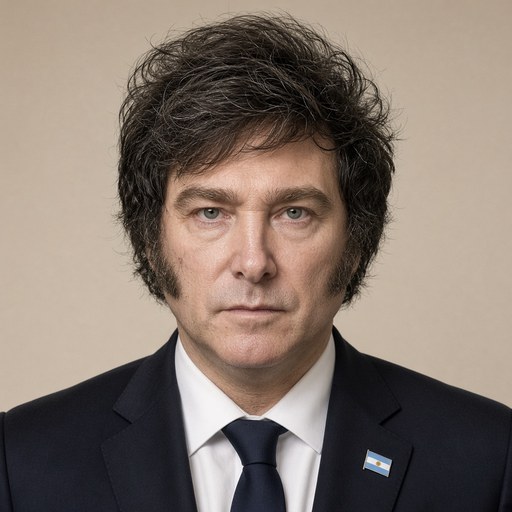
Words of the President of the Nation, Javier Milei, at the official event for International Holocaust Remembrance Day, from the Holocaust Museum, CABA.
 Javier Milei · President of Argentina
- Context
- Milei addressed the official International Holocaust Remembrance Day ceremony at the Holocaust Museum in Buenos Aires on January 26, 2024.
- Main themes
- Holocaust remembrance, Jewish resilience and memory, antisemitism, October 7 Hamas attack on Israel, Argentina as refuge for persecuted peoples, Jewish community in Argentina, obligation to combat terrorism, lessons of history, freedom and tolerance, Never Again imperative
- Duration
- ~9 min
- Words
- 1,083
- Sentences
- 44
- Readability
- 47
- Grade
- 12.8
- Syntax
- 3.06
- Vocabulary
- 2.25
Translated from Spanish
The broad sphere of national life a sentence belongs to. Every sentence has an Arena, so it is the denominator the other indices are read against.
Other44 sentences in 12 paragraphs
First of all, I want to start by thanking the president of the Holocaust Museum, Marcelo Mindlin, for inviting me to say a few words on this date that is close to our hearts. I consider it an honor. I want to thank everyone who has just shared this ceremony with me, and I also want to greet everyone present here.
As everyone knows, most will have experienced it firsthand; it is a tradition in Jewish weddings for the groom to break a glass cup under his foot. By stepping on the glass, they remember the two destructions of the Holy Temple in Jerusalem: the first 2,600 years ago at the hands of the Babylonians, the second 600 years later as a result of the oppression of the Roman yoke.
In the context of a wedding, one of the great joys in a person's life, the protagonists and the guests remember a tragic event in their history: the destruction of their city and the house of God, the symbol of their people, at the hands of invading barbarism. It is frankly a moving image. Having gone through so much pain, they choose to remember it at the moment when a new Jewish family is being celebrated. From the rubble, from the ruins, from what has been destroyed, a testimony of strength and hope is rebuilt. This tradition expresses what I consider one of the most admirable qualities of the Jewish community: resilience, the quality of facing adversity, resisting oppression, regaining strength, and blooming again.
Today we commemorate the memory of the victims of the Holocaust, one of the greatest atrocities ever recorded against the Jewish people and against all humanity. An atrocity with survivors who are here among us today, who, after enduring segregation, discrimination, and even the horror of concentration camps, came to Argentina seeking to rebuild their lives far from persecution and pain.
Today, in addition to honoring the victims who are no longer here, we are fortunate to be able to hear from the survivors we host in our country, who are a testament to strength and hope. Their life stories are examples and dictate to us the moral imperative to keep the memory alive and ensure that atrocities like these never happen again.
Argentina, for a long time, was a refuge and a destination for all the persecuted peoples of the world. In the second half of the 19th century and the first half of the 20th century, when in different places in Europe and the world people were punished by hunger, instability, and oppression, hundreds of thousands looked across the ocean and dreamed of a life in Argentina. They knew that on the other side of the Atlantic awaited a country tolerant of diversity, thriving, and full of opportunities; a country with open doors that had already welcomed millions of immigrants from different backgrounds, escaping injustice and persecution, and seeking the promise of a prosperous future for themselves. They knew that on the other side of the Atlantic awaited a place to start anew. That was Argentina for a long time, and we have been enriched by that diversity.
Each people contributed their qualities, their virtues, their capacity, and their talent, and the result was a synergy that enriched all Argentines for decades. The Argentine Jewish community was and is one of the protagonists of this process. And today we are honored that Argentina has the largest Jewish community in Latin America and among the 10 largest in the world.
This new government has the vocation to once again make Argentina a free and thriving country, a country that is once again seen with hope and admiration. A country that can once again be a destination, that can welcome once more those fleeing the yoke of oppression and only seeking peace and the possibility to prosper, as it did with the Jewish people.
In addition to being important for me, as it is my first participation as president, the Day of Remembrance for the Victims of the Holocaust has this year a meaning of special relevance for the Argentine Jewish community, the global Jewish community, and for the entire free world. The Holocaust and the Nazis are not something of the past. The acts of abhorrent violence that occurred in Israel on October 7 are atrocious and unforgivable. Since the Holocaust, there has not been a coordinated mass murder of so many Jews in a single day, in a global context of the resurgence of antisemitism; we must be firm in our position of intolerance towards terrorism and not look the other way.
During the early years of the Holocaust, many countries in the free world turned their backs on the Jewish people. The powers of the world remained inert while the Nazis enacted antisemitic and segregationist laws and began to populate the concentration camps. They even closed their doors to exiled Jews who had to choose between exile or torture. Today, many countries in the free world regret that attitude of silence in the face of the atrocities of the Nazis. To ensure that history does not repeat itself, we, who defend freedom, have the obligation to ensure that this does not happen again. However, many countries are repeating the same silence, a silence that is deafening. Argentina does not remain silent in the face of the terror of Hamas and demands the immediate release of all kidnapped civilians, including our eleven compatriots.
During my term, I commit to continue working with the organizations of the Argentine Jewish community to achieve a society that is more respectful of cultural and religious diversity. I also commit to strengthening our diplomatic, commercial, and friendship ties with the State of Israel. In fact, in the coming weeks, I will be traveling to the Holy Land, which will constitute a new chapter in the fraternity between our two nations. And also, in the framework of the 30th anniversary of the AMIA attack, I commit to continue working to support justice and put an end to the impunity surrounding this abhorrent crime and the tragedy of the attack on the Israeli embassy.
On this day of commemoration and memory, we honor the surviving victims of the Shoah and reaffirm our commitment to the defense of freedom and the rejection of antisemitism. This museum is not about the past. Thanks to this museum and this act, we build the present and project a future of hope. Shalom and freedom. Thank you very much.
The original Spanish. The tags above are read on the English translation's sentences.
En primer lugar, quiero comenzar por agradecer al presidente del Museo del Holocausto, Marcelo Mindlin, por invitarme a decir unas palabras en esta fecha que está cerca de nuestro corazón. Lo considero un honor. Quiero agradecer a todos a quienes acaban de compartir conmigo esta ceremonia, y también saludar a todos los aquí presentes.
Como todos saben, la mayoría habrá vivido en carne propia, es tradición en los casamientos judíos, que el novio rompa bajo su pie una copa de cristal. Pisando la copa, se recuerdan las dos destrucciones del Templo Sagrado de Jerusalén: la primera hace 2.600 años a manos de los babilonios, la segunda 600 años después producto de la opresión del yugo romano.
En el contexto de una boda, una de las grandes alegrías en la vida de una persona, los protagonistas y los invitados recuerdan un hecho trágico en su historia: la destrucción de su ciudad y de la casa de Dios, el símbolo de su pueblo, a manos de la barbarie invasora. Es francamente una imagen conmovedora. Habiendo atravesado tanto dolor, eligen recordarlo en el momento en el que se celebra el inicio de una nueva familia judía. Sobre los escombros, sobre las ruinas, sobre lo destruido, se vuelve a construir un testimonio de la fortaleza y de la esperanza. Esta tradición expresa lo que considero una de las cualidades más admirables de la comunidad judía: la resiliencia, la cualidad de enfrentar la adversidad, de resistir la opresión, de recuperar la fuerza y de volver a florecer.
Hoy conmemoramos la memoria de las víctimas del Holocausto, una de las atrocidades más grandes de las que se tenga memoria contra el pueblo judío y contra la humanidad toda. Una atrocidad con sobrevivientes que están hoy entre nosotros, que, tras soportar la segregación, la discriminación e incluso el horror de los campos de concentración, vinieron a la Argentina buscando rehacer su vida lejos de la persecución y el dolor.
Hoy, además de honrar a las víctimas que ya no están, tenemos la suerte de poder escuchar a los sobrevivientes que albergamos en nuestro país, que son un testimonio de fortaleza y esperanza. Sus historias de vida son ejemplos y nos dictan el imperativo moral de mantener viva a la memoria y velar para que atrocidades como estas no se repitan nunca más.
La Argentina, durante mucho tiempo, fue un refugio y un lugar de destino para todos los pueblos perseguidos del mundo. En la segunda mitad del siglo XIX y la primera mitad del siglo XX, cuando en distintos lugares de Europa y del mundo la gente era castigada por el hambre, la inestabilidad y la opresión, cientos de miles miraban al otro lado del océano y soñaban con una vida en la Argentina. Sabían que del otro lado del Atlántico los esperaba un país tolerante con la diversidad, pujante y repleto de oportunidades; un país con las puertas abiertas que ya había acogido a millones de inmigrantes de distintos orígenes, escapándose de la injusticia y de la persecución, y buscando ellos mismos la promesa de un futuro próspero. Sabían que del otro lado del Atlántico los esperaba un lugar para empezar de nuevo. Eso fue la Argentina por mucho tiempo, y nosotros nos enriquecemos producto de esa diversidad.
Cada pueblo aportó sus cualidades, sus virtudes, su capacidad y su talento, y el resultado fue una sinergia que durante décadas nos enriqueció a todos los argentinos. La comunidad judía argentina fue y es una de las protagonistas de este proceso. Y hoy nos honra que la Argentina tenga una comunidad judía más grande de Latinoamérica y entre las 10 más grandes del mundo.
Este nuevo gobierno tiene la vocación de volver a convertir a la Argentina en un país libre y pujante, un país que vuelva a ser visto con esperanza y admiración. Un país que vuelva a ser un lugar de destino, que pueda acoger una vez más a quienes huyen del yugo de la opresión y solo buscan paz y la posibilidad de prosperar, como lo hizo con el pueblo judío.
Además de ser importante para mí, por tratarse de mi primera participación como presidente, el Día de la Memoria de las Víctimas del Holocausto tiene este año un significado de especial relevancia para la comunidad judía argentina, la comunidad judía global y para todo el mundo libre. El Holocausto y los nazis no son algo del pasado. Los hechos de violencia aberrante ocurridos en Israel el último 7 de octubre son atroces e imperdonables. Desde el Holocausto, no ocurría el asesinato coordinado de tantos judíos en masa en un mismo día, en un contexto global del resurgimiento del antisemitismo, tenemos que ser firmes en nuestra posición de intransigencia con el terrorismo y no mirar para otro lado.
Durante los primeros años del Holocausto, muchos países del mundo libre le dieron la espalda al pueblo judío. Las potencias del mundo se mantuvieron inertes mientras los nazis promulgaban leyes antisemitas y segregacionistas, y comenzaban a poblar los campos de concentración. Inclusive, le cerraron las puertas a judíos exiliados que tenían que elegir entre el exilio o la tortura. Hoy, muchos países del mundo libre se arrepienten de aquella actitud de silencio frente a las atrocidades de los nazis. Para que la historia no se repita, nosotros, quienes defendemos la libertad, tenemos la obligación de que eso no vuelva a ocurrir. Sin embargo, muchos países reinciden en el mismo silencio, un silencio que aturde. Argentina no silencia frente al terror de Hamas y exige la liberación inmediata de todos los civiles secuestrados, incluidos nuestros once compatriotas.
En mi mandato, me comprometo a continuar trabajando con las organizaciones de la comunidad judío-argentina para lograr una sociedad más respetuosa de la diversidad cultural y religiosa. Me comprometo también a fortalecer nuestro vínculo diplomático, comercial y de amistad con el Estado de Israel. De hecho, en las próximas semanas estaré viajando a la Tierra Santa, en la que constituirá un nuevo capítulo en la fraternidad entre nuestras dos naciones. Y también, en el marco de los 30 años del atentado a la AMIA, me comprometo a seguir trabajando para apoyar la justicia y poner fin a la impunidad que rodea este crimen aberrante y a la tragedia del atentado a la embajada de Israel.
En este día de conmemoración y memoria, honramos a las víctimas sobrevivientes de la Shoá y ratificamos nuestro compromiso en la defensa de la libertad y el rechazo al antisemitismo. Este museo no se trata del pasado. Gracias a este museo y a este acto, construimos el presente y proyectamos un futuro de esperanza. Shalom y libertad. Muchas gracias.