




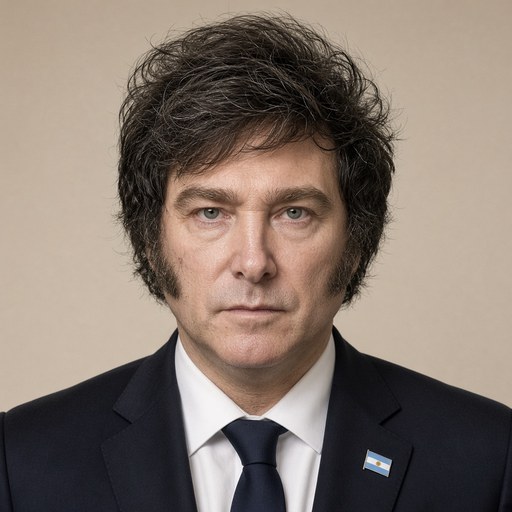
Words of the President of the Nation, Javier Milei, at the presentation of the Cultural Center Palacio Libertad Domingo Faustino Sarmiento.
 Javier Milei · President of Argentina
- Context
- Milei addressed the inauguration ceremony of the Cultural Center Palacio Libertad Domingo Faustino Sarmiento in Buenos Aires on October 12, 2024, marking 156 years since Sarmiento's presidency.
- Main themes
- Domingo Faustino Sarmiento legacy, renaming of Palacio Libertad, education reform, historical revisionism, university funding and audits, human capital theory, childhood poverty and illiteracy, liberal nationalism, critique of socialism, social mobility, public university debate, Argentine national heroes
- Duration
- ~13 min
- Words
- 1,505
- Sentences
- 63
- Readability
- 49
- Grade
- 12.1
- Syntax
- 3.14
- Vocabulary
- 2.21
Translated from Spanish
The broad sphere of national life a sentence belongs to. Every sentence has an Arena, so it is the denominator the other indices are read against.
Other63 sentences in 13 paragraphs
Hello everyone! Welcome to one of the first steps to change the history that they wanted to prostitute, changing names and tarnishing the great heroes of this homeland. It is a pleasure to be here with all of you inaugurating the Palacio Libertad Domingo Faustino Sarmiento. For some, it may just be a simple name change, but for us, it is the beginning of a new stage where we exalt the figure of our greatest patriots and national symbols, leaving behind the cult of the politicians who dragged the country into decadence and humiliation.
Taking this opportunity, I would like to commemorate that today marks 156 years since Domingo Faustino Sarmiento assumed the presidency of the Argentines. His presidency is among the most important in our history because it was fundamental for the consolidation of our nation.
Sarmiento took a country with a 90% illiteracy rate, built 1,800 schools, and quadrupled the school population. As a result of his educational proposal and the economic progress that that liberal generation ensured, a few decades later, Argentina became the first people in human history to eradicate illiteracy. In other words, we literally made civilization out of barbarism.
Without a doubt, Sarmiento was the first thinker to develop the theory of human capital, which both liberals and, for example, Professor Espert, admire so much from Gary Becker, who articulated it in microeconomic analysis.
Despite the important role that Sarmiento played in our history, today those who dare to question him, after his death, seek to impose an absurd historical revisionism about his figure and presence, rejecting his enormous legacy. Just as they tried to do with Roca and many other heroes of that generation. The same ones who carried out the attempt to demonize the father of the classroom are the same ones who now pretend to tear their garments for education and take students hostage in their desperate attempts to maintain their privileges. And it is also these same people who promoted the cultural, social, and economic model that has set Argentina back in recent decades. Just to put it in numbers… To show you the disaster they have caused by contaminating socialism and everything they touch. Based on the Aprender tests from 2023, we now know that about 40% of primary school children perform poorly in language and about 50% perform poorly in mathematics. Regarding secondary school, of those who are in the level, 8 out of 10 have reading comprehension problems; they do not understand what they read, and of those who finish, only 4 can understand a text. Consequently, if we add to that the problems we have in terms of nutrition and poverty, to the point that seven out of ten children aged 0 to 14 are poor, they are misplacing the focus on the end of the educational journey. When we have problems with the formation of basic human capital, because the children do not eat and, at the same time, cannot study afterwards. However, they continue to try with the same model that failed more than 100 years ago, something we have come to put an end to and to stand the nation up.
Throughout the campaign, you have heard me say that we prefer an uncomfortable truth to an uncomfortable lie. The uncomfortable truth in Argentina is that the national public university serves no one but the children of the upper class and the children of the upper middle class, in a country where the vast majority of children are poor, where they cannot read or write or perform a basic mathematical operation, the myth of free university becomes a subsidy from the poor to the rich, whose children are the only ones who reach university with the resources, culture, and time necessary to study.
The university has ceased to be a tool for social mobility to become an obstacle to it. If those who defend universities truly believed in social mobility, they would take Sarmiento's example. Instead of defending a university for the rich, they would defend initial education for all. Furthermore, they could allow for audits, because this is not about the issue of public and free university; it is not up for discussion, it is not part of the discussion. The part of the discussion is that resources are scarce and, under any slogan, stealing is always wrong. We want to put an end to the leaks of money that enter the university and what really reaches the students and professors, and not what stays in the middle, for example, with expensive cars worth 90,000 dollars and tremendous drivers who earn 13 million pesos.
That is why we want to audit them. Not because we want to close the universities as they lie to the people, but because we also want to take care of them, taking care of the resources, and for that, they need to be audited. But as I would say at the beginning of a revelation: "If you do not want to be audited, it must be because you are dirty." Therefore, gentlemen, stop deceiving the Argentines and tell them the truth that you do not want to be audited to maintain your scams. And in this way, you use and prostitute a noble cause to continue defending the theft of some political groups.
Therefore, when we finish with these thieving criminals and liars, we will be once again facing true upward social mobility. But the reality is that they are not interested in social mobility or education. They are only interested in their coffers to maintain their privileges while waving noble flags that allow them to atone for their guilt. Well, we do care about progress.
In fact, I have mentioned several times that, as an economist, I have decided to specialize in economic growth. Let’s say that the first formal model, so to speak, and tested, aside from Adam Smith having developed a model and different authors, but who formally articulated the model was Robert Solow, in 1956, who tested it in 1957. The model only explained 15% of growth. Then, from the University of Chicago, George Stigler, who was the head of the economics department, said: "The problem is that the model does not map because it omits human capital." And there emerged two lines of analysis of human capital: on one hand, the macroeconomic line, which was led by Ozawa, who was the thesis advisor of one of the greatest economists in Argentine history, named Miguel Sidrauski, and who also guided Robert Lucas Jr., who won the Nobel Prize in Economics in 1987. On the other hand, there is the microeconomic human capital line, which was developed by Gary Becker. That debate, however, was dominated by the MIT line, by Samuelson and Solow, and only considered the idea of technological progress in an exogenous way, which is why that literature fell into ostracism, into oblivion, until, by the late 1970s, Robert Lucas Jr. began to propose that the real question in economics was economic growth. He takes up Adam Smith's legacy and tries to explain economic growth. The one who finds the solution in 1983 is a Chicago graduate named Paul Romer. And from there, the theory of endogenous growth is constructed, which generates a great debate; a debate that, for economic theory, is basically settled in 1989 with an article by David Romer, Weil, and Mankiw. Guess what they discover? That when they include economic growth, it explains 90% of what happens in the economic growth of a country. That is to say, if there is someone who is convinced of the importance of human capital, it is me. If there is someone who is convinced of the value of education, it is me. And that is why I created the Ministry of Human Capital. Stop lying, criminals who do not want to be audited.
That is why, today, 156 years after the presidential assumption, I want to reaffirm that Sarmiento remains one of our great guides, even if it displeases Julio Argentino Roca, Urquiza, Mitre, Avellaneda, Pellegrini, and, above all, Juan Bautista Alberdi. Because we have the titanic task of re-establishing the foundations for the economic, social, and cultural development of the nation, just as that generation of patriots did, which are nothing more than the foundations for the full exercise of freedom for each of the Argentines. That is the only way to honor our heroes, with a work worthy of theirs, that places the country back on the path to prosperity.
And we will not stop until we achieve it. To those who want to attack the ideas of freedom, which are undoubtedly the ideas of progress, I remind you of what Sarmiento said when he was forced into exile by the intolerance and proscription of the Rosas tyranny: "Ideas cannot be killed."
Therefore, God bless the Argentines, may the forces of heaven accompany us, and long live freedom, damn it! Long live freedom, damn it! Long live freedom, damn it! Thank you very much.
The original Spanish. The tags above are read on the English translation's sentences.
¡Hola a todos! Bienvenidos a uno de los primeros pasos para cambiar la historia que quisieron prostituir, cambiando los nombres y ensuciando a los grandes héroes de esta patria. Es un placer estar aquí con todos ustedes inaugurando el Palacio Libertad Domingo Faustino Sarmiento. Quizás para algunos sea solo un simple cambio de nombre, pero para nosotros es el inicio de una nueva etapa donde enaltecemos la figura de nuestros más grandes próceres y símbolos nacionales, para dejar atrás el culto a los políticos que arrastraron al país a la decadencia y a la humillación.
Aprovechando la oportunidad, me gustaría conmemorar que hoy se cumplen 156 años de la asunción de Domingo Faustino Sarmiento como presidente de los argentinos. Su presidencia se encuadra dentro de las más importantes de nuestra historia, porque fue fundamental para la consolidación de nuestra nación.
Sarmiento tomó un país con una tasa de analfabetismo del 90%, construyó 1.800 escuelas y cuadruplicó la población escolar. Producto de su propuesta educativa y del progreso económico que aquella generación liberal aseguró, algunas décadas después, Argentina se convirtió en el primer pueblo de la historia humana en erradicar el analfabetismo. O sea, literalmente, hicimos civilización de la barbarie.
Sin lugar a dudas, Sarmiento fue el primer pensador que desarrolló la teoría del capital humano, que tanto los liberales como, por ejemplo, el profe Espert, tanto admiramos de Gary Becker, quien lo plasmó en el análisis microeconómico.
A pesar del importante rol que supo ocupar Sarmiento en nuestra historia, hoy quienes se atreven a cuestionarlo, después de muerto, pretenden instalar un absurdo revisionismo histórico sobre su figura y su presencia, rechazando su enorme legado. Tal como quisieron hacerlo con Roca y muchos otros próceres de esa generación. Los mismos que llevaron a cabo el intento de demonización contra el padre del aula, son los mismos que pretenden ahora rasgarse las vestiduras por la educación y toman a los alumnos de rehenes en sus desesperados intentos por mantener sus privilegios. Y también son estos mismos quienes promovieron el modelo cultural, social y económico que atrasó a la Argentina en las últimas décadas. Solo para ponerlo en datos… Para que vean el desastre que han causado contaminando el socialismo y todo lo que tocan. En función de las pruebas Aprender del 2023, hoy sabemos que de los chicos de primaria, cerca del 40% tiene un mal desempeño en lengua y cerca del 50% un mal desempeño en matemática. En lo que tiene que ver con el secundario, de los que transitan el nivel, 8 de 10 tienen problemas de lectocomprensión; no entienden lo que leen, y de los que terminan, solo 4 no logran entender un texto. Consecuentemente, si a eso le sumamos los problemas que tenemos en términos de alimentación y pobreza, a tal punto que siete de cada 10 chicos de 0 a 14 años son pobres, están poniendo muy mal el foco sobre el final de la carrera educativa. Cuando tenemos problemas de formación de capital humano básico, porque los chicos no comen y, al mismo tiempo, después no pueden estudiar. Sin embargo, siguen intentando con el mismo modelo que fracasó hace más de 100 años, algo a lo que nosotros venimos a ponerle fin y a poner de pie a la nación.
Durante toda la campaña, me han escuchado decir que preferimos una verdad incómoda a una mentira inconfortable. La verdad incómoda en la Argentina es que la universidad pública nacional no le sirve a nadie más que a los hijos de la clase alta y a los hijos de la clase media alta, en un país donde la gran mayoría de los niños son pobres, donde no saben leer ni escribir ni realizar una operación matemática básica, el mito de la universidad gratuita se convierte en un subsidio de los pobres hacia los ricos, cuyos hijos son los únicos que llegan a la universidad con los recursos, con la cultura y el tiempo necesarios para poder estudiar.
La universidad ha dejado de ser una herramienta de movilidad social para convertirse en un obstáculo para la misma. Si los que defienden las universidades realmente creyeran en la movilidad social, tomarían el ejemplo de Sarmiento. En vez de defender una universidad para ricos, defenderían una educación inicial para todos. Además, podrían permitir que se audite, porque aquí no está en juego la cuestión de la universidad pública y gratuita; no está en discusión, no es parte de la discusión. La parte de la discusión es que los recursos son escasos y, bajo cualquier consigna, siempre robar está mal. Queremos terminar con las filtraciones del dinero que entra en la universidad y con lo que realmente llega a los alumnos y a los profesores, y no lo que se queda en el medio, por ejemplo, con autos caros de 90.000 dólares y tremendos choferes que cobran 13 millones de pesos.
Por eso los queremos auditar. No porque queramos cerrar las universidades como le mienten a la gente, sino porque además los queremos cuidar, cuidando los recursos y para eso hay que auditarlas. Pero como diría al principio de revelación: “si no quieren ser auditados deben ser porque están sucios”. Por lo tanto, señores dejen de engañar a los argentinos y díganles la verdad que no quieren ser auditados para mantener sus curros Y de esa manera utilizan y prostituyen una causa noble para seguir defendiendo el robo de algunas agrupaciones políticas.
Por lo tanto, cuando terminemos con estos ladrones delincuentes y mentirosos, ahí vamos a estar nuevamente frente a la verdadera movilidad social ascendente. Pero la realidad es que no les interesa la movilidad social, ni la educación. Les interesan solamente sus cajas para mantener sus privilegios, mientras enarbolan banderas nobles que les permiten expiar sus culpas. Bueno, a nosotros sí nos interesa el progreso.
De hecho, varias veces he mencionado que, como economista, he decidido especializarme en crecimiento económico. Digamos que el primer modelo formal, por decirlo de alguna manera, y testeado, al margen de que Adam Smith había desarrollado un modelo y distintos autores, pero quién lo plasmó formalmente el modelo fue Robert Solow, en el año 56, que lo testeó en el 57. El modelo solamente explicaba el 15% del crecimiento. Entonces, desde la Universidad de Chicago, George Stigler, que era el jefe del departamento de economía, dijo: "El problema es que el modelo no mapea porque omite el capital humano". Y ahí salieron dos líneas de análisis del capital humano: por un lado, la línea macroeconómica, que fue liderada por Ozawa, quien fue el tutor de tesis de uno de los más grandes economistas de la historia argentina, que se llamó Miguel Sidrauski, y que, además también, fue el que guió a Robert Lucas Jr., quien ganó, justamente, el premio Nobel de economía en el año 87. Por otro lado, está la línea de capital humano de nivel microeconómico, que fue lo que desarrolló Gary Becker. Ese debate, sin embargo, quedó dominado por la línea del MIT, por la de Samuelson y la de Solow, y solamente se consideró la idea del progreso tecnológico en modo exógeno, motivo por el cual esa literatura cayó en el ostracismo, en el olvido, hasta que, ya a fines de los años 70, Robert Lucas Jr. empezó a plantearse que la verdadera pregunta en economía era el crecimiento económico. Retoma el legado de Adam Smith y trata de explicar el crecimiento económico. Quien le encuentra la vuelta en el año 83 es un graduado de Chicago llamado Paul Romer. Y a partir de ahí se construye la teoría del crecimiento endógeno, que genera un gran debate; debate que, para la teoría económica, queda zanjado, básicamente, en el año 89 con un artículo de David Romer, Weil y Mankiw. ¿Adivinen qué descubren? Que cuando meten el crecimiento económico se explica el 90% de lo que ocurre en el crecimiento económico de un país. Es decir, con lo cual si hay alguien que está convencido de la importancia del capital humano soy yo. Si hay alguien que está convencido del valor de la educación soy yo. Y por eso creé el Ministerio de Capital Humano. Dejen de mentir delincuentes que no quieren ser auditados.
Por eso, hoy, 156 años después de la asunción presidencial, quiero ratificar que Sarmiento sigue siendo una de nuestras grandes guías, aunque les pese a Julio Argentino Roca, a Urquiza, a Mitre, a Avellaneda, a Pellegrini y, sobre todo, a Juan Bautista Alberdi. Porque tenemos la titánica tarea de volver a sentar las bases para el desarrollo económico, social y cultural de la nación, tal como lo hizo aquella generación de patriotas, que no son otra cosa que las bases para el ejercicio pleno de la libertad de cada uno de los argentinos. Esa es la única manera de honrar a nuestros próceres, con una obra a la altura de la suya, que coloca al país en la senda de la prosperidad nuevamente.
Y no vamos a parar hasta lograrlo. A aquellos que quieran atentar contra las ideas de la libertad, que son, sin duda, las ideas del progreso, les recuerdo lo que decía Sarmiento cuando fue obligado a exiliarse por la intolerancia y la proscripción de la tiranía rosista: "Las ideas no se matan".
Por lo tanto, Dios bendiga a los argentinos, que las fuerzas del cielo nos acompañen, y ¡Viva la libertad, carajo! ¡Viva la libertad, carajo! ¡Viva la libertad, carajo! Muchísimas gracias.