




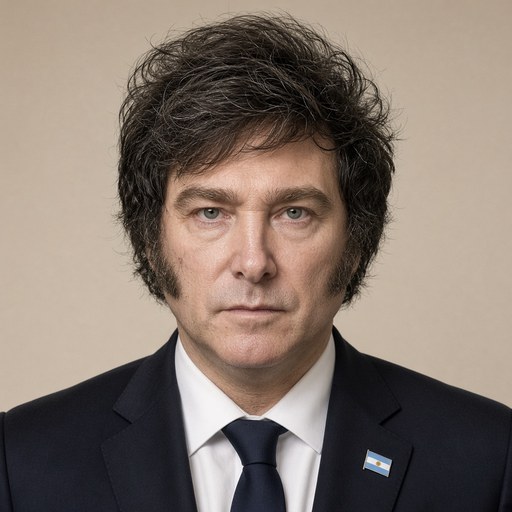
Words of the President of the Nation, Javier Milei, at the XXXV Plenary Assembly of the Business Council of Latin America (CEAL), Buenos Aires.
 Javier Milei · President of Argentina
- Context
- Milei addressed the XXXV Plenary Assembly of the Business Council of Latin America (CEAL) in Buenos Aires on October 9, 2024, outlining Argentina's economic transformation.
- Main themes
- Economic paradigm shift, libertarian liberal governance, fiscal reform, country risk reduction, monetary stability, business investment, Argentina's economic history, social justice critique, Keynesianism rejection, GDP growth, political change, property rights
- Duration
- ~41 min
- Words
- 4,873
- Sentences
- 155
- Readability
- 51
- Grade
- 13.8
- Syntax
- 3.49
- Vocabulary
- 1.99
Translated from Spanish
The broad sphere of national life a sentence belongs to. Every sentence has an Arena, so it is the denominator the other indices are read against.
Other155 sentences in 26 paragraphs
Good morning everyone: to begin, I want to greet and thank the authorities of CEAL for organizing and inviting us to this event, and also to all the businesspeople - present here - for betting and continuing to bet on investment and trade, both in this country and in the rest of the countries in the region.
We are gathered here today - in this space - around a common vision regarding life, which relates to the role that businesspeople play in society, and - as the title of this XXXV assembly indicates - the economic paradigm shift that Argentina is undergoing and which we hope will spread to the rest of the region and also to the world. We speak of a paradigm shift because, to put it simply, Argentina - 10 months ago - decided to leave behind the recipes that impoverished it for more than 100 years, to start applying the ideas of freedom, growth, and progress, which are the same ideas that have lifted 90% of the world's population out of poverty in the last 300 years.
There is an old saying that goes: “credibility and trust go up the stairs, but come down in the elevator.” And Argentina's credibility - after being the greatest serial defaulter in modern history - and incurring in a century of practically uninterrupted fiscal deficits and systematic violations of property rights has been completely destroyed over the last 40 years. Imagine how bad things were that, in the country of the so-called “social justice,” which is unjust and has nothing social about it because it is deeply antisocial, as it is based on theft and treating everyone equally before the law, citizens chose the first libertarian liberal president in history, without a political party, governors, or mayors. Obviously - under normal pressure and temperature conditions - there are no libertarian liberal presidents. So basically, they had to do many things wrong for me to be here.
In fact, in my other life - when I used to give economics lectures - I said that I was a type 2 error, because I did everything wrong and it turned out well, and you can imagine, in general, economists are not very popular people; moreover, if you look within economists themselves, there is a group of nerds, who are the ones who do Mathematical Economics, and on top of that, I specialized in economic growth - in a country that is sick with Keynesianism, that is, that thinks only in 5-minute terms… I just remembered something else that I can't replicate. And I, who think in terms of 100 years, 200, 1,000, 2,000, I went… No, it's a joke, it's part of the act and also being liberal, in a country that has been - basically - contaminated by more than 100 years of socialism. So I truly did everything for people to hate me, but it turned out wrong and I ended up being president, the most voted in history.
But - clearly - at the bottom, what one must understand is that the people said: “enough,” to the politicians and their games, and they said it seriously. Because such a slap in the face to politics and the analog red circle means that - truly - people are very tired and have really gotten tired. In the 10 months that we have been in government, we have embodied this paradigm shift in management; we have made significant progress in macroeconomics, we have recovered monetary stability, which is the foundation for having a healthy growing economy; we are reducing the structural cost of the Argentine economy, which - at the expense of taxes and regulations - has exponentially increased the prices of all goods and services in our economy. And as a result of this change in direction, we are steadily establishing trust in our country with a Country Risk, which was - around 3,000 basis points - at the time of the elections and which - yesterday - basically broke below 1,200 basis points. And this is important because we have it valued, in terms of GDP, which is no small matter because if the Country Risk were around 3,000 basis points, which is returning to the fiscal policy of the fiscal degenerates of politics, that would imply a GDP of 400 billion dollars.
And with this fiscal policy scheme we have, today - at today's prices - with the Country Risk, not from this week, but from a week ago, the GDP is 600 billion dollars, that is, returning to the bad fiscal policy would cost us 200 billion dollars. That is, it is not only a lower GDP, but it is a lower per capita GDP. In fact, the budget discussion - if one had done it seriously - not approving expenses, without considering resources, which violates the State Financial Administration Law and, moreover, in the Senate they also violated the Senate statute, look at what is interesting, what the increase for universities would imply that - in the end - would be yielding to the old politics, to the old way of doing politics, of ignoring the Budget restriction. And that would imply going back to the old ways and returning to the levels of Country Risk that we had with Kirchnerism, with which we would go from a GDP of 600 billion dollars to one of 400 billion dollars. That is, we would be losing a third of the GDP. So - when you take resources for universities - if you take the case of 600 billion without the increase, and take the increase with the 400 billion, the numbers are - more or less - tied, but in the middle you reduced the per capita GDP, we lost a third of the GDP and, moreover, when you take the impact, on the GDP in dollars, and on the GDP in pesos, the impact on the GDP in pesos is a third - or real GDP - that is in dollars. This means that - in the middle - there is a jump in the real exchange rate, which not only causes the GDP to fall, the per capita GDP to fall, but also exacerbates the increase in the poor and indigent due to the rise in the real exchange rate.
So, what are we talking about? And that is - yes, if the claim were genuine - if in the middle we consider that it is a mere euphemism to defend the scams of three or four criminals, who use a noble cause and prostitute it to make money, at the expense of robbing students and professors and what has to do with buildings and so on, I think there is not much more to discuss. And we have come to do things right, regardless of what public opinion says or the fear that many have of telling the truth. We have come to put an end to the scams and - in the end - if they were clean, what is the problem with auditing them, if they were clean? It has been almost 10 years since they last did an audit and all we are asking is to audit them, but it seems that this puts public education at risk. No, on the contrary, it is to value public education; that is, if they were clean, the principle of revelation would say that - clearly - they could show the numbers, but they do not want to do it and there must be a reason for that.
But what I want to make clear is that going back to the old ways is not free, it is - at least - losing a third of the GDP or, if I wanted to put it in terms of achievement, this drop in Country Risk allows us to go from a GDP of 400 billion dollars to one of 600 billion dollars, just by the effect it has on the value of assets, the drop in Country Risk, and what it allows - in terms of macroeconomic coordination - which is 50% more. Look at that little number, huh, there is no management… but - as I said - the consequences of all this are starting to be seen, for example, with an unprecedented credit boom. In November there were not even installments in retail stores and - today - there is mortgage credit, for 30 years, as if we were Singapore, accompanied by personal and business loans. That is, if you remember - in November, December - we were discussing hyperinflation; we were seeing how we could get through day by day. Today one of the greatest tools for upward social mobility is returning, which is buying a property and it can be done, for 30 years. Therefore, see how we have changed the macroeconomic context.
I am not going to go over all the numbers, which I usually give regularly, but I do want to mention the inflation figure, because - when one takes the wholesale inflation index for the month of December - which was 54 percent, that implied that annualized it was 17,000; and all the monetary conditions were given for that, if there was validation, and it is an indicator that anticipates retail inflation. Moreover, the last record, of the wholesale was 2.1 percent, that is, 28 percent annual would be. Look at how we have done a titanic job fixing the monetary problem and that, therefore, this is what explains that there can be another time horizon for investments in Argentina. At the same time - in terms of investment - the RIGI continues to sow announcements, throughout the country, with very positive projections for the trade and energy balance, from here on out. The first phase of the popular amnesty that we promoted has exceeded all expectations, even surpassing the first phase of the amnesty of the Macri administration, which had already been a success. That is, when you look at the deposits - in dollars - the number is truly staggering, like what is happening.
But sometimes, it seems that - I don't know if there is a lack of historical perspective or ignorance or bad intention or all together at once - as a result of this the deposits - in dollars - in the private sector are today at record levels. Day by day, it is becoming easier to set up a business in Argentina, and we all know what happens with wages when there are more companies competing with each other to attract the same number of workers. In this sense, we continue to work, every day, untangling the Gordian knot that the exegeses of the impoverishing model built. All this in order to continue climbing steps - in terms of economic freedom - that will bring us more savings, more investment, more growth, and greater prosperity.
I often say - repeatedly - that we work to be the freest country in the world. In fact, the reform of the Bases Law, plus DNU 70/23 allows us to have a leap - in terms of economic freedom - of almost 90 places. Thus, we would be at levels similar to countries like Germany, Italy, and France. But that is not enough for us, as we have 3,200 pending reforms, and you can see the enormous task that our colossal Minister of Deregulation, Federico Sturzenegger, is carrying out.
And when you see, day by day, you will realize that, without a doubt, when we finish this term, we will be the freest country in the world, with what that implies, in dynamic terms. So, basically, I do not want to stop to make a detailed recount of our brief management, which you have already heard on other occasions, but I do want to emphasize telling you where this ship is headed, which is nothing other than to be the freest country in the world. Many times, when I use this expression, I am labeled as crazy and other things. I also said this in an interview: what is the difference between a genius and a madman? Success.
When I say that I would like to reach levels of quality of life similar to those of Australia, everyone screams as if it were an impossible feat. Let me tell you something about Australia, a country that I also admire and for which I have great affection, but Australia was a nation founded by convicts; that is, they went from being the discard of England to becoming global leaders. And Argentina used to be the country with the highest per capita GDP in the world, in 1895, in the Angus Madison series. If the Australians could do it, why couldn't we, if we already did it 100 years ago, why couldn't we do it again? Let’s think that when Argentina was born - as Argentina - in 1860, strictly, with the unification of Buenos Aires, Argentina was a country of barbarians and in 35 years it became the world's leading power. If we could do it - in the 19th century - why can't we do it now that we also have better technological conditions globally? We must dare, we must break free from mediocrity.
That is to say, an Argentina that is a power with living standards similar to Australia, New Zealand, Italy, Spain, the United States, or, if you prefer, Ireland, is not only not a crazy idea, but it is the manifest destiny if we maintain this path. Do not doubt it: that is our destiny, if we manage to respect some basic precepts of the economy such as fiscal balance, monetary stability, and also if we manage to defeat that multi-headed Kraken, which is the Argentine cost; a country where inflation will be just a bad memory, and believe me, I will achieve it, where Argentines will have regained the ability to make economic calculations and each person will be able to plan, save, invest, and be the master of their own destiny; a country where it is the producer and not the State that chooses which inputs to use, whom to hire, to whom to sell, and at what price; a country where cutting-edge technology can be imported to improve competitiveness without paying two or three times its value, due to confiscatory tariffs; a country where everyone can enjoy the fruits of their labor, without fear of being robbed or—even—killed for something as basic as a cellphone; a country where televisions can be bought outright and a house in installments, and not the other way around, as was the case until very recently here; a country where one does not have to cross the border to get a good quality pair of sneakers at a good price; a country with minimal taxes, rewarded with quality services, not with municipalities, provinces, and a voracious National State charging the same tax three times to provide miserable services three times; a country where there is no talk of extraordinary profits to charge you more taxes when you had a good year because if the moral end of every business is to make money, how can a profit be extraordinary?
Here I want to make a point because I find it interesting. There is nothing more abhorrent than talking about this concept of charging more on extraordinary profits and so on. Suppose you have an economy with two sectors: I will make it simple, and—for some reason—either because people's preferences changed or because there was a problem that caused a negative shock to the supply of one of the goods, you have a change in relative prices. I don’t know, suppose, I don’t know, an earthquake comes and part of the economy is lost; obviously, the goods that were linked to that sector will contract in supply and that will cause the price to be higher; that is, that relative price, in that sector, will be higher. The same thing happened when the mask problem arose, that is, now that higher relative price, that extraordinary profit, is actually a signal that is telling where to allocate capital, where to move capital, how to reallocate capital. Therefore, if you punish that extraordinary result, what you are doing is making it difficult and putting obstacles in the way of solving the problem; that is, you need that price signal to flow so that resources can be reallocated and thus solve the problem. This is the same discussion as the real exchange rate, which is already a nuisance… fortunately, the econochantas have calmed down quite a bit. Let’s see, if I have fiscal balance, I have a constant amount of money, I don’t have elements of economic policy that are generating an artificial problem, now if I have a problem in the sector, and I will do it with an example. Suppose I have an economy of tradables and non-tradables, and for some reason, I don’t know, an earthquake comes and breaks half of the non-tradable sector. That would cause the price of non-tradables, what has to happen? It has to rise. So, what? In the logic of the econochantas, they would be telling me that the real exchange rate is appreciated because the price of non-tradables is rising a lot, so how would the econochantas want to fix it? Devalue, devalue, devalue, the exchange rate is lagging, devalue, devalue. It’s interesting because if I devalue, that is, I listen to them and devalue, what is the problem? The problem is that I needed to send resources to the non-tradable sector and by devaluing what I do is break the price signal and, therefore, I never end up solving the problem. That is to say, Argentina has had that problem since we have that damned institution—called the Central Bank of the Argentine Republic—and they use the Central Bank to correct problems in the real sector. No, real sector problems are solved in the real sector. That is to say, the only thing the Central Bank can do is keep inflation in check, something we actively work on.
So, if I violate that signal, what happens to me is that I stop the amount of money, I end up with the fiscal deficit, and obviously, the recomposition of relative prices will make non-tradables more expensive; why? Because for more than 70, 80, almost 100 years, I dedicated myself to breaking the price signal, that is, it is not free. This is also important because—then—when that extraordinary benefit appears to that entrepreneur who is reaping that extraordinary benefit, instead of pursuing him, I should be giving him a reward, I should be carrying him in triumph; that is, again, think about the need for masks in the middle of the pandemic; yes, of course he is going to make a lot of money, if there is a furious reallocation of demand. But that guy is the one who is solving the problems for me, he is the one who is generating a greater quantity of masks. On the other hand, what happens if the State intervenes and starts to manipulate prices, what happens? There will be less, and on top of that, because resources want to move from sector A to sector B, but since I am capping the price, sector A is going to be destroyed, but sector B is not going to expand.
So, that idea filled with envy and resentment, we must combat it, from now on, because the one who makes money is a hero, he is a social benefactor because he does it by selling better quality goods, at a better price. So, this is not minor: because if Argentina is going to start generating a process of strong economic growth, as you begin to generate that process, extraordinary profits will be generated. And let’s not give space to the damn leftists who come to say that this is wrong. Because they, who are based on envy, hatred, and resentment, will come to annoy us with the Gini coefficient, inequality, and—in reality—those guys, who are capturing the great benefits, are the ones who will make Argentina a great country again. So, let’s fight that battle. I know I am straying from the original speech, a thousand apologies, but I would love to read your signs, but there is an effect called years, and I can’t see. I would love to be able to read you, let’s see what it says? Yes, I have many demands, there are many people proposing that I go to other countries to do the same. I will have a nationality problem.
So, I present this openly because it is the debate that is coming, looking to the future. That is to say—from now on—all the news that the Argentine economy will give will be good. Moreover, if you take even the worst number that came out, the last one which was about poverty, if you break it down between the first quarter and the second quarter, poverty did indeed touch 56%, but then, in the second, it fell to 51, and do not doubt that for the third quarter it will be at 49. That is to say, if I take the activity data, the last EMAE indicator gave 1.7. If I take—the seasonally adjusted—last data, against December, the GDP drop is 0.6; nothing if we consider that we just made the largest fiscal adjustment in the history of humanity.
Moreover, it is a heroic exercise, it does not mean that I am talking about the number I am going to give, I clarify, but so that you have an idea of the speed. An economy when it grows strongly, let’s suppose, by 5%—the seasonally adjusted—grows 0.4 monthly; the last data gave 1.7. That means that the speed, which the last data showed, in an economy like that moves at a rate of 23 percent. That is to say, you realize. Because the other day I received a reference from a certain stupid journalist, and I say it in these terms so that they cannot know if I am talking about a man or a woman, but he did it, in a prime time program, at minute 47; that’s how it is—as you will see we have them well calibrated—those criminals are well calibrated. But don’t think that you will have to go looking in hostile places on the grid, be careful. That said, the number that was published—yesterday—of 1.5 is excellent, and yet, what do they do? You have an economy that was being destroyed, that was heading towards hyperinflation, that we were on the way to exploding poverty, that we were on the way to destroying the level of activity… because I warn you that an adjustment that was half of what we did was the one Duhalde did; I tell you that GDP fell by 11 percent and, in the second quarter, which was when he did it fully, it fell by 16. Look at the numbers we are talking about.
So it is clear that when you have the drop, if you compare it against the same month of the previous year, it will give you negative. Well, the person in question focused entirely on that and not on the monthly indicator—seasonally adjusted—that is showing the exit. This is so you can see the bad intentions they have, because—besides—one thing is that one makes a mistake once, twice, now they always make a mistake and always on the same side; an econometrician—I would tell you—that is called autocorrelation, but nothing, let’s better get out of there. But—in short—what I want to promote is a country anchored in three fundamental principles, which are: the right to life; the right to liberty; and the right to property for all Argentines.
All this implies a new role for entrepreneurs in the Argentina to come. I will say it very clearly: I should not and cannot, that is, I should not—in moral terms—and I cannot because, given the fatal arrogance, be the one to command the decisions that you must make. It must be you who make them, knowing that on this side there is a Government that supports you and that is willing to do everything to do things right, otherwise see what I am fighting for to defend zero deficit or what I am fighting for to maintain zero issuance and everything we are doing deregulating every day so that, precisely, every day it is easier to invest in Argentina. We will persist in our mission, even if the consequence is ostracism, because, as Cicero said: “the disrepute acquired by doing what is right is not disrepute at all, but glory.” So, to you, I say: take risks, invest, innovate, and bet on industry and commerce because in the new Argentina the words effort and merit have real meaning and will be rewarded.
We came to reconvert Argentina into the great power it should never have stopped being, and we know that the key to achieving this is trade, which turns enemies into customers and competitors into collaborators. That is why I do not come here to appeal to your humanity, but to your own benefit; whose pursuit results in benefits for society. This is Adam Smith, transformed a bit, but it is an adaptation, version 2024.
Now I will deal—with again—the leftist ideology. Today I caught them in a good mood. There is a phrase—repeated to the point of nausea by the well-meaning left—that says: “no one saves themselves alone.” And what the left does not understand is that the market is—precisely—their demonstration. And this surprises me, that if you ask an economist, an economist also does not know what the market is. This is serious because to ask what the market is and for them to answer trying to put—in words—a supply and demand curve speaks very poorly of the professional in question. The market is a process of social cooperation, where individuals voluntarily exchange property rights. That is the market. In fact, if you understood it this way, there is a whole part of the literature that you would eradicate. Why? Because market failures could not exist, because for market failures to exist there should be coercion, but if there is coercion, then they are not voluntary, which violates the definition of the market. Notice why Alberto Benegas Lynch (son) defines liberalism as: “liberalism is the unrestricted respect for the life project of others, based on the principle of non-aggression and in defense of the right to life, liberty, and property.” Therefore, there can be no coercion, because if you are coercing, you are curtailing freedom or impacting property rights. In that sense, the first thing that these people fail at is that they do not know what the market is, and the truth is that many economists do not know it either.
So, there is a wonderful report by Alejandro Fantino, my former competitor, from the runoff election, who tells him, and what are you going to say, that the market is going to make the sewer or the path for such a person in a vulnerable sector, and Fantino says to him: “to put an end to the nonsense that the market saves you, but excuse me, we have been doing the opposite for 40 years and they still don’t have it,” with which we charge them taxes, we charge them for everything and the result is not there, so at least, I am not going to have anything, but – at least – I have more money in my pocket. Besides the fact that I can coordinate with other people and do it. So, in a free market, to be able to save ourselves, we must be useful to a third party, providing goods or services of better quality, at a better price. This triggers a virtuous circle in which everyone benefits mutually. Back to the idea of the invisible hand. I mean, today I’m with dad, I’m intense. I mean, yesterday I took out the Scottish flag and took it for a walk. It must be because I started listening to Rod Stewart, another Scot. In turn, it is the multiplication of wealth that allows us to carry out the greatest works of charity and philanthropy known to humankind. It is not by receiving benefits, but by providing services that we make the whole grow.
That is why, in honor of the great fathers of this Homeland, we want to redirect Argentina towards a path of sustained growth. Because, as Pericles said: “those who demonstrated their worth through deeds should receive their tribute through deeds.” We did not come to fill our mouths inaugurating squares, cultural centers, or poorly maintained roads with the names of Alberdi, Roca, or Sarmiento; we came to lift the testimony that 100 years of infamy let fall and thus put Argentina back as a protagonist in the history of the world, as it always should have been. Thank you very much to everyone.
May God bless the Argentines, may the forces of heaven accompany us. Long live freedom, damn it!
The original Spanish. The tags above are read on the English translation's sentences.
Buenos días a todos: para comenzar, quiero saludar y agradecer a las autoridades del CEAL por la organización y la invitación a este evento, y también a todos los empresarios - aquí presentes - por haber apostado y seguir apostando a la inversión y al comercio, tanto en este, como en el resto de los países de la región.
Nos congrega hoy - en este espacio - una visión común respecto de la vida, que tiene que ver con el rol que cumplen los empresarios, en la sociedad, y - tal como acusa el título de esta XXXV asamblea - el cambio de paradigma económico, que está atravesando la Argentina y que esperemos contagia el resto de la región y también al mundo. Hablamos del cambio de paradigma porque dicho en pocas palabras, Argentina - hace 10 meses - decidió dejar atrás las recetas que lo empobrecieron, por más de 100 años, para empezar a aplicar las ideas de la libertad, del crecimiento y el progreso, que son las mismas ideas que sacaron al 90% de la población mundial, de la pobreza, en los últimos 300 años.
Hay un antiguo refrán que reza: que “la credibilidad y la confianza suben por la escalera, pero bajan por el ascensor”. Y la credibilidad argentina - tras ser el mayor defaulteador serial de la historia moderna - e incurrir en un siglo prácticamente ininterrumpido de déficit fiscal y violaciones sistemáticas de los derechos de propiedad se destruyó completamente, los últimos 40 años. Imaginen lo mal que estaban las cosas que, en el país de la mal llamada “justicia social”, que es injusta y que no tiene nada de social porque profundamente antisocial, porque parte de un robo y de un trato es igual frente a la ley, los ciudadanos eligieron el primer presidente liberal libertario de la historia, sin partido político, ni gobernadores, ni intendentes. Obviamente - en condiciones normales de presión y temperatura - no hay presidentes liberales libertarios Así que hay que – básicamente - tuvieron que hacer muchas cosas mal para que yo esté acá.
De hecho, en mi otra vida - cuando daba conferencias de Economía - decía que yo era un error tipo 2, porque hice todo mal y me salió bien, y ustedes imagínense, en general, los economistas no son personas muy populares que digamos; además si ustedes miran dentro de los propios economistas, hay un grupo de nerds, que son los que hacen Economía Matemática, y encima, dedicarme al crecimiento económico - como especialización - en un país que está enfermo, de keynesianismo, o sea, que piensa solamente en 5 minutos… se me acaba de pasar otra cosa que no lo puedo replicar Y yo que pienso en término de 100 años 200, 1.000, 2000 me fui… No, es un chiste, es parte de la actuación y además ser liberal, en un país que estaba – básicamente – contaminado, por más de 100 años de socialismo. Así que verdaderamente hice todo para que la gente me odiara, pero me salió mal y terminé siendo presidente, el más votado de la historia.
Pero – claramente - en el fondo lo que uno tiene que entender que esto es que la gente le dijo: “basta”, a los políticos y a sus jueguitos, y se lo dijo en serio. Porque semejante cachetada a la política y al círculo rojo analógico significa que – verdaderamente - la gente está muy cansada y se cansó de verdad. En los 10 meses, que llevamos de gobierno, hemos plasmado este cambio de paradigma en la gestión; hemos avanzado kilómetros recorriendo la macroeconomía, hemos recuperado la estabilidad monetaria, que es la base para tener una economía sana que crezca; estamos reduciendo el costo estructural de la economía argentina, que - a costa de impuestos y regulaciones - ha encarecido exponencialmente los precios de todos los bienes y servicios en nuestra economía. Y producto de este cambio de rumbo, estamos estableciendo de forma sostenida la confianza, en nuestro país con un Riesgo País, que se encontraba - en torno a los 3.000 puntos básicos -, al momento de las elecciones y que – ayer- quebró, básicamente, los 1.200 puntos básicos. Y esto es importante porque nosotros lo tenemos preciado, en términos de PBI, lo cual no es menor porque si el Riesgo País estuviera, en torno a los 3.000 puntos básicos, que es volver a la política fiscal de los degenerados fiscales de la política, eso implicaría un PBI, de 400 mil millones de dólares.
Y con este esquema de política fiscal que tenemos, hoy - a los precios de hoy - con el Riesgo País, no de esta semana, sino de hace una semana atrás, el PBI es de 600.000 millones de dólares, es decir, que volver a las andadas de la mala política fiscal nos costaría 200.000 millones de dólares. Es decir, no sólo es un PBI menor, sino que es un PBI per cápita menor. De hecho, la discusión presupuestaria, - si uno la hubiera hecho seriamente - no aprobando gastos, sin contemplar los recursos, lo cual viola la Ley de Administración Financiera del Estado y, además, en el Senado también violaron el estatuto del Senado, fíjense lo que es interesante, lo que implicaría el aumento para las universidades que - en el fondo - sería ceder a la vieja política, a la vieja forma de hacer política, de ignorar la restricción de Presupuesto. Y eso implicaría volver a las andadas y volver a los niveles de Riesgo País, que teníamos con el kirchnerismo, con lo cual, pasaríamos de un PBI de 600.000 millones de dólares a uno de 400 mil millones de dólares. Es decir, estaríamos perdiendo un tercio del PBI. Entonces - cuando ustedes toman los recursos para las universidades - si toman el caso de 600.000 sin el aumento, y toman el aumento con el de 400.000, los números quedan - más o menos - empatados, pero en el medio ustedes redujeron el PBI per cápita, perdimos un tercio del PBI y, además, cuando ustedes toman el impacto, en el PBI en dólares, y en el PBI en pesos, el impacto en el PBI en pesos es un tercio - o PBI real - que es en dólares. Esto significa que - en el medio - se produce un salto del tipo de cambio real, que no sólo hace que caiga el PBI, que caiga el PBI per cápita, sino que exacerba el aumento de pobres e indigentes por la suba, en el tipo de cambio real.
Entonces, ¿de qué estamos hablando? Y eso es - sí el reclamo fuera genuino - si en el medio consideramos que es un mero eufemismo para defender los curros de tres o cuatro delincuentes, que utilizan una causa noble y la prostituyen para ganar dinero, a costa de robárselos a los alumnos y a los profesores y a lo que tiene que ver con los edificios y demás, me parece que no hay mucho más que discutir. Y Nosotros hemos venido a hacer las cosas que están bien, independientemente de lo que diga la opinión pública o el terror que le tengan muchos a decir la verdad. Nosotros venimos a terminar con los curros y - en el fondo - si estuvieran limpios ¿cuál es el problema de que los auditen, si estuvieran limpios? Hace casi 10 años que no hacen una auditoría y lo único que estamos pidiendo es auditarlos, pero parece que eso es poner en riesgo la educación pública. No, todo lo contrario, es valorizar la educación pública; es decir, si estuvieran limpios, el principio revelación diría que – claramente - podrían mostrar los números, pero no lo quieren hacer y por algo debe ser, entonces.
Pero lo que quiero que quede claro es que volver a las andadas no es gratis, es - por lo menos - perder un tercio del PBI o, si yo lo quisiera poner en términos de logro, esta baja del Riesgo País nos permite pasar de un PBI de 400 mil millones de dólares, a uno de 600 mil millones de dólares, por sólo el efecto que tiene sobre el valor de los activos, la baja del Riesgo País, y lo que permite - en términos de coordinación macroeconómica - que es un 50% más. Miren qué numerito, eh, no hay gestión… pero - como decía - las consecuencias de todo esto empieza a verse, por ejemplo, con un boom de crédito nunca antes visto. En noviembre no había ni cuotas en comercios minoristas y - hoy - existe el crédito hipotecario, a 30 años, como si fuéramos Singapur, acompañado de créditos personales y para empresas. Es decir, si ustedes recuerdan - en noviembre, diciembre - estábamos discutiendo la hiperinflación; estábamos viendo cómo lográbamos pasar el día a día. Hoy está volviendo una de las herramientas de mayor movilidad social ascendente, que es comprar una propiedad y se puede hacer, a 30 años. Por lo tanto, miren si hemos cambiado el contexto macroeconómico.
No voy a estar repasando todos los números, que suelo dar regularmente, pero sí quiero mencionar el de inflación, porque - cuando uno toma el índice de inflación mayorista del mes, de diciembre - que era 54 por ciento, eso implicaba que anualizado era 17.000; y estaban todas las condiciones monetarias dadas para eso, si había convalidación, y es un indicador que se anticipa a la inflación minorista. Además, el último registro, del mayorista fue del 2,1 por ciento, es decir, 28 por ciento anual vendría a ser. Miren si no hemos hecho una tarea titánica arreglando el problema monetario y que, por ende, esto es lo que explica que pueda existir otro horizonte temporal para las inversiones, en Argentina. A su vez - en materia de inversión - el RIGI sigue sembrando anuncios, a lo largo y ancho del país, con proyecciones muy positivas para la balanza comercial y energética, de acá en adelante. El primer tramo del blanqueo popular, que impulsamos ha superado todo tipo de expectativas, superando – incluso - el primer tramo del blanqueo de la administración de Macri, que ya había sido un éxito. Es decir, cuando ustedes miran los depósitos - en dólares - verdaderamente el número es estremecedor, como lo que está pasando.
Pero, a veces, parece que - no sé si hay falta de perspectiva histórica o hay ignorancia o mala intención o todas juntas a la vez -, producto de esto los depósitos - en dólares - en el sector privado se encuentran, hoy, en niveles récords. Día a día, se vuelve más sencillo montar una empresa, en Argentina, y todos sabemos lo que pasa con los salarios, cuando hay más empresas compitiendo entre ellas para atraer la misma cantidad de trabajadores. En este sentido, seguimos trabajando, todos los días, desatando el nudo gordiano, que construyeron los exégetas del modelo empobrecedor. Todo esto en pos de seguir subiendo escalones - en términos de libertad económica - que nos traerá más ahorro, más inversión, más crecimiento y mayor prosperidad.
Yo suelo decir – recurrentemente - que nosotros trabajamos para ser el país más libre del mundo. De hecho, la reforma de la Ley Bases, más el DNU 70/23 nos permite tener un salto - en términos de libertad económica - de casi 90 puestos. Así, pasaríamos a estar en niveles parecidos a países, como Alemania, como Italia, como Francia. Pero eso para nosotros no es suficiente, pues nos quedan 3200 reformas pendientes, y ustedes pueden ver la tarea enorme, que lleva a cabo nuestro colosal ministro de Desregulación, que es Federico Sturzenegger.
Y cuando ustedes ven, el día a día, se van a dar cuenta que, sin lugar a dudas, cuando terminemos este mandato, vamos a ser el país más libre del mundo, con lo que ello implica, en términos dinámicos. Entonces, básicamente, yo no quiero detenerme en hacer un racconto detallado, de nuestra breve gestión, que ya han escuchado en otras ocasiones, pero sí quiero hacer énfasis en contarles a dónde conduce este barco, que no es a otra cosa que ser el país más libre del mundo. Muchas veces, cuando uso esta expresión, me tildan de loco y otras cosas más. Esto también lo dije en un reportaje: ¿cuál es la diferencia entre un genio y un loco? El éxito.
Cuando digo, que me gustaría alcanzar niveles de calidad de vida similares a los de Australia, todos ponen el grito en el cielo, como si fuera una gesta imposible. Les voy a contar algo, de Australia, un país que además admiro y por el cual tengo mucho aprecio, pero Australia fue una nación fundada por presidiarios; es decir, pasaron de ser el descarte, de Inglaterra, a convertirse en referentes globales. Y Argentina supo ser el país con el PBI per cápita más alto del mundo, en 1895, en la serie de Angus Madison. Si los australianos pudieron por qué nosotros no podríamos, si nosotros ya lo hicimos hace 100 años, por qué no podríamos hacerlo de nuevo. Pensemos que cuando Argentina nació - como Argentina - en 1860, estrictamente, con la unificación de Buenos Aires, Argentina era un país de bárbaros y en 35 años se convirtió en la primera potencia mundial. Si lo pudimos hacer - en el siglo XIX - por qué no lo vamos a poder hacer ahora que, además, contamos con mejores condiciones tecnológicas a nivel global. Hay que animarse, hay que salir de la mediocridad.
Es decir, una Argentina potencia con niveles de vida parecidos a Australia, Nueva Zelanda, Italia, España, Estados Unidos, o sea, el que les guste, Irlanda, no sólo no es una locura, sino que es el destino manifiesto si mantenemos este camino. No tengan dudas: ese es nuestro destino, si logramos respetar algunos preceptos básicos de la economía como el equilibrio fiscal, la estabilidad monetaria y también si logramos abatir ese Kraken de muchas cabezas, que es el costo argentino; un país, donde la inflación será tan sólo un mal recuerdo, y crean que lo voy a lograr, donde los argentinos habremos recuperado la capacidad de hacer cálculo económico y cada cual podrá planificar, ahorrar, invertir y ser el dueño de su propio destino; un país, donde es el que produce y no el Estado el que elige qué insumos utilizar, a quién contratar, a quién le vende y a qué precio; un país, donde se puede importar tecnología de punta para mejorar la competitividad sin pagar dos o tres veces su valor, por culpa de aranceles confiscatorios; un país, donde cada uno puede disfrutar del fruto de su trabajo, sin temor a que le roben o – incluso - lo maten por algo tan básico, como un celular; un país, donde se pueden comprar televisores al contado y una casa en cuotas y no al revés, como sucedía, hasta hace muy poco acá; un país, donde no hay que cruzar la frontera para hacerse de un par de zapatillas de buena calidad, a buen precio; un país con impuestos mínimos, retribuidos con servicios de calidad, no con municipios, provincias y un Estado Nacional voraces cobrando el mismo impuesto tres veces para brindar servicios paupérrimos las tres veces; un país, donde no se habla de ganancias extraordinarias para cobrarte más impuestos cuando tuviste un buen año porque si el fin moral de todo negocio es ganar plata ¿cómo puede ser extraordinaria una ganancia?
Aquí quiero hacer un punto porque me parece interesante. No hay nada más aberrante que hablar de este concepto de cobrarle más a las ganancias extraordinarias y demás. Supongan que ustedes tienen una economía de dos sectores: lo voy a hacer fácil, y - por algún motivo - ya sea o porque cambiaron las preferencias de la gente o porque hubo un problema que causó un shock negativo sobre la oferta de uno de los bienes, ustedes tienen un cambio de precios relativos. No sé, supongan, no sé, viene un terremoto y se pierde una parte de la economía; obviamente que los bienes que estaban ligados a ese sector van a contraer la oferta y eso va a ser que el precio sea más alto; es decir, ese precio relativo, en ese sector, va a ser más alto. Lo mismo cuando apareció el problema de los barbijos, es decir, ahora ese precio relativo más alto, esa ganancia extraordinaria, en realidad es una señal que está diciendo a dónde asignar el capital, a dónde mover el capital, cómo reasignar el capital. Por lo tanto, si usted castiga ese resultado extraordinario, lo que está haciendo es dificultar y poner palos en la rueda para resolver el problema; es decir, usted necesita que esa señal de precio fluya para que los recursos se reasignen y de esa manera resolver el problema. Esto es la misma discusión que del tipo de cambio real, que son un fastidio ya… por suerte los econochantas ya se calmaron bastante. A ver, si yo tengo equilibrio fiscal, tengo constante la cantidad de dinero, no tengo elementos de la política económica, que estén generando un problema artificial, ahora si yo tengo un problema del sector, y lo voy a hacer con un ejemplo. Supongamos que tengo una economía de transables y no transables, y por algún motivo, no sé, viene un terremoto y me rompe la mitad del sector no transable. Eso haría que el precio de los no transables, ¿qué tiene que pasar? Tiene que subir. Entonces, ¿qué? En la lógica de los econochantas, me estarían diciendo que el tipo de cambio real está apreciado porque estaría subiendo mucho el precio de los no transables, entonces cómo lo querrían arreglar los econochantas, devalúa, devalúa, devalúa, el tipo de cambio está atrasado, devalúa, devalúa. Es interesante porque si yo devalúo, o sea, les hago caso y devalúo, ¿cuál es el problema? El problema es que yo necesitaba mandar los recursos al sector no transable y devaluando qué es lo que hago, rompo la señal de precios y, por lo tanto, no termino nunca de resolver el problema. Es decir, Argentina tiene ese problema desde que tenemos esa maldita institución - llamada Banco Central de la República Argentina - y utilizan el Banco Central para corregir problemas del sector real. No, los problemas del sector real se arreglan en el sector real. Es decir, lo único que puede hacer el Banco Central es mantener la inflación a raya, algo por lo cual trabajamos activamente.
Entonces, si yo violento esa señal, me pasa lo que me pasa a mí: freno la cantidad de dinero, termino con el déficit fiscal y obviamente que la recomposición de precios relativos va a ser que los no transables estén más caros ¿por qué? Porque durante más de 70, 80, casi 100 años, me dediqué a romper la señal de precios, es decir, no es gratis. Esto también es importante porque – entonces - cuando aparece ese beneficio extraordinario a ese empresario que está cosechando ese beneficio extraordinario, en lugar de perseguirlo, le tendría que estar dando un premio, lo tendría que estar llevando en anda; o sea, de vuelta, piensen en el medio de la pandemia la necesidad de los barbijos; sí, claro que va a ganar un montón de plata, si hay un reacomodamiento de la demanda furioso. Pero ese tipo es el que me está arreglando los problemas, es el que me genera que haya una mayor cantidad de barbijos. En cambio, qué pasa si se mete el Estado y empieza a tocar los precios, ¿qué pasa? Va a haber menos y encima, porque los recursos se quieren mover, del sector A, al sector B, pero como yo le estoy capiando el precio, el sector A se me va a destruir, pero el sector B no se va a expandir.
Entonces, esa idea llena de envidia y resentimiento, la tenemos que combatir, desde ya, porque el que gana plata es un héroe, es un benefactor social porque lo hace vendiendo precios de mejor calidad, a un mejor precio. Entonces, esto no es menor: porque si Argentina va a empezar a generar un proceso de fuerte crecimiento económico, en la medida que ustedes empiecen a generar ese proceso, se van a generar ganancias extraordinarias. Y no le demos lugar a los zurdos de mierda que vengan a decir que eso está mal. Porque ellos que se basan en la envidia, en el odio, en el resentimiento van a venir a hinchar las pelotas con el Coeficiente de Gini, la desigualdad y - en realidad - esos tipos, que están capturando los grandes beneficios, son los que van a hacer de vuelta que Argentina sea un país grande nuevamente. Entonces, demos esa batalla. Sé que me estoy desviando del discurso original, mil disculpas, pero me encantaría leer tus carteles, pero hay un efecto que se llama años, y no veo. Me encantaría poder leerte, a ver ¿qué dice? Sí tengo muchas demandas, hay mucha gente proponiéndome que me vaya a otros países a hacer lo mismo. Voy a tener un problema de nacionalidad.
Entonces, esto lo se los planteo abiertamente porque es el debate que se va a venir, de cara al futuro. Es decir - de acá en adelante - todas las noticias que va a dar la economía argentina son todas buenas. Es más, si ustedes toman hasta el peor número que salió, el último que fue el de la pobreza, si ustedes descomponen entre el primer trimestre y el segundo trimestre, la pobreza es cierto que tocó el 56%, pero ya después, en el segundo, cayó al 51, y no tengan dudas que para - el tercer trimestre - va a estar en el 49. Es decir, si yo tomo los datos de actividad, el último indicador del EMAE dio 1,7. Si tomo – desestacionalizado - el último dato, contra diciembre, la caída del PBI es 0,6; nada si tenemos en cuenta que acabamos de hacer el ajuste fiscal más grande de la historia de la humanidad.
Es más, es un ejercicio heroico, no quiere decir que estoy hablando del número que voy a dar, aclaro, pero para que tengan una idea de la velocidad. Una economía cuando crece fuerte, supongamos, un 5% por ciento - el desestacionalizado - crece 0,4 mensual; el último dato dio 1,7. Eso significa que la velocidad, que mostró el último dato, en una economía como que se mueve a un ritmo del 23 por ciento. Es decir, usted se da cuenta. Porque el otro día me llegó la referencia de cierto periodista imbécil, y lo digo en estos términos para que no puedan saber si estoy hablando de un de un hombre a una mujer, pero lo hizo, en un programa de prime time, en el minuto 47; así es - como verán lo tenemos bien calibrados - a esos delincuentes los tenemos bien calibrados. Pero no se crean que van a tener que ir a buscar en lugares de la grilla hostiles, ojo. Dicho esto, el número que se publicó – ayer - de 1,5 es buenísimo, y sin embargo, ¿Qué hacen? ustedes tienen una economía que se venía destrozando, que iba camino a una híper, que íbamos camino a hacer explotar la pobreza, que íbamos camino a destrozar el nivel de actividad…, porque yo les aviso un ajuste que fue la mitad de que nosotros hicimos, fue el que hizo Duhalde; les cuento que el PBI cayó 11 por ciento y, en el segundo trimestre, que fue cuando lo hizo pleno, cayó 16. Miren los números que les estamos hablando.
Entonces está claro que cuando ustedes tienen la caída, si comparan contra el mismo mes, del año anterior, les va a dar negativo. Bueno, la persona en cuestión hacía todo foco en eso y no en el indicador mensual -desestacionalizado - que el que está mostrando la salida. Eso para que vean la mala intención que tienen, porque – aparte - una cosa es que uno se equivoque una vez, dos veces, ahora se equivoca siempre y siempre para el mismo lado; un econometrista - te diría - que eso se llama autocorrelación, pero nada, salgamos de ahí mejor. Pero - en definitiva - yo lo que quiero impulsar es un país anclado en tres principios fundamentales, que son: el derecho a la vida; el derecho a la libertad y el derecho a la propiedad para todos los argentinos.
Todo esto implica un nuevo rol para el empresariado, en la Argentina que viene. Lo voy a decir bien claro: yo no debo ni puedo, o sea, no debo - en términos morales - y no puedo porque, dada la fatal arrogancia, ser el que comande las decisiones que ustedes deben tomar. Deben ser ustedes quienes las tomen, sabiendo que de este lado hay un Gobierno que los apoya y que está dispuesto a todo por hacer las cosas bien, sino vean lo que estoy peleando para defender el déficit cero o lo que estoy peleando para mantener emisión cero y todo lo que estamos haciendo desregulando todos los días para que, justamente, cada día sea más fácil invertir, en Argentina. Nosotros persistiremos en nuestra misión, aunque la consecuencia sea el ostracismo, porque, como dijo Cicerón: “el desprestigio adquirido por hacer lo correcto, no es desprestigio en absoluto, sino que es la gloria”. Así que, a ustedes les digo: arriesguen, inviertan, innoven y apuesten a la industria y al comercio porque en la nueva Argentina las palabras esfuerzo y mérito tienen significado real y serán recompensadas.
Vinimos a reconvertir, a la Argentina, en la gran potencia, que nunca debió dejar de ser y sabemos que la clave para alcanzarlo es el comercio que convierte a los enemigos en clientes y a los competidores en colaboradores. Por eso no vengo aquí a apelar a su humanidad, sino a su propio beneficio; cuya persecución redunda en beneficio para la sociedad. Esto es Adam Smith, transformado un poco, pero es una adaptación, versión 2024.
Ahora me voy a ocupar - de vuelta - del zurdaje. Hoy me agarraron de buen humor. Hay una frase - repetida hasta el hartazgo por la izquierda bien pensante - que dice: “nadie se salva solo”. Y lo que no entiende la izquierda es que el mercado es – justamente - la demostración de ellos. Y esto a mí me sorprende, que usted le pregunta a un economista y un economista tampoco sabe qué es el mercado. Esto es gravísimo porque preguntar qué es el mercado y que me contesten tratando de poner - en palabras - una curva de oferta y demanda, habla muy mal del profesional en cuestión. El mercado es un proceso de cooperación social, donde los individuos intercambian - voluntariamente - derechos de propiedad. Eso es el mercado. De hecho, si ustedes entendieran así, hay toda una parte de la literatura que ya la erradicarían. ¿Por qué? Porque no podría existir los fallos de mercado, porque para que existan los fallos de mercado debería haber coacción, pero sí es coacción, entonces no son voluntarios, con lo cual violenta la definición de mercado. Fíjese por qué la definición de Alberto Benegas Lynch (hijo) sobre liberalismo, que dice: “el liberalismo es el respeto irrestricto del proyecto de vida del prójimo, basado en el principio de no agresión y en defensa del derecho a la vida, la libertad y a la propiedad”. Por lo tanto, no puede haber coacción, porque si ustedes están coaccionando están cercenando la libertad o están impactando sobre los derechos de propiedad. En ese sentido, ahí en lo primero que falla esta gente es que no sabe qué es mercado y, la verdad, que tampoco lo saben muchos economistas.
Entonces, hay un reportaje maravilloso de Alejandro Fantino, a mi ex competidor, del balotaje, que le dice y qué le vas a decir que el mercado le va a hacer la cloaca o el camino a tal persona en un sector vulnerable y Fantino le dice: “para terminar con el versito de que el mercado te salva, pero discúlpame llevamos 40 años haciendo lo opuesto y siguen sin tenerlo”, con lo cual le cobramos impuestos, le cobramos de todo y el resultado no está, con lo cual, por lo menos, no voy a tener nada, pero – por lo menos – tengo más plata, en el bolsillo. Al margen de que me puedo coordinar con otras personas y hacerlo. Entonces, en un mercado libre, para poder salvarnos a nosotros mismos debemos ser útiles para un tercero, proveyendo bienes o servicios de mejor calidad, a un mejor precio. Esto desencadena un círculo virtuoso en el que todos se benefician mutuamente. De vuelta a la idea de la mano invisible. O sea, hoy estoy con papá, estoy intenso. O sea, ayer saqué la bandera de Escocia y la saqué a pasear. Debe ser porque arranqué escuchando, a Rod Stewart, otro escocés. A su vez, es la multiplicación de riqueza lo que permite llevar adelante las más grandes obras de caridad y filantropía conocidas por el humano. No es recibiendo beneficios, sino prestando servicios que hacemos crecer al conjunto.
Por eso, es en honor a los grandes padres de esta Patria que queremos volver a encauzar, a la Argentina, en el rumbo del crecimiento sostenido. Porque, como decía Pericles: “quienes con obras demostraron su valor, con obras deberían recibir su homenaje”. No vinimos a llenarnos la boca inaugurando plazoletas, centros culturales o rutas en mal estado con los nombres de Alberdi, Roca o Sarmiento; vinimos a levantar el testimonio que 100 años de infamia dejaron caer y así volver a poner a Argentina como protagonista de la historia del mundo, como siempre debió haber sido. Muchísimas gracias a todos.
Que Dios bendiga a los argentinos, que las fuerzas del cielo nos acompañen ¡Viva la libertad, carajo!