




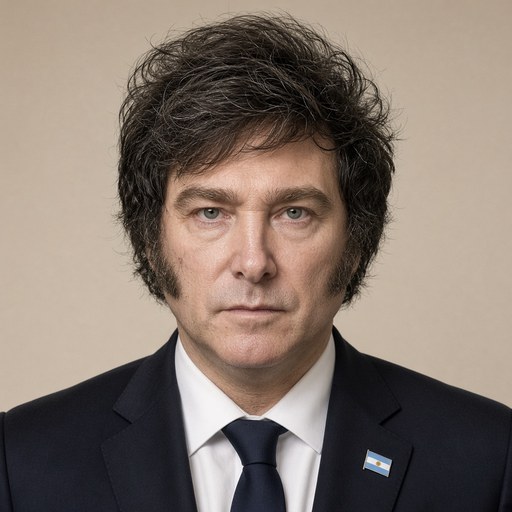
Words of the President of the Nation, Javier Milei, upon receiving the Juan de Mariana Award 2024 at the Real Casino of Madrid.
 Javier Milei · President of Argentina
- Context
- Milei addressed the Juan de Mariana Institute in Madrid on June 21, 2024, upon receiving the Juan de Mariana Award 2024 at the Real Casino of Madrid.
- Main themes
- Austrian school economics, liberalism and libertarian philosophy, Argentina's economic reform, neoclassical theory critique, moral foundations of economic policy, free markets and private property, non-aggression principle, political challenges of reform, capitalism vs. socialism, intellectual mentors and influences
- Duration
- ~64 min
- Words
- 7,652
- Sentences
- 358
- Readability
- 60
- Grade
- 10.1
- Syntax
- 3.17
- Vocabulary
- 2.07
Translated from Spanish
The broad sphere of national life a sentence belongs to. Every sentence has an Arena, so it is the denominator the other indices are read against.
Other358 sentences in 41 paragraphs
Good evening. First of all, I want to thank the Juan de Mariana Institute for this enormous distinction. A year ago, due to campaign matters and so on, my sister and I had to come to Madrid. In those coincidences, or the forces of heaven, or spontaneous order, I was led to get in touch with Manuel Llamas, and because of his responsibility, I had the honor of attending the dinner where Dr. Anxo Bastos, whom I admire so much, was awarded, along with many others whom I will mention shortly. I was also fortunate that that day I was seated at the Murray Rothbard table. Today I believe it was more than a coincidence because, in fact, thanks to reading Murray Rothbard's article "Monopoly and Competition," I converted to the Austrian school, in an edition published by Libertas, which had been translated by the father of our freedom hero and, clearly, one of my mentors, Dr. Alberto Benegas Lynch (son), to whom I owe so much and with whom I have so much gratitude for everything he has taught me and for his generosity towards me. Also, in a rather hostile context in which I was developing my presence in liberalism and politics.
And in that context, I also want to thank Professor Huerta de Soto for his words. He has been so important in inspiring all of us, where his classes on YouTube are a true revolution. I also want to thank Professor Ricardo Manuel Rojas for his words, which I will mention in some parts as I speak. He has always been so generous with me and has helped me a lot on several occasions.
I also want to thank Gabriel Calzada. I had the opportunity to meet him at Francisco Marroquín University when I went to present a book called "Unmasking the Keynesian Lie." My depth in the Austrian school was not what it would become in the future, but there were already clear signs that, at least, I knew where things were headed.
In this talk today, I had prepared a sort of synthesis of my recent book, which is called "Capitalism, Socialism, and the Neoclassical Trap." Basically, it discusses the transition from economic theory to political action. It is a book where I basically explore the design problems of neoclassical theory and how this leads to socialism. There are five blocks, and I thought that, in light of the speeches and the interactions I have had, I might be able to contribute something of value by sharing my experience, especially regarding politics.
So, I will partition the talk. I will talk a bit about what we are doing in the government, and then I will delve into the topic of the discussion I wanted to give, but in a much more synthetic and concentrated manner.
One of the things that Professor Huerta de Soto mentioned, which is extremely valuable, is when he points out the role of knowledge of economic theory. I can assure you that this is fundamental. There is a saying that I like to repeat frequently, which goes: "He who does not know what he is looking for does not understand what he finds," and this plays a fundamental role when one designs economic policy and how one adheres to that course. From the very first moment, we knew where we wanted to go, that is, the north was clear. We want to go there, and that is determined by everything one does, one’s background, the way one sees the economy. But it is not only a matter of economics; we interpret the economy from a moral standpoint. The design of economic policy is fundamentally a moral issue, that is, what are the values behind it. And clearly, in the face of that, nothing can stand against liberalism. That is why, repeatedly, in our campaign events, we concluded with Alberto Benegas Lynch (son)'s definition of liberalism, with some mutations that I made: liberalism is the unrestricted respect for the life project of others, based on the principle of non-aggression and the defense of the right to life, liberty, and property. Its institutions are private property, free markets without state intervention, free competition (but in the Austrian sense, not in the neoclassical sense), the division of labor, social cooperation, and where one can only be successful by serving others with better quality goods and better prices. In that sense, that is a guiding framework, and our goal is to make Argentina great again. The only way to achieve that is for Argentina to be free again. And that is what marks the north.
The truth is that when you set the objective, I warn you that it is not a uniform straight-line movement. That is, one does not zigzag because one is an inefficient fool, but in the middle, there may be potholes, there are a lot of things, and you have to dodge them. And not only that, but you also encounter other problems, where political opponents also shoot at you. So, you are dodging the potholes in the road, and while you are dodging, the opponents are shooting. And not only are the opponents shooting, but also, as if all that were not enough, since we decided to cut official advertising, the media spends all their time talking trash about us.
As if that were not enough, while we defend the ideas of freedom, the Egyptian liberals also appear, who on one hand talk about freedom and on the other sell the privateering license to the highest bidder. They even talk about the efficiency of public spending. And not only that, one has to keep advancing and fighting for the ideas, and the worst part is that one even has to deal with lies and so on. In that sense, I will share my version of where we are, what we are doing, and where we are going, to start discussing some of the theoretical background that, from my point of view, is important. When we came to power, Argentina's twin deficits amounted to 17 points of GDP. Basically, you know, those who have studied all the literature on early indicators of crisis, that twin deficits of four points of GDP is a yellow light; eight points of GDP is a warning of cataclysm. Imagine receiving 17 points of GDP in twin deficits. That is what we received. Structurally, of those 17 points, 15 were in the national public sector, where five points corresponded to the Treasury deficit and 10 points of GDP in the Central Bank, that is, the quasi-fiscal deficit.
To give you an idea of the monetary mess that the previous government created, over four years they had issued 28 points of GDP to finance the treasury. Of those 28, 13 were issued during the last year of government, in the electoral adventure in which they launched themselves trying to win at all costs. In fact, among other things, being the dirtiest campaign in the history of humanity, where, for example, a certain government gave the official government 1 billion dollars to spend on dirtying the one who was going to run in that election. That is why, at some point, you would enter YouTube anywhere in the world, wanting to check or see a video of mine, and something would pop up saying that I was saying some atrocity. If these things were picked up by people who knew they were lies. Moreover, in one of those lies made by someone linked to liberalism, it almost killed our candidate for Minister of Education, who had heart problems and they almost ended up suing him for something that supposedly one of ours leaked.
In that sense, what I want to point out is that we approached the campaign with a chainsaw, which had to do with cutting public spending with 1 dollar, which was the way the people understood the competition of currencies and eliminating the Central Bank. But they told us it was impossible. In fact, today the adjusters and those who talk about the adjustment, and what is more, the little scissors and the blender. I did not know that if 90% of the adjustment is chainsaw adjustment, they call that little scissors. It is a problem of order of magnitudes, that is, 10% of the adjustment is the blender. But well, that is how intellectually honest some economists are.
The unfortunate thing is that those things are also repeated by liberals, which is even more serious, but some are sold out and get paid to repeat this kind of aberrations. In this sense, one of the most remarkable things that happened to us is that when we had the first cabinet meeting, when I started to say what we wanted to do, some parts said that what I wanted to do was impossible. Therefore, I said that those who believed it was impossible should leave, because it was going to happen. It was a day of 40 degrees, so if I went, I would ask the ice cream vendor on the corner selling ice cream, who would also say it was impossible. So I did not care if they told me it was impossible; they had to bring me how to do what I wanted to do. And that is how we started and made the fiscal adjustment. In fact, we made the largest fiscal adjustment in the history of humanity, not just in Argentina.
At the beginning, basically with the disaster we found ourselves in, we saw that we had to stop the monetary issuance. In the first week of December, prices were rising at 1% daily, that is, at 3700% annually. In the first 15 days of December, it had accelerated at a rate of 7500% annually. Not only that, but when you take wholesale inflation, which is a leading indicator of inflation, in fact, the inflation of December was 54%. That annualized gives 17,000%. I understand that the inflation of 35% in the last month is an horrifically high number and that, annualizing it, it is at 50% annually. But the truth is that going from 17,000 to 50% annually without having hyperinflation in the middle that liquefies real wages, without having price controls, without fixing the exchange rate, and without having expropriations, is quite an incredible adventure. But moreover, the monetary difficulty was not only due to everything that the previous government had issued; it was not just the problem of financing the treasury, but it was also the problem of the remunerated liabilities that generated 10 points of fiscal deficit for us. In that sense, we also had to take quite difficult strategies where the serial offenders who continue to criticize today got it wrong, but none of them recognizes that they got it wrong. Because we, instead of seeking to go to a positive real interest rate, what we sought was to arbitrage with foreign currency, with the dollar against which Argentines substitute. So, that implied a high rate in dollars, but in negative real terms. And if the sterilization worked, it would also allow us to significantly reduce the remunerated liabilities and at the same time the interest rate, which was above 250%. Today it is at 40%, and the quasi-fiscal deficit of 10 points of GDP will end up being one point, based on what has already run, not on what is to come.
And this is also important because the previous government, where that debt with the Central Bank was 30, 60, 90, 120, 180, 270, and 360 days, I don’t know if naively, but they passed it all to one day. They did not do this by chance; they did not do it innocently. Argentina had a currency gap of 200%, the relationship between the parallel and official exchange rate was 3 to 1. In addition, it had debt with importers equivalent to 50 billion dollars, so part of the productive system was halted because no one could import anymore. Furthermore, Argentina had the credit, the agreement with the fund that had fallen through, we had 25 billion dollars of debt maturing externally, where the vast majority were with multilateral organizations, and we were facing that problem. We had about 15 billion dollars of retained dividends, we had debt maturities in pesos equivalent to 90 billion dollars. So, basically, the remunerated liabilities would be practically four times the monetary base.
Therefore, what was the big bet of the previous government? It was that we would not be libertarian liberals, but that we would be liberal libertarians. In that situation, they believed that we would ignore the relationships between stocks and flows and that a stock of those characteristics could be converted into a flow instantaneously. And in that way, in one day, the amount of money would multiply between 4 and 5 times, and we would have all the strangulation of the currencies that wanted to leave. In that context, we would have generated hyperinflation, and then the Peronist machinery of looting and so on would have done all the work during the month of December, what was left of December for them to return in January.
In the face of that situation, being very critical of the liberals, especially the Egyptian liberals. In that sense, what we decided, and here there was indeed an intensive use of economic theory. We were at the Hotel Libertador, and the colors of the hotel are purple, that is, more spontaneous order is impossible. So, we were with Luis "Toto" Caputo, this brilliant man I have as Minister of Economy, who is now the President of the Central Bank, Santiago Bausili was also in that meeting, Fede Furiase, Martín Vauthier, and we had to decide where to set the exchange rate. We knew that if we opened up, we would create a disaster. We knew we would be punished by libertarian liberals or those who omit the problem of stocks; they would be well served by the other nickname.
And one of the things, the market consensus so fatally arrogant, said that the exchange rate should be set at 600 and that based on that, given that 600, there was a hypothesis of better dynamics of the inflation rate. By the way, we set the exchange rate at 800 because corrected for the Country Tax it would equal the market exchange rate. So, they said it would be a much worse inflationary disaster. And it turns out that now, with a higher exchange rate, there is less inflation. And they are the same ones who talk about the delayed exchange rate; they have a serious problem of model inconsistency.
I say this because then they say: "No, because this one opined, that one opined," all the serial blunderers gave their opinions. They didn't get one right, I warn you. There are very few who got it right.
I just had the opportunity to greet a person who introduced herself and told me she was a friend of Pablo Arriazu, the son of Arriazu, who is one of the few who does see it. And in that sense, why did we choose the exchange rate there? And this is pure economic theory. Because if I went with a number closer to the market exchange rate, even though it wasn't perfectly market-based, which was interesting, I would reduce the excess demand for foreign currency. And by reducing the excess demand for foreign currency, I would reduce the excess supply from the rest of the economy. So, by reducing the excess of bonds, the price of bonds would rise, and therefore, the interest rate and country risk would fall. Therefore, the level of economic activity would also shrink, the difference between savings and investment would shrink, and thus the excess supply of goods would shrink, and therefore, activity would decline less. Not only that, but also, the excess supply in the labor market would also decrease, and therefore, real wages would have less.
And this is interesting because anyone who had said that we were going to make a fiscal adjustment of 15 points of GDP would have told us that we were going to blow up. In fact, we had a monetary imbalance worse than that of the Rodrigazo crisis of '75. The situation of the Central Bank's balance sheet was worse than that of the Central Bank in 1989, prior to the hyperinflation of Alfonsín, and the social indicators were worse than at the end of convertibility in 2001. Therefore, not only did we have all the conditions for it to be the most important crisis in Argentine history, because it combined the three elements of the three worst crises in Argentina, but we also had structurally certain weaknesses in terms of legislative structure and power structure. And that is also very interesting, and now I will reflect on that. In that context, notice that we, making an adjustment of these characteristics, saw GDP fall by 7% in the first quarter. Of course, one says, it's not tremendous. Now, when you take the convertibility crisis during 2002, GDP fell by 10.9%, almost 11%, but in the second quarter, where all the adjustments took place, GDP fell by 16%. That is to say, the use of economic theory not only avoided, but at least 10 more points of GDP decline. That, in social terms, is not minor because we also made a whole revolution regarding social issues. We knew that the adjustment was going to be very hard, we knew it was going to be recessionary because when one makes an adjustment, savings increase and that has a counterpart of investment, activity is going to fall and that was going to be felt in terms of employment and real wages. And we were already coming from a very high level of poor and indigent people. Therefore, there was a doubling of the universal child allowance, the food plan so that children would not lack food, or a plan called Mil Días, which is to provide assistance to pregnant women. In addition, we provided support to students so they could have school supplies. And not only that, but also, to avoid the trauma that implies having to change schools for a child and the situation that generates in the family, we provided assistance so they could cover the fees of low-income private schools.
Despite all that support, obviously the fiscal adjustment in the first months reached seven points of GDP. Since we needed five, we let one point run. So, with the six from the treasury, plus the nine from the Central Bank, we are at 15. Moreover, now with all this the country would have exploded and yet, it did not explode. And yet, they criticize the government's social policy. Well, because there is something the Government did that was interesting, and that is to end the intermediaries of poverty, that is, people who raise the noble cause of providing support to the most needy. Although we know that fundamentally, as Professor Huerta de Soto says, anti-poverty plans generate more poverty, but even keeping that in mind we changed the dynamics of assistance. Historically, in Argentina, assistance was about giving people fish. Our revolutionaries, in our case, was the name of the Ministry, it is called the Ministry of Human Capital. Our goal is not to give fish to people. Our goal is to teach them to fish, to teach them to be entrepreneurs. And if they can, to have their own fishing business.
And in that context, there was also something very interesting, I warn you because if you look at the newspapers or get informed through the media or with biased analysts, they have criticized the Minister of Human Capital enormously. They believe that, in addition, the Minister of Human Capital has a defect: she is my friend, so she has to be honest. So they think I would have problems firing someone from my cabinet because they are a friend. Well, the chief of staff who was ejected had been my friend for 18 years, did not meet the objectives and left. Hint: here it is about meeting objectives, those who meet them do so, and those who do not meet them, no matter how long I have known them, go out. And there too, if you look, we are addressing inflation. When you start looking at the activity indicators, if you look at those from the first quarter, they are clearly bad. But when you start looking at the indicators from April and some indicators that already appear from May, you will clearly see a rebound, that the economy is bouncing back, that the economy is recovering. I see you so interested that I think I will not talk about economic theory and will only talk about what we are doing, that is, applied liberalism one on one, said by the one who is doing it.
The temptation is over, and now I will talk about what I am doing. In that sense, there was also something very interesting: one of the things that the Minister of Human Capital discovered is that when social plans were given, a card was given. When that card was given, one believed that the beneficiary received the full amount. Well, I warn you that they did not. How did it work?: When you received that program, you then had to certify that you had worked, and when you went to seek that certification, half of it stayed there. So, knowing that the first quarter was going to be very hard, one of the things we did, a great action by the Minister of Human Capital, was precisely to remove the obligation of the benefit. Well, that situation was quite complicated. Not for the people, who were now going to receive double the money, and that is why, instantly when we did this, the poverty managers announced a massive march. In that massive march, we had the information: they were planning to gather 100,000 people, they said that 50,000 were going to go to later show as a great achievement that 100,000 were going. So, you can imagine, when the Minister of Human Capital did this, the number of things they came out to say to her in the end: "This is a liberal government that ends up being populism, right-wing populism." And in reality, it was cutting off the scam to the thieves of the poverty managers.
In that context, they went out to march, and there too with our brilliant Minister of Security, Dr. Bullrich, who also had the greatness (although her change option was defeated in the elections), not only supported us in the electoral process but also accepted to be our Minister of Security. Together with the Minister of Infrastructure at that time, what did we do? We created a number for people to report extortions. We said that those who cut do not collect. And that, the Minister of Infrastructure, what he did, used the transport network, the one he used the most, to say outrageous things about me, to tell them that if they did not go to the marches nothing would happen, that they would continue collecting their plans. And at the same time, Dr. Bullrich presented me with a security protocol which I did not hesitate for a second to support unconditionally. On the day of the march, we ended up deploying 12,000 national government personnel to recover one of the demands of the population, which was to recover the street that was taken by vandals and that the entire population was being extorted by this group of criminals. Well, of the 100,000 people they expected to bring, they brought 3,000. There were more personnel than people at the march, and that dealt a strong blow to those organizations. Not only did we start to rein in inflation, but we are also recovering the economy. We also took control of the streets. Today in Argentina, it is not for the violent, but for those who want to work. And those who cut do not collect, and those who cause disturbances go to jail.
But it is not only a matter of what we are proposing in terms of the stabilization strategy and what has to do with the strategy of putting control on the streets. We also said that we were going to aim to recover economic growth and that, obviously, that implied making a reform of the State. Well, the first thing we did was to reduce the number of ministries by half, which, much to my regret because I would have liked another to be my most popular video, is outside. That is the most popular video I have and that everyone has turned to, just like the one about there being no money. And this is very interesting with the one about there being no money, the different politicians of different stripes are either completely lost because they are the most rancid socialists, or they are pure socialists, Keynesians, two types who ignore the budget constraint.
Look, I’m going to tell you something. There was something that, when I was a deputy, produced a tremendous thing in me, it put me in a terrible mood. And it is that we were assigned times to speak, each according to the size of the block they had. They had a certain amount of time. So, if you wanted to understand why in 123 years, we had had a fiscal deficit for 113, if of the 22 crises we had from 1901 until now, 20 had a fiscal origin, there you had it. All in the chamber where the budget is voted. None respected the budget constraint. If they were given 5 minutes, they spoke for 10. And if they were given 10, they spoke for 20. They are systematic violators of the budget. How could they not be the disaster they made?
So, there we also fought some important battles that were key to what we are doing, because one of the things you can notice in all my speeches is that I always said: I am not going to vote for budgets with fiscal deficits. And I explained that, for example, if you have a fiscal deficit, and that is why the issue of values is so important, if you vote for it with debt, that is profoundly immoral. Because, in reality, what you are saying is that today’s party is paid for with future taxes; that is, you are partying today and passing the bill to your children, to your grandchildren. And in places where the murderous abortion agenda is in force, even people who have not yet been born could be the extreme.
So, in debt, it is immoral. That is the first point. The second, in fact, Argentina abused that so much that it is the biggest defaulter in modern history. By the way, we received the country with 2900 basis points of country risk. We managed to lower it to about 1150, until a few weeks ago, when the politics that not only does not help but also tries to destroy, made the country risk jump to 1600. Now, it is going down again because under no circumstances am I going to give up fiscal balance. You will have to kill me, you will have to take me out of the Casa Rosada to create a fiscal deficit, because I am not going to hand it over to you.
The other thing you can do is finance it with monetary emission. Not for nothing did Argentina remove 13 zeros from its currency. It had two hyperinflations without war. We could remove three more zeros. It is also immoral, as the brilliant book by Professor Ricardo Rojas states, inflation is a crime, the real crime. And Professor Rojas puts it very well: it is monetary emission, seigniorage. Because those economists, not you, can emit as much as the demand for money grows and if it were linear with GDP. So, as GDP grows, that is a farce too, that is a crime, it is also a scam, because that inflation being zero does not mean there is no scam. Because if they had not emitted, there would have been deflation. And that would have returned the money to the people and that is indeed a truly pro-poor policy. However, pseudo-progressives like to emit money wildly.
So, at this point, we in the cleanup we did of the Central Bank, today, I can practically tell you that the quasi-fiscal is zero. From here on out, zero. There were about 18 trillion. We had a monetary base of 15 trillion pesos and we had remunerated liabilities of 18 trillion. Of those, 12 were in public banks, 7 in Banco Nación, where a large part of those holdings on the other side belong to the National Treasury. What has to do with the province of Buenos Aires, which is 3 trillion, has such a fiscal deficit in the Soviet-style province of Buenos Aires that it uses Banco Provincia and therefore, it cannot touch that, and the rest is mostly with the city government, with whom we have an excellent relationship. So, we only have a problem of 6 trillion left. The last placement of letters to make the mutation from the Central Bank to the Treasury amounted to almost 6 trillion pesos. They are almost against the ropes; we have them in a knockout. The only problem we have left at the Central Bank at this moment is a contingent instrument, some puts. The previous government, as it could not obtain financing for the Treasury, from the Treasury and with the backing of the International Monetary Fund, used contingent instruments. And what is the problem with that? That in the balance with the Central Bank, that liability is recorded at the value of the contingent, that is, with a very small fraction of the liability that you have open. So, you hardly see it inside the Central Bank and yet, there is a potential for issuance of four points of GDP. Therefore, the day we finish with that, there will begin the second stage of the monetary reform. Having avoided it, the timing is up to God. In that context, I need to close the agreement with the puts and for that, I have to reach an agreement with the banks. We are also working on a reform of the financial system to separate investment banking from the store of value, so that the system becomes anti-runs. That is, the store of value is a 100% reserve, and in investment banking you will have securities and it will adjust based on how prices fluctuate. Therefore, the runs are over. So, with the fiscal tap closed, the financial tap closed, the external tap closed, because the exchange rate will be free, we will not only move to a system of free competition of currencies, but we will declare monetary issuance a crime against humanity. And, in that case, if there were to be monetary issuance, the president of the nation will go to prison. I believe they can approve it because they are so eager to put me in prison. The Minister of Economy will go to prison, the president of the Central Bank, the board of the Central Bank, and the deputies and senators who support such a measure will also go to prison. That said, what will happen, you can tell me: "No, well, but Argentina systematically violated the laws." It is true, but being classified as a crime against humanity, it is imprescriptible. So a government can come and change it, but another liberal can come and imprison all the criminals.
Therefore, with the amount of pesos fixed, and as individuals need to monetize, they will bring their own currencies and will make transactions in the currencies they wish. And if you look at it, that will make the peso have much less role or importance within the number of transactions that are made, and there will come a time when it will be so small that we will close the Central Bank.
Finally, I will talk about the economic growth program, I will talk about the transition, and I will talk about the reforms. A note of color: because there are many "libertarados," Egyptian libertarians, who say that we are increasing the tax burden. "Milei is not liberal in that because he raised taxes." Well, we are going against those liars. If I had 15 points of monetary issuance, 15 points of seigniorage, which is direct theft from Argentines, and I only took one and a half points from the country tax and returned 13 and a half points to Argentines, did the tax burden increase or decrease in net terms? Learn to do the math, donkeys.
Moreover, I emphasize: public spending in real terms fell by 30%. The true tax burden that a country faces, do you know what it is? It is public spending, and it fell by 30%. Therefore, we are pushing the State out of the way. And why is that important? Because now there are 15 points of GDP that the State was consuming and now, what does it become? It becomes savings that returns to investment. Therefore, now investment will be financed by that savings. Think that when we came to power, there was talk of hyperinflation. 85% of Argentines believed there would be hyperinflation; today, less than 20% believe there could be hyperinflation. From being the most pressing problem in Argentina, inflation has now moved to third place. Don’t come to tell me that it can’t be done, because it can be done.
And not only that, but credit has also returned for 30 years. We are really doing it! So, not only will that be an element that will boost savings and, therefore, investment, Argentina is an economy that comes from 20 years of savage populism and is deeply undercapitalized. Therefore, that makes the value of the marginal product of capital, if you want the return of the firm's cash flow, if you want to put it in financial terms, that makes it enormous and well above the WACC, that is, the opportunity cost. And that also boosts investment. But as if all that were not enough, as Argentina recovers the economy and expands again, we will not increase public spending, we will keep it fixed. Therefore, as one can grow and new resources are generated, we will lower taxes. And in fact, the country tax that is currently at 17.5%, according to the perfection of the exit of the foundational law and the fiscal law that is sent by necessity of the governors, not by us, because we have balance, in that context we will lower that tax from 17.5 to 7.5. So, for those who talk about tax increases, they not only lie and do not take the aggregate into account, donkeys who do not understand general equilibrium, but we also start with the tax reduction.
On the other hand, there are people who say we do not have a long-term program. It is incredible, because the biggest reform that was made in Argentina was the one Menem did, and that State reform had 100 articles, it was 100 reforms. And they say, "no, the dismantled foundational law."
Well, the dismantled foundational law is five times larger than Menem's reform. Not only that, if we add the decree of necessity and urgency, which the evidence has proven that I am right, the reform is eight times larger. That is, we are making the largest structural reform in the history of Argentina, which is eight times larger than the next one. Why is this important? Because those countries that are freer are 12 times freer than those that are repressed, grow more than double, have 25% less poverty in the standard format, and 50% less poverty in the extreme format. And why is this so important? This is very important because these reforms will make Argentina climb 90 places in the index of economic freedom. That is to say, Argentina would enter a growth path that could mean that in a certain period of time, let’s call it 35 or 40 years, we could become a country like Germany.
However, I have some extra news to tell you. In my opinion, resembling the economic freedom of Germany does not appeal to me. Moreover, the country that had the most economic freedom was Ireland, and that in 35 years went from being the most miserable country in Europe to having a per capita GDP 50% higher than that of the United States. The truth is that we have 3,200 more structural reforms pending, and not only will we be as free as Ireland, we will make the country the freest in the world and we will make the country the most prosperous in the world.
And to conclude, and this is indeed the last thing and has to do with some of the things we are doing, there are some texts that have marked me a lot. The combined idea that Kirzner presents when he demonstrates the moral superiority of capitalism is interesting, because it is interesting how that book starts. Kirzner says: "Yes, yes, the productive superiority of capitalism over socialism is undeniable. If it is built on unjust foundations, it is not worth defending. It does not matter that it is more productive; it is built on something unjust and is not worth defending." So, he argues that it is the only just system, and for that, he relies on Locke's principle of appropriation and Hayek's idea as a process of discovery in the market. That is very interesting because when you study the literature on economic growth, my specialization with or without money. It is supposed that I understand how to grow an economy and how to lower inflation, and it seems that the latter is working and the other, believe me, is too. But Hayek's proposal is very interesting. If you put it and contrast it with the theory of economic growth, one of the things it does is seek and try to describe how it reaches a steady state with or without growth. But the interesting thing is that depending on how you model the production function, a phenomenon called convergence appears. That is interesting because countries that tend to be lagging grow faster than those that are ahead. Market reforms are made and then, in time, they catch up with the developed countries, if you want to call them that. And this is very interesting because if you look at the history of humanity, the number of years needed to double GDP is less. The first to achieve it was England, which took 58 years, then the United States, and so on until the case of Korea, which took 10 years, or the case of China, which took 7 years. Moreover, the case of China is so interesting that it not only doubled per capita GDP in 7 years, but in the following 7 years, also, obviously making pro-market reforms, that is, in 14 years it quadrupled per capita GDP.
So, what you see is a process of acceleration. And why does this happen? Because in reality, those market opportunities in developed countries have already been discovered. So, what you have to do is have good institutions, institutions that defend life, liberty, and property, and the principle of non-aggression, the ideas of freedom. And when you do that, you will create an environment for businesses to develop, for entrepreneurs to discover and appropriate from their discovery, and that allows you to converge, and the freer you are, the faster you will do it. And the more technology helps you, the more you will be able to do it. That is why my last tour of the United States was about meeting the most important entrepreneurs in the technological world. Because, what is artificial intelligence? It is nothing more than a new kind of Industrial Revolution, a situation where there is an unprecedented increase in productivity. And the only risk it has, everyone must have read Hazlitt when he talks about "hatred of the machine." Well, you will have seen politicians, it seems they have a hatred of the machine, the scholarly fallacy. And it is interesting because they are based on a lot of myths, which are all lies that the Austrian School knows are all lies. And with that, they regulate. But what happens? When you regulate, this in economics is the problem of non-convexities, those are the problems we economists invent in our heads for certain normative properties, call it Pareto optimal in our general equilibrium model, and that actually have nothing to do with real life.
That is why it was very revealing for me the article by Murray Newton Rothbard on Monopoly and Competition, where I realized that after teaching microeconomics for 25 years, everything I had taught about market structure was wrong. That is, it was more productive to read those 140 pages in three hours than everything I had studied before. But not for nothing, one of my four-legged little ones is named Murray. And in that sense, monopolies, when I had taken Adam Smith's definition from Lord Coke's monopoly, was when the monarch or the feudal lord demanded that in a certain place only one product from one company be sold and if that was not complied with, it was sanctioned by law, they would have their heads cut off or be killed. Now if I have 10 cell phone companies and one appears that has the best cell phone or better price and cheaper, then yes, the other 9 will go bankrupt. Or are they crying for the candle manufacturers? Damn Edison. Thank you, Edison.
So, look at this, following the neoclassical paradigm, they try to regulate those companies as if they were competitive in the neoclassical sense. This means that they take away the quasi-rent, that is, the extraordinary profits. If you take away the quasi-rents, the result is that they remain as a company with constant returns to scale. In other words, they kill the potential for economic growth. That is to say, with the regulations, of which Europe is one of the places that suffers the most in the world, therefore, the place that grows the least in the world, precisely, the state and its regulations are killing economic growth. So, what do we offer them? Deregulation, openness, freedom to invest. Therefore, embracing the ideas of freedom, not punishing the population with the aberration of abortion, because the population allows for greater division of labor and, therefore, allows for greater economic growth and increasing economic returns to scale. The famous pin factory of Adam Smith, limited by the size of the market, is a call to defend life, not death.
Now I am going to tell you a funny anecdote about Elon Musk, you are going to like this... We were at the first meeting with Elon Musk and he raises the demographic problem. So we start discussing the demographic issue and he is concerned that the population is growing less and less and that there is a problem with the birth rate. So, the engine of innovation is being stalled, and he proposes to reverse the brainwashing that was done to the population with everything that was the Club of Rome, whose files were declassified from Nixon's archives. Where they proposed a scientific issue about the high rates of abortion, but what they don’t know is that it is an old agenda. If you look at the book of Exodus from the Torah or Sashem; that is, the Pentateuch of the Old Testament, this has been applied for a long time. So, there is nothing modern about pretending to be Pro Choice. Pro choice is a bunch of retrogrades from 4000 years ago. And at one point he says to me: "Well, no. Then we have to work to clean up that brainwashing. Liberalism has the foundations to do it, with respect for the right to life. Probably there is no better example than Walter Block's airplane, with that you can never. But there are some idiots who say: “no, no, he is not conservative, he is against abortion.” No, Milei is a true liberal, he is not a murderer who is in favor of the murderer in the womb of the mother. The worst part is that these things are told to me by someone who is not liberal and that an idiot who calls himself liberal, an Egyptian liberal, endorses it. But aside from that, Musk says to me: "Well, we have to start bringing children into the world.” Well, that sounds great to me. And then at home, how are we doing? So I say to him: "Well, look, I have children, I have five." "Yes, but the four-legged ones don’t count." So also, Elon Musk tells me at one point in the conversation, look how fabulous. And that explains why he is successful and that is commendable, he says: I get up every morning thinking about what problem I can solve for humanity. That's it, he is the social benefactor we talk about, the successful entrepreneur is that. Therefore, what I want to say is the following: embracing the ideas of freedom and using technology, you know what? We can recreate paradise on earth. But that paradise on earth will only be possible by embracing the ideas of freedom. Thank you very much and long live freedom, damn it! Long live freedom, damn it! Long live freedom, damn it!
The original Spanish. The tags above are read on the English translation's sentences.
Buenas noches. En primer lugar, quiero dar las gracias al Instituto Juan de Mariana por esta enorme distinción. Hace un año, por estos temas de las campañas y demás, con mi hermana nos tocó venir a Madrid. En esas casualidades, o las fuerzas del cielo, o el orden espontáneo, me llevaron a ponerme en contacto con Manuel Llamas, y por responsabilidad de él, tuve el honor de venir a la cena en la cual se premiaba al doctor Anxo Bastos, a quien tanto admiro, como tantos otros a quienes ya voy a mencionar. También tuve la suerte de que ese día me tocara la mesa Murray Rothbard. Hoy creo que fue más que una casualidad, porque, de hecho, gracias a leer el artículo de Murray Rothbard, "Monopolio y Competencia", yo me convertí a la escuela austriaca, en una edición publicada por Libertas, que había sido traducida por el papá de nuestro prócer de la libertad y, claramente, uno de mis mentores, el doctor Alberto Benegas Lynch (hijo), a quien tanto le debo y con quien tengo tanta gratitud por todo lo que ha enseñado y por su generosidad para conmigo. También, en un contexto bastante hostil en el cual fui desarrollando mi presencia en el liberalismo y en la política.
Y en ese contexto, también quiero dar las gracias por las palabras del profesor Huerta de Soto. Ha sido tan importante inspirándonos a todos, donde sus clases en YouTube son una verdadera revolución. También quiero dar las gracias por las palabras del profesor Ricardo Manuel Rojas, que en algunas partes, ahora cuando hablo, lo voy a mencionar. Siempre ha sido tan generoso conmigo y en varias ocasiones me ha ayudado mucho.
También quiero darle las gracias a Gabriel Calzada. Tuve la oportunidad de conocerlo en la Universidad Francisco Marroquín, cuando fui a presentar un libro que se llama "Desenmascarando la mentira keynesiana". Todavía mi profundidad en la escuela austríaca no era la que tuve en el futuro, pero ya había claros indicios de que, por lo menos, sabía por dónde andaba la cosa, al menos.
Y en esta charla, para hoy, yo tenía preparada una suerte de síntesis de mi reciente libro, que se llama "Capitalismo, Socialismo y la Trampa Neoclásica". Básicamente, dice de la teoría económica a la acción política. Es un libro donde básicamente exploro los problemas de diseño de la teoría neoclásica y cómo ello conduce al socialismo. Son cinco bloques y me pareció que, a la luz de los discursos y a la luz de las interacciones que fui teniendo, puede que pueda aportar algo de valor contándoles mi experiencia, sobre todo en lo que tiene que ver con la política.
Entonces, la charla la voy a particionar. Voy a hablar un poco de lo que tiene que ver con las cosas que estamos haciendo en el gobierno y, por otra parte, después voy a entrar en el tema de la discusión que quería dar, pero de manera mucho más sintética y mucho más concentrada.
Una de las cosas que mencionó el profesor Huerta de Soto, extremadamente valiosas, es cuando él señala el rol del conocimiento de la teoría económica. Les puedo asegurar que eso es fundamental. Hay un dicho que a mí me gusta repetir recurrentemente, que dice: "El que no sabe lo que busca no entiende lo que encuentra", y esto tiene un rol fundamental cuando uno diseña la política económica y cómo uno se aferra a ese rumbo. Desde el primer momento supimos hacia dónde queremos ir, es decir, el norte está claro. Nosotros queremos ir ahí, y eso viene dado por todo lo que uno hace, su background, la forma en la cual se ve la economía. Pero no es solamente la cuestión de la economía; nosotros interpretamos la economía desde una cuestión moral. El diseño de la política económica tiene que ver con una cuestión fundamentalmente moral, es decir, cuáles son los valores que están detrás de eso. Y claramente, frente a eso, nada puede contra el liberalismo. Por eso, recurrentemente, en nuestros actos de campaña cerrábamos con la definición de liberalismo de Alberto Benegas Lynch (hijo), con algunas mutaciones que yo le hice: el liberalismo es el respeto irrestricto del proyecto de vida del prójimo, basado en el principio de no agresión y en la defensa del derecho a la vida, a la libertad y a la propiedad. Sus instituciones son la propiedad privada, los mercados libres de intervención estatal, la libre competencia (pero en el sentido austríaco, no en el sentido neoclásico), la división del trabajo, la cooperación social, y donde solamente se puede ser exitoso sirviendo al prójimo con bienes de mejor calidad y de mejor precio. En ese sentido, eso es un marco rector, y nosotros como objetivo tenemos que hacer que Argentina vuelva a ser grande nuevamente. La única forma de lograr eso es que Argentina vuelva a ser libre nuevamente. Y eso es lo que marca el norte.
La verdad es que cuando ustedes plantean el objetivo, les aviso que no es un movimiento rectilíneo uniforme. Es decir, uno no va zigzagueando porque es un imbécil ineficiente, sino que en el medio puede ser que haya pozos, haya un montón de cosas y las tiene que ir esquivando. Y no solamente eso, sino que también se encuentra con otros problemas, donde los oponentes políticos también disparan. Entonces, ustedes están esquivando los pozos en el camino, y mientras están esquivando, los opositores están disparando. Y no solo que están los opositores están disparando, sino que, además, como si todo eso fuera poco, como nosotros decidimos cortar la publicidad oficial, los medios de comunicación se dedican todo el tiempo a estar hablando pestes de nosotros.
Como si esto fuera poco, mientras defendemos las ideas de la libertad, también aparecen los liberales egipcios, que por un lado hablan de libertad y por el otro le venden la patente de corso al mejor postor. Hasta hablan de la eficiencia del gasto público. Y no solo eso, uno tiene que seguir avanzando y peleando por las ideas, y lo peor de todo es que hasta tiene que lidiar con las mentiras y demás. En ese sentido, les voy a contar mi versión de dónde nos encontramos, de lo que estamos haciendo y a dónde estamos yendo, para empezar a discutir algo del trasfondo teórico que, desde mi punto de vista, es importante. Cuando nosotros llegamos al poder, los déficits gemelos de Argentina ascendían a 17 puntos del PBI. Básicamente, ustedes saben, aquellos que hayan estudiado toda la literatura de indicadores tempranos de crisis, que los déficits gemelos por cuatro puntos del PBI es una luz amarilla; ocho puntos del PBI es alerta de cataclismo. Imagínense recibir 17 puntos del PBI de déficits gemelos. Eso es lo que nosotros recibimos. Estructuralmente, de esos 17 puntos, 15 estaban en el sector público nacional, donde cinco puntos correspondían al déficit del Tesoro y 10 puntos del PBI en el Banco Central, es decir, el déficit cuasi fiscal.
Para tener una idea de los desmadres monetarios que hizo el Gobierno anterior, a lo largo de 4 años habían emitido para financiar el fisco 28 puntos del PBI. De esos 28, 13 fueron emitidos durante el último año de gobierno, en la aventura electoral en la cual se lanzaron tratando de ganar como fuera. De hecho, entre otras cosas, siendo la campaña sucia más grande de la historia de la humanidad, donde, por ejemplo, un determinado gobierno al gobierno oficialista le dio 1000 millones de dólares para gastar en ensuciar al que fuera a correr esa elección. Por eso, en algún momento, ustedes entraban en YouTube en cualquier parte del mundo, querían chequear o ver un video mío, y les aparece algo diciendo que yo estaba diciendo alguna atrocidad. Si estas cosas eran levantadas por personas que aún sabiendo que eran mentiras. Es más, en una de esas mentiras que hizo alguien ligado al liberalismo, por poco mata a nuestro candidato a ministro de educación, que le dio problemas cardíacos y casi lo terminan demandando por algo que supuestamente filtró uno de los nuestros.
En ese sentido, lo que quiero señalar es que nosotros a la campaña le hicimos con una motosierra, que tenía que ver con el recorte del gasto público con 1 dólar, que era la forma popular que la gente entendió la competencia de monedas y eliminar el Banco Central. Pero nos dijeron que era imposible. De hecho, hoy los sommeliers del ajuste y que hablan y que el ajuste y que es más, tijerita y licuadora. Yo no sabía que si el 90% del ajuste es ajuste de motosierra, a eso lo llaman tijerita. Es un problema de orden de magnitudes, es decir, el 10% del ajuste es licuadora. Pero bueno, así son de honestos intelectualmente algunos economistas.
Lo lamentable, que esas cosas también lo repiten los liberales, que más grave aún, pero algunos están vendidos y cobran para repetir este tipo de aberraciones. En este sentido, una de las cosas más formidables que nos pasó es que cuando tuvimos la primera reunión de gabinete, cuando empecé a decir lo que queríamos hacer, algunas partes dijeron que lo que yo quería hacer era imposible. Por lo tanto, dije que aquellos que creían que era imposible que se fueran, porque sí iba. Era un día de 40 grados, o sea, si yo iba le preguntaba al heladero de la esquina vendiendo helados, también decía que era imposible. Así que a mí no me importaba si me decían que era imposible, a mí me tenían que traer cómo se hacía lo que yo quería hacer. Y así empezamos e hicimos el ajuste fiscal. De hecho, hicimos el ajuste fiscal más grande en la historia de la humanidad, no solo el de la Argentina.
En el inicio, básicamente con el desastre con lo que nos encontrábamos, habíamos visto que teníamos que frenar la emisión monetaria. En la primera semana de diciembre, los precios subían al 1% diario, es decir, al 3700% anual. En los primeros 15 días de diciembre, se había acelerado a un ritmo del 7500% anual. No solo eso, sino que cuando ustedes toman la inflación mayorista, que es un indicador anticipado de la inflación, de hecho la inflación de diciembre fue del 54%. Eso anualizado da 17.000%. Entiendo, que la inflación del 35% del último mes es un número espantosamente alto y que, anualizándolo, es al 50% anual. Pero la verdad es que pasar de 17.000 a 50% anual sin tener la hiperinflación en el medio que licue los salarios reales, sin tener controles de precio, sin fijar el tipo de cambio y sin tener expropiaciones, vaya que es una aventura increíble. Pero es más, la dificultad monetaria no solo era por todo lo que había emitido el gobierno anterior, no era solo el problema de la financiación del fisco, sino que también era el problema de los pasivos remunerados que nos generaban 10 puntos de déficit fiscal. En ese sentido, también tuvimos que tomar estrategias bastante difíciles donde los pifiadores seriales que hoy siguen criticando, la erraron, pero ninguno reconoce que la erró. Porque nosotros, en lugar de buscar ir a una tasa de interés real positiva, lo que nosotros buscamos es arbitrar con la moneda extranjera, con el dólar contra el que los argentinos sustituyen. Entonces, eso implicaba una alta tasa en dólares, pero en términos reales negativos. Y si la esterilización funcionaba, nos iba a permitir además bajar fuertemente los pasivos remunerados y al mismo tiempo la tasa de interés, que estaba arriba del 250%. Hoy está en el 40% y el déficit cuasifiscal de 10 puntos del PBI va a terminar siendo de un punto, por lo que ya corrió, no por lo que viene para adelante.
Y esto también es importante, porque el gobierno anterior, donde esa deuda con el Banco Central estaba 30, 60, 90, 120, 180, 270 y 360 días, no sé si ingenuamente, pero la pasaron toda a un día. Esto no lo hicieron por casualidad, no lo hicieron inocentemente. Argentina tenía una brecha cambiaria del 200%, la relación del tipo de cambio entre el paralelo y el oficial era de 3 a 1. Además, tenía deuda con importadores por el equivalente a 50.000 millones de dólares, por lo cual parte del sistema productivo estaba parado, porque ya nadie podía importar. Además, Argentina tenía el crédito, el acuerdo con el fondo caído, teníamos 25.000 millones de dólares de deuda que vencían externamente, donde la gran mayoría eran con organismos multilaterales, y estábamos con ese problema. Teníamos cerca de 15.000 millones de dólares de dividendos retenidos, teníamos vencimientos de deuda en pesos por el equivalente a 90,000 millones de dólares. Entonces, básicamente, los pasivos remunerados serán prácticamente cuatro veces la base monetaria.
Por lo tanto, ¿cuál era la gran apuesta del gobierno anterior? Era que nosotros no fuéramos liberales libertarios, sino que fuéramos liberales libertarados. En esa situación, ellos creían que nosotros íbamos a ignorar las relaciones entre stock y flujos y que un stock en esas características se podía convertir en un flujo instantáneamente. Y de esa manera, en un día, se iba a multiplicar entre 4 y 5 veces la cantidad de dinero, y vamos a tener todo el estrangulamiento de las divisas que querían salir. En ese contexto, hubiéramos generado una hiperinflación y después la maquinaria peronista de los saqueos y demás hubiera hecho todo el trabajo durante el mes de diciembre, lo que quedaba de diciembre para ellos volver en el mes de enero.
Frente a esa situación, siendo muy críticos por los liberales, en especial por los liberales egipcios. En ese sentido, lo que nosotros decidimos, y acá sí hubo un uso intensivo de la teoría económica. Nosotros estábamos en el Hotel Libertador y los colores del hotel son violeta, es decir, más orden espontáneo imposible. Entonces, estábamos con Luis "Toto" Caputo, este brillante hombre que tengo como ministro de economía, quien hoy es presidente del Banco Central, Santiago Bausili también estaba en esa reunión, Fede Furiase, Martín Vauthier y había que decidir dónde poner el tipo de cambio. Sabíamos que si abríamos, generábamos un desastre. Sabíamos que íbamos a ser castigados por los liberales libertarios o aquellos que omiten el problema de los stocks, les valdría bien el otro apodo.
Y una de las cosas, el consenso de mercado tan fatalmente arrogante, decía que había que poner el tipo de cambio en 600 y que en función de eso, dado ese 600, había una hipótesis de mejor dinámica de la tasa de inflación. Dicho sea de paso, nosotros pusimos el tipo de cambio en 800 porque corregido por Impuesto País se iba e igualaba el tipo de cambio de mercado. Entonces, decían que iba a ser un desastre inflacionario mucho peor. Y sucede que ahora, con un tipo de cambio más alto, menos inflación. Y son los mismos que hablan del tipo de cambio atrasado, tienen un problema de inconsistencia de modelos graves.
Digo, porque después dicen: "No, porque este opiné, este opiné", opinaron todos los pifiadores seriales. No pegaron una, aviso. Son muy poquitos los que acertaron.
Recién tuve la posibilidad de saludar a una persona que se presentó y que me dijo que era amiga de Pablo Arriazu, el hijo de Arriazu, que es uno de los pocos que sí la ven. Y en ese sentido, ¿por qué elegimos el tipo de cambio ahí? Y esto es teoría económica pura. Porque si yo iba un número más parecido al tipo de cambio de mercado, aún cuando no era perfectamente mercado, que era lo interesante, que yo achicaba el exceso de demanda de divisas. Y al achicar el exceso de demanda de divisas, achicaba el exceso de oferta del resto de la economía. Entonces, achicando el exceso de bonos, subía el precio de bonos y, por ende, la tasa de interés y el riesgo país caían. Por lo tanto, el nivel de actividad económica también se achicaba, la diferencia entre ahorro e inversión y, por lo tanto, se achicaba el exceso de oferta de bienes y, por ende, la actividad caía menos. No solo eso, sino que además, el exceso de oferta en el mercado de trabajo también se hacía menor y, por ende, el salario real tenía menos.
Y esto es interesante porque cualquier persona que lo hubiera dicho, que íbamos a hacer un ajuste fiscal de 15 puntos del PBI, nos hubiera dicho que íbamos a volar por los aires. De hecho, nosotros teníamos un desequilibrio monetario peor que el de la crisis del Rodrigazo del 75. La situación del balance del Banco Central era peor que la que tenía el Banco Central en el año 89, previo a la hiperinflación de Alfonsín, y los indicadores sociales eran peores que al final de la convertibilidad en el 2001. Por lo tanto, no solo que teníamos todas las condiciones para que fuera la crisis más importante de la historia argentina, porque combinaba los tres elementos de las tres peores crisis de la Argentina, sino que además teníamos estructuralmente cierta debilidad en materia de estructura legislativa y estructura de poder. Y eso también es muy interesante, y ahora voy a hacer una reflexión sobre eso. En ese contexto, fíjense que nosotros, haciendo un ajuste de estas características, el PBI en el primer trimestre cayó 7%. Claro, uno dice, no es tremendo. Ahora, cuando ustedes toman la crisis de la convertibilidad durante el 2002, el PBI cayó 10,9%, casi 11%, pero en el segundo trimestre, donde tomó todos los ajustes, el PBI cayó 16%. Es decir, que el uso de la teoría económica no solo evitó, sino que por lo menos 10 puntos más de caída del PBI. Eso, en términos sociales, no es menor porque también nosotros hicimos toda una revolución en lo que tiene que ver con la cuestión social. Nosotros sabíamos que el ajuste iba a ser muy duro, sabíamos que iba a ser recesivo porque cuando uno hace un ajuste, aumenta el ahorro y eso tiene una contrapartida de inversión, la actividad va a caer y eso se iba a sentir en términos de empleo y en términos de salarios reales. Y ya veníamos con un nivel de pobres e indigentes muy alto. Por lo tanto, hubo una duplicación de la asignación universal por hijo, del plan alimentar para que no le falte el alimento a los chicos, o un plan que se llama Mil Días, que es darle asistencia a las mujeres embarazadas. Además, se les dio contención a los alumnos para que puedan tener útiles. Y no solo eso, sino que además, para evitar el trauma que implica tener que cambiar de colegio para un chico y la situación que eso genera también en la familia, dimos asistencia para que pudieran cubrir las cuotas de los colegios privados de bajos recursos.
A pesar de toda esa contención, obviamente el ajuste fiscal en los primeros meses llegó a siete puntos del PBI. Como necesitábamos cinco, ya un punto lo dejamos correr. Entonces, con los seis del tesoro, más los nueve del Banco Central, estamos en 15. Es más, ahora con todo esto el país hubiera estallado y, sin embargo, no estalló. Y sin embargo, critican la política social del gobierno. Bueno, porque hay algo que hizo el Gobierno que fue interesante y es terminar con los intermediarios de la pobreza, es decir, gente que levanta la noble causa de dar contención a los más necesitados. Aunque sabemos que de fondo, como dice el profesor Huerta de Soto, los planes contra la pobreza generan más pobreza, pero aún teniendo eso en la cabeza nosotros cambiamos la dinámica de la asistencia. Históricamente, en Argentina, la asistencia era darle el pescado a la gente. Ya los revolucionarios, en nuestro caso, fue el nombre que tiene el Ministerio, se llama Ministerio de Capital Humano. Nuestro objetivo no es darle pescado a la gente. Nuestro objetivo es enseñarles a pescar, enseñarles a ser un empresario. Y si pueden, que tengan su propia empresa de pesca.
Y en ese contexto también hubo algo muy interesante, aviso porque si ustedes miran por los diarios o se informan con los medios de comunicación o con analistas tendenciosos, han criticado a la ministra de Capital Humano enormemente. Se creen que, además, la ministra de Capital Humano tiene un defecto: es amiga mía, entonces tiene que ser honesta. Entonces creen que yo tendría problemas en echar a alguien de mi gabinete porque es amigo. Bueno, el jefe de gabinete que fue eyectado hacía 18 años que era amigo mío no cumplió los objetivos y se fue. Pista: acá es cumplir los objetivos, el que los cumple los cumple y el que no los cumple, por más que lo conozca hace 20 años, 30 afuera. Y ahí también, si ustedes se fijan, estamos tomando la inflación. Cuando ustedes empiezan a mirar los indicadores de actividad, si miran los del primer trimestre, claramente son malos. Pero cuando ustedes empiezan a mirar los indicadores de abril y algunos indicadores que ya aparecen de mayo, van a ver claramente un rebote, que la economía está rebotando, que la economía está recuperándose. Los veo tan interesados que me parece que no voy a hablar de teoría económica y solamente voy a hablar de lo que estamos haciendo, es decir, liberalismo aplicado one on one, dicho por el que lo está haciendo.
Se acabó la tentación, y ahora voy a hablar de lo que estoy haciendo. En ese sentido, hubo algo también muy interesante: una de las cosas que descubrió la ministra de Capital Humano es que cuando se daban los planes sociales, se les daba una tarjeta. Cuando se les daba esa tarjeta, uno creía que el beneficiario lo cobraba entero. Bueno, les aviso que no. ¿Cómo funcionaba?: Cuando ustedes recibían ese programa, ustedes después tenían que certificar que habían trabajado, y cuando iban a buscar esa certificación, ahí se quedaba la mitad. Entonces, sabiendo que el primer trimestre iba a ser muy duro, una de las cosas que hicimos, una gran acción de la ministra de Capital Humano, fue justamente quitarle la obligación de la prestación. Bueno, esa situación fue bastante complicada. No para la gente, que ahora iba a recibir el doble de dinero, y es por eso que, instantáneamente cuando nosotros hicimos esto, los gerentes de la pobreza anunciaron una marcha masiva. En esa marcha masiva, nosotros teníamos la información: ellos estaban planeando juntarse 100.000 personas, decían que iban a ir 50.000 para después mostrar como un gran logro que iban 100.000. Entonces, se imaginarán, cuando la ministra de Capital Humano hizo esto, la cantidad de cosas que salieron a decirle al final: "Este es un gobierno liberal que termina siendo populismo, populismo de derecha". Y en realidad, era cortarle el curro a los ladrones de los gerentes de la pobreza.
En ese contexto salen a hacer una marcha, y ahí también con nuestra brillante ministra de Seguridad, la doctora Bullrich, que además tuvo la grandeza (aunque su opción de cambio fue derrotada en las elecciones), no solo nos apoyó en el proceso electoral sino que además aceptó ser nuestra ministra de Seguridad. Junto al ministro de Infraestructura de ese momento, ¿qué es lo que hicimos? Creamos un número para que la gente denunciara las extorsiones. Dijimos que el que corta no cobra. Y eso, el ministro de Infraestructura, lo que hacía, utilizaba la red de transporte, la que más usaba, para decir cosas aberrantes de mí, para decirles que si no iban a pasar a las marchas no pasaba nada, que ellos iban a seguir cobrando sus planes. Y al mismo tiempo, la doctora Bullrich me presentó un protocolo de seguridad en el cual no dudé ni medio segundo en apoyar incondicionalmente. El día de la marcha, nosotros terminamos poniendo, el gobierno nacional 12.000 efectivos para recuperar una de las demandas de la población, que era recuperar la calle que estaba tomada por los vándalos y que toda la población era extorsionada por este conjunto de delincuentes. Bueno, de las 100.000 personas que esperaban llevar, llevaron 3.000. Había más efectivos que personas en la marcha, y eso implicó un fuerte golpe sobre esas organizaciones. No solo empezamos a poner en caja la inflación, sino que estamos recuperando la economía. También pusimos en caja a la calle. Hoy en la Argentina, no es de los violentos, sino de quien quiere trabajar. Y el que corta no cobra, y el que hace disturbios va preso.
Pero no solo es una cuestión de lo que nosotros estamos planteando en términos de la estrategia de estabilización y lo que tiene que ver con la estrategia de poner el control en las calles. Nosotros también dijimos que íbamos a apuntar a recuperar el crecimiento económico y que, obviamente, eso implicaba hacer una reforma del Estado. Bueno, lo primero que hicimos fue bajar la cantidad de ministerios a la mitad, que, muy a mi pesar porque me hubiera gustado que otro fuera mi video más popular, es afuera. Ese es el video más popular de los que tengo y que todo el mundo se volvió, al igual que el que no hay plata. Y esto es muy interesante con el que no hay plata, los distintos políticos de distintos pelajes o están perdidos totalmente porque son socialistas de los más rancios, o son socialistas puros, keynesianos, dos tipos que ignoran la restricción de presupuestos.
Miren, les voy a contar algo. Había algo que, cuando era diputado, me producía una cosa tremenda, me ponía de tremendo mal humor. Y es que nos asignaban tiempos para hablar, cada cual en función del tamaño del bloque que tenía. Tenía una determinada cantidad de tiempos. Entonces, si ustedes querían entender por qué en 123 años, 113 habíamos tenido déficit fiscal, si de las 22 crisis que tuvimos desde el año 1901 hasta ahora, de las 22, 20 tenían origen fiscal, ahí lo tenían. Todo en la cámara donde se vota el presupuesto. Ninguno respetaba la restricción de presupuesto. Si les daban 5 minutos, hablaban 10. Y si les daban 10, hablaban 20. Son unos violadores sistemáticos del presupuesto. ¿Cómo no iban a ser el desastre que hicieron?
Entonces, ahí también dimos algunas batallas importantes que fueron clave para lo que estamos haciendo, porque una de las cosas que ustedes pueden notar en todos mis discursos es que siempre dije: yo no voy a votar presupuestos con déficit fiscal. Y explicaba que, por ejemplo, si ustedes tienen déficit fiscal, y por eso es tan importante el tema de los valores, si ustedes lo votan con endeudamiento, eso es profundamente inmoral. Porque, en realidad, lo que están diciendo es que la fiesta de hoy se paga con impuestos futuros; es decir, que ustedes están de fiesta hoy y le están pasando la cuenta a sus hijos, a sus nietos. Y en lugares donde está vigente la agenda asesina del aborto, hasta gente que ni siquiera ha nacido podría llegar a ser el extremo.
Entonces, en el endeudamiento es inmoral. Es el primer punto. El segundo, es de hecho, Argentina abusó tanto de eso que es el máximo defaulteador de la historia moderna. Dicho sea de paso, nosotros recibimos el país con 2900 puntos de riesgo país. Llegamos a bajarlo a cerca de 1150, hasta hace unas pocas semanas, donde la política que no solo no ayuda, sino que además trata de destruir, nos hizo saltar el riesgo país a 1600. Ahora, de vuelta está bajando porque bajo ningún punto de vista voy a entregar el equilibrio fiscal. Me van a tener que matar, me van a tener que sacar de la Casa Rosada para hacer un déficit fiscal, porque no se los voy a entregar.
La otra cosa que pueden hacer es financiarlo con emisión monetaria. No por nada Argentina le sacó 13 ceros a la moneda. Tuvo dos hiperinflaciones sin guerra. Podríamos sacarle tres ceros más. También es inmoral, como dice el brillante libro del profesor Ricardo Rojas, la inflación es un delito, el verdadero delito. Y eso lo plantea muy bien el profesor Rojas: es la emisión monetaria, el señoriaje. Porque esos economistas, no ustedes, pueden emitir hasta lo que crece la demanda del dinero y si fuera lineal con el PBI. Entonces, en cuanto crece el PBI, eso es una farsa también, eso es un delito, también es una estafa, porque que la inflación sea cero no significa que no haya estafa. Porque si no hubieran emitido, hubiera habido deflación. Y eso le hubiera devuelto el dinero a la gente y esa sí que es una política bien pro- pobres. Sin embargo, a los seudo-progresistas les gusta emitir dinero a lo loco.
Entonces, en ese punto nosotros en el saneamiento que hicimos del Banco Central, hoy, prácticamente ya les digo que el cuasi fiscal es cero. De acá para adelante, cero. Quedaban cerca de 18.000. Teníamos una base monetaria de 15 billones de pesos y teníamos pasivos remunerados por 18 billones. De esos, 12 estaban en bancos públicos, 7 en el Banco Nación, donde gran parte de esas tenencias del otro lado son del Tesoro Nacional. Lo que tiene que ver con la provincia de Buenos Aires, que son 3 billones, tiene tanto déficit fiscal el soviético de la provincia de Buenos Aires que usa el Banco Provincia y por lo tanto, esa no lo puede tocar, y el resto está mayoritariamente con el gobierno de la ciudad, con quien tenemos una excelente relación. Entonces, solamente nos queda un problema de 6 billones. La última colocación de letras para hacer la mutación desde el Central al Tesoro ascendió a casi 6 billones de pesos. Están casi contra las cuerdas; los tenemos nocauts. El único problema que nos queda en el Banco Central en este momento es un instrumento contingente, unas puts. El gobierno anterior, como no conseguía el financiamiento para el Tesoro, desde el Tesoro y con el aval del Fondo Monetario Internacional, utilizó instrumentos contingentes. ¿Y cuál es el problema con eso? Que en el balance con el Banco Central, ese pasivo queda registrado por el valor del contingente, o sea, con una fracción muy pequeña del pasivo que ustedes tienen abierto. Entonces, ustedes no lo ven prácticamente adentro del Banco Central y, sin embargo, hay un potencial de emisión por cuatro puntos del PBI. Por lo tanto, el día que terminemos con eso, ahí va a empezar la segunda etapa de la reforma monetaria. Ya evitado, el tiempo es de Dios. En ese contexto, necesito cerrar el acuerdo con los puts y en eso me tengo que poner de acuerdo con los bancos. Nosotros, además, estamos trabajando en una reforma del sistema financiero para separar la banca de inversión con la reserva de valor, de modo que el sistema se convierta en antecorridas. O sea, el almacén de valor es un encaje al 100%, y en la banca de inversión ustedes van a tener títulos y se va a ir acomodando en función de cómo fluctúen los precios. Por lo tanto, se terminaron las corridas. Entonces, cerrado el grifo fiscal, cerrado el grifo financiero, cerrado el grifo externo, porque el tipo de cambio va a ser libre, vamos a ir no solo a un sistema de libre competencia de monedas, sino que, vamos a declarar la emisión monetaria un delito de lesa humanidad. Y, en ese caso, si llegara a haber emisión monetaria, va a ir preso el presidente de la nación. Yo creo que me lo pueden aprobar porque tienen tantas ganas de meterme preso. Va a ir preso el ministro de economía, el presidente del Banco Central, el directorio del Banco Central y los diputados y senadores que acompañen una medida de esas características. Dicho esto, lo que va a suceder, ustedes me pueden decir: "No, bueno, pero Argentina violó sistemáticamente las leyes." Es cierto, pero al ser caratulado delito de lesa humanidad, es imprescriptible. Entonces puede venir un gobierno y cambiarlo, pero atrás puede venir otro liberal y meter preso a todos los delincuentes.
Por lo tanto, al quedar fija la cantidad de pesos, y en la medida en que los individuos necesiten monetizar, van a traer sus propias monedas y van a hacer las transacciones en las monedas que deseen. Y si ustedes se fijan, eso va a hacer que cada vez el peso tenga muchísimo menos rol o importancia dentro de la cantidad de transacciones que se hacen, y va a llegar un momento en que va a ser tan chico que vamos a cerrar el Banco Central.
Finalmente, voy a hablar sobre el programa de crecimiento económico, voy a hablar sobre la transición, y voy a hablar sobre las reformas. Una nota de color: porque hay muchos "libertarados", libertarios egipcios, que dicen que nosotros estamos aumentando la presión fiscal. "Milei no es liberal en eso porque subió los impuestos." Bueno, vamos contra esos mentirosos. Si yo tenía 15 puntos de emisión monetaria, 15 puntos de señoriaje, que es robo directo sobre los argentinos, y solo me llevé un punto y medio del impuesto país y les devolvía a los argentinos 13 puntos y medio, ¿aumentó la presión fiscal o bajó en el neto? Aprendan a hacer las cuentas, burros.
Es más, te lo subrayo: el gasto público en términos reales cayó un 30%. La verdadera presión fiscal que enfrenta un país, ¿saben qué es? Es el gasto público, y cayó un 30%. Por lo tanto, estamos corriendo al Estado del medio. ¿Y por qué es importante eso? Porque ahora hay 15 puntos del PBI que se los comía el Estado y ahora, ¿en qué se convierte? En el ahorro que vuelve a la inversión. Por lo tanto, ahora la inversión va a ser financiada por ese ahorro. Piensen que cuando nosotros llegamos al poder se hablaba de hiperinflación. El 85% de los argentinos creía que iba a haber una hiperinflación; hoy, menos del 20% cree que puede haber una hiperinflación. De ser el problema más acuciante de la Argentina, la inflación ahora pasó a estar en tercer lugar. Que me vengan a decir que no se puede, porque sí se puede.
Y no solo eso, sino que además volvió el crédito a 30 años. ¡Vaya que lo estamos haciendo! Entonces, no solo eso será un elemento que va a potenciar el ahorro y, por ende, la inversión, Argentina es una economía que viene de 20 años de populismo salvaje y está profundamente descapitalizada. Por lo tanto, eso hace que el valor del producto marginal del capital, si ustedes quieren el retorno del flujo del fondo de la firma, si lo quieren poner en términos de finanzas, eso hace que sean enormes y que estén muy por encima del WACC, o sea, del costo de oportunidad. Y eso también potencia la inversión. Pero como si todo eso fuera poco, en la medida que Argentina recupere la economía y se vuelva a expandir, nosotros no vamos a aumentar el gasto público, lo vamos a mantener fijo. Por lo tanto, en la medida que uno pueda ir creciendo y se generen nuevos recursos, nosotros vamos a ir bajando impuestos. Y de hecho, el impuesto país que hoy está en 17,5%, de acuerdo a la perfección de la salida de la ley bases y de la ley fiscal que está enviada por necesidad de los gobernadores, no por nosotros, porque tenemos equilibrio, en ese contexto vamos a bajar ese impuesto del 17 y medio al 7 y medio. Así que, para aquellos que hablan de la suba de impuestos, no solo mienten y no toman el agregado burros que no entienden de equilibrio general, sino que además también empezamos con la reducción de impuestos.
Por otra parte, hay gente que dice que no tenemos un programa a largo plazo. Es increíble, porque la reforma más grande que se hizo en la Argentina fue la que hizo Menem, y esa reforma del Estado tenía 100 artículos, eran 100 reformas. Y dicen, "no, la desguazada ley bases".
Bueno, la desguazada ley bases es cinco veces más grande que la reforma de Menem. No solo eso, si le sumamos el decreto de necesidad y urgencia, que la evidencia ha probado que tengo razón, la reforma es ocho veces más grande. O sea, estamos haciendo la reforma estructural más grande de la historia Argentina, que es ocho veces más grande que la que le sigue. ¿Por qué es importante esto? Porque aquellos países que son más libres, son 12 veces más libres que los que son reprimidos, crecen más del doble, tienen un 25% menos de pobreza en el formato estándar, y un 50% menos de pobreza en el formato extremo. ¿Y por qué esto es tan importante? Esto es muy importante, porque estas reformas lo que van a hacer es que Argentina en el índice de libertad económica escale 90 puestos. Es decir, que Argentina entraría en un sendero de crecimiento que podría ser que en un determinado periodo de tiempo, llamémosle 35 o 40 años, nos podríamos convertir en un país como Alemania.
Sin embargo, tengo algunas noticias extras para decirles. A mi parecer, parecerme a la libertad económica de Alemania, no me gusta. Es más, el país que más libertad económica tenía era Irlanda, y eso en 35 años hizo de ser el país más miserable de Europa a tener un PBI per cápita 50% más alto que el de Estados Unidos. La verdad sabe que nosotros tenemos pendiente 3.200 reformas estructurales más, y no solo vamos a ser libres como Irlanda, vamos a hacer el país más libre del mundo y vamos a hacer el país más próspero del mundo.
Y para finalizar, y esto sí ya es lo último y tiene que ver con algunas de las cosas que estamos haciendo, a mí hay algunos textos que me marcaron mucho. La idea combinada que hace Kirzner cuando demuestra la superioridad en términos morales del capitalismo, porque es interesante cómo arranca ese libro. Kirzner dice: "Sí, sí, la superioridad productiva del capitalismo respecto al socialismo es innegable. Si está construida sobre bases injustas, no vale la pena defenderlo. No importa que sea más productivo, está construido sobre algo injusto y no vale la pena defenderlo." Entonces, él avanza que es el único sistema justo, y para eso se vale del principio de apropiación de Locke y se vale de la idea de Hayek como proceso de descubrimiento en el mercado. Eso es muy interesante porque cuando ustedes estudian la literatura del crecimiento económico, mi especialización con o sin dinero. Se supone que entiendo cómo se hace para crecer una economía y cómo bajar la inflación, y parece que esta última está funcionando y la otra, créanme, que también. Pero es muy interesante el planteo de Hayek. Si ustedes lo ponen y lo contrastan con la teoría del crecimiento económico, una de las cosas que hace es buscar y tratar de describir cómo llega a un estado estacionario con o sin crecimiento. Pero lo interesante es que según como ustedes modelen la función de producción, aparece un fenómeno que se llama convergencia. Eso es interesante porque los países que suelen estar rezagados crecen más rápido que los que están adelante. Se hacen las reformas del mercado y entonces, en un tiempo, alcanzan a los países desarrollados, si ustedes quieren llamarlos de alguna manera. Y esto es muy interesante porque si ustedes van mirando la historia de la humanidad, la cantidad de años que se necesita para duplicar el PBI es menor. El primero que lo logró fue Inglaterra, que tardó 58 años, luego Estados Unidos, y así sucesivamente hasta el caso de Corea, que tardó 10 años, o el caso de China, que tardó 7 años. Es más, es tan interesante el caso de China que no solo duplicó el PBI per cápita en 7 años, sino que los 7 años que le siguieron, también, obviamente haciendo reformas pro-mercado, es decir, que en 14 años multiplicó por cuatro el PBI per cápita.
Entonces, lo que ustedes ven es un proceso de aceleración. Y ¿por qué pasa esto? Porque en realidad esas oportunidades del mercado en los países que están desarrollados ya fueron descubiertas. Entonces, ustedes lo que tienen que hacer es tener buenas instituciones, instituciones que defiendan la vida, la libertad y la propiedad, y el principio de no agresión, las ideas de la libertad. Y cuando ustedes hacen eso, van a crear un ambiente para que las empresas se puedan desarrollar, para que los emprendedores puedan descubrir y apropiarse desde su descubrimiento, y eso hace que ustedes puedan converger, y cuanto más libres sean, más rápido lo van a hacer. Y cuanto más los ayude la tecnología, más lo van a poder hacer. Por eso, mi última gira por Estados Unidos tuvo que ver con ir a ver a los empresarios más importantes del mundo tecnológico. Porque, ¿qué es la inteligencia artificial? No es ni más ni menos que una nueva suerte de Revolución Industrial, una situación donde se da un aumento de la productividad nunca visto. Y el único riesgo que tiene eso, todos habrán leído Hazlitt cuando dice el "odio a la máquina". Bueno, ustedes habrán visto a los políticos, pareciera que tuvieran el odio a la máquina, la falacia erudita. Y es interesante porque están basados en un montón de mitos, que son todas mentiras que la Escuela Austríaca sabe que son todas mentiras. Y con eso, lo que hacen es regular. Pero ¿qué es lo que pasa? Cuando ustedes regulan, esto en economía es el problema de las no convexidades son esos problemas que nos inventamos en la cabeza, los economistas, para determinadas propiedades normativas, llámese óptimo de Pareto en nuestro modelo de equilibrio general, y que en realidad no tienen nada que ver con la vida real.
Por eso, para mí fue muy revelador el artículo de Murray Newton Rothbard sobre Monopolio y Competencia, donde me di cuenta que después de dar 25 años de clases de microeconomía, todo lo que había enseñado sobre estructura de mercado estaba mal. O sea, fue más productivo leer esas 140 hojas en tres horas que todo lo que había estudiado antes. Pero no por nada, uno de mis hijitos de cuatro patas se llama Murray. Y en ese sentido, los monopolios ya cuando lo había tomado a Adán Smith de la definición de Lord Coke monopolio era cuando El Monarca o el señor feudal exigía en una determinada un determinado lugar se vendió un solo producto de una sola empresa y si eso no era cumplido se lo sancionaba con la ley, se les cortaba la cabeza o los mataban. Ahora si yo tengo 10 empresas de celulares y aparece una que a su mejor celular o mejor precio y más barato, y sí las otras 9 van a quebrar. ¿O acaso están llorando por los fabricantes de velas? Maldito Edison. Gracias Edison.
Entonces, fíjense en esto, siguiendo el paradigma neoclásico, intentan regular esas empresas como si fueran competitivas en el sentido neoclásico. Eso quiere decir que les quitan la cuasi renta, es decir, los beneficios extraordinarios. Si ustedes les quitan las cuasi rentas, el resultado es que quedan como una empresa de rendimiento constante a escala. Es decir, les matan el potencial de crecimiento económico. Es decir, que con las regulaciones, con las cuales Europa es uno de los lugares que más sufre en el mundo esas regulaciones, por ende, el lugar que menos crece en el mundo, justamente, el estado y sus regulaciones están matando el crecimiento económico. Entonces, ¿qué es lo que nosotros les ofrecemos? Desregular, apertura, libertad para que puedan invertir. Por lo tanto, abrazando las ideas de la libertad, no castigando a la población con la aberración del aborto, porque la población permite mayor división del trabajo y, por ende, permite mayor crecimiento económico y mayores rendimientos económicos crecientes a escala. La famosa fábrica de alfileres de Adam Smith, limitada por el tamaño del mercado, es un canto a defender la vida, no la muerte.
Ahora les voy a contar una anécdota divertida de Elon Musk, esto les va a gustar...Estábamos en la primera reunión con Elon Musk y él me plantea el problema demográfico. Entonces nos ponemos a discutir el tema demográfico y a él le preocupa que la población está creciendo cada vez menos y que hay un problema con la tasa de natalidad. Entonces, se nos frena el motor de la innovación, y él propone revertir el lavado de cerebro que se hizo en la población con todo lo que fue el Club de Roma, cuyos archivos se desclasificaron los archivos de Nixon. Donde proponían una cuestión científica sobre los elevados del aborto, pero los que no saben es que es una agenda antigua. Si ustedes miran el libro de Éxodo de la Toráh o Sashem; o sea el Pentateuco del Antiguo Testamento, ya se aplicaba esto desde hace tiempo. O sea, que no tienen nada de moderno hacerse los cancheros Pro Choice. Pro choice es una manga de retardatarios de hace 4000 años. Y en un momento me dice: "Bueno, no. Entonces hay que trabajar para limpiar ese lavado de cerebro. El liberalismo tiene los fundamentos para hacerlo, con el respeto del derecho a la vida. Probablemente no hay mejor ejemplo que el de Walter Block del avión, con ese no pueden nunca. Pero hay algunos imbéciles que dicen: “no, no es conservador, está en contra del aborto”. No, Milei es liberal de verdad, no es un asesino que está a favor del asesino en el vientre de la madre. Lo peor de todo es que estas cosas me las diga alguien que no es liberal y que un imbécil que se dice liberal, un liberal egipcio, se lo avale. Pero, al margen de eso, me dice Musk: "Bueno, hay que empezar a traer hijos al mundo”. Bueno, está bien, me parece bárbaro. Y entonces por casa, ¿cómo andamos? Entonces le digo: "Bueno, mire, yo tengo hijos, tengo cinco." "Sí, pero los de cuatro patas no cuentan." Así que además, Elon Musk me dice en un tramo de la charla, miren qué fabuloso. Y eso explica por qué es exitoso y eso es festejable, ponderable, dice: Yo me levanto todas las mañanas pensando en qué problema le puedo arreglar a la humanidad. Listo, es el benefactor social del que nosotros hablamos, el empresario exitoso es ese. Por lo tanto, lo que quiero decir es lo siguiente: abrazando las ideas de la libertad y utilizando la tecnología, ¿saben qué? Podemos recrear el paraíso en la tierra. Pero ese paraíso en la tierra solo va a ser posible abrazando las ideas de la libertad. Muchas gracias y ¡viva la libertad, carajo! ¡Viva la libertad, carajo! ¡Viva la libertad, carajo!