




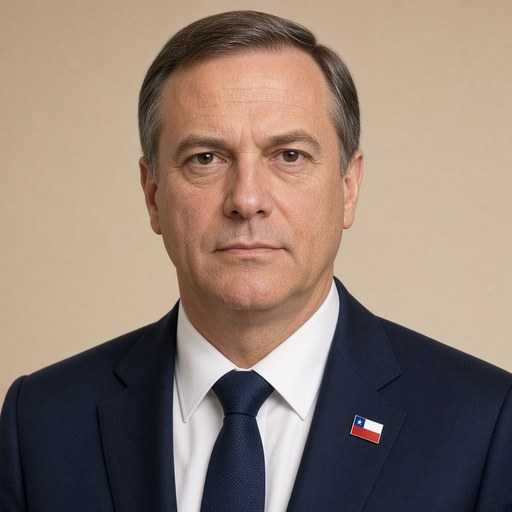
H.E. the President of the Republic José Antonio Kast presents the National Reconstruction Bill.
 José Antonio Kast · Leader of the Republican Party (Chile)
- Context
- Kast addressed fire victims in Lirquén, Penco, three days after assuming Chile's presidency, to present the National Reconstruction Bill on March 14, 2026.
- Main themes
- National reconstruction bill, wildfire disaster recovery, Valparaíso and Biobío fire victims, community solidarity, housing loss, government response and unity, cross-partisan cooperation, rebuilding homes and memories, cabinet coordination, local leadership
- Duration
- ~37 min
- Words
- 4,445
- Sentences
- 256
- Readability
- 67
- Grade
- 8.2
- Syntax
- 2.85
- Vocabulary
- 1.91
Translated from Spanish
The broad sphere of national life a sentence belongs to. Every sentence has an Arena, so it is the denominator the other indices are read against.
Other256 sentences in 58 paragraphs
Every time the media comes, every time the authorities come, you are re-victimized. But it is important for all of Chile to know the pain you have suffered and that this also serves to mobilize many wills. We have all the willingness, all the desire to collaborate.
But a tragedy like this, a tragedy like that of Valparaíso overwhelms us all. These are unexpected things that take everything away. And you can see it here. It not only took the buildings, it took family members, it took memories, stories, work, bonds, and this tragedy continues because some are still here in very precarious conditions, others have had to go very far away.
But what I highlight the most from what I have been able to see in these brief moments is the community. You have a tremendous community. And I hope we can testify to that throughout all of Chile. Each of the leaders, and I congratulate you because I saw only women, only women... no, I know there are men, but the people who, at least to me, explained things were very united female leaders. And that does not always happen.
I have had the opportunity to visit many areas in villas, small towns, apartment blocks, where there is a lot of tension. And here everyone told me: “We want a solution for the 720 neighbors who lost their homes.” No one said: “Hey, look... that this...”. No. Everyone, deep down, always spoke about everyone. Everyone spoke about the urgency of being able to facilitate the exit for the people who are still here because they have not found the possibility of a roof elsewhere. And that is moving.
Just as you are a community, I want to tell you that we are a team. And this is not just a President, it is a group of people, and today you have here the governor of the region. You have the mayors of the most affected municipalities. You have the parliamentarians from the region, who are committed. You have the presidential delegate, who has been recently appointed, to whom I give my thanks. You have regional councilors, council members. All focused on the same thing, not on the small political divisions that are legitimate. Not everyone voted for me, not everyone voted for the governor, not everyone voted for the mayor, but housing has no political color, memories have no political color. And that is what we have to present to you.
I thank the ministers who accompany me very much. I am joined by the Minister of Finance, who has a very difficult role. This was something unexpected, that was not in anyone's calculations.
We are joined by the Minister of Defense, who has done a great job and has to deploy throughout all of Chile. You know that we also have problems of another kind in the northern and southern areas, where we have had to ask for the collaboration of the Armed Forces.
I am accompanied by the Minister of Security, who has been very dedicated. On the first day, she could not join us in some activities because she immediately went south when she learned of the attack on a police officer. She was very well disposed on the first day to go to the Los Lagos Region.
I am accompanied by the Chief of Staff, the Minister of the Interior, and we are also joined by the Minister of Social Development. So, as you can see, we are a tremendous team and that is what we want to convey.
I prepared some words so as not to stray from the protocol.
Dear residents of Lirquén, new mayor. Three days ago we assumed the Government of Chile and today we are here in the municipality of Penco, Biobío Region, in this land that was unfortunately ravaged by fire two months ago. Through you, I want to address the Chileans, presenting a draft bill that proposes a National Reconstruction.
For years we talked about rebuilding our homeland, but now we have to add other reconstructions and, from here, we want to start working. We want the families of Ñuble and Biobío, who lost their homes, to be the first to know that this is a Government that is working for you. There have been discussions about why we use that concept, because in work, love for one’s neighbor is represented, in service what we want to do is reflected.
We want to take care, not worry, in seeking a prompt and effective solution, the best possible to alleviate the drama you have lived. We all know that it is not immediate. We do not have immediate solutions, but we are going to – as I say – take care. And we chose Lirquén to present this project because governing commits us to stand on the same ground where the problem is, where the pain of the people is.
We talked about the working tables when we first arrived. How many working tables are organized, well located, but not always are the authorities where the pain is. Where it is known, it is not lived because we, of course, come and go. But the transmission that you give us of your experiences is very important. Each minister will leave touched in the heart by what they have seen here.
And that is also something we have to convey to the people who later have to help us in the processing of the bills. Because we have to learn to improve situations every time situations like this occur. Only in the field can we learn the true urgency of the solution.
In the speech of March 11, when I assumed the Presidency of the Republic, I said something that many already know, but few have dared to speak clearly. And that is that we received a government in worse conditions than we imagined. This is not an excuse, because some say: “They are putting a bandage on the wound to avoid facing the problems.” No, to face the problems you have to know the deep reality. You have to know what resources are available. With which officials we will be able to count at all times. Which officials will be with you. Not that they come again and again to take one form or another, but who is going to bring you the real and effective solutions.
That is why we say that it is not an excuse to want to know the reality in order to have all the possible means to face the problem that was created after the fires.
And we must understand what has collapsed in Chile. Because, of course, here we see the destruction by fire. But in Chile, more things have broken, many more things. The economy has broken, it literally broke. Growth has stagnated, you here in the region have suffered the pain of unemployment, the lack of dignity, of not having good services, care, because the region and the country stopped in their tracks. Productivity has decreased, formal employment has been lost. And many, today, have that famous concept of “the boyfriend.” “No, I have a boyfriend here, a little boyfriend there,” but formal work is what provides certainty in life to get ahead.
And, of course, public finances have broken. Of the last 18 years, 16 of those 18 years, Chile has had a deficit, a debt that has been growing. In 2008, our debt equivalent to GDP was 5% and today it is 42%.
What family can withstand being in debt for 16 out of 18 years? Imagine that you all month, for 16 years, spent more than what you earn. Just the anguish of seeing the savings book, of seeing where one saves coins and there is none, that already generates a permanent anguish. Imagine an entire country in debt.
When one is in debt, they start looking for formulas, and when a country goes into debt, it loses credibility. Because we are not isolated, we are not an immensely rich country with natural riches. We have some, but not enough to solve all the problems. And when credibility is lost and the country loses credibility, they push you away and say: "No, look, it seems they don’t know how to manage finances.” This is the same as a house, but on a much larger scale.
When we do not take care of that and we break it and break our word and tell the world “no, we are orderly, we will fulfill what we committed to,” and every year we fail because we do not know how to make a budget, because we do not know how to say how much we are going to earn, how much we are going to spend, well, that credibility takes its toll. It happens to a neighbor and it happens to neighbors in places where there are stores. When the store starts, everyone on credit: “Hey, can you write me down in the notebook for credit?” But when it goes beyond credit, they say: “Hey, look, no...”. And suddenly, there is a sign that says: “No credit. No credit today or tomorrow.”
We want to regain credibility and forgive me for landing the example to something that is everyday. But we want the world to trust Chile again. To say again: “They are serious people, they are responsible people.”
That is why I have also indicated that we will have to take measures that are sometimes unpopular. That at first someone will say to me: “No, but they took this away from me.” But they took it away why? Because someone lied to you. Someone told you that you had all the resources, that you should not worry, “after all, the one who comes will pay.” Well, that has to change.
Here, evidently, the hardest thing is the loss of homes. It is a reality that took you years to build and was gone in seconds, in minutes. What we also want to say here is that we have not forgotten the neighbors of the Valparaíso Region. Because the legitimate fear of people who suffered the same as you did two years ago is that one tragedy will overshadow the other. And that since this is more alive, everyone focuses here and they are left abandoned.
We will not allow anyone to be left behind. Just as we want to take care of your situation, we are also doing so in the Valparaíso Region and in a moment we will have contact with someone you know, who is Minister Poduje. The one you all recognize the most among us is Minister Iván Poduje. He is tall just like the gentleman back there. But you recognize him and know that he is a down-to-earth man, a brave man, who does not shy away from problems and who himself says: “Look, I am also under evaluation.” I don’t know if you have heard anyone before, in a position like that, say: “Hey, I am going to evaluate this person, but also evaluate me. Yes, I will be accountable for what I do and for what I have not done.”
Here I also want to say that many said they were going to refound our homeland. And a whole democratic debate was generated, where an option won that said it was going to refound the country, but it did not prosper because common sense returned. And we realize that sometimes someone can speak very well, they say that I do not speak so well, but I speak from the heart.
Common sense returned and those who wanted to refound the country, who had the country in their hands, unfortunately did not know how to manage the country. Because if they were going to refound the country, the most obvious thing is that they could manage things like this, things like those in Valparaíso. Many authorities went, but the solutions did not arrive.
We indicated that this was an emergency government and it is an emergency government. When one talks about an emergency government, it is not a slogan, it is not a quick exit. No, there are real emergencies, but emergencies must be prioritized. Of course, we have an emergency in security, we have an emergency in health, we have an emergency in education, we have an emergency in housing, in transportation, but this emergency has a primary place. And if we are going to focus resources to solve these emergencies, well, we will have to leave something for a second opportunity. We do not have enough resources to face everything at once.
And where are the brothers who suffer the most? In those who do not have a home. And there again, I reiterate, we are working for you. We have been here for three days, it has been intense, but I believe everyone is happy, tired, but happy. Each one has traveled to different regions, different places and this is just beginning.
Time passes very quickly, four years fly by and these three days have been – as I tell you – very intense, but the Minister of Finance has prepared, along with the other ministers, a draft of the National Reconstruction project. And I say it is a draft because this also requires legislative discussion and I want to thank the parliamentarians who are here because they will be informed step by step this week of all the areas, because it is not only a physical reconstruction, but it is an economic, social, and order reconstruction, because we cannot forget those emergencies that are also present.
The minister, in a moment, will give the general guidelines and you will see that it is broader than just a material reconstruction. It is an economic reconstruction because we need more resources; it is an institutional reconstruction, to recover respect for the institutions that are currently questioned, we are questioned; and it is a fiscal reconstruction.
Also – and that is why the Minister of Security and the Minister of Defense are with us today – it is a reconstruction of order and security that allows society to function. What is the fear that some neighbors have here? That with nothing left, unscrupulous people come to steal the copper pipes. That is the level of disorder we can reach, of people who have no scruples, who in the pain of another are even capable of appropriating the only thing that remains.
This physical reconstruction, which is what we urgently need today, will propose an extraordinary allocation of resources of 400 billion pesos additional for the disaster-stricken areas, for this area. This is an important fiscal effort, and the minister does not pull it from just anywhere. He has also had to have the understanding of the other ministers. Because when one has to organize, one has to tell some: “Well, we have to save here, we have to save there.” All ministries will have to reduce their expenses in part to be able to transfer these resources where the urgency is.
Since not only urgent resources are required now and we have to seek to bring more people to invest in Chile, we also want to send a signal to those who are going to invest. Some always look for the easy solution, which is to raise taxes. “No, if he has it, he has to pay.” But when those who have are always being taken from, they also get tired. And suddenly, since this is an integrated world, they say: “Hey, but next door they are lowering taxes and here they are raising taxes.”
What would any of us do if we have the opportunity to obtain more resources with an investment? Look for the best investment. We have seen how national and foreign companies choose neighboring countries because there are lower taxes, because there are fewer regulations, and they leave us with nothing. Therefore, this bill also proposes a reduction in the corporate tax, which is a gradual timeline, from 27% to 23% of the corporate tax.
And we thus place ourselves at the level of something we always like to compare ourselves to, the OECD. Surely you have heard that we are OECD countries. You ask many neighbors and they say: “What is the OECD? Why do we compare ourselves with others?” Well, let’s compare ourselves in the things that serve us and in those that do not serve us, because we compare ourselves in some things and not in others. To collect taxes, we do not compare ourselves and we collect more. And for other things, we compare ourselves when it suits us. No, we want investment in Chile. We want to highlight the people who are going to come to Chile to invest to create jobs.
Also in Chile – here we see destroyed houses – there are about 100,000 homes that have not been sold. Again, because regulations are changing, they say: “No, it is unfair that he does not pay an additional tax.” Everyone knows the VAT. You buy bread, you pay VAT. Well, when you have 100,000 houses that are there and are not sold because they have a very high price, it means that no more houses will continue to be built while those houses are not sold. So, we will also propose the elimination of VAT for a limited period of 1 year, so that those houses can be sold and more houses can be built.
Construction provides a huge number of jobs. If I ask you here, how many of your relatives work in construction? it is most likely that many will raise their hands and say: “I haven’t had a job for a long time because the cranes have stopped.” And what people want is work.
We also want to strengthen formal jobs. That is why we are designing, the minister is designing a direct subsidy to unblock investment works. How many times does a procedure stop something indefinitely? And you do not know when you start processing something and you do not know when it ends. It happens to any neighbor, who arrives with a document and has to wait. “No, look, this stamp is missing, tell me what number you have for the driving order so that I can reach the final number,” and months and months go by.
We also have to reform some things in the environmental system, because the person comes first. With Minister Poduje, we have traveled all over Chile and we have seen that sometimes a finding, which is important, which must be treated with respect – some relic – but a finding is not more important than a person. Imagine if we found a finding, the CECOSF burned down. Imagine if now it appears, because they are doing excavations that were not done before, a finding appears. And that urgent CECOSF takes 2 or 3 years because a jar appeared. And archaeologists come, scientists come, to see how many years old the jar is.
And where is the person? I do not disregard the importance of a finding, but first is the care of the chronically ill, first is the care of the child, winter is coming. We need to expedite the care of people. And that also requires a clear public policy that people always come first, always the person first.
We also want to recover fiscal reconstruction with credibility. If we break our word again that the commitments established in the Budget Law will not be fulfilled, who will believe us? How are we going to go out into the world and tell them to come and invest if when we make the National Budget we change it three times because we did not know how to calculate?
Here I must recognize that the minister always anticipates, because he anticipates the problems that are going to come. And that is a job well done. Because I have to think about how the different situations that are occurring in the world today will affect me to prevent a greater disaster. Maybe I can get out in an emergency. But those emergencies are paid for, and when one does not foresee them, they are paid for more dearly. That is why it is important to plan and do things well.
In terms of security, many neighbors are affected by informal loans. It is most likely that when someone has a very high need, they accept that someone lends them money and then charges them excessively. That goes outside legal norms. And the recovery of those loans is sometimes violent. And we have seen in many areas of the country how what one used to say: “What is ‘the drop by drop’?” has settled. I ask for 100,000 pesos and end up paying 300,000, and if I don’t pay, I can suffer violence. That is organized crime. We are going to confront that.
How many times do we see that there are people who live off smuggling? And our borders are porous. And we can put all the laws, raise all the taxes, but if we do not control our borders, the drugs, the cigarettes that come in trucks and trucks, who has not bought loose cigarettes? Because addiction can. Well, but what does that do? It breaks the order and we have to ask everyone to start complying with the law.
For that, we also have to combat smuggling, the illegal trafficking of people, because illegal trafficking of people is a business. And there the Minister of Security is focused. I cannot explain how focused she is with her team. Because if there is no order, there is no development, and if there is no security, there is no freedom.
Suddenly, one sees some semblance of freedom, but if there is no order and there is no security, that freedom is just a fleeting dream that goes away very quickly.
I must highlight what I said at the beginning, the community. Every time Chile has had a tragedy, we unite and stand up. You have been hit several times by nature. The 27F, all of Chile during the pandemic, the fires, and it is most likely that nature will continue to shake us. Because there are things that cannot be prevented, but the strength of Chile is the unity of its population, of its people. You bear witness, and that is why I thank you so much for the journey we took, because you showed us in practice how unity is maintained and solidarity remains.
Our job is to simplify procedures. Our job is to learn from a tragedy. Your mother passed away, and you say: “Look, it is not just having lost my mom, it is reliving my mother’s death every time I have to do a procedure that is inexplicable.” There are people who lost their relatives and do not live here and cannot do anything because they have another home, they have something else, it is a co-ownership. All pure problems. No one is making life easier for people, and that is what we want to do.
We want to keep our word so as not to lose your trust. And every time you require the presence of any authority, we will be there. Perhaps I will not be there, the Minister of Finance may not be there, the ministers may not be there, but we also have a delegate, to whom we have entrusted the responsibility of being there. We have a great governor there, who is doing an admirable job, together with the mayors. The drama is that they do not have the resources. Because even for that, Chile was not prepared. They ask the governors to provide resources, and the budgets are not approved at the beginning of the year. Well, everything works halfway.
But we want to tell the families of Lirquén, the families of Biobío, Ñuble, and Valparaíso that we are working. We want to tell the entrepreneurs that we are thinking of you, to the people who are going to invest, that we are thinking of you and we are working for you. To those taxpayers who pay their taxes, that their taxes will be well used and that, just as we are asking for audits, we must also be audited. Because he who does nothing fears nothing. If someone does something wrong, they will have to stop what they are doing.
For the elderly, of whom there are several, we committed to ensuring that the first home would stop paying property taxes. Here even some told me: “Hey, I am still paying property taxes, and look, why am I going to keep paying for cleaning, property taxes, if I have nothing?” Well, our first measure, because this is step by step, is that the elderly stop paying their property taxes for the first home. Because it is fair, it is a right that people do not pay rent for what is theirs.
Chile deserves reconstruction, Chile can be rebuilt, and this Government takes on that task with seriousness, with the necessary urgency, and with the conviction required for these difficult moments. And today we begin here, in Lirquén. So, thank you for welcoming us, and you will be living testimony that this Government is indeed concerned with working for you. Thank you very much.
And since we cannot leave out the one who is busier than anyone else, and here also something I did not say, the first decree I signed was to ask the one whom people identify as the one who rebuilds homes, which is the Minister of Housing, to take on the responsibility of reconstruction. I was surprised when they asked a minister: “Hey, are you the minister of reconstruction?” “No.” “And who is?” And it’s like they keep passing the responsibility.
Well, the reconstruction in Valparaíso was entrusted to the Minister of Social Development. Social Development has other obligations. When one sees that a house is burning, who do you think of? Housing, yes, it is evident, it is common sense.
So, we have talked with the Minister of Social Development to keep her focused and working on the thousands and hundreds of occupations she has, and we have transferred the responsibility of reconstruction to Minister Poduje, who is now with the spokesperson minister, Mara Sedini, in Valparaíso.
And we will see if technology accompanies us to be able to communicate with Minister Poduje and the spokesperson minister who are in Valparaíso, to make it clear that we do not leave anyone behind.
The original Spanish. The tags above are read on the English translation's sentences.
Cada vez que vienen los medios, cada vez que vienen las autoridades, ustedes se revictimizan. Pero es importante que todo Chile conozca el dolor que ustedes han sufrido y que esto también sirva para movilizar muchas voluntades. Nosotros tenemos toda la disposición, todas las ganas para colaborar.
Pero una tragedia como esta, una tragedia como la de Valparaíso nos supera a todos. Son cosas inesperadas que se llevan todo. Y ustedes lo pueden ver acá. No solamente se llevó los edificios, se llevó a familiares, se llevó recuerdos, historias, trabajo, vínculos y esta tragedia sigue porque algunos siguen aquí en condiciones muy precarias, otros se han tenido que ir muy lejos.
Pero lo que más destaco de lo que he podido recorrer en estos breves instantes es la comunidad. Tienen una tremenda comunidad. Y eso ojalá lo pudiéramos testimoniar a lo largo todo Chile. Cada una de las dirigentes, y las felicito porque vi puras mujeres, puras mujeres…no, si sé que hay hombres, pero las personas que, al menos a mí, me explicaron fueron dirigentas muy unidas. Y eso no siempre se da.
Me ha tocado recorrer muchas zonas en villas, villorrios, blocks de departamentos, ahí hay mucha tensión. Y aquí todas me dijeron: “Queremos solución para los 720 vecinos que perdieron las viviendas”. Nadie dijo: “Oiga, yo mire… que esto…”. No. Todos, en el fondo, siempre hablaron de todos. Todos hablaron de la urgencia de poder facilitarles la salida a las personas que siguen aquí, porque no han encontrado la posibilidad de un techo en algún otro lugar. Y eso conmueve.
Así como ustedes son una comunidad, quiero decirles que nosotros somos un equipo. Y esto no es un Presidente, es un grupo de personas y hoy día ustedes cuentan acá con el gobernador de la región. Cuentan con los alcaldes de las comunas más afectadas. Cuentan con los parlamentarios de la región, que están comprometidos. Cuentan con el delegado presidencial, que ha sido recientemente nombrado, a quien le doy las gracias. Cuentan con consejeros regionales, con concejales. Todos enfocados en lo mismo, no en las pequeñas divisiones políticas que son legítimas. No todos votaron por mí, no todos votaron por el gobernador, no todos votaron por el alcalde, pero la vivienda no tiene color político, los recuerdos no tienen color político. Y eso es lo que nosotros tenemos que plantearles.
Les agradezco mucho a los ministros que me acompañan. Me acompaña el ministro de Hacienda, que tiene un rol muy difícil. Esto era algo inesperado, que no estaba en los cálculos de nadie.
Nos acompaña el ministro de Defensa, que ha hecho una gran labor y tiene que desplegarse a lo largo de todo Chile. Ustedes saben que tenemos problemas también de otro tipo en la zona norte y en la zona sur, donde hemos tenido que pedir la colaboración de las Fuerzas Armadas.
Me acompaña la ministra de Seguridad, que ha estado aplicada. El primer día no nos pudo acompañar en algunas actividades porque partió inmediatamente al sur cuando supo del atentado, del ataque a un carabinero. Ahí estaba ella muy bien dispuesta el primer día para ir a la Región de Los Lagos.
Me acompaña el jefe de Gabinete, el ministro del Interior y también nos acompaña la ministra de Desarrollo Social. Así que, como ven, somos un tremendo equipo y eso es lo que queremos plasmar.
Preparé unas palabras para no seguir saliéndome del protocolo.
Estimados habitantes de Lirquén, nuevo alcalde. Hace 3 días asumimos el Gobierno de Chile y hoy estamos aquí en la comuna de Penco, Región de Biobío, en esta tierra que lamentablemente fue arrasada por el fuego hace dos meses atrás. A través de ustedes, quiero dirigirme a los chilenos, presentándoles un borrador de proyecto de ley que plantea una Reconstrucción Nacional.
Hace años hablábamos de reconstruir nuestra patria, pero ahora tenemos que agregar otras reconstrucciones y, desde aquí, queremos partir trabajando. Queremos que las familias de Ñuble y Biobío, que perdieron sus casas, sean las primeras en saber que este es un Gobierno que está trabajando para usted. Ha habido discusiones de por qué usamos ese concepto, porque en el trabajo se representa el amor hacia el prójimo, en el servicio está reflejado lo que nosotros queremos hacer.
Queremos ocuparnos, no preocuparnos, en buscar una pronta y eficaz solución, la mejor posible para aliviar el drama que han vivido. Todos sabemos que no es inmediato. No tenemos soluciones inmediatas, pero nos vamos a –como digo– ocupar. Y elegimos Lirquén para presentar este proyecto, porque gobernar nos compromete a pararnos en el mismo suelo donde está el problema, donde está el dolor de las personas.
Hablábamos de las mesas de trabajo, cuando recién llegamos. Cuántas mesas de trabajo se organizan, bien ubicadas, pero no siempre las autoridades están donde está el dolor. Donde se conoce, no se vive porque nosotros, claro, venimos y nos vamos. Pero la transmisión que ustedes nos hacen de sus vivencias es muy importante. Cada ministro se va a ir tocado en el corazón por lo que ha visto acá.
Y eso también tenemos que ir transmitiéndoselo aquí a las personas que después tienen que colaborarnos en la tramitación de los proyectos de ley. Porque tenemos que ir aprendiendo a mejorar las situaciones, cada vez que se producen situaciones como esta. Solo en terreno, se aprende la verdadera urgencia de la solución.
En el discurso del 11 de marzo, cuando asumí la Presidencia de la República, dije algo que ya muchos saben, pero pocos se han atrevido a hablar con claridad. Y es que recibimos un gobierno en peores condiciones de las que nos imaginábamos. Esto no es excusa, porque algunos dicen: “Se están poniendo el parche antes de la herida para no enfrentar los problemas”. No, para enfrentar los problemas hay que conocer la realidad profunda. Hay que saber con qué recursos se cuenta. Con qué funcionarios vamos a poder contar a todo evento. Qué funcionarios van a estar con ustedes. No que vengan una y otra vez a tomar una ficha u otra ficha, sino quién va a traerles las soluciones reales y efectivas.
Por eso decimos que no es una excusa querer conocer la realidad para poder disponer de todos los medios posibles, para enfrentar el problema que se creó después de los incendios.
Y hay que entender qué se derrumbó en Chile. Porque claro, aquí vemos la destrucción por el fuego. Pero en Chile se han roto más cosas, muchas más cosas. Se rompió la economía, literalmente se rompió. El crecimiento se estancó, ustedes aquí en la región han sufrido el dolor del desempleo, la falta de dignidad, de no tener buenos servicios, atenciones, porque la región y el país se detuvo en su andar. Bajó la productividad, el empleo formal se ha ido perdiendo. Y muchos, hoy día, tienen ese famoso concepto del “pololo”. “No, tengo un pololo aquí, un pololito acá”, pero el trabajo formal es lo que da certeza en la vida para salir adelante.
Y, por supuesto, se rompieron las finanzas públicas. De los últimos 18 años, 16 años de esos 18, Chile ha tenido un déficit, una deuda que ha ido creciendo. El año 2008, nuestra deuda equivalente al PIB era de un 5% y hoy día es del 42%.
¿Qué familia resiste endeudándose 16 de 18 años? Imagínense que ustedes todos los meses, durante 16 años, gastaran más de lo que les ingresa. Ya la pura angustia de ver la libreta de ahorro, de ver donde uno junta las monedas y que no hay, eso ya genera una angustia permanente. Imagínense un país entero endeudado.
Cuando uno está endeudado empieza a buscar fórmulas y cuando un país se endeuda pierde la credibilidad. Porque no estamos aislados, no somos un país inmensamente rico con riquezas naturales. Tenemos, pero no para poder solucionar todos los problemas. Y cuando se pierde la credibilidad y el país pierde la credibilidad, lo van alejando y dicen: "No, mira, parece que no saben llevar las finanzas”. Esto es igual que una casa, pero muy en grande.
Cuando no cuidamos eso y lo rompemos y rompemos nuestra palabra y le decimos al mundo “no, nosotros somos ordenados, vamos a cumplir lo que comprometimos”, y todos los años fallamos porque no sabemos hacer un presupuesto, porque no sabemos decir cuánto nos va a entrar, cuánto vamos a gastar, bueno, esa credibilidad pasa la cuenta. Le pasa a un vecino y les pasa a los vecinos en lugares donde hay almacenes. Cuando parte el almacén, todos con fiado: “Oiga, ¿me puede anotar en el cuaderno el fiado?” Pero cuando se pasa del fiado le dicen: “Oiga, mire, no…”. Y, de repente, hay un cartel que dice: “No se fía. No se fía hoy ni mañana”.
Nosotros queremos recuperar la credibilidad y perdonen que aterrice el ejemplo a algo que es cotidiano. Pero nosotros queremos que el mundo vuelva a confiar en Chile. Que vuelvan a decir: “Son personas serias, son personas responsables”.
Por eso también he señalado que vamos a tener que tomar medidas que, a veces, son impopulares. Que al principio alguien me va a decir: “No, pero es que me quitaron esto”. Pero se lo quitaron ¿por qué? Porque alguien le mintió. Alguien le dijo que tenía todos los recursos, que no se preocupe, “total paga el que viene”. Bueno, eso tiene que cambiar.
Aquí, evidentemente, lo más duro es la pérdida de las viviendas. Es una realidad que les tomó años construir y se fue en segundos, en minutos. Lo que también queremos decir acá es que no hemos olvidado a los vecinos de la Región de Valparaíso. Porque el temor legítimo de personas que sufrieron lo mismo que ustedes sufrieron hace 2 años atrás es que una tragedia oculte la otra. Y que como esto está más vivo, todo el mundo se enfoque acá y ellos queden abandonados.
Nosotros no vamos a permitir que nadie quede atrás. Así como queremos ocuparnos de la situación de ustedes, también lo estamos haciendo en la Región de Valparaíso y en un momento más vamos a tener un contacto con alguien que ustedes conocen, que es el ministro Poduje. Al que más ubican de todos nosotros es al ministro Iván Poduje. Es alto igual que el caballero que está allá atrás. Pero a él lo ubican y saben que es un hombre terreno, es un hombre valiente, que no rehúye a los problemas y que él mismo dice: “Mire, yo también estoy en evaluación”. Yo no sé si habían escuchado a alguien antes, en un cargo como ese, y dice: “Oiga, yo voy a evaluar a esta persona, pero también evalúenme a mí. Sí yo voy a responder por lo que hago y por lo que no he hecho”.
Aquí también decir que hay muchos que decían que iban a refundar nuestra patria. Y se generó todo un debate democrático, donde ganó una opción que dijo que iba a refundar el país, pero no prosperó porque volvió el sentido común. Y nos damos cuenta de que a veces alguien puede hablar muy bien, dicen que yo no hablo tan bien, pero hablo del corazón.
El sentido común volvió y aquellos que quisieron refundar el país, que tuvieron el país en sus manos, lamentablemente no supieron gestionar el país. Porque si iban a refundar el país, lo más evidente es que pudieran gestionar cosas como esta, cosas como las de Valparaíso. Iban muchas autoridades, pero las soluciones no llegaban.
Nosotros señalamos que este era un gobierno de emergencia y es un gobierno de emergencia. Cuando uno habla de gobierno de emergencia no es un eslogan, no es una salida rápida. No, hay emergencias reales, pero las emergencias hay que priorizarlas. Claro, tenemos una emergencia en seguridad, tenemos una emergencia en salud, tenemos una emergencia en educación, tenemos una emergencia en vivienda, en transporte, pero esta emergencia tiene un lugar primordial. Y si vamos a enfocar recursos a solucionar estas emergencias, bueno, algo vamos a tener que dejar para una segunda oportunidad. No tenemos los recursos suficientes para enfrentar todo de una vez.
¿Y dónde están los hermanos que más sufren? En los que no tienen casa. Y ahí de nuevo, reitero, que estamos trabajando para ustedes. Llevamos 3 días, ha sido intenso, pero yo creo que todos están felices, cansados, pero felices. Cada uno ha recorrido distintas regiones, distintos lugares y esto está recién comenzando.
El tiempo pasa muy rápido, cuatro años pasan volando y estos tres días han sido –como les digo– muy intensos, pero el ministro de Hacienda ha preparado, junto con los otros ministros, un borrador de proyecto de Reconstrucción Nacional. Y digo que es un borrador, porque esto requiere también una discusión legislativa y les quiero dar las gracias a los parlamentarios que están acá porque a ellos se les va a ir informando paso a paso esta semana de todas las áreas, porque no es solamente una reconstrucción física, sino que es una reconstrucción económica, social, de orden, porque esas emergencias que están, tampoco las podemos olvidar.
El ministro, en un momento más, va a dar los lineamientos generales y ustedes van a ver que es más amplio que solamente una reconstrucción material. Es una reconstrucción económica, porque necesitamos más recursos; es una reconstrucción institucional, de recuperar el respeto a las instituciones que hoy día están cuestionadas, estamos cuestionados; y es una reconstrucción fiscal.
También –y por eso la ministra de Seguridad y el ministro de Defensa nos acompañan hoy día– es una reconstrucción del orden y la seguridad que permite que la sociedad funcione. ¿Cuál es el temor incluso que tienen algunos vecinos acá? Que ya no quedando nada, vienen inescrupulosos a robarse las cañerías de cobre. Ese es el nivel del desorden que podemos llegar a tener, de las personas que no tienen escrúpulos, que en el dolor de otro incluso son capaces de apropiarse de lo único que queda.
Esa reconstrucción física que es la que hoy día nos urge más, se va a proponer una asignación extraordinaria de recursos de 400 mil millones de pesos adicionales para las zonas siniestradas, para esta zona. Eso es un esfuerzo fiscal importante y el ministro no lo saca de cualquier parte. Ha tenido que también que tener la comprensión del resto de los ministros. Porque cuando uno tiene que ordenarse, a algunos tiene que decirles: “Bueno, tenemos que ahorrar acá, tenemos que ahorrar acá”. Todos los ministerios van a tener que reducir en parte sus gastos para poder traspasar estos recursos donde está la urgencia.
Como no solamente se requerían recursos ahora urgentes y tenemos que procurar que vengan más personas a invertir a Chile, también queremos dar una señal a aquellos que van a invertir. Algunos buscan siempre la solución fácil, que es subir los impuestos. “No, si él tiene y él tiene que pagar”. Pero cuando al que tiene siempre le van sacando, también se cansa. Y de repente, como este es un mundo integrado, dice: “Oiga, pero aquí al lado están bajando los impuestos y aquí están subiendo los impuestos”.
¿Qué haría cualquiera de nosotros, si tiene oportunidad de obtener más recursos con una inversión? Buscar la mejor inversión. Hemos visto cómo empresas nacionales y extranjeras eligen países vecinos porque hay baja de impuestos, porque hay menos regulaciones y nos dejan a nosotros sin nada. Por lo tanto, también este proyecto de ley plantea una rebaja al impuesto corporativo, que es un plazo gradual, del 27 al 23% del impuesto corporativo.
Y nos ponemos así al nivel de algo que siempre nos gusta compararnos, la OCDE. Seguramente alguna vez habrán escuchado que somos países de la OCDE. Usted les pregunta a muchos vecinos y dicen: “¿Qué es la OCDE? ¿Por qué nos comparamos con otros?”. Bueno, comparémonos en las cosas que nos sirven y en las que no nos sirven, porque nos comparamos en algunas cosas y en otras no. Para cobrar impuestos no nos comparamos y cobramos más. Y para otras cosas nos comparamos cuando nos conviene. No, nosotros queremos que en Chile haya inversión. Nosotros queremos destacar a las personas que van a venir a Chile a invertir para dar trabajo.
También en Chile –aquí vemos casas destruidas–, hay cerca de 100 mil viviendas que no se han vendido. De nuevo, porque van cambiando normas, pues dicen: “No, es que es injusto que él no pague un impuesto adicional”. Todos saben el IVA. Usted compra pan, paga IVA. Bueno, cuando usted tiene 100 mil casas que están ahí y que no se venden porque tienen un precio muy alto, quiere decir que no se van a seguir construyendo casas mientras esas casas no se vendan. Entonces, también vamos a plantear una eliminación del IVA por un plazo acotado de 1 año, para que esas casas puedan venderse y se puedan construir más casas.
La construcción da una cantidad de empleos enormes. Si yo les pregunto aquí, ¿cuántos de sus familiares trabajan en construcción? lo más probable es que muchos levanten la mano y digan: “Hace tiempo que no tengo trabajo porque las grúas se pararon”. Y lo que la gente quiere es trabajo.
También queremos fortalecer los empleos formales. Por eso estamos diseñando, el ministro está diseñando un subsidio directo para destrabar obras de inversión. ¿Cuántas veces un trámite detiene algo de manera infinita? Y no sabe cuándo entra a tramitar algo y no sabe cuándo termina. Le pasa a cualquier vecino, que llega con un documento y tiene que esperar. “No, mire falta este timbre, dígame qué número tiene la orden de conducción para que yo pueda llegar al número final” y pasan meses y meses.
También tenemos que reformar algunas cosas en el sistema ambiental, porque la persona está primero. Con el ministro Poduje hemos recorrido Chile entero y hemos visto cuando a veces un hallazgo, que es importante, que hay que tratarlo con respeto –alguna reliquia– pero un hallazgo no es más importante que una persona. Imagínense que encontráramos un hallazgo, se quemó el CECOSF. Imagínense que ahora aparezca, porque están haciendo excavaciones que antes no se hacían, aparezca un hallazgo. Y ese CECOSF que es urgente, se demore 2 o 3 años porque apareció un cántaro. Y vienen los arqueólogos, vienen científicos, para ver cuántos años tiene el cántaro.
¿Y dónde está la persona? Si yo no desconozco la importancia de un hallazgo, pero primero es la atención de los crónicos, primero es la atención del niño, viene el invierno. Nosotros necesitamos agilizar la atención de las personas. Y eso requiere también una política pública clara de que las personas están siempre primero, siempre la persona primero.
La reconstrucción fiscal también la queremos recuperar con la credibilidad. Si nosotros volvemos a romper nuestra palabra de que no se va a cumplir los compromisos establecidos en la Ley de Presupuesto, ¿quién va a creer en nosotros? ¿cómo vamos a salir al mundo a decirles que vengan a invertir si es que cuando hacemos el Presupuesto de la Nación lo cambiamos tres veces porque no supimos calcular?
Aquí debo reconocer que el ministro siempre se anticipa, porque se adelanta a los problemas que van a venir. Y ese es el trabajo bien hecho. Porque yo tengo que pensar cómo me van a afectar las distintas situaciones que están ocurriendo en el mundo hoy día para prevenir un desastre mayor. A lo mejor yo puedo salir en la emergencia. Pero esas emergencias se pagan y cuando uno no las prevé, se pagan más caro. Por eso es importante planificarse y hacer las cosas bien.
En el orden de la seguridad, muchos vecinos se ven afectados por los créditos informales. Lo más probable es que cuando alguien tiene una necesidad muy alta, acepta que alguien le facilite dinero y después le cobre de manera desmedida. Eso sale de las normas legales. Y la recuperación de esos créditos, a veces, es con violencia. Y hemos visto en muchas zonas del país cómo se instaló lo que antes uno decía: “¿Qué es lo que será ‘el gota a gota’?”. Yo pido 100.000 pesos y termino pagando 300 000, y si no los pago, puedo sufrir violencia. Eso es crimen organizado. Eso lo vamos a enfrentar.
¿Cuántas veces vemos que hay gente que vive del contrabando? Y nuestras fronteras son porosas. Y podemos poner todas las leyes, subir todos los impuestos, pero si nosotros no controlamos nuestras fronteras, la droga, los cigarrillos que vienen en camiones y camiones, ¿quién no ha comprado cigarrillos sueltos? Porque el vicio puede. Bueno, pero eso, ¿qué es lo que hace? Rompe el orden y nosotros tenemos que pedirles a todos que empecemos a cumplir la ley.
Para eso hay que combatir también el contrabando, el tráfico ilegal de personas, porque es un negocio el tráfico ilegal de personas. Y ahí la ministra de Seguridad está aplicada. No les explico lo aplicada que está con su equipo. Porque si no hay orden, no hay desarrollo y si no hay seguridad, no hay libertad.
De pronto a veces uno ve algún rasgo de libertad, pero si no hay orden y no hay seguridad, esa libertad es solo un sueño pasajero que se va muy rápido.
Sí debo destacar lo que dije al principio, la comunidad. Cada vez que Chile ha tenido una tragedia, nosotros nos unimos y nos ponemos de pie. Ustedes han sido golpeados varias veces por la naturaleza. El 27F, todo Chile por la pandemia, los incendios y lo más probable es que la naturaleza nos va a seguir remeciendo. Porque hay cosas que no se pueden prevenir, pero la fortaleza de Chile es la unidad de su población, de su gente. Ustedes dan testimonio y por eso le agradezco tanto el recorrido que hicimos, porque fueron mostrándonos en los hechos cómo la unidad se mantiene y la solidaridad permanece.
Nuestra labor es simplificar los trámites. Nuestra labor es que de una tragedia aprendamos. Su madre partió y usted dice: “Mire, no es solamente haber perdido a mi mamá, es revivir la muerte de mi madre cada vez que tengo que hacer un trámite que es inexplicable”. Hay personas que perdieron a sus familiares y no viven aquí y no pueden hacer nada porque tienen otra vivienda, tienen algo más, es una copropiedad. Todos puros problemas. Nadie le está facilitando la vida a la gente y eso es lo que nosotros queremos hacer.
Nosotros queremos cumplir la palabra para no perder su confianza. Y cada vez que ustedes requieran de la presencia de alguna autoridad estaremos. Quizás no estaré yo, no podrá estar el ministro de Hacienda, no podrán estar los ministros, pero también tenemos un delegado, a quien le hemos confiado la responsabilidad de estar. Tenemos a un gran gobernador ahí, que está haciendo una pega encomiable, en conjunto con los alcaldes. El drama es que no tienen los recursos. Porque incluso para eso Chile no estaba preparado. Les piden a los gobernadores que entreguen recursos y no están aprobados los presupuestos a principio de año. Bueno, todo funciona a medias.
Pero queremos decirles a las familias de Lirquén, a las familias de Biobío, de Ñuble, de Valparaíso, que estamos trabajando. Queremos decirles a los emprendedores que estamos pensando en ustedes, a las personas que van a invertir, que estamos pensando en ustedes y estamos trabajando para ustedes. A esos contribuyentes que pagan sus impuestos, que sus impuestos van a ser bien utilizados y que, así como nosotros estamos pidiendo auditorías, a nosotros también tienen que auditarnos. Porque el que nada hace, nada teme. Si alguien hace algo malo tendrá que dejar lo que está haciendo.
Para los adultos mayores, que hay varios, nosotros nos comprometimos a que la primera vivienda iba a dejar de pagar contribuciones. Aquí incluso algunos me decían: “Oiga, yo sigo pagando contribuciones y mire, ¿por qué voy a seguir pagando aseo, contribuciones, si no tengo nada?”. Bueno, nuestra primera medida, porque esto es paso a paso, es que los adultos mayores dejen de pagar sus contribuciones por la primera vivienda. Porque es justo, es un derecho que las personas no paguen un arriendo por lo que es suyo.
Chile merece una reconstrucción, Chile puede reconstruirse y este Gobierno asume esa tarea con seriedad, con la urgencia necesaria y con la convicción que se requiere para estos momentos difíciles. Y hoy comenzamos aquí, en Lirquén. Así que, gracias a ustedes por acogernos y ustedes serán testimonio vivo de que este Gobierno sí está ocupado de trabajar por usted. Muchas, muchas gracias.
Y como no podemos dejar afuera al que está más ocupado que todos y aquí también algo que no dije, el primer decreto que firmé fue pedirle a quien la gente identifica como el que reconstruye las viviendas, que es el ministro de la Vivienda, que él asuma la responsabilidad de la reconstrucción. Yo, claro, me sorprendí cuando le preguntan a un ministro: “Oiga, ¿y usted es el ministro de la reconstrucción?”. “No”. “¿Y quién es?” Y como que se van pasando la responsabilidad.
Bueno, la reconstrucción en Valparaíso se le encomendó a la ministra de Desarrollo Social. Desarrollo Social tiene otras obligaciones. Cuando uno ve que se quema una casa, ¿en quién piensa? En Vivienda, sí es evidente, es de sentido común.
Entonces, hemos hablado con la ministra de Desarrollo Social que siga aplicada y trabajando en las miles y cientos de ocupaciones que tiene y le hemos traspasado la responsabilidad de la reconstrucción al ministro Poduje, quien está ahora con la ministra vocera, Mara Sedini, en Valparaíso.
Y vamos a ver si la tecnología nos acompaña para poder comunicarnos con el ministro Poduje y la ministra vocera que están en Valparaíso, para que quede claro que no dejamos a nadie atrás.