




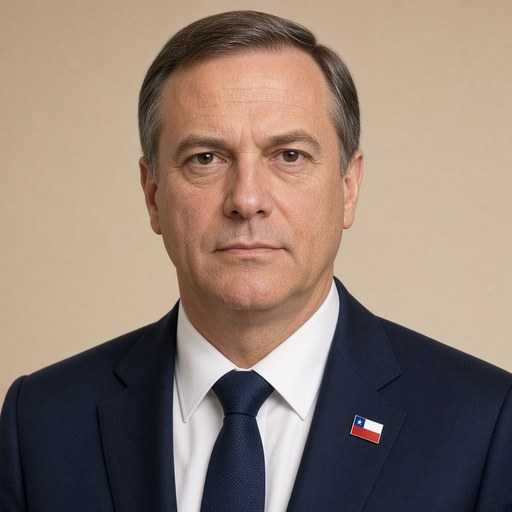
His Excellency the President of the Republic, José Antonio Kast, visits the Industrial Mining Training Center in Antofagasta.
 José Antonio Kast · Leader of the Republican Party (Chile)
- Context
- Kast addressed trainees, officials, and local leaders at the Industrial Mining Training Center in Antofagasta on March 17, 2026, highlighting Chile's copper wealth and youth opportunity.
- Main themes
- Mining industry and copper production, vocational training for youth, economic development and investment, Chile's mining potential, renewable energy, artificial intelligence and technology, regional development in Antofagasta, foreign investment, peaceful democratic transition, government collaboration
- Duration
- ~32 min
- Words
- 3,880
- Sentences
- 276
- Readability
- 66
- Grade
- 7.5
- Syntax
- 2.62
- Vocabulary
- 1.93
Translated from Spanish
The broad sphere of national life a sentence belongs to. Every sentence has an Arena, so it is the denominator the other indices are read against.
Other276 sentences in 58 paragraphs
Good afternoon, very, very good afternoon.
I apologize, Minister, for turning my back to you. First, I want to thank the tremendous team that accompanies me. It is not common to have so much, so much, so much commitment and willingness. And to the Undersecretary, thank you, Undersecretary, because here at this moment there are three ministries present, four if we consider the delegate as part of the Ministry of the Interior. But we have the Ministry of Foreign Affairs, which opens the door to the world for us. The Ministry of the Interior is well represented by our regional delegate. The Ministry of Economy and Mining is here because the minister had to shoulder two ministries; we appreciate his commitment. And we also have our Minister of Finance, who has given us good news, only good news.
You are here, but the most important ones are these young people next to me and those other young people over there, whom I also met. And for them, I want the first round of applause.
Because everything you are doing, mayors, thank you, mayor, thank you, mayor, mayors for being here with us, councilors, you are the ones who also have to give us all the possibilities for all Chileans, not just one sector or another, the facilities.
But we are all working for them because they are the future. Many of us have already turned gray – as they say – but our challenge is for them to have the best future. That one of them someday sits there, as president of a great company, as director of an establishment like that. Those are big dreams. It is a huge machine, it is a dream. Who wouldn’t want to be there?
You have that possibility; you are coming down from a practice, from a place that few people know. And the name says it all, Escondida, but the world knows what Escondida is, and we are here today at a relevant and important ceremony.
For me, it is a privilege to be once again in Antofagasta. A few months ago, we were here, on the way to Calama, in the more industrial area, and we talked mostly about security, about the security of people, of industries. Today we talk about dreams, about dreams of progress, about dreams of better lives for our compatriots.
When I served as a deputy, I always went where people said: Look, one sometimes forgets the obvious, everyday things. One forgets to say thank you when someone helps you with something. One forgets to greet in the mornings. One forgets so many things that seem habitual. And sometimes we forget that northern Chile is an impressive power. We forget the gift of nature, of being literally on top of, not a gold mine, but today copper is almost as important as gold for the world.
And that we are one of the countries with the largest copper reserves on the planet. We forget, it seems obvious. When you go on the way to Calama, you say: Oh look, there is this mine, there is this other one. But it is like part of the landscape. You cannot imagine the thousands of jobs that are there. All of Chile looking north. How many people travel thousands of kilometers to get here. But since they live here, sometimes one forgets where they are standing.
Chile is responsible for almost a third of the world’s copper production. It is impressive. But it could be there, abandoned. But no, there are you, who take that to the whole world, especially today. Copper is increasingly necessary. Because there is a lot of future, and that reflects the confidence you have to continue increasing investments.
There is a future in copper. Electric cars, all the data centers for artificial intelligence. There you have to meet the Minister of Science, who is focused on the issue of artificial intelligence to not see it as a threat, but as a possibility for new ventures, new developments. Everything that is renewable energies.
What we lack now is to be able to bring those renewable energies to Santiago. But we are also working on that. Because the people of Santiago not only want the benefit of what they receive from copper taxes, but they also want to have electricity at a reasonable price. And the other good news is that prices are high.
So, what better time than now to make the necessary investments. Because this union of factors, that Chile has that mining power, that prices are high, that we have ministers who will be judged by order, by respect for legislation, by active collaboration with people who dare to invest, does not always happen.
And foreign investment funds see that. Because Chile is part of this global world. International mining companies see it, governments see it. The peaceful transfer of power that we had, peaceful in the broadest sense of the word, well, it was a milestone. Not in all countries does what we experienced happen: responsibility, respect, orderly transfer of power. The presidents with whom I was able to share were amazed, surprised, and all they wanted was collaboration.
What you do here is important, for example, for countries like Panama, which also has mining wealth, but they still do not know the power that their citizens have. So, if you young people went to Panama and told them: look, this is the experience, this is what a country achieves when it does things right, perhaps in Panama they could develop an important mining sector.
In Ecuador, in Peru where there is mining, but in Ecuador they still have not awakened to mining, in Argentina which is just waking up to the mining issue. Well, all of these are possibilities for us.
As my father used to say, we must be generous in sharing knowledge because there is enough for everyone. The world requires more copper, and we have the human capital that has been talked about here. If you prepare well, well, destiny can take you to Ecuador, Argentina, Canada, to different countries. The whole world opens up to you in the training you receive here.
Chile today has that strategic position because we not only have a third of the world’s mining potential, but we also have the human capital. We have the possibility for you to acquire what adds to something you already have. Because when they explained to me what was here, the first thing is attitude. I am sure that any of you have attitude because you are willing to come here. There was someone who came from Machalí. Attitude. I go and take the risk because I believe in the future I will receive here.
You have attitude, which from your educational establishment you rise to prepare yourselves. But what we lack are knowledge and skills. And that is what you provide here. So thank you for those concepts because attitude is followed by knowledge and skills, which is what you make available to 33,000 people a year. I say it is incredible, 33,000 people a year who can receive that support to have the knowledge and skills.
It is a projection of something that I always repeat, repeat, from the Bicentennial Mining High School Juan Pablo II of Alto Hospicio. Because there is also something important. That you, at least the six of you who are here, are from Antofagasta. Therefore, you will most likely settle in your jobs here, unless you go to another country and have a destination abroad. But many times the regions say: we want the people who are here to be from here. Well, but first we need knowledge and skills.
If that knowledge and skills come from someone who is in Cañete, from someone who is in Lota, from the coal mining area, well, let’s complement it. But this is the path, the training of the young people who live here, who live in Alto Hospicio and who today have a path towards progress, development through that educational establishment, you have it here and as they also told me in five more cities.
And that is valued and appreciated, even more than economic investment. Because you are working on human capital. The economic investment, you do not know the joy that the Minister of Finance can have, the ministers in general, because we are tormented by the 3% cut, but giving us good news that he will provide all the facilities within the legal framework, because there are no shortcuts in this, for public finances to improve.
Because, just as we have this good news, nothing is perfect. And unfortunately, and I say unfortunately, in recent years, we have not spent public resources well. Because one not only has to have them, but also spend them well. And public finances have not been well managed, and the fiscal deficit we have is very large. It is the largest in recent decades.
In this, we must be very transparent. When one compares figures, one must always compare the figures at the same date. If I look at my savings account, my checking account, well, if I look at it the day before paying public officials, generally when I was a deputy they were paid on the 18th, if I looked at it on the 17th it was one reality, and if I looked at it on the 19th it was another reality. So, I always have to look at the same date because that is how I plan. I cannot say that I live off what I received on the 19th if I have accumulated debts. And that is what has happened to us here. And in this, we must be super transparent.
And again, this is not an excuse for not doing things. But if we want to do things well, we need to have the concrete data, and public debt has grown in recent years in an irresponsible manner. And the result is evident.
If we are not well, how do we improve security? We were talking with the mayor at length about security issues. How do we increase your 30 security cameras? 30 cameras in a city the size of Antofagasta. They are making incredible efforts, and management is not always adequate. 17 billion pesos were to be invested in improving security throughout the region with security cameras, and it was halted because a procedure was done incorrectly. 17 billion were available, ready to execute, and the bidding failed. They say, well, if this is the most urgent thing we have, why is it stuck, and why does the mayor now have to make efforts to get those 100 cameras he wants to make available?
What happens in the health issue? Antofagasta suffers a drama today, not yesterday, today, a new hospital, new, that has serious shortcomings, just a short time into operation. A person today in the morning who was struggling between life and death in a CESFAM, because the CESFAM does not have the conditions and the hospital is collapsed, it is new. What is there? A management that is not the responsibility of the officials; yes, the officials cannot do more than what they have available.
In the education issue. How many young people have lost the motivation to study? You see some young people who only challenge authority: We are going to protest, and we are going to march. Unfortunately, those marches and protests end in riots, in destruction. Does burning a bus improve their quality of life? Does destroying a statue improve their quality of life? What fault does the statue have? Does insulting a police officer improve their quality of life? The call is the other way around. Feel proud to be students of the Instituto Nacional, respect your teachers, seek the best texts to study.
That time you spend, for them to spend it, for me is wasted, insulting a police officer, insulting the President of the Republic, spend it studying, spend it feeling proud that you can be the next leaders of the country. Feel proud of those security jackets you are wearing. Because your future may depend on an entire family. The time someone dedicates to protesting, to complaining, to shouting, just five days before a new government takes office, will not help their families, will not help Chile.
And if you are leaders, well, be the best in what you have to do at that moment. If someone is a university leader, a leader of an educational establishment, what is their first responsibility? That their classmates do well. Not that the government does poorly. Let’s change our attitude a bit for what is to come, and I invite you to think about the future of Chile.
Chile needs to spend well what it has. This is the same for any family. It is for a government and it is for a family. If I do not have the resources, I have to see how I optimize what I have. And you are collaborating in that.
Chile has no option. Growing is not an option, it is a necessity. It is not growing for the sake of growing, because growing is work. And sometimes one does not connect the dots. It is said: look, only investment, only growth, only taxes. All of that is work. All of that is dignity. And that is what we seek, dignity for Chileans. Good quality work for Chileans.
If we do things well, Chile will once again be that reliable destination. That destination where other investors want to come and invest. Where Chileans want to invest. Yes, there is a paradox that Chileans invest abroad. It is quite impressive. There are Chileans who have large investments in the south and are treated better in Brazil than in Chile, they are treated better in Peru than in Chile. Look at everything that has happened in agricultural matters. We were at the forefront. Well, our knowledge reached our Peruvian friends, and today they have enormous agricultural production.
But we have comparative advantages. Because we have the change in temperature, we have today an option in salmon farming. We always have alternatives because we have good human capital.
But for things to be done well, we need to eliminate excessive bureaucratic procedures. And this was said by the Minister of Finance, to whom we ask all public officials for their commitment to Chile. This is not a commitment to government A or B. Every time you expedite a procedure, you are giving these young people greater opportunities to get ahead. Every time you say: No, it doesn't matter, after all, what does one more day or one less day matter? One more day, one less day means more production, more tax payments, more jobs, more of everything. I pay tribute to Minister Mas.
Every time there is tax uncertainty, there are doubts from investors. Therefore, I also call on the Legislative Power. Yes, we are proud to be part of the OECD, but we are going in the opposite direction of the OECD. The OECD is lowering taxes, and we were the only country that raised taxes. Clearly, other countries have done well with more investment. We have become less competitive. So, we also ask legislators for urgency at this moment.
Today we need investment. If we get caught up in a permanent debate about whether this helps some or others, the ones that investment and growth help are the workers of Chile. Those workers, those people who only want jobs. Who do not care about the political debate.
We also need to meet each other. We need opposition, but constructive opposition. Opposition that gives us the opportunity to present the project and then discuss it. Because otherwise, they can make mistakes. Because sometimes one sends a message, but I have to explain the message. A short phrase may lead them to infer that some social benefit is being terminated. Do not be mistaken. We are not going to end any social benefit. And we have said it time and again.
But we can think about the future if what we have done, we have done well or poorly. And that is debatable. And that is where that debate comes in. But at least let the bills come in, so that you can analyze them, before rushing out and making mistakes. We are not interested in you making mistakes. We are interested in serious debate.
And from what we have discussed, the result is evident. If we have tax uncertainty, if we have a bad political climate, if we have excessive bureaucratic procedures, what was going to happen was evident: Chile was going to slow down. And today there seems to be a degree of hope returning.
That is why I thank the ministers so much, because they are deployed throughout Chile. Yes, yesterday we were with ministers in the northern zone, there were ministers in the southern zone. Minister Poduje was in Biobío. On Saturday we were in Los Álamos, we were in Concepción. Minister Poduje and Minister Sedini were in Valparaíso. All excited to get things done. The minister here went through the entire northern zone.
So today there is a good atmosphere. A good atmosphere that in other countries occurred a little earlier. And there we have, for example, Peru. Which has increased its investments. Beyond the political climate, people are investing more. There we have Canada. There we have Argentina, which is discovering the mining issue. There we have Ecuador, which is starting in the mining area.
So, other countries are doing what we should have already done, and that we today commit to once again. Because they gave us a clear mandate, and that clear mandate is to do things well. To recover security, order.
To say that Chile is once again open to the world. That Chile will have clear and stable rules. To say that the institutions will once again be present in each of the actions that are carried out.
Today you communicate to us the entry of BHP, of this new concentrator plant, which enters the Environmental Impact Assessment System. A system that we respect and value because the law establishes what the procedure is. And the law is clear, and we must comply with the law. We do not have to interpret every paragraph of the law, because many times there are people who say: no, I am going to go beyond the law. The investor has clarity when the clear rules that were democratically approved in Parliament are in place. And that is what we want to be fulfilled.
5 billion dollars is a lot of resources. It is an entire budget of a ministry. People sometimes do not realize what 5 billion dollars means. Will it be 30 hospitals like the one we have here in Antofagasta? That is the dimension of the investment. Always relate it, and I tell the young people, always relate it to the number of schools, the number of homes, the number of hospitals. Because one gets lost with the amount of numbers. Except when you relate it to something concrete and practical.
And to be very precise about this so that it does not lend itself to misinterpretations. We are going to comply with each of the environmental, institutional, legislative norms, at each stage required by law. There are no shortcuts here. There is no: hey, I am going to call a friend to put the folder higher. No. Everything orderly, everything as it should be, but with the commitment of public officials of the State, that we are not going to process them unnecessarily. That there will be a response.
Yesterday I spoke with some people, and they told me: we have been waiting 45 days for them to tell us yes or no. When one asks about the Chacal Bridge, why is it delayed? Well, if I send a letter and tell me: Can I do A or B? Tell me if it is A or B, but answer me. Months without saying A or B. So, that is what we are going to change.
Here – as I said – the environmental requirements are met, the communities are heard, and the legal deadlines are respected. That is the main thing. And – as I said – we are going to be rigorous in substance and efficient in form, to avoid that bureaucratic trap that halts progress and growth.
Do we want projects to be executed? Yes, but we want them to be executed well. And when it is said that this concentrator, someone will have to operate it, when it is said that the heavy trucks someone has to drive, when it is said that the equipment someone has to maintain, that someone is you. Because one can talk about 5,000, 6,000 people or workers, but there is a father there, there is a son, there is a grandson, who is the pride of the grandparents, the first professional in the family.
Well, that someone is you. There is the human capital, which is the most important. The money, the resources are needed, but that someone is the most important. And that is at the center of each of our public policies. Decent work. There is no better public policy than work, full employment. And decent and good full employment.
This Industrial and Mining Training Center has been around for 26 years. Multiply 26 by 33,000. That is the number of people who have had a chance, that does not mean they have a job ready and guaranteed. They have the possibility, if they keep doing well, to find a very good job with a stable future.
Well, that is something impressive about what is done here. And the people of Antofagasta, Sierra Gorda, Taltal, Tocopilla, San Pedro, Ollagüe, María Elena – there were some young people there from María Elena – Mejillones – a great port too – have a tremendous opportunity.
Chile has a tremendous opportunity, if from those five centers we move to ten, we always have to set more challenges. And those high schools that today are complementing the work you do, you also take on the direction of some high schools, practical centers. Well, all working for what? For the human capital, which is truly the most important.
And it is something that the Minister of Foreign Affairs always talks about. Every time we have traveled, the Minister of Foreign Affairs has accompanied me a lot, also on international trips to promote Chile, he talks about human capital. That is the one that is formed, is formed here, and that is why we are so grateful.
We need growth, we need investment, because that generates jobs. And that is what brings dignity to people. Let us never forget that.
So, without further ado, I want to tell you that we are working for you. All of us, each one of us here, are working for you to do well, for Chile to grow again in order and in peace.
Thank you very much for being here and for your patience.
The original Spanish. The tags above are read on the English translation's sentences.
Muy, muy buenas tardes.
Perdone, ministro, que le dé la espalda. Primero, quiero darle las gracias al tremendo equipo que me acompaña. No es habitual que haya tanto, tanto, tanto compromiso y tanta disposición. Y a la subsecretaria, gracias subsecretaria, porque hay aquí en este minuto tres ministerios presentes, cuatro si consideramos a la delegada como parte del Ministerio del Interior. Pero está Relaciones Exteriores, que nos abre la puerta al mundo. Está el Ministerio del Interior, bien representado por nuestra delegada regional. Está el Ministerio de Economía y Minería, porque el ministro se tuvo que llevar al hombro dos ministerios, le agradecemos su compromiso. Y, también, está nuestro ministro de Hacienda, que nos ha dado buenas y buenas noticias, sólo buenas noticias.
Están ustedes, pero lo más importante son estos jóvenes que están al lado mío y esos otros jóvenes que están allá, que también conocí. Y para ellos quiero el primer aplauso.
Porque todo lo que ustedes están haciendo, los alcaldes, gracias alcalde, gracias alcaldesa, alcaldes por estar aquí con nosotros, cores, concejales, ustedes son aquellos que también tienen que darnos todas las posibilidades a todos los chilenos, no a un sector u otro sector, las facilidades.
Pero todos estamos trabajando para ellos, porque son el futuro. Varios de nosotros ya pintamos canas –como dicen–, pero nuestro desafío es que ellos tengan el mejor futuro. Que alguno de ellos algún día esté sentado ahí, como presidente también de una gran compañía, como director de un establecimiento como ese. Esos son sueños grandes. Es una máquina enorme, es un sueño. Qué pequeño no quisiera estar ahí.
Ustedes tienen esa posibilidad, ustedes vienen bajando de una práctica, de un lugar que conoce poca gente. Y el nombre lo dice, Escondida, pero el mundo conoce lo que es Escondida, y nosotros estamos hoy día aquí en una ceremonia relevante e importante.
Para mí es un privilegio estar una vez más en Antofagasta. Hace unos meses atrás estuvimos aquí, camino a Calama, en el sector ahí más industrial y hablamos más que nada de seguridad, de esa seguridad de las personas, de las industrias. Hoy día hablamos de sueños, de sueños de progreso, de sueños de vidas mejores para nuestros compatriotas.
Cuando ejercí el rol de diputado siempre iba donde las personas decían: Miren, uno a veces olvida lo evidente, cosas del día a día. Olvida dar las gracias cuando a uno le ayudan en algo. Olvida saludar en las mañanas. Se olvida de tantas cosas que parecen habituales. Y, a veces, olvidamos que el norte de Chile, ahí, es una potencia impresionante. Nos olvidamos del regalo de la naturaleza, de estar literalmente sobre, no una mina de oro, pero hoy día el cobre es casi tan importante como el oro para el mundo.
Y que somos uno de los países con mayores reservas en el planeta de cobre. Se nos olvida, es como evidente. Cuando uno va camino a Calama, dice: Ah mira, ahí está esta minera, ahí está esta otra. Pero es como parte del panorama. No se imagina los miles de trabajos que hay ahí. Todo Chile mirando al norte. Cuántas personas se desplazan miles de kilómetros para llegar acá. Pero como viven acá, a veces a uno se le olvida dónde está parado.
Chile es el responsable de casi un tercio de la producción de cobre del mundo. Es impresionante. Pero podría estar ahí, abandonado. Pero no, están ustedes, que llevan eso al mundo entero, sobre todo, hoy día. El cobre cada vez es más necesario. Porque hay mucho futuro y eso refleja la confianza que ustedes tienen de seguir aumentando las inversiones.
Hay futuro en el cobre. Los autos eléctricos, todos los centros de datos para la inteligencia artificial. Ahí tienen que conocer a la ministra de Ciencias, que va enfocada al tema de la inteligencia artificial para no verlo como una amenaza, sino como una posibilidad de nuevos emprendimientos, nuevos desarrollos. Todo lo que son las energías renovables.
Lo que nos falta ahora es esas energías renovables poder llevarlas a Santiago. Pero también estamos trabajando en eso. Porque la gente de Santiago no solamente quiere el beneficio de lo que se recibe por los impuestos del cobre, sino que también quiere tener electricidad a un precio razonable. Y la otra buena noticia es que los precios están altos.
Entonces, qué mejor que ahora hacer las inversiones necesarias. Porque esta unión de factores, que Chile tenga esa potencia minera, que los precios estén altos, que tengamos ministros que van a estar juzgados por el orden, por el respeto a las legislaciones, por la colaboración activa a personas que se atreven a invertir, no se da siempre.
Y eso lo ven los fondos de inversión extranjera. Porque Chile es parte de este mundo global. Lo ven las mineras internacionales, lo ven los gobiernos. El cambio de mando republicano que tuvimos, republicano en el amplio sentido de la palabra, bueno, fue un hito. No en todos los países se da lo que nosotros vivimos de responsabilidad, de respeto, de traspaso del mando ordenado. Los presidentes con los cuales pude compartir estaban admirados, sorprendidos, y lo único que querían era colaboración.
Lo que ustedes hacen acá es importante, por ejemplo, para países como Panamá, que tiene también riqueza minera, pero todavía no conocen la potencia que tienen sus ciudadanos. Entonces, si ustedes mismos, jóvenes, fueran a Panamá y les dijeran: miren, esta es la experiencia, esto es lo que llega un país cuando hace bien las cosas, quizás en Panamá podrían ellos sacar un desarrollo minero importante.
En Ecuador, en Perú donde hay minería, pero en Ecuador todavía no despiertan a la minería, en Argentina que está recién despertando al tema minero. Bueno, todas son posibilidades para nosotros.
Como decía mi padre, hay que ser generosos en compartir los conocimientos porque alcanza para todos. El mundo requiere más cobre y nosotros tenemos el capital humano del que se ha hablado acá. Si ustedes se preparan bien, bueno, el destino puede llevarlos a Ecuador, Argentina, Canadá, a distintos países. Se les abre el mundo completo en la capacitación que reciben acá.
Chile hoy día tiene esa posición estratégica, porque no solamente tenemos un tercio del potencial minero del mundo, sino que tenemos el capital humano. Tenemos la posibilidad de que ustedes adquieran eso que adiciona a algo que ustedes ya tienen. Porque cuando me explicaban qué lo que había acá, lo primero es actitud. Estoy seguro que cualquiera de ustedes tiene actitud, porque están dispuestos a venirse algunos. Ahí había alguien que venía de Machalí. Actitud. Voy y me arriesgo, porque creo en el futuro que voy a recibir acá.
Ustedes actitud, que desde su establecimiento educacional suben a prepararse. Pero lo que nos falta son conocimientos y habilidades. Y eso es lo que dan ustedes acá. Así que gracias por esos conceptos, porque a la actitud le sigue el conocimiento y las habilidades, que es lo que ustedes ponen a disposición de 33 mil personas al año. Yo digo que increíble, 33 mil personas al año que pueden recibir ese acompañamiento para tener los conocimientos y las habilidades.
Es una proyección de algo que también siempre repito, repito, del Liceo Bicentenario Minero Juan Pablo II de Alto Hospicio. Porque también ahí hay algo importante. Que ustedes, al menos los 6 que están acá, son de Antofagasta. Por lo tanto, se van a radicar en sus trabajos lo más probablemente acá, salvo que se vayan a otro país y tengan destino fuera. Pero muchas veces las regiones dicen: queremos que las personas que estén acá sean de acá. Bueno, pero primero necesitamos conocimientos y habilidades.
Si esos conocimientos y habilidades vienen de alguien que está en Cañete, de alguien que está en Lota, de la zona de minera del carbón, bueno, complementémoslo. Pero este es el camino, la capacitación de los jóvenes que viven acá, que viven en Alto Hospicio y que tienen hoy día un camino hacia el progreso, el desarrollo a través de ese establecimiento educacional, ustedes lo tienen acá y como me decían también en cinco ciudades más.
Y eso se valora y se agradece, incluso más que la inversión económica. Porque están trabajando en el capital humano. La inversión económica, no saben la alegría que puede tener el ministro de Hacienda, los ministros en general, porque nos tiene entre atormentados con el recorte del 3%, pero dándonos buenas noticias de que va a dar todas las facilidades dentro de la norma legal, porque en esto no hay atajos, para que las finanzas públicas mejoren.
Porque, así como tenemos estas buenas noticias, nada es perfecto. Y lamentablemente, y digo lamentablemente, en los últimos años, en los últimos tiempos, no hemos gastado bien los recursos públicos. Porque uno no solo tiene que tenerlos, sino que gastar bien. Y las finanzas públicas no han sido bien manejadas y el déficit fiscal que tenemos es muy grande. Es el más grande de las últimas décadas.
En esto hay que ser bien transparentes. Cuando uno compara cifras, siempre tiene que comparar las cifras a la misma fecha. Si yo veo mi cuenta de ahorro, mi cuenta corriente, bueno, si la veo el día antes del pago a los funcionarios públicos, en general cuando yo era diputado se les pagaba a los días 18, si yo la miraba el 17 era una realidad y si la miraba el 19 era otra realidad. Entonces, siempre tengo que mirar en la misma fecha, porque ahí me programo. Yo no puedo decir que vivo de lo que he recibido el 19 si tengo acumuladas deudas. Y eso es lo que nos ha pasado acá. Y en eso hay que ser súper transparente.
Y de nuevo, esto no es una excusa para no hacer las cosas. Pero si queremos hacer las cosas bien tenemos que tener los datos concretos y la deuda pública ha crecido en los últimos años de una manera no responsable. Y el resultado es evidente.
Si no estamos bien, ¿cómo mejoramos la seguridad? Estábamos hablando con el alcalde, largamente, de temas de seguridad. ¿Cómo aumentamos sus 30 cámaras de seguridad? 30 cámaras en una ciudad del tamaño de Antofagasta. Están haciendo esfuerzos increíbles y la gestión no siempre es la adecuada. Se iban a invertir 17 mil millones de pesos en mejorar la seguridad en toda la región con cámaras de seguridad y quedó detenido porque se hizo mal un trámite. 17 mil millones estaban disponibles, listos para ejecutar, y falló la licitación. Dice, bueno, si es lo más urgente que tenemos, ¿por qué se entrampa y por qué el alcalde ahora tiene que hacer esfuerzos para conseguir esas 100 cámaras que quiere poner a disposición?
¿Qué pasa en el tema de la salud? Antofagasta sufre un drama hoy día, no ayer, hoy día, un hospital nuevo, nuevo, que está con graves falencias, recién con poco tiempo de funcionamiento. Una persona hoy día en la mañana que se debatía entre la vida y la muerte en un CESFAM, porque el CESFAM no tiene las condiciones y el hospital está colapsado, está nuevo. ¿Qué es lo que hay ahí? Una gestión que no es responsabilidad de los funcionarios, sí los funcionarios no pueden hacer más de lo que tienen disponibilidad.
En el tema de la educación. ¿Cuántos jóvenes han perdido la motivación para estudiar? Uno ve a algunos jóvenes que lo único que hacen es desafiar la autoridad: Vamos a salir a protestar, y vamos a salir a marchar. Lamentablemente, esas marchas y protestas terminan en desmanes, en destrozos. ¿Les mejora la calidad de vida quemar un bus? ¿Les mejora la calidad de vida destruir una estatua? ¿Qué culpa tiene la estatua? ¿Les mejora la calidad de vida insultar a un carabinero? El llamado es al revés. Siéntanse orgullosos de ser alumnos del Instituto Nacional, respeten a sus profesores, busquen los mejores textos para estudiar.
Ese tiempo que ustedes ocupan, para ellos ocuparlo, para mí es gastarlo, insultando a un carabinero, insultando al Presidente de la República, ocúpenlo estudiando, ocúpenlo sintiéndose orgullosos de que pueden ser los próximos dirigentes y líderes del país. Siéntanse orgullosos de esas casacas de seguridad que están usando. Porque de ustedes puede depender al futuro una familia entera. El tiempo que alguien le destina a protestar, a reclamar, a gritar, a sólo cinco días de que asuma un nuevo Gobierno, no le va a ayudar a sus familias, no le va a ayudar a Chile.
Y si ustedes son líderes, bueno, sean los mejores en los que les toque en ese momento hacer. Si alguien es líder universitario, líder de un establecimiento educacional, ¿cuál es su primera responsabilidad? Que a sus compañeros les vaya bien. No que al Gobierno le vaya mal. Cambiemos un poco la actitud para lo que viene y los invito a pensar en el futuro de Chile.
Chile necesita gastar bien lo que tiene. Esto en cualquier familia es lo mismo. Es para un gobierno y es para una familia. Si yo no tengo los recursos, tengo que ver cómo optimizo lo que tengo. Y ustedes allí están colaborando en eso.
Chile no tiene opción. Crecer no es una opción, es una necesidad. No es crecer por crecer, porque el crecer es trabajo. Y a veces uno como que no junta las cosas. Se dice: mire, sólo inversión, sólo crecimiento, sólo impuesto. Todo eso es trabajo. Todo eso es dignidad. Y eso es lo que nosotros buscamos, dignidad para los chilenos. Buena calidad de trabajo para los chilenos.
Si nosotros hacemos las cosas bien, Chile volverá a ser ese destino confiable. Ese destino donde otros inversionistas quieren venir a invertir. Donde los chilenos quieren invertir. Sí se da una paradoja de que chilenos invierten afuera. Es bien impresionante. Hay chilenos que tienen grandes inversiones en el sur y los atienden mejor en Brasil que en Chile, los atienden mejor en Perú que en Chile. Miren todo lo que ha pasado en temas agrícolas. Nosotros éramos de punta. Bueno, nuestros conocimientos les llegaron a los amigos peruanos y hoy día ellos tienen una producción agrícola enorme.
Pero nosotros tenemos ventajas comparativas. Porque tenemos el cambio de la temperatura, tenemos hoy día una opción en temas de salmones. Siempre tenemos alternativas porque tenemos un buen capital humano.
Pero para que las cosas se hagan bien necesitamos que se terminen los trámites burocráticos excesivos. Y lo dijo el ministro de Hacienda, que le pedimos a todos los funcionarios públicos el compromiso con Chile. Este no es el compromiso con un gobierno A o B. Cada vez que usted agiliza un trámite, está haciendo que estos jóvenes tengan mayores posibilidades de salir adelante. Cada vez que usted dice: No, sí da lo mismo, total, qué importa un día más, un día menos. Un día más, un día menos es más producción, es más pago de impuestos, es más trabajo, es más de todo. Le hago un homenaje al ministro Mas.
Cada vez que hay una incertidumbre tributaria, hay dudas de los inversionistas. Por lo tanto, también un llamado al Poder Legislativo. Sí nosotros nos sentimos orgullosos de ser parte de la OCDE, pero vamos a la inversa de la OCDE. La OCDE está bajando impuestos y nosotros fuimos el único país que subió impuestos. Claramente, a otros países les ha ido bien con más inversión. Nos hemos vuelto poco competitivos. Entonces, a los legisladores también les pedimos urgencia para este momento.
Hoy día necesitamos inversión. Si nos entrampamos en un debate permanente, si esto ayuda a unos o a otros, a los que ayuda la inversión y el crecimiento es a los trabajadores de Chile. A esos faeneros, a esas personas que lo único que quieren es trabajo. Que no les importa el debate político.
También tenemos que encontrarnos. Nosotros necesitamos oposición, pero oposición constructiva. Oposición que nos dé la posibilidad de presentar el proyecto y después discutir. Porque si no se pueden equivocar. Porque uno a veces da un mensaje, pero el mensaje tengo que explicarlo. Una frase corta a lo mejor los lleva a inducir que se termina algún beneficio social. No se equivoquen. Nosotros no vamos a terminar con ningún beneficio social. Y lo hemos dicho una y otra vez.
Pero sí podemos pensar en el futuro si lo que hemos hecho, lo hemos hecho bien o mal. Y eso es discutible, debatible. Y ahí viene ese debate. Pero al menos dejen que entren los proyectos de ley, que ustedes los puedan analizar, antes de salir rápido y poder equivocarse. A nosotros no nos interesa que se equivoquen. Nos interesa el debate serio.
Y de lo que hemos conversado el resultado es evidente. Si nosotros tenemos incertidumbre tributaria, si tenemos un mal clima político, si tenemos exceso de trámites burocráticos, lo que va a pasar era evidente: Chile se iba a frenar. Y hoy día como que vuelve un grado de esperanza.
Por eso les agradezco tanto a los ministros, porque están desplegados por Chile. Sí ayer estábamos con ministros en la zona norte, había ministros en la zona sur. El ministro Poduje estaba en Biobío. El sábado nosotros estábamos en Los Álamos, estábamos en Concepción. El ministro Poduje y la ministra Sedini estaban en Valparaíso. Todos entusiasmados por hacer cosas. El ministro aquí pasó por toda la zona norte.
Entonces, hoy día hay un buen ambiente. Buen ambiente que en otros países se dio un poco antes. Y ahí tenemos, por ejemplo, a Perú. Que ha aumentado sus inversiones. Más allá del clima político, invierten más las personas. Ahí tenemos a Canadá. Ahí tenemos a Argentina, que está descubriendo el tema minero. Ahí tenemos a Ecuador, que está partiendo en el tema minero.
Entonces, otros países están haciendo lo que nosotros ya deberíamos haber hecho, y que nosotros hoy día nos comprometemos una vez más. Porque nos dieron un mandato claro y ese mandato claro es hacer las cosas bien. Recuperar la seguridad, el orden.
Decir que Chile vuelve a estar abierto al mundo. Que Chile va a tener reglas claras y estables. Decir que la institucionalidad va a volver a estar presente en cada una de las acciones que se realizan.
Hoy día ustedes nos comunican el ingreso en BHP, de esta nueva planta concentradora, que ingresa al Sistema de Evaluación de Impacto Ambiental. Sistema que nosotros respetamos y valoramos porque la ley establece cuál es el procedimiento. Y la ley es clara y nosotros tenemos que cumplir la ley. No tenemos que interpretar cada párrafo de la ley, porque muchas veces hay personas que dicen: no, yo voy a ir más allá de la ley. El inversionista tiene claridad cuando están las normas claras que fueron aprobadas democráticamente en el Parlamento. Y eso es lo que nosotros queremos que se cumpla.
5.000 millones de dólares son muchos recursos. Es una partida entera de un ministerio. La gente a veces no dimensiona lo que son 5.000 millones de dólares. ¿Serán 30 hospitales como el que tenemos aquí en Antofagasta? Esa es la dimensión de la inversión. Llévenlo siempre, y le digo a los jóvenes, llévenlo siempre a cantidad de escuelas, a cantidad de viviendas, a cantidad de hospitales. Porque uno se pierde con la cantidad de números. Salvo cuando los lleva a algo concreto y algo práctico.
Y ser muy preciso en esto para que no se preste a malinterpretaciones. Nosotros vamos a cumplir con cada una de las normas ambientales, institucionales, legislativas, en cada etapa que exija la ley. Aquí no hay atajos. Aquí no hay: oiga voy a llamar a un amigo para que ponga la carpeta más arriba. No. Todo ordenado, todo como corresponde, pero con el compromiso de los funcionarios públicos del Estado, de quien no vamos a tramitarlos innecesariamente. De que va a haber respuesta.
Ayer conversaba con algunas personas y me decían: llevamos 45 días para que nos digan sí o no. Cuando uno se pregunta por el tema del Puente del Chacal, ¿por qué se atrasa? Bueno, si yo mando una carta y dígame: ¿Puedo hacer A o B? Dígame si es A o B, pero contésteme. Meses sin decir A o B. Entonces, eso es lo que nosotros vamos a cambiar.
Aquí –como decía– los requisitos ambientales se cumplen, las comunidades son escuchadas y los plazos legales se respetan. Eso es lo principal. Y –como decía– vamos a ser rigurosos en el fondo y eficientes en la forma, para evitar esa trampa burocrática que detiene el progreso y el crecimiento.
¿Queremos que los proyectos se ejecuten? Sí, pero queremos que se ejecuten bien. Y cuando se dice que esta concentradora, alguien la va a tener que operar, cuando se dice que los camiones de alto tonelaje alguien los tiene que manejar, cuando dicen que los equipamientos alguien los tiene que mantener, ese alguien son ustedes. Porque se puede hablar de 5 mil, 6 mil personas o trabajadores, pero ahí hay un papá, ahí hay un hijo, hay un nieto, que es el orgullo de los abuelos, el primer profesional de la familia.
Bueno, ese alguien son ustedes. Ahí está el capital humano, que es lo principal. La plata, los recursos se necesitan, pero ese alguien es el más importante. Y eso está en el centro de cada una de nuestras políticas públicas. El trabajo digno. No hay mejor política pública que el trabajo, el pleno empleo. Y el pleno empleo digno y bueno.
Este Centro de Entrenamiento Industrial y Minero lleva 26 años. Multipliquen 26 por 33 mil. Esa es la cantidad de personas que han tenido una posibilidad, eso no quiere decir que tengan un trabajo listo y asegurado. Tienen la posibilidad, si lo siguen haciendo bien, de encontrar un muy buen trabajo con futuro estable.
Bueno, eso es algo impresionante de lo que se hace acá. Y la gente de Antofagasta, de Sierra Gorda, de Taltal, de Tocopilla, de San Pedro, de Ollagüe, de María Elena –había unas jóvenes ahí que eran de María Elena–, de Mejillones –gran puerto también– tienen una tremenda oportunidad.
Chile tiene una tremenda oportunidad, si de esos cinco centros pasamos a diez, siempre hay que ponerle más desafíos. Y esos liceos que hoy día están complementando el trabajo que ustedes hacen, ustedes asumen la dirección también de algunos liceos, centros prácticos. Bueno, todo trabajando ¿para qué? Para el capital humano, que es de verdad lo más importante.
Y es algo de lo que habla el Ministro de Relaciones Exteriores siempre. Cada vez que hemos viajado, me ha acompañado harto el ministro de Relaciones Exteriores, también en viajes internacionales para promover a Chile, habla del capital humano. Ese es el que se forma, se forma acá y por eso estamos tan agradecidos.
Necesitamos crecimiento, necesitamos inversión, porque eso genera trabajo. Y eso es lo que les lleva a la dignidad a las personas. De eso no nos olvidemos nunca.
Así que, sin más, decirles que estamos trabajando para ustedes. Todos, cada uno de los que está acá, estamos trabajando para que les vaya bien, para que Chile vuelva a crecer en orden y en paz.
Muchas, muchas gracias por estar aquí y por la paciencia.