




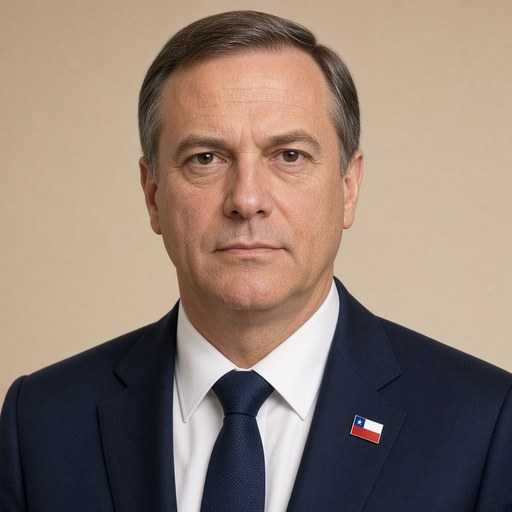
His Excellency the President of the Republic, José Antonio Kast, accompanied by the Minister of Housing and Urban Development, Iván Poduje, participates in the delivery of 120 homes in Rancagua.
 José Antonio Kast · Leader of the Republican Party (Chile)
- Context
- Kast addressed 120 families in Rancagua on April 28, 2026, at a ceremony delivering new homes built through an industrialized housing construction program.
- Main themes
- Social housing delivery, community living, homeownership milestone, housing construction innovation, continuity of government programs, family and community responsibility, public infrastructure, Telethon and social solidarity
- Duration
- ~20 min
- Words
- 2,355
- Sentences
- 142
- Readability
- 71
- Grade
- 7.4
- Syntax
- 2.82
- Vocabulary
- 1.85
Translated from Spanish
The broad sphere of national life a sentence belongs to. Every sentence has an Arena, so it is the denominator the other indices are read against.
Other142 sentences in 30 paragraphs
Good afternoon, everyone.
What a great coincidence today, because we come from a very exciting event, which was the presentation of a bill that establishes the Telethon Day and Family Reunion Day. The Telethon is represented by a heart, and the gift that the condominium gave me is a heart. So, look at those coincidences that happen.
Just as Don Francisco was at the Telethon and those of us who watched Sábados Gigantes, those of us with a few more gray hairs, Don Francisco would do the “applause contest,” “the lookalike contest,” “who does he look like…” and he would say, “And who invited you?” all those things, well, if we did an applause meter, clearly, Julie and Shaila won all the possible applause. Please stand up again, a tremendous round of applause.
Because you are the true protagonists. Governments come and go, and this is a work of different governments. This is not the work of the government that we have had the honor to lead; we came out rewarded, yes, Minister, because we didn’t have the art, a little bit from you and some others, but we took home a good wine. So, we are very grateful; we came out rewarded. “The last shall be first,” they say.
I also take this opportunity to greet the parliamentarians, deputies, senator, ministers, regional secretaries, the regional government, the mayor of Rancagua, and the regional delegate.
Today, 120 families are receiving their keys. Always keep them safe. I carry the keys to “my little apartment” in La Moneda. They are big pieces, but I am in three. It’s not that they are the keys to La Moneda, no, the keys to La Moneda are handled by the Presidential Guard and given to all presidents. But this is the key to my home.
Take care of it, because it is much more than a key. It is what Julie said, it is a home, it is security, it is certainty, it is many hours of sleep, of sleepless nights. And why am I so happy about the applause you received? Because it is very difficult to be a leader of a committee. How many years? Since 2012? No? Since when have you been in the committee? Since 2024 the committee, but the struggle must have been for years. Well, there are committees that have been going for 8 or 10 years and more, the deputy tells me, and more. Imagine what it is to keep the heart of 100, 200, 300 people beating for 10, 8, or 6 years. Yes, it is very difficult; living there is difficult.
You have a tremendous challenge today, here, in this condominium, because you are given the keys and your life is going to change forever. But for it to be a good change, you also have to learn to live in community. Having neighbors above, in front, below, and taking care of the common spaces. Because one cannot isolate oneself in their home, in their dwelling. There is a community life; the common spaces are important, and if that community life is not taken care of, problems can arise that you cannot imagine. That someone didn’t take out the trash, that someone parked their car poorly, that someone didn’t help water the tree, that someone doesn’t collaborate in the cleaning of the condominium, because now the common spaces belong to everyone, and many times when things belong to everyone, they belong to no one. There you have a tremendous challenge.
This new life begins, which is a joy, but it also brings difficulties, and that is why it is so relevant that the park, the square, the civic center, and good connectivity begin as soon as possible, when the resources are available. The mayor told us that a new connectivity has just been established. It is very important because some will be farther from their work, some will have their children in a school perhaps farther away. Well, all that life begins now.
I reiterate that this is a work of continuity because governments pass on large works like this from one government to another. This is a different, innovative project; we hope it passes all the tests of all the rains, of all the noises. I am also glad that they recognized the sponsoring entity, the construction company. They say: “there is trust because we know them,” and that is very relevant because when a situation arises – hopefully none will arise – you know you will have someone who will respond. And that is very important because that will empower that construction company to apply, and you can be the ones who endorse them so they can present themselves for other works.
This is innovative because it is a system of industrialized housing construction in 5 stories. Well, it is a challenge because it helps to build more quickly. It saves almost 40% of the time required in the system we all know. When one said: it is made of material. Well, times change. My house, not the one I showed the key for, my house is of a similar system and has worked very well, but it is hard for one to accept changes. It is hard for one to say: “Well, will this be as good as what I had?” We hope so, because if that is a reality, many people’s lives will be made easier.
As the minister said, these are the difficult things that need to be done. It is hard to demolish. It is hard to demolish homes because people do not have the conviction, the certainty that what they had will be replaced. “It has problems, but I have a roof. It is damp, but I have a roof.”
With the minister, we have traveled to many cities, including here in Rancagua, and one would say: “Look, at the conditions in which the housing is.” Yes, it is evident that it needs to be intervened, it needs to be demolished, but it is hard. And when they are not demolished in time, what happened, for example, in Cerro Chuño happens. That not all the homes are demolished and there is usurpation or occupation of those homes by people in need. Yes, one understands that there is a lot of need.
But what I also value is that you respected the line. Because a situation has arisen in Chile that has generated violence, problems, even murders. Because today there are organized crime organizations that take over land. And then they create a kind of organized subdivisions themselves. Then they sell them, then they sell the water, then they dominate the same place. That cannot continue happening in Chile.
We have to return to the tradition that one can achieve home ownership, which today has become distant, because homes are more expensive, land is more expensive, materials have become more expensive, but we have to return to the tradition in Chile where one strives, works, receives the support of the State when appropriate, and has their own home.
The dream of home ownership has drifted out of reach for many families in Chile. We have to recover it. That is why the minister, who has traveled to many areas of Chile, has proposed things that sometimes seem disruptive. We have to optimize land use. We have to look for where those plots are in different cities to be able to build homes. We were in Valdivia some time ago, beyond the debate, but a site of more than 10 hectares was handed over to the State many years ago, and it is abandoned.
And the other debate is legitimate. Of course, one can use one form or another, but when a law is enacted at the national level, which is to respect green areas, nature, which we all want to protect, but it covers enormous areas because it talks about wetlands, well, but the area is so large in Valdivia, it is the heritage city of wetlands, well, how many thousands of families today have nowhere to live?
And there are lands that objectively are not wetlands. There are others that are, we can protect and all, but let’s always start from the person. In Chile, hospitals stopped being built because archaeological finds were discovered, a tip of an arrow, which are many in museums, because if it were the unique arrowhead, well, let’s protect it. But if it is the tip of one of many arrows, well, what do we do? Do we stop a hospital for a year, two years, three years? I am from the commune of Buin; the hospital was delayed a year because pieces of a pot appeared.
In the south, there is a hydroelectric plant that has been halted for three years because pieces of a pot appeared, they are identified. Today the dispute is because some communities want the remains, which are about twelve, to be reburied. Hundreds of millions of pesos were spent to remove them, and today they have to be buried again, and we have an energy crisis.
What comes first? Health, energy, housing, or the care of our culture and our history? I believe they are not incompatible. And forgive me for going on, but we have to face the problems that affect all families in Chile with common sense. There are more than 500,000 families today without housing. There are more than 120,000 families living in camps. And there is land.
But when a mistake is made, one can recognize it. A small mistake, like the one I might have made by having lunch with my friends in La Moneda. That is a small mistake; I paid for the food, but it is a small mistake, and if I have to respond, I will respond. But if one makes a mistake in a law, one must also recognize it. One does not want to end the law, but to limit it to what is appropriate. Because with this Wetlands Law, even an irrigation pond could be identified as a wetland. Imagine if there is a field that irrigates from a small farmer or a larger field, and there is a pond, well, that pond could be classified as a wetland. Imagine if a river passes through your city and the river, like the Mapocho River, is declared a wetland. Then one says: “Well, it doesn’t matter; if the river needs to be protected, yes, it needs to be protected.”
Hopefully, we have a river that is also a place of meeting, of walking. But if I want to build a building a few meters from the river and there is dust, there will be dust when there is earth movement, when it is built, and that dust reaches the river, it could be that the wetland is being affected.
So, again, common sense when one enacts a norm. As I say, if one makes a mistake, if we go to the education issue, we had a tremendous discussion about whether we reorganized the education issue, and the organizations called SLEP were created, and it went from municipal administration to an organization directing several municipalities together. What I ask is that we review whether that has been good or bad for whom, for the students. It needs to be reviewed.
If I reacted to what people tell me and only went against the lottery, which I also spoke against, I might make a mistake. But what I ask is that we become aware; do we want to continue advancing at full speed, or do we want to take a break, review what has happened, and what is best for the children? Because they are our main objective.
Education, housing, and security provide freedom, certainty, but education provides freedom. That same education that you will have to cultivate here to take care of the common spaces. I invite you to perhaps meet again in two years right here and see how the common spaces are. Because sometimes I am told: “Hey, but the speech is simple.” Great things are built from the small. If we ask one day all our compatriots to go out with a can of paint, a brush, and we go to clean the facades of our cities, it will change the quality of life for all of us. But then we have to take care of it.
Let’s come back in two years and see how lush the tree is. Let’s come back in two years and see if there are some little plants here, today in what is dirt, maybe there is some grass, where someone can sit down and not just be in the playground or on the bench, but throw a blanket and say: “Here I will share.” But that implies taking care of each other, living in community; it is not easy.
And here what I want to say is that if the State functions well, the government, the municipality, and the social organization function well, nothing can go wrong. We can have discussions. Here, people of different political thoughts will live. When elections come, there will be a sign A, B, C in some places. Maybe they agree and don’t put up any signs because everyone knows each other. Each one knows more or less who they are going to vote for.
Take care of the community. Take care and put this same heart somewhere. So that when you enter, you see this heart and remember this moment, which should be for many the happiest moment you will have. But let it always be a happy moment when you enter. That is solidarity, that is companionship. Sometimes a neighbor on the fifth floor is going to fracture a foot. Well, someone has to help them. Who is going to bring them groceries? Someone will have to help them.
So, I take this symbol with me. I am very happy that there was a coincidence between the heart of the Telethon and the heart of the condominium. May God bless you all.
Thank you very much.
The original Spanish. The tags above are read on the English translation's sentences.
Muy, muy buenas tardes.
Qué gran coincidencia este día, porque venimos de un acto muy emocionante, que fue el acto de presentación de un proyecto de ley que instaura el Día de la Teletón y el Día del Encuentro Familiar. La Teletón se representa con un corazón, y el regalo que me hizo el condominio es un corazón. Así que, miren esas coincidencias que se dan.
Así como en la Teletón estaba Don Francisco y los que veíamos Sábados Gigantes, los que tenemos un poquito más de canas, Don Francisco hacía el “concurso de los aplausos”, “el igualito a…”, “quién se parece a…” y les decía “Y a usted ¿quién lo invitó?”, todas esas cosas, bueno, si hiciéramos un aplausómetro, claramente, Julie y Shaila se ganaron todos los aplausos posibles. Pónganse de pie de nuevo, un tremendo aplauso.
Porque ustedes son los verdaderos protagonistas. Los gobiernos pasan, y esto es una obra de distintos gobiernos. Esto no es la obra del gobierno que a nosotros nos ha tocado encabezar, salimos premiados, sí ministro, porque no teníamos arte, un poco de parte de ustedes y algunos, pero nos llevamos un buen vino. Así que, muy agradecidos, salimos premiados. “Los últimos serán los primeros” dicen.
Aprovecho de saludar también a los parlamentarios, diputados, senador, a los ministros, a los seremis, al gobierno regional, al alcalde de Rancagua, a la delegada regional.
Hoy son 120 familias que reciben sus llaves. Guárdenlas siempre. Yo ando con las llaves de “mi departamentito” en La Moneda. Son piezas grandes, pero estoy en tres. No es que sean las llaves de La Moneda, no, las llaves de La Moneda las manejan la Guardia Presidencial y se las dan a todos los presidentes. Pero, esta es la llave de mi casa.
Cuídenla, porque es mucho más que una llave. Es lo que decía Julie, es un hogar, es seguridad, es certeza, son muchas horas de sueño, de desvelo. ¿Y por qué me alegro tanto del aplauso que recibieron? Porque es muy difícil ser dirigente de un comité. ¿Cuántos años? ¿desde el 2012? ¿No? ¿Desde cuándo son del comité? Del 2024 el comité, pero la lucha debió haber sido años. Bueno, hay comités que llevan 8 o 10 años y más, me dice el diputado, y más. Imagínense lo que es mantener latiendo el corazón de 100, 200, 300 personas durante 10, 8 o 6 años. Sí es muy difícil, convivir ahí es difícil.
Ustedes tienen un tremendo desafío hoy día, aquí, en este condominio, porque les entregan las llaves y su vida va a cambiar para siempre. Pero para que sea un buen cambio, tienen que aprender también a vivir en comunidad. Tener vecinos arriba, al frente, abajo, y cuidar los espacios comunes. Porque uno no puede aislarse en su hogar, en su vivienda. Hay una vida comunitaria, los espacios comunes son importantes y si no se cuida esa vida comunitaria, se pueden producir problemas que ustedes no se imaginan. Que no sacó la basura, que dejó el auto mal estacionado, que no ayudó a regar el árbol, que no colabora en la limpieza del condominio, porque ahora los espacios comunes son de todos, y muchas veces cuando las cosas son de todos, son de nadie. Ahí tienen un tremendo desafío.
Comienza esta nueva vida, que es una alegría, pero también trae dificultades y por eso es tan relevante que se inicien lo más pronto que se pueda, cuando estén los recursos, lo que es el parque, lo que es la plaza, el centro cívico, que haya buena conectividad. El alcalde nos decía que se acaba de generar una conectividad nueva. Es muy importante, porque algunos van a quedar más lejos de su trabajo, algunos van a tener los niños en un colegio quizás más alejado. Bueno, toda esa vida comienza ahora.
Vuelvo a reiterar que esta es una obra de continuidad porque los gobiernos se van traspasando obras grandes como esta, de un gobierno a otro. Este es un proyecto distinto, innovador, esperamos que pase todas las pruebas de todas las lluvias, de todos los ruidos. Me alegro también que le hayan hecho un reconocimiento a la entidad patrocinante, a la constructora. Dicen: “hay confianza porque los conocemos” y eso es muy relevante, porque cuando se produzca –ojalá no se produzca ninguna– alguna situación, ustedes saben que van a tener alguien que va a responder. Y eso es muy importante porque eso va a potenciar a esa constructora para que pueda postular y ustedes puedan ser aquellos que avalen para que ellos puedan presentarse a otras obras.
Esto es innovador porque es un sistema de construcción de viviendas industrializadas en 5 pisos. Bueno, es un desafío porque ayuda a construir con mayor velocidad. Ahorra casi el 40% del tiempo que se requiere en el sistema que todos conocemos. Que cuando uno decía: es de material. Bueno, los tiempos cambian. Mi casa, no la que mostré la llave, mi casa es de un sistema parecido y ha funcionado muy bien, pero a uno le cuestan los cambios. A uno le cuesta decir: “Bueno, ¿y esto será tan bueno como lo que yo tenía?” Esperamos que sí, porque si eso es realidad, a muchas personas se le va a poder facilitar la vida.
Como decía el ministro, esto es de las cosas difíciles que hay que hacer. Cuesta demoler. Cuesta demoler viviendas, porque la gente no tiene la convicción, la certeza de que le vayan a reemplazar lo que tenía. “Tiene problemas, pero tengo un techo. Está húmedo, pero tengo un techo”.
Con el ministro hemos recorrido hartas ciudades aquí en Rancagua también y uno decía: “Mira, en las condiciones que está la vivienda”. Sí es evidente que hay que intervenirla, hay que demolerla, pero cuesta. Y cuando no se demuelen a tiempo, pasa lo que sucedió, por ejemplo, en el Cerro Chuño. Que no se demuelen todas las viviendas y hay usurpación o hay ocupación de esas viviendas de personas que tienen necesidad. Sí uno entiende que hay mucha necesidad.
Pero lo que también valoro es que ustedes respetaron la fila. Porque se ha dado una la situación en Chile que ha generado violencia, problemas, incluso asesinatos. Porque hay hoy día organizaciones de crimen organizado que se toman terrenos. Y después hacen una especie de loteos organizados por ellos mismos. Después los venden, después le venden el agua, después dominan el mismo lugar. Eso no puede seguir ocurriendo en Chile.
Nosotros tenemos que volver a la tradición de que uno puede alcanzar la vivienda propia, que hoy día se ha alejado, porque las viviendas son más caras, los terrenos son más caros, los materiales se han puesto más caros, pero tenemos que volver a la tradición en Chile donde uno se esfuerza, trabaja, recibe el apoyo del Estado cuando corresponde y tiene su vivienda propia.
El sueño de la vivienda propia se fue alejando del alcance de muchas familias en Chile. Tenemos que recuperarlo. Por eso el ministro que ha recorrido hartas zonas de Chile, ha planteado cosas que a veces parecen disruptivas. Tenemos que optimizar el uso del suelo. Tenemos que buscar dónde están esos paños en las distintas ciudades para poder construir viviendas. Estuvimos en Valdivia hace un tiempo atrás, más allá del debate, pero se entregó un sitio al Estado de más de 10 hectáreas hace ya muchos años y ahí está abandonado.
Y el otro debate es legítimo. Claro, uno puede usar una forma u otra, pero cuando se dicta una ley a nivel nacional, que es para respetar las áreas verdes, la naturaleza, que todos queremos cuidar, pero se abarcan áreas enormes porque se habla de humedales, bueno, pero el área es tan grande en Valdivia, es la ciudad patrimonio de los humedales, bueno, ¿cuántos miles de familias hoy día no tienen dónde vivir?
Y hay terrenos que objetivamente, no son humedales. Hay otros que sí, nosotros podemos resguardar y todo, pero partamos siempre desde la persona. En Chile se dejaron de construir hospitales porque se encontraron hallazgos, una punta de una flecha, que habían hartas en museos, porque si fuera la flecha única, bueno, resguardémosla. Pero si es la punta de una de tantas flechas, bueno, ¿Qué hacemos? ¿Paramos un hospital un año, dos años, tres años? Yo soy de la comuna de Buin, un año de demora tuvo el hospital porque aparecieron pedacitos de un cántaro.
En el sur hay una central hidroeléctrica detenida hace tres años porque aparecieron pedacitos de cántaro, están identificados. Hoy día la disputa es porque algunas comunidades quieren que los restos que son como doce se vuelvan a enterrar. Se gastaron cientos de millones de pesos para sacarlos y hoy día hay que volver a enterrarlos y tenemos una crisis energética.
¿Qué es primero? ¿La salud, la energía, la vivienda o el cuidado de nuestra cultura y nuestra historia? Yo creo que no son incompatibles. Y perdonen que me haya alargado, pero nosotros tenemos que enfrentar desde el sentido común los problemas que afectan a todas las familias en Chile. Hay más de 500 mil familias que hoy día no tienen vivienda. Hay más de 120 mil familias que viven en campamentos. Y terrenos hay.
Pero cuando se comete un error, uno lo puede reconocer. Un error pequeño, como el que pude haber cometido yo al haber almorzado con mis amigos en La Moneda. Eso es un error pequeño, la comida la pagué yo, pero es un error pequeño y si tengo que responder, voy a responder. Pero si uno se equivoca en una la ley, también tiene que reconocerlo. Uno no quiere terminar con la ley, pero acotarla lo que corresponde. Porque con esta Ley de Humedales hasta un tranque de regadío podría ser identificado como humedal. Imagínese que aquí hay algún campo que riega de un pequeño agricultor o un campo más grande, y hay un tranque, bueno, ese tranque podría ser catalogado como humedal. Imagínese si pasa un río por su ciudad y el río como podría ser el río Mapocho, es declarado humedal. Entonces, uno dice: “Bueno, no importa, si el río hay que cuidarlo, sí, hay que cuidarlo”.
Ojalá tengamos un río que además sea un lugar de encuentro, de paseo. Pero si yo quiero construir un edificio a unos metros del río y hay polvo, va a haber polvo cuando hay movimiento de tierra, cuando se construye y ese polvo llega al río, podría ser que se esté afectando el humedal.
Entonces, de nuevo, el sentido común cuando uno dicta una norma. Como digo, si uno se equivoca, si vamos al tema de la educación, tuvimos una tremenda discusión de si reorganizábamos el tema de la educación y se crearon los organismos que se denominan SLEP, y pasó de la administración municipal a una organización de dirección de varias comunas juntas. Yo lo que pido es que revisemos si eso ha sido bueno o malo para quién, para los alumnos. Hay que revisarlo.
Si yo reaccionara a lo que me dicen las personas y sólo voy en contra de la tómbola, que yo también hablé en contra de la tómbola, quizás cometería un error. Pero lo que yo pido es que tomemos conciencia, queremos seguir avanzando a toda velocidad o queremos hacer un alto, revisar qué es lo que ha sucedido y qué es lo mejor para los niños. Porque ellos son el gran objetivo de nosotros.
La educación, la vivienda, la seguridad dan libertad, certeza, pero la educación da libertad. Esa misma educación que ustedes van a tener que cultivar aquí para cuidar los espacios comunes. Yo los invito a que nos juntemos a lo mejor en dos años más aquí mismo y veamos cómo están los espacios comunes. Porque hay veces que me dicen: “Oiga, pero es como sencillo el discurso”. Las cosas grandes se construyen desde lo pequeño. Si nosotros le pedimos un día a todos nuestros compatriotas que salgan con una lata de pintura, una brocha y vayamos a limpiar las fachadas de nuestras ciudades, nos va a cambiar la calidad de vida a todos. Pero después tenemos que cuidarlo.
Vengamos en dos años más y veamos cuán frondoso está el árbol. Vengamos en dos años más y veamos si hay unas plantitas aquí, hoy día en lo que es tierra, a lo mejor hay un pasto, donde alguien pueda bajar y no solamente estar en los juegos o en la banca, sino tirar un chal y decir: “Aquí voy a compartir”. Pero eso implica cuidarnos entre todos, vivir en comunidad, no es fácil.
Y aquí lo que quiero decir es que, si el Estado funciona bien, la gobernación, el municipio y la organización social funciona bien, nada puede salir mal. Podemos tener discusiones. Aquí van a vivir personas de distintos pensamientos políticos. Cuando vengan las elecciones va a haber un cartel A, B, C en algunos lugares. A lo mejor se ponen de acuerdo y no ponen ni un cartel, porque todos se conocen. Cada uno sabe más o menos por quién va a votar.
Cuiden la comunidad. Cuiden y pongan en alguna parte este mismo corazón. Para cuando ustedes entren, vean este corazón y recuerden este momento que debe ser para muchos el momento más feliz que van a tener. Pero que siempre sea un momento feliz cuando entren. Eso es solidaridad, eso es acompañamiento. De repente algún vecino que está en el quinto piso se va a fracturar un pie. Bueno, hay que ayudarle. ¿Quién le va a llevar la mercadería? Alguien va a tener que ayudarle.
Entonces, este símbolo yo me lo llevo. Me alegro mucho que haya habido una coincidencia entre el corazón de la Teletón y el corazón del condominio. Qué Dios los bendiga.
Muchas gracias.