




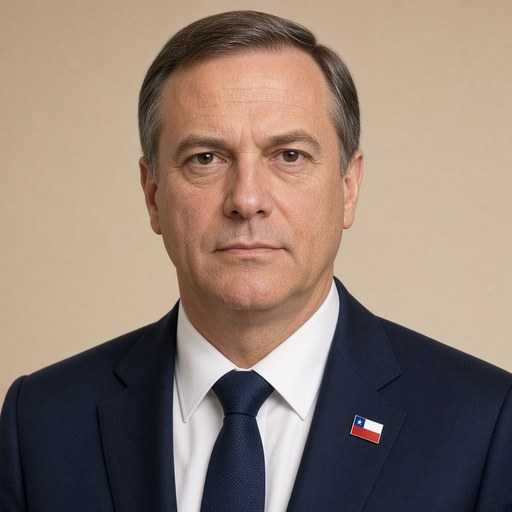
His Excellency the President of the Republic, José Antonio Kast, declares a national health alert to address waiting lists for 27,000 oncology patients.
 José Antonio Kast · Leader of the Republican Party (Chile)
- Context
- Kast addressed senators, deputies, and health workers at a CESFAM in La Florida to declare a national health alert targeting a backlog of 27,000 oncology patients.
- Main themes
- Oncology patient waiting lists, national health alert, cancer care access, public-private health collaboration, Chile's health system, political bipartisanship in health policy, CESFAM community health centers, patient and healthcare worker recognition, fiscal challenges in Chile
- Duration
- ~21 min
- Words
- 2,560
- Sentences
- 121
- Readability
- 63
- Grade
- 9.7
- Syntax
- 3.08
- Vocabulary
- 1.90
Translated from Spanish
The broad sphere of national life a sentence belongs to. Every sentence has an Arena, so it is the denominator the other indices are read against.
Other121 sentences in 33 paragraphs
Good afternoon.
It is a day full of emotions. The flag at half-mast fills us with pain, but also with emotion. Beyond the shouts in favor, the shouts against, here we are concerned, occupied, with those people who are suffering.
I also want to thank the senators. I was a colleague of Senator Castro when he was a deputy, and I know of his concern and commitment to health issues. Beyond the fact that one can have political differences, in health matters he has always been of one line. That is appreciated and valued.
I thank the senators who accompany us from different regions, Senator Gatica from the south, who has an incredible testimony, which Senator Goic also shared at her moment, of bravery, of resilience, of being there. So you don’t know how grateful we are that you are here. The two senators, two of the senators from the Metropolitan Region, Senator Cruz-Coke and Senator Ossandón, who was president of the Senate for a year. We appreciate that you are here, at an event that is significant.
What can I say about the deputies who accompany us, Deputy Celis, who also comes from the Fifth Region, because he knows the importance of this, the local deputies and Deputy Romero, who for years served on the Health Commission, where I also spent four years.
To the councilors, thank you for being here. Our mayor of La Florida. That is the attitude, “the best commune,” that attitude is appreciated. I was in Antofagasta, and part of what the young people studying said, and the teacher said: the first thing is the attitude. Because we can have thousands of problems, but someone can let themselves die with the problem or someone can say: here we have a tremendous opportunity. And at least what I have seen in you is that you always see an opportunity, beyond the difficulties.
That is also partly because you have a good team, a team of councilors, but above all a management team and a team that allows you to proudly show a CESFAM, allows you to proudly show a rescue unit. And there the minister said: how good that you have a rescue unit, because that way we have less work for the centralized unit, for the ambulances. Because this is something collaborative, and each of the people who attend in this CESFAM, thank you very much to the host as well, thank you for that work, for that smile, which is sometimes difficult, because patients do not always arrive with the best attitude. Just as I see a positive attitude here, there are times when people with the anguish they have do not realize that in front of them there is also a person.
You are there to attend to them, but those people often do not understand everything that is experienced within a CESFAM, all the urgencies that are experienced in a CESFAM. Even people who come to be treated here, who sometimes do not have a place to park their vehicle, who have to arrive earlier, all those difficulties that the patient does not see.
Well, I also ask patients to see those who attend to them, because there is a whole life behind it, and for you to be there also requires an enormous sacrifice, and that must be recognized.
Chile is going through several emergencies, and there is a whole discussion about whether the government is in an emergency or not, when the emergency will end. No one knows, but the important thing is that we have the conviction to face the problems. Are we going to be able to solve them all at once? It is impossible, and we all know that, but we have to start somewhere.
Chile showed an impressive example of how to face a health crisis, a pandemic precisely with a health alert, which allowed us to integrate, beyond the respect we must have for public health, but also the recognition we must have for private health. How is that managed? Beyond political and ideological differences.
Cancer has no ideological differences. People who suffer want a quick, effective, timely solution, which we are not always able to provide, and if we start to discuss, the person can die. That is often the effect of the discussions we have, and that is why I value that Senator Castro is with us. Because are we going to have differences? We will have them, and it is legitimate, and it is very good that we have differences.
In fact, they mentioned that one of my daughters is pursuing a career in health. Of course, when she was little, she would say to me: Dad, would the world be better if everyone were of your political current? I told her no, that it was very good to have opponents, that dialogue and debate were very good, because that is where great things arise.
So I truly appreciate that you are present and that we invite all people, who can have legitimate differences, to set priorities. Yes, we have stated that there is a complex situation today in Chile, from a fiscal point of view. I believe in the good intentions of all people, but life experiences lead us to make one decision or another when we have to face an issue.
Here the call that Cecilia makes, whom I also thank for being here. I saw you here and remembered, I asked you what year it was, to be sure: 1987, and I was shouting like a young person, like crazy, in the street there in Providencia with Lyon, because she had been elected Miss Universe. So, all those memories come back, and you say, how incredible. In black and white? Oh no, no, no, no, but if it was a Bolocco television. No, I had a color one, but you filled us with hope, with spirit.
This morning I shared with athletes, Tomás González was there, and I said how incredible it is to see you here, committed to promoting the issue of sports, with that intention we have for the Youth Olympic Games to come to Chile in 2030. That is not something that we are going to cut a ribbon for. No, we are planting so that the next generation has the opportunity to say I was in an Olympic competition. Thank you, I don’t know if it was in favor or against, but thank you anyway.
But what truly occupies us is what the minister said. Beyond whether it is 1%, 10%, or 50%, cancer is a silent disease, which many times one carries inside, which the family carries, and one often does not want to say anything. I also went through that; one of my brothers passed away very young from cancer. And what Cecilia said is the most important, because sometimes one is not going to have the medical solution, but the welcome, the hug, with whom I meet for the first time when I arrive at a cold place, where I never thought I would arrive, that changes the way of facing the situation.
So many people who after going through cancer today give testimony, and accompany people, showing them the process. A very close friend of one of my children, who, due to cancer, is treated in children, at Calvo Mackenna, with a stuffed animal, would say: look, you are going to lose your hair like the stuffed animal. And the stuffed animal was accompanying him, which perhaps is not the oncological treatment itself, but it is that emotional part, which is fundamental.
One of the things that has helped me is to travel through Chile, to visit health centers, to visit CESFAM, before they were called health centers, CESFAM, Emergencies, and to value the work that the entire medical team does. Beyond the fact that we may have differences. To all those of us who have had to go to some public service, to leave a family member, I had to take my mother, in her last moments, to the San Luis de Buin Hospital, and how they welcomed me, how they attended to me, is appreciated. That sometimes goes unseen, goes unsaid, but it is a good moment to make that recognition to each of the officials, who perform an impressive job.
This health alert allows us a greater degree of freedom of action, where the people who are here, I see Dr. Julio Montt, and I truly get emotional, because in those tours I got to know Tisné, which is here nearby. I learned about the traffic lights, and there I learned about what social beds are, of families who, not having how to meet the needs of their grandparents, leave them at the hospital because they know they will be cared for there. And those are the social beds, and the doctor had a traffic light there, and said: well, this patient should be here for two days, therefore, the traffic light is green, then this one went over two days, it is yellow, then it is red. And there he would give special attention, and sought a solution, with other public agencies, to continue attending to patients who were really urgent, and who were not a social case. And I feel proud that he told us yes, that he would take the plunge, and that what you, along with your team, because one is always with a team, achieved in Tisné.
Dr. Alejandra, you were outside of Chile, and thank you for taking the leap. I hope you have settled in, that your things have arrived, because they are radical life decisions. Someone who was outside, who had a career made, and suddenly the minister calls her and says: are you coming? And she didn’t hesitate, she came, that commitment is appreciated.
I see Alejandro over there, there he is Alejandro. I didn’t know about Cecilia, you helped us for a long time and could have said: hey, I helped so much, now it’s my turn. No, you are part of a team, and that is appreciated too. A call to all those who worked for months to bring this forward, and who perhaps today are not on the front line. It doesn’t matter where one is. One can be attending to the person who arrives, can be on the motorcycle, can be a minister, it doesn’t matter, it doesn’t matter where we are. Let’s not create disputes where there are none. The dispute has to be how we reach the person who is suffering quickly and efficiently.
There will now be a few, who are not few, there are more than 20,000 people who believed in us when a law was enacted, and today the same State cheats, and waits for the last date, the last moment, and then tells them: Okay, now, now send the letter. When it could have been sent earlier. Yes, we could have anticipated.
Well, it is an emergency, and emergencies are faced with drastic measures, with measures that have already been proven, such as this health emergency that today the minister is going to sign as a decree, and that does require the collaboration of each of you.
So, at some point we will come to knock on the door of Parliament, in due time, with prudence, with everything, but we need to move forward now, we need to give clear signals that things can indeed be done. There we ask for your collaboration, because we can sign all the decrees, we can obtain all the resources, but if there is no will from the people who have to do that work, we can do everything impeccably, and someone, due to a matter of specific differences, can say: No, we will show you that this is not going to work.
We all have to get on this, not for a political issue, not to boast that we achieved the result, and this. Today a journalist asked me: Well, when does the emergency end? Well, when we manage to attend to all the people in their different situations, to attend to the son of Sergeant Figueroa Manquemilla. I spoke yesterday with the widow, who is also a police officer, I spoke with the brothers-in-law, who are also police officers, and I hope to be able to tell her son, Joaquín, at some point, that he can count on all of us, because it is a very, very, very hard moment. Imagine that being repeated in every family that loses someone to cancer. That is the relevance of what we are doing here.
It will allow us to have more resources, which are scarce, but to focus them, yes, to hire more doctors, to call back doctors who have left the Public Service for various reasons, to have more supplies, to organize the house, and to truly make the work more efficient that the minister, her undersecretaries, the person in charge of cancer issues, calls us to today.
And to the foundations, like yours, Cecilia, thank you, because you are collaborating with us in an area that perhaps is not so well known to us in terms of artificial intelligence, inviting everyone, this is an interaction between the public and private sectors. That no family ever says again: My daughter or son did not receive care because there were no beds. There are beds, what is sometimes lacking is will, is diligence, is doing things for the good of others, beyond how the other thinks.
So I truly thank all those present. I thank the senators, the deputies, because you will have a tremendous job. I thank the councilors, I was also a councilor, I know how difficult it is to be a councilor. I didn’t get to be a mayor, I would have loved to be a mayor. I think I would have had the same attitude you have had.
To the work team, thank you. This morning I was with the Minister of Sports and I hugged her emotionally, because she achieved incredible things in a moment of crisis. Then the Minister of Science wrote to me, who was in La Serena, and says: Here is an issue. Again, the same. Then, I was talking with Minister Quiroz, who has a huge task ahead. But, again, he has the attitude, he has the teams. The most important thing is to recognize each person who does the job well.
And I ask all the neighbors to do our part well. I never tire of saying: let’s not skip the line, let’s collaborate on the things that are our responsibility. If we need to clean, let’s clean. If we need to pay for public transportation, even if we have differences, let’s pay it. Every fare that you do not pay is one less assistance for someone who needs it more than you. If someone has a debt with the State, get up to date. We understand that someone may have a difficulty. Well, let’s talk about that difficulty, but if you do not have a difficulty, if you have received a hand from the State, return the hand.
Thank you, thank you very much, and we have a tremendous challenge ahead. So everyone is invited, a big hug.
Thank you very much.
The original Spanish. The tags above are read on the English translation's sentences.
Muy buenas tardes.
Es un día lleno de emociones. Que la bandera esté a media asta nos llena de dolor, pero también de emoción. Más allá de los gritos a favor, de los gritos en contra, aquí estamos preocupados, ocupados, de aquellas personas que están sufriendo.
Quiero también darles las gracias a los senadores. Fui colega con el senador Castro cuando era deputado y conozco de su preocupación y de su ocupación en temas de salud. Más allá de que uno puede tener diferencias políticas, en temas de salud siempre ha sido de una sola línea. Eso se agradece y se valora.
Les doy las gracias a los senadores que nos acompañan de distintas regiones, viene la senadora Gatica del sur, que tiene un testimonio increíble, que también dio en su minuto la senadora Goic, de valentía, de resiliencia, de estar ahí. Así que no sabe lo que agradecemos que esté aquí presente. Los dos senadores, dos de los senadores de la Región Metropolitana, el senador Cruz-Coke y el senador Ossandón, que fue por un año presidente del Senado. Se agradece que estén acá, en un acto que es trascendente.
Para qué decir los diputados que nos acompañan, el diputado Celis, que también viene de la Quinta Región, porque sabe de la importancia que tiene esto, los diputados locales y el diputado Romero, que por años ejerció en la Comisión de Salud, donde yo también estuve cuatro años.
Los concejales, gracias por estar aquí presentes. Nuestro alcalde de La Florida. Esa es actitud, “la mejor comuna”, esa actitud y se agradece. Estuve en Antofagasta y parte de lo que señalaban los jóvenes que estaban estudiando y el profesor decía: lo primero es la actitud. Porque podemos tener miles de problemas, pero alguien puede dejarse morir con el problema o alguien puede decir: aquí tenemos una tremenda oportunidad. Y al menos lo que yo he visto en usted, es que siempre ve una oportunidad, más allá de las dificultades.
Eso también en parte es porque tiene un buen equipo, un equipo de concejales, pero sobre todo un equipo directivo y un equipo que le permite a usted mostrar con orgullo un CESFAM, le permite mostrar con orgullo una unidad de rescate. Y ahí la ministra decía: qué bueno que tenga unidad de rescate, porque así nosotros tenemos menos pega de la unidad centralizada, de las ambulancias. Porque esto es algo colaborativo y cada una de las personas que atienden en este CESFAM, muchas gracias a la dueña de casa también, gracias por esa labor, por esa sonrisa, que a veces es difícil, porque los pacientes no siempre llegan con la mejor actitud. Así como aquí veo una actitud positiva, hay veces que las personas con la angustia que tienen, no se dan cuenta que al frente también hay una persona.
Ustedes están por atenderlas, pero esas personas muchas veces no entienden todo lo que se vive dentro de un CESFAM, todas las urgencias que se viven en un CESFAM. Incluso personas que vienen a atender acá, que no tienen a veces dónde estacionar su vehículo, que tienen que llegar más temprano, todas esas dificultades que el paciente no las ve.
Bueno y también les pido a los pacientes que vean a quienes los atienden, porque hay toda una vida detrás y que ustedes estén ahí, también requiere de un sacrificio enorme y eso hay que reconocerlo.
Chile pasa por varias emergencias y hay toda una discusión del gobierno de emergencia o no de emergencia, de cuándo se va a terminar la emergencia. Nadie sabe, pero lo importante es que tenemos la convicción de enfrentar los problemas. ¿Qué los vamos a poder solucionar todos de una vez? Es imposible y todos sabemos, pero tenemos que partir en alguna parte.
Chile dio una muestra impresionante de cómo enfrentar una crisis sanitaria, una pandemia precisamente con una alerta sanitaria, que nos permitió integrarnos, más allá del respeto que tenemos que tener por la salud pública, pero también el reconocimiento que tenemos que tener por la salud privada. ¿Cómo se gestiona eso? Más allá de las diferencias políticas, ideológicas.
El cáncer no tiene diferencias ideológicas. Las personas que sufren quieren una solución rápida, eficaz, oportuna, que no siempre somos capaces de darla y si nosotros empezamos a discutir, la persona se puede morir. Ese es el efecto muchas veces de las discusiones que tenemos y por eso valoro que el senador Castro esté con nosotros. Porque ¿vamos a tener diferencias? Vamos a tener, y es legítimo y es muy bueno que tengamos diferencias.
De hecho, mencionaban que una hija mía sigue la carrera de la Salud. Claro, ella cuando era pequeñita me decía: Papá, ¿el mundo sería mejor si todos fueran de tu corriente política? Yo le decía que no, que era muy bueno tener contradictores, que era muy bueno el diálogo y el debate, porque de ahí surgían las grandes cosas.
Así que yo de verdad agradezco que esté presente y que invitemos a todas las personas, que podemos tener legítimas diferencias, a que pongamos prioridades. Sí, hemos planteado que hay una situación compleja hoy día en Chile, desde el punto de vista fiscal. Yo creo en la buena intención de todas las personas, pero las experiencias de vida nos llevan a tomar una decisión u otra decisión cuando tenemos que enfrentar un tema.
Aquí el llamado que nos hace Cecilia, a quien también agradezco que esté. Te veía aquí y me acordaba, te pregunté qué año era, para no fallar: el 87, y yo gritando como joven, como loco, en la calle ahí en Providencia con el Lyon, porque había sido electa Miss Universo. Entonces, a uno se le vienen todos esos recuerdos, y dice, qué increíble. ¿En blanco y negro? Ah no, no, no, no, pero si era un televisor Bolocco. No, yo tenía uno a color, pero nos llenaste de esperanza, de espíritu.
Hoy día en la mañana compartía con deportistas, estaba Tomás González, y decía qué increíble verte aquí, verte jugado por promover el tema del deporte, con esa intención que tenemos de que lleguen los Juegos Olímpicos Juveniles a Chile el año 2030. Que no es algo que nosotros vayamos a cortar una cinta. No, estamos sembrando para que la próxima generación tenga la posibilidad de decir yo estuve en una competencia olímpica. Gracias, no sé si era a favor o en contra, pero gracias igual.
Pero lo que de verdad nos ocupa es lo que decía la ministra. Más allá si el 1%, el 10% o el 50%, el cáncer es una enfermedad silenciosa, que muchas veces uno lleva por dentro, que lo lleva la familia, y uno muchas veces no quiere decir nada. También pasé por eso, un hermano mío partió muy joven por cáncer. Y lo que decía Cecilia es lo más importante, porque uno de repente no va a tener la solución médica, pero el acogimiento, el abrazo, con quien me encuentro la primera vez que llego a un lugar frío, donde nunca pensé que iba a llegar, eso cambia la manera de enfrentar la situación.
Tantas personas que después de pasar cáncer hoy día dan testimonio, y van acompañando a las personas, mostrándoles el proceso. Una muy cercana de uno de mis hijos que, a partir del cáncer, que se trata en niños, en el Calvo Mackenna, con un peluche, le iba diciendo: mira vas a perder el pelo como el peluche. Y el peluche lo iba acompañando, que quizás no es el tratamiento oncológico en sí mismo, pero es esa parte emocional, que es fundamental.
De las cosas que a mí me ha servido es recorrer Chile, recorrer consultorios, recorrer CESFAM, antes se decía consultorios, CESFAM, Urgencias, y valorar el trabajo que hace todo el equipo médico. Más allá también de que podamos tener diferencias. A todos los que nos ha tocado llegar a algún servicio público, a dejar a un familiar, a mí me tocó llevar a mi madre, en su último minuto, al Hospital San Luis de Buin, y cómo me acogieron, cómo me atendieron, se agradece. Eso a veces no se ve, no se dice, pero es un buen momento para hacer ese reconocimiento a cada uno de los funcionarios, que realiza una labor impresionante.
Esta alerta sanitaria nos permite algún grado mayor de libertad de acción, donde las personas que están acá, veo al doctor Julio Montt, y de verdad me emociono, porque en esos recorridos conocí el Tisné, que está aquí cerquita. Aprendí de los semáforos y ahí aprendí de lo que son las camas sociales, de familias que no teniendo cómo atender las necesidades de sus abuelitos, de las personas, los dejan al hospital porque saben que ahí van a estar cuidados. Y son esas camas sociales, y el doctor tenía ahí un semáforo, y decía: bueno, este paciente debería estar dos días aquí, por lo tanto, está el semáforo en verde, después este se me pasó dos días, está en amarillo, después está en rojo. Y ahí iba a darle una atención especial, y buscaba una solución, con otros organismos públicos, para poder seguir atendiendo pacientes que estaban realmente urgentes, y que no eran un caso social. Y me siento orgulloso de que nos haya dicho que sí, de que se la vaya a jugar, y que lo que usted, junto con su equipo, porque siempre uno está con un equipo, logró en el Tisné.
Dra. Alejandra, estaba fuera de Chile, y gracias por dar el salto. Espero que ya se haya podido acomodar, que ya hayan llegado las cosas, porque son decisiones radicales de vida. Alguien que estaba afuera, que tenía una carrera hecha, y de repente la llama la ministra y le dice: ¿se viene? Y no lo dudó, se vino, se agradece ese compromiso.
Allá veo a Alejandro, ahí está Alejandro. No sabía lo de Cecilia, nos ayudaste mucho tiempo y podría haber dicho: oye, que yo ayude tanto tiempo, ahora me toca a mí. No, y eres parte de un equipo, y se agradece también. Un llamado a todos los que trabajaron durante meses para sacar adelante esto, y que a lo mejor hoy día no están en la primera línea. Da lo mismo donde uno esté. Uno puede estar atendiendo a la persona que llega, puede estar en la motocicleta, puede estar de ministra, da lo mismo, da lo mismo donde estemos. No generemos disputas donde no las hay. La disputa tiene que ser cómo llegamos rápido y de manera eficiente a la persona que está sufriendo.
Serán ahora unos pocos, que no son pocos, son más de 20 mil personas que creyeron en nosotros cuando se dictó una ley, y que hoy día el mismo Estado se hace trampa, y esperan la última fecha, el último momento, y después le dicen: Ya, ahora, ahora mande la carta. Cuando la podría haber mandado antes. Sí nos podríamos haber anticipado.
Bueno, es una emergencia, y las emergencias se enfrentan con medidas drásticas, con medidas que además ya se probaron, como es esta emergencia sanitaria que hoy día la ministra va a firmar como un decreto, y que sí requiere la colaboración de cada uno de ustedes.
Entonces, en algún momento llegaremos a golpear la puerta del Parlamento, con tiempo, con prudencia, con todo, pero necesitamos ahora avanzar, necesitamos dar señales claras de que sí se puede hacer las cosas. Ahí les pedimos colaboración, porque nosotros podemos firmar todos los decretos, podemos conseguir todos los recursos, pero si no hay voluntad de las personas que tienen que hacer ese trabajo, podemos hacer nosotros todo impecable, y alguien, por un tema de diferencias puntuales, puede decir: No, les vamos a demostrar que esto no va a funcionar.
Todos tenemos que subirnos a esto, no por un tema político, no por un tema de vanagloriarnos de que obtuvimos el resultado, y esto. Hoy día me preguntaba una periodista: Bueno, ¿cuándo termina la emergencia? Bueno, cuando logremos atender a todas las personas en sus distintas situaciones, a atender al hijo del sargento Figueroa Manquemilla. Hablé ayer con la viuda, que también es carabinera, hablé con los cuñados, que también son carabineros, y espero poder en algún momento decirle a su hijo, a Joaquín, que cuente con todos nosotros, porque es un momento muy, muy, muy duro. Imagínense eso que se repite en cada familia que pierde a alguien por cáncer. Esa es la relevancia de lo que estamos haciendo acá.
Nos va a permitir tener más recursos, que son escasos, pero focalizarlos, sí, para contratar más médicos, para convocar a médicos que se han ido del Servicio Público por distintas razones, para tener más insumos, para ordenar la casa, y hacer de verdad más eficiente el trabajo al que nos convoca hoy día la ministra, sus subsecretarios, el encargado del tema del cáncer.
Y a las fundaciones, como la suya, Cecilia, darles las gracias, porque están colaborándonos en un área que quizás para nosotros no es tan conocida en temas de inteligencia artificial, convocarlos a todos, esto es una interacción entre lo público y lo privado. Que nunca más una familia diga: Mi hija o mi hijo no tuvo atención, porque no había camas. Camas hay, lo que falta a veces es voluntad, es diligencia, es hacer las cosas por el bien del otro, más allá de cómo piensa el otro.
Así que de verdad les agradezco a todos los que están presentes. Les agradezco a los senadores, a los diputados, porque van a tener una tremenda pega. Les agradezco a los concejales, también fui concejal, sé lo difícil que es ser concejal. No alcancé a ser alcalde, me habría encantado ser alcalde. Creo que habría tenido la misma actitud que ha tenido usted.
Al equipo de trabajo, gracias. En la mañana estuve con la ministra del Deporte y la abrazaba emocionado, porque consiguió cosas increíbles en un momento de crisis. Después me escribió la ministra de Ciencia, que estaba en La Serena y me dice: Aquí hay un tema. De nuevo, lo mismo. Después, estuve hablando con el ministro Quiroz, que tiene una tarea enorme por delante. Pero, de nuevo, tiene la actitud, tiene los equipos. Lo más importante es reconocerle a cada persona que hace la pega bien.
Y pedirles a todos los vecinos que hagamos bien lo que nos corresponde. No me canso de decir: no nos saltemos la fila, colaboremos con las cosas que nos toca. Si hay que hacer aseo, hagamos aseo. Si hay que pagar el pasaje del transporte público, aunque tengamos diferencias, paguémoslo. Cada pasaje que usted deja de pagar, es una atención menos para alguien que lo necesita más que usted. Si alguien tiene una deuda con el Estado, póngase al día. Entendemos que alguien puede tener una dificultad. Bueno, conversemos de esa dificultad, pero si usted no tiene una dificultad, si usted ha recibido una mano del Estado, devuélvale la mano.
Gracias, muchas gracias, y tenemos un tremendo desafío por delante. Así que están todos convocados, un gran abrazo.
Muchas gracias.