




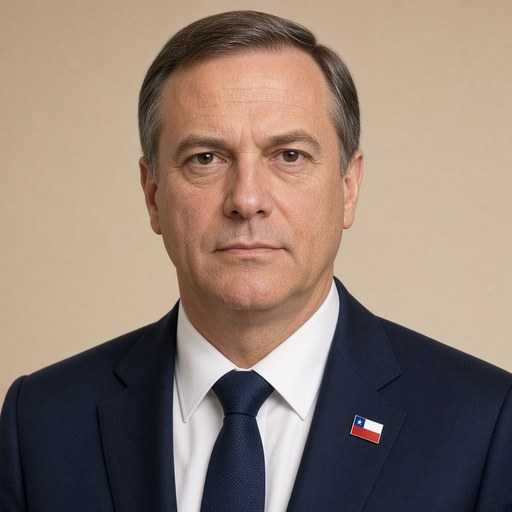
His Excellency the President of the Republic, José Antonio Kast, inaugurates the renovation of the Balmaceda Literary Café on International Book Day.
 José Antonio Kast · Leader of the Republican Party (Chile)
- Context
- Kast addressed attendees at the inauguration of the renovated Balmaceda Literary Café in Santiago on International Book Day, April 23, 2026.
- Main themes
- Importance of reading and imagination, Balmaceda Literary Café renovation, International Book Day, cultural heritage and public spaces, childhood literature and Chilean authors, Cervantes and Shakespeare, violence against public spaces, municipal leadership, books versus digital media, community and education
- Duration
- ~15 min
- Words
- 1,821
- Sentences
- 113
- Readability
- 61
- Grade
- 8.7
- Syntax
- 2.89
- Vocabulary
- 2.07
Translated from Spanish
The broad sphere of national life a sentence belongs to. Every sentence has an Arena, so it is the denominator the other indices are read against.
Other113 sentences in 24 paragraphs
Good morning still.
The mayor's speech wasn't very long, but it was a very good speech. So, thank you, mayor, for this invitation. I greet the governor. To our Minister of Culture, who has had an intense day today, starting early at a Metro station, recovering or reaffirming the issue of books in the Metro, which is so, so relevant. To the undersecretaries, to the regional delegate, to each of you, councilors who support this type of initiative. Verónica, what a pleasure to know that there is a daughter of one who cared for the citizens, for the inhabitants of Providencia. And to each of those who accompany us today, thank you very much for the invitation.
Above all, to Vito, and to Vito, but to his parents, because when we were walking through the library and went to see some books, we opened a book and the special effects were provided by the dad. That means there is a very important bond, and Vito would not be a regular user of the library because he knew it by heart, he knew where the children's books were, where the youth books were, and that there were games upstairs, and Metrópolis was up there. That is to be thanked to those who educate him, because it shows. I could never have given a speech; I think the first time I ran for mayor, the podium was shaking all over.
Vito, I congratulate you because that personality and that ease of speaking is very much needed today. And that, as you say, comes from books, from imagination. Entering here, you said, was a magical world. You talked about Marcela Paz, and I remembered Papelucho with the magnifying glass, Papelucho detective, or with his sister, or astronaut. Well, there was a whole story there that made one dream. Also, I recognized some books that I read as a child, “Hansel and Gretel,” I said here I catch it, because he must not know what “Hansel and Gretel” is, and he knew more than I did about “Hansel and Gretel.” So, congratulations, Vito.
The remodeling turned out incredible. The work that your father started was expanded; it has an impressive warmth. I had the chance to be here years ago with the mayor when I was a deputy and a young university leader, I think. We were already using the facilities because the municipality provided them to hold activities, and I see that today it has even been improved. Warmer, more rooms, universal accessibility everywhere that is recognized.
It is impressive here, in the middle of the city, to find a kind of oasis. Because one is inside, does not hear the vehicles. One is here and is going to find something green, a green lung. That is a great invitation for all the neighbors, and it aligns with what your father proposed.
Cervantes, who passed away on April 22, 410 years ago, left us a very inspiring saying. I said: why is Book Day celebrated today? Well, because Cervantes died one day before and Shakespeare one day after, and we, as good Chileans, compromised in the middle. But he left us a saying that, at least for me, motivates me. It says: “he who reads much and travels much, sees much and knows much.” A part of that, a professor at the university said, “he who in Chile reads or studies half an hour a day on a single topic becomes the greatest expert on that topic.” That has been forgotten because life runs very fast. One seeks the quick solution; today one no longer goes to the encyclopedia, to Sopena, to see, to do the work; one puts something on the cell phone and everything appears immediately. But that does not take away from what Vito proposed, that one must read because that opens our imagination.
I acknowledge that in recent years I have been reading less, but I travel more. So, I compensate for Cervantes' phrase by traveling. But one must never neglect reading because reading, and Vito said it very well, opens our imagination, transports us in time to the future.
I read Jules Verne and said this will never happen, and today reality surpasses what Jules Verne was. It also takes us to the past and shows us stories that today can, unfortunately, be repeating. That makes us know other experiences, imagine all of us; not everything is given. When one tunes into a series, and everyone talks, oh, what a good Netflix series, I assure you that some books surprise one more than the already elaborated series. That is a first reflection, and a reflection on the importance of reading, of knowing, of studying.
The second reflection is how extraordinary it is to be in this place. Inside we will have images of how they attacked a building, how they destroyed something that served everyone. It is extraordinary that the former mayor decided to rebuild it, to recover it. Therefore, let us give a big round of applause to Evelyn Matthei, because she had the decision, the courage to say they will not win, irrational violence will not win. And another round of applause to the mayor because it turned out quite beautiful. So, to both mayors, thank you, because you took the risk.
And the question one asks is why would someone want to destroy a place like this? What sense does that irrational violence make? That hatred that was reflected on a wall, on a glass, to the extent of burning books. One says, this is irrational violence; it makes no sense. But for some, it does make sense because it is to destroy freedom, to end the freedom of young people who can start dreaming, who can project themselves. Reading and studying give freedom.
That is what we unfortunately see today in some educational establishments. Why do they want to destroy an educational establishment? What is the sense? So that young people cannot be formed, so that young people cannot be educated. Because someone who does not have all the knowledge is manipulable. The ideology is installed there. That is the sense. Of course, young people are instruments; they are like the stone in the hand of someone who throws it. That young person is not responsible; it is others who use those young people, instrumentalize those young people to destroy what is essential, which is education, which leads us to freedom.
Therefore, that violence that was exercised here must be, in the good sense of the word, combated. It is not combated with more violence. It is combated by rebuilding spaces like these, inviting neighbors to make what the mayor says a reality. One should not leave at 6 in the evening. Why does violence, delinquency, organized crime force us to leave public spaces at 6 in the evening? We are more.
The State will be, just as the mayor has been and has generated for some time, with the previous mayor, a whole network of citizen security; well, laws have also advanced so that citizen security can be complemented with the collaboration of Carabineros de Chile. I thank Carabineros because they gave their lives to defend the homeland. Right here we saw very hard scenes, police officers burned by the irrationality of a young person who threw a Molotov cocktail.
Young people who continue to be instrumentalized. Yes, what happened at Liceo Lastarria, what happened at Liceo Alessandri Palma, is irrational, but those young people are not responsible. Those young people do need to have a sanction. We are following all the behaviors of those young people. I completely agree with the mayor that those young people are making a kind of itinerary of violence in different educational establishments. Yes, they need education, but that cannot go without sanction.
The first adult foreigner who was participating in the demonstrations here on the famous Day of the Young Combatant has already been expelled. He has already been expelled. We are going to take away the nationality, or the residency, the visa, from another foreigner who is also here. We are looking into who the parents of those violent young people are, who may have caused the death of other young people in different educational establishments. That is unacceptable.
But we need everyone's collaboration. We need the collaboration of the young people who study in those establishments, which are emblematic establishments of our nation, that have been destroyed. Today, many parents do not want to take their children to Instituto Nacional. It is an impressive thing. Well, we all have a responsibility there. We cannot let those acts go unpunished.
I thank you, mayor, for bringing General Baquedano back.
It is a great symbol. Moreover, it happened on a very important day because it was the day before I was to take the oath. So, I believe it returned to the place, as you said, from where it should never have left. And as we talked with the minister, we must continue to advance. The Unknown Soldier must also return there because it is part of our history, and our history cannot be erased by irrational violence.
This place, as I already mentioned, was one of the many works or dreams of Germán Bannen. I did not know that his daughter Verónica would be here. So, feel proud of what your father did because he said that the city is not its streets or its buildings; it is its inhabitants. He said that places had to be created for its inhabitants. And the greatest pride for your father is Vito, who is a resident of the commune. He studies in a school in Providencia, lives here in Providencia. So, your father must be happy that today Vito, a young resident of the commune of Providencia, has used this podium and knows the library by heart. So, thank you, Verónica, greetings to your whole family, and recognition to your father.
I say again that this place is extraordinary. It is a place of peace, in the middle of the city, a place of peace, a place of reflection, a place of coexistence, a place of reading. It will have, as the director told us, café spaces so that one can also share. No, I find it incredible what has been achieved.
The historical tour that the mayor gave us with his detention in the Italians, I don’t know if it will be for some special reason, but Providencia is growing, Providencia is becoming a very attractive place, especially for adults who can walk through this Paseo de la República and for young families.
So, thank you for being here, thank you Vito for giving us that tremendous testimony, thank you to Vito's parents, thank you to each of the neighbors who are going to recover this place that should never have been lost.
Thank you very much.
The original Spanish. The tags above are read on the English translation's sentences.
Muy buenos días todavía.
No fue tan largo el discurso del alcalde, pero estuvo muy bueno el discurso. Así que, gracias, alcalde por esta invitación. Saludo al gobernador. A nuestro ministro de la Cultura que hoy ha tenido un día intenso, partió temprano en una estación del Metro recuperando o ratificando el tema de los libros en el Metro que es tan, tan relevante. A los subsecretarios, al delegado regional, a cada uno de ustedes, concejales que apoyan este tipo de iniciativas. Verónica, qué gusto saber que hay una hija de quien fuera uno de los que se preocupó de los ciudadanos, de los habitantes de Providencia. Y a cada uno de los que hoy día nos acompañan, muchas gracias por la invitación.
Sobre todo, a Vito, y a Vito, pero a sus papás, porque cuando estábamos circulando por la biblioteca y fuimos a ver algunos libros, abríamos un libro y los efectos especiales los ponía el papá. Eso quiere decir que hay un vínculo muy importante y Vito no sería usuario habitual de la biblioteca porque la conocía de memoria, sabía dónde estaban los libros infantiles, dónde estaban los juveniles y que arriba había en Juegos, y estaba el Metrópolis arriba. Eso se le agradece a quienes lo educan, porque se refleja. Yo jamás habría podido dar un discurso, yo creo que la primera vez que fui candidato a alcalde, el podio se movía entero.
Vito, te felicito porque esa personalidad y esa facilidad para hablar es muy necesaria hoy día. Y eso, como dices tú, lo dan los libros, la imaginación. Entrar aquí, tú dijiste, era un mundo mágico. Hablabas de Marcela Paz, y yo me acordaba de Papelucho con la lupa, Papelucho detective, o con su hermana, o astronauta. Bueno, había toda una historia ahí que a uno lo hacía soñar. Además, conocía algunos libros que yo leía de chico, “Hansel y Gretel”, yo dije aquí lo pillo, porque no debe saber qué es “Hansel y Gretel” y sabía más que yo de “Hansel y Gretel”. Así que, felicitaciones, Vito.
La remodelación quedó increíble. La obra que partió tu padre fue ampliada, tiene una calidez impresionante. Me tocó estar hace años atrás acá también con el alcalde, cuando yo era deputado y era un joven dirigente universitario, yo creo. Ya usábamos las instalaciones, porque el municipio las facilitaba para poder hacer actividades, y veo que hoy día eso fue incluso mejorado. Más cálido, más salas, una accesibilidad universal por todas partes que se reconocen.
Es impresionante aquí, en medio de la ciudad, encontrar una especie de oasis. Porque uno está adentro, no escucha los vehículos. Uno está aquí y se va a encontrar con algo verde, un pulmón verde. Eso es una gran invitación para todos los vecinos, y va en la línea de lo que planteaba tu padre.
Cervantes, quien falleció el 22 de abril, de hace 410 años atrás, nos dejó un dicho bien inspirador. Yo decía: ¿por qué el Día del Libro se celebra hoy día? Bueno, porque Cervantes murió un día antes y Shakespeare un día después, y nosotros, como buenos chilenos, transamos en la mitad. Pero nos dejó un dicho que, a mí, al menos, me motiva. Dice: “el que lee mucho y anda mucho, ve mucho y sabe mucho”. Una parte de eso, lo decía un profesor en la universidad, decía “el que en Chile lea o estudie media hora al día de un solo tema, se transforma en el mayor experto en ese tema. Eso se ha ido olvidando, porque la vida corre muy rápido. Uno busca la solución rápida, hoy día ya uno no va a la enciclopedia, a la Sopena, a ver, a hacer el trabajo, uno pone algo en el celular y aparece todo de inmediato. Pero eso no quita lo que nos planteaba Vito, que hay que leer, porque eso nos abre la imaginación.
Yo reconozco que en los últimos años estoy leyendo menos, pero recorro más. Entonces, compenso la frase de Cervantes recorriendo. Pero no hay que dejar nunca de lado la lectura, porque la lectura, y ahí lo dijo muy bien Vito, nos abre la imaginación, nos transporta en el tiempo hacia el futuro.
Yo leía Julio Verne y decía esto no va a ocurrir nunca, y hoy día la actualidad supera lo que era Julio Verne. También, nos lleva al pasado y nos muestra historias que hoy día pueden ir, lamentablemente, algunas repitiéndose. Eso nos hace conocer otras experiencias, imaginarnos todos, no está todo dado. Cuando uno sintoniza una serie, y todo el mundo habla, oh, qué buena la serie de Netflix, yo les aseguro que algunos libros a uno lo sorprenden más que la serie ya elaborada. Esa es una primera reflexión, y una reflexión de lo importante de la lectura, del conocer, del estudiar.
La segunda reflexión es lo extraordinario que es estar en este lugar. Adentro vamos a tener imágenes de cómo atacaron un edificio, cómo destruyeron algo que les servía a todos. Es extraordinario que la exalcaldesa haya decidido reconstruirlo, recuperarlo. Por eso, démosle un gran aplauso a Evelyn Matthei, porque tuvo la decisión, el coraje de decir no van a ganar, la violencia irracional no va a ganar. Y otro aplauso al alcalde porque quedó harto bonito. Así que, a los dos alcaldes agradecerles, porque se la jugaron.
Y la pregunta que uno se hace es ¿por qué alguien quisiera destruir un lugar como este? ¿Qué sentido tiene esa violencia irracional? Ese odio que se vio reflejado en un muro, en un vidrio, al extremo de quemar los libros. Uno dice, esto es una violencia irracional, no tiene sentido. Pero para algunos sí tiene sentido, porque es destruir la libertad, terminar con la libertad de los jóvenes que pueden empezar a soñar, pueden proyectarse. La lectura y el estudio dan libertad.
Eso es lo que vemos lamentablemente hoy día en algunos establecimientos educacionales. ¿Por qué quieren destruir un establecimiento educacional? ¿Cuál es el sentido? Que los jóvenes no se puedan formar, que los jóvenes no se puedan educar. Porque alguien que no está con todos los conocimientos es manipulable. La ideología se instala ahí. Ese es el sentido. Claro, los jóvenes son instrumentos, son como la piedra en la mano de alguien que la arroja. Ese joven no es el responsable, son otros los que ocupan a esos jóvenes, instrumentalizan a esos jóvenes para destruir lo esencial, que es la educación, que nos lleva a la libertad.
Por eso, esa violencia que se ejerció acá tiene que ser, en el buen sentido de la palabra, combatida. No se combate con más violencia. Se combate reconstruyendo espacios como estos, invitando a los vecinos a hacer realidad lo que dice el alcalde. No hay que irse a las 6 de la tarde. ¿Por qué nos obliga la violencia, la delincuencia, el crimen organizado a retirarnos de los espacios públicos a las 6 de la tarde? Nosotros somos más.
El Estado va a estar, así como el alcalde está y genera desde hace tiempo, con la alcaldesa anterior, toda una red de seguridad ciudadana, bueno, se avanzó también en las leyes para que la seguridad ciudadana pueda ser complementada con la colaboración de Carabineros de Chile. Le doy las gracias a Carabineros, porque dieron la vida por defender la patria. Aquí mismo vimos escenas durísimas, carabineras quemadas por la irracionalidad de un joven que arrojaba una bomba Molotov.
Jóvenes que siguen siendo instrumentalizados. Sí, lo que ocurrió en el Liceo Lastarria, lo que ocurrió en el Liceo Alessandri Palma, es irracional, pero no son responsables esos jóvenes. Esos jóvenes sí tienen que tener una sanción. Nosotros estamos siguiendo todas las conductas de esos jóvenes. Le encuentro toda la razón al alcalde, que esos jóvenes van haciendo como un itinerario de violencia en distintos establecimientos educacionales. Sí, hay que darles educación, pero eso no puede quedar sin sanción.
Ya se expulsó al primer extranjero adulto que estaba participando en las manifestaciones aquí en el famoso Día del Joven Combatiente. Ya se expulsó. Le vamos a quitar la nacionalidad, o la residencia, la visa, a otro extranjero que también está acá. Estamos viendo quiénes son los padres de esos jóvenes violentos, que pueden haber causado la muerte de otros jóvenes en distintos establecimientos educacionales. Eso es inaceptable.
Pero necesitamos la colaboración de todos. Necesitamos la colaboración de los jóvenes que estudian en esos establecimientos, que son establecimientos emblemáticos de nuestra nación, que han sido destruidos. Hoy día, muchos padres no quieren llevar a sus niños al Instituto Nacional. Es una cosa impresionante. Bueno, ahí todos tenemos una responsabilidad. No podemos dejar que esos actos queden impunes.
Le agradezco, alcalde, que haya traído de vuelta al general Baquedano.
Es un gran símbolo. Además, ocurrió en un día muy importante, porque era la previa de que a mí me tocara jurar. Así que, creo que volvió al lugar, como dijo usted, desde donde nunca se debió haber ido. Y como hablábamos con el ministro, tenemos que seguir avanzando. El Soldado Desconocido también tiene que volver ahí, porque es parte de nuestra historia, y nuestra historia no la puede borrar la violencia irracional.
Este lugar, como ya lo mencioné, fue una de las tantas obras o sueños de Germán Bannen. No sabía que iba a estar su hija Verónica. Así que, siéntete orgullosa de lo que hizo tu padre, porque él decía que la ciudad no son sus calles ni sus edificios, son sus habitantes. Él decía que tenía que crear lugares para sus habitantes. Y el mayor orgullo para tu padre es Vito, que es habitante de la comuna. Estudia en un colegio de Providencia, vive aquí en Providencia. Entonces, tu padre ha de estar feliz que hoy día Vito, un habitante joven de la comuna de Providencia, haya usado este podio y conozca de memoria la biblioteca. Así que, gracias Verónica, un saludo a toda tu familia y un reconocimiento a tu padre.
Vuelvo a decir que este lugar es extraordinario. Es un lugar de paz, en medio de la ciudad, un lugar de paz, un lugar de reflexión, un lugar de convivencia, un lugar de lectura. Va a tener, como nos decía la directora, espacios de café para que uno pueda también compartir. No, yo encuentro que es increíble lo que se ha logrado.
El recorrido histórico que nos hizo el alcalde con su detención en los italianos, no sé si será por alguna razón en especial, pero Providencia está creciendo, Providencia se está convirtiendo en un lugar muy atractivo, sobre todo para personas adultas que pueden transitar por este Paseo de la República y para familias jóvenes.
Así que, gracias por estar aquí, gracias Vito por darnos ese tremendo testimonio, gracias a los papás de Vito, gracias a cada uno de los vecinos que van a recuperar este lugar que nunca se debió haber perdido.
Muchas gracias.