




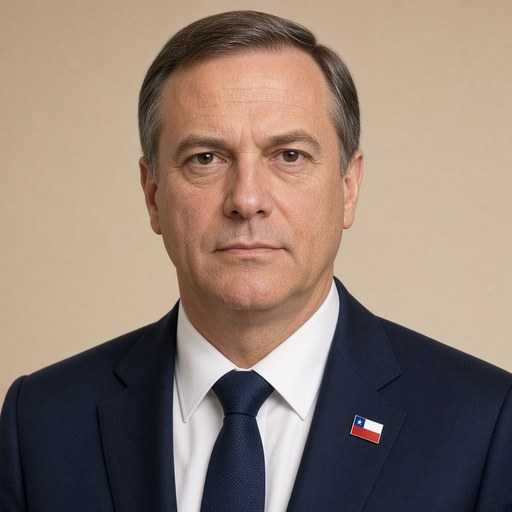
His Excellency the President of the Republic, José Antonio Kast, presents at the LATAM FOCUS seminar.
 José Antonio Kast · Leader of the Republican Party (Chile)
- Context
- Kast addressed the LATAM FOCUS seminar in April 2026, presenting his government's National Reconstruction and Economic and Social Development project sent to Congress that morning.
- Main themes
- National reconstruction and economic development, signal vs. noise in public discourse, Chile's economic stagnation, legislative debate and political opposition, government reform agenda, entrepreneurial vision and leadership, social media misinformation, fiscal responsibility, team governance, growth and employment
- Duration
- ~37 min
- Words
- 4,489
- Sentences
- 280
- Readability
- 68
- Grade
- 7.8
- Syntax
- 2.82
- Vocabulary
- 2.01
Translated from Spanish
The broad sphere of national life a sentence belongs to. Every sentence has an Arena, so it is the denominator the other indices are read against.
Other280 sentences in 61 paragraphs
Good, good morning.
It has been a great day. I also see many familiar faces. I want to tell you that we are working as a team. I start by thanking the ministers who are with me, Ximena, Francisco, for the great work they are doing. We have been building a team, and that has been reflected in the various actions we have taken in recent days.
I appreciate the invitation to this forum, to this debate, where important issues for our country will be discussed. It is a moment where there are many concerned looks regarding what is happening in the world and also a lot of expectation about what will happen in our country in the coming days.
When we started, we said we would have a Challenge 90. We are moving forward steadily to ensure that the goals we have set reach a successful conclusion. This will require the collaboration of everyone.
This morning, together with the Minister of Finance, we signed a National Reconstruction and Economic and Social Development project. It is now on its way to Congress and will initiate a legislative debate. We hope that this will take place with a broad perspective, without too many slogans, and with the idea of conversing rather than shutting down the debate before the process begins.
It is striking that some refuse the idea of legislating before knowing the project itself. Before it is debated in the first committees what is proposed. I can understand that if after a prior debate, as always happens in the Chamber of Deputies, someone may disagree with some of the things we propose. But without knowing, without the project entering, to already announce a refusal to the idea of legislating on something that is not ideological. Because we are not talking about an ideological project; we are talking about how to transform, about how to recover our homeland.
I start with a phrase that is not from a lawyer, that is not from a politician, that is not from an economist. It is from a great entrepreneur, a creative genius, Steve Jobs, founder of Apple, who told us: do not let the noise of others' opinions drown out your own inner voice. And most importantly, have the courage to follow your heart and intuition. They somehow already know what you truly want to become. Everything else is secondary.
I must say that this phrase motivates me, that it is an appropriate phrase for the moment. But here, it is not only about following the heart and intuition. We must see what has happened in our country in recent years. It is there, it is all in plain sight.
Why do I mention this phrase? Because today the public conversation is full of noise. He speaks of signals and noise. Today we can see how we are filled with opinions that are presented as certainties. When one sees some interviews, those who led us to this dramatic situation in Chile give us certainties. One would ask what certainty does someone give us who, with their public policies, has us stagnated at a growth of 2%. Someone who left us with more than 800,000 people unemployed.
But they go and give opinions with certainties. And the numbers do not support them. We are full of diagnoses. They say this is what is happening, but no one presents a single solution. You can see in all the interviews that are conducted with experts, and they ask: Well, what would you do? Well, I would grow, I would do everything possible to grow, for the country to develop, for resources to reach the most vulnerable.
And what has happened? By the same people who give those diagnoses, the opposite. We are full of arguments that sound very good on social media. Some replicate those arguments from social media, and what social media says becomes a pseudo-truth.
When one starts to ask the person who replicates that comment on social media, and asks them about simple things, when the VAT is paid, what a PPM is, what a FUT is, they say: no, it’s a bit complicated, look, let me check. But we have gotten used to repeating things that others say, and we take them as if they were revealed truths.
We must distinguish between signals and noise. Most of the information that circulates on social media today turns into these slogans. In the end, it is the accessory, it is the ephemeral or “the emiferous,” as someone said. It passes very quickly.
The important thing is that we make decisions that provide certainties, that allow us to present ourselves to the world as a country that fulfills its agreements. The signal we are giving is based on great lines that allow things to truly change. My invitation is for those who are here to set aside the noise and commit to seeking the underlying reasons. Why has Chile not grown? Why has Chile not achieved the development we all seek?
I know that there are many people anxious, some quite nervous, because they see that we make a decision, and everyone has an opinion. No, they shouldn’t have done that. Raise fuel prices and many theories on how to cushion the blow.
But all of them involve greater indebtedness. I believe many are carried away by the noise. The effect was evident. Who could say that if we did not take that measure, there would not be a blow to citizen support? It was evident that it would happen. The difference is that we have the conviction that we must do things right, not for easy applause, but out of conviction. That Chileans must be spoken to as adults, that the truth must be told. That had been forgotten in our homeland, to speak with the truth. And to defend the arguments strongly, not to yield to the polls that come and go.
Yes, the blow to citizen support was hard. Other politicians might have thought: well, let’s do it, let’s get into debt and maybe we can go from 58 to 44, or even if we do it well, for a couple of weeks we can go to 60. And what good is that? It’s 4 years of government. We are going step by step and providing certainties, working as much as we can, we will go again, regaining the trust of the people, because we are doing things right, openly, looking straight ahead and saying things as they are.
Conviction is important. Once again, I dare to tell you with conviction, as I said at a time when many thought everything was lost, when we had votes that seemed impossible to recover. And at that time I said: calm down, everything will be fine.
I repeat the same today: if we all commit, if we all start to explain to people what is being done, I can tell you with conviction that everything will be fine. But that involves all of us. Let no one get nervous. Let no one be unsettled when something is said on social media. On social media, many times, there is work done to create a negative atmosphere and for everyone to say this is going badly. We can tell you that this looks good, is going well, and will be well.
Twelve years ago, Chile was promised something very concrete: a tax reform that said it would collect more, that it would distribute better, and that it would finance to make that definitive leap to development. Everyone said, the majority, within this noise, that it was a reasonable reform. And the voices of those who did know, who said that this could end badly, were not heard. There was talk of a balanced reform that was consistent with the path of progress. The minister of the time was literally immortalized in a national newspaper image with his hands like this saying: judge me by my results. That is a photo I have framed because the results are in plain sight. It’s like that phrase someone gave, who was at the time the director of the Budget, very grandiloquent: The best Budget director in the history of the country. There it stayed or I leave it to you.
The results are in plain sight and it is evident. That reform was not paid for by the 1% of the richest. That is part of the slogans that the same old ones keep repeating. It’s as if some had no past. It’s as if they just arrived in the nation and they tell us the same things they said 10, 5, 3 years ago, and today the same, that this reform, in our case, “only benefits the 1% richest in the nation.”
Their reform, which they made, was not paid for by the richest; it was paid for by the middle class, it was paid for by the most vulnerable. Those people who today are in camps, those people who today do not have drinking water, those people who do not have connectivity, those people who are abandoned. They paid for that reform 14 years ago that stagnated our nation.
Today the same old ones come with that discourse to present themselves and say that they are right. No, they are not. The situation in which our compatriots find themselves is evident. It is our job to go out and defend, to go out and state, not even to defend, to go out and state things by their name, so that never again are the most vulnerable citizens deceived, promising them something that will never arrive.
Because we stopped growing, we stopped giving them opportunities. Because some said that the State by itself could generate all the wealth. That the State was like that virtuous source of production. A virtuous source of production for a few. Because what grew? The size of the State. What decreased? The quality of life of thousands of Chileans who believed in those phrases.
Because yes, they say that I am a bit boring and others speak very beautifully. Well, I prefer to be more boring and speak the truth. Because all those grandiloquent ones who bang the table and say that I promise you that Chile will grow again have deceived Chile for a long time. That cannot be repeated. But again, it is the responsibility of all of us, those of us who are here and all Chileans to take care of what we finish.
They legislated at that time looking at the polls. What did the polls say? Chile wants this. Well, we have dared to go, in some cases, against the polls when we are clear that those polls will lead to a harmful result for our compatriots.
The argument they give today is the same that will lead, if it were to impose, to the error we already know. Again, I invite you to leave here, to take all the dialogues, to all the conversations, the bill and the numbers. Not just those who are more knowledgeable, who are the economists; any person who goes out and realizes the reality of Chile has something to say.
We invite you to say it, to not keep silent. Because when we keep silent, someone occupies the spaces. Anyone who has a chance to go to a media outlet should go. I thank several of the economists who are here, who are serious and responsible people, for their intervention in the media. Because they speak with arguments, they speak seriously. They do not often engage with questions that are posed in a document. But sometimes the same person who poses them does not have the appropriate answer, because the answer comes from those same people who led us to this situation.
What Chile did we find when we assumed the Government? And I thank you all for taking on the challenge because we have, and I reiterate, a great team of ministers, undersecretaries, and people who are giving their all to change this trend.
We received a Chile that in the last 12 years had been growing at 2% annually. Our neighbors were growing much more. A Chile with more than 800,000 people unemployed. A Chile with more than 120,000 families in camps. When the challenge in the year 2000 was a Chile without temporary housing and we were all committed, everyone must have collaborated for that. Well, we went from that to the impressive number of people living in very, very vulnerable conditions. A housing deficit of almost 800,000 homes, and it could be more depending on the numbers we can present or what housing needs are required. A public debt of 155 billion dollars, 40 billion dollars more than four years ago.
To all this, we had to add the devastating fires in Ñuble and Biobío, partially dealing with the fires in the Valparaíso Region and, to top it off, a distant war that directly affected us in the first month of Government.
That is the starting point. It is not easy. But we are fully committed. Just as Chile got lost when they said that the State had to provide everything and that it would improve the lives of all people, the issue of insecurity was added to that. That, as I have said many times, Ximena, is an invisible tax. That invisible tax is paid even by the poorest families. Those people who have to put up fences in their homes of 45, 50 square meters, have to put up fences, have to put all kinds of alarms, because today no one sleeps peacefully.
And we are working on that. We are working with the Investigative Police, with Carabineros, with the Maritime Police, with the collaboration of the Armed Forces in the Southern Macrozone and in the Northern Macrozone. We will go after each of those criminals. It has taken us and will take us time, but I assure you that no crime will go unpunished in our nation. That is a certainty that our compatriots are waiting for.
We must also add the violence that has accompanied us for quite some time. The poor quality of education. Just like the promise of growth, how much was debated about how to improve the quality of education? Even how many political victories were achieved with simple slogans, marching in the streets, claiming that public education would be improved. Look at how the emblematic high schools of our nation are struggling among students to prevent the destruction of educational centers.
In this, again, a clear signal. I thank Parliament for approving the Protected Schools Law in the first process yesterday. We have reached that level, having to protect our students by installing metal detectors, having to ask various educational projects to check students' backpacks. Because that violence that some have instilled has reached the classrooms where our children are.
In the face of that reality, what corresponds, as I have said, is to act and act with conviction, with the truth, and without populism. I insist again: Our compatriots expect to be spoken to with the truth, to be treated as adults, not to be deceived again from a political podium.
We must fight against bureaucracy, against the inefficient use of resources, against uncertainty and stagnation. We have asked the more than a thousand internal auditors that the State has to assume their role. Who knew that there were a thousand internal auditors within the State and that, on some occasions, perhaps due to pressures or other situations, they were not empowered to fulfill their function?
I had to hold a meeting in one of the rooms of La Moneda, not with my friends, but with the auditors. That is a message for my friend Daniel. By the way, it was cheaper to eat a little sandwich inside than to go out to eat a little sandwich at a restaurant, because the mobilization just for security was more expensive than doing it inside. I will not do it again, so do not worry. We are going to issue a decree where I can only use the three rooms I occupy today in La Moneda.
But the auditors had never been called to an expanded meeting. There was a lady who had been there for many years, and I asked them: Hey, have you ever been in this room, have you been called to talk, to be told to do your job because you are taking care of us? And a person who has been working for quite a few years tells me: I did not know this room and I had never been called to any meeting.
Well, you have a very important role for us. There is a whole new process that begins now of oversight, of internal auditing at the Government level, and we want to do it well. We want to be a collaboration for the Comptroller's Office. The worst thing we can do is not review that things are being done well.
Partly for that reason, we presented this bill that has generated debate and concern in recent weeks. "He did not present it on the day he said he would present it. He did not do this." And everything gets lost in noise. I suggested, and several ministers said, it will be presented. But before presenting, we could still have the possibility of dialogue, of conversation, of adjustments, which is natural and normal.
In that line, I thank the parties that support the Government: Renovación Nacional, the UDI, Evópoli, the Social Christian Party that is about to gather the signatures again to establish itself as a party, they have done an incredible job. To Demócratas, to the Republican Party. Also, the good disposition that has been shown by the Libertarian National Party. The good conversations we have been able to have with the People’s Party and with many independent parliamentarians who agree that things must change. Well, that has been happening and bodes well for the beginning of the debate to allow the possibility of legislating.
This project has four fundamental axes. The first, as you know, is physical reconstruction. We urgently and immediately need resources to rebuild those thousands of homes that were burned not only in the last fires of January but in fires from two years ago. I invite any of you here to go to the Valparaíso Region and see how it is, to see the despair of the people.
And those people who see the fires in Biobío say: now they are going to forget about us. The first thing we did was go to Valparaíso to tell them we will not forget you. We are not going to come here to tell you that we will fix everything, like a vain promise. We are not interested in the photo; we are interested in the facts, the concrete facts.
For that, we have proposed some transitional norms that will allow us to have resources quickly and effectively, such as the repatriation of capital. Not only recognizing that there are foreign capitals but asking all those who at some point doubted the fate of our homeland to reinvest in Chile. It was difficult to propose any alternative for that to become a reality. But here it is being done. Now it will depend on many people who legally took their resources abroad because they did not see certainty in our country, that with this transitional benefit they can return those capitals to invest in Chile. We hope they can do it.
Also, the issue that some say: no, here they are facilitating adjustments for donations and inheritances. But it is a reality. We want people to advance everything they can do and that in life they can solve some issues of transferring family assets. That is something that our Minister of Foreign Affairs will explain very well later, about how a family can carry out a project. Well, why not organize that beforehand? And that people can pay the corresponding taxes before and not after.
The second axis of this bill is economic reconstruction. It is essential to recover tax competitiveness. When all the countries with which some experts always compare us are lowering their tax burden, we were going in the opposite direction. It is hard to understand that if all the countries that have become developed are lowering their tax burden, we are going up. When the world is becoming more interconnected. Therefore, it is proposed, as you know, a gradual reduction of the tax from 27% to 23%.
Also, to give guarantees to the person who is going to invest in Chile of tax invariability. In recent years, in the last 25 years, we have had seven tax reforms. When you look at a graph, you can see that Chile was growing and then reached a plateau. Then, with some important phrase, it grows again, another tax reform, and plateau. Well, and there we are stagnated. No one wants to invest and not know what tax they will have to pay in the medium and long term.
We need to generate more certainty, less uncertainty, and that will lead us to the path of growth. Also, several measures are coming for the recovery of construction. It is an area where many jobs are generated. With the measures of the temporary extension of VAT and other measures in the General Urbanism and Construction Ordinance, in densities and other areas, we are sure that construction will reactivate and there will be more jobs. Because I say it again, there is no better public policy, no better social policy than full employment. That is something that motivates us greatly.
Also, there will be direct support for SMEs. Because we need not only for there to be work but for the work to be formal. That the people who work can contribute to the financing of their health. That they can foresee what will be old age.
For that reason, if the project is approved, about 1.4 billion dollars will be allocated for SMEs. It is not for large companies, it is not for what they say about the 1%. It is for 235,000 SMEs that today cannot ask for help from one more person. Because they have made life impossible for the small entrepreneur.
We also propose to rationalize the issue of environmental evaluation by establishing concrete and real deadlines. We also propose that if the State approves a project after all that processing and an important judicial debate begins, but having had the approval of the State, well, if it is reversed, the State that authorized the people to start a project and said that everything was fine will have to take responsibility.
Well, in some cases, the least, that decision is judicially reversed. If we gave the authorization as a State, we must take responsibility. That will give certainty to large investments that will generate, again, more jobs and economic growth in our nation.
Also, important changes are coming to everything related to the National Monuments Council. Yesterday we talked about a large electrical investment that has been stalled for more than three years. Because there were certain findings, findings that were found and that will not even be in a museum for all of us to admire what was there, which were remains of a jar, the tip of an arrow, a piece of something, not even that. Because all this work was done to find it, now that we have discovered it, some demand that they be buried there again. Well, that has to end. There are hospitals that have not been built due to findings. There are lives that have been lost due to findings.
Again, why? Because the noise does not allow us to see reality. Many of us silence ourselves and say: no, they are actually right. That finding is so important that it prevents the construction of a hospital.
And the fourth axis is fiscal reconstruction, because in 16 of the last 18 years, Chile has had a structural deficit. Public debt has grown, as you all know, excessively, out of control. What we are proposing here is not an ideological adjustment; it is a structural adjustment due to a real need to seek a better quality of life for the most vulnerable people. If we do not control spending today, we will not be able to guarantee any social rights in the future. I can promise today or some president can promise all the social spending there has ever been. And who will pay for it in the future if there are no resources? At some point, they will stop giving us credit. And what will we say to the most vulnerable people then? To those people who were deceived yesterday with the issue of quality education. In the issue of pensions and in so many other matters.
That reality that we want to present will help to have more work, to have housing, those who had the dream of owning a home, to finance better pensions, to give jobs to those young people who today are part of the 22% of young people who are unemployed. They will give an absolutely necessary boost to SMEs. To all those people who want to move from a stall selling sopaipillas, sandwiches, who used to see all the constructions, today not even that is there. So that 2, 3 can come and become a small chain. Something that is a visible reality. Many of the cases of those present here, perhaps their ancestors started with a small fast food place and today are a large chain.
We want to ask you to stand up for Chile. Each of you can do something more than what you are already doing, which is a lot. But look to the future. Decide for Chile, decide to invest here.
Just as Ricardo Lagos, at the time, said that task number 1 was to grow and that the rest is music, today task number one is to provide employment and the rest is music. Chile can do much more than grow at 2%. We all know that much more can be done if we truly commit. Chile can grow again, as the Minister of Finance has said, to 4%, to 5%. By the end of this term, we can finish this presidential term with more jobs, with more homes.
But again, Chile is built in unity, from the smallest things to the largest. The signal we have given as a Government, and which the Minister of Foreign Affairs will deepen in a moment, is given. Now, it depends on you and each of the Chileans who are watching us today, who will see you, and what we do in the very near future.
Thank you very much.
The original Spanish. The tags above are read on the English translation's sentences.
Muy, muy buenos días.
Ha sido un gran día. Veo, además, muchos rostros conocidos. Quiero decirles que estamos trabajando en equipo. Parto agradeciéndoles a los ministros que me acompañan, Ximena, Francisco, por la gran labor que realizan. Hemos ido construyendo un equipo y eso se ha ido reflejando en las distintas acciones que hemos ido tomando en estos días.
Agradezco la invitación a este foro, a este debate, donde se discutirán temas importantes para nuestro país. Es en un momento donde hay bastantes miradas de preocupación respecto de lo que pasa en el mundo y también de mucha expectación de lo que va a pasar en nuestro país en los próximos días.
Cuando partimos dijimos vamos a tener un Desafío 90. Vamos avanzando a paso firme para lograr que las metas que nos hemos propuesto lleguen a buen puerto. Eso va a requerir la colaboración de todos.
Hoy en la mañana hemos firmado, junto con el ministro de Hacienda, un proyecto de Reconstrucción Nacional y Desarrollo Económico y Social. Que va ahora camino al Congreso e iniciará un debate legislativo. Que esperamos que se dé con altura de miras, sin tanto eslogan y con la idea de conversar y no de cerrarse al debate antes de iniciar el proceso.
Llama la atención que algunos se nieguen a la idea de legislar antes de conocer el proyecto mismo. Antes de que se debata en las primeras comisiones lo que se plantea. Yo puedo entender que si después de un debate previo, como se da siempre en la Cámara de Diputados, alguien pueda no estar de acuerdo con alguna de las cosas que planteamos. Pero sin conocer, sin que ingrese el proyecto, ya anunciar cerrarse a la idea de legislar en algo que no es ideológico. Porque allí no estamos hablando de un proyecto ideológico, estamos hablando de cómo transformar, de cómo recuperar nuestra patria.
Parto con una frase que no es de un abogado, que no es de un político, que no es de un economista. Es de un gran emprendedor, de un genio creativo, Steve Jobs, fundador de Apple, que nos decía: no dejes que los ruidos de las opiniones de los demás acallen tu propia voz interior. Y lo más importante, ten el valor de seguir a tu corazón y a tu intuición. Ellos ya saben de algún modo en qué quieres convertirte verdaderamente. Todo lo demás es secundario.
Debo decir que esta frase me motiva, que es una frase apropiada para el momento. Pero aquí no solamente hay que seguir el corazón y la intuición. Hay que ver qué ha sucedido en nuestro país en los últimos años. Está ahí, está todo a la vista.
¿Por qué hago mención de esta frase? Porque hoy día la conversación pública está llena de ruido. Él habla de señales y de ruido. Hoy día podemos ver cómo estamos llenos de opiniones que se presentan como certezas. Uno cuando ve algunas entrevistas, nos dan certezas aquellos que nos llevaron a esta situación dramática de Chile. Uno diría qué certeza nos da alguien que con sus políticas públicas nos tiene estancados en un crecimiento del 2%. Alguien que nos dejó más de 800 mil personas sin empleo.
Pero van y dan opiniones con certezas. Y los números no los avalan. Estamos llenos de diagnósticos. Dicen esto es lo que sucede, pero nadie presenta ni una solución. Ustedes pueden ver en todas las entrevistas que se les hacen a entendidos y le dicen: Bueno, ¿Y usted qué haría? Bueno, yo crecería, haría todo lo posible por crecer, porque el país se desarrolle, porque los recursos lleguen a los más vulnerables.
¿Y qué ha pasado? Por los mismos que dan esos diagnósticos, todo lo contrario. Estamos llenos de argumentos que en las redes sociales suenan muy bien. Algunos van replicando esos argumentos de las redes sociales y se transforma en una pseudo verdad lo que dicen las redes sociales.
Cuando uno empieza a preguntarle al que replica en las redes sociales ese comentario, y le pregunta por cosas sencillas, cuándo se paga el IVA, que es lo que es un PPM, que es lo que es el FUT, dicen: no, es un poco complicado, mira, déjame revisar bien. Pero nos hemos acostumbrado a repetir cosas que otros dicen y las damos por especies de verdades reveladas.
Nosotros tenemos que distinguir entre las señales y el ruido. La mayoría de esa información que hoy día circula en las redes sociales se transforma en estos eslóganes. Al final es lo accesorio, es lo efímero o “lo emífero” (sic), como decía alguien. Pasa muy rápido.
Lo importante es que tomemos decisiones que den certezas, que nos permitan presentarnos al mundo como un país que cumple con sus acuerdos. La señal que nosotros estamos dando se basa en grandes líneas que permiten que las cosas cambien de verdad. Mi invitación es que los que están acá dejen de lado el ruido y se comprometan a buscar las razones de fondo. ¿Por qué Chile no ha crecido? ¿Por qué Chile no logró ese desarrollo que todos buscamos?
Yo sé que hay mucha gente inquieta, algunos bastante nerviosos, porque ven que uno toma, que nosotros porque aquí la tomamos entre varios, tomamos una decisión y todos opinan. No, no deberían haber hecho eso. Alza el combustible y muchas teorías de cómo amortiguar el golpe.
Pero todas pasan por mayor endeudamiento. Creo que muchos se dejan llevar por el ruido. El efecto era evidente. ¿Quién podía decir que si nosotros no tomábamos esa medida no iba a haber un golpe en la adhesión ciudadana? Era evidente que iba a ocurrir. La diferencia es que tenemos la convicción de que hay que hacer las cosas bien no por el aplauso fácil, sino por la convicción. Que a los chilenos hay que hablarles como personas adultas, hay que decirles la verdad. Eso se había olvidado en nuestra patria, hablar con la verdad. Y defender con fuerza los argumentos, no rendirse a las encuestas que van y vienen.
Sí, el golpe en la adhesión ciudadana fue duro. Otros políticos quizás habrían pensado: bueno, hagámoslo, endeudémonos y pasemos a lo mejor no del 58 al 44, sino de 58 al 55, e incluso si lo hacemos bien, por un par de semanas podemos pasar al 60. ¿Y de qué sirve? Son 4 años de Gobierno. Nosotros vamos paso a paso y dando certezas, trabajando todo lo que nosotros podamos, vamos a ir de nuevo, recuperando la confianza de las personas, porque estamos haciendo las cosas bien, de cara, mirando de frente y diciendo las cosas como son.
La convicción es importante. Una vez más, me atrevo a decirles con convicción, como lo dije en algún momento que muchos pensaban que todo estaba perdido, cuando tuvimos unas votaciones que parecían imposibles de remontar. Y en esa ocasión dije: tranquilos, todo va a estar bien.
Lo mismo repito hoy día: si todos nos comprometemos, si todos empezamos a explicarles a las personas lo que se está haciendo, les puedo decir con convicción que todo va a estar bien. Pero eso nos involucra a todos. Que nadie se ponga nervioso. Que nadie se intranquilice cuando en las redes sociales se diga una cosa u otra cosa. En las redes sociales muchas veces se trabaja para que se genere un ambiente negativo y todas las personas digan esto viene mal. Nosotros les podemos decir que esto se ve bien, viene bien y estará bien.
Hace 12 años a Chile se le prometió algo muy concreto: una reforma tributaria que decía que iba a recaudar más, que iba a distribuir mejor y que iba a financiar para poder dar ese salto definitivo al desarrollo. Todos decían, la mayoría, dentro de este ruido, que era una reforma razonable. Y no se escuchó a las personas que sí sabían, que decían que eso podía terminar mal. Se hablaba de una reforma balanceada que era consistente con la senda del progreso. El ministro de la época quedó literalmente inmortalizado en una imagen de un diario de circulación nacional con las manos así diciendo: júzguenme por mis resultados. Esa es una foto que tengo enmarcada porque los resultados están a la vista. Es como esa frase que alguien dio de quién era en su momento la directora de Presupuesto, muy altisonante: La mejor directora de Presupuesto de la historia del país. Ahí quedó o ahí se las dejo.
Los resultados están a la vista y es evidente. Esa reforma no la pagó el 1% de los más ricos. Que es parte de los eslóganes que vuelven a repetir los mismos de siempre. Sí es como que algunos no tuvieran pasado. Es como que llegaran recién a la nación y nos vuelven a decir lo mismo que dijeron hace 10, 5, 3 y hoy día lo mismo, que esta reforma, en el caso nuestro, “sólo beneficia al 1% más rico de la nación”.
La reforma de ellos, que ellos hicieron, no la pagaron los más ricos, lo pagó la clase media, lo pagaron los más vulnerables. Aquellas personas que hoy día están en campamentos, aquellas personas que hoy día no tienen agua potable, aquellas personas que no tienen conectividad, aquellas personas que están en el abandono. Ellos pagaron esa reforma de hace 14 años que estancó a nuestra nación.
Hoy día los mismos de siempre vienen con ese discurso a plantearse y decir que ellos tienen la razón. No, no la tienen. Es evidente la situación en la que están nuestros compatriotas. Es labor nuestra salir a defender, salir a plantear, ni siquiera a defender, salir a plantear las cosas por su nombre, para que nunca más se engañe a los ciudadanos más vulnerables, prometiéndoles algo que nunca va a llegar.
Porque dejamos de crecer, dejamos de darles oportunidades. Porque algunos decían que el Estado por sí mismo podía generar toda la riqueza. Que el Estado era como esa fuente virtuosa de producción. Fuente virtuosa de producción para unos pocos. Porque ¿qué creció? El tamaño del Estado. ¿Qué decreció? La calidad de vida de miles de chilenos que creyeron en esas frases.
Porque sí, dicen que yo soy algo fome y otros hablan muy bonito. Bueno, yo prefiero ser más fome y hablar con la verdad. Porque todos aquellos grandilocuentes que golpean la mesa y dicen que yo les prometo que Chile va volver a crecer, han engañado a Chile por mucho tiempo. Eso no se puede volver a repetir. Pero de nuevo, es responsabilidad de todos, los que estamos aquí y todos los chilenos de cuidar lo que terminemos.
Se legisló en esa época mirando las encuestas. ¿Qué decían las encuestas? Chile quiere esto. Bueno, nosotros nos hemos atrevido a ir, en algunos casos, en contra de las encuestas cuando esas encuestas tenemos claro que van a llevar a un resultado dañino para nuestros compatriotas.
El argumento que dan ellos hoy día es el mismo que va a llevar si es se llegara a imponer al error que ya conocemos. De nuevo, los invito a ustedes a salir de aquí, a llevar a todos los diálogos, a todas las conversaciones, el proyecto de ley y los números. No sólo aquellos más entendidos que son los economistas, cualquier persona que salga y se dé cuenta de la realidad de Chile tiene algo que decir.
Los invitamos a decirlo, a no guardar silencio. Porque cuando nosotros guardamos silencio, los espacios alguien los ocupa. Cualquier persona que tenga una posibilidad de ir a un medio de comunicación que vaya. Yo les agradezco a varios de los economistas que están acá, que son personas serias y responsables, su intervención en los medios de comunicación. Porque hablan con argumentos, hablan con seriedad. No enganchan muchas veces con preguntas que están planteadas en un documento. Pero que en algunas ocasiones la misma persona que las plantea no tiene la respuesta adecuada, porque la respuesta viene de aquellos mismos que nos llevaron a esta situación.
¿Qué Chile nos encontramos cuando asumimos el Gobierno? Y les agradezco que todos hayan asumido el desafío porque tenemos, y vuelvo a reiterar, un gran equipo de ministros, subsecretarios y personas que lo están dando todo por cambiar esta tendencia.
Recibimos un Chile que en los últimos 12 años venía creciendo al 2% anual. Nuestros vecinos crecían bastante más. Un Chile con más de 800 mil personas sin trabajo. Un Chile con más de 120 mil familias en campamentos. Cuando el desafío al año 2000 era un Chile sin mediaguas y estábamos todos comprometidos, todos deben haber colaborado para eso. Bueno, pasamos al número impresionante de personas que viven en condiciones muy, muy vulnerables. Un déficit habitacional de casi 800 mil viviendas y puede ser más de acuerdo a los números que podamos plantear o qué necesidad de vivienda se requieran. Una deuda pública de 155 mil millones de dólares, 40 mil millones de dólares más que hace 4 años atrás.
A todo esto, tuvimos que sumarles los devastadores incendios de Ñuble y de Biobío, hacernos cargo en parte de los incendios de la Región de Valparaíso y, por si fuera poco, una guerra lejana, pero que nos afectó directamente en el primer mes de Gobierno.
Ese es el punto de partida. No es fácil. Pero estamos con toda la disposición. Así como Chile se extravió cuando dijeron que el Estado tenía que proveer todo y que iba a mejorar la vida de todas las personas, se sumó a eso el tema de la inseguridad. Que como lo he dicho muchas veces, Ximena, es un impuesto invisible. Ese impuesto invisible que pagan hasta las familias más pobres. Esas personas que tienen que poner rejas en sus casas de 45, de 50 metros cuadrados, tienen que poner rejas, tienen que poner todo tipo de alarmas, porque hoy día nadie duerme tranquilo.
Y estamos trabajando para eso. Estamos trabajando con la Policía de Investigaciones, con Carabineros, con la Policía Marítima, con la colaboración de las Fuerzas Armadas en la Macrozona Sur y en la Macrozona Norte. Vamos a ir por cada uno de esos delincuentes. Nos ha tomado y nos va a tomar un tiempo, pero les aseguro que ningún crimen va a quedar impune en nuestra nación. Eso es una certeza que están esperando nuestros compatriotas.
A esto hay que sumarle la violencia que nos acompañó por bastante tiempo. La mala calidad de la educación. Al igual que la promesa de crecimiento, ¿cuánto se debatió de cómo se iba a lograr mejorar la calidad de la educación? Incluso cuántos triunfos políticos se dieron con eslóganes sencillos, marchando por las calles, de que se iba a mejorar la educación pública. Miren cómo están los liceos emblemáticos de nuestra nación, luchando entre alumnos para evitar el que se destruyan los centros de educación.
En eso, de nuevo, una señal clara. Le agradezco al Parlamento que el día de ayer hayan aprobado en el primer trámite la Ley de Escuelas Protegidas. A ese nivel hemos llegado, de tener que proteger a nuestros alumnos poniendo portales para detectar metales, teniendo que pedirles a los distintos proyectos educativos que revisen la mochila de los alumnos. Porque esa violencia que algunos han instalado ha llegado a las aulas de clase donde están nuestros niños.
Frente a esa realidad lo que corresponde, como les he dicho, es actuar y actuar con convicción, con la verdad y sin populismo. Vuelvo a insistir: Nuestros compatriotas esperan que se les hable con la verdad, que se les trate como adultos, que no se les vuelva a engañar desde un podio político.
Tenemos que luchar contra burocracia, contra el uso ineficiente de los recursos, en contra de la incertidumbre y el estancamiento. Les hemos pedido a los más de mil auditores internos que tiene el Estado que asuman su rol. ¿Quién sabía que había mil auditores internos dentro del Estado y que, en algunas ocasiones, quizás por presiones o por otras situaciones, no estaban empoderados para cumplir su función?
Me tocó hacer una reunión en uno de los salones de La Moneda, no con mis amigos, sino con los auditores. Eso es un recado para mi amigo Daniel. Que a todo esto era más barato comer un sandwichito adentro que irnos a comer un sandwichito a un restaurant, porque la movilización sólo de la seguridad era más caro que hacerlo adentro. No lo voy a volver a hacer, así que no se preocupen. Vamos a sacar un decreto donde sólo puedo ocupar las tres habitaciones que ocupo hoy día en La Moneda.
Pero los auditores nunca habían sido convocados a una reunión ampliada. Había una señora que llevaba muchos años, y les pregunté: Oigan, ¿ustedes alguna vez habían estado en este salón, los habían convocado a conversar, a decirles que hagan la pega porque nos están cuidando a nosotros? Y una persona que lleva bastantes años trabajando me dice: yo no conocía este salón y nunca me habían convocado a ninguna reunión.
Bueno, ustedes tienen un rol muy importante para nosotros. Hay todo un proceso nuevo que se inicia ahora de fiscalización, de auditoría interna a nivel de Gobierno y queremos hacerlo bien. Queremos ser una colaboración para la Contraloría. Si lo peor que podemos hacer es no revisar que las cosas se estén haciendo bien.
En parte por eso presentamos este proyecto de ley que ha generado debate, inquietud en las últimas semanas. “Es que no lo presentó el día que dijo que lo iba a presentar. Es que no hizo esto”. Y todo se va en ruido. Yo planteaba y lo dijeron varios ministros, se va a presentar. Pero antes de presentar, podíamos tener todavía la posibilidad de diálogo, de conversación, de ajustes, que es natural y normal.
En esa línea agradezco mucho a los partidos que sustentan al Gobierno: Renovación Nacional, la UDI, Evópoli, el Partido Social Cristiano que está a punto de lograr las firmas de nuevo para constituirse en partido, han hecho un trabajo increíble. A Demócratas, al Partido Republicano. También la buena disposición que ha habido del Partido Nacional Libertario. Las buenas conversaciones que hemos podido tener con el Partido De la Gente y con muchos parlamentarios independientes que están de acuerdo en que las cosas tienen que cambiar. Bueno, eso se ha ido realizando y nos augura un buen comienzo del debate para que haya la posibilidad de poner la idea de legislar.
Este proyecto tiene 4 ejes fundamentales. El primero, como ustedes saben, es la reconstrucción física. Necesitamos recursos de manera urgente e inmediata para poder reconstruir esas miles de viviendas que se quemaron no solamente en los últimos incendios de enero, sino en incendios de hace dos años. Yo los invito a cualquiera de los que están acá, a ir a la Región de Valparaíso y ver cómo está, ver la desesperanza de las personas.
Y esas personas que ven los incendios de Biobío dicen: ahora sí que se van a olvidar de nosotros. Lo primero que partimos fue ir a Valparaíso a decirle no los vamos a olvidar. No vamos a venir aquí a decirles que lo vamos a arreglar todo, como una promesa vana. No nos interesa la foto, nos interesan los hechos, los hechos concretos.
Para eso hemos planteado algunas normas transitorias que van a permitir tener recursos de manera rápida y eficaz, como es el tema de la repatriación de capitales. No solamente reconocer que hay capitales extranjeros, sino que pedirles a todos aquellos que en algún momento dudaron del destino de nuestra patria, que vuelvan a invertir a Chile. Era difícil plantear alguna alternativa para que eso fuera una realidad. Pero aquí se está haciendo. Ahora va a depender de muchas personas que sacaron legalmente sus recursos al extranjero porque no veían certeza en nuestro país, que con este beneficio transitorio puedan retornar esos capitales para invertir en Chile. Esperamos que lo puedan hacer.
También, el tema de que algunos dicen: no, aquí están facilitando los ajustes para el tema de las donaciones, de las herencias. Pero sí es una realidad. Nosotros queremos que las personas adelanten todo lo que puedan hacer y que en vida puedan solucionar algunos temas de traspaso de los bienes familiares. Eso es algo que podrá explicar muy bien después nuestro ministro de Relaciones Exteriores, de cómo uno como familia saca adelante un proyecto. Bueno, ¿por qué no ordenar eso antes? Y que las personas puedan pagar los impuestos que correspondan antes y no después.
El segundo eje de este proyecto de ley es la reconstrucción económica. Es fundamental recuperar la competitividad tributaria. Cuando todos los países con los cuales siempre algunos expertos nos comparan van bajando la carga tributaria, nosotros íbamos en la línea inversa. Es poco entendible que, si todos los países que han llegado a ser desarrollados van bajando la carga tributaria, nosotros vamos en ascenso. Cuando el mundo está cada vez más interconectado. Por lo tanto, se propone, como ustedes saben, una rebaja gradual del impuesto del 27 al 23%.
También, darle garantías a la persona que va a invertir en Chile de invariabilidad tributaria. En los últimos años, en los últimos 25 años, hemos tenido siete reformas tributarias. Ustedes cuando ven un gráfico pueden ver que Chile venía creciendo y después llega una meseta. Después, con alguna frase importante vuelve a crecer, otra reforma tributaria y meseta. Bueno, y ahí estamos estancados. Nadie quiere invertir y no saber qué impuesto va a tener que pagar en el mediano y largo plazo.
Tenemos que generar más certeza, menos incertidumbre y eso nos va a llevar a la línea del crecimiento. También, vienen varias medidas para el tema de la recuperación de la construcción. Es un área donde se generan muchos empleos. Con las medidas de la extensión transitoria del IVA y otras medidas en la Ordenanza General de Urbanismo y Construcción, en las densidades y otras áreas, estamos seguros de que la construcción se va a reactivar y va a haber más empleo. Porque lo vuelvo a decir, no hay mejor política pública, no hay mejor política social que el pleno empleo. Eso es algo que nos tiene muy motivados.
También, viene un apoyo directo a las pymes. Porque necesitamos no solamente que haya trabajo, sino que el trabajo sea formal. Que las personas que trabajen sí puedan colaborar con el financiamiento de su salud. Que sí puedan prever lo que va a ser la vejez.
Por eso se van a destinar, si se aprueba el proyecto, cerca de 1.400 millones de dólares para las pymes. No es para las grandes empresas, no es para lo que dicen del 1%. Es para 235 mil pymes que hoy día no pueden pedirle la colaboración a una persona más. Porque le han hecho imposible la vida al pequeño emprendedor.
También, proponemos racionalizar el tema de la evaluación ambiental estableciendo plazos concretos y reales. Planteamos asimismo que, si el Estado aprueba un proyecto después de toda esa tramitación y empieza un debate judicial importante, pero habiendo tenido la aprobación del Estado, bueno, si se revierte tendrá que hacerse cargo el Estado que les autorizó a las personas a iniciar un proyecto y que dijo que todo estaba bien.
Bueno, en algunos casos, los menos, judicialmente se revierta esa decisión. Si nosotros dimos la autorización como Estado, tenemos que hacernos responsables. Eso va a dar certeza a grandes inversiones que van a generar, de nuevo, más empleo y crecimiento económico en nuestra nación.
También, vienen cambios importantes a todo lo que es el Consejo de Monumentos Nacionales. Ayer hablábamos de una gran inversión eléctrica, que está detenida hace más de tres años. Porque hubo ciertos hallazgos, hallazgos que se encontraron y que ni siquiera van a estar en un museo para que todos podamos admirar lo que había ahí, que eran restos de un cántaro, la punta de una flecha, un trozo de algo, ni siquiera eso. Porque se hizo toda esta obra para encontrarlo, ahora que ya lo descubrimos, algunos exigen que los vuelvan a enterrar ahí mismo. Bueno, eso tiene que terminar. Hay hospitales que no se han construido por hallazgos. Hay vidas que se han perdido por hallazgos.
De nuevo, ¿Por qué? Porque el ruido no nos permite ver la realidad. Muchos nos silenciamos y decimos: no, en realidad tienen razón. Ese hallazgo es tan importante que impide la construcción de un hospital.
Y el cuarto eje es la reconstrucción fiscal, porque en 16 de los últimos 18 años, Chile ha tenido un déficit estructural. La deuda pública ha crecido, como todos ustedes saben, de manera desmedida, sin control. Lo que nosotros estamos planteando aquí no es un ajuste ideológico, es un ajuste estructural por una necesidad real de buscar una mejor calidad de vida para las personas más vulnerables. Si hoy no controlamos el gasto, no vamos a poder garantizar ningún derecho social hacia futuro. Yo puedo prometer hoy día o algún presidente puede prometer todos los gastos sociales habidos y por haber. ¿Y quién los va a pagar a futuro si no hay recursos? En algún minuto nos van a dejar de dar crédito. ¿Y ahí qué les vamos a decir a las personas más vulnerables? A esas personas que engañaron en el día de ayer con el tema de la educación de calidad. En el tema de las pensiones y en tantos otros temas.
Esa realidad que nosotros queremos plantear va a ayudar a tener más trabajo, a tener vivienda, aquellos que tuvieron el sueño de la vivienda propia, a financiar mejores pensiones, a darles trabajo a esos jóvenes que hoy día forman parte del 22% de jóvenes que no tienen trabajo. Van a darle un impulso absolutamente necesario a las pymes. A todas esas personas que quieren pasar de un puesto de venta de sopaipillas, de sándwiches, que antes se veían todas las construcciones, hoy día ni eso está. Para que vengan 2, 3 y se convierta en una pequeña cadena. Cosa que es una realidad visible. Muchos de los casos de los que están aquí presentes, quizás sus antepasados partieron con un pequeño local de comida rápida y hoy día son una gran cadena.
Queremos pedirles a ustedes que se la jueguen por Chile. Cada uno de ustedes puede hacer algo más de lo que ya está haciendo y que es harto. Pero miren el futuro. Decídanse por Chile, decidan a invertir acá.
Así como Ricardo Lagos, en su momento, decía que la tarea n° 1 era crecer y que el resto es música, hoy día la tarea n° uno es dar empleo y el resto es música. Chile puede mucho más que crecer a un 2%. Todos sabemos que se puede mucho más, si es que de verdad nos jugamos. Chile puede volver a crecer, como lo ha dicho el ministro de Hacienda, al 4, al 5%. Al término de este periodo, podemos terminar este periodo presidencial con más trabajo, con más viviendas propias.
Pero de nuevo, Chile se construye en unidad, de las cosas más pequeñas a las cosas más grandes. La señal que nosotros hemos dado como Gobierno, y va a profundizar en ella el ministro de Relaciones Exteriores en un momento más, están dadas. Ahora, depende de ustedes y de cada uno de los chilenos que nos está viendo hoy día, que los va a ver a ustedes, y de lo que hagamos en un futuro muy próximo.
Muchas, muchas gracias.