




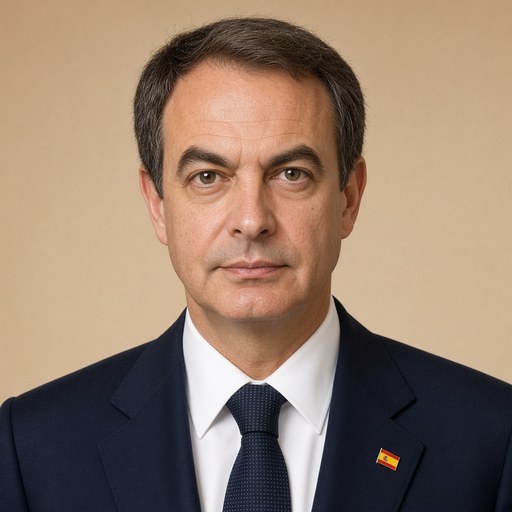
Press conference of the Prime Minister after the European Council meeting.
 José Luis Rodríguez Zapatero · Prime Minister of Spain
- Context
- Zapatero addressed press following the December 2011 European Council meeting, reporting on key agreements reached by eurozone leaders on fiscal integration and debt stabilization.
- Main themes
- European fiscal pact, sovereign debt crisis, eurozone stabilization mechanisms, European Stability Mechanism, budgetary golden rule, fiscal consolidation, private sector participation, eurozone institutional strengthening, intergovernmental treaty, Greece exception
- Duration
- ~36 min
- Words
- 4,293
- Sentences
- 155
- Readability
- 45
- Grade
- 13.6
- Syntax
- 3.38
- Vocabulary
- 2.07
Translated from Spanish
This is an interview, press conference or exchange with other speakers. It is split into sentences and counted in the corpus, but its sentences are not tagged on the twelve indices.
155 sentences in 62 paragraphs
President.- Good afternoon. I appear before you to report on this important European Council that has just concluded. I will briefly outline the main agreements reached by the heads of state and government of the euro area; agreements that reflect a determined political will from the seventeen countries that make up the euro to advance towards greater economic integration that supports the functioning of the Monetary Union.
We have decided to strengthen both the institutional architecture of the European Union and the monetary union, as well as the stabilization mechanisms against the sovereign debt crisis. These are additional substantial steps to those we have been taking over the last eighteen months since the acute onset of the debt crisis in European markets in the spring of 2010.
Regarding the institutional strengthening of the euro area, I want to highlight what is already known as the "fiscal pact." This pact has one objective: to improve the effectiveness of fiscal supervision, ensure fiscal consolidation processes, and seek budgetary balance, fiscal balance, so that in the future there will be no more problems with the sovereign debts of the countries in the euro area.
From that fiscal pact, I would highlight two major measures. The first is the incorporation of the so-called "golden rule," that is, the principle of budgetary stability that will be incorporated into national constitutions or laws of equivalent rank, as we have already done in Spain through a constitutional reform process, which you are aware of, with the agreement of the two major parties and which, without a doubt, is a factor of confidence, guarantee, and compliance with this new fiscal pact for the euro area.
Secondly, there will be greater automaticity in the excessive deficit procedure to ensure greater control, greater supervision, and ultimately, also greater foresight to avoid excessive deficits.
The other major block, alongside the institutional strengthening of the Monetary Union, alongside the institutional strengthening through the fiscal pact I just referred to, pertains to the stabilization mechanisms or, if you allow me, defense mechanisms—some have called them firewalls—to combat the risks of crises or problems arising from sovereign debt.
We have always defended this principle and have always argued that Europe should progressively and steadily establish a sufficient mechanism that guarantees the sustainability of the debt for all countries in the euro area and also to prevent possible attacks on it.
To this end, we have decided on some relevant measures. First, to bring forward the operational start of the European Stability Mechanism to July 2012, the definitive mechanism, that is, the European financial safety net, which will be permanent, replacing the facility that has currently acted to address the crisis in Greece, Portugal, and Ireland, and which will have an effective lending capacity of five hundred billion euros.
We have therefore agreed to expedite its decision-making process to make it more effective, moving from the rule of unanimity to that of qualified majority, with 85 percent of the representation of the countries to make it effective, to apply it at each specific moment.
And the most important thing, from my point of view, is that we have reaffirmed, in a forceful manner, the exceptional nature of the Greek case regarding the participation of the private sector. On some occasions, in this room and elsewhere, you have heard me state that the consequence of the so-called Deauville Summit, which opened the door to the participation of the private sector in the processes of addressing sovereign debt crises, the restructuring of private debt had undoubtedly been a decisive factor for that extension or systemic situation that we have largely experienced and continue to experience in the sovereign debt of the countries in the euro area.
Hence, I want to highlight in a particular way, because this is a fundamental message, that Greece is an absolute exception, that this will not be contemplated again, and that, therefore, it must be a factor of confidence for investors regarding the commitments that the various countries in the euro area have concerning our sovereign debt.
The political agreement on these relevant issues is based on the seventeen countries of the euro area, the seventeen countries that make up the common currency; but it is not limited to the seventeen countries. The reasonable expectation is that the vast majority of the other ten countries will join this political agreement, which will be translated into an intergovernmental agreement and must be made and completed before March 2012 regarding its specific content. In fact, in the next two or three weeks, there will already be a first approach, a first definition, of the content of that fiscal pact that will be taken to an intergovernmental treaty of the seventeen, surely, and, most likely, of the vast majority of the other ten countries of the European Union.
These are the two major agreements we have achieved at this Council. They are two agreements that must sustain confidence; that reaffirm the commitment of the euro area to itself, of all countries with the common currency; that provide more security regarding the financial support instrument available to all countries, and that give more confidence in the medium and long term because, without a doubt, the euro area will be a zone of fiscal strength, of guarantee of public accounts, of sustainability, both through the commitment of each of the countries in the euro area and through the additional, fundamental commitment of guaranteeing the entire euro area, in collaboration with European institutions.
Allow me to also refer to some other aspects that are in the Resolutions and that are important, affecting the enlargement policy and the foreign policy of the European Union; specifically, Croatia. Today we welcomed Croatia after the signing of its Accession Treaty; furthermore, an important step has been taken, a positive outlook, regarding the possible candidate status of Serbia, a topic that is undoubtedly also fundamental for the future and stability in the Balkans, and the perspective of opening accession negotiations with Montenegro in June 2012 has been considered.
Iran. The Council has also conveyed and received the text of conclusions on Iran adopted by the Foreign Affairs Council on December 1. In this way, the European Union expresses again, as it has done through the Council and the entire group of countries, its rejection of the events that occurred with the British Embassy in that country; its concern and monitoring of Iran's nuclear program and, of course, in close coordination with international partners, the adoption of additional measures, which include those that may affect the Iranian financial system, transportation, and the energy sector, in response to Iran's attitude.
These are perhaps the three fundamental issues concerning the non-economic part of the European Council. I must add something in this Council and in this press conference that has some unique characteristics, as you undoubtedly know well.
The first of these is that we have worked in full coordination with the Popular Party, as is appropriate, given that it is a caretaker government, with the party that will govern Spain. Specifically, I have had a permanent dialogue with Mr. Rajoy, most recently this morning, about the development of the Council, about exhaustive information on what the positions maintained have been, and, above all, about the task that, as you may have deduced from the information I have just referred to, we have ahead of us as a country in the coming weeks and months, especially to consolidate that intergovernmental treaty.
Therefore, I express my satisfaction with the degree of collaboration, with the degree of coordination, which simply demonstrates how a serious country, a member country of the European Union and the euro area, such as Spain, should work.
This is the last European Council I attend as Prime Minister, as you well know. I believe I have attended 44 European Councils and EU Summits; therefore, it is a sufficiently high number to convey some conclusion, some feeling, from that experience.
The first is that it has been an immense honor to represent my country in a forum like this in Europe.
The second is that I have always worked thinking that strengthening the European Union was strengthening Spain; the future, the well-being, and the desires of the Spanish people.
The third is that I arrived here with all my European vocation, with my European conviction, and after this time and after the last two years, which have been of difficult decisions and intense debates, some even until the early hours of the morning, like yesterday's, my European vocation, my conviction, is even firmer. The present and future of Spain, its well-being, and its economic recovery depend, to a large extent, on the strength, determination, and political will for unity that we Europeans have.
Finally, I wish to sincerely thank all of you, who have regularly followed me in these press appearances, for your attitude, your tone, and your intelligent questions, from which I have undoubtedly learned on many occasions. I hope that your work continues to go as well as possible and that you renew and maintain that European faith.
Q.- You mentioned the Deauville agreement as one of the key moments in the debt crisis of recent months. Do you think that things, beyond that misstep, could have been done differently? Could Europe have supported other economies that initially should not have been affected by the crisis and did not do so? Do you have any reproach to make to any of your European colleagues?
President.- We probably lack perspective to make or elevate that conclusion definitively. Let us start from a fact that is clear and indisputable: the European Union has faced the toughest, most serious, most difficult crisis since its inception. It is a great test. We must overcome it. In my opinion, we still have half the journey ahead.
If you were to ask me, "What have you done in these three years?" we have tried to respond, with successes and mistakes, which there have been; we have covered half the journey, and we have the other half left to guarantee the sustainability of the debt, to guarantee economic recovery, which is the objective, and job creation, and to perfect the entire architecture that, without a doubt, the Monetary Union needed to perfect when it was launched. We have debated many times that a common currency, without a fiscal union, without a common defense mechanism, suffered from problems.
Therefore, we lack perspective.
What I can state is that, since April-May, since the spring of 2010, the effort has been enormous and, although it is true that the debt problems have spread to several countries, we cannot forget that it is the first time in history that a political union, that a region, that an economic union faces this challenge and where a good part of the countries in the euro area, and also of the Union as a whole, have to explain to their citizens that they are lending money to other countries. This was not in the design of the Europeanists, nor of the founding fathers, nor of those who created the Monetary Union; it was not there, and we have had to build it, yes, with successes and with mistakes.
You recalled, because I have stated it, that the moment to open the door to the participation of the private sector for Greece was a very difficult moment. One can argue in favor of that decision the enormous volume of Greek debt and the difficulty of assuming that enormous volume because, certainly, given what Greece represents in terms of GDP and population, the volume of its public debt commitments has reached levels... Just one example: for the IMF, the program with Greece is the largest program in its entire history in which it has participated. Therefore, let us put it into perspective.
The fundamental issue at this moment is that the light, even if it is still far away, can be seen at the end, and the first step is the recovery of confidence among international economic actors, among investors, because if the tension in the markets regarding sovereign debt continues indefinitely, the economic recovery, which is key to creating jobs and to being able to pay off our debts and what we have had to finance, will be much more difficult.
Q.- Two questions. First, yesterday the Popular Party made it known that it wanted to increase the votes needed to activate the new rescue fund from 85 percent to 90 percent. I would like to know if that request was conveyed and why it was not deemed appropriate to include it.
A second question. After 44 Summits, you are leaving; Europe is dominated by the center-right; austerity is perhaps not the only, but the guiding principle of this Europe, and intergovernmentalism has also advanced. I wanted to know, in that context, what you believe has been the main achievement in the European policy of the Spanish Government and also what decision or measure, if there is a specific example, you would have liked to see decided and it has not been possible.
President.- Regarding the qualified majority --I explained it very briefly before so that we understand what we are talking about--, when the rule of unanimity was established, countries like Spain, and some others --you can easily imagine which countries; it would be easy to make the list--, we expressed our concern, because it is a very strict rule when it comes to that fund being able to lend money, to intervene. It is an important step that the rule of unanimity is not present.
It is true that this raised a derivative that, in my opinion, has another dimension, which is that moving from 85 to 90 percent meant that Spain alone could veto. But the objective of a country like ours, more than vetoing, is to facilitate the possibility of having that mechanism act.
Therefore, I understand the request, and I have shared it, I have proposed reaching 90 percent --I proposed it on two occasions: yesterday, mainly, at night and in the early morning--; but there was a criterion, which was the one that has been followed, for the 85 percent and it is to follow the same rule as the IMF. There was a clear consensus on that. It has a basis, the 85 percent is what the IMF requires, and it has been maintained at 85 percent.
I have already explained this to Mr. Rajoy this morning and I believe he understood it perfectly. Although we would have liked that 90 percent, to have, let’s say, that possibility, which we surely would never have used because, by nature, our country in this situation is favorable to the application of the Stability Mechanism, as is natural.
Who have been the ones who have had to come to this position? Germany, the Netherlands, Finland..., the countries that are always much more demanding in this context and at this historical moment when it comes to applying all the funds that are put in place to safeguard, to act as a firewall, against sovereign debt problems.
As for the achievement, that corresponds to others, to you, who are the ones who evaluate and analyze. I believe that Spain, throughout this time and in all the trajectory since our incorporation, has been characterized by being a country faithful to constructive Europeanism. That is the line I have followed, that I have maintained, and I believe it is what suits Spain.
Q.- It seems that a strict fiscal discipline is now imposed. I wanted to know how it can favor economic recovery, specifically, in Spain. Do you perhaps miss a commitment to some kind of stimulus? Can the return to economic growth slow down?
President.- Also in this we should have a bit of perspective. Is fiscal discipline or fiscal rigor, the search for budgetary balance, being reimposed? From 2004 to 2008 Spain had a budget surplus. The Government I presided over understood that this was good for the Spanish economy. It is true that, when you face a crisis of the magnitude, severity, or dimension that this one has had, you inevitably have to resort to fiscal stimuli. That was the decision, clearly, at the end of 2008, of Europe and the G-20, until those fiscal stimuli generated a problem in sovereign debt as a consequence, especially, of Greece and its possible systemic effect.
Anyone who approaches how public budgets should be managed reasonably supports that revenues and expenditures must be balanced; that there are exceptional circumstances where one can act, with limits, depending on the economic cycle; but that what is known as structural deficit must be strictly controlled because, if it is not strictly controlled, when an economic recession arrives, a drop in revenues, the problem regarding debt falls with great virulence, putting many things at risk: putting at risk the fiscal capacity of the State and also the economy.
What is the stimulus that the economy needs at this moment? The fundamental stimulus is that tensions in the markets decrease, that liquidity returns to the banks. That is the greatest stimulus.
Look, if we observe what has happened since May 2010 to now in our country, there are almost two parallel lines in that, when market tensions have flared up, our economy has immediately suffered, and employment. Why? Because banks find it harder to finance themselves, because companies find it harder to have liquidity, it is harder for them to ask banks, their investment plans are cut, they have to reduce costs and it affects the economy.
Therefore, the most important stimulus that the eurozone needs at this moment, and particularly the Spanish economy, is confidence, credibility, sustainability. That it does not cost us to finance ourselves as an economy as much as it costs us at this moment, that there is liquidity in banks so that they can lend money to SMEs, so that they can create jobs and so that, by creating jobs, the spending capacity of Spaniards and demand increases; that is the fundamental stimulus. Then, some reforms that remain pending, as is natural, although many of them have been made.
In short, the capacity for financing and credibility for the financing of the entire economic system of the eurozone and of Spain, that is the greatest stimulus. When we recover this, there may be other stimuli, which may be of different nature: fiscal, monetary..., but this is the most important today.
Q.- President, I have not heard you --perhaps I missed it-- give an assessment of the agreements of this Summit. It is evident that we leave here with an agreement, but with an intergovernmental agreement, outside the community procedure, which is the one that Spain has always defended. I wanted to ask you what assessment you make.
I also wanted to ask you what assessment you make of these results in light of what you have just raised. That is to say, do you think this agreement will restore confidence in the sovereign debt of euro countries and will contribute to easing market pressure? Does the fact that all euro countries, and some more, have accepted very firm and strict commitments to fiscal and budgetary discipline serve to activate other mechanisms? For example, can the European Central Bank intervene with more freedom, as other central banks in other countries do? Can we expect this now as a complement to budgetary discipline?
Finally, indeed, you have said it, it is your last European Council. I do not know if you have had the opportunity to say goodbye to some of the leaders with whom you have shared, if not all 44, at least a good part of the European Summits.
President.- There are many questions. It is almost a press conference in itself.
Assessment? My assessment is positive, but we have experiences from European Councils, and the positive assessment is consolidated when the whole of the economic actors --I am not only referring to investors-markets, but I am referring to the great economic powers, to the great international organizations, such as the IMF, the United States, China, emerging countries-- support, back, and see that these are decisions that go in the right direction. We will see that in the next 24 or 48 hours. As always, we have experience from Councils and, therefore, I reserve that final assessment.
Second, the vast majority of countries, if not almost all but one, would have opted for a treaty, for a reform of the treaties. It could be with more scope or less scope, accompanied by more derived law or not; but there has been one country, and since this is with twenty-seven, that is Great Britain, that said "no." It said "no" because it was asking for other parallel things, but that is another issue. But for one, this will not stop, it is evident, and, as we have a reasonable, solid alternative, which is the intergovernmental treaty, especially because the countries of the eurozone need it, it is very positive that we are going to advance in that direction.
European Central Bank. We must respect what the Central Bank does, what the Central Bank says. The day before yesterday it took very favorable measures for the liquidity of the banks and, even, some are unprecedented in the limits that have been set. I have no doubt that the European Central Bank knows it has to contribute to the stability of the monetary area; but it acts independently and makes its own decisions, with its own evaluations and its own analyses.
Regarding future proposals, there was quite a bit of debate yesterday about eurobonds. Although it seems that this has not been picked up, there was quite a bit of debate about eurobonds. I believe that --I will no longer be in that discussion-- next year this will undoubtedly be discussed, and it will continue to be discussed, and my impression is that the space will expand.
Finally, yes, of course, I have said goodbye to all my colleagues and to some with whom I have been, logically, for several years here. In particular, I was with the President of the Council, Herman Van Rompuy, this morning. I have had a few words with everyone. You know that in these proceedings people are extraordinarily affectionate, right? That has been the case.
Q.- I wanted to ask you precisely about your conversation with Mariano Rajoy. Did you discuss the issue of eurobonds, because you say that it will continue to be discussed and it is assumed that Spain will continue to defend it? Did you talk to Mariano Rajoy about this specific issue?
How was that request received, if you made it, for the European Central Bank, while maintaining its independence, to be more flexible in helping countries in trouble like Spain to overcome the debt crisis? It has already done so, but has the rest of the countries accepted that Spanish request well, if it has been made?
President.- Regarding the issue of eurobonds, I did not specifically talk about it with Mr. Rajoy today; but undoubtedly I will talk, because I am going to give him as exhaustive a report as I can about the development of the Council to know the different positions and why I said that we will talk about eurobonds next year.
Regarding the European Central Bank, this is one of the great debates. I have explained on some occasions --I did so yesterday during the lengthy dinner-- that if one looks at the major economic areas of the world, one observes something significant, which is that the eurozone has less debt and less deficit than the United States, the eurozone has less debt and less deficit than Great Britain, and the eurozone has less debt and less deficit than Japan, and yet it has much higher interest rates: the average interest rate of the eurozone is in the one and a bit-two for others and for us, an average rate of five. So, that is surprising. Less deficit, less debt and higher interest rates paid to finance.
Then, you compare other parameters, and what do you observe? That the eurozone is the one where its Central Bank has, by far, less public debt outstanding. Compare it with the United States, with Great Britain, which has the most, or with Japan.
There we enter the eternal debate --I say "eternal" because this has been debated many times-- that is that the European Central Bank in the Treaties has the mandate it has, it is true: guarantor of inflation. And it does not have that other mandate. Fundamentally, there is a clear debate that is more conceptual, economic, about what the response should be to a serious economic crisis that affects the stability of public accounts and the need for debt: a proactive policy, which some would qualify as inflationary, or a policy, let’s say, more passive, which may have other advantages. There are many examples throughout history of responses in one direction or another. Sometimes, expansive policy has worked, a monetarist policy, a policy, as it is said, of injecting liquidity, and sometimes it has not worked.
Therefore, I believe that we will continue to have that debate, because it is a debate of all economic schools and of all known experiences. As almost always happens, surely none of the extreme positions is the correct one, but rather a balanced position, where central banks act in certain circumstances, but that they do not excessively monetize the debt, because we know that this in the short or medium term is inflation and that generates problems also for economic growth and, surely, for employment.
Thank you very much. Until next time.
The original Spanish. The tags above are read on the English translation's sentences.
Presidente .- Buenas tardes. Comparezco ante ustedes para darles cuenta de este importante Consejo Europeo que acaba de terminar. Les voy a exponer de manera sintética los principales acuerdos a los que hemos llegado los jefes de Estado y de Gobierno de la zona euro; acuerdos que reflejan una voluntad política decidida de los diecisiete países que integramos el euro de avanzar hacia una mayor integración económica que respalde el funcionamiento de la Unión Monetaria.
Hemos decidido reforzar, tanto la arquitectura institucional de la Unión Europea y monetaria, como los mecanismos de estabilización contra la crisis de la deuda soberana. Se trata de pasos adicionales de entidad a los que hemos venido dando en los últimos dieciocho meses desde que en la primavera de 2010 se iniciara de forma aguda la crisis de la deuda en los mercados europeos.
En relación con el refuerzo institucional de la zona euro, quiero destacar lo que ya se conoce como el "pacto fiscal". Este pacto tiene un objetivo: mejorar la eficacia de la supervisión fiscal, garantizar los procesos de consolidación fiscal y buscar el equilibrio presupuestario, el equilibrio fiscal, para que en el futuro no vuelva a haber problemas con las deudas soberanas de los países de la zona euro.
De ese pacto fiscal destacaría dos grandes medidas. La primera es la incorporación de la denominada "regla de oro", es decir, el principio de estabilidad presupuestaria que se va a incorporar a las Constituciones nacionales o a leyes con un rango equivalente, como, por cierto, ya hemos hecho en España a través de un proceso de reforma de la Constitución, que ustedes conocen, con el acuerdo de los dos grandes partidos y que, sin duda alguna, es un factor de confianza, de garantía y de cumplimiento de este nuevo pacto fiscal para la zona euro.
En segundo lugar, se va a introducir una mayor automaticidad en el procedimiento de déficit excesivo para que haya un mayor control, una mayor supervisión y, en definitiva, también una mayor previsión para evitar los déficits excesivos.
El otro gran bloque, junto al refuerzo institucional de la Unión Monetaria, junto al refuerzo institucional a través del pacto fiscal que acabo de referir, está referido a los mecanismos de estabilización o, si me permiten, de defensa --algunos han llamado de cortafuegos--, para luchar contra los riesgos de las crisis o de los problemas derivados de la deuda soberana.
Siempre hemos defendido este principio y siempre hemos defendido que Europa se dote, progresivamente y de manera estable, de un mecanismo suficiente, que sea garantía para el conjunto de los países de la zona euro, sobre la sostenibilidad de su deuda y también para prevenir posibles ataques a las mismas.
Para ello hemos decidido algunas cosas que tienen relevancia. Primera, adelantar a julio de 2012 la puesta en funcionamiento del Mecanismo Europeo de Estabilidad, del Mecanismo definitivo, es decir, la red europea de seguridad financiera, que tendrá carácter permanente, que sustituirá a la Facilidad que en estos momentos ha actuado para afrontar la crisis de Grecia, Portugal e Irlanda y que tendrá una capacidad efectiva de préstamo de quinientos mil millones de euros.
Hemos, por tanto, acordado agilizar su procedimiento en la toma de decisiones para hacerla más efectiva, pasando de la regla de la unanimidad a la de la mayoría cualificada, con un 85 por 100 de la representatividad de los países para hacerla efectiva, para aplicarla en cada momento concreto.
Y lo más importante, desde mi punto de vista, es que hemos reafirmado, de una manera contundente, la excepcionalidad del caso griego en relación con la participación del sector privado. En alguna ocasión, en esta sala y en otros lugares, me escucharon afirmar que la consecuencia de la llamada Cumbre de Deauville, en la que se abrió la puerta a la participación del sector privado en los procesos de asunción de las crisis de la deuda soberana, la reestructuración de la deuda privada había sido, sin duda alguna, un factor decisivo para esa extensión o esa situación sistémica que, en gran medida, hemos vivido y vivimos en la deuda soberana de los países de la zona euro.
De ahí que quiera destacar de manera singular, porque éste es un mensaje fundamental, que Grecia es una excepción absoluta, que esto no se volverá a contemplar y que, por tanto, debe ser un factor de confianza en los inversores sobre los compromisos que los distintos países de la zona euro tenemos en relación con nuestra deuda soberana.
El acuerdo político de estas cuestiones relevantes tiene como fundamento los diecisiete países de la zona euro, los diecisiete países que integramos la moneda común; pero no se circunscribe a los diecisiete países. La previsión razonable es que la gran mayoría de los otros diez países se sumen a este acuerdo político, que tendrá su traducción en un acuerdo intergubernamental y que ha de hacerse y completarse antes de marzo de 2012 en cuanto a su contenido concreto. De hecho, en las próximas dos o tres semanas habrá ya una primera aproximación, una primera definición, del contenido de ese pacto fiscal que se llevará a un tratado intergubernamental de los diecisiete, seguros, y, con toda probabilidad, de la gran mayoría de los otros diez países de la Unión Europea.
Ésos son los dos grandes acuerdos que hemos logrado en este Consejo. Son dos acuerdos que deben sostener la confianza; que reafirman el compromiso de la zona euro consigo misma, de todos los países con la moneda común; que dan más seguridad sobre el instrumento de apoyo financiero del que disponen el conjunto de los países, y que dan más confianza a medio y largo plazo porque, sin duda alguna, la zona euro va a ser una zona de fortaleza fiscal, de garantía de las cuentas públicas, de sostenibilidad, tanto por el compromiso de cada uno de los países de la zona euro, como por el compromiso añadido, fundamental, de garantía del conjunto de la zona euro, en colaboración con las instituciones europeas.
Permítanme que les haga referencia también a algunos otros aspectos que están en las Resoluciones y que tienen su importancia, que afectan a la política de ampliación y a la política exterior de la Unión Europea; en concreto, Croacia. Hoy hemos dado la bienvenida a Croacia tras la firma de su Tratado de Adhesión; además, se ha dado un paso importante, una visión positiva, al posible estatus de candidato de Serbia, tema, sin duda, también fundamental para el futuro y la estabilidad en los Balcanes, y se ha contemplado la perspectiva de apertura de negociaciones de adhesión con Montenegro en junio de 2012.
Irán. El Consejo ha trasladado también y ha recibido el texto de conclusiones sobre Irán adoptado por el Consejo de Asuntos Exteriores del pasado 1 de diciembre. De esta manera, la Unión Europea expresa nuevamente, al igual que lo ha hecho a través del Consejo y del conjunto de los países, su rechazo a los sucesos ocurridos con le Embajada de Gran Bretaña en aquel país; su preocupación y seguimiento del programa nuclear de Irán y, por supuesto, en estrecha coordinación con los socios internacionales, la adopción de medidas adicionales, que incluyen las que puedan afectar al sistema financiero iraní, al transporte y al sector energético, como respuesta a la actitud de Irán.
Éstos, quizás, son los tres temas fundamentales en lo que afecta a la parte no económica del Consejo Europeo. Debo añadir alguna cosa en este Consejo y en esta rueda de prensa que tiene algunas características singulares, como, sin duda alguna, ustedes bien conocen.
La primera de ellas es que hemos trabajado en plena coordinación con el Partido Popular, como procede, tratándose de un Gobierno en funciones, con el partido que va a gobernar España. En concreto, he tenido un diálogo permanente con el señor Rajoy, en última ocasión esta mañana mismo, sobre el desarrollo del Consejo, sobre una información exhaustiva de cuáles habían sido las posiciones mantenidas y, sobre todo, de la tarea que, como habrán deducido de la información que les acabo de referir, tenemos por delante como país en las próximas semanas y en los próximos meses, muy especialmente para consolidar ese tratado intergubernamental.
Por tanto, expreso mi satisfacción por el grado de colaboración, por el grado de coordinación, que simplemente pone de manifiesto cómo se debe trabajar y cómo ha de trabajar un país serio, un país miembro de la Unión Europea y de la zona euro, como es España.
Éste es el último Consejo Europeo al que asisto como presidente del Gobierno, como bien saben. Creo que han sido 44 Consejos Europeos y Cumbres de la Unión Europea a las que he asistido; por tanto, es un número suficientemente elevado para trasladarles alguna conclusión, alguna sensación, de esa experiencia.
La primera es que ha sido un inmenso honor representar a mi país en un foro como éste en Europa.
La segunda es que siempre he trabajado pensando que fortalecer la Unión Europea era fortalecer España; el futuro, el bienestar y los deseos de los españoles.
La tercera es que llegué aquí con toda mi vocación europeísta, con mi convicción europeísta, y después de este tiempo y después de los últimos dos años, que han sido de decisiones difíciles y de debates intensos, incluso algunos hasta altas horas de la madrugada, como el de ayer mismo, mi vocación, mi convicción, europeísta es aún más firme. El presente y el futuro de España, de su bienestar y de su recuperación económica dependen, en gran medida, de la fortaleza, de la determinación y de la voluntad política de unión que tengamos los europeos.
Por último, deseo agradecerles muy sinceramente a todos ustedes, que me han seguido de manera habitual en estas comparecencias de prensa, su actitud, su tono y sus preguntas inteligentes, sin duda alguna, de las cuales he aprendido en muchas ocasiones. Espero que la tarea les siga yendo lo mejor posible y que renueven y mantenga esa fe europeísta.
P.- Citaba el acuerdo de Deauville como uno de los momentos clave en la crisis de deuda de los últimos meses. ¿Cree que las cosas, más allá de ese patinazo, se podrían haber hecho de otra manera? ¿Europa podría haber apoyado más a otras economías que en un principio no debían haberse visto afectadas por la crisis y no lo ha hecho? ¿Tiene algún reproche que hacer a alguno de sus colegas europeos?
Presidente .- Nos falta perspectiva, seguramente, para hacer o elevar a definitiva esa conclusión. Partamos de un hecho, que es claro e incontestable: la Unión Europea ha afrontado la crisis más dura, más grave, más difícil, desde su nacimiento. Es una gran prueba. Tenemos que superarla. Aún queda, en mi opinión, la mitad del camino.
Si a mí me dijera "¿qué han hecho en estos tres años?", hemos intentado dar una respuesta, con aciertos, con errores, que los ha habido; hemos cubierto la mitad del camino, y nos queda la otra mitad, para garantizar la sostenibilidad de la deuda, para garantizar la recuperación económica, que es el objetivo, y la creación de empleo, y para perfeccionar toda la arquitectura que, sin duda alguna, la Unión Monetaria cuando se puso en marcha necesitaba perfeccionar. Hemos debatido en muchas ocasiones que una moneda común, sin una unión fiscal, sin un mecanismo de defensa común, adolecía de problemas.
Por tanto, nos falta perspectiva.
Lo que sí puedo constatar es que, desde abril-mayo, desde la primavera, de 2010 el esfuerzo ha sido enorme y, aunque es verdad que los problemas de deuda se han extendido a varios países, no podemos dejar de olvidar que es la primera vez en la historia que una unión política, que una región, que una unión económica, afronta este desafío y donde una buena parte de los países de la zona euro, y también de la Unión en su conjunto, tiene que explicar a sus ciudadanos que se presta dinero a otro países. Esto no estaba en el diseño de los europeístas, ni de los padres fundadores, ni de quienes hicieron la Unión Monetaria; no estaba y hemos tenido que construirlo, pues sí, con aciertos y con errores.
Usted lo recordaba, porque yo lo he afirmado, que el momento de abrir la puerta a la participación del sector privado para Grecia fue un momento muy difícil. Se puede argumentar a favor de esa decisión el ingente volumen de la deuda griega y la dificultad de asumir ese ingente volumen porque, ciertamente, a tenor de lo que Grecia representa en cuanto a PIB y en cuanto a número de habitantes, el volumen de sus compromisos de deuda pública ha llegado a niveles… Basta un ejemplo: para el FMI el programa con Grecia es el programa mayor de toda su historia en el que ha participado. Por tanto, pongámosle dimensión.
La cuestión fundamental en estos momentos es que la luz, aunque sea todavía lejos, se ve al final y el primer paso es la recuperación de la confianza en los actores internacionales de la economía, en los inversores, porque, si la tensión en los mercados sobre la deuda soberana continúa indefinidamente, la recuperación económica, que es la clave para que se cree empleo y para que podamos pagar tranquilamente las deudas y aquello que nos ha costado financiar, será mucho más difícil.
P.- Dos cuestiones. Primera, ayer el Partido Popular hizo saber que quería ampliar del 85 por 100 al 90 por 100 los votos necesarios para activar el nuevo fondo de rescate. Me gustaría saber si hizo el traslado de esa petición y por qué no ha sido adecuado incluirla.
Una segunda pregunta. Tras 44 Cumbres, usted se va; Europa está dominada por el centroderecha; la austeridad es, quizás no el único, pero el principio rector de esta Europa y el intergubernamentalismo también ha avanzado. Quería saber, en ese contexto, cuál cree que ha sido el principal logro en la política europea del Gobierno de España y también cuál es la decisión o la medida, si hay algún ejemplo concreto, que le gustaría haber visto decidida y no ha podido ser.
Presidente .- Sobre la mayoría cualificada --antes lo expliqué muy sucintamente para que se comprenda de qué estamos hablando--, cuando se estableció la regla de la unanimidad, países como España, y algunos otros --ya se pueden imaginar qué países; sería fácil hacer la lista--, mostramos nuestra preocupación, porque es una regla muy estricta a la hora de que ese fondo pueda prestar dinero, intervenir. Es un avance importante el que la regla de la unanimidad no esté presente.
Es verdad que eso planteaba una derivada que, en mi opinión, tiene otra dimensión, que es que pasar del 85 al 90 por 100 suponía que España por sí sola podría vetar. Pero el objetivo de un país como el nuestro, más que vetar, es facilitar el que tengamos esa posibilidad de que el mecanismo actúe.
Por tanto, comprendo la petición, y la he compartido, la he propuesto, de llegar al 90 por 100 --la he propuesto en dos ocasiones: ayer, fundamentalmente, por la noche y de madrugada--; pero había un criterio, que era el que se ha seguido, para el 85 por 100 y es seguir la misma regla que el FMI. En eso había un consenso claro. Tiene un sustento, el 85 por 100 es lo que exige el FMI, y se ha mantenido en el 85 por 100.
Ya se lo he explicado al señor Rajoy esta mañana y creo que lo ha entendido perfectamente. Aunque nos hubiera gustado ese 90 por 100, por tener, digamos, esa posibilidad, que seguramente no la hubiéramos utilizado nunca porque, por naturaleza, nuestro país en esta coyuntura es favorable a que se aplique el Mecanismo de Estabilidad, como es natural.
¿Quiénes han sido los que han tenido que venir a esta posición? Alemania, Holanda, Finlandia…, los países que siempre son mucho más exigentes en este contexto y en este momento histórico a la hora de aplicar todos los fondos que se ponen para salvaguardar, para hacer de cortafuegos, ante los problemas de deuda soberana.
En cuanto al logro, eso corresponde a los demás, a ustedes, que son los que evalúan y analizan. Yo creo que España, en todo este tiempo y en toda la trayectoria desde nuestra incorporación, se ha caracterizado por ser un país fiel al europeísmo constructivo. Ésa es la línea que he seguido, que he mantenido, y creo que es la que le conviene a España.
P.- Parece que ahora se impone una estricta disciplina fiscal. Quería saber cómo puede favorecer a la recuperación económica, en concreto, de España. ¿No echa en falta, tal vez, una apuesta por algún tipo de estímulos? ¿Puede ralentizarse la vuelta al crecimiento económico?
Presidente .- También en esto tengamos un poco de perspectiva. ¿Se vuelve a imponer la disciplina fiscal o el rigor fiscal, la búsqueda del equilibrio presupuestario? De 2004 a 2008 España tuvo superávit presupuestario. El Gobierno que presidía entendía que eso era bueno para la economía española. Es verdad que, cuando enfrentas una crisis de la envergadura, de la gravedad o de la dimensión que ésta ha tenido, inevitablemente tienes que recurrir a estímulos fiscales. Ésa fue la decisión, claramente, a finales de 2008, de Europa y del G-20, hasta que esos estímulos fiscales generaron un problema en la deuda soberana como consecuencia, especialmente, de Grecia y su posible efecto sistémico.
Cualquier persona que se aproxime a cómo se deben gestionar los Presupuestos públicos respalda razonablemente que los ingresos y los gastos deben de ir equilibrados; que hay circunstancias excepcionales donde se puede actuar, con límites, en función del ciclo económico; pero que eso que se conoce como déficit estructural tiene que estar estrictamente controlado porque, si no está estrictamente controlado, cuando llegue una recesión económica, una caída de ingresos, el problema sobre la deuda recae con una gran virulencia, poniendo en riesgo tantas cosas: poniendo en riesgo la capacidad fiscal del Estado y también la economía.
¿Cuál es el estímulo que necesita la economía en estos momentos? El estímulo fundamental es que disminuyan, que se reduzcan, drásticamente las tensiones en los mercados y que vuelva la liquidez para los bancos. Ése es el mayor estímulo.
Fíjese, si observamos lo que ha pasado desde mayo de 2010 a aquí en nuestro país, hay casi dos líneas paralelas en función de que, cuando la tensión en los mercados se ha reavivado, nuestra economía se ha resentido inmediatamente, y el empleo. ¿Por qué? Porque a los bancos les cuesta más financiarse, porque a las empresas les cuesta más tener liquidez, les cuesta más pedir a los bancos, sus planes de inversión se cortan, tienen que reducir costes y afecta a la economía.
Por tanto, el estímulo más importante que necesita en estos momentos la zona euro, y en particular la economía española, es la confianza, la credibilidad, la sostenibilidad. Que no nos cueste financiarnos como economía tanto como nos cuesta en estos momentos, que haya liquidez en los bancos para que puedan prestar dinero a las pymes, para que éstas puedan crear empleo y para que, creándose empleo, aumenten la capacidad de gasto de los españoles y la demanda; ése es el estímulo fundamental. Luego, algunas reformas que quedan pendientes, como es natural, aunque se han hecho muchas de ellas.
En definitiva, capacidad de financiación y credibilidad para la financiación del conjunto del sistema económico de la zona euro y de España, ése es el mayor estímulo. Cuando recuperemos esto, puede haber otros estímulos, que pueden ser de distinta naturaleza: fiscales, monetarios…, pero éste es el más importante hoy.
P.- Presidente, no le he escuchado --quizás se me ha pasado a mí-- una valoración sobre los acuerdos de esta Cumbre. Es evidente que se sale de aquí con un acuerdo, pero con un acuerdo intergubernamental, al margen del procedimiento comunitario, que es el que siempre ha defendido España. Quería preguntarle qué valoración hace.
También quería preguntarle qué valoración hace de estos resultados de cara, precisamente, a lo que acaba de plantear. Es decir, ¿cree que este acuerdo va a devolver la confianza en la deuda soberana de los países del euro y va a contribuir a que se relaje la presión de los mercados? ¿El hecho de que se hayan aceptado por todos los países del euro, y algunos más, compromisos muy firmes y muy estrictos de disciplina fiscal y presupuestaria va a servir para que se puedan activar otros mecanismos? Por ejemplo, ¿para que el Banco Central Europeo pueda intervenir con las manos más libres, como intervienen otros bancos centrales de otros países? ¿Cabe esperar esto ahora como complemento a la disciplina presupuestaria?
Por último, efectivamente, usted lo ha dicho, es su último Consejo Europeo. No sé si ha tenido oportunidad de despedirse de algunos de los mandatarios con los que ha compartido, si no las 44, al menos buena parte de las Cumbres europeas.
Presidente .- Son muchísimas preguntas. Casi es una rueda de prensa en sí misma.
¿Valoración? Mi valoración es positiva, pero tenemos experiencias de Consejos Europeos, y la valoración positiva se consolida cuando el conjunto de los actores económicos --no me refiero sólo a inversores-mercados, si no me refiero a las grandes potencias económicas, a los grandes organismos internacionales, como el FMI, Estados Unidos, China, los países emergentes--, respaldan, apoyan y ven que esto son decisiones que van en la buena dirección. Eso lo vamos a ver en las próximas 24 o 48 horas. Como siempre, ya tenemos experiencia de los Consejos y, entonces, me reservo esa última valoración.
Segundo, la inmensa mayoría de los países, por no decir casi todos menos uno, hubiéramos optado por un tratado, por una reforma de los tratados. Podía ser con más alcance o con menos alcance, acompañado con más Derecho derivado o no; pero ha habido un país, y como esto es a veintisiete, que es Gran Bretaña, ha dicho "no". Ha dicho "no" porque pedía otras cosas paralelas, pero ésa es otra cuestión. Pero por uno no se va a parar esto, es evidente, y, como tenemos una alternativa razonable, sólida, que es el tratado intergubernamental, sobre todo porque los países de la zona euro lo necesitamos, es muy positivo que se vaya a avanzar en esa dirección.
Banco Central Europeo. Hay que respetar lo que haga el Banco Central, lo que diga el Banco Central. Antes de ayer tomó medidas muy favorables para la liquidez de los Bancos e, incluso, algunas no tienen precedentes en los límites que se han situado. No tengo ninguna duda de que el Banco Central Europeo sabe que tiene que contribuir a la estabilidad de la zona monetaria; pero actúa con carácter independiente y actúa con sus propias decisiones, con sus propias evaluaciones y con sus propios análisis.
De cara al futuro planteamiento, ayer se debatió bastante de eurobonos. Aunque parece que eso no ha sido recogido, se debatió bastante de eurobonos. Yo creo que --ya no voy a estar en esa discusión-- el año próximo se hablará de esto, sin duda, y se irá hablando, y mi impresión es que el espacio se irá ampliando.
Por último, sí, claro, me he despedido de todos los colegas y de algunos con los que he estado, lógicamente, varios años aquí. De manera particular, he estado esta mañana con el presidente del Consejo, con Herman Van Rompuy. Con todos he tenido algunas palabras. Ya saben que en estos trámites la gente es extraordinariamente cariñosa, ¿no? Así ha sido.
P.- Yo quería preguntarle precisamente sobre su conversación con Mariano Rajoy. ¿Ha comentado el tema de los eurobonos, porque dice usted que se va a seguir hablando y se supone que España lo va a seguir defendiendo? ¿Ha hablado con Mariano Rajoy de este tema en concreto?
¿Cómo ha sido acogida esa petición, si es que la ha hecho, de que el Banco Central Europeo, evidentemente manteniendo su independencia, sí sea más flexible a la hora de ayudar a los países en problemas como España a superar la crisis de la deuda? Ya lo ha hecho, pero ¿el resto de países ha aceptado bien esa petición española, si es que se ha hecho?
Presidente .- Sobre el tema de eurobonos, hoy no he hablado en concreto con el señor Rajoy; pero sin duda alguna hablaré, porque voy a hacerle un relato todo lo más exhaustivo que pueda de lo que ha sido el desarrollo del Consejo para saber las distintas posiciones y por qué he dicho que se hablaré el próximo año de eurobonos.
Sobre el Banco Central Europeo, éste es uno de los grandes debates. Yo he explicado en alguna ocasión --ayer lo hice en el desarrollo de la larguísima cena-- que, si uno coge las grandes áreas económicas del mundo, observa algo significativo y es que la zona euro tiene menos deuda y menos déficit que Estados Unidos, la zona euro tiene menos deuda y menos déficit que Gran Bretaña, y la zona euro tiene menos deuda y menos déficit que Japón, y, sin embargo, tiene los tipos de interés mucho más altos: el tipo de interés medio de la zona euro está en el uno y pico-dos para los demás y para nosotros, un tipo medio del cinco. Entonces, eso sorprende. Menos déficit, menos deuda y más tipo de interés pagan para financiarse.
Luego, vas a comparar otros parámetros, ¿y qué observas? Que la zona euro es aquella en la que su Banco Central tiene, con amplísima diferencia, menos deuda pública viva. Compárese con Estados Unidos, con Gran Bretaña, que es la que más tiene, o con Japón.
Ahí entramos en el eterno debate --digo "eterno" porque esto se ha debatido muchísimas veces-- que es que el Banco Central Europeo en los Tratados tiene el mandato que tiene, es verdad: garante de la inflación. Y no tiene ese otro mandato. En el fondo, es clarísimo que hay un debate que es más bien conceptual, económico, sobre cuál es la respuesta ante una grave crisis económica y que afecta a la estabilidad de las cuentas públicas y a la necesidad de la deuda: una política proactiva, que algunos calificarían como inflacionista, o una política, digamos, más pasiva, que pueda tener otras ventajas. Ejemplos a lo largo de la historia de respuestas de una u otra dirección hay muchos. A veces, ha funcionado la política expansiva, una política monetarista, una política, como se dice, de inyectar liquidez, y, a veces, no ha funcionado.
Por tanto, creo que ese debate lo vamos a seguir teniendo, porque es un debate de todas las escuelas económicas y de todas las experiencias conocidas. Como casi siempre ocurre, seguramente ninguna de las posiciones extremas es la acertada, sino una posición equilibrada, donde los bancos centrales actúen en determinadas circunstancias, pero que tampoco monetaricen excesivamente la deuda, porque sabemos que eso a corto o medio plazo es inflación y eso genera problemas también para el crecimiento económico y, seguramente, para el empleo.
Muchas gracias. Hasta la próxima.