




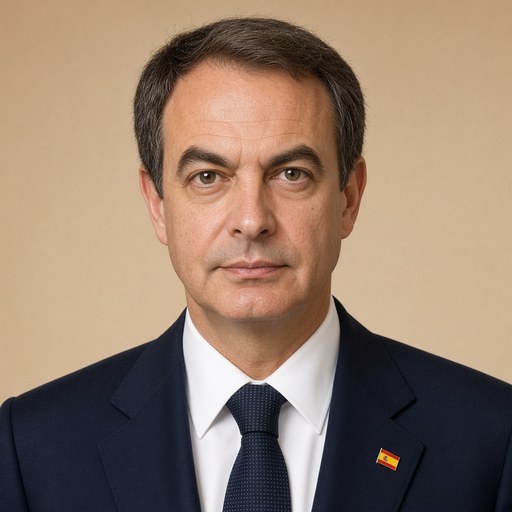
Speech by the President of the Government at the plenary session of the Lower House of Parliament to report on the Summit of Eurogroup Heads of State and Government
 José Luis Rodríguez Zapatero · Prime Minister of Spain
- Context
- Zapatero addressed the Spanish Lower House of Parliament on 26 July 2011 to report on the Eurogroup Heads of State Summit held in Brussels on 21 July 2011.
- Main themes
- Eurozone financial stability, Greek sovereign debt crisis, European Financial Stability Facility, private sector participation, European economic governance, eurogroup summit decisions, Spanish economy, financial aid programmes, monetary union, sovereign debt markets, austerity and structural reforms
- Duration
- ~23 min
- Words
- 2,739
- Sentences
- 88
- Readability
- 36
- Grade
- 15.7
- Syntax
- 3.28
- Vocabulary
- 2.18
The broad sphere of national life a sentence belongs to. Every sentence has an Arena, so it is the denominator the other indices are read against.
Other88 sentences in 19 paragraphs
Ladies and gentlemen, I have asked to appear today in this House to present the results from the Summit of Eurogroup Heads of State and Government that was held in Brussels on Thursday, 21 July. The reason for doing so is clear: I consider it an obligation, and the general rule that I have always aimed to follow since the start of the crisis, that this House should immediately have all the information available on the decisions adopted at a European level, and that the different groups are given the chance to state their opinions and debate them. This is particularly true on this occasion when the decisions are undoubtedly far-reaching.
As you all know, the Eurogroup summit was called to address the heightened tension in the sovereign debt markets caused basically by doubts about the sustainability of the Greek debt. It is a new episode of the effects of the international financial crisis in Europe, a crisis that has forced three countries in the Eurozone to request financial support, something that would have appeared simply unthinkable little more than a year ago, at the start of the spring of 2010. And now, in recent months, the lack of specific decisions, both on Greece and on guarantees for financial stability in the Euro as a whole, has led to systemic tension in all the countries that share the single currency. This instability in the Eurozone affects Spain directly. It is the cause of constant concern because, apart from the greater financing cost it involves for the public treasury, it makes it even more difficult to overcome the main collective challenge we face in the future. This challenge is to speed up economic recovery and create jobs.
In these circumstances, European countries have once more shown their commitment to doing whatever is necessary to safeguard the financial stability of the Monetary Union. The summit has given clear and structured responses in this respect in three interrelated areas of great importance: the new programme of financial aid for Greece; the precise definition of participation by the private sector to resolve Greece's crisis; and greater flexibility for the Financial Facility to allow it to act as a true European monetary fund. I would like to begin by highlighting the high political value of these decisions reached by the 17 countries in the Eurozone who, we should not forget, represent a total of 332 million people. These decisions undoubtedly represent a further step towards European economic governance and are destined to provide greater stability to the common Euro project.
Ladies and gentlemen, Before specifying the content of these three agreements, allow me to recall briefly the steps we have taken so far, because in the history of the Euro this is the fourth time that the leaders of the Eurogroup have met. And in fact, all four occasions have been within the last two and a half years, which shows clearly the extraordinary difficulties that we are faced with. The first meeting was held on 12 October, 2008 after the collapse of one of the largest investment banks and one of the largest insurance companies in the United States and Europe. Currently the Eurogroup has coordinated a decisive response to stabilise the financial system and guarantee - and we should not forget this - the deposits of savers.
The second meeting was on 7 May 2010. It marked the start of the response to the serious turmoil in the European sovereign debt markets. For the first time in the history of the Euro, a programme of financial aid was agreed to Greece, in partnership with the International Monetary Fund, amounting to 110 billion euros. At the same time, the European Financial Stability Facility was created to strengthen the stability of the Eurozone. Ireland would be the first country to make use of these financial resources in November 2010, with an aid package of 85 billion euros, conditioned on a demanding austerity programme and structural reforms.
The third meeting of the leaders of the Eurogroup was held on 11 March 2011 before the Spring European Council meeting. It made progress on economic governance by strengthening the effectiveness of the Stability and Growth Pact and creating the European Stability Mechanism to operate on a permanent basis, as well as boosting the competitiveness of our economies with detailed commitments under the Euro-Plus Pact. On 21 April 2011, Portugal requested financial support. It was approved on 16 May 2011 for 78 billion euros, once more in exchange for the implementation of a tough package of cuts and structural reforms.
The tension in the financial markets has continued since then, at an even more volatile and unstable level over recent weeks. The origin of the renewed episode of instability lies in the spreading belief that, given the circumstances, Greece will obviously not be able to finance itself normally through the markets at the start of 2012, which was the objective of the first support programme. In addition, analysts have had serious doubts about the medium-term sustainability of the Greek government debt, which was already above 150 per cent of its gross domestic product, while investors' uncertainty remained high regarding the characteristics of the second financial support programme that was being negotiated for Greece; in particular, in relation to the private sector's participation in the programme. As a result of all this, instability had produced contagion to other countries in the Eurozone, and increased the spread between the sovereign debt of Member States against German government bonds. This contagion above all affected two major European economies: Italy and Spain.
Ladies and gentlemen, The continued crisis hitting the European sovereign debt markets reveals in all its starkness the disadvantages of not having a true economic government of the Euro in place. We had a monetary union that apparently was in good health, but it had not progressed sufficiently in the necessary coordination with other economic policies. The meetings of the Eurogroup and the European Council since 2008 have aimed to mitigate this shortcoming, as I have just explained, and reinforce the coordination, supervision and solidarity mechanisms within the Economic and Monetary Union. The summit held on Thursday in Brussels has contributed notably to this task, which is still far from having concluded. A series of specific decisions made at the summit have aimed once more to comply with our political commitment to do whatever is necessary to guarantee the stability of the Eurozone as a whole and that of each of its Member States.
First, after the Greek authorities approved a new package of fiscal adjustment and privatisation measures on 27 June, the Euro countries defined the features of the second programme of financial aid to Greece lasting until 2014. Together with the International Monetary Fund, we will contribute additional funds of 109 billion euros at lower interest rates that are close to the financing cost of the Financial Facility, which is around 3.5 per cent, and longer maturities, from the current 7.5 years to a maximum of 30 years. These improvements in interest rates and maturities will also apply to the programmes designed for Portugal and Ireland. Aware that economic growth is essential for the sustainability of Greece's debt, with the country immersed in a profound economic recession, at a negative rate of GDP growth of 4.8 per cent year-on-year in the first quarter of 2011, the members of the Eurogroup agreed to promote a global strategy in favour of growth and investment in Greece. Additional funds were mobilised for this purpose in the EU and the European Investment Bank, measures were put into place to ensure that the Structural Funds that Greece already receives were put to the best use possible.
Second, the private sector will contribute financial support to Greece. This will ease pressure on the country and help it to gradually resume operations on the markets. In any event, it is worth remembering that this participation is voluntary, limited and set within a specific menu of options. The participation that has already been agreed with the Institute of International Finance, which groups together the main private financial institutions, and it has been prepared solely and exclusively for the case of Greece. The financial instruments that will be used are a swap for bonds with longer maturities, exchange of bonds at maturity by new long-term ones and the repurchase of bonds on the secondary market. This contribution by the private sector is estimated at 106 billion euros for the period 2011-2019. It represents an acceptance of an average loss of around 21 per cent for holders of Greek bonds. Assuming that this option could involve the declaration of selective default by the rating agencies, we have agreed to give guarantees that in this case the Greek entities can continue to finance at the European Central Bank and, if necessary, support the recapitalisation of the Greek banks.
Finally, the third major agreement adopted on Thursday consists of reinforcing the capacity of the Monetary Union to prevent new crisis episodes and react to them through an increase in the flexibility of the Financial Facility and the Permanent Mechanisms that will replace it starting in 2013. This is of enormous importance. After the modification of its procedures, the Facility will be able to grant finance as a preventive measure to Member States and buy securities in secondary debt markets, with the prior agreement and support through an evaluation by the European Central Bank.
These are, ladies and gentlemen, the three major decisions approved by the Eurogroup: a second programme of aid to Greece, the definition of the involvement of the financial sector and a new structure for the European Financial Facility, with more flexibility and more instruments to enable it to react and guarantee the stability of the Eurozone. The Spanish government can do no less than give a favourable overall report of the results of this meeting, as they are in line with what we have been defending over recent months. • Firm and clear commitment to support Greece; • In the case of participation by the financial sector, the private sector, with clear definition of its actions, which in any event are to be voluntary; • And third, promotion of stability in the Eurozone as a whole, providing it with more flexible and efficient financial instruments.
Ladies and gentlemen, Together with these measures, which are extremely significant, the Eurogroup has confirmed other prior decisions made to strengthen the Eurozone. For example, it has called on the European Commission to present proposals to reduce the dependency of the European Union on external credit ratings. The Member States have reaffirmed our national commitment to budget stability, so that the countries that are not subject to a programme of financial support will reduce our public deficit to under 3 per cent not later than 2013. The statement refers explicitly to Spain, where the Eurogroup declares itself satisfied with "the ambitious reforms undertaken by Spain in the budget, financial and structural area".
As you know, and today I would like to insist on it, the Government's commitment is to continue to act along the same lines and with the same determination. In particular, in relation to budget consolidation, the figures of the government deficit for the first half of the year will be out at the end of the week, and we expect they will continue the trend to May: close to 20 per cent under the figure for the same period last year. To achieve our budget target in 2011, which consists of a reduction of the deficit to 6 per cent of GDP, we have to count on the contribution of all levels of government, with each meeting its own targets. I expect that the meeting this afternoon of the Fiscal and Financial Policy Council will be held in a constructive atmosphere. The Government will attend with this aim and motivation, to formulate the proposal to adopt the spending rules of the autonomous regions, in line with those we have just approved at the level of central government and the local authorities. As evidence of this collective effort, I would like to highlight the agreements reached last week between central government and the autonomous regions at the Inter-regional National Health System Council, which will save pharmaceutical expenditure estimated at more than 2 billion euros per year. Although the situation is not easy for anyone, we must all act responsibly, within our respective institutional responsibilities. Make no mistake, the Government of Spain will do so to ensure compliance with the deficit target of 6 per cent. Commitments are not made to be broken, particularly at a time like this when confidence in the Eurozone is still fragile.
With respect to the reform of the financial system, the process of recapitalisation ends in September, as you all know. As you also know, last week two important steps were taken consisting of the initial public offering of Bankia and Banca Cívica, with results that were more than reasonable given the still extremely complicated environment in which they took place. In addition, the Bank of Spain has decided to formalise its intervention in the Caja de Ahorros del Mediterráneo, once the results of the stress tests were made public. It has analysed its economic and financial situation and decided that the saving bank's capital strengthening plan could not ensure a viable future for it. It has now been capitalised through the Fund for the Orderly Restructuring of the Banking System (FROB), the directors of the savings bank have been replaced and a competitive process for its sale has been agreed. During this period, depositors and creditors have absolutely no need for concern, as the bank will comply with all its obligations normally.
Ladies and gentlemen, and here I conclude, At this Eurogroup summit some extremely significant steps have been taken to reinforce financial stability. New steps, tangible steps, have been taken, and now they have to be implemented, and we will do so in the shortest possible time. This was the will expressed on Thursday. The expected results should then occur, and I am sure they will do so, although we cannot expect that stability will return overnight, after so many months of turmoil. It will take time. Whatever the outcome, I believe it is only right that we should recognise that the Eurogroup, and all the countries that form part of it, has the capacity to react with energetic measures in circumstances of great difficulty; and that it should create an awareness of the importance of these measures and, most important of all, of what drives us to promote them.
Ladies and gentlemen, We have achieved a major political commitment, one that goes beyond national priorities to make progress in European integration, in particular in the Eurozone. This commitment does everything needed to preserve European economic monetary union, and in my view it is a commitment that will not end until it achieves the expected result: the stability of the Eurozone. We will continue to do everything necessary, because we know that the ship cannot founder and because we have decided to weather the storm together and to continue on course; to continue moving in the only direction possible, the only route that can be reconciled with history and the destiny of the European project: more integration, more Europe and more commitment of all to Europe.
The solution to the problems we are facing not was not one that could be found ready-made; and this is true of many other things in this crisis. There was nothing like an existing road map to serve as a guide and by which we could check the appropriateness of our decisions. There was none then, and there is undoubtedly is none now. What we have, what we can use, is our will, the firm determination of one of the most powerful regions in the world and of the countries that make it up, to resolve these problems, which have acquired a structural dimension. Beyond any clear and precise decisions we may have agreed, this is what is most notable about what happened on Thursday: the common will to do whatever is necessary to strengthen the Eurozone and its stability; a stability on which the strength of economic recovery depends, and a stability on which the current and future welfare of the people of Europe - and of course, Spain - also depends.
Thank you very much.