




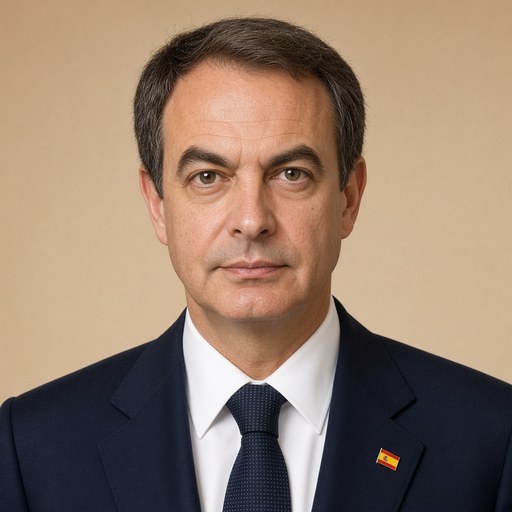
Speech by the President of the Government at the extraordinary plenary session of the Lower House of Parliament to ratify the Royal Decree Law on fiscal and healthcare measures
 José Luis Rodríguez Zapatero · Prime Minister of Spain
- Context
- Zapatero addressed an extraordinary plenary session of Spain's Lower House on 22 August 2011 to defend ratification of an emergency Royal Decree Law on fiscal and healthcare measures amid worsening global economic conditions.
- Main themes
- Fiscal and healthcare reform ratification, international economic deterioration, sovereign debt market volatility, European economic crisis, US debt ceiling and credit rating downgrade, stock market instability, Spanish economic measures, Eurozone risk premiums, short-selling ban, economic recovery concerns
- Duration
- ~33 min
- Words
- 4,001
- Sentences
- 95
- Readability
- 26
- Grade
- 19.2
- Syntax
- 3.71
- Vocabulary
- 2.21
The broad sphere of national life a sentence belongs to. Every sentence has an Arena, so it is the denominator the other indices are read against.
Other95 sentences in 29 paragraphs
Mr. Speaker, Honourable Members of Parliament, I am here to defend, in the name of the Government, the grounds for ratifying the Royal Decree Law on fiscal and healthcare measures approved by the Council of Ministers on 19 August. This will also allow me to lay out the Government's position as regards the new deterioration of the international economic situation that has taken place during the last few weeks, a deterioration that has become evident in the sovereign debt markets and in the growth figures for developed economies that have recently been announced. Furthermore, I would like to take this opportunity to inform you of the steps that the Government proposes to take. In this way, I also hope to respond to the logical concerns expressed by the various parliamentary groups about the development of the economic situation and the need for debate in this House.
Members of Parliament, I will start with a description of the situation, of the new and considerable difficulties in the international economic situation. The start of August has seen extraordinary volatility in the world financial markets and stock exchanges, which is generating a state of considerable concern among the economic players, and citizens in general, which could result in a worsening of the already lengthy economic crisis that we have been suffering since 2008. There are factors that have contributed to generating this recent instability.
During my last appearance on 27 July, requested to set out the results of the latest Summit of the Eurogroup, I highlighted the importance of these results, but I also warned that their effect on the debt markets may not be felt until such time as the agreements reached at the Summit are established and implemented in all their forms. And that is what has taken place: we are suffering from the consequences of this transition, but furthermore, in the last few weeks additional elements of instability have also arisen. One of them has clearly been the difficult and troubled political process that has led to the decision taken by the US Congress to increase the debt ceiling of the Federal Reserve. It was a process which, after reaching the agreement, led to one of the three main credit rating agencies in the world to lower the rating of this country, with the negative impact that you are aware of, because, regardless of whether there were grounds to lower it or not - that is not for me to decide - this was the first time that the world's largest economy has had its rating of triple A lowered by a rating agency.
Almost simultaneously, figures were published on both sides of the Atlantic which question the reality of the economic recovery, although not the recovery in itself, in the United States and Europe. On 29 July, advanced growth figures for the United States corresponding to the second quarter were announced and the estimates made in the first quarter were revised downwards. These showed growth in the first quarter of less than 1% year-on-year and the indicators advanced for the third quarter are leading analysts to lower the growth forecast for the year as a whole. And in mid-August we were also made aware that the rate of growth has slowed in the European Union, from growth of 0.8% in the first quarter to 0.2% in the second quarter, with Germany being the country among the major European economies which has seen its level of activity most affected.
Together with these factors there are others, such as increased market sensitivity in August to speculation - against which, by the way, we have taken action by banning short-selling of financial securities - or the propagation of unfounded rumours about the financial health of certain European banks, which have also contributed towards fuelling uncertainties about the general economic situation. In the sovereign debt markets of the Eurozone, these uncertainties have once again resulted in significant fluctuations in the risk premiums, recording marked, worrying and unjustified increases in the differentials of countries like Spain and Italy, but also in others, like Belgium and France, whose risk premiums have also reached their maximum level since the Euro was created, and the credit default swaps (CDS) which are nearing two hundred base points. This instability has also affected European banks as a whole, which have to tackle higher risk premiums to obtain liquidity in the interbank market, as well as all the European and American stock markets, whose indicators have fallen to the minimum levels recorded during the financial crisis in the spring of 2009, in such a way that the stock market fall in 2011, until yesterday, 22 August, exceeded 23% in the case of Eurostoxx, around 21% for the CAC index on the Parisian Bourse or the German DAX, and 16% in the case of the Spanish IBEX. And investors are fleeing towards the safest commodities, such as gold, which has increased by 42% in the year to date.
Against this backdrop of financial tension and a harsh and prolonged fiscal adjustment, the Spanish economy has maintained its weak recovery that is struggling to create net employment, which is our goal, our wish and the great need of the country. The Spanish economy grew by 0.2% in the second quarter when compared with the first quarter, the same as for the Eurozone as a whole, and slightly above its two largest economies: Germany and France. Year-on-year, this growth amounts to 0.7%, one per cent below the European economy as a whole. Our growth continues to depend on the strength of foreign trade. Exports in the first half of the year have increased by 18.5%, a very considerable figure that speaks volumes about the effort made by many Spanish companies to be competitive and which justifies the initiatives adopted by the Government to foster internationalisation. On the other hand, the adjustment in the residential construction sector, which is still not complete, continues to represent a negative contribution to growth and the sector continues to shed jobs. The Active Population Survey for the second quarter still records an unemployment rate of around 20%, which weighs heavily on Spanish society but which also reflects, however, that our economy is returning to net job creation for the first time in almost three years, for the first time since the autumn of 2008 in all sectors except the construction sector. This explains in part the initiatives that the Government adopted last Friday, which I will return to shortly.
Aside from this, the Spanish economy is continuing to correct the serious imbalances that began to accumulate as from the previous expansive cycle, and it is doing this at a good pace. We have managed to reduce our inflation differential with Europe by half, standing at 0.5 points in the month of July; in the last two years we have also managed to reduce our current account deficit by half, from 9.6% in 2008 to 4.6% in the first quarter of 2011; and, for the first time in a decade, we managed to reduce the net indebtedness of the Spanish economy as a whole in 2010 by four points, to 87% of the Gross Domestic Product. And, despite the increase in tension, this summer the Public Treasury has continued to offer financing as normal. In the auctions of Treasury bills and bonds held between 26 July and 16 August, some 12 billion euros were collected, with a high level of demand and significant participation from international investors.
But, Honourable Members, I do not wish to hide my concerns: our economy will be vulnerable to a worsening of the international economic situation, should this take place and had we not reacted to it, or worse still, if we had done nothing to prevent it. My concern is firstly based on the difficulties that the current situation of the financial markets is undoubtedly causing to companies, institutions and public bodies seeking recourse to resources, and secondly, on the fact that the risks of a global slowdown taking place will also affect, as I have just indicated, our main source of growth, the foreign sector; and finally, on the fact that the current climate of uncertainty can result in and indeed is resulting in an additional brake on the improvement of consumer and corporate confidence which is so vital for the recovery of national demand and so necessary, in turn, for net job creation.
Honourable Members, This worsening of the crisis in the European sovereign debt markets may end up affecting the very heart of the Monetary Union. Faced with this risk, European institutions and those countries that share the Euro must do everything possible to strengthen financial stability, correcting dysfunctions that are taking place in the markets, and whereby 'everything possible' means, firstly, implementing the agreements reached at the last meeting of the Eurogroup as soon as possible. To that end, the President of the Commission requested all Member States of the Eurozone, on 3 August, to speed up their procedures for ratifying the agreements reached at the meeting on 21 July; and to that end, likewise, representatives of the European Commission and of the European governments have been working through these weeks of August on firming up the agreements of 21 July so that the Finance Ministers of the Eurozone can approve them at the beginning of September. As regards the Spanish Government, we will be ready to submit the agreements to the ratification of this Parliament before the period of sessions in September expires.
In this regard, the Royal Decree Law that we are looking at today will increase the limit of guarantees envisaged in the General State Budget for 2011 with the aim of increasing the capacity of the European Financial Stability Facility.
Meanwhile, the European Central Bank has made a key intervention to diffuse tensions in the financial markets over the last few days. Since 8 August, the programme for the acquisition of financial assets has once again been employed, with the purchase of public debt securities on the secondary market for a global amount of 36,291 million euros in the first two weeks. This decisive action by the European Central Bank has undoubtedly managed to reduce the tensions of the debt markets, particularly in Italy and Spain; but this intervention to guarantee liquidity and the smooth running of the monetary markets can only be seen as temporary and exceptional. Both European institutions and governments must work with an immediate but temporary timeline to make this unnecessary because the Financial Facility is fully operational and due to the effect of the new measures adopted, both within national legislation and within the framework of European governance by the governments of the Eurozone.
This consideration leads me to explain to the Honourable Members the latest initiatives taken by the Spanish Government and to announce to you certain others that we propose to implement on an urgent basis.
During the whole course of this crisis, Spain has defended proceeding down the path towards greater economic and budgetary integration as an essential step. This greater integration to maintain the stability of the Eurozone and lay the foundations for a new period of growth also means assuming clear national convergence commitments by the Member States of the EU. The new international economic situation, with added difficulties, makes the need to continue complying with these commitments even more important, if this is possible. And the Government will do this until the very last day of its legislature.
To that end, I announced in my appearance before the media on 29 July - before, by the way, the turbulence of the financial markets gathered pace - that the Government was preparing new measures to ensure compliance with the objective of the deficit reduction and to increase the competitiveness and flexibility of the Spanish economy, in other words, its capacity to create jobs. I stated that these new measures would be approved in the Councils of Ministers to be held on 19 and 26 August. I have stated this time and again; that this Government is fully committed to guaranteeing strict compliance with the commitments undertaken regarding the reduction of the public deficit, which means reducing it to 6% of GDP by the end of the year. As the Honourable Members are aware, the State budgetary performance data in the first part of the year clearly place us on the path to strict compliance; but, as this needs to be guaranteed the Government is seeking to count on an additional margin until the end of the year to allow us to ensure compliance with the global objective of the whole State, of all of the public authorities. Achieving this additional margin is the ground on which the Royal Decree Law approved by the Council of Ministers on 19 August is based, which will be debated and voted on today.
This legislation contains, on the one hand, measures to reduce pharmaceutical expenditure, which respond to the proposals agreed on by the Inter-regional Health Council in its meeting held on 21 July to streamline healthcare expenditure. Together with that, other initiatives have been included aimed at improving the quality of the system, such as creating a healthcare card in one sole format and supporting pharmaceutical services in the countryside. Overall, the commitments approved represent an estimated saving for the National Health System of 2,400 million euros annually, 600 of them in 2011 alone. This saving is in addition to the saving made by the preceding measures adopted in 2010, which resulted, for the first time in the history of the National Health System, in an annual reduction in pharmaceutical expenditure, a reduction which currently stands at 9% year-on-year.
There are actions promoted by the Government which will also help to balance the finances of the autonomous regions, such as the offer made in this month of August of a new ICO [Official Credit Institute] line of credit to the autonomous regions conditional upon them paying outstanding invoices from their suppliers to the amount of 50% of the negative reimbursements in 2012, some 2,500 million euros. That allows me to reiterate the loyal and responsible commitment to the deficit reduction at all levels of the public administration.
On another note, the Royal Decree Law also incorporates an increase in partial payments on account of Corporate Income Tax for major corporations, which will result in additional revenue of 2,500 million euros in 2011. This is a temporary measure, until 2013, so that those companies with greatest economic capacity (those with turnover of more than 20 million euros annually - approximately 3,900 companies) contribute to achieving the objectives set regarding the deficit reduction to date. The measure does not involve a tax increase, but rather a change in the pre-payment of revenue on account of Corporate Income Tax, following a procedure similar to the one followed by individuals in the payment of their Personal Income Tax obligations.
These two measures, the reduction in pharmaceutic al expenditure and the change in the partial payment of Corporate Income Tax, together with the revenue from auctions of the radio-electric spectrum, amounting to 2 billion euros, will result in available resources of an amount in excess of 0.5% of GDP, thus contributing towards fiscal consolidation. This is the additional margin with which we seek to ensure compliance with the objective of 6% by the end of this year.
Honourable Members, During the last few weeks, certain European countries have announced that they will adopt, on an urgent basis, significant fiscal consolidation measures. I would like to remind you, in this respect, that Spain started its public deficit reduction process before a significant part of the other European countries and, thanks to that, in only two years our country will have reduced its public deficit by almost half: or 5.2% of GDP, one of the greatest austerity efforts ever seen by a developed country and which ultimately is down - I would like to acknowledge that here - to the collective will of Spanish society and its public representatives.
The path is mapped out and we must trust that the Government elected in the coming elections at the end of the year, whichever party it may be, continues down this path. Precisely because I appreciate that this is a strategic decision of great structural importance and not merely circumstantial, and because it is assumed by the vast majority of Spanish society and its representatives, we should get ready to transfer this to our constitution in the same way as other major European economies are doing. The direction of this initiative is identical in all those cases that have been announced: it means strengthening the commitment with the needs of the definitive consolidation process of the Economic and Monetary Union, and it also represents an important step in strengthening our trust in the medium- and long-term stability of the Spanish economy.
Honourable Members, It is a question of establishing a rule to guarantee budgetary stability in the medium- and long-term, both in relation to the structural deficit and to debt and which will bind all public authorities. I am convinced that, if we treat it as a constitutional reform, the best option would be to adopt it not only with the legally-established consensus but also with as broad a consensus as possible, and do this with this is mind right from the very start of the process. The best bet would be to start this with a parliamentary initiative. However, I should say that I have already consulted the possibility of formalising this initiative with the leader of the main opposition party and with the socialist candidate for President of the Government. I believe it is feasible to reach this agreement on constitutional reform and I invite the two main parties and the other parliamentary groups in this House to make a joint proposal for a draft reform bill that could be approved shortly.
Honourable Members, Together with fiscal consolidation we need to continue making reforms to increase the competitiveness of our economy and its capacity to create jobs. One of the imbalances generated in the last period of growth was the excessive weight acquired by residential construction, which diverted resources that could have been used to foster other activities with greater added value and, above all, incentivise private debt, which is the greatest current problem of the Spanish economy. In order to drive the end of the adjustment of the real estate sector and to enable the latter to recover the reasonable and specific weight that it should hold in our productive and employment system, the Government has approved a fiscal incentive, of a temporary nature, in order to foster the purchase of property. Until 31 December 2011, a new super-reduced VAT rate of 4% will be applied for the purchase of new builds, compared with the current rate of 8%.
I shall now move on, Honourable Members, to announce some of the new measures proposed by the Government for adoption immediately to foster new hirings in this even more demanding environment in which we may find ourselves in the coming months. • Next Friday we will approve a Royal Decree Law which, inter alia, will include adaptations to the methods of hiring people which fosters, at the same time, access for young people to training and to the job market; • the extension of the deadline to convert temporary contracts into contracts to promote indefinite employment contracts; • the remission until the first half of 2013 of the implementation of the individual capitalisation fund maintained over the working life provided for in cases of dismissal, provide complementary training, or in the last resort at the time of retirement; • the extension of the payment mechanism for FOGASA of part of the severance pay due; • an additional six-month extension to the PREPARA programme, the professional retraining programme for people who have exhausted their unemployment protection. This programme has already been attended by 105,000 unemployed people and includes a job market reinsertion plan as well as participation in various measures of active employment policies, as well as aid of 400 euros.
Having reached this point, Honourable Members, I would like to the thank the General-Secretaries of the two main trade unions for the letter they sent me on 18 August. This is a display of responsibility at a time when we clearly need reforms that foster job growth, such as those we intend to approve on Friday, but which also need price and salary moderations, and profits aimed at reinvestment to improve competitiveness in the short term. During the time in which the Collective Bargaining Agreement signed in 2010 by social stakeholders has been in force, Spain has been able to recover part of its competitiveness-price lost since the entry into force of the Euro. It would be an additional step of credibility on our path to recovery if, on an urgent basis, the social stakeholders extended the Collective Bargaining Agreement for a longer term; an agreement that acknowledges much needed moderation, both in terms of salaries and in terms of profits, and which allows for the evolution of salaries to not only be tied to the evolution of prices, but also to other factors that permit us to continue gaining in competitiveness and fosters job creation.
Honourable Members, Mr. Speaker, in conclusion: Three years will soon have passed since, in the autumn of 2008, some of the leading financial entities, firstly in the United States and then in various European countries, went bankrupt. Immediately afterwards, developed economies were forced to make a major fiscal effort to sustain their financial systems and avoid a steep decline of economic activity. This caused growth in sovereign debt, which became a new threat and obliged the objective of fiscal stability to be sought as a matter of great urgency and quicker than expected; and that, in turn, ended up by limiting the possibilities of speeding up recovery and strong job creation, re-fuelling doubts about the sustainability of the public accounts. Beyond specific national issues, the root cause of concern in the markets, of the economic agents and of governments all around the developed world is this worrying perception that the circle of the crisis is closing in on itself, precisely when, after the harsh times in the last few years, we most need to clear the boards and expand our horizons to consolidate economic recovery.
The debate on the dilemma between fiscal consolidation and growth, which has been reopened in various places in recent days, expresses this feeling of despondency well. It is not the Government's role to take part in these debates, but rather to assume the responsibility for the well-being of its people at all times. In particular, in Spain this responsibility must be focused on the major collective task at hand, that of reducing our unemployment rate.
Of course, Honourable Members, it would have been better to face recovery without the need to make such harsh fiscal adjustments as those we have made, but that is the challenge we face, the challenge which characterises overcoming this crisis whilst guaranteeing the much needed fiscal consolidation. The challenge is to grow whilst carrying out these adjustments, driving recovery whilst carrying out fiscal consolidation; an even greater challenge, if possible, since it is the same as is faced, to a greater or lesser degree by the vast majority of developed economies. In my opinion the only path forward is to persevere in the application of these measures in Spain and also persevere - this would be the only positive feature of this crisis - in the objective of continuing to make progress in coordinating actions, in international governance of the economy and, of course, in the governance of the European Economic Union.
That is what the Government is going to do, Honourable Members, and I hence trust in the collaboration of the Parliamentary Groups of this House until the very last day of our Legislature.
Thank you very much.