




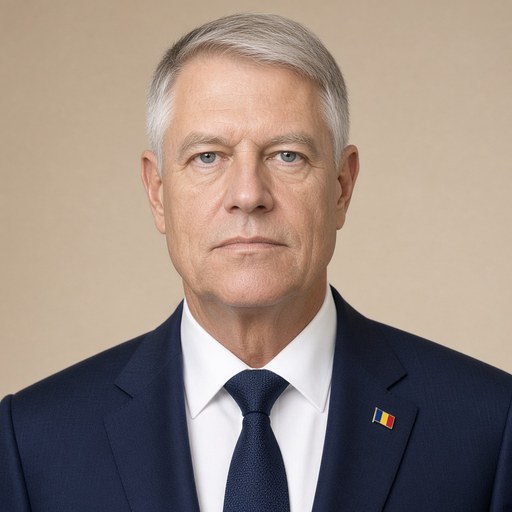
The speech of the President of Romania, Mr. Klaus Iohannis, at the launch event of the numismatic issue "150 Years since the Birth of King Ferdinand"
 Klaus Iohannis · President of Romania
- Context
- Iohannis spoke at the National Bank of Romania on July 15, 2015, at the launch of a commemorative coin marking 150 years since King Ferdinand I's birth.
- Main themes
- King Ferdinand I 150th birth anniversary, National Bank of Romania 135th anniversary, numismatic commemorative issue, euro area integration, fiscal responsibility and sustainability, public finance discipline, economic stability, Romania's modernization, post-crisis economic challenges, Fiscal Code debate, lessons from Greece's economic crisis
- Duration
- ~10 min
- Words
- 1,191
- Sentences
- 51
- Readability
- 25
- Grade
- 15.6
- Syntax
- 3.36
- Vocabulary
- 2.29
Translated from Romanian
The broad sphere of national life a sentence belongs to. Every sentence has an Arena, so it is the denominator the other indices are read against.
Other51 sentences in 13 paragraphs
Dear Governor, Esteemed leadership of the National Bank of Romania, Distinguished representatives of the academic, financial-banking, and business environments, Honored guests, Ladies and gentlemen, It is a great pleasure for me to be here today at the National Bank of Romania, a place so rich in history, which reveals so much about Romania's economic journey. Mr. Governor, thank you for the invitation to participate in this event! I am glad to have had the opportunity to visit the museum, and then the treasury at the National Bank of Romania!
Any such visit makes it evident that gold remains, nonetheless, the most brilliant era in the monetary history of mankind. Over time, monetary systems have profoundly changed, and the way they are managed today, in the paradigm of "rules versus discretion," has become increasingly important. In post-communist Romania, the National Bank has consistently demonstrated the importance of its role, a role systematically embraced with responsibility.
Ladies and gentlemen, The year 2015 has a special significance, as it marks a double anniversary. On one hand, in 2015 we celebrate 150 years since the birth of the first king of Greater Romania. King Ferdinand I was an integrative leader, a symbol of unification, but also of the development and consolidation of the modern state. I welcome the fact that this anniversary is marked here, at the National Bank of Romania, through a special numismatic issue.
On the other hand, this year we also celebrate 135 years since the establishment of the National Bank of Romania. The passing of years brings wisdom and stability, not only for people but also for institutions. "Happy anniversary!" to the NBR and congratulations to all those who, day by day, carry out their activities here!
Romania has benefited, especially in recent times, from a stable, solid banking system, and this is, first and foremost, the merit of the National Bank of Romania. Despite a winding transition, even burdensome due to imbalances and adjustments, the NBR has remained, in the consciousness of Romanian society, a pillar of stability and balance. Currently, Romania faces a new economic context, with all the challenges of a post-transition, post-European accession, and post-crisis horizon. I am convinced that the National Bank will continue to be the same essential factor in Romania's modernization journey.
As a member state of the European Union, as part of the European project, Romania must prepare, carefully and consistently, for monetary integration as well. The euro is the political, economic, and institutional project that Romania can and must aspire to. Windows of opportunity exist to be capitalized on. In this sense, the objective of joining the euro area is for Romania, equally, an anchor for economic discipline, predictability, and stability.
Ladies and gentlemen, Romania's development must start from the basic requirements of a successful economic model: responsibility and sustainability. Recent history shows that we can no longer afford economic experiments or public policies with half-measures, especially when they threaten our aspirations for long-term freedom and prosperity. That is why it becomes imperative to abandon at least a few illusions: first, the illusion that prosperity can be built on budget deficits and public debt, continuously rolled over from year to year; then, the illusion that monetary and fiscal policies can compensate for the absence of real reforms; not least, the illusion that once prosperity has been achieved, it will not be lost, which is profoundly wrong. Hence the need for a new approach, one based on responsibility and sound principles.
I could invoke, as an example, the new Fiscal Code, which I am currently analyzing to decide on the appropriateness of its promulgation. I do not know how the appreciation that this Fiscal Code would revolutionize Romania's finances, simply by reducing some taxes, has crept in. I believe we should not only be concerned with tax cuts but also with the manner in which this is done. Such a change is useful, but without jeopardizing certain benefits, such as the sustainability of public finances, which has been strengthened, with serious efforts, in recent times. Moreover, being on the brink of an electoral year, we must understand the distance between political temptation and economic reality. At the same time, the current context, both economic and geopolitical, imposes prudent, responsible approaches for the state of public finances and economic balances.
The situation facing Greece at this moment is undoubtedly a truly difficult one. However, recently, too often and seemingly too unfairly, Greece's economic problems have been attributed to the common currency, to the European Union itself. Rather, in this post-crisis stage, Greece has revealed to us an economic model sustained for decades by deficits and public debt. Such imbalances must be profoundly corrected, and the economy shows us that miraculous political solutions do not exist.
Ladies and gentlemen, For our economy to become truly competitive, Romania needs to improve the institutional quality of the business environment. Transparency, stability, and fiscal and legislative predictability are important elements for stimulating investment and entrepreneurship. Bureaucracy and the burden of regulations affect the functioning of the business environment, and the phenomenon of corruption can subtly and surely undermine economic development. It is not enough for Romania's economic progress to have only a quantitative, statistical appearance, through high growth rates, which, when easily obtained, can be lost just as easily. We need a healthy economy that thrives qualitatively, through productivity and competitiveness, for this is where long-term prosperity in the daily lives of Romanians will come from.
Recent years have shown that Romania has definitively emerged from the inflationary paradigm. We can say that the economic transition has been completed, but this does not mean that Romania has made the decisive, definitive, and generalized leap to the principles of a market economy. The economy still seems to be built around the state budget, which explains why Romanians continue to expect many things to come from the state or through the state.
At the same time, the public sector can participate increasingly as a competitive actor, but within the framework of basic economic rules. State enterprises need to correct their imbalances, which betray financial indiscipline and poor management. It is not too late, in this sense, to understand the necessity of rethinking the role of the state, by strengthening its institutional presence and reducing its economic presence. We still need to strengthen the principles of a market economy, to have a democracy centered on the interests of the citizen, not the politician, and a rule of law that arbitrates, not one that plays discretionarily. Otherwise, we cannot hope for the Europeanization of Romania, for the development of a strong middle class, which is the authentic indicator of economic development.
Ladies and gentlemen, I believe the time has come for maturity, for paradigm shifts, and for reforms carried through to completion. Romania today needs, perhaps more than ever, a new perspective, a new model of development, one that is sustainable, built on the healthy foundations of competitiveness and economic freedom. At the same time, we must preserve and protect the progress made so far, for the accumulations of the present offer the chances for future performances, the ones we all desire.
The original Romanian. The tags above are read on the English translation's sentences.
textul discursului: „Stimate domnule Guvernator, Stimată conducere a Băncii Naționale a României, Stimați reprezentanți ai mediului academic, financiar-bancar și de afaceri, Onorați invitați, Doamnelor și domnilor, Îmi face o deosebită plăcere să fiu astăzi aici, la Banca Națională a României, un loc atât de încărcat de istorie, care ne dezvăluie atât de multe despre parcursul economic al României. Domnule Guvernator, vă mulțumesc pentru invitația de a participa la acest eveniment! Mă bucur că am avut ocazia să vizitez muzeul, iar apoi tezaurul de la Banca Națională a României! Orice asemenea vizită face evident faptul că aurul rămâne, totuși, cea mai sclipitoare eră în istoria monetară a omenirii. De-a lungul timpului, sistemele monetare s-au modificat profund, iar maniera în care sunt ele astăzi administrate, în paradigma «reguli versus discreționarism», a devenit tot mai importantă. În România postcomunistă, Banca Națională a etalat consecvență cu importanța rolului său, rol însușit sistematic, cu responsabilitate. Doamnelor și domnilor, Anul 2015 are o semnificație specială, întrucât marchează o dublă aniversare. Pe de-o parte, în 2015 se împlinesc 150 de ani de la nașterea primului rege al României Mari. Regele Ferdinand I a fost un lider integrator, un simbol al unificării, dar și al dezvoltării și consolidării statului modern. Salut faptul că această aniversare este marcată aici, la Banca Națională a României, printr-o emisiune numismatică specială. Pe de altă parte, tot anul acesta aniversăm și 135 de ani de la înființarea Băncii Naționale a României. Trecerea anilor aduce cu sine înțelepciune și stabilitate, nu doar pentru oameni, ci și pentru instituții. «La mulți ani!» BNR și felicitări tuturor celor care, zi de zi, își desfășoară activitatea aici! România a beneficiat, cu precădere în ultima perioadă, de un sistem bancar stabil, solid, iar acesta este, în primul rând, meritul Băncii Naționale a României. În ciuda unei tranziții sinuoase, chiar împovărătoare prin dezechilibre și ajustări, BNR a rămas, în conștiința societății românești, un pilon de stabilitate și echilibru. Actualmente, România are în față un nou context economic, cu toate provocările unui orizont post-tranziție, post-aderare europeană și post-criză. Sunt convins că Banca Națională va rămâne, în continuare, același factor esențial în parcursul de modernizare a României. Ca țară membră a Uniunii Europene, ca parte a proiectului european, România trebuie să se pregătească, atent și consecvent, și pentru integrarea monetară. Euro este proiectul politic, economic și instituțional la care România poate și trebuie să aspire. Ferestrele de oportunitate există pentru a fi valorificate. În acest sens, obiectivul de aderare la zona euro este pentru România, în egală măsură, o ancoră pentru disciplină economică, pentru predictibilitate și stabilitate. Doamnelor și domnilor, Dezvoltarea României trebuie să pornească de la exigențele elementare ale unui model economic de succes: responsabilitate și sustenabilitate. Istoria recentă arată că nu ne mai putem permite experimente economice sau politici publice cu jumătăți de măsură, mai ales când acestea atentează la aspirațiile noastre de libertate și prosperitate pe termen lung. Tocmai de aceea, devine imperativ să renunțăm la cel puțin câteva iluzii: în primul rând, iluzia că prosperitatea se poate construi pe deficite bugetare și datorie publică, rostogolită continuu, de la un an la altul; apoi, iluzia că politicile monetare și fiscale pot compensa absența reformelor reale; nu în cele din urmă, iluzia că odată ce prosperitatea a fost obținută, ea nu se va mai pierde, ceea ce este profund greșit. De aici și nevoia pentru o nouă abordare, una bazată pe responsabilitate și principii sănătoase. Aș putea invoca, drept exemplu, noul Cod fiscal, pe care chiar zilele acestea îl analizez, pentru a decide asupra oportunității promulgării sale. Nu știu cum s-a strecurat aprecierea că acest Cod fiscal ar revoluționa finanțele României, prin simpla reducere a unor impozite. Cred că n-ar trebui să ne preocupe doar scăderea taxelor, ci și maniera în care se face aceasta. O asemenea schimbare este utilă, însă fără să pună în pericol anumite beneficii, cum ar fi sustenabilitatea finanțelor publice, care a fost consolidată, cu eforturi serioase, în ultima perioadă. În plus, aflați totuși în prag de an electoral, trebuie să înțelegem distanța dintre tentația politică și realitatea economică. Totodată, contextul actual, atât economic cât și geopolitic, impune abordări prudente, responsabile pentru starea finanțelor publice, și echilibre economice. Situația cu care se confruntă Grecia în acest moment este, fără îndoială, una cu adevărat dificilă. Însă, în ultima vreme, prea des și parcă prea nedrept, problemele economice ale Greciei au fost trecute în contul monedei comune, al Uniunii Europene chiar. Mai degrabă, în această etapă post-criză, Grecia ne-a dezvăluit un model economic susținut decenii de-a rândul prin deficite și datorie publică. Astfel de dezechilibre trebuie corectate profund iar economia ne arată că soluțiile politice miraculoase nu există. Doamnelor și domnilor, Pentru ca economia noastră să devină cu adevărat competitivă, România are nevoie de îmbunătățirea calității instituționale a mediului de afaceri. Transparența, stabilitatea și predictibilitatea fiscală și legislativă sunt elemente importante pentru stimularea investițiilor și a antreprenoriatului. Birocrația și povara reglementărilor afectează funcționarea mediului de afaceri, iar fenomenul corupției poate submina subtil și sigur dezvoltarea economică. Nu este suficient ca progresul economic al României să aibă doar o alură cantitativă, statistică, prin rate înalte de creștere, care atunci când sunt obținute ușor se pot pierde la fel de ușor. Avem nevoie de o economie sănătoasă, care să prospere și în sens calitativ, prin productivitate și competitivitate, căci de aici va veni bunăstarea pe termen lung în viața de zi cu zi a românilor. Ultimii ani au arătat că România a ieșit definitiv din paradigma inflaționistă. Putem spune că tranziția economică a fost încheiată, însă aceasta nu înseamnă că România a făcut saltul decisiv, definitiv și generalizat, la principiile economiei de piață. Economia pare construită, în continuare, în jurul bugetului de stat, ceea ce explică de ce românii așteaptă ca multe lucruri să vină, în continuare, de la stat sau prin intermediul statului. În același timp, sectorul public poate să participe tot mai mult, în calitate de actor competitiv, însă în cadrul regulilor economice de bază. Este nevoie ca întreprinderile de stat să își corecteze dezechilibrele, care trădează indisciplină financiară și management defectuos. Încă nu este târziu, în acest sens, să înțelegem necesitatea regândirii rolului statului, prin întărirea prezenței sale instituționale și restrângerea prezenței sale economice. Avem nevoie, în continuare, de consolidarea principiilor economiei de piață, de o democrație centrată pe interesele cetățeanului, nu ale politicianului, de un stat de drept care să arbitreze, nu care să joace în mod discreționar. Altfel nu vom putea spera la europenizarea României, la dezvoltarea unei clase de mijloc puternice, care este indicatorul autentic al dezvoltării economice. Doamnelor și domnilor, Cred că a venit vremea maturității, a schimbărilor de paradigmă și a reformelor duse până la capăt. România are astăzi nevoie, poate mai mult ca niciodată, de o nouă perspectivă, de un nou model de dezvoltare, unul durabil, construit pe bazele sănătoase ale competitivității și libertății economice. Totodată, trebuie să păstrăm și să protejăm progresele de până în prezent, căci acumulările prezentului oferă șansele performanțelor viitoare, cele pe care cu toții ni le dorim.