




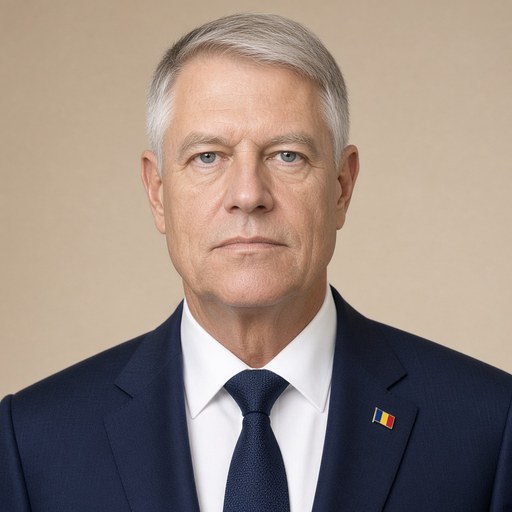
The speech of the President of Romania, Mr. Klaus Iohannis, at the State University of Moldova.
 Klaus Iohannis · President of Romania
- Context
- Iohannis addressed students and faculty at the State University of Moldova in Chișinău on February 25, 2015, during an official presidential visit to Moldova.
- Main themes
- Romanian-Moldovan relations, European integration of Moldova, common identity and solidarity, Romanian language preservation, shared history and culture, Stephen the Great as symbol, Romania's support for Moldova's EU path, role of education and values, generational responsibility, European project
- Duration
- ~21 min
- Words
- 2,494
- Sentences
- 105
- Readability
- 37
- Grade
- 13.9
- Syntax
- 3.14
- Vocabulary
- 2.23
Translated from Romanian
The broad sphere of national life a sentence belongs to. Every sentence has an Arena, so it is the denominator the other indices are read against.
Other105 sentences in 3 paragraphs
Mr. Rector, Madam Pro-Rector, Honorable Professors, Dear Students,
First of all, allow me to thank you for the exceptionally warm welcome. I am impressed. I wanted to see you, but the warmth with which you received me was unexpectedly much in a positive sense. It is a great pleasure for me to address you. Compared to my previous visit to Chișinău, I am now here as the President of Romania, which makes my emotions even stronger. My presence before you is not only a reason for joy but also an opportunity to talk about things we feel the same about: our common values, the challenges of the moment, but also the opportunities that this space on the European continent and these times offer. I want to refer to two fundamental values that govern our relationship: solidarity and identity. And I summarize these two interdependent notions in our case through the European project assumed by the Republic of Moldova in relation to Romania. The cooperation between us demonstrates how important it is to have a good advocate in this journey. Moldova has a great opportunity that we did not have at the time of accession. This opportunity is called Romania, a full member of the European Union, today the most formidable supporter of the Republic of Moldova in the integration process. It is fitting, first and foremost, to greet the presence at this meeting of numerous cultural figures from the Republic of Moldova. I am a teacher by profession, and I know that the role of a teacher is not just to share knowledge. It has a much heavier mission, that of transmitting values and thus building characters. Moreover, your role in defending and preserving the Romanian language is fundamental, for which I am grateful and encourage you to continue. I come from a generation that had the misfortune to know life under an absurd and criminal regime that tried to erase the fundamental values of communities. On both sides of the Prut, we live with the scars of this past. Therefore, I now express my respect for the heroes who sacrificed themselves for the flourishing of the Romanian language. I also bring you the greetings of the Romanian citizens, who, through the decisions made in recent years, have shown that they fully support the European path of the Republic of Moldova. For us, your path to a united Europe represents a national priority. We currently have, as a unanimously assumed political project – Presidency, Government, Parliament – the idea of European support for Chișinău. I emphasize my firm commitment as President of Romania to support these efforts, based on the prerogatives of the office I hold. Distinguished audience, I am still marked by the image of the statue of Stephen the Great in the center of Chișinău. Anyone who arrives here and does not know the biography and deeds of this great historical figure will try to understand his image through external symbols – crown, sword, and cross. The greatness of Stephen the Great, however, is above the elements of medieval power represented by the imposing bronze statue erected in the interwar period. I would say that this is only the chivalric part of his figure. The foreign visitor would miss a fundamental detail if they did not find out that this great nation builder, as Nicolae Iorga calls him, is an important symbol of our common identity. His glory endures over the centuries not only through the 47 years of reign but especially because his deeds have decisively contributed to our identity, to the solidarity of a people. This is the great achievement of his time and, at the same time, a lesson for us, those on the left and right of the Prut, in the 21st century. Today, the communion of language, history, civilization, and culture makes the relationship between Romania and the Republic of Moldova a unique episode at the European level. At different stages of European construction, different states have provided advisory and technical assistance to other countries aspiring to candidate or EU membership status, as well as support in the negotiation process. However, the relationship between Romania and the Republic of Moldova goes beyond these technical elements. Between us, there is something more than the acquis communautaire, chapters of accession, norms, conditions, and procedures. Our common language is much older than the moment when visionary European leaders built the first Community of Coal and Steel. Between us, there is a mix of identity and solidarity that is hard to define but easy to feel. From Timișoara to Orhei, the same language is heard, and our past often fits between the covers of the same history textbook. Today's occasion, for which I thank our hosts, to meet with the youth of the capital of the Republic of Moldova, gives me the opportunity to emphasize the importance of Chișinău's effort to continue the European path. You will become, in the coming years, the voice of the people of the Republic of Moldova, whether we are talking about politicians, state officials, journalists, researchers, civic activists, or representatives of the business environment. In this capacity, you will have the decisive responsibility to lead the Republic of Moldova into the great European family. Thus, the Moldovan elites have the great opportunity to contribute to placing the Republic of Moldova where it belongs, in the European Union, alongside Romania. But building a sustainable future cannot be solely the responsibility of the citizens of the Republic of Moldova; it must be decisively assumed by the Government in Chișinău, whatever it may be. One of the great challenges of the coming years is to carry out the democratic reforms initiated in your country. There is no other way to prosperity and security than to continue this sustained effort. Again, Romanian solidarity will manifest itself through sharing the experience that Romania has gained. In recent years, you have made significant efforts to get closer to the European Union. The Republic of Moldova has managed to fully capitalize on its status as a member of the Eastern Partnership, obtaining visa liberalization for Moldovan citizens and signing, alongside Ukraine and Georgia, the Association Agreement with the European Union, including the component of trade liberalization. These are determined steps towards integration, but they are not sufficient. Therefore, efforts must continue. We live in turbulent times, even at our borders, a perspective that complicates the efforts of the Republic of Moldova even more. I believe that, in the current regional context marked by instability, it is Romania's duty to contribute to guaranteeing the European perspective of the Republic of Moldova. For us, support for the Republic of Moldova is not limited to institutional support. It is about deepening cooperation on all levels, economic relations, cultural and political dialogue not only at the state level but also between local communities. We must also support projects that lead to increasing the energy independence of the Republic of Moldova, so that this state can become fully independent. I emphasize here, in front of you, the conviction that the efforts to integrate the Republic of Moldova are closely linked to strengthening statehood. This relationship is seen by few, although the history of over six decades of the Union confirms it almost without exception. This observation comes not only from the past but also from current realities, some very painful, at the EU border. You cannot build anything sustainable without political stability, without consensus, and especially without a major project assumed by the decision-makers of the state. Institutions function and produce concrete and consistent results over time only if there is calm, perseverance, and patience, if there is a predictable path and sufficient will to succeed. I am sure that the history of this country will be written with much effort in the coming years, but the destiny of a state is given precisely by the courage of its citizens to assume important objectives. Obviously, everything will take time; nothing is built overnight, but be assured that things done in order are more efficient and more sustainable. Romania signed the Association Agreement with the European Union in 1993 and became a full member in 2007. Fourteen years represent a long road, but experience has shown us that waiting meant, above all, overcoming our own barriers: in administration, in justice, in the relations between the state and its citizens. Ultimately, accession to the common European space means practically assuming values and principles that make community life better. Romania wishes for the citizens of the Republic of Moldova to enjoy as soon as possible the benefits that Europe can bring for each of them. I am referring here to economic assistance for stabilization, to assistance programs, and to lines of financing. Our relationship of culture and language is essential because it carries with it the value I mentioned earlier, the unconditional solidarity that Romania wishes to confirm day by day. This difficult process is also a test for us, for Romania, namely how we will manage to provide the Republic of Moldova with the tools we have – institutional, procedural, bureaucratic experience – for the success of the European project beyond the Prut. In recent years, alongside the ties of language and spirituality, we have managed to move on to various economic projects, some of significant scale. Our governments have made important steps towards bringing the two states closer in concrete areas, and in the coming period this collaboration will be even more intense. From education to infrastructure, we have strengthened our cooperation and shown our citizens, as well as Europe, that solidarity means, above all, valuing identity through specific, sustainable, and, above all, very pragmatic projects. The territory of the Republic of Moldova has had a specific history. Here, at the gates of Europe, people and places have been at the crossroads of civilizations, in relations with different powers, suffering from invasions or occupations. Social, religious, political, cultural, and economic ties have woven a rich heritage that you have the duty to preserve and capitalize on. In our times, this history deserves to be preserved. One of the obligations of the majority is to conserve the cultural specificity of the minorities that are on the territory of the state. Experience has shown us, those on the other side of the Prut, that minorities represent an important proof of diversity and tolerance, which modern Europe has sought to value in a special way. One of the lessons of our journey to the European Union is this: faith in democracy must be our first concern. In this way, the rights and freedoms of citizens are always defended, the rule of law is strengthened, security is ensured, and prosperity becomes possible. From this point of view, the Republic of Moldova must adapt to the European model of society, in which the state ensures equal opportunities for all citizens, in which the law is the same for everyone, and freedom of expression is, of course, guaranteed. Ladies and gentlemen,
Major objectives need symbolic data. In 2018, Romania will mark a special moment, the anniversary of the Great Union. I firmly believe that the Union of 1918 was the most beautiful and profound national project in our modern history. Those who made the Union were neither better nor more hardworking than us, but they had in mind a sentiment that has almost disappeared from our public life in recent years: a high sense of duty. Beyond the festive moment and the importance of this celebration for Romania, I am convinced that we can find together, besides the reason to mark a common history – 100 years since the Great Union – an objective for the Republic of Moldova to fulfill in its relationship with the European Union, and Romania to support this stage of the integration calendar. This would highlight not only the value of solidarity but also the nature of our relationship, the identity of culture, history, and language. How right Jean Monnet, one of the founding fathers of European unity, was when he said, referring to the European community, that "We do not unite states, we unite people!" Spoken by a Romanian here, at the gates of Europe, this phrase has a special meaning. First of all, because history has shown that the European Union is the most effective model of cooperation among the states of the old continent, which provides people with invaluable values and benefits: freedom, prosperity, peace, and democracy. Secondly, because the Bucharest-Chisinau cooperation model is so unprecedented in recent European history that I am sure that, sooner or later, the people on both banks of the Prut will find themselves not only in the Union but also in communion, and their experience will become part of the European heritage. And because I am speaking at a university, I would like to show another proof of Monnet's statement. I am particularly pleased to remind you that young people from the Republic of Moldova have been traveling to Romania to study for a long time, even before the existence of an agreement between the EU and the Republic of Moldova. Not only our past but also our future is common, and our identity is not given only by history and geography but also by spirituality, one of the fundamental values of European construction. As you know, the banks of the Prut were once separated by barbed wire. But this symbol of the degradation of peace and freedom was not characteristic only for Romania and Moldova but for half of Europe. Now, two European states, one a member of the European Union, the other aspiring to this status, have the chance to prove that solidarity can not only break down the barbed wire fence but can also build a common future. In conclusion, I would like to convey to all of you a message of encouragement and congratulations. You have done great things in recent years, you have impressed Europe with your determination. I am optimistic that the coming years will bring even more significant successes. I want to assure you that Romania will stand by you in this effort of Europeanization. I am convinced that within a reasonable time frame, the Prut will remain only a geographical border, and the Republic of Moldova will be a serious and important member of the European Union. In this way, the gate of Europe will move one step further, just as it did in 2013, 2007, or 2004. One of the great spirits of our culture, Mihai Eminescu, wrote in 1878 about Bessarabia a phrase that I wish to share with you because it comprehensively characterizes all the efforts you are making to become members of the European Union. Eminescu's words represent a happy synthesis of the values that give meaning and defend the relationship between us: "Noble is the seed from which this small Romanian people has sprouted, and although the plant is not large, the fruit is beautiful and abundant."
The original Romanian. The tags above are read on the English translation's sentences.
„Domnule rector, Doamnă prorector, Onorați profesori, Dragi studenți,
În primul rând, dați-mi voie să vă mulțumesc pentru primirea deosebit de călduroasă. Sunt impresionat. Am dorit să vă văd, dar căldura cu care m-ați primit a fost în sens pozitiv neașteptat de multă. Îmi face o deosebită plăcere să mă adresez dumneavoastră. Față de vizita precedentă făcută la Chișinău, acum mă aflu aici în calitate de Președinte al României, motiv pentru care emoțiile mele sunt și mai puternice. Prezența mea în fața dumneavoastră este nu doar un motiv de bucurie, ci și un prilej de a vorbi despre lucruri față de care simțim la fel: despre valorile noastre comune, despre provocările momentului, dar și despre oportunitățile pe care acest spațiu de pe continentul european și aceste timpuri le oferă. Vreau să mă refer la două valori fundamentale care guvernează relația dintre noi: solidaritatea și identitatea. Și rezum aceste două noțiuni, interdependente în cazul nostru, prin proiectul european asumat de Republica Moldova în relație cu România. Cooperarea dintre noi dovedește cât de important este să ai un bun avocat în acest parcurs. Moldova are o mare șansă pe care noi n-am avut-o la momentul aderării. Această șansă se numește România, membru cu drepturi depline al Uniunii Europene, astăzi cel mai redutabil susținător al Republicii Moldova în procesul de integrare. Se cuvine, înainte de toate, să salut prezența la această întâlnire a numeroși oameni de cultură din Republica Moldova. Sunt dascăl de profesie și știu că rolul unui dascăl nu este doar de a împărtăși cunoștințe. El are o misiune mult mai grea, aceea de a transmite valori și de a construi, astfel, caractere. În plus, rolul dumneavoastră pentru apărarea și păstrarea limbii române este unul fundamental, lucru pentru care vă sunt recunoscător și vă îndemn să mergeți mai departe. Provin dintr-o generație care a avut nefericirea să cunoască viața sub un regim absurd și criminal, care a încercat să șteargă valorile fundamentale ale comunităților. Pe ambele maluri ale Prutului trăim cu cicatricele acestui trecut. De aceea îmi exprim acum respectul pentru eroii care s-au jertfit pentru propășirea limbii române. Vă aduc, totodată, salutul cetățenilor români, care, prin deciziile luate în decursul ultimilor ani, au arătat că sprijină cu toată hotărârea parcursul european al Republicii Moldova. Pentru noi, drumul dumneavoastră către Europa unită reprezintă o prioritate națională. Avem, în acest moment, ca proiect politic asumat unanim – Președinţie, Guvern, Parlament – ideea de sprijin european pentru Chișinău. Subliniez angajamentul meu ferm în calitate de Președinte al României de a susține aceste demersuri, în baza prerogativelor funcției pe care o dețin. Distins auditoriu, Sunt și acum marcat de imaginea statuii lui Ștefan cel Mare din centrul Chișinăului. Cine ajunge aici și nu cunoaște biografia și faptele acestui mare personaj istoric, va încerca să-i înțeleagă imaginea prin simbolurile exterioare - coroană, paloș și cruce. Măreția lui Ștefan cel Mare este însă mai presus de elementele puterii medievale reprezentate de impunătoarea statuie de bronz ridicată în perioada interbelică. Aș spune că aceasta este doar partea cavalerească a figurii sale. Vizitatorul străin ar rata un detaliu fundamental dacă n-ar afla că acest mare ziditor de țară, cum îl numește Nicolae Iorga, este un simbol important al identității noastre comune. Gloria sa rezistă peste secole nu doar prin cei 47 de ani de domnie, ci mai ales pentru că faptele sale au contribuit decisiv la identitatea noastră, la solidaritatea unui neam. Aceasta este marea izbândă a vremii sale și, totodată, o lecție pentru noi, cei din stânga și din dreapta Prutului, în secolul XXI. Astăzi, comuniunea de limbă, istorie, civilizație și cultură face din relația României cu Republica Moldova un episod unic la nivel european. În diferite etape ale construcției europene, diferite state au acordat altor țări care aspirau la statutul de candidat sau de membru al UE asistență consultativă și tehnică, precum și susținere în procesul de negociere. Cu toate acestea, relația dintre România și Republica Moldova depășește aceste elemente tehnice. Între noi este ceva mai presus de acquis comunitar, capitole de aderare, norme, condiții și proceduri. Limba noastră comună este mult mai veche decât momentul când vizionarii lideri europeni construiau prima Comunitate a Cărbunelui și Oțelului. Între noi există un amestec de identitate și solidaritate greu de definit, dar ușor de simțit. De la Timișoara la Orhei se aude aceeași limbă, iar trecutul nostru încape deseori între coperțile aceluiași manual de istorie. Ocazia de astăzi, pentru care le mulțumesc gazdelor noastre, de a mă întâlni cu tinerii din capitala Republicii Moldova, îmi oferă prilejul să subliniez importanța efortului Chișinăului de a continua parcursul european. Dumneavoastră veți deveni, în următorii ani, vocea locuitorilor Republicii Moldova, fie că vorbim despre politicieni, funcționari ai statului, jurnaliști, cercetători, activiști civici, reprezentanți ai mediului de afaceri. În această calitate, veți avea responsabilitatea decisivă de a conduce Republica Moldova în marea familie europeană. Astfel, elitele moldovenești au marea șansă de a contribui la așezarea Republicii Moldova acolo unde îi este locul, în Uniunea Europeană, alături de România. Dar construcția unui viitor durabil nu poate fi însușită doar de către cetățenii Republicii Moldova, ci trebuie asumată cu hotărâre de Guvernul de la Chișinău, oricare ar fi acesta. Una dintre marile provocări ale anilor următori este să duceți la îndeplinire reformele democratice începute în țara dumneavoastră. Nu există altă cale spre prosperitate și securitate decât a continua acest efort susținut. Din nou, solidaritatea românească se va manifesta prin împărtășirea experienței pe care România a dobândit-o. În ultimii ani, ați făcut eforturi importante pentru apropierea de Uniunea Europeană. Republica Moldova a reușit să fructifice din plin statutul de membru al Parteneriatului Estic, obținând anularea vizelor pentru cetățenii moldoveni și semnarea, alături de Ucraina și Georgia, a Acordului de Asociere cu Uniunea Europeană, inclusiv componenta de liberalizare a schimburilor. Aceștia sunt pași hotărâți în vederea integrării, dar nu și suficienți. De aceea eforturile trebuie să continue. Trăim vremuri tulburi, chiar la granițele noastre, o perspectivă care complică și mai mult strădaniile Republicii Moldova. Cred că, în actualul context regional marcat de instabilitate, este de datoria României să contribuie la garantarea perspectivei europene a Republicii Moldova. Pentru noi, sprijinul acordat Republicii Moldova nu se rezumă doar la cel instituţional. Este vorba despre o adâncire a cooperării pe toate planurile, a relațiilor economice, a dialogului cultural și politic nu doar la nivel de stat, ci și între comunităţile locale. De asemenea, trebuie să sprijinim proiectele care conduc la creșterea independenţei energetice a Republicii Moldova, pentru ca acest stat să devină independent până la capăt. Subliniez aici, în fața dumneavoastră, convingerea că eforturile de integrare a Republicii Moldova sunt strâns legate de consolidarea statalității. Această relație puțini o întrevăd, deși istoria de peste șase decenii a Uniunii o confirmă aproape fără excepție. Această constatare nu vine doar din trecut, ci și din realitățile curente, unele foarte dureroase, de la granița UE. Nu poţi construi nimic durabil fără stabilitate politică, fără consens și, mai ales fără, un proiect major asumat de factorii decizionali ai statului. Instituțiile funcționează și produc rezultate concrete și constante în timp doar dacă există calm, perseverență și răbdare, dacă există un parcurs predictibil și suficientă voință pentru a reuși. Sunt sigur că istoria acestei țări va fi scrisă cu multă trudă în anii următori, dar destinul unui stat este dat tocmai de curajul cetățenilor de a asuma obiective importante. Evident, totul va lua timp, nimic nu se construiește peste noapte, dar fiți convinși că lucrurile făcute cu rânduială sunt mai eficiente și mai durabile. România a semnat Acordul de asociere cu Uniunea Europeană în 1993 și a devenit membru cu drepturi depline în 2007. 14 ani reprezintă un drum lung, dar experiența ne-a dovedit că așteptarea a însemnat, înainte de toate, depășirea propriilor bariere: din administrație, din justiție, din raporturile statului cu cetățenii. În final, aderarea la spațiul european comun înseamnă asumarea în practică a unor valori și principii care fac viața comunității mai bună. România își dorește ca cetăţenii Republicii Moldova să se bucure cât mai curând de beneficiile pe care le poate aduce Europa pentru fiecare dintre ei. Mă refer aici la ajutorul economic pentru stabilizare, la programele de asistență și la liniile de finanțare. Relația noastră de cultură și limbă este esențială pentru că poartă cu ea valoarea de care am vorbit mai sus, solidaritatea necondiționată pe care România dorește să o confirme zi de zi. Tot acest proces dificil este o probă și pentru noi, pentru România, și anume cum vom reuși să furnizăm Republicii Moldova instrumentele de care dispunem – instituționale, procedurale, experiența birocratică – pentru reușita proiectului european de dincolo de Prut. În ultimii ani, pe lângă legăturile de limbă și de spiritualitate, am reușit să trecem la proiecte economice diverse, unele de anvergură. Guvernele noastre au făcut pași importanți în apropierea celor două state în domenii concrete, iar în perioada următoare această colaborare va fi și mai intensă. De la educație la infrastructură, ne-am consolidat cooperarea și am arătat cetățenilor noștri, dar și Europei, că solidaritatea înseamnă înainte de toate a pune în valoare identitatea prin proiecte specifice, durabile și, mai ales, foarte pragmatice. Teritoriul Republicii Moldova a avut o istorie specifică. Aici, la porțile Europei, oamenii și locurile s-au aflat la întretăierea civilizațiilor, în raporturi cu diferite puteri, au suferit de pe urma invaziilor sau ocupațiilor. Legăturile sociale, religioase, politice, culturale, economice au țesut o moștenire bogată pe care aveți datoria să o păstrați și să o valorificați. În timpurile noastre, această istorie merită să fie prezervată. Una dintre obligațiile majorității este de a conserva specificul cultural al minorităților care se află pe teritoriul statului. Experiența ne-a dovedit și nouă, celor de pe celălalt mal al Prutului, că minoritățile reprezintă o importantă dovadă a diversității și toleranței, pe care Europa modernă a căutat să le valorifice în chip aparte. Una dintre lecțiile drumului nostru către Uniunea Europeană este aceasta: credința în democrație trebuie să fie prima noastră grijă. În acest mod, drepturile și libertățile cetățenilor sunt mereu apărate, statul de drept este consolidat, securitatea asigurată, iar prosperitatea devine posibilă. Din acest punct de vedere, Republica Moldova trebuie să se adapteze la modelul european de societate, în care statul asigură oportunități egale pentru toți cetățenii, în care legea este aceeași pentru toți și libertatea de expresie este, evident, garantată. Doamnelor și domnilor,
Obiectivele majore au nevoie de date simbolice. În 2018, România va marca un moment deosebit, aniversarea Marii Uniri. Cred cu tărie că Unirea de la 1918 a fost cel mai frumos și mai profund proiect de țară din istoria noastră modernă. Cei care au făcut Unirea nu erau nici mai buni, nici mai harnici decât noi, dar au avut în gând un sentiment care aproape a dispărut din viața noastră publică a ultimilor ani: înaltul simț al datoriei. Dincolo de momentul festiv și de importanța acestei sărbători pentru România, sunt convins că putem găsi împreună, pe lângă motivul de a marca o istorie comună – 100 de ani de la Marea Unire - un obiectiv pe care Republica Moldova să-l îndeplinească în relația sa cu Uniunea Europeană, iar România să sprijine această etapă a calendarului integrării. Am evidenția astfel nu doar valoarea solidarității, ci și natura relației noastre, identitatea de cultură, istorie și limbă. Câtă dreptate avea Jean Monnet, unul dintre părinții fondatori ai unității europene, când spunea, referindu-se la comunitatea europeană, că „Noi nu coalizăm statele, ci unim oamenii!”. Rostită de un român aici, la porțile Europei, această frază are un înțeles aparte. Întâi de toate pentru că istoria a arătat că Uniunea Europeană este cel mai performant model de cooperare între statele bătrânului continent, care asigură oamenilor valori și beneficii neprețuite: libertatea, bunăstarea, pacea și democrația. În al doilea rând, pentru că modelul de cooperare București-Chișinău este atât de inedit în istoria recentă europeană încât sunt sigur că, mai devreme sau mai târziu, oamenii de pe cele două maluri ale Prutului se vor regăsi nu doar în Uniune, ci și în comuniune, iar experiența lor va deveni parte a patrimoniului european. Și pentru că vorbesc la Universitate, aș vrea să arăt și o altă probă a declarației lui Monnet. Îmi face o deosebită plăcere să reamintesc faptul că tinerii din Republica Moldova călătoresc în România pentru a studia de multă vreme, chiar înainte de existența unui acord între UE și Republica Moldova. Nu doar trecutul, ci și viitorul nostru sunt comune, iar identitatea noastră nu este dată doar de istorie și de geografie, ci și de spiritualitate, una dintre valorile fundamentale ale construcției europene. Așa cum știți, malurile Prutului au fost despărțite odată de sârmă ghimpată. Dar acest simbol al degradării păcii și libertății nu a fost caracteristic doar pentru România și Moldova, ci pentru jumătate de Europă. Acum, două state europene, unul membru al Uniunii Europene, celălalt aspirant la acest statut, au șansa de a dovedi că solidaritatea nu doar că poate doborî gardul de sârmă ghimpată, ci poate construi un viitor comun. În final, aș vrea să vă transmit tuturor un mesaj de încurajare și de felicitare. Ați făcut lucruri mari în ultimii ani, ați impresionat Europa prin determinarea dumneavoastră. Sunt optimist că anii care vin vor aduce succese și mai importante. Vreau să vă asigur că România va sta alături de voi în tot acest efort de europenizare. Sunt convins că într-un orizont de timp rezonabil, Prutul va rămâne doar o graniță geografică, iar Republica Moldova va fi un membru serios și important al Uniunii Europene. În acest fel, poarta Europei se va mai muta cu un pas, așa cum a făcut și în 2013, 2007 sau 2004. Unul din marile spirite ale culturii noastre, Mihai Eminescu, scria la 1878 despre Basarabia o frază pe care doresc să v-o împărtășesc pentru că ea caracterizează într-un chip cuprinzător toate eforturile pe care le faceți pentru a deveni membri ai Uniunii Europene. Cuvintele lui Eminescu reprezintă o sinteză fericită a valorilor care dau sens și apără relația dintre noi: ”E nobil răsadul din care s-a prășit acest mic popor românesc, și, deși planta nu e mare, rodul e frumos și îmbelșugat.”