




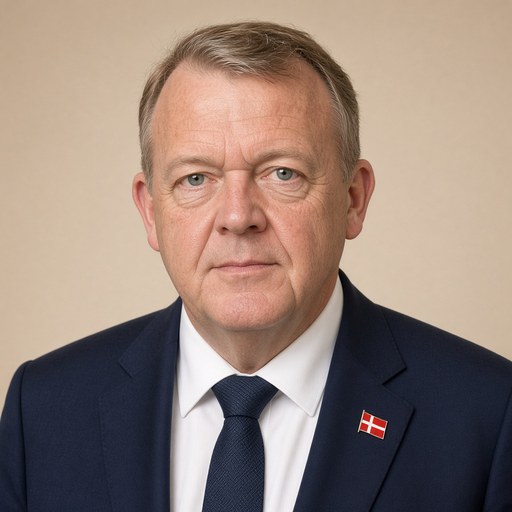
Prime Minister Lars Løkke Rasmussen's Constitution Day Speech 2017
 Lars Løkke Rasmussen · Prime Minister of Denmark
- Context
- Rasmussen addressed a Constitution Day gathering in Denmark on June 5, 2017, reflecting on Danish values, national identity, and recent terrorist attacks in London and European cities.
- Main themes
- Danish national identity and values, Constitution Day celebration, counter-terrorism and resilience, openness vs. isolationism, Denmark's international role and leadership, Reformation 500th anniversary, free trade and maritime heritage, climate change leadership, development aid and immigration policy, women's rights and equality, Nordic cooperation, defense and security policy
- Duration
- ~23 min
- Words
- 2,818
- Sentences
- 193
- Readability
- 59
- Grade
- 8.1
- Syntax
- 2.65
- Vocabulary
- 1.96
Translated from Danish
The broad sphere of national life a sentence belongs to. Every sentence has an Arena, so it is the denominator the other indices are read against.
Other193 sentences in 100 paragraphs
"I see the beech-light islands spread out over the sea,
So pure and beautiful in the sun, as I have never seen.
I know that, as they lie there, it is only a short distance, from border to border. But this land is ours."
That is how we sang yesterday afternoon in Haderslev in connection with the commemoration of the 500th anniversary of the Reformation.
And it is true that there is a short distance from border to border. But still, Denmark is a large country. Not because we are many people. Not because our economy is the largest. Not geographically. But by virtue of the way we act.
We do not always see it ourselves, but I am nevertheless quite convinced that this is the case...
"If only everyone could be like the Scandinavians, everything would be much easier," said an American president once.
And when I, together with my four Nordic colleagues, visited him in Washington for a summit last spring, he - then President Obama, that is - said that he believed that "Denmark punches above our weight."
In other words - very loosely translated - that Denmark can hold its own with the big players. Because of the way we act internationally. Because we take responsibility. Show leadership. Try to play a role and make a difference.
I am incredibly proud of that. We can all be proud of that. And it is indeed a well-deserved compliment.
Denmark was among the first countries in the world where women gained the right to vote and the first country in the world to allow partnerships between two people of the same sex.
Denmark takes significant responsibility in the world's hotspots without hesitation when it comes to our common struggle for peace and freedom - and against oppression, tyranny, and terror.
Denmark is a global leader when it comes to the fight for sustainable solutions and in the fight against man-made climate change. Our knowledge is in demand, and our development serves as a model.
Denmark has gained all our prosperity through trade with others. We are one of the world's leading maritime nations and one of the strongest voices for free trade.
Denmark is a member of the small exclusive club of countries that live up to the UN's goal of contributing 0.7 percent of our wealth to the world's poor. And this year - because we have gotten our immigration policy under control - we can transfer an additional 1.8 billion kroner from receiving asylum seekers to development aid. An investment in the world and in ensuring that the influx of asylum seekers does not increase again.
And on top of all that, Denmark is a happy and harmonious country, "where few have too much and fewer have too little." A rather unique spot on the globe, which many envy us.
All of this makes Denmark truly special. We are not a perfect country, but probably the best there is.
Especially in a time when our values - freedom, open-mindedness, equality - are under pressure, it is crucially important that we are not only aware of which values are ours - but that we are also ready to fight for them.
***
Less than two days ago, we once again experienced a cowardly attempt to undermine our way of life and values. Another terrorist attack. This time in London.
The cold-blooded contempt for life leaves us at once empty of words, but with strengthened will. Their actions will not change us or break us. Every cowardly attack makes our belief in our values and way of life even more unshakeable.
We all mourn with the victims. From this weekend's attack in London. But also from far too many recent attacks in the heart of European cities like Berlin, St. Petersburg, Stockholm, and Manchester. And also attacks further away in Istanbul in January, Egypt last month, and in Kabul the other day.
Attacks directed at innocent children and young people carried out by despicable murderers. Who will never win.
***
When things get tough and our way of life comes under pressure, there can be two very different reactions:
One can choose to shut oneself in and fortify oneself. Try to keep the outside world out.
Or one can insist on openness and on the belief that our values are so strong that they will ultimately prevail. That light conquers darkness.
I understand the first, but I insist on choosing the second. For I have a deep-seated belief that Denmark belongs in the world around us. That we are stronger together than alone. And I know that if you build walls, you will ultimately end up locking yourself in as well.
We must not be blind to challenges or naive regarding the external enemies we are fighting against.
That is why we have border control and have strengthened our police and intelligence services. That is why we will give our defense a substantial boost when we negotiate a new defense agreement this autumn.
But we must first and foremost believe that we can win. We must not bow our heads, and we must not succumb to insecurity.
For fundamentally, it is the case that we have never before in human history had it better. In Denmark and in the world around us.
In my lifetime alone (and I am not that old either...), Denmark's prosperity has more than doubled, and our life expectancy has increased by almost 10 years.
This has happened not least because we have doubled our trade with the outside world during the same period. We have refined our cooperation with the world around us, embraced new technology, replaced sewing rooms with design and shipyards with wind turbine factories. We have, in short, become smarter and richer.
And looking out into the world, we have never had a higher standard of living, better working conditions, or greater health than we do now. Life expectancy is rising, and illiteracy has never been lower.
There is no doubt that the world today is a far better place than the world yesterday. And there is no doubt that current generations have more opportunities than their parents had. Including my own.
We can largely thank globalization and our open society for that.
At the same time, most of the problems we face require global solutions. Climate challenges, poverty alleviation, security, and migration.
But... Still, many do not see globalization as an advantage, but as a threat. Why? Well, some become - and I understand this well - simply afraid when our values are threatened. Others have a sense that their jobs are at risk of disappearing. That they risk being replaced by machines, outsourced to other countries, or taken over by people coming here from abroad.
They see the flip side of the globalization coin: The ever-widening gap between those who have the opportunity to embrace globalization and its opportunities, and those who do not.
We must not ignore that experience. It is real and well-founded. And it must be answered seriously. We must become better able to bridge that gap. We do that best by expanding opportunities for all.
***
On a day like today, nothing is more obvious than to praise Denmark. Because we have a wonderful country, and because many things are going well. Almost everyone can agree on that.
Most people live good, peaceful lives, and we are among the happiest in the world.
More and more are in work - 91,000 more private employees since the election - and the lowest number of people are on public assistance in almost a decade.
Our economy is healthy - and for the first time since Frederick the Sixth was an absolute monarch, Denmark is free of debt in foreign currency.
So in short: Denmark is standing strong.
Now the challenge is to ensure that the good times benefit everyone. To get everyone on board.
In my New Year's speech, I promised that we would give all young people hope for the future. That we would make everyone the winners of the future.
Most Danish young people are well-prepared for the future, are optimistic about it, and are reaching for it. They will be fine.
But I am concerned about the 50,000 who, seven years after primary school, are without a vocational certificate, student cap, or stable connection to the labor market. They are at risk of being left behind on the platform while their friends have redeemed their tickets to the future. That is why the government has presented a series of proposals. Placed piece by piece in the puzzle. So that we now have a comprehensive strategy for children and young people on the edge. That can help give everyone a chance for education, work, and a good life.
- With a proposal for early childhood education - a strengthened, early effort for the children who need it the most.
- A reform of the offerings for young people who have difficulty making the leap from primary school to youth education, so we support the ambition and belief that all young people have a future.
- A tripartite agreement on 10,000 more apprenticeship places.
- A school fund with 500 million kroner for the primary schools that have many academically weak students. For I do not accept the viewpoint that it is not possible to run a public school where children, as they are most, can learn to read and write at a sufficient level after 10 years of schooling.
We must include everyone.
For if we do not succeed, it will not only lead to less prosperity, less development, and less progress. No, what is worse, it can lay the groundwork for unrest and dissatisfaction, which in the long run can lead to insurmountable divides and insoluble conflicts. And then we cannot maintain a society like the Danish.
***
The solution has both a Danish and an international dimension:
Here at home, I have taken the lead in a partnership for the future of Denmark, where challenges and opportunities are discussed by the labor market parties, business leaders, entrepreneurs, academic experts, and representatives from the rest of society.
And internationally, we must strengthen the cooperation that helps reduce extreme inequality, lessen global tensions, and solve tomorrow's problems.
Global free trade agreements are one good example. Since my youth, global trade as a share of the world economy has increased by almost fifty percent, and it has made us all significantly richer than we would otherwise have been.
Climate change is another textbook example. The Paris Agreement is a milestone in international cooperation, and we must fight for its goals. For just as no country can avoid feeling the consequences of climate change, it is equally certain that no country can solve the problem alone. We can only do that together.
***
Last week, we saw a disheartening example of how global leadership can be undermined. President Trump announced that he would withdraw the USA from the global climate agreement that his predecessor, I, and 194 other leaders entered into in Paris in December a year and a half ago.
It is a wrong decision. And I also tried to convince the president of that during my visit to the White House in March.
One thing is that it obviously challenges the Paris Agreement. But honestly, I believe that the agreement will survive. It is strong. Signed by 196 countries and ratified by 147. And the global movement towards green transition will remain unchanged.
Even though the USA now chooses to redeem membership in the lonely club that has chosen to stand outside the Paris Agreement. A club whose other members probably only include Syria and Nicaragua.
Yes, even internally in the USA, developments will likely continue in the same direction because many crucial decisions are not made in the White House, but in each of the states.
For example, California, New York, and Washington - which account for one-fifth of the USA's economy - have quickly started an alliance to get progressive states to uphold the Paris Agreement and combat climate change.
No, what really worries me is actually something else.
Namely that the USA, with the decision to leave the Paris Agreement, calls into question the value of broad, international agreements.
It is a decision that, in my eyes, is based on a misunderstanding of what the USA's own national interests are.
At the same time, the USA undermines its own global leadership.
By withdrawing from the international leadership position that the world's only superpower, which the USA has held unchallenged since the end of the Cold War, the USA makes itself smaller than it is. They leave the playing field to others. And that truly worries me.
***
It is concerning for the Free World, which risks being left without a leader. And it should also raise eyebrows here at home. For if the world falls apart, the risk is greatest for the small countries that depend on others.
Denmark has a completely unequivocal interest in the USA remaining in the global leadership position. And we have an equally strong interest in that happening with respect for the broadly accepted rules that govern the international community.
But if we are to convince the Americans - and each other - that it is an advantage to walk together. That we win by playing by the same rules. And that we must be able to trust the agreements we make with each other, then the benefits must be clearer - and the downsides fewer.
Denmark has a clear interest in a strong international legal order, and the government wishes to engage in active international cooperation.
But I am equally skeptical when the same rules prevent us from acting in a way that is completely obvious.
One example of this is the increasingly far-reaching interpretation of the European Convention on Human Rights, which also means that the Human Rights Court is bogged down in cases that should be far too small to ever reach there.
When the Supreme Court's interpretations of the Human Rights Convention prevent us from extraditing four Romanians to their home country - another EU country! - because the prison conditions are apparently not good enough.
When the European Court of Justice, with the Metock ruling, forced us to change our immigration rules so that we can no longer require that third-country nationals have had legal residence in another EU country to be reunited with their families.
Or when the European rules for the free movement of labor mean that we have been forced to send large Danish child allowances out of the country to children who live in a completely different country, where the cost of living is much lower and a child allowance corresponds to a monthly salary.
Denmark has some demands on the international community. And the international community has some demands on Denmark. But there must be a reasonable balance in things.
And that is not always the case today.
It must not lead to the conclusion that when international rules are not good, we should just withdraw. That would be a dangerous gamble. But we must stand up and fight to change them.
And there is a need to critically examine the way, for example, the European Court of Human Rights has expanded the scope of parts of the convention.
This will be an important focus when Denmark takes over the presidency of the Council of Europe this autumn.
Europe needs a strong human rights system, but it must be more balanced and focused than the current one. Therefore, it is necessary to initiate reforms if the system is to remain relevant and effective in the future.
Otherwise, there is a risk that human rights will lose their popular support and grounding.
With the Danish presidency, we have a unique opportunity to place the issue on the international agenda.
We must do this in a way that reminds each other of the importance of common international rules. But where it also becomes clear that you can only get people to accept the rules if they find them fair and understandable.
***
Nothing above and nothing beside the Constitution, one often hears on a day like this. And that is true. But the Constitution cannot stand alone. It needs to be accompanied.
By good Danish laws that regulate everything that the Constitution cannot and should not address. And sometimes also by international rules that create order where there could otherwise be chaos.
Fundamentally, I believe that it is common sense: We must work together when we benefit from it. When it provides better solutions. And it does so more often than one might initially think.
But it only makes sense if we are able to do so with the necessary respect for plain common sense.
Thank you for the word. And a very happy Constitution Day.
The original Danish. The tags above are read on the English translation's sentences.
”Jeg ser de bøgelyse øer ud over havet spredt,
Så skært og skønt i solen, som aldrig jeg har set.
Jeg ved det, som de ligger der, så er der kun så kort,
fra grænse og til grænse. Men dette land er vort.”
Sådan sang vi i går eftermiddags i Haderslev i forbindelse med markeringen af 500-året for Reformationen.
Og det er rigtigt, at der er kort fra grænse til grænse. Men alligevel er Danmark et stort land. Ikke fordi vi er mange mennesker. Ikke fordi vores økonomi er størst. Ikke geografisk. Men i kraft af den måde vi agerer på.
Vi ser det ikke altid selv, men jeg er nu alligevel ret overbevist om, at det forholder sig sådan...
”Bare alle kunne være som skandinaverne, ville det hele være meget lettere” sagde en amerikansk præsident engang.
Og da jeg, sammen med mine fire nordiske kollegaer, besøgte ham i Washington til topmøde sidste forår, sagde han - daværende præsident Obama altså - at han mente, at ”Denmark punches above our weight”.
Altså - meget frit oversat - at Danmark kan spise kirsebær med de store. På grund af den måde vi agerer på internationalt. Fordi vi tager ansvar. Udviser lederskab. Forsøger at spille en rolle og gøre en forskel.
Det er jeg utroligt stolt over. Det kan vi alle være stolte over. Og det er faktisk en velfortjent ros.
Danmark var blandt de første lande i verden hvor kvinder fik stemmeret og det første land i verden, som tillod partnerskab mellem to personer af samme køn.
Danmark tager uden tøven et betydeligt ansvar i verdens brændpunkter, når det kommer til vores fælles kamp for fred og frihed – og imod undertrykkelse, tyranni og terror.
Danmark er global leder når det kommer til kampen for bæredygtige løsninger og i kampen mod menneskeskabte klimaforandringer. Vores viden er efterspurgt og vores udvikling tjener som et forbillede.
Danmark har vundet al vores velstand gennem handel med andre. Vi er en af verdens førende søfartsnationer og en af de allerstærkeste stemmer for frihandel.
Danmark er medlem af den lille eksklusive klub af lande, som lever op til FN’s mål om at yde 0,7 procent af vores velstand til verdens fattige. Og vi kan nu i år - fordi vi har fået styr på udlændingepolitikken - overføre 1,8 mia. kr. ekstra fra modtagelse af asylansøgere til udviklingsbistand. En investering i verden og i, at asyltilstrømningen ikke tager til igen.
Og oven i alt det er Danmark et lykkeligt og harmonisk land, ”hvor få har for meget og færre for lidt”. En ret unik plet på kloden, som mange misunder os.
Alt det gør Danmark helt særligt. Vi er ikke et perfekt land, men nok det bedste der findes.
Især i en tid, hvor vores værdier – frihed, frisind, ligestilling - er under pres, så er det afgørende vigtigt, at vi ikke alene er bevidste om, hvilke værdier der er vores – men at vi også er parat til at kæmpe for dem.
***
For mindre end to døgn siden oplevede vi igen et fejt forsøg på at knægte vores livsstil og værdier. Endnu et terrorangreb. Denne gang i London.
Den koldblodige foragt for liv efterlader os på én gang tomme for ord, men med styrket vilje. Deres handlinger vil ikke forandre os eller knække os. Hvert fejt attentat gør vores tro på vores værdier og levevis endnu mere urokkelig.
Vi sørger alle med ofrene. Fra denne weekends angreb i London. Men også fra den seneste tids alt for mange angreb i hjertet af europæiske storbyer som Berlin, Sankt Petersborg, Stockholm og Manchester. Og også angreb længere væk i Istanbul i januar, Ægypten i sidste måned og i Kabul forleden.
Angreb rettet mod uskyldige børn og unge som bliver udført af usle mordere. Som aldrig vil vinde.
***
Når tingene bliver svære og vores levevis kommer under pres, så kan der være to meget forskellige reaktioner:
Man kan vælge at lukke sig inde og forskanse sig. Prøve at holde omverdenen ude.
Eller man kan insistere på åbenhed og på, at vores værdier er så stærke, at de vil sejre til slut. At lyset besejrer mørket.
Jeg forstår den første, men jeg insisterer på at vælge den anden. For jeg har en grundfæstet tro på, at Danmark hører til i verden omkring os. At vi er stærkere sammen, end alene. Og jeg ved, at bygger man mure, så ender man til sidst med også at spærre sig selv inde.
Vi skal ikke være blinde overfor udfordringer eller naive i forhold til de ydre fjender som vi kæmper imod.
Derfor har vi grænsekontrol og har styrket vores politi og efterretningstjenester. Derfor vil vi give vores forsvar et substantielt løft, når vi til efteråret skal forhandle nyt forsvarsforlig.
Men vi skal først og fremmest tro på, at vi kan vinde. Vi skal ikke dukke nakken og vi skal ikke ligge under for utrygheden.
For grundlæggende er det sådan, at vi aldrig før i menneskets historie har haft det bedre. I Danmark og i verden omkring os.
Alene i min levetid (og så gammel er jeg altså heller ikke...) er Danmarks velstand mere end fordoblet og vores levetid steget med næsten 10 år.
Det er ikke mindst sket, fordi vi i samme periode har fordoblet vores samhandel med omverdenen. Vi har forfinet vores samvirke med verden omkring os, omfavnet ny teknologi, erstattet systuer med design og skibsværfter med vindmøllefabrikker. Vi er kort sagt blevet dygtigere og rigere.
Og kigger man ud i verden, så har vi aldrig haft højere levestand, bedre arbejdsforhold eller større sundhed, end vi har nu. Levealderen er stigende, og analfabetismen har aldrig været lavere.
Der er ingen som helst tvivl om, at verden i dag er et langt bedre sted, end verden i går. Og der er ingen tvivl om, at nuværende generationer har flere muligheder end deres forældres havde. Min egen inkluderet.
Det kan vi i høj grad takke globaliseringen og vores åbne samfund for.
Samtidig kræver langt de fleste af de problemer, som vi står overfor, globale løsninger. Klimaudfordringerne, fattigdomsbekæmpelse, sikkerhed og migration.
Men.. Alligevel ser mange ikke globaliseringen som en fordel, men som en trussel. Hvorfor? Tja, nogen bliver - og det forstår jeg godt - simpelthen bange, når vores værdier trues. Andre har en fornemmelse af, at jobbet er i fare for at forsvinde. At de risikerer at blive erstattet af maskiner, outsourcet til andre lande eller overtaget af folk som kommer hertil udefra.
De ser bagsiden af globaliseringsmedaljen: Den stadig bredere kløft mellem dem, der har mulighed for at omfavne globaliseringen og dens muligheder, og dem der ikke har.
Den oplevelse må vi ikke ignorere. Den er reel og velbegrundet. Og skal besvares seriøst. Vi skal blive bedre i stand til at bygge bro over den kløft. Det gør vi bedst ved at udvide mulighederne for alle.
***
På en dag som i dag er intet mere oplagt end at lovprise Danmark. Fordi vi har et ejligt land, og fordi meget går godt. Det kan næsten alle enes om.
De fleste lever gode, fredelige liv, og vi er blandt de lykkeligste i verden.
Stadigt flere er i arbejde – 91.000 flere private beskæftigede siden valget - og det laveste antal personer er på offentlig forsørgelse i næsten et årti.
Vores økonomi er sund – og for første gang siden Frederik den Sjette var enevældig konge, er Danmark fri for gæld i fremmed valuta.
Så kort sagt: Danmark står bom-stærkt.
Nu er udfordringen at sikre, at de gode tider kommer alle til gavn. At få alle med.
I min nytårstale lovede jeg, at vi skal give alle unge et håb for fremtiden. At vi skal gøre alle til fremtidens vindere.
De fleste danske unge er godt klædt på til fremtiden, har mod på den, rækker ud efter den. De skal nok klare sig.
Men jeg er bekymret over de 50.000, der syv år efter folkeskolen er uden svendebrev, studenterhue eller fast tilknytning til arbejdsmarked. De er i fare for at blive efterladt på perronen, mens deres venner har indløst billet til fremtiden. Derfor har regeringen fremlagt en stribe forslag. Lagt brik på brik i puslespillet. Så vi nu har en samlet strategi for børn og unge på kanten. Som kan bidrage til at give alle en chance for uddannelse, arbejde og et godt liv.
- Med et udspil om dagtilbud - en styrket, tidlig indsats for de børn, der har mest brug for det.
- En reform af tilbuddene til de unge, som har svært ved at tage springet fra folkeskolen og ind i ungdomsuddannelserne, så vi understøtter ambitionen om og troen på, at alle unge har en fremtid.
- En indgået trepartsaftale om 10.000 flere praktikpladser.
- En skolepulje med 1⁄2 mia. kr. til de folkeskoler, der har mange fagligt svage elever. For jeg anerkender ikke det synspunkt, at det ikke er muligtat drive en folkeskole, hvor børn som de er flest, kan lære at læse og regne på et tilstrækkeligt niveau efter 10 års skolegang.
Vi skal have alle med.
For lykkes det ikke, så vil det ikke alene føre til mindre velstand, mindre udvikling og mindre fremgang. Nej, hvad værre er, så kan det lægge kimen til uro og misnøje, som på sigt kan føre til uoverstigelige skel og uløselige konflikter. Og så kan vi ikke opretholde et samfund som det danske.
***
Løsningen har både en dansk og en international dimension:
Herhjemme har jeg sat mig i spidsen for et partnerskab for fremtidens Danmark, hvor udfordringer og muligheder drøftes af arbejdsmarkedets parter, erhvervsledere, iværksættere, akademiske kapaciteter og repræsentanter fra det øvrige samfundsliv.
Og internationalt skal vi styrke det samarbejde, som hjælper med at reducere ekstrem ulighed, mindske globale spændinger og løse morgendagens problemer.
Globale frihandelsaftaler er ét godt eksempel. Siden min ungdom er den globale handel som andel af verdensøkonomien steget med næsten halvtreds procent og det har gjort os alle markant rigere, end vi ellers ville have været.
Klimaændringerne er et andet skoleeksempel. Parisaftalen er en milepæl i det internationale samarbejde, og vi skal kæmpe for dens mål. For ligesom intet land kan undgå at mærke konsekvenserne af klimaforandringerne ligeså sikkert er det, at intet land alene kan få problemet til at forsvinde. Det kan vi kun gøre i fællesskab.
***
I sidste uge så vi et forstemmende eksempel på, hvordan globalt lederskab kan sættes over styr. Præsident Trump meddelte, at han ville trække USA ud af den globale klimaaftale, som hans forgænger, jeg og 194 andre ledere indgik i Paris i december for halvandet år siden.
Det er en forkert beslutning. Og det forsøgte jeg også at overbevise præsidenten om under mit besøg i Det hvide Hus i marts.
En ting er, at det selvfølgelig udfordrer Paris-aftalen. Men helt ærligt, så tror jeg nu nok at aftalen skal overleve. Den er stærk. Undertegnet af 196 lande og ratificeret i 147. Og den globale bevægelse i retning af grøn omstilling vil forblive uændret.
Også selvom USA nu vælger at indløse medlemskab til den ensomme klub, der har valgt at stå udenfor Parisaftalen. En klub hvis øvrige medlemmer vel kun tæller Syrien og Nicaragua.
Ja, selv internt i USA vil udviklingen givetvis fortsætte i samme retning, fordi mange afgørende beslutninger slet ikke træffes i det Hvide Hus, men i hver enkelt af staterne.
Eksempelvis har Californien, New York og Washington - som tegner sig for en femtedel af USA's økonomi - lynhurtigt startet en alliance for at få progressive delstater til at opretholde Parisaftalen og bekæmpe klimaforandringerne.
Nej, det der virkelig bekymrer mig er faktisk noget andet.
Nemlig at USA med beslutningen om at forlade Paris-aftalen sætter spørgsmålstegn ved værdien af brede, internationale aftaler.
Det er en beslutning som i mine øjne beror på en misforståelse af hvad USA’s egne nationale interesser er.
Samtidig underminerer USA deres eget globale lederskab.
Ved at trække sig tilbage fra den internationale førerposition, som verdens eneste supermagt, som USA har besiddet uantastet siden afslutningen på den Kolde Krig, gør USA sig mindre end de er. De overlader spillebanen til andre. Og dét bekymrer mig for alvor.
***
Det er bekymrende for Den frie Verden, som risikerer at stå tilbage uden leder. Og det bør også give panderynker herhjemme. For hvis verden går af lave, så er risikoen størst for de små lande, som er afhængige af andre.
Danmark har en helt utvetydig interesse i, at USA forbliver i den globale førerposition. Og vi har en lige så stærk interesse i, at det sker med respekt for de bredt accepterede spilleregler, som styrer det internationale samfund.
Men hvis vi skal kunne overbevise amerikanerne – og hinanden - om, at det er en fordel at følges ad. At vi vinder ved at spille efter de samme regler. Og at vi skal kunne fæste lid til de aftaler vi laver med hinanden, så skal gevinsterne være tydeligere – og ulemperne færre.
Danmark har en klar interesse i en stærk international retsorden og regeringen ønsker at indgå i et aktivt internationalt samarbejde.
Men jeg er lige så skeptisk, når de samme regler forhindrer os i at handle på en måde, som er helt indlysende rigtig.
Et eksempel på det er der stadig mere vidtgående fortolkning af Den europæiske Menneskerettighedskonvention, som også betyder, at menneskerettighedsdomstolen sander til i sager, som burde være alt for små til nogensinde at nå dertil.
Når Højesterets fortolkninger af Menneskerettighedskonventionen forhindrer os i at udlevere fire rumænere til deres hjemland – et andet EU-land! – fordi fængselsforholdene åbenbart ikke er gode nok.
Når EF-Domstolen med Metock-dommen tvang os til at ændre vores udlændingeregler, så vi ikke længere kan kræve, at tredjelandsstatsborgere har haft lovligt ophold i et andet EU-land for at blive familiesammenført.
Eller når de europæiske regler for arbejdskraftens frie bevægelighed medfører, at vi har været tvunget til at sende store danske børnechecks ud af landet til børn, som lever i et helt andet land, hvor leveomkostningerne er meget lavere og en børnecheck svarer til en månedsløn.
Danmark har nogle fordringer på det internationale samfund. Og det internationale samfund har nogle fordringer på Danmark. Men der skal være en fornuftig balance i tingene.
Og det er der ikke altid i dag.
Det må ikke føre frem til den konklusion, at når de internationale regler ikke er gode, så skal vi bare melde os ud. Det vil være en farlig chancesejlads. Men vi skal sige fra og tage kampen op for at ændre dem.
Og der er behov for at se kritisk på den måde, som for eksempel Den Europæiske Menneskerettighedsdomstol har udvidet rækkevidden af dele af konventionen.
Det bliver et vigtigt fokus når Danmark til efteråret overtager formandsskabet for Europarådet.
Europa har behov for et stærkt menneskeretssystem, men det skal være mere afbalanceret og fokuseret end det nuværende. Derfor er det nødvendigt at igangsætte reformer, hvis systemet også fremover skal være relevant og effektivt.
I modsat fald er der risiko for, at menneskerettighederne mister deres folkelige opbakning og forankring.
Med det danske formandskab får vi en enestående chance for at sætte emnet på den internationale dagsorden.
Det skal vi gøre på en måde, hvor vi får mindet hinanden om vigtigheden af fælles internationale spilleregler. Men hvor det samtidig bliver tydeligt, at man kun kan få folk til at acceptere spillereglerne, hvis man synes at de er fair og forståelige.
***
Intet over og intet ved siden af Grundloven, hører man tit på en dag som denne. Og det er rigtigt. Men grundloven kan ikke stå alene. Den skal have følgeskab.
Af gode danske love, som regulerer alt det, som grundloven ikke kan og skal behandle. Og nogen gange også af internationale spilleregler, som skaber orden, hvor der ellers kunne være kaos.
Grundlæggende mener jeg, at det er sund fornuft: Vi skal arbejde sammen når vi vinder på det. Når det giver bedre løsninger. Og det gør det oftere end man umiddelbart skulle tro.
Men det giver kun mening, hvis vi er i stand til at gøre det med den nødvendige respekt for helt almindelig sund fornuft.
Tak for ordet. Og rigtigt god grundlovsdag.