




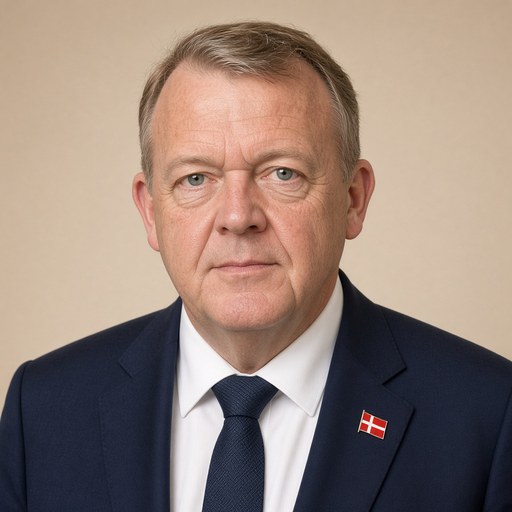
Prime Minister Lars Løkke Rasmussen's speech at the opening of the People's Meeting in Bornholm on June 15, 2017.
 Lars Løkke Rasmussen · Prime Minister of Denmark
- Context
- Rasmussen addressed the opening of the 2017 Folkemøde (People's Meeting) on Bornholm on June 15, reflecting on Danish democracy, Lutheran heritage, and technological disruption.
- Main themes
- Danish democracy and open dialogue, Reformation 500th anniversary, Lutheran heritage and Danish society, disruption and technological change, freedom and responsibility, Danish welfare state, Folkemøde tradition, popular education, globalization, volunteering and civic engagement
- Duration
- ~8 min
- Words
- 981
- Sentences
- 111
- Readability
- 54
- Grade
- 7.5
- Syntax
- 2.16
- Vocabulary
- 2.08
Translated from Danish
The broad sphere of national life a sentence belongs to. Every sentence has an Arena, so it is the denominator the other indices are read against.
Other111 sentences in 54 paragraphs
I have a soft spot for Bornholm. I always have.
My mother was from Bornholm, born in Nexø. I am half-Bornholm. And as long as my grandmother and grandfather were alive, I went to Bornholm every summer.
Now I come here again every summer.
Many of us do. More and more. Again this year, the Folkemøde expects a record number of participants.
Again this year!
How is that possible?
By one thing. A huge voluntary effort. From hundreds of passionate individuals who lift together. Thank you to all of you volunteers. You deserve a big round of applause.
* * *
I am convinced that a meeting like the Folkemøde can only take place in Denmark – or justly in Scandinavia.
A folk high school in the open air, where citizens, organizations, and politicians can meet. Discuss. Disagree. Become wiser.
That critical conversation lays a strong foundation for our society.
And when you have a solid footing, you do not need to build walls against change. For walls have the disadvantage that they not only keep others out. But also trap oneself inside.
We should not build walls. We should build bridges. Be open to the world. Ready for renewal.
This is crucial in a time when the winds of change are blowing.
Many of us probably feel that we are currently in the storm of change. That the greatest upheavals are happening right here in our own time.
The question is whether that is true.
This year we celebrate the 500th anniversary of the Reformation.
And imagine living in a time when Columbus had just discovered America – that was real globalization. When books could be printed for the first time and messages could spread – that was modern technology that meant something.
It was in the midst of that upheaval and breakthrough that Luther gained momentum for his ideas. For a movement that still deeply influences us today.
The critical conversation, which is the focal point of the Folkemøde, owes a debt to Luther.
Luther said that man is free. And with freedom comes responsibility. Responsibility for oneself. Responsibility for the community.
In order to live out that freedom and take on that responsibility, individuals needed to be educated. Specifically, ordinary people needed to learn to read. Luther started a popular education. It had enormous significance.
And Luther sowed the seed for critical thought, which is the opposite of fundamentalism. The Bible is not and will never be a constitution. That was important then. It is important today.
We are free to think for ourselves. Discuss. Criticize.
And thus also free to criticize and stand up against Martin Luther himself.
I have used the year of the Reformation to clearly speak out against Luther's accusations against Jews and Muslims. Those accusations have no place in an enlightened society. They have no place anywhere.
* * *
I do not think it is a coincidence that the Scandinavian countries are both Lutheran. And at the same time have developed the world's strongest welfare societies. We are shaped by 500 years of Lutheranism. Of course, we are.
And I think you experience it so often.
A few years ago, I held a summit at Marienborg about the public school system. Here I witnessed young Danish students walking in and expressing their opinions in front of the Prime Minister and the entire world press.
Our youth have a confidence and an unimpressed attitude that we can be proud of.
Now we are working to improve the school so that they also have something to base their confidence on.
Denmark's confident youth are children of Luther. Even if they probably do not think about it themselves.
Denmark became the first kingdom in the world to collectively convert to the Lutheran faith.
Denmark was among the first countries in the world to grant women the right to vote.
We were the first country in the world to allow partnerships between two people of the same sex.
We are a pioneering country.
And today we are a country on the rise. With faith in the future. Freedom. Responsibility. These are seeds that were sown 500 years ago.
* * *
That brings me back to the beginning. We are again living in a time of great changes.
Today, a new wave of technological advancements can make us richer. Provide us with better welfare. And create jobs that are more rewarding and less exhausting.
I am glad that among the more than 3,000 events here at the Folkemøde, many are about robots, digitalization, and disruption. It is important that we have a broad debate about how we prepare for change. How we will use new technology. How we will bring everyone into a brighter future.
That is why I have also established a Disruption Council – Partnership for Denmark's Future. Where we continue a strong Danish tradition. Of collaboration and conversation across society. A debate about everything that challenges us. And this debate can be enriched by the Folkemøde this year.
A debate for which we have a solid foundation to engage in Denmark.
When robots take over the workplace, many Danes are excited and fewer are worried.
Denmark is – along with Sweden – among the countries in Europe where the population is most positive about globalization.
Denmark is among the countries in Europe where the most people believe in a better future.
The Danes have courage for the future.
That makes me fundamentally optimistic about our little country.
If one, like the great beech tree, wants to spread its branches, one must have a strong root system so that the storm does not take one.
Strong roots. We have that in Denmark.
Responsibility. Trust. And critical conversation. That may sound banal. But it is something entirely unique.
And that is what we celebrate here in the coming days.
Happy Folkemøde to all of us!
The original Danish. The tags above are read on the English translation's sentences.
Jeg har et blødt punkt for Bornholm. Det har jeg altid haft.
Min mor var bornholmer, født i Nexø. Jeg er halvbornholmer. Og så længe min mormor og morfar levede, var jeg på Bornholm hver sommer.
Nu kommer jeg her igen hver sommer.
Det er vi mange, der gør. Flere og flere. Igen i år forventer Folkemødet deltagerrekord.
Igen i år!
Hvordan kan det lade sig gøre?
I kraft af én ting. En kæmpe frivillig indsats. Fra hundredevis af ildsjæle, der løfter i flok. Tak til alle jer frivillige. I fortjener et stort bifald.
* * *
Jeg er overbevist om, at et møde som Folkemødet kun kan lade sig gøre i Danmark – eller retfærdigvis i Skandinavien.
En højskole i det fri, hvor borgere, organisationer og politikere kan mødes. Diskutere. Være uenige. Blive klogere.
Dén kritiske samtale støber et stærkt fundament under vores samfund.
Og når man har et solidt ståsted, behøver man ikke at bygge mure mod forandringer. For mure har den ulempe, at de ikke kun lukker andre ude. Men også spærrer en selv inde.
Vi skal ikke bygge mure. Vi skal bygge broer. Være åbne mod verden. Klar til fornyelse.
Det er afgørende i en tid, hvor forandringens vinde blæser.
Mange af os føler nok, at vi lige nu befinder os i forandringens stormvejr. At de største omvæltninger sker lige her i vores egen tid.
Spørgsmålet er, om det er rigtigt.
I år fejrer vi 500-året for Reformationen.
Og tænk at leve på en tid, hvor Columbus lige havde opdaget Amerika – det var rigtig globalisering. Hvor bøger som noget helt nyt kunne trykkes og budskaber nå ud – det var moderne teknologi, der ville noget.
Det var midt i det opbrud og nybrud, at Luther fik medvind for sine tanker. For en bevægelse, der præger os dybt den dag i dag.
Den kritiske samtale, som er omdrejningspunktet for Folkemødet, står i gæld til Luther.
Luther sagde, at mennesket er frit. Og med frihed følger ansvar. Ansvar for sig selv. Ansvar for fællesskabet.
For at kunne udleve den frihed og påtage sig det ansvar, skulle den enkelte uddannes. Helt konkret skulle almindelige mennesker lære at læse. Luther startede en folkeoplysning. Det fik en enorm betydning.
Og Luther såede frøet til den kritiske tanke, der er modsætningen til fundamentalisme. Biblen er ikke og bliver aldrig en grundlov. Det var vigtigt dengang. Det er vigtigt i dag.
Vi er frie til at tænke selv. Diskutere. Kritisere.
Og dermed også frie til at kritisere og gå op imod selveste Martin Luther.
Jeg har selv brugt reformationsåret til at sige klart fra over for Luthers beskyldninger mod jøder og muslimer. De beskyldninger hører ikke hjemme i et oplyst samfund. De hører ingen steder hjemme.
* * *
Jeg tror ikke, det er en tilfældighed, at de skandinaviske lande både er lutherske. Og samtidig har udviklet verdens stærkeste velfærdssamfund. Vi er præget af 500 års lutheranisme. Selvfølgelig er vi det.
Og jeg synes, man oplever det så tit.
For nogle år siden holdt jeg et topmøde på Marienborg om folkeskolen. Her oplevede jeg unge, danske skoleelever, der kom skridende ind og sagde deres mening foran statsministeren og foran hele verdenspressen.
Vores unge har en selvsikkerhed og en uimponerethed, som vi kan være stolte af.
Nu arbejder vi på at gøre skolen bedre, så de også har noget at have deres selvsikkerhed i.
Danmarks selvsikre unge er børn af Luther. Selvom de nok ikke selv tænker over det.
Danmark blev det første kongerige i verden, som samlet gik over til den lutherske tro.
Danmark var blandt de første lande i verden, hvor kvinder fik stemmeret.
Vi var det første land i verden, som tillod partnerskab mellem to mennesker af samme køn.
Vi er et foregangsland.
Og vi er i dag et land i fremgang. Med tro på fremtiden. Friheden. Ansvaret. Det er frø, som blev sået for 500 år siden.
* * *
Det bringer mig tilbage til start. Vi lever igen i en tid med store forandringer.
I dag kan en ny bølge af teknologiske fremskidt gøre os rigere. Give os bedre velfærd. Og skabe job, som er mere givende og mindre nedslidende.
Jeg er glad for, at der mellem de mere end 3.000 events her på Folkemødet er mange, der handler om robotter, digitalisering og disruption. Det er vigtigt, at vi får en bred debat om, hvordan vi forbereder os på forandring. Hvordan vi vil bruge den ny teknologi. Hvordan vi vil få alle med ind i en lysere fremtid.
Derfor har jeg også nedsat et Disruptionråd – Partnerskab for Danmarks fremtid. Hvor vi viderefører en stærk dansk tradition. Om samarbejde og samtale på kryds og tværs i samfundet. En debat om alt det, der udfordrer os. Og den debat kan Folkemødet i år være med til at berige.
En debat, som vi har et solidt udgangspunkt for at tage i Danmark.
Når robotter indtager arbejdspladsen, er mange danskere begejstrede og færre bekymrede.
Danmark er – sammen med Sverige – blandt de lande i Europa, hvor befolkningen er mest positiv over for globalisering.
Danmark er blandt de lande i Europa, hvor flest tror på en bedre fremtid.
Danskerne har mod på fremtiden.
Det gør, at jeg grundlæggende er optimistisk på vores lille lands vegne.
Hvis man som det store bøgetræ vil folde sine grene ud, er man nødt til at have et stærkt rodnet, så stormen ikke skal tage én.
Stærke rødder. Det har vi i Danmark.
Ansvar. Tillid. Og kritisk samtale. Det kan lyde banalt. Men det er noget helt unikt.
Og det er det, vi fejrer her de næste dage.
Godt Folkemøde til os alle sammen!