




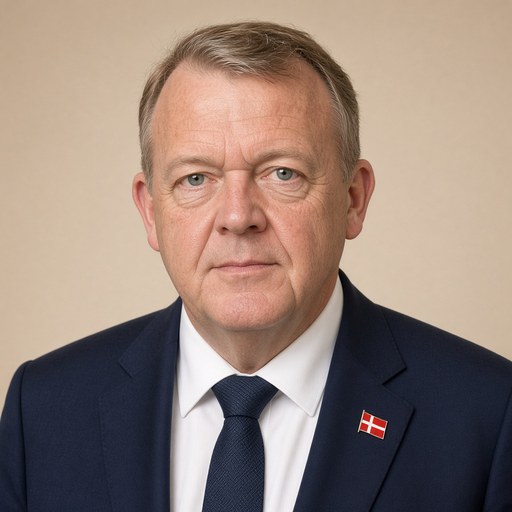
The Prime Minister's speech at the People's Meeting at Ejer Bavnehøj on August 22, 2010.
 Lars Løkke Rasmussen · Prime Minister of Denmark
- Context
- Rasmussen addressed the People's Meeting at Ejer Bavnehøj on August 22, 2010, focusing on Danish-German minority relations and the 90th anniversary of Southern Jutland's reunification with Denmark.
- Main themes
- Danish-German minority model, Danish South Schleswigers, border community and good neighborliness, school subsidies for Danish minority, Danish democracy and folk meetings, minority rights and equality, Danish-German relations, 90 years since Southern Jutland reunification, Grundtvig and Danish identity, electoral arrangements for minorities
- Duration
- ~16 min
- Words
- 1,882
- Sentences
- 160
- Readability
- 65
- Grade
- 6.8
- Syntax
- 2.46
- Vocabulary
- 2.17
Translated from Danish
The broad sphere of national life a sentence belongs to. Every sentence has an Arena, so it is the denominator the other indices are read against.
Other160 sentences in 73 paragraphs
Dear everyone.
Thank you for allowing me to be here today. I have genuinely looked forward to this.
For folk meetings in the Danish hills are the lookout points of community.
Grundtvig did note that other countries have "much higher mountains" than we do. Yes, for us, a mountain is just a hill.
But we are happy to settle for the hilltop. It contains a greatness that fits us perfectly. The solid. The down-to-earth. The popular.
Take a hilltop, a memorial stone, and green beech trees.
Add an orchestra, community singing, and a gymnastics display.
Then we have the beat of the Danish summer. The heartbeat of Danish democracy.
In a time characterized by Facebook, video clips, and TV news from home and abroad, it is important to hold on to meetings like today. Living folk meetings, where we are together person to person. Where we affirm our community.
* * *
The folk meeting here at Ejer Bavnehøj has the important aim of reminding the Danish population of the Danes south of the border. To make the minority visible to us Danes north of the border. To emphasize the bond between Denmark and the Danish South Schleswigers.
And there is good reason for that. For the Danish-German minority model is quite unique. The counter-image is frightening, but unfortunately also widespread. Think of the Balkans in the 90s. Think of the bloody civil wars between warring nations, trapped in imposed states.
In many other places in the world, borderlands are a breeding ground for unrest – for us, the borderland is a seed for good neighborliness.
In other places, the majority fights the minority – for us, the minority enriches the majority.
In other places, the minority resorts to desperate measures and dead ends – for us, all citizens are on equal footing, regardless of their national and cultural affiliations.
Yes, many can learn – and many wish to learn – from the way we do it. Through peace, voluntariness, and popular governance.
Previously, the borderland was what separated Denmark and Germany. Now it binds us together politically and culturally. Minority policy is a solid foundation for the good Danish-German relationship – and minority policy is also evolving.
This year marks 90 years since Southern Jutland was reunited with Denmark. "They must not be forgotten," said then-Prime Minister Niels Neergaard from the Liberal Party. And those words have been upheld by successive Danish prime ministers ever since, regardless of party affiliation. Those words have been upheld by the Danish Parliament and the Danish state.
These are not just words. They are action. We are taking new steps. We are affirming the community.
North of the border, one of the latest examples is the electoral arrangement that was introduced in the Southern Jutland municipalities in connection with the structural reform, to the benefit of the German minority. I had the pleasure of negotiating the arrangement as Minister of the Interior. An electoral arrangement that is ahead of developments in the rest of Europe.
And earlier this year, a unanimous Parliament passed the law on subsidies for the Danish minority.
South of the border, we could rejoice that in 1985, equality of student subsidies between Danish and German schools was introduced. In 1990, it was stipulated in the state constitution that the Danish minority and the Frisian people have a right to "protection and support." In 2008, the district of North Frisia adopted a similar provision.
It is the sum of the many steps forward that makes the Danish-German minority model unique. We renew ourselves. We develop our community.
That is how we should continue.
At the very center of all this are the Danish schools. The schools are the lifeblood of the Danish minority. The schools are the focal point of the intimate: the language, the family, the community. The schools are the place where one meets to be Danish.
Therefore, it has also raised concerns in the Danish government that the Schleswig-Holstein state government intends to reduce the student subsidy for the Danish minority's schools in connection with the upcoming budget.
I focus on the principled question in the matter: That the previous equality between minority and majority would cease. That the Danish schools would no longer, in practice, have the status of public schools for the minority.
We have, of course, discussed the matter with our German colleagues, and I have agreed with Minister-President Carstensen that we will now establish a quickly working civil servant committee to look into the factual conditions surrounding the Danish and German subsidies to the minorities.
In the end, it is a matter that must be resolved in the spirit of cooperation that has characterized the excellent relations between our two countries for many years. We have faced problems before, which we have solved by sitting down at the table and talking to each other person to person. The most notable example is the negotiations in 1955 that led to the issuance of the Copenhagen-Bonn declarations.
To meet as people. Person to person. That is how conflicts are resolved. We must continue to move forward. We must show the world a good example.
In unfree countries, everything collapses when you strengthen minorities. Then everything explodes. In unfree countries, one simply shares a common servitude. There, one fights to be the strong one who can dominate the weak.
In free countries, the situation is quite the opposite. In free countries, one shares common opportunities; when you strengthen minorities in a free society, you also strengthen the community.
* * *
We live in a time where we humans do not let ourselves be limited by national borders. A Danish company can easily set up a branch in China. A Chinese company can easily establish a research center in Denmark. Danish youth can study at Harvard and return home wiser. Indian engineers and German nurses can work in Denmark and contribute their expertise.
In a time when globalization erases borders in this way, it is especially important to maintain both a national pride and a national self-awareness. We simply need a standpoint.
We must know who we are, where we come from, and what we can. So that it is possible for us to benefit from, learn from, and be inspired by others. People with roots in distant countries and traditions. They also have the opportunity to enrich our community.
When we know who we are and where we come from, it is possible to tell those who come to Denmark what we expect, what they can count on, and what they cannot count on.
When we expect people who come here to become part of the community, we must not hide our Danishness. We must be proud of it.
How can we otherwise expect others to respect it?
* * *
The Danish minority in South Schleswig not only shows the way for minorities in the rest of the world. The Danish minority also shows a way for us in Denmark by holding on to the strong Danish values that all of Denmark needs to be reminded of today.
What we have in common in history and tradition, we must uphold.
It is our roots from which we must draw strength so that we can grow and flourish, unfold, and set new branches in a new world.
We particularly need strong roots in these years, where violent winds have swept over Denmark.
For a while, we were spoiled by favorable winds. We have been carried forward. With the international crisis, the wind direction changed dramatically. In one fell swoop, our conditions changed.
Denmark has become poorer. We have lost exports. We have lost jobs. Branches have been broken off the tree, one might say.
These are new times in Denmark. In new times, we need strong roots.
We also need a clear outlook. We must rise above the daily struggles and the flat fields. Get up on the mountain – or the hill – feel the wind in our hair and gaze out over the Danish land.
Where do we do this better than here at Denmark's highest folk meeting?
Yes, I know that the height has been a topic of discussion. Wise people have measured and measured again. Which peak is Denmark's highest? There is no doubt that Ejer Moræneryg is Denmark's Himalayas. But which of the peaks is Mont Everest is a close race that was not won by Ejer Bavnehøj. But that does not change the fact that the folk meeting at Ejer Bavnehøj is still Denmark's highest-placed folk meeting. Let us hold on to that.
We are up in the air. And when we look out, it is a beautiful sight. Denmark is a lovely country. It is so because of generations of hard-working and enterprising Danes.
We have prosperity instead of hunger and misery.
Schools instead of child labor.
A true democracy instead of oppression.
Equality between women and men.
Freedom to shape our own lives.
All that I have called "the Danish dream."
We all stand on the shoulders of generations who have fought to get this far. It is our shared responsibility – and duty – to continue the fight in a new time.
There are still plenty of battles to fight. Not least a battle for there to be enough for all of us – also in the future.
My agenda is therefore clear: We must again create growth and prosperity in Denmark as a prerequisite for lasting welfare. As a prerequisite for being able to live the Danish dream also in 5, 10, and 20 years.
We must not distribute money we do not have. Instead, we must earn money so that we can afford a good and safe society in the future.
Without new growth, no lasting welfare.
To create growth, we must mobilize all resources.
We Danes have always been good at that, no matter how many storms we have been hit by.
After the war in 1864, we understood that our country's survival depended on all parts of the country being able to flourish. We could not afford to be wasteful with our human resources. Everything had to be set in motion.
And Denmark survived. We passed the test of time. In these years, we again find ourselves at a crossroads between an old time and a new one. And again, it is our task to mobilize all resources.
We can do this by drawing on the forces that slumber in our history and in our culture. In our Danishness. We can do this regardless of which side of the border we come from – with each of our concrete experiences.
That is my message to you today. We need each other. To strengthen each other.
As H.C. Andersen wrote: "Once you were lord of the whole world – ruled over England – now you are called weak."
We can think like that today as well. But just as H.C. Andersen, we can draw on each other and declare: "A small country – and yet so far around the world – still the Danish song and chisel strike are heard."
That is our task now. To regain growth and recover what has been lost.
Enjoy the rest of the meeting!
Thank you for your attention.
The original Danish. The tags above are read on the English translation's sentences.
Kære alle sammen.
Tak, fordi jeg må være med i dag. Det har jeg oprigtigt glædet mig til.
For folkemøder på de danske bjerge er fællesskabets udsigtsposter.
Grundtvig bemærkede ganske vist, at andre lande har "langt højere bjerge" end os. Ja, hos os er bjerg jo kun bakke.
Men vi tager gerne til takke med bakketoppen. Den rummer en storhed, som passer præcis til os. Det solide. Det jordbundne. Det folkelige.
Tag en bakketop, en mindesten og grønne bøgetræer.
Tilsæt orkester, fællessang og gymnastikopvisning.
Så har vi den danske sommers beat. Det danske demokratis hjerteslag.
I en tid præget af facebook, videoklip og TV-nyheder fra indland og udland er det vigtigt at holde fast i møder som i dag. Spillevende folkemøder, hvor vi er sammen menneske til menneske. Hvor vi bekræfter vores fællesskab.
* * *
Folkemødet her på Ejer Bavnehøj har det vigtige sigte at erindre den danske befolkning om danskerne syd for grænsen. At gøre mindretallet synligt for os danskere nord for grænsen. Understrege båndet mellem Danmark og de danske sydslesvigere.
Og det er der god grund til. For den dansk-tyske mindretalsmodel er ganske unik. Modbilledet er skræmmende, men desværre også udbredt. Tænk på Balkan i 90’erne. Tænk på de blodige borgerkrige mellem stridende nationer, der var fanger i påtvungne stater.
Mange andre steder i verden er grænselande kim til ufred – hos os er grænselandet en spire til godt naboskab.
Andre steder bekriger flertallet mindretallet – hos os beriger mindretallet flertallet.
Andre steder tyer mindretallet til desperate udveje og vildveje – hos os er alle borgere på lige fod, uanset deres nationale og kulturelle tilhørsforhold.
Ja, mange kan lære – og mange ønsker at lære – af den måde, vi gør det på. Gennem fred, frivillighed og folkestyre.
Før var grænselandet det, der skilte Danmark og Tyskland. Nu binder det os sammen politisk og kulturelt. Mindretalspolitikken er en fast grund under det gode dansk-tyske forhold – og mindretalspolitikken er også i udvikling.
I år er det 90 år siden, Sønderjylland blev genforenet med Danmark. ”De skal ikke blive glemt” lød det dengang fra Venstre-statsminister Niels Neergaard. Og de ord har skiftende danske statsministre lige siden levet op til, uanset partifarve. De ord har det danske Folketing og den danske stat levet op til.
Det er ikke bare ord. Det er handling. Vi tager nye skridt. Vi bekræfter fællesskabet.
Nord for grænsen er et af de seneste eksempler den valgordning, der blev indført i de sønderjyske kommuner i forbindelse med strukturreformen, til gavn for det tyske mindretal. Jeg havde selv den glæde at forhandle ordningen på plads som indenrigsminister. En valgordning, der er på forkant med udviklingen i resten af Europa.
Og tidligere i år vedtog et enigt Folketing loven om tilskud til det danske mindretal.
Syd for grænsen kunne vi glæde os over, at der i 1985 blev indført ligestilling af elevtilskud mellem danske og tyske skoler. I 1990 blev det bestemt i delstatens forfatning, at det danske mindretal og den frisiske folkegruppe har krav på ”beskyttelse og støtte”. I 2008 vedtog Nordfrislands amt en lignende bestemmelse.
Det er summen af de mange skridt fremad, der gør den dansk-tyske mindretalsmodel unik. Vi fornyr os. Vi udvikler vores fællesskab.
Sådan skulle vi gerne fortsætte.
Helt centralt i alt dette står de danske skoler. Skolerne er livsnerven i det danske mindretal. Skolerne er omdrejningspunktet i det nære: sproget, familien, fællesskabet. Skolerne er det sted, man mødes om at være danske.
Derfor har det også vakt bekymring i den danske regering, at den slesvig-holstenske landsregering påtænker at reducere elevtilskuddet til det danske mindretals skoler i forbindelse med den kommende finanslov.
Jeg hæfter mig selv ved det principielle spørgsmål i sagen: At den hidtidige ligestilling mellem mindretal og flertal så vil ophøre. At de danske skoler dermed ikke længere i praksis har status som offentlige skoler for mindretallet.
Vi har fra regeringens side naturligvis drøftet sagen med vores tyske kolleger og jeg har aftalt med ministerpræsident Carstensen, at vi nu nedsætter et hurtigt arbejdende embedsmandsudvalg, som skal se på de faktuelle forhold omkring de danske og de tyske tilskud til mindretallene.
I sidste ende er det en sag, som skal løses i den samarbejdets ånd, der i mange år har præget de fortrinlige relationer mellem vore to lande. Vi har før haft problemer, som vi har løst ved at sætte os om bordet og tale sammen menneske til menneske. Det mest markante eksempel er de forhandlinger, der i 1955 førte til udstedelsen af København-Bonn-erklæringerne.
At mødes som mennesker. Menneske til menneske. Det er sådan, man løser konflikter. Vi skal blive ved med at gå fremad. Vi skal vise verden et godt eksempel.
I de ufri lande falder alting sammen, når man styrker mindretallene. Så eksploderer det hele. I de ufri lande deler man nemlig bare en fælles trældom. Så dér kæmper man om at være den stærke, der kan tryne den svage.
I de frie lande forholder det sig lige modsat. I de frie lande deler man nogle fælles muligheder, når man styrker mindretallene i et frit samfund, styrker man derfor også fællesskabet.
* * *
Vi lever i en tid, hvor vi mennesker ikke lader os begrænse af landegrænser. En dansk virksomhed kan så let som ingenting placere en afdeling i Kina. En kinesisk virksomhed kan så let som ingenting placere et forskningscenter i Danmark. Danske unge kan studere på Harvard og vende klogere hjem. Indiske ingeniører og tyske sygeplejersker kan arbejde i Danmark og bidrage med deres ekspertise.
I en tid, hvor globaliseringen på den måde udvisker grænser, så er det ekstra vigtigt at bevare både en national stolthed og en national selvfølelse. Vi har kort sagt brug for et ståsted.
Vi skal vide, hvem vi er, hvor vi kommer fra, og hvad vi kan. Så det er muligt for os at få gavn af, lære af og lade os inspirere af andre. Mennesker med rødder i fjerne lande og traditioner. De har også muligheden for at berige vores fællesskab.
Når vi ved, hvem vi er, og hvor vi kommer fra, så er det muligt at fortælle dem, der kommer til Danmark, hvad vi forventer, hvad de kan regne med, og hvad de ikke kan regne med.
Når vi forventer, at mennesker, der kommer hertil, skal blive en del af fællesskabet, så må vi ikke gå og putte med vores danskhed. Vi skal være stolte af den.
Hvordan kan vi ellers regne med, at andre skal respektere den?
* * *
Det danske mindretal i Sydslesvig viser ikke alene vejen for mindretal i resten af verden. Det danske mindretal viser også en vej for os i Danmark ved at holde fast i de stærke danske værdier, som hele Danmark har brug for at blive erindret om i dag.
Det, vi har til fælles i historien og traditionen, det skal vi holde i hævd.
Det er vores rødder, som vi skal suge kraft af, så vi kan vokse og gro, folde os ud og sætte nye grene i en ny verden.
Vi har i særlig grad brug for stærke rødder netop i disse år, hvor voldsomme vinde er slået ind over Danmark.
I en årrække var vi forkælede af medvind. Vi er blevet båret fremefter. Med den internationale krise skiftede vindretningen dramatisk. Med ét slag blev vores vilkår ændret.
Danmark er blevet fattigere. Vi har mistet eksport. Vi har tabt arbejdspladser. Der er røget grene af træet, kunne man sige.
Det er nye tider i Danmark. I nye tider har vi brug for stærke rødder.
Vi har også brug for et klart udsyn. Vi skal hæve os over dagligdagens genvordigheder og de flade marker. Komme op på bjerget – eller bakken – få vind i håret og skue ud over det danske land.
Hvor gør vi det bedre end her på Danmarks højest beliggende folkemøde?
Ja, jeg ved godt, at det med højden har været til diskussion. Kloge folk har målt og målt efter. Hvilken top er Danmarks højeste? Der er ingen tvivl om, at Ejer Moræneryg er Danmarks Himalaya. Men hvilken af toppene, der så er Mont Everest, det er et tæt opløb, som ikke blev vundet af Ejer Bavnehøj. Men derfor er folkemødet på Ejer Bavnehøj stadig Danmarks højest placerede folkemøde. Lad os holde fast i det.
Vi er til vejrs. Og når vi skuer ud, er det et smukt syn. Danmark er et dejligt land. Det er det i kraft af generationer af hårdtarbejdende og handlekraftige danskeres indsats.
Vi har velstand i stedet for sult og nød.
Skoler i stedet for børnearbejde.
Et sandt demokrati i stedet for undertrykkelse.
Ligestilling mellem kvinder og mænd.
Frihed til selv at forme vores liv.
Alt det, jeg har kaldt ”den danske drøm”.
Vi står alle sammen på skuldrene af generationer, der har kæmpet for at nå så langt. Det er vores fælles ansvar – og pligt – at kæmpe videre i en ny tid.
Der er stadig masser af kampe at kæmpe. Ikke mindst en kamp for, at der kan være nok til os alle - også i fremtiden.
Min dagsorden er derfor klar: Vi skal igen skabe vækst og velstand i Danmark som forudsætning for varig velfærd. Som forudsætning for at kunne udleve den danske drøm også om 5, 10 og 20 år.
Vi skal ikke fordele penge, vi ikke har. Vi skal derimod tjene penge, så vi også i fremtiden har råd til et godt og trygt samfund.
Uden ny vækst ingen varig velfærd.
For at skabe vækst skal vi mobilisere alle ressourcer.
Det har vi danskere altid været gode til, uanset hvor mange storme, vi er blevet ramt af.
Efter krigen i 1864 forstod vi, at vores lands overlevelse afhang af, at alle dele af landet kunne blomstre. Vi havde ikke råd til ødselhed med vores menneskelige ressourcer. Alt skulle sættes i gang.
Og Danmark bestod. Vi bestod tidens prøve. I disse år står vi igen i et vadested mellem en gammel tid og en ny. Og igen er det vores opgave at mobilisere alle ressourcer.
Det kan vi gøre ved at trække på de kræfter, der slumrer i vores historie og i vores kultur. I vores danskhed. Det kan vi gøre uanset, hvilken side af grænsen vi kommer fra – med hver vore konkrete erfaringer.
Det er mit budskab til jer i dag. Vi har brug for hinanden. Til at styrke hinanden.
Som H.C. Andersen skrev: ”En gang du herre var i hele verden – bød over England – nu du kaldes svag”.
Sådan kan vi også tænke i dag. Men på samme måde som H.C. Andersen kan vi trække på hinanden og erklære: "Et lille land - og dog så vidt om jorden - end høres danskes sang og mejselslag."
Det er det, der er vores opgave nu. At få væksten igen og genvinde det tabte.
Fortsat godt møde!
Tak for ordet.