




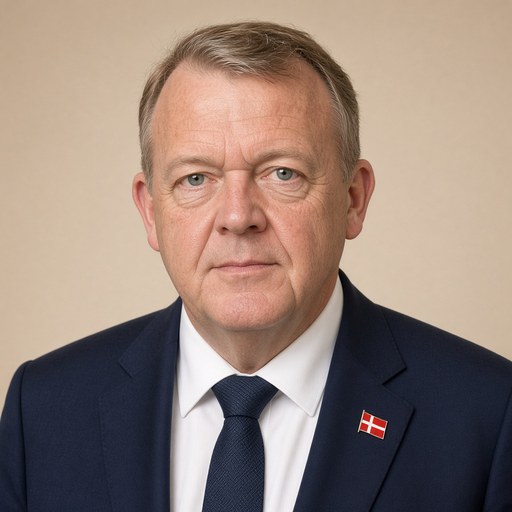
Prime Minister Lars Løkke Rasmussen's speech at the Municipal Political Summit on March 21, 2019.
 Lars Løkke Rasmussen · Prime Minister of Denmark
- Context
- Rasmussen addressed the Municipal Political Summit on March 21, 2019, outlining government expectations for municipalities in healthcare reform and other policy areas.
- Main themes
- Municipal responsibility in healthcare reform, future role of municipalities, health system centralization and decentralization, parallel societies strategy, infrastructure and mobility, Denmark as land of opportunity, aging population and care, government-municipality cooperation, task delegation and funding, childhood and elder care services
- Duration
- ~20 min
- Words
- 2,423
- Sentences
- 222
- Readability
- 56
- Grade
- 8.1
- Syntax
- 2.38
- Vocabulary
- 1.99
Translated from Danish
The broad sphere of national life a sentence belongs to. Every sentence has an Arena, so it is the denominator the other indices are read against.
Other222 sentences in 120 paragraphs
Thank you, Mr. Chairman.
I am glad to be here – once again this year.
For there is actually quite a bit I would like to talk to you about.
The role of municipalities in the future. The government's expectations. Our cooperation – leading up to the next municipal summit, where I look forward to once again conveying the government's greetings. That would be for the fifth year in a row...
But regardless of the outcome of the election that many are waiting for – I am happy to be here today.
I have immense respect for your work. I have been there myself.
And I am proud of the strong spirit of cooperation in the municipalities.
As I grow older, it increasingly dawns on me that our society – the way we have organized ourselves – is something truly unique and valuable.
Some talk about the American dream. That the paperboy can become a billionaire. I have always believed that Denmark is the land of opportunities.
In Denmark, people can move.
With the government's new infrastructure plan, it will be easier to move around the country... But in Denmark, people can also move in a more metaphorical sense.
Because we both catch those who fall – and provide freedom and opportunities for those who want to advance.
In other words: You, who are here today, have the responsibility for a completely central area. For the close service to and care for the citizens. The good start to childhood. The good ending to life.
For 12 years, we have had a map of Denmark with 98 strong municipalities. You have lived up to the great responsibility you were given back then.
In many of the proposals the government has put forward, we expect – I expect – that you will take on an even greater responsibility.
This applies to the health reform.
This applies to the coherence reform.
This applies to the strategy against parallel societies, where we have set the goal of completely dismantling the ghettos.
Thank you for last time to those of you who participated in the Summit on parallel societies at Marienborg on Monday. And first and foremost, thank you for the effort you continuously make to implement the strategy.
Not just one Monday in March, but every day back in your municipalities.
Today, I will focus a lot on the government's health reform. For it is my ambition that municipalities should play a key role in the future healthcare system.
There have been significant advances in the health sector over the past 10-20 years. Shorter waiting times. Better treatment. More people survive serious illness.
Advances that rest on the fact that we have consolidated specialties. Invested massively in super hospitals. Hired more doctors, more nurses.
I stand by that form of centralization.
I believe we should take it further. With even stronger national collaborations on complicated diseases. On ensuring patient rights.
Three weeks ago, I was in Aarhus, where I helped open the Center for Particle Therapy. A huge investment and a national collaboration to provide gentle cancer treatment in Denmark. So that children with cancer no longer have to travel to the USA for treatment.
We cannot have a particle accelerator on every street corner. We need to consolidate expertise in one place.
It is not ideology. It is common sense.
In some areas, it is centralization and specialization that provide security. In other areas, security for the patient is to be treated close to home.
It is not an either-or. It is a both-and.
In the future, we will need close offers of high quality that can relieve hospitals.
We do this because it is expected that there will be 230,000 more citizens over 75 years old in the next 10 years alone. More will need care and treatment. This will put pressure on the healthcare system, pressure on the staff.
Every responsible government must address this.
And here I must just say that the proposal we have seen from the other side is too vague.
What is it that they want?
I will let the question hang for a moment, as the answers are also somewhat nebulous.
Mandatory discharge of doctors, 1,000 more nurses. Is that an answer?
When the number of people with diabetes alone nearly doubles over 10 years, then 1,000 new nurses will not go far.
It sounds easy. It is too easy.
I believe – perhaps not surprisingly, but I actually think I have something to back it up – I believe that the government's proposal is a much more ambitious and well-thought-out course for the healthcare system.
A course where you municipalities take on more tasks. Greater responsibility. Room for ambitions.
I am aware of the risk of unfunded task shifting – we need to have an agreed transfer of tasks where the money follows.
Now we need to find a model where municipalities have a good opportunity to present your perspectives on the healthcare system. I have noted that you want stronger representation in the new structure.
The government has taken that wish into the negotiations.
The core of the health reform is that more citizens should be treated closer to their own homes.
I hear you as if you are ready to take on that responsibility. Just as you took on the responsibility when we took the first steps towards a greater role in the health sector – with the municipal reform in 2007.
Now we are ready for the next step.
An enhancement of close health services and greater municipal responsibility is also a step away from 98 different health policies.
There must be a higher and more uniform professional quality. With the responsibility to meet a standard. And with the freedom to organize the effort to fit the local situation.
As it stands today, one can encounter hospital doctors who say they do not feel secure about the health offers they discharge the patient to. Not in all municipalities, but in some municipalities. That is not secure enough.
Today, there are municipalities with three times as many admissions that could have been avoided as in other municipalities. That is not good enough.
The vision for the future is that all citizens – regardless of where they live – should have local health offers of high quality. There should be a more uniform high quality in all 98 municipalities. The local offers should be better.
It should be a collaborative project.
In the 21 new health communities, municipalities will work together with hospitals and general practitioners to create better coherence in treatment and avoid unnecessary admissions.
It will be a major task to further develop your health offers.
Funding will follow. We have extraordinarily allocated 6 billion DKK to a Proximity Fund in the years 2020-2025. This is money to upgrade the engine, so to speak.
And therefore, it is also money that goes beyond the ongoing prioritization of health. Beyond the fuel that we continuously put into the engine.
The Proximity Fund will support the transition of treatments from hospitals to municipalities. For example, you will need to build more health houses, develop the right competencies among employees, and develop quality health offers.
This is not something that happens with a snap of the fingers. It is a kind of development plan. A sustained effort.
The health communities will only function if you take on the task and responsibility. It is you who must contribute the good ideas. It is you who must tell the rest of us how it makes sense locally to solve the task close to the citizen.
You are the driving force.
It is possible. There are already good examples out there.
In the fall, I visited Kolding Health Center, where many professional groups work under the same roof. And the hospital and municipality work closely together.
Engaged. Competent. It is a pleasure. Not least for the citizens.
I have visited the House of Psychiatry in Silkeborg. Here, employees in the municipality's social psychiatry and treatment psychiatry are gathered under one roof. This creates better pathways for people who particularly need their treatment to be coherent.
The good examples exist.
Now they need to be spread. And more good examples need to emerge.
With the new quality plan – or development plan, if you will – we are laying a foundation under the health professional standards in the close healthcare system.
But the standards must not be a straitjacket. They should be a springboard that gives altitude to how tomorrow's challenges are handled.
That ambition is significant – for the good examples are characterized by one thing: There are people behind them. People with professional insight who do their work with diligence, commitment, and dedication. Putting the patient first.
Therefore, the reform is about allowing professionalism to have more of a voice.
Greater responsibility locally. More treatments being moved from hospitals to municipalities. A strengthening of close health services. More health houses. More focus on general practice. More emergency preparedness.
Some call it centralization.
I do not quite understand it.
Certainly, there are areas that need to be decided centrally, e.g., compliance with IT standards or common standards for procurement. That is common sense.
But the main purpose of the health reform that the government has presented is to strengthen close health services right next to the citizen. How that can be seen as centralization is a bit of a mystery to me.
The task is different from municipality to municipality. You do not have the same citizens. Not the same starting point. Not the same expenses. That is the municipal diversity.
But we will uncover the burden-related consequences of the health reform. If it skews, we must address it.
The equalization system already has some known imbalances. The government would like to correct those.
We actually tried that last year. But there was a lack of will to reach an agreement. I find that unfortunate.
It is a bound task for a newly elected Parliament to correct imbalances and errors in the equalization.
Even though it is difficult. Even though there will always be many opinions on equalization – up to 98 different opinions. That is quite classic.
It is also quite classic that municipalities and the sitting government have an ongoing discussion about the economy.
We have that this year as well. I can see that a number of you mayors have a viewpoint in the newspaper today. Send more money, is not so surprising a message.
It is right in the campaign for my re-election.
It is a fact that the V-led governments have increased the municipalities' agreed service expenditures by 2.5 billion DKK from 2015 to 2019. While the government that was in place in the years before reduced the municipalities' agreed service expenditures by 3.5 billion DKK.
Plus 2.5 billion versus minus 3.5 billion.
They cut back. We are adding.
I think it is appropriate to clarify that.
I said it last year as well. But there may be some who have forgotten it.
Therefore, I would like to remind you that one thing is golden promises. Another thing is results that count.
And the results must rest on a solid economic foundation.
The government guarantees that. It is more important to invest in that than to spend more money on transfers to healthy people.
We must maintain a healthy economy under the welfare society that you – the municipalities – are responsible for in the citizens' everyday lives.
You are close to the citizens. And I want to let municipalities be municipalities. With freedom. With responsibility. With municipal self-government.
Therefore, I also think it is entirely natural that municipalities have a central role in the new preparatory basic education. It is you who are close to the young people.
The same applies to the simplification of employment legislation, where we have given you more freedom for local solutions.
I fundamentally believe that you should be measured in municipalities on the results you create. Not on how you create them. That is also the thinking in the coherence reform.
As part of the coherence reform, we have set the ambitious goal of collaborating to remove administrative rules and burdens in the public sector – 4 billion DKK in total over four years, which should be prioritized locally for welfare.
That requires something from all of us.
For it is not only the state and the Parliament that invent rules, goals, and documentation requirements. You do that in the municipalities as well.
We have a shared responsibility to unlock potential by removing rules and paperwork.
I believe in freedom, in trust, in all aspects of life. Freedom allows ideas to sprout. Responsibility allows them to grow.
That is why I am also a strong supporter of the free municipality trials.
Several of them have been very successful.
One example: The work with One Plan.
An attempt to address the paradox that the citizens who need help the most to navigate their situation are met with a labyrinth of plans and systems.
That is why nine municipalities in North Zealand came together a few years ago to create a more coherent effort for precisely those people who need it the most.
It succeeded so well that the free municipalities have been an important source of inspiration for the bill on "One Plan," which was passed last summer.
And just before Christmas, the government entered into an agreement with a broad majority in the Parliament to go even further – and work towards a new main law on holistic initiatives.
We must focus on the person, the citizen, the elderly, the student in school – putting the person before the system.
That is what we all want.
I believe that this can best happen if you have the freedom of method to do so.
Trust. Freedom. Responsibility. That is the breeding ground for tomorrow's good examples.
A strong municipal self-government is a prerequisite for us to continue the work of developing the Danish welfare society.
We, who are here today, have – despite our differences – worked with the welfare society – many of us for many years. We share the experience that proper political craftsmanship takes time.
We share an ambition to do better.
We succeed a little every day, but it will never be good enough.
We must develop our welfare society. It is the core of the country we are. A harmonious country. With trust in each other. And faith in the future.
Have a good summit.
The original Danish. The tags above are read on the English translation's sentences.
Tak til formanden.
Jeg er glad for at være med – igen i år.
For der er egentlig en del, jeg gerne vil tale med jer om.
Kommunernes rolle i fremtiden. Regeringens forventninger. Vores samarbejde – frem til næste kommunale topmøde, hvor jeg glæder mig til igen at overbringe regeringens hilsen. Det ville så blive for 5. år i træk ...
Men uanset udfaldet af det valg, mange venter på – så er jeg glad for at være med i dag.
Jeg har en kæmpe respekt for jeres arbejde. Jeg har været der selv.
Og jeg er stolt af den stærke samarbejdsånd i kommunerne.
Som jeg selv bliver ældre, går det i højere og højere grad op for mig, at vores samfund – den måde, vi har indrettet os på – er noget helt unikt og værdifuldt.
Nogle taler om den amerikanske drøm. At avisbuddet kan blive milliardær. Jeg har altid ment, at Danmark er mulighedernes land.
I Danmark kan mennesker flytte sig.
Med regeringens nye infrastrukturplan bliver det så lettere at flytte sig i hele landet ... Men i Danmark kan mennesker også flytte sig i mere overført betydning.
Fordi vi både griber dem, der falder – og giver frihed og muligheder for dem, der vil frem.
Med andre ord: I, der er her i dag, har ansvaret for et helt centralt område. For den nære service til og omsorg for borgerne. Den gode start på barnelivet. Den gode afslutning på livet.
I 12 år har vi haft et Danmarkskort med 98 stærke kommuner. I har levet op til det store ansvar, I fik dengang.
I mange af de udspil, regeringen er kommet med, forventer vi – forventer jeg – at I løfter et endnu større ansvar.
Det gælder sundhedsreformen.
Det gælder sammenhængsreformen.
Det gælder strategien mod parallelsamfund, hvor vi har sat det mål at afvikle ghettoerne helt.
Tak for sidst til jer, der deltog i Topmødet om parallelsamfund på Marienborg i mandags. Og først og fremmest tak for den indsats, I yder løbende for at gennemføre strategien.
Ikke kun en mandag i marts, men hver dag hjemme i jeres kommuner.
I dag vil jeg gøre en del ud af regeringens sundhedsreform. For det er min ambition, at kommunerne skal spille en hovedrolle i fremtidens sundhedsvæsen.
Der er sket store fremskridt på sundhedsområdet de seneste 10-20 år. Kortere ventetid. Bedre behandling. Flere overlever alvorlig sygdom.
Fremskridt, der hviler på, at vi har samlet specialerne. Investeret massivt i superhuse. Ansat flere læger, flere sygeplejersker.
Den form for centralisering står jeg på mål for.
Jeg mener, at vi skal tage den videre. Med endnu stærkere nationale samarbejder om komplicerede sygdomme. Om at sikre patientrettigheder.
For tre uger siden var jeg i Aarhus, hvor jeg var med til at åbne Center for Partikelterapi. En kæmpe investering og et nationalt samarbejde om at yde en skånsom kræftbehandling i Danmark. Så kræftsyge børn ikke længere skal rejse til USA for behandling.
Vi kan ikke have en partikel-accelerator på hvert gadehjørne. Vi er nødt til at samle ekspertisen ét sted.
Det er ikke ideologi. Det er sund fornuft.
På nogle områder er det centralisering og specialisering, som giver tryghed. På andre områder er tryghed for patienten at blive behandlet tæt på hjemmet.
Det er ikke et enten-eller. Det er et både-og.
I fremtiden får vi brug for nære tilbud af høj kvalitet, som kan aflaste sygehusene.
Det gør vi, fordi der alene over de næste 10 år forventes at være 230.000 flere borgere over 75 år. Flere får brug for pleje og behandling. Det vil presse sundhedsvæsnet, presse personalet.
Det må enhver ansvarlig regering forholde sig til.
Og her må jeg bare sige, at det bud, vi har set fra anden side, er for løst.
Hvad er det, man vil?
Jeg lader spørgsmålet hænge lidt, for svarene er også noget svævende.
Tvangsudskrivning af læger, 1.000 flere sygeplejersker. Er det et svar?
Når alene antallet af mennesker med diabetes næsten fordobles over 10 år, så rækker 1.000 nye sygeplejersker ikke langt.
Det lyder let. Det er for let.
Jeg mener – måske ikke overraskende, men jeg synes faktisk, at jeg har noget at have det i – jeg mener, at regeringens udspil er en noget mere ambitiøs og gennemarbejdet kurs for sundhedsvæsenet.
En kurs, hvor I kommuner får flere opgaver. Større ansvar. Plads til ambitioner.
Jeg er opmærksom på risikoen for ufinansieret opgaveglidning – vi skal have en aftalt opgaveflytning, hvor pengene flytter med.
Nu skal vi finde en model, hvor kommunerne får god mulighed for at fremføre jeres perspektiver på sundhedsvæsnet. Jeg har noteret mig, at I ønsker en stærkere repræsentation i den nye struktur.
Det ønske har regeringen taget med i forhandlingerne.
Kernen i sundhedsreformen er, at flere borgere skal behandles tættere på eget hjem.
Jeg hører jer, som at I er klar til at tage dét ansvar på jer. Ligesom I tog ansvaret på jer, da vi tog de første skridt mod en større rolle på sundhedsområdet – med kommunalreformen i 2007.
Nu er vi klar til næste skridt.
Et løft af den nære sundhed og større kommunalt ansvar er også et skridt væk fra 98 forskellige sundhedspolitikker.
Der skal være en højere og mere ensartet faglig kvalitet. Med det ansvar, at man lever op til en standard. Og med den frihed, at man kan organisere indsatsen, så det passer med den situation, der er lokalt.
Som det er i dag, kan man støde på sygehuslæger, der siger, at de ikke føler sig trygge ved de sundhedstilbud, som de skriver patienten ud til. Ikke i alle kommuner, men i nogle kommuner. Det er ikke trygt nok.
I dag er der kommuner med tre gange så mange indlæggelser, der kunne have været undgået, som andre kommuner. Det er ikke godt nok.
Visionen for fremtiden er, at alle borgere – uanset hvor de bor – skal have lokale sundhedstilbud af høj kvalitet. Der skal være en mere ensartet høj kvalitet i alle 98 kommuner. De lokale tilbud skal være bedre.
Det skal være et samarbejdsprojekt.
I de 21 nye sundhedsfællesskaber skal kommunerne arbejde sammen med sygehuse og praktiserende læger om at skabe bedre sammenhæng i behandlingen og undgå unødige indlæggelser.
Det bliver en stor opgave at videreudvikle jeres sundhedstilbud.
Der følger penge med. Vi har ekstraordinært afsat 6 mia. kr. til en Nærhedsfond i årene 2020-2025. Det er penge til at opgradere motoren så at sige.
Og derfor er det også penge, der kommer ud over den løbende prioritering til sundhed. Ud over den benzin, som vi løbende fylder på motoren.
Nærhedsfonden skal understøtte omstillingen af behandlinger fra sygehuse til kommuner. For eksempel skal I bygge flere sundhedshuse, opbygge de rigtige kompetencer hos medarbejderne, udvikle kvalitets-sundhedstilbud.
Det er ikke noget, som sker med et fingerknips. Det er en slags udviklingsplan. En vedvarende indsats.
Sundhedsfællesskaberne vil kun fungere, hvis I tager opgaven og ansvaret på jer. Det er jer, der skal byde ind med de gode idéer. Det er jer, der skal fortælle os andre, hvordan det lokalt giver mening at løse opgaven tæt på borgeren.
I er drivkraften.
Det kan lade sig gøre. Der er allerede gode eksempler derude.
I efteråret besøgte jeg Kolding Sundhedscenter, hvor mange faggrupper arbejder under samme tag. Og sygehus og kommune arbejder tæt sammen.
Engagerede. Kompetente. Det er en fornøjelse. Ikke mindst for borgerne.
Jeg har besøgt Psykiatriens Hus i Silkeborg. Her er medarbejdere i kommunens socialpsykiatri og behandlingspsykiatrien samlet under ét tag. Det skaber bedre forløb for mennesker, som i særlig grad har brug for, at deres behandling hænger sammen.
De gode eksempler findes.
Nu skal de bredes ud. Og der skal komme flere gode eksempler til.
Med den nye kvalitetsplan – eller udviklingsplan om man vil – lægger vi en bund under de sundhedsfaglige standarder i det nære sundhedsvæsen.
Men standarderne må ikke være en spændetrøje. De skal være et springbræt, der giver flyvehøjde til, hvordan morgendagens udfordringer håndteres.
Den ambition er væsentlig – for de gode eksempler er jo kendetegnet ved én ting: Der står mennesker bag. Mennesker med faglig indsigt, der passer deres arbejde med flid, engagement og dedikation. Sætter patienten først.
Derfor handler reformen om at lade fagligheden komme mere til orde.
Større ansvar lokalt. Flere behandlinger, der flyttes fra sygehusene til kommunerne. En styrkelse af den nære sundhed. Flere sundhedshuse. Mere fokus på almen praksis. Mere akutberedskab.
Nogle kalder det centralisering.
Jeg forstår det ikke helt.
Vel er der områder, der skal besluttes centralt, f.eks. efterlevelse af IT-standarder eller fælles standarder for indkøb. Det er sund fornuft.
Men hovedformålet med den sundhedsreform, regeringen har lagt frem, er at styrke den nære sundhed helt tæt på borgeren. Hvordan man kan få dét til centralisering er mig lidt af en gåde.
Opgaven er forskellig fra kommune til kommune. I har ikke de samme borgere. Ikke samme udgangspunkt. Ikke samme udgifter. Det er den kommunale mangfoldighed.
Men vi vil afdække de byrdemæssige konsekvenser af sundhedsreformen. Hvis det trækker skævt, skal vi tage hånd om det.
Udligningssystemet har allerede nogle kendte skævheder. Dem vil regeringen gerne rette op på.
Det forsøgte vi sådan set sidste år. Men der manglede vilje til at indgå en aftale. Det, synes jeg, er ærgerligt.
Det er en bunden opgave for et nyvalgt Folketing at rette op på skævheder og fejl i udligningen.
Også selvom det er svært. Selvom der altid vil være mange holdninger til udligning – op til 98 forskellige holdninger. Det er ret klassisk.
Det er også helt klassisk, at kommunerne og den til enhver tid siddende regering har en løbende diskussion om økonomien.
Det har vi også i år. Jeg kan se, at en række af jer borgmestre har et synspunkt i avisen i dag. Send flere penge, er det ikke så overraskende budskab.
Det er lige ind i kampagnen for mit genvalg.
Det er jo et faktum, at de V-ledede regeringer har øget kommunernes aftalte serviceudgifter med 2,5 mia. kr. fra 2015 til 19. Mens den regering, der var årene før, satte kommunernes aftalte serviceudgifter ned med 3,5 mia. kroner.
Plus 2,5 milliarder over for minus 3,5 milliarder.
De skar ned. Vi lægger til.
Det, synes jeg, er på sin plads at få sat på plads.
Jeg sagde det også sidste år. Men der kan jo være nogen, der har glemt det.
Derfor vil jeg minde om, at ét er gyldne løfter. Noget andet er resultater, der tæller.
Og resultaterne skal hvile på et solidt økonomisk fundament.
Det er regeringen garant for. Det er vigtigere at investere i dét end at bruge flere penge på overførsler til raske mennesker.
Vi skal bevare en sund økonomi under det velfærdssamfund, som I – kommunerne – har ansvaret for i borgernes hverdag.
I er tæt på borgerne. Og jeg vil lade kommunerne være kommuner. Med frihed. Med ansvar. Med et kommunalt selvstyre.
Derfor syntes jeg også, at det er helt naturligt, at kommunerne har en central rolle i den nye forberedende grunduddannelse. Det er jer, som er tæt på de unge.
Det samme gælder forenklingen af beskæftigelseslovgivningen, hvor vi har givet jer mere frihed til lokale løsninger.
Jeg mener grundlæggende, at man skal måle jer i kommunerne på, hvilke resultater I skaber. Ikke på hvordan I skaber dem. Det er også tankegangen i sammenhængsreformen.
Som en del af sammenhængsreformen har vi sat den ambitiøse målsætning at samarbejde om at fjerne administrative regler og byrder i den offentlige sektor - 4 mia. kr. i alt i løbet af fire år, som skal prioriteres lokalt til velfærd.
Den kræver noget af os alle sammen.
For det er jo ikke kun staten og Folketinget, der opfinder regler, mål og dokumentationskrav. Det gør I også i kommunerne.
Vi har et fælles ansvar for at frigøre et potentiale ved at fjerne regler og papir.
Jeg tror i alle livets sammenhænge på frihed, på tillid. Frihed får ideer til at spire frem. Ansvar får dem til at vokse.
Derfor er jeg også en stor tilhænger af frikommuneforsøgene.
Flere af dem har stor succes.
Et eksempel: Arbejdet med Én plan.
Et forsøg på at gøre op med det paradoks, at de borgere, som har mest brug for hjælp til at overskue deres situation – bliver mødt af en labyrint af planer og systemer.
Derfor gik ni kommuner i Nordsjælland for nogle år siden sammen om at skabe en mere sammenhængende indsats for netop de mennesker, der har mest brug for det.
Det lykkedes så godt, at frikommunerne har været en vigtig inspirationskilde til lovforslaget om ”En plan”, som blev vedtaget sidste sommer.
Og kort før jul indgik regeringen en aftale med et bredt flertal i Folketinget om at gå endnu videre – og arbejde hen imod en ny hovedlov om helhedsorienterede indsatser.
Vi skal fokusere på mennesket, borgeren, den ældre, eleven i skolen – sætte mennesket før systemet.
Det ønsker vi alle sammen.
Jeg tror på, at det bedst kan ske, hvis I har metodefriheden til det.
Tillid. Frihed. Ansvar. Det er grobunden for morgendagens gode eksempler.
Et stærkt kommunalt selvstyre er en forudsætning for, at vi kan fortsætte arbejdet med at udvikle det danske velfærdssamfund.
Vi, der er her i dag, har – vores forskellighed til trods – arbejdet med velfærdssamfundet – flere af os gennem mange år. Vi deler den erfaring, at ordentligt politisk håndværk tager tid.
Vi deler en ambition om at gøre det bedre.
Vi lykkes hver dag lidt, men det bliver aldrig godt nok.
Vi skal udvikle vores velfærdssamfund. Det er kernen i det land, vi er. Et harmonisk land. Med tillid til hinanden. Og tro på fremtiden.
Godt topmøde.