




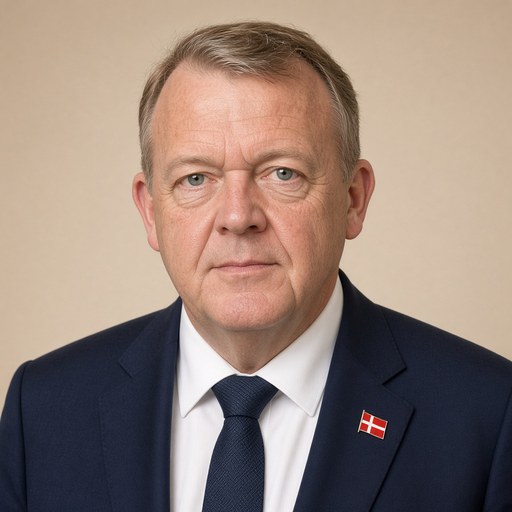
Prime Minister Lars Løkke Rasmussen's speech at the Trade Union Congress on April 8, 2019.
 Lars Løkke Rasmussen · Prime Minister of Denmark
- Context
- Rasmussen addressed the first Trade Union Congress (FH Labor Summit) in Denmark on April 8, 2019, speaking on labor relations and the Danish model.
- Main themes
- Danish labor model, social dumping, tripartite cooperation, foreign transport workers, collective agreements, minimum wage debate, early retirement, labor movement dialogue, Brexit and European populism, vocational education, adult continuing education, integration
- Duration
- ~17 min
- Words
- 2,044
- Sentences
- 197
- Readability
- 64
- Grade
- 6.4
- Syntax
- 2.33
- Vocabulary
- 2.11
Translated from Danish
The broad sphere of national life a sentence belongs to. Every sentence has an Arena, so it is the denominator the other indices are read against.
Other197 sentences in 122 paragraphs
Thank you for the invitation.
I am glad to stand here today.
At the first major Labor Summit – but not the last. I understand that it is to become a tradition. So I am already looking forward to next year...
For no one can be Prime Minister in Denmark without listening to and having a dialogue with the labor movement.
That has always been the case. That must always be the case. That will be the case.
FH gathers a total of 1.4 million members. That was a bold thought.
The labor movement has a strong team.
The government has a steadfast opponent and ally.
Thank you to Lizette and to Bente for that.
We may disagree on some things. But it is precisely when we disagree that cooperation must be put to the test and show its strength.
A special thank you to you, Lizette. You stepped in as chair of LO just a few months after I had become Prime Minister – again.
In the time that has passed, we have experienced quite a bit together. I also think we have achieved quite a lot together – a great deal.
I have great respect for the tasks and the responsibility you take on. And for the way you do it.
Sharp – perhaps also tough.
But always constructive. You aim for results.
Almost four years ago, we started from the common zero point that the tripartite institution was doomed. Dead. Buried.
We have revived it together. From dead to alive.
With three strong agreements. One on integration. One on better vocational education and more internships. One on adult and continuing education.
We have achieved results together.
* * *
We have done this within the framework of the Danish model, which many other countries rightly envy us.
Out in the world, we see increasing division.
People feel abandoned – by a development and changes that are running away from them. Brexit in the United Kingdom. The yellow vests in France.
That is not the case in Denmark. We are among the countries in Europe where the most people have faith in the future.
And I am not in the slightest doubt that our long-standing agreement model has a large part of the credit for that. Unlike other countries, we have a high level of organization in Denmark.
Therefore, we must take it seriously when the Danish model is challenged.
The Padborg case clearly showed what is at stake.
Filipino drivers who are offered miserable conditions and wages far below what we consider fair.
Danish employees whose conditions are undermined by social dumping.
That brings many things with it. It contributes to cracking the trust of Danes in foreign labor, which we cannot do without.
All of that worries me. It worries you.
That is also why I have wanted to raise a debate.
For me, it is a crucial premise that it must be an advantage to be covered by a collective agreement. Danish wages must be determined in negotiations between trade unions and employers.
That has been the case. That must be the case.
But when there are serious problems in certain areas – such as in the transport sector – we must look at things without prejudice and consider whether the government and lawmakers should have a stronger role in collaboration with the labor market parties.
That is why I have raised this debate, which has been somewhat clumsily translated to mean that now I think we should have a legally mandated minimum wage.
It has a broader perspective. And that is why I am pleased with the agreement that FH and DA reached last week.
An agreement that fundamentally expresses the same considerations.
An agreement that is a quite solid proposal to solve some of the most significant problems with underpaid foreign drivers.
An agreement that both thinks anew – and seeks to respect the Danish model.
For it proposes that when foreign transport companies must document that their drivers in Denmark receive a salary that corresponds to Danish conditions, the basis must be concrete agreements in the Danish labor market.
Now we must find the right balance regarding the collective agreements that should be included in that basis.
We would like to closely study the agreement, which I acknowledge. We will initiate preparatory legislative work. Where we involve the parties – involve you.
The goal is that the follow-up legislation can be presented in the fall.
Regardless of the election that is coming – soon. We must create results together.
We must ensure the balance between a Denmark that is open to the world – that is our foundation for life – and a Denmark where we never tolerate behavior that undermines the community.
* * *
It is the results that count.
One thing is golden promises. Something else is concrete results.
This also applies when we need to help those people who have become worn out and can no longer work.
They deserve to be able to retire earlier. That security and safety must be there.
And that is precisely why I become concerned when someone promises your members that they can have a right to retire three years earlier than others – on a very uncertain basis.
In the years leading up to the retirement age, there are about 40,000 people in the labor market per age group.
Out of them, you represent here in the room, that is, FH – a rough estimate – about 20,000.
For the amount that some are turning around, just under 3,000 can go from full-time work to retirement three years earlier.
Both within and outside FH’s area. If some are part-time, the number becomes a bit larger.
But in any case, it is only very few.
Many Danes believe that they are covered by the proposal that has been put forward. Many of your members believe it. But only a handful are.
Who are the lucky ones – and who will be disappointed?
The educators? The bricklayers? The metalworkers? The HK members?
I still do not know. But perhaps the answer will come in the wake of my speech...
There is no indication that a long time in work gives the greatest likelihood of wear and tear.
On the contrary.
Seniors with a long working life have, on average, better health than peers with a short working life.
This is simply because the arrangements we have – early retirement, flexible jobs, etc. – work. Many worn-out individuals work less or not at all.
Therefore, it is not entirely straightforward to construct a fair system with special rights for some groups – and not for others.
I find it hard to envision. And I do not think it is desirable to break with the universal welfare model and divide Danes into arbitrary A and B teams.
Danes deserve better. The worn-out deserve better.
There is a need to improve the arrangements we have. There is no doubt that we tightened the possibilities for early retirement for seniors too much when we entered into an agreement with the previous government in 2012.
One thing is golden promises. Something else is results that count.
* * *
That brings me to the agenda you have set for the summit today. Investments in the future.
My proposal – and the government’s priority – is that we must invest in jobs. Jobs on decent terms.
We must invest in people so they can hold the jobs.
We must invest in the common welfare that makes Denmark the land of opportunities.
First and foremost, jobs.
This government has improved the business conditions. With fewer burdens and more relief for companies.
With incentives to invest in new technology. With green investments. Promoting a shareholder environment.
Never before have so many been employed as right now. And more are constantly joining.
Since the election in 2015, 168,000 more private wage jobs have been created.
That corresponds to 128 new jobs being created every day.
That again corresponds to one extra job every 11 minutes around the clock. Right now, while I am giving my speech, one job is being added.
* * *
We must invest in jobs – and secondly, we must invest in people.
In Denmark, we have so far been good at educating and retraining as the demands in the labor market have changed. We have transformed sewing rooms into design studios. Shipyards into wind turbine factories.
The gains from economic growth have reached widely.
We must hold on to that.
We are underway.
All the work in the Disruption Council.
The tripartite agreement on adult and continuing education. A transition fund for unskilled and skilled workers.
Two bottleneck packages focusing on upskilling the unemployed.
The vocational education agreement, which aims to get more young people to apply for and complete vocational education.
The agreement on better pathways to education and jobs after primary school, so more young people move forward well in the education system. So we also include those who stumbled at the start. So they find their footing, straighten their backs, and move on well.
Everyone must be included in the future.
It requires common and long-term solutions like those I have mentioned.
* * *
We must invest in jobs. We must invest in people.
Without jobs, no prosperity. Without prosperity, no welfare.
That is my third point. We must invest in our common welfare.
The government and the Danish People’s Party have entered into an ambitious agreement, where we will invest 8.5 billion DKK in a Proximity Fund – money that will come on top of the increased operating grants that the healthcare system will need in the coming years.
We are addressing the challenge that over the next ten years, there is expected to be 230,000 more citizens over 75 years old. Twice as many with diabetes. Thousands with the lung disease COPD.
I want to say to all of you whose members work in hospitals and in municipal health.
I have great respect for the work of healthcare personnel. So do the Danes.
I want to give more space to professionalism. And I want to hire more doctors, more nurses, and more social and health assistants.
But we need to educate them first. It is pure logic, when there were 960 unsuccessful recruitments of nurses alone in the second half of 2018.
The government will increase the intake by 2,000 more nurses over the next three years compared to the last three years.
No finger snap can magically make the problems disappear. We must make well-considered decisions that draw lines into the future.
* * *
Investments in the future.
Fortunately, this is not a new agenda. It is a responsibility that each generation must take on. With the insight that we stand on the shoulders of those who took on the responsibility before us.
Last week, I attended a 90th birthday celebration – the birthday person was Poul Schlüter.
Poul was one of my youth idols. Perhaps some of you had other idols.
All the more reason today to mention that an absolute highlight of Poul Schlüter’s time as Prime Minister is the tripartite agreement that was reached in 1987.
Back then, the chair of LO was Finn Thorgrimson. He championed the principle of working for the members, regardless of the color of the government.
Together, Schlüter and Thorgrimson laid the foundation for broad groups in society to start saving for occupational pensions.
Bold decisions. Sustainable decisions. Joint decisions.
That millions of Danes benefit from today.
That Danish business and all of us can rejoice over. For here is significant investment power.
I want to acknowledge the proposal today to create more investment power. And say it completely openly and honestly: I am reserved about the idea of creating an entirely new structure. We have a Growth Fund. But it may well need a bit more vitamins.
So I want to acknowledge your input to build on the traditions that were there before we arrived. That were put on pause for four years, during which the tripartite institution was declared dead and buried, but which has now been revived.
It is the results that count.
Thank you for the word. Have a great summit!
The original Danish. The tags above are read on the English translation's sentences.
Tak for invitationen.
Jeg er glad for at stå her i dag.
Til det første store Lønmodtagernes Topmøde – men ikke det sidste. Jeg forstår, at det skal være en tradition. Så jeg glæder mig allerede til næste år...
For ingen kan være statsminister i Danmark uden at lytte til og have en dialog med fagbevægelsen.
Sådan har det altid været. Sådan skal det altid være. Sådan vil det være.
FH samler i alt 1,4 millioner medlemmer. Det var modigt tænkt.
Fagbevægelsen har fået et stærkt hold.
Regeringen har fået en fast modspiller og medspiller.
Tak til Lizette og til Bente for det.
Nok er vi uenige om – nogle ting. Men det er netop, når man er uenige, at samarbejdet skal stå sin prøve og vise sin styrke.
En særlig tak til dig, Lizette. Du trådte til som formand for LO få måneder efter, at jeg selv var blevet statsminister – igen.
I den tid, der er gået, har vi oplevet en del sammen. Jeg synes også, vi har opnået en del sammen – en hel del.
Jeg har stor respekt for de opgaver og det ansvar, du tager på dig. Og for den måde, du gør det på.
Skarp – måske også skrap.
Men altid konstruktiv. Du går efter resultater.
For snart fire år siden lagde vi ud fra det fælles nulpunkt, at trepartsinstitutionen var dømt ude. Død. Begravet.
Vi har genoplivet den sammen. Fra død til spillevende.
Med tre stærke aftaler. Én om integration. Én om bedre erhvervsuddannelser og flere praktikpladser. Én om voksen- og efteruddannelse.
Vi har opnået resultater sammen.
* * *
Det har vi gjort inden for rammerne af den danske model, som mange andre lande med rette missunder os.
Ude i verden ser vi en stigende splittelse.
Mennesker føler sig ladt i stikken – af en udvikling og forandringer, der stikker af fra dem. Brexit i Storbritannien. De gule veste i Frankrig.
Sådan er det ikke i Danmark. Vi er blandt de lande i Europa, hvor flest har tiltro til fremtiden.
Og jeg er ikke et sekund i tvivl om, at vores mangeårige aftalemodel har en stor del af æren for det. I modsætning til andre lande har vi en høj organisationsgrad i Danmark.
Derfor skal vi tage det alvorligt, når den danske model udfordres.
Padborgsagen viste med al tydelighed, hvad der er på spil.
Filippinske chaufører, der bliver budt usle forhold og lønninger langt under det, vi betragter som fair.
Danske medarbejdere, hvis vilkår bliver undergravet af social dumping.
Det trækker mange ting med sig. Det er med til at slå sprækker i danskernes tillid til den udenlandske arbejdskraft, som vi ikke kan klare os uden.
Alt det bekymrer mig. Det bekymrer jer.
Det er også derfor, jeg har ønsket at rejse en debat.
For mig er det en afgørende præmis, at det skal være en fordel at være omfattet af en overenskomst. Danskernes løn skal fastlægges i forhandlinger mellem fagforeninger og arbejdsgivere.
Sådan har det været. Sådan skal det være.
Men når der er alvorlige problemer på visse områder – som for eksempel på transportområdet – er vi er nødt til at se fordomsfrit på tingene og overveje, om regering og lovgivere skal have en stærkere rolle i samspil med arbejdsmarkedets parter.
Derfor har jeg rejst denne debat, som så er blevet oversat lidt firkantet til, at nu synes jeg, vi skal have en lovbestemt mindsteløn.
Det har et videre perspektiv. Og derfor glæder mig over den aftale, som FH og DA indgik i sidste uge.
En aftale, som grundlæggende er udtryk for de samme overvejelser.
En aftale, som er et ganske solidt bud på at løse nogle af de væsentligste problemer med underbetalte udenlandske chauffører.
En aftale, som både tænker nyt – og søger at respektere den danske model.
For den lægger op til, at når udenlandske transportfirmaer skal dokumentere, at deres chauffører i Danmark får en løn, der svarer til danske vilkår, så skal grundlaget være konkrete aftaler på det danske arbejdsmarked.
Nu skal vi finde den rette balance i forhold til de overenskomster, der skal indgå i det grundlag.
Vi vil gerne nærstudere aftalen, som jeg kvitterer for. Vi vil sætte et lovforberedende arbejde i gang. Hvor vi inddrager parterne – inddrager jer.
Målet er, at den opfølgende lovgivning kan fremsættes til efteråret.
Uanset det valg, som kommer – snart. Så skal vi skabe resultater sammen.
Vi skal sikre balancen mellem et Danmark, der er åbent mod verden – det er vores livsgrundlag – og et Danmark, hvor vi aldrig tolerer en adfærd, der undergraver fællesskabet.
* * *
Det er resultaterne, der tæller.
Ét er gyldne løfter. Noget andet er konkrete resultater.
Det gælder også, når vi skal hjælpe de mennesker, der er blevet nedslidte og ikke længere kan arbejde.
De fortjener at kunne trække sig tidligere tilbage. Den tryghed og sikkerhed skal der være.
Og netop derfor bliver jeg bekymret, når nogen lover jeres medlemmer, at de kan få en ret til at komme på pension tre år før andre – på et meget usikkert grundlag.
I årene op til folkepensionsalderen er der omkring 40.000 personer på arbejdsmarkedet per årgang.
Ud af dem repræsenterer I her i salen, altså FH – et slag på tasken – omkring 20.000.
For det beløb, som nogen turnerer med, kan i underkanten af 3.000 gå fra fuldtidsarbejde til pension tre år tidligere.
Både indenfor og udenfor FH’s område. Hvis nogle er på deltid, bliver tallet lidt større.
Men det er under alle omstændigheder kun ganske få.
Rigtig mange danskere tror, at de er omfattet af det forslag, som er lagt frem. Mange af jeres medlemmer tror det. Men kun et fåtal er det.
Hvem er de heldige – og hvem bliver de skuffede?
Pædagogerne? Murerne? Metalarbejderne? HK’erne?
Jeg ved det fortsat ikke. Men det kan jo være, at svaret kommer i forlængelse af mit indlæg...
Der er ikke noget, der tyder på, at lang tid i arbejde giver størst sandsynlighed for nedslidning.
Tværtimod.
Seniorer med et langt arbejdsliv har i gennemsnit et bedre helbred end jævnaldrende med et kort arbejdsliv.
Det skyldes simpelthen, at de ordninger, vi har – førtidspension, fleksjob mv. – virker. Mange nedslidte arbejder mindre eller slet ikke.
Derfor er det ikke helt enkelt at skrue et retfærdigt system sammen med særlige rettigheder for nogle grupper – og ikke for andre.
Jeg har svært ved at se det for mig. Og synes ikke, det er ønskværdigt at bryde med den universelle velfærdsmodel og dele danskerne op i tilfældige A- og B-hold.
Danskerne fortjener bedre. De nedslidte fortjener bedre.
Der er brug for at forbedre de ordninger, vi har. Der er ingen tvivl om, at vi fik strammet mulighederne for at gå på førtidspension som senior for meget, da vi indgik en aftale sammen med den tidligere regering i 2012.
Ét er gyldne løfter. Noget andet er resultater, der tæller.
* * *
Det bringer mig videre til den dagsorden, I har sat for topmødet i dag. Investeringer i fremtiden.
Mit bud – og regeringens prioritering – er, at vi skal investere i arbejdspladser. Job på ordentlige vilkår.
Vi skal investere i mennesker, så de kan bestride jobbene.
Vi skal investere i den fælles velfærd, der gør Danmark til mulighedernes land.
For det første arbejdspladser.
Denne regering har forbedret erhvervsvilkårene. Med færre byrder og flere lettelser til virksomhederne.
Med tilskyndelser til at investere i ny teknologi. Med grønne investeringer. Fremme af et aktionærmiljø.
Aldrig før har så mange været i arbejde som lige nu. Og der kommer hele tiden flere til.
Siden valget i 2015 er der skabt 168.000 flere private lønmodtagerjob
Det svarer til, at der hver dag er skabt 128 nye job.
Det svarer igen til ét ekstra job hvert 11. minut døgnet rundt. Lige nu, mens jeg holder min tale kommer der ét job til.
* * *
Vi skal investere i arbejdspladser – og for det andet skal vi investere i mennesker.
I Danmark har vi hidtil været gode til at uddanne og omskole i takt med, at kravene på arbejdsmarkedet har ændret sig. Vi har forvandlet systuer til design. Skibsværfter til vindmøllefabrikker.
Gevinsterne af økonomisk vækst er nået bredt ud.
Det skal vi holde fast i.
Vi er i gang.
Hele arbejdet i Disruptionrådet.
Trepartsaftalen om voksen- og efteruddannelse. En omstillingsfond til ufaglærte og faglærte.
To flaskehalspakker med fokus på at opkvalificere ledige.
Erhvervsuddannelsesaftalen, der skal få flere unge til at søge og gennemføre en erhvervsuddannelse.
Aftalen om bedre veje til uddannelse og job efter grundskolen, så flere unge kommer godt videre i uddannelsessystemet. Så vi også får dem med, der snublede ved start. Så de får fodfæste, ranker ryggen og kommer godt videre.
Alle skal med ind i fremtiden.
Det kræver fælles og langsigtede løsninger som dem, jeg har nævnt.
* * *
Vi skal investere i arbejdspladser. Vi skal investere i mennesker.
Uden job, ingen velstand. Uden velstand, ingen velfærd.
Det er mit tredje punkt. Vi skal investere i vores fælles velfærd.
Regeringen og Dansk Folkeparti har indgået en ambitiøs aftale, hvor vi vil investere 8,5 mia. kr. i en Nærhedsfond – penge, som kommer oveni de øgede driftsbevillinger, som sundhedsvæsenet får brug for de kommende år.
Vi tager hånd om den udfordring, at der alene over de næste godt 10 år forventes at være 230.000 flere borgere over 75 år. Dobbelt så mange med diabetes. Tusinder med lungesygdommen KOL.
Jeg vil sige til alle jer, hvis medlemmer arbejder på sygehusene og i den kommunale sundhed.
Jeg har stor respekt for sundhedspersonalets arbejde. Det har danskerne også.
Jeg vil give mere plads til fagligheden. Og jeg vil ansætte flere læger, flere sygeplejesker og flere sosu-assistenter.
Men vi er nødt til at uddanne dem først. Det er ren logik, når der alene i andet halvår 2018 var 960 forgæves rekrutteringer af sygeplejesker.
Regeringen vil øge optaget med 2.000 flere sygeplejersker over de næste tre år i forhold til de seneste tre år.
Intet fingerknips kan trylle problemerne væk. Vi skal træffe gennemtænkte beslutninger, der trækker spor ind i fremtiden.
* * *
Investeringer i fremtiden.
Det er jo lykkeligvis ikke nogen ny dagsorden. Det er et ansvar, hver generation må tage på sig. Med den indsigt, at vi står på skuldrene af dem, der påtog sig ansvaret før os.
I sidste uge var jeg til 90 års fødselsdag – fødselaren hed Poul Schlüter.
Poul var et af min ungdoms idoler. Måske havde en del af jer andre idoler.
Så meget desto mere grund til i dag at nævne, at et absolut højdepunkt i Poul Schlüters tid som statsminister er den trepartsaftale, som blev indgået i 1987.
Dengang hed LO-formanden Finn Thorgrimson. Han hyldede det princip at arbejde for medlemmerne, uanset regeringens farve.
Sammen lagde Schlüter og Thorgrimson grunden til, at brede grupper i samfundet begyndte at spare op til arbejdsmarkedspension.
Modige beslutninger. Holdbare beslutninger. Fælles beslutninger.
Som millioner af danskere har glæde af i dag.
Som dansk erhvervsliv og vi alle sammen kan glæde os over. For her er en betydelig investeringskraft.
Jeg vil kvittere for forslaget i dag om at skabe mere investeringskraft. Og sige det helt åbent og ærligt: Jeg er reserveret over for idéen om at lave en helt ny struktur. Vi har en Vækstfond. Men den kan muligvis godt trænge til lidt flere vitaminer.
Så jeg vil kvittere for jeres indspil til at bygge videre på de traditioner, som var der, før vi kom til. Som var sat på pause i fire år, hvor trepartsinstitutionen blev erklæret død og begravet, men som nu er genoplivet.
Det er resultaterne, der tæller.
Tak for ordet. Godt topmøde!