




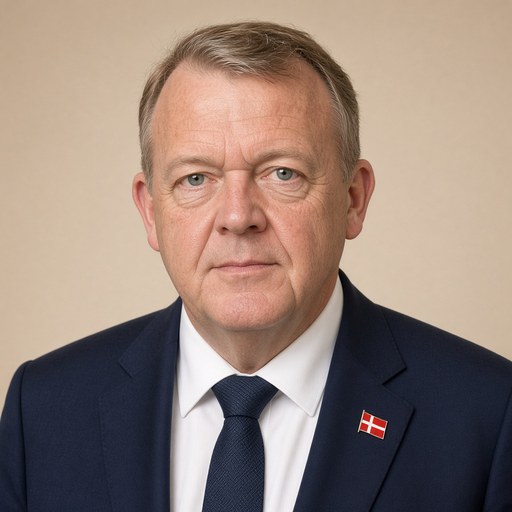
Prime Minister Lars Løkke Rasmussen's speech at the Sports Summit on April 3, 2019.
 Lars Løkke Rasmussen · Prime Minister of Denmark
- Context
- Rasmussen addressed the Sports Summit at DGI-byen on April 3, 2019, outlining government initiatives to boost Danish sports participation and associational life.
- Main themes
- Sports culture and community, voluntary associations, physical activity participation, social inclusion, welfare society, government sports policy, e-sports strategy, vulnerable groups, volunteers, school-sports collaboration, Danish associational life
- Duration
- ~8 min
- Words
- 988
- Sentences
- 93
- Readability
- 59
- Grade
- 7.6
- Syntax
- 2.51
- Vocabulary
- 2.06
Translated from Danish
The broad sphere of national life a sentence belongs to. Every sentence has an Arena, so it is the denominator the other indices are read against.
Other93 sentences in 49 paragraphs
Your Royal Highness.
Esteemed guests.
Welcome to the summit here in DGI-byen.
A place I personally appreciate. My local swimming pool.
Today, however, we are not here to swim – but to elevate some of what makes Denmark strong.
Our sports culture – and sports communities. The freedom to express oneself, to be oneself, and to challenge oneself – alone and together with others.
It is healthy – in every way. Both for the individual. But also for a society.
Our voluntary communities not only help to strengthen health. They also create a sense of togetherness, a community, and an inclusiveness that many of us have learned from a young age. And that most carry on into adulthood.
That is how I feel myself.
I was not particularly good at football. I was typically substituted in as a right back. Back then, I think only the position of left back was worse.
I also tried my hand at badminton. That went a bit better. There, you couldn’t be substituted out.
For me, it was the scouting life that made a difference. You can hardly call that a sport. At least, that’s not how I perceived it.
But it encompassed the same core values.
Community, freedom, cooperation. Whether it was huts that needed to be built or badges that needed to be earned.
The experience that no one can do everything – but everyone can do something.
I have carried that mindset with me for the rest of my life. As a compass in life. I believe many feel the same way.
And even though it cannot be directly inserted into an Excel sheet – or into conventional economic models. I am completely convinced that it is also a cornerstone of the welfare society that Denmark has become.
The sense of the whole. The responsibility for others. The will to stick together.
That is why the government supports DIF's and DGI's vision 25, 50, 75.
To such an extent that we have incorporated it directly into the government’s platform:
The vision that by 2025, 50 percent of Danes should be members of a sports club, and 75 percent of the population should be physically active.
It is a great ambition. That we will not reach without further effort.
For even though we have a strong association life here at home. And a high level of sports participation. Which has only increased since the mid-60s.
There are signs that the curve has flattened out. That sports participation has stagnated. And that overall participation in sports clubs is also stagnating.
That is unhealthy – in several ways.
That is why the government has been working purposefully since the election to both strengthen sports participation and the association life. For although the two often go hand in hand, it is not a necessity.
We have changed the distribution of lottery funds so that the association life is better supported.
We have strengthened efforts for vulnerable groups and people with special needs – vulnerable children and young people, people with disabilities, socially disadvantaged individuals, and others – who particularly need a community.
We have provided more physical space for clubs, associations, and institutions by modernizing the planning law.
We have given volunteers better conditions. For example, by giving people on unemployment benefits even more opportunities to contribute to the local association. Without being deducted from their benefits.
Among other things, at the urging of many of you.
We have supported DIF's Get2sport. Which works to ensure that more people in disadvantaged neighborhoods – typically with non-Western backgrounds – become part of the association life. Gain trust in society. Embrace it.
A new strategy for civil society. More initiatives in daycare facilities. More movement in primary schools and in youth education.
The list of initiatives is long. But we are not there yet. We must move forward – and we must move forward together.
Since we last met at Marienborg – at the first summit in 2017 – three working groups, with many different participants, have developed concrete recommendations on how we can move forward.
This has resulted in four very concrete initiatives.
First – an inclusion initiative. Which aims to strengthen the inclusion of socially disadvantaged groups in sports communities. So that we can get everyone on board.
Second – a prescription initiative. Where we, together with several of you, will look at how disadvantaged citizens can more often receive sports activities and communities on prescription. To strengthen health and enhance job opportunities for those who are unemployed.
Third, a national strategy for e-sports. Where we will work together to create even better conditions for that part of the large community.
And fourth, a school network. Where we will collect good examples of collaboration between primary schools and sports associations – so that local ideas can gain both greater altitude and distance.
I hope that the new initiatives will contribute to elevating the community, the associations, and sports participation.
And I hope that today’s summit will provide further inspiration and wind in the sails to work with our common vision: 25-50-75.
We will only reach our goals with collective help.
This applies in most areas – but perhaps especially here.
That is why I am very pleased that the vast majority of initiatives, plans, and efforts have been created – and are being created – in close, constructive, and trusting dialogue with DIF, DGI, and a number of other actors in municipalities, regions, foundations, and associations. No government can do this alone.
You show that cooperation does not only belong on the field or in the local association. But also when it comes to the country’s sports policy.
You bring the understanding of the whole to the meeting table.
And you make an invaluable effort to ensure that all of Denmark is better connected. Gets up from the sofa. And moves for life.
Thank you very much for that. Have a great summit.
The original Danish. The tags above are read on the English translation's sentences.
Deres kongelige højhed.
Ærede gæster.
Velkommen til topmøde her i DGI-byen.
Et sted, jeg personligt sætter pris på. Min lokale svømmehal.
I dag er vi her dog ikke for at svømme – men for at løfte noget af det, som gør Danmark stærk.
Vores idrætskultur – og idrætsfællesskaber. Friheden til at udfolde sig, være sig selv og prøve sig selv af – alene og sammen med andre.
Det er sundt – på alle måder. Både for den enkelte. Men også for et samfund.
Vores frivillige fællesskaber er ikke kun med til at styrke sundheden. Den skaber også et sammenhold, et fællesskab og en rummelighed, som mange af os har lært lige fra barns ben. Og som de fleste bærer videre, som voksne.
Sådan har jeg det selv.
Jeg var ikke den store ørn til fodbold. Blev typisk skiftet ind som højre back. Dengang var det vist kun pladsen som venstre back, der var værre.
Jeg forsøgte mig også med fjerbolden. Det gik lidt bedre. Der kunne man jo ikke blive skiftet ud.
For mig var det spejderlivet, som gjorde en forskel. Det kan man vel dårligt kalde en sport. Sådan opfattede jeg det i hvert fald ikke.
Men det rummede de samme bærende værdier.
Fællesskabet, friheden, samarbejdet. Om det var hytter, der skulle bygges eller mærker, der skulle tages.
Oplevelsen af, at ingen kan alt – men alle kan noget.
Den indstilling har jeg taget med mig resten af tilværelsen. Som et kompas i livet. Sådan tror jeg, at mange har det.
Og selvom det ikke kan sættes direkte ind i et excelark – eller i gængse økonomiske modeller. Så er jeg helt overbevist om, at det også er en grundpille for det velfærdssamfund, som Danmark er blevet.
Fornemmelsen for helheden. Ansvaret for andre. Viljen til at holde sammen.
Derfor bakker regeringen op om DIFs og DGIs vision 25, 50, 75.
I en sådan grad, at vi har løftet den helt ind i regeringsgrundlaget:
Visionen om at i 2025 skal 50 pct. af danskerne være medlem af en idrætsforening, og 75 pct. af befolkningen være idrætsaktive.
Det er en stor ambition. Som vi ikke når uden videre.
For selvom vi herhjemme har et stærkt foreningsliv. Og en høj idrætsdeltagelse. Som kun er steget siden midten af 60’erne.
Så tyder noget på, at kurven er fladet ud. At idrætsdeltagelsen er stagneret. Og at den samlede deltagelse i idrætsforeninger også stagnerer.
Det er usundt – på flere måder.
Derfor har regeringen siden valget arbejdet målrettet for både at styrke idrætsdeltagelsen og foreningslivet. For selvom de to ofte kommer i par, så er det jo ikke en nødvendighed.
Vi har ændret fordelingen af udlodningsmidler, så foreningslivet bliver bedre tilgodeset.
Vi har styrket indsatsen for sårbare grupper og mennesker med særlige behov – sårbare børn og unge, personer med handicaps, socialt udsatte og andre – som i særlig høj grad har brug for et fællesskab.
Vi har givet mere fysisk plads til klubber, foreninger og institutioner ved at modernisere planloven.
Vi har givet frivillige bedre vilkår. For eksempel ved at give folk på dagpenge endnu flere muligheder for at bidrage i den lokale forening. Uden at blive trukket i ydelse.
Blandt andet på opfordring fra mange er jer.
Vi har støttet DIFs Get2sport. Som arbejder for at flere mennesker i udsatte boligområder – typisk med ikke-vestlig herkomst – bliver en del af foreningslivet. Får tillid til samfundet. Tager det til sig.
En ny strategi for civilsamfundet. Flere indsatser i dagtilbud. Mere bevægelse i folkeskolen og på ungdomsuddannelserne.
Listen over indsatser er lang. Men vi er ikke i mål. Vi skal videre – og vi skal videre i fællesskab.
Siden sidst vi mødtes på Marienborg – til det første topmøde i 2017 – har tre arbejdsgrupper, med mange forskellige deltagere, udarbejdet konkrete anbefalinger til, hvordan vi kommer videre.
Det er der nu kommet fire helt konkrete initiativer ud af.
For det første – et inklusionsinitiativ. Som skal styrke inklusionen af socialt udsatte grupper i idrætsfællesskaber. Så vi får alle med ombord.
For det andet – et recept-initiativ. Hvor vi sammen med flere af jer vil se på, hvordan udsatte borgere i højere grad kan få idrætsaktiviteter og fællesskaber på recept. For at styrke sundheden og styrke jobmulighederne, hvis man er ledig.
For det tredje en national strategi for e-sport. Hvor vi sammen skal skabe endnu bedre rammer for dén del af det store fællesskab.
Og for det fjerde et skolenetværk. Hvor vi vil indsamle gode eksempler på samarbejde mellem grundskoler og idrætsforeninger – så de lokale ideer både kan få større flyvehøjde og flyvelængde.
Jeg håber, at de nye initiativer vil bidrage til at løfte fællesskabet, foreningerne og idrætsdeltagelsen.
Og jeg håber, at dagens topmøde vil give yderligere inspiration og vind i sejlene til at arbejde med vores fælles vision: 25-50-75.
Vi kommer kun i mål ved fælles hjælp.
Det gælder på de fleste områder – men det gælder måske i særlig grad her.
Derfor glæder det mig rigtig meget, at langt de fleste initiativer, planer og indsatser er blevet til – og bliver til – i tæt, konstruktiv og tillidsfuld dialog med DIF, DGI og en række andre aktører i kommuner, regioner, fonde og foreninger. Det kan ingen regering gøre alene.
I viser at samarbejde ikke kun hører til på banen eller i den lokale forening. Men også når det gælder landets idrætspolitik.
I bærer forståelsen for helheden med ind ved mødebordet.
Og I gør en uvurderlig indsat for, at hele Danmark hænger bedre sammen. Kommer op af sofaen. Og bevæger sig for livet.
Tusind tak for det. Rigtig godt topmøde.