




Agriculture as the Foundation, Industry as the Leading Factor
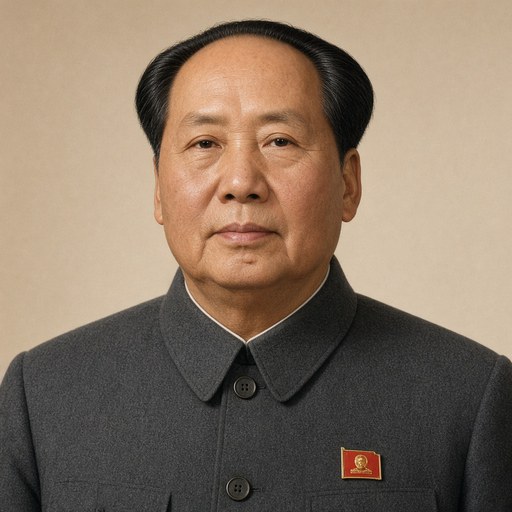
 Mao Zedong · Chairman of the Central Committee of the Communist Party of China
- Context
- Mao addressed Party colleagues in three talks on June 6, 8 and 16, 1964, on economic planning, third front construction, opposing revisionism and training revolutionary successors; the venues and audiences are not given.
- Main themes
- Agriculture as the foundation and industry as the leading factor, reform of the Soviet-style planning method, quality and variety over quantity in steel output, strategic rear area and third front construction, local Party committees and militia work, opposition to Khrushchev revisionism, training proletarian revolutionary successors, five requirements for successors, unity of the majority of cadres and people, democratic work style and self-criticism, reform of literature, art and education
- Duration
- ~21 min
- Words
- 2,473
- Sentences
- 183
- Readability
- 61
- Grade
- 8.1
- Syntax
- 2.65
- Vocabulary
- 2.12
Translated from Chinese Source: GitHub qinglee/maoxuan (毛泽东选集) ↗
The broad sphere of national life a sentence belongs to. Every sentence has an Arena, so it is the denominator the other indices are read against.
Other183 sentences in 48 paragraphs
June 6, 1964
I. Agriculture as the Foundation, Industry as the Leading Factor
Our method of drawing up plans was, in the past, basically learned from the Soviet Union, and it was fairly easy to do: first fix how much steel, then on that basis calculate how much coal, how much electricity, how much transport capacity, and so on; on the basis of these, calculate how much to increase the urban population and how much in living welfare. It is the method of cranking a calculating machine. As soon as steel output falls, everything else is cut back across the board. This method does not fit reality; it does not work. Calculating this way, you cannot plan in the Old Man in Heaven. When a natural disaster comes, he simply won't give you that much grain, the urban population cannot increase that much, and everything else comes to nothing. War, too, cannot be planned in. We are not the American chief of staff; we don't know when he wants to fight. And then there are revolutions in various countries, which are also hard to plan in. When the people's revolution in some country succeeds, they will need our economic aid. How could this be foreseen?
The method of planning must be changed. This is a revolution. After we learned the Soviet method, it became a force of habit, and it seems very hard to change.
In these past few years we have groped our way to some methods. Our policy is: agriculture as the foundation, industry as the leading factor. In accordance with this policy, when drawing up a plan, first look at how much grain can be produced, then look at how much chemical fertilizer, pesticide, machinery, and steel are needed.
How do we plan for the harvest? Over five years, set it at one good year, two average years, and two poor years. This is more practical and reliable. First establish how much industry can be undertaken on the basis of the grain, cotton, and other cash crops that can be produced under these conditions. If the harvests turn out better, so much the better.
We must also take war into consideration. There must be strategic dispositions. Party committees everywhere must not take charge only of civil matters and not military ones, only of money and not of guns. As long as imperialism exists, there is the danger of war. We must build a strategic rear area. It's not that the coastal areas are no longer wanted; they too must be well arranged, so that they play their role in supporting the construction of new bases.
Two fists and one backside. Basic industry is one fist, national defense is the other fist. For the fists to have strength, the backside must be firmly seated, and the backside is agriculture.
In basic industry, the main problems to solve now are variety and quality. Last year, although the quantity of steel was less than before, the varieties were more numerous than before, the quality was better than before, and its usefulness was even greater than before. The key is not quantity. The Soviet Union takes quantity as the standard; if the quantitative target for steel isn't met, it is as if the whole of socialist construction has failed. Every year they raise their output targets, and every year they engage in exaggeration. In fact, if a quantitative plan isn't fulfilled, the state won't collapse. With a certain quantity, more varieties and better quality, the foundation will be all the more solid.
Agriculture must rely mainly on the Dazhai spirit, on self-reliance. This does not mean that we can do without industrial support. Water conservancy, chemical fertilizers, and pesticides all require basic industry.
Plans must be arranged in accordance with the objective proportional relationships we have grasped.
Planning cannot rely only on addition, subtraction, multiplication, and division. Once the figures are calculated, the various departments and regions divide up the numbers, scramble for people, scramble for money, and go to litigation. Politics must be in command, there must be an overall point of view; plans must be arranged not according to the wishes of a particular region itself, but according to objective reality and the laws inherent in things themselves.
Don't keep scrambling for money; once you've got the money, you spend it recklessly.
We should strive, within a few years, to stop importing grain, and use the foreign exchange saved to buy more technical equipment and technical materials.
Money must not be spent recklessly. Don't, on seeing the situation improve, again casually "go all out." "Leave some leeway": how many times was this said in the past, and it wasn't acted upon. These past two years it has been acted upon. Don't stop acting on it again once the situation is good.
Most office personnel can manage half work, half labor. This method deserves to be promoted. Laziness is one of the roots from which revisionism emerges.
Why has the world of literature and art set up so many associations and parked them in Beijing? They have nothing to do, or they do all sorts of messy things. At art festivals, the army's comes first, the localities' second, and Beijing's (the Center's) is the worst. This association, that association: this whole set-up was also carried over from the Soviet Union. The central literary and art organizations are still ruled by foreigners and dead people. They must go deep into life. If we keep on with dead people and foreigners, our country will perish. They must serve the workers and the poor and lower-middle peasants. Sport, too, should be of benefit to the revolutionary struggle and to construction.
Among ordinary cadres, there are many "three-door" cadres (out the door of the family home, in the door of the school, in the door of the government office). The "three doors" cannot train cadres well. If in the future the state relies on cadres like these to run it, that will be dangerous. Relying on "primary-school-door, middle-school-door, university-door" cadres won't do either. Not reading books won't do, but reading too many books won't do either. Ability cannot come from book-reading alone; it must come from practice. Our country must be run mainly by cadres who read books in the course of practice.
Every province must develop military industry. Money must be squeezed out of industry, agriculture, and culture and education. Don't run so many regular schools. At Tsinghua there are over ten thousand students and over forty thousand staff and family members. That way, the energies of the leadership will be greatly wasted.
June 8, 1964
II. Guard Against and Oppose Revisionism, Carry Out Third Front Construction
At the start we were not prepared for Khrushchev to turn traitor. There are now two kinds of Communist Party in the world. One is genuine, the other is fake. The October Revolution: we know that revisionism emerging in the Soviet Union is of great significance. Revisionism emerging in Yugoslavia is not so important; the Soviet Union had been at it for over forty years, led by Lenin. Yugoslavia was accidental; the Soviet Union is no longer accidental.
We have already had cases: the Baiyin Plant, Xiaozhan. In the past we didn't pay attention to the roots higher up.
Pass this on, pass it down to the counties: what if a Khrushchev appears? What if a revisionist Central Committee appears in China? The county Party committees must stand up against a revisionist Central Committee.
Set up the first, second, and third fronts, prepared for them to be smashed to pieces once war breaks out.
There must be a third front; we must build up the rear area in the Southwest, and do it faster, but not carelessly. There is only so much money, so don't spread things out so widely. Laying railways from both ends at once is faster.
June 16, 1964
III. Do Not Fear Imperialism; Train Proletarian Revolutionary Successors
I'll speak on two questions: one is local Party committees taking charge of military matters; the second is that we must work on successors.
(1)
Local Party committees must handle military matters; just watching demonstrations won't do. The militia must be put in good order. It must be put in order organizationally, politically, and militarily. Putting it in order organizationally means: how many core militia and ordinary militia are there? Fix this organizationally, with fighters, and squad, platoon, company, battalion, regiment, and division commanders, and make them truly function. Political work personnel must also be organized, so that the moment something happens, they pick up their guns and go. Some say that after three months in the militia, people's spirit and outlook is completely different. The militia must be organized, with soldiers and officers, and this must be put into effect. In many places now it has not been put into effect. Political work must be done, work on people. To put things into effect politically, there must be political bodies, with political commissars, political instructors, and political directors. Political work is work on people. Good people and bad people in the militia must be distinguished, and the bad people cleared out.
Whatever big thing happens, don't panic. If an atom bomb falls, fight him. "Since ancient times all have died; without trust, people cannot stand." If everything is blown up by atom bombs, the imperialists won't go along with that either; they'd have no one left to exploit.
We must educate the people not to panic. Dying standing up or dying lying down is all the same.
Don't fear imperialism. Fearing it does no good either; the more you fear, the less strength you have. Be prepared, don't fear, and you will have strength.
(2)
We must prepare for what comes after us: the question of successors. The imperialists say that with our first generation there's no problem, the second generation won't change either, but with the third and fourth generations there is hope. Can this hope of the imperialists be realized? Will what the imperialists say come true? We hope it won't come true, but it may come true. In the Soviet Union it was precisely in the third generation that Soviet Khrushchev revisionism emerged. We may also produce revisionism. How do we prevent revisionism? How do we train proletarian revolutionary successors? As I see it, there are five points:
The first point: cadres must be educated to understand some Marxism-Leninism; the more they understand, the better. That is to say, we must practice Marxism-Leninism, not revisionism.
The second point: we must work for the interests of the great majority of the people, for the interests of the great majority of the Chinese people, for the interests of the great majority of the people of the world, not for a minority, not for the exploiting classes, not for the bourgeoisie, not for the landlords, rich peasants, counter-revolutionaries, bad elements, and rightists.
Without this point, one cannot be a branch secretary, still less a member of the Central Committee. Khrushchev works for the interests of a minority; we work for the interests of the majority.
The third point: one must be able to unite the majority of people. Uniting the majority of people includes those who previously opposed oneself and were wrong to do so, no matter which mountain-stronghold faction they belong to. Don't bear grudges; there must be no "each emperor with his own court officials." Our experience proves that without the correct policy of unity of the Seventh Congress, our revolution could not have triumphed.
We must be watchful of people who engage in plots and intrigues; at the Center, for example, there were Gao, Rao, Peng, Huang, and others. Everything divides into two. Some people are simply bent on plotting; if they want to do it, what can you do? There are still people who want to do it now! People who engage in plots exist objectively; it's not a matter of whether we like it or not.
All things are a unity of opposites. Of the five fingers, four point one way and the thumb the other; only thus can they close together into a grip.
Complete purity does not exist; many people have not thought this principle through. Only because it is impure is nature nature and society society. Complete purity would not be nature, would not be society; it does not accord with the laws of dialectics. Impurity is absolute, purity is relative; this is the unity of opposites. Sweep the floor, sweep from morning to night for twenty-four hours, and there is still dust. Look: in our Party's history, was there any year when it was pure? Yet that did not bring us down. Whether imperialism or the revisionism that popped up within our Party, none of it has brought us down. After Liberation there were Gao Gang, Rao Shushi, and Peng Dehuai; did they bring us down? No. Bringing us down is not easy; this is historical experience.
People can change. A small number can't change; after eating they curse people. Every province has a few of them, a tiny minority. If they don't change, that's all right too; let them go on cursing. As for those who make mistakes, we must urge them to mend their ways. We must help them correct themselves. As long as they have seriously corrected themselves, don't keep criticizing them endlessly.
We must unite the broad masses, unite the broad ranks of cadres, unite these two ninety-five percents.
The fourth point: when there are matters to deal with, consult with your comrades, deliberate fully, listen to all kinds of opinions; opposing opinions should also be allowed to be voiced. Practice democracy; don't have "a hall where only one voice is heard," speaking for hours yourself as soon as a meeting opens and not letting others speak. Don't approve at a meeting and then reverse the verdict after it, saying you don't approve. Communists must have a democratic style of work, not a patriarchal style.
The fifth point: when you have made a mistake, make self-criticism. A commander directing battles who fights three, wins two and loses one, can stay on. In making decisions, if you're right more often and wrong a bit less, that's fine. Don't always think you are right, as if all truth were in your hands. Don't always think that only you are capable and others are no good at anything, as if without you the world would stop turning. Nature and human society both advance according to their own laws. The great figures of the proletariat, like Marx, Engels, Lenin, and Stalin: haven't they all passed away? The world revolution is still advancing.
But the question of successors still has to be arranged. Successors must be properly prepared. Proletarian revolutionary successors always grow up amid great winds and waves.
The original Chinese. The tags above are read on the English translation's sentences.
一九六四年六月六日
一、以农业为基础,以工业为主导
制定计划的方法,过去基本上是学苏联的,比较容易做:先定下来多少钢,然后根据这来计算要多少煤,多少电,多少运输力量,等等;根据这些再计算增加多少城市人口、多少生活福利,是摇计算机的办法。钢的产量一变少,别的一律跟着削减。这种方法是一种不合实际的方法,行不通。这样计算把老天爷就计划不进去。天灾来了,偏不给你那么多粮食,城市人口不能增加那么多,别的就都落空。打仗,也计划不进去。我们不是美国的参谋长,不晓得他什么时候要打。还有各国的革命,也难计划进去。有的国家的人民革命成功了,就需要我们的经济援助,这如何能预计到?
要改变计划方法。这是一个革命。学上了苏联的方法以后,成了习惯势力,似乎很难改变。
这几年,我们摸索出来了一些方法。我们的方针是;以农业为基础,以工业为主导。按照这个方针,制定计划时先看可能生产多少粮食,再看需要多少化肥、农药、机械、钢铁。
年成,如何计划?五年中,按一丰、二平、三欠来定。这样比较切实可靠。先确定,在这样能够生产的粮食、棉花和其他经济作物的基础上,可能搞多少工业。如果年成好些,那就更好。
还要考虑到打仗。要有战略部署,各地党委,不可只管文不管武,只管钱不管枪。只要有帝国主义存在,就有战争危险。要建立战略后方。沿海不是不要了,也要好好安排,发挥支援建设新基地的作用。
两个拳头,一个屁股。基础工业是一个拳头,国防是一个拳头。要使拳头有劲,屁股就要坐稳,屁股就是农业。
基础工业,现在主要解决品种、质量问题。去年钢的数量虽然比过去少了,但品种比过去多了,质量比过去好了,用处比过去还大。关键不在数量上。苏联就是以数量为标准,如果钢的数量标准完不成,就好像整个社会主义建设就不行了。他们年年要增加产量指标,年年搞虚夸。其实数量计划完不成,国家垮不了台。有一定的数量,品种更多了,质量更好了,基础就更巩固了。
农业主要靠大寨精神,自力更生。这不是说可以不要工业支援。水利、化肥、农药都是需要基础工业的。
要按照我们掌握的客观的比例关系安排计划。
计划不能只靠加、减、乘、除。计算出来了,各部门、各地区,就分数字、争人、争钱、打官司,要政治挂帅,要有全局观点,不是根据那个地区自己的愿望,而是根据客观存在,事物本身的规律,来安排计划。
不要老是争钱,争来了钱,就乱花钱。
争取几年内做到不再进口粮食,节省下外汇来多买技术设备,技术资料。
不能乱花钱。不要看到情况好转了,又随便“大办”。“留有余地”过去说了多少次,不照办。这两年照办了。不要情况好了又不照办了。
机关工作人员,大部分可以做到半工作半劳动。这办法值得提倡。懒是出修正主义的根源之一。
文艺界为什么弄那么多协会摆在北京?无所事事,或者办些乱七八糟的事。文艺会演,军队的第一,地方的第二,北京(中央)的最糟。这个协会,那个协会,这一套也是从苏联搬来的,中央文艺团体,还是洋人、死人统治着。一定要深入生活。老搞死人洋人,我们的国家是要亡的。要为工人、贫下中农服务。体育,也要对革命斗争和建设有益处的。
一般干部中,“三门”干部很多(出家门、进学校门、进机关门),“三门”不能很好培养干部。国家将来靠这种干部掌握,就危险。靠“小学门、中学门、大学门”干部也不行。不读书不行,读书太多了也不行。本事,光靠读书不行,要靠实践。我们的国家主要靠在实践中读书的干部掌握。
各省都要搞军事工业。要从工业、农业、文教挤出钱来。不要办那么多正规学校。清华,学生一万多,教职员、家属四万多,这样,领导精神会大大浪费。
一九六四年 六月八日
二、防修反修,搞三线建设
我们对赫鲁晓夫开始没有准备他会叛变。现在世界上有两种共产党。一种是真的,一种是假的。十月革命,我们知道修正主义出在苏联有伟大意义。南斯拉夫出修正主义不行,苏联是搞了四十多年,列宁领导的,南斯拉夫是偶然的,苏联不是偶然的了。
我们已经出了,白银厂,小站,过去我们不注意上面的根子。
传下去,传到县,如果出了赫鲁晓夫怎么办?中国出修正主义中央怎么办?要县委顶修正主义中央。
搞一、二、三线,打起仗来准备打烂。
要有第三线,要搞西南后方,要搞快些,但不要毛草。钱就那么多,这就不要把摊铺得那么大,铁路两头铺就快些。
一九六四年六月十六日
三、对帝国主义不要怕,培养无产阶级革命接班人
讲二个问题:一个是地方党委抓军事问题,二是要搞接班人。
(一)
地方党委要搞军事,光看表演可不行。要把民兵很好整顿一下。从组织上、政治上、军事上整顿。组织上整顿就是基干民兵、普通民兵有多少?组织上确定下来,有战士、班、排、连、营、团、师长,而且真正起作用。还有政治工作人员也要组织起来一旦有事,拿起枪来就走。有人说,当三个月民兵精神面貌大不同啦。民兵组织要有组织,有兵、有官,要落实。现在许多地方不落实,要做政治工作,做人的工作。政治落实要有政治机构,有政委、教导员、指导员。政治工作就是做人的工作。要分清民兵中的好人坏人,把坏人清理出去。
无论出什么大事都不要慌慌张张。原子弹打下来就和他干。“自古皆有死,人无信不立。”原子弹都炸光了,帝国主义也不干,他没有剥削对象了。
要教育人民都不要慌。站着死趴着死都一样。
对帝国主义不要怕,怕也不行,越怕越没劲,有准备,不怕,就有劲。
(二)
要准备后事,接班人问题,帝国主义说我们第一代没问题,第二代也变不了,第三代第四代就有希望了。帝国主义这个希望能不能实现呢?帝国主义这话灵不灵?希望讲得不灵,但也可能灵,苏联就是第三代出了苏联赫鲁晓夫修正主义的,我们也可能出修正主义。如何防止修正主义?怎样培养无产阶级的革命接班人?我看有五条:
第一条,要教育干部懂得一些马列主义,懂得多一些更好。就是说,要搞马列主义,不搞修正主义。
第二条,要为大多数人民谋利益,为中国人民大多数谋利益,为世界人民大多数谋利益,不是为少数人,不是为剥削阶级,不是为资产阶级,不是为地、富、反、坏、右。
没有这一条,不能当支部书记,更不能当中央委员。赫鲁晓夫是为少数人的利益,我们是为大多数人的利益。
第三条,要能够团结大多数人。所谓团结大多数人,包括从前反对自己反对错了的人,不管他是哪个山头的,不要记仇,不能“一朝天子一朝臣”。我们的经验证明,如果不是“七大”的正确的团结方针,我们的革命就不能胜利。
对于搞阴谋诡计的人要注意,如中央就出了高、饶、彭、黄等人。事物都是一分为二的。有的人就是要搞阴谋,他要搞,有什么办法,现在还有要搞的嘛!搞阴谋的人,是客观存在,不是我们喜欢不喜欢的问题。
一切事物都是对立的统一。五个指头,四个指头向一边,大拇指向另一边,这才捏得拢。
完全的纯是没有的,这个道理许多人没有想通。不纯才成其为自然界,成其为社会。完全的纯就不成其为自然界,不成其为社会,不合乎辩证规律。不纯是绝对的,纯是相对的,这就是对立的统一。扫地,一天到晚扫二十四个钟头,还是有尘土。你们看,我们党的历史上哪年纯过吗?但是却没有把我们搞垮。帝国主义也好,我们党里冒出来的修正主义也好,都没有把我们搞垮。解放以后出了高岗、饶漱石、彭德怀,搞垮了我们没有?没有。搞垮我们是不容易的,这是历史经验。
人是可以改变的。有少数人变不了,吃了饭就骂人,各省都有一点,是极少数,不变也可以,让他们去骂。对那些犯错误的人,要劝他们改好。要帮助人家改正。只要他认真改正了,就不要老是批评没完。
要团结广大群众,团结广大干部,团结这两个百分之九十五。
第四条,有事要跟同志们商量,要充分酝酿,要听各种意见,反对的意见也可以让他讲出来。要讲民主,不要“一言堂”,一开会就自己讲几个钟头,不让人家讲话。不要开会时赞成,会后又翻案,又说不赞成。共产党人要搞民主作风,不能搞家长作风。
第五条,自己有了错误,要作自我批评。一个指挥员指挥打仗,三个仗,胜二个,败一个,就可以当下去。打主意,对的多,错的少一点,就行了。不要总是以为自己对,好像真理都在自己手里。不要总是认为只有自己才行,别人什么都不行,好像世界上没有自己,地球就不转了。自然界和人类社会都是按照自己的规律前进的。无产阶级的大人物,像马克思、恩格斯、列宁、斯大林不是都逝世了吗?世界革命还是在前进。
但是,接班人的问题还是要部署一下。要准备好接班人。无产阶级的革命接班人总是要在大风大浪中成长的。