




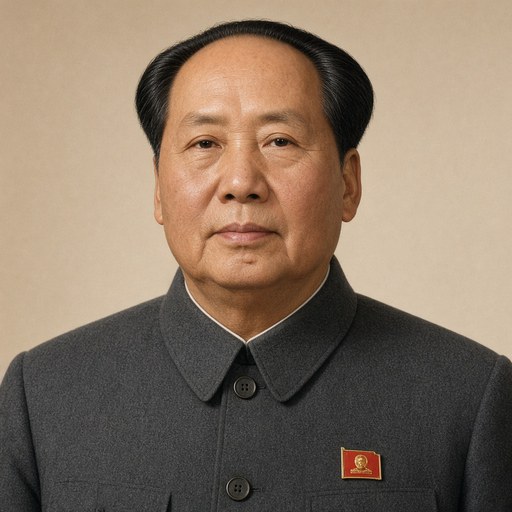
Be Promoters of the Revolution
 Mao Zedong · Chairman of the Central Committee of the Communist Party of China
- Context
- Mao addressed an enlarged plenary session of the Central Committee, attended by provincial and prefectural Party committee cadres, on October 9, 1957, urging continued rectification, agricultural planning and a stance as promoters of progress.
- Main themes
- Rectification and letting go, speaking out freely and big-character posters, socialist democracy, Forty Articles of the Programme for Agricultural Development, intensive cultivation and grain yield targets, six-level agricultural planning, being both red and expert, committee for promoting progress, principal contradiction between socialism and capitalism, anti-Rightist struggle, differences with Khrushchev over Stalin and peaceful transition, hundred flowers policy and the Rightists
- Duration
- ~49 min
- Words
- 5,909
- Sentences
- 347
- Readability
- 59
- Grade
- 9.2
- Syntax
- 2.84
- Vocabulary
- 2.08
Translated from Chinese Source: GitHub qinglee/maoxuan (毛泽东选集) ↗
The broad sphere of national life a sentence belongs to. Every sentence has an Arena, so it is the denominator the other indices are read against.
Other347 sentences in 33 paragraphs
This meeting has gone very well. An enlarged plenary session of the Central Committee like this one, attended by comrades from the provincial and prefectural Party committees, is in effect a conference of cadres from three levels, and it is good for clarifying our policies, exchanging experience and unifying our will.
It is probably necessary to hold a meeting like this once a year. A big country like ours has extremely complicated work. Last year we did not hold one, and we suffered for it: a Right deviation set in. The year before last there was an upsurge, and last year came a slackening. Of course, last year we were holding the Eighth Congress and had no time. When we hold a meeting like this again, we can bring in a small number of county Party secretaries and some district Party secretaries from a number of big cities, adding, say, a hundred or so people. I suggest that each province also hold a province-wide conference of cadres from three or four levels, bringing in some cadres from the co-operatives, and sort the problems out thoroughly. That is my first point.
My second point is about the rectification. We must boldly let go, thoroughly let go, resolutely let go; we must boldly correct, thoroughly correct, resolutely correct. We must have this determination. Then should we add an anti-Rightist struggle, waged on a big scale? There is no need to add one, because the anti-Rightist struggle is already on track, and in some places it has already ended. The emphasis now is on letting go and on correction at the grass-roots level, that is, on airing views and on rectification and correction at the three levels of the county, the district and the township. At the level of the Centre and of the provinces and municipalities, some departments still need to let go, but the focus is on correction.
This year the masses have created a revolutionary form, a form of mass struggle: speaking out freely, airing views fully, holding great debates and writing big-character posters. Our revolutionary content has now found a very fitting form. This form could not have appeared in the past. In the past we were fighting wars, and then there were the five great movements and the three great transformations, so this form of unhurried debate could not arise. Back then, unhurried debate, setting out the facts and reasoning things through, keeping at it for a year, was not possible. Now it is. We have found this form, and it fits the content of present-day mass struggle, the content of present-day class struggle, and the problem of correctly handling contradictions among the people. Having grasped this form, we will find things much easier to handle from now on. Whether on major issues of right and wrong or minor ones, on questions of revolution or questions of construction, all can be resolved through this form of speaking out, airing views and debating, and resolved fairly quickly. The Left is not only speaking out and debating together with the middle elements, but also doing so completely openly with the Rightists, and in the countryside with the landlords and rich peasants. It is all published in the papers, and we are not afraid of being shown up: "the Party's empire," "the Communist Party should step aside," "get down from the sedan chair." We have only just got into the sedan chair and the Rightists want us to get out. This form of speaking out freely, airing views fully, holding great debates and writing big-character posters is the best suited to bringing the initiative of the masses into play and raising their sense of responsibility.
Our Party has a democratic tradition. Without a democratic tradition we could not accept speaking out and airing views on such a scale, such great arguments and debates, and big-character posters. During the Yan'an rectification we wrote notes, examined ourselves and helped one another in small groups of seven or eight people, and we kept it up for several months. Everyone I have met is grateful for that rectification and says that their correction of subjectivism began then. During the land reform we discussed matters with the masses and won them over in their thinking. In our army, company commanders tuck in their soldiers' blankets and talk with the soldiers as equals and as friends. The Yan'an rectification, the land reform, democratic life in the army, and also the "three checks and three rectifications," and later the "three antis" and "five antis," the ideological remoulding of the intellectuals and so on, all contained rich forms of democracy. But this kind of speaking out freely, airing views fully, great arguments and great debates, followed by a gentle breeze and mild rain, consultation and persuasion, is a form that could only have emerged at the present time. Having found this form will be of great benefit to our cause. Overcoming subjectivism, bureaucratism and commandism (what we call commandism means hitting and swearing at people and forcing them to carry out orders), and having leading cadres become one with the masses, will now be easy to achieve.
This year our democratic tradition has developed greatly, and from now on the form of speaking out freely, airing views fully, great debates and big-character posters should be handed down. This form gives full play to socialist democracy. Only socialist countries can have democracy of this kind; capitalist countries cannot. On the basis of such democracy, centralism is not weakened but further consolidated, and the dictatorship of the proletariat is strengthened. For the dictatorship of the proletariat must rely on a broad body of allies; the proletariat as a single class cannot do it alone. China's proletariat is small in number, only ten million or so, and it must rely on hundreds of millions of poor peasants, lower-middle peasants, urban poor, impoverished handicraftsmen and revolutionary intellectuals in order to exercise dictatorship; otherwise it would be impossible. We have now aroused their enthusiasm, and so the dictatorship of the proletariat has been consolidated.
My third point is agriculture. The Forty Articles of the Programme for Agricultural Development have been revised and can be issued soon. I ask you comrades to organize a good round of debate and discussion on them in the countryside. I asked some comrades whether the prefectural level should draw up an agricultural plan. They said it should. Should the district level? They said it should too. Should the township? They said yes. The co-operatives too. So that makes these levels: the province, the prefecture, the county, the district, the township and the co-operative, six levels. Please pay attention to this and get down to drawing up these agricultural plans in earnest. A programme and a plan are the same thing; since people are used to the word, calling it a programme is fine. We must persist in all-round planning, strengthen leadership, have the Party secretaries take a hand themselves, and have the whole Party run the co-operatives. It seems that in the second half of last year the whole Party was no longer running the co-operatives and the secretaries were not taking much of a hand. This year we must persist in doing it this way.
When exactly can the plans be completed? I asked some comrades; in some places they are already done, in others not yet entirely. The emphasis now is on the three levels of province, prefecture and county. Can they be completed this winter or next spring? If not, they must be completed in the course of next year, and at all six levels, because we have several years of experience by now and the national Forty Articles are more or less complete. The Forty Articles, the provincial plans and the plans at all other levels must all be taken to the countryside for discussion. But discussing seven plans at once is too much; they should be taken to the masses in stages and batches for airing views and debate. This concerns long-term planning. What if, once drawn up, they prove unsuitable later on? After a few more years of experience they will be revised. The Forty Articles, for instance, will be revised again in a few years. It is impossible not to revise them. I think there will probably be a minor revision every three years and a major one every five. Having a plan is always better than having none. The whole period is twelve years; two have passed and only ten remain. If we do not get a firm grip on it, the targets set in the Forty Articles, under which the three types of region are to reach grain yields of 400, 500 and 800 jin per mu respectively, are in danger of not being met. If we grasp it firmly, they can be achieved.
As I see it, China lives by intensive cultivation. In future China must become the world's foremost high-yield country. Some counties already yield a thousand jin per mu. Could we reach two thousand jin per mu within half a century? In future, could the area north of the Yellow River yield 800 jin per mu, the area north of the Huai River 1,000 jin, and the area south of the Huai River 2,000 jin? There are still several decades until the beginning of the twenty-first century to reach these targets, and perhaps it will not even take that long. Living by intensive cultivation, even with somewhat more people we will still have enough to eat. I think three mu of land per head on average is too much; in future a fraction of a mu will be quite enough to feed a person. Of course, we still need birth control; I am not here to encourage having children.
I ask you comrades to find out the real situation regarding the peasants' grain consumption. We must promote running households industriously and thriftily and saving grain, so that there can be accumulation. If the state accumulates, the co-operatives accumulate and households accumulate, with these three kinds of accumulation we will become prosperous. Otherwise, if everything is eaten up, what prosperity can there be?
This year, wherever there has been a good harvest and no natural disaster, accumulation should be raised a little. Using good years to make up for bad ones is very necessary. In the co-operatives of one province, apart from the public reserve fund (5 per cent), the public welfare fund (5 per cent) and administrative expenses, production expenses account for 20 per cent of the total output value, and capital construction expenses in turn account for 20 per cent of production expenses. I discussed this with comrades from other provinces, and they said the capital construction expenses were perhaps a little high. Everything I am telling you today is in the nature of a suggestion. If it is workable, do it; if not, don't. And the provinces and counties need not all be uniform; go and study it. In some places in the past, the co-operatives' administrative expenses took too large a share; they should be cut to 1 per cent. Administrative expenses means the allowances of co-operative cadres and office costs. We must cut administrative expenses and increase spending on farmland capital construction.
The Chinese people must have aspiration. We should teach every person in the cities and villages across the country to have far-reaching goals, to have aspiration. Eating and drinking lavishly, eating and drinking everything up, does that count as aspiration? It counts for nothing. We must run our households industriously and thriftily and plan for the long term. For weddings and funerals, taking a wife or a death in the family, there is really no need to put on great banquets. We should economize on these things and not be wasteful. This is reforming old habits. Changing these habits must be done through speaking out freely and airing views fully, or perhaps in a smaller way, by arguing it out. Then there is gambling. In the past there was no way to stamp out problems like this; only by speaking out freely and airing views fully, and through debate, can they be changed. In my view, reforming old habits should also be included in the plans.
Then there is eliminating the four pests and promoting hygiene. I pay great attention to wiping out these four things: rats, sparrows, flies and mosquitoes. There are only ten years left. Could we prepare a little this year, mobilize, and then get going next spring? Because that is when the flies are born. I think we must still wipe these things out and make the whole country extremely hygienic. This is culture, and we must greatly raise this culture. Let's have a competition and really wipe these things out, with everyone clean and hygienic. The provinces can be uneven, the counties can be uneven, and in the end we'll see who comes out the hero. China must become a country of four withouts: first, without rats; second, without sparrows; third, without flies; fourth, without mosquitoes.
For family planning, let's also have a ten-year plan. It should not be promoted in minority nationality areas, nor in sparsely populated places. Even in densely populated places, we should carry out pilot projects and extend it step by step, gradually achieving universal planned births. Family planning requires open education; it too comes down to speaking out freely, airing views fully and great debate. In childbearing, humanity is in a state of complete anarchy; it cannot control itself. To achieve fully planned childbearing in future, it cannot be done without a social force, without everyone agreeing and everyone doing it together.
Then there is the question of comprehensive planning. What I just spoke about was the agricultural plan; there are also industrial plans, commercial plans and plans for culture and education. A comprehensive plan covering industry, agriculture, commerce and education is entirely necessary, so that they are tied together and coordinated with one another.
The experience of cultivating experimental plots deserves to be spread everywhere. Leading cadres at the county, district and township levels and in the co-operatives should all work a small plot of land to test whether high yields can be achieved and by what methods.
We must get to the bottom of agricultural technology. Doing agriculture without learning technology will no longer do. Politics and professional work are a unity of opposites. Politics is primary and comes first, and we must oppose the tendency to ignore politics. But doing nothing but politics, without understanding technology or professional work, will not do either. All our comrades, whether in industry, agriculture, commerce, or culture and education, must learn some technology and professional skills. I think we should have a ten-year plan for this too. Our cadres in every trade and profession must strive to master technology and their professional work, to become experts, both red and expert. So-called "expert first, red later" means white first and red later, and that is wrong, because such people really want to stay white, and "red later" is just empty words. At present some cadres are no longer red; they have rich-peasant ideas. Some people are white, for example the Rightists inside the Party, who are white politically and not expert technically either. Some are grey, and some are pink. Those who are truly deep red, red like our five-star red flag, are the Left. But being red alone is not enough; one must also understand the professional work and the technology. Right now many cadres are just red, not expert, understanding neither the professional work nor the technology. The Rightists say we are incapable of leading, that "laymen cannot lead experts." We refute the Rightists: we can lead. Our capability is political capability. As for technology, there is much that we do not yet understand, but technology can be learned.
Without its own huge contingent of technical personnel and theoretical workers, the proletariat cannot build socialism. Within these ten years (the science plan is also for twelve years, with ten remaining) we must build a contingent of proletarian intellectuals. Our Party members and activists outside the Party must all strive to become proletarian intellectuals. Every level, especially the three levels of province, prefecture and county, must have a plan for training proletarian intellectuals; otherwise the time will pass and the people will not have been trained. There is an old Chinese saying: "It takes ten years to grow trees, a hundred years to rear people." A hundred years to rear people: cut ninety years off that, and it is ten years to rear people. Ten years to grow trees is wrong; in the south it takes twenty-five years, and in the north even longer. Ten years to rear people, though, is feasible. Eight years have already passed; add ten and that makes eighteen, and we estimate that we can basically create a contingent of working-class experts with Marxist thinking. After ten years we will expand this contingent and raise its level.
As for the relationship between agriculture and industry, of course taking heavy industry as the centre and giving priority to developing heavy industry is beyond question and unshakeable. But under this condition, we must develop industry and agriculture simultaneously and gradually build modern industry and modern agriculture. We used to say we would build our country into an industrial country; in fact that also included the modernization of agriculture. Now we must put the emphasis on publicizing agriculture. Comrade Xiaoping also spoke about this.
My fourth point is about two methods. In doing anything there are at least two methods: one reaches the goal somewhat more slowly and somewhat less well; the other reaches it somewhat faster and somewhat better. One is a matter of speed, the other a matter of quality. Don't consider only one method; always consider two. In building a railway, for example, the choice of route should involve several options, and one route is chosen from among several. Several methods can be compared, at least two. For example, should we speak out and air views in a big way or a small way? Should we have big-character posters or not? Which of these two methods is better after all? There are a great many questions like this; people simply cannot let go. Of the thirty-four institutions of higher learning in Beijing, not one could let go, not a single one let go freely and readily. Because it is a matter of setting fire to yourself! To let go requires thorough persuasion, plus a considerable amount of pressure, that is, open appeals, many meetings, putting people on the spot, "driven to join the rebels on Mount Liang." In the revolution in the past there were many differing views within the Party about this method or that method, this policy or that policy, and in the end we adopted policies that were comparatively suited to the situation, so the periods of the War of Resistance against Japan and the War of Liberation were an advance over the earlier periods. In construction, too, our guidelines can go this way or that, and we must likewise adopt those that are comparatively suited to the situation.
The Soviet Union's experience of construction is fairly complete. Complete means it includes making mistakes. Without mistakes it would not count as complete. Learning from the Soviet Union does not mean copying everything mechanically; dogmatism is mechanical copying. We advocated learning from the Soviet Union after we had criticized dogmatism, so there was no danger. After the Yan'an rectification and after the Seventh Congress, we stressed learning from the Soviet Union, and this did us no harm; it was to our advantage. In revolution we have experience. In construction we have only just begun; it has been only eight years. Our achievements in construction are the main thing, but we have not been free of mistakes. We will make mistakes in future too; I hope we make fewer. In learning from the Soviet Union we must include studying its mistakes. Having studied that side of things, we can avoid some detours. Can we avoid the detours the Soviet Union took, and go even faster than the Soviet Union and achieve even better quality? We should strive for this possibility. Take steel output, for example: could we reach twenty million tons in three five-year plans or a little longer? With effort it is possible. That means opening more small steel plants. I think we should open more plants producing thirty or fifty thousand tons a year, or seventy or eighty thousand tons; they are very useful. Then there are medium-sized plants of three or four hundred thousand tons, which we should also open.
My fifth point: last year swept away a few things. One thing swept away was "more, faster, better, more economically." No more "more," no more "faster," and "better" and "more economically" were swept away along with them. As for "better" and "more economically," I don't think anyone opposes them; it is just "more" and "faster" that people dislike, and some comrades called it "rash advance." Actually, "better" and "more economically" place limits on "more" and "faster." "Better" means good quality; "more economically" means spending less money; "more" means getting more done; "faster" also means getting more done. The slogan limits itself, because with "better" and "more economically," requiring both good quality and less money, unrealistic "more" and unrealistic "faster" become impossible. I am glad that one or two comrades at this meeting spoke about this question. I also saw an article in the newspaper that raised it. What we mean is "more, faster, better, more economically" that is realistic, that seeks truth from facts, not a subjectivist "more, faster, better, more economically." We must always strive as far as possible for a bit more and a bit faster; what we oppose is only the subjectivist so-called "more" and "faster." In the second half of last year a gust of wind swept this slogan away, and I would like to restore it. Is that possible? Please everyone study it.
The Forty Articles of the Programme for Agricultural Development were swept away too. Since last year the Forty Articles have been out of favour; now they have been "restored."
The committee for promoting progress was swept away too. I once said that there is the Central Committee of the Communist Party, Party committees at every level, the State Council, and people's councils at every level; in short, there are a great many committees and councils, chiefly the Party committees. Is their nature that of a committee for promoting progress or a committee for promoting retreat? They should be committees for promoting progress. I think the Kuomintang was a committee for promoting retreat, and the Communist Party is a committee for promoting progress. Can the committee for promoting progress, which that gust of wind swept away last year, now be restored? If everyone says they disagree with restoring it and insists on organizing a committee for promoting retreat, if so many of you want to promote retreat, there is nothing I can do about it. But judging from this meeting, everyone wants to promote progress; not a single speech argued for promoting retreat. The ones who want to make us retreat are that Rightist Zhang-Luo alliance. As for things that really have run too fast, run in an unsuitable way, there can be temporary, partial retreat, that is, giving way a step, slowing down a step. But our overall guideline is always to promote progress.
My sixth point: the contradiction between the proletariat and the bourgeoisie, the contradiction between the socialist road and the capitalist road, is undoubtedly the principal contradiction in our society at present. Our tasks are now different from before. Previously, the main task was for the proletariat to lead the masses of the people against imperialism and feudalism, and that task has been completed. Then what is the principal contradiction now? What we are carrying out now is the socialist revolution, with its spearhead directed against the bourgeoisie, while at the same time changing the system of small-scale production, that is, achieving co-operativization. The principal contradiction is between socialism and capitalism, between collectivism and individualism; in a word, it is the contradiction between the two roads of socialism and capitalism. The resolution of the Eighth Congress did not raise this question. There is a passage in the Eighth Congress resolution saying that the principal contradiction is that between the advanced socialist system and the backward productive forces of society. That formulation is incorrect. At the Second Plenary Session of the Seventh Central Committee we stated that after nationwide victory, the principal internal contradiction would be that between the working class and the bourgeoisie, and the principal external one that between China and imperialism. Later we did not state it publicly, but in fact we acted on it: the revolution has already turned into a socialist revolution, and what we are doing is precisely the socialist revolution. The three great transformations are the socialist revolution, chiefly the socialist revolution in the ownership of the means of production, and they have basically been completed. This is acute class struggle.
In the second half of last year the class struggle eased somewhat; we deliberately eased it a little. But as soon as you ease up, the bourgeoisie, the bourgeois intellectuals, the landlords, the rich peasants and a section of the well-to-do middle peasants attack us; that is what happened this year. We eased up a little and they attacked, and that is fine too, because we gained the initiative. As a People's Daily editorial put it, "the tree wants to be still, but the wind will not stop." They want to blow up a wind! They want to blow up a typhoon of some force or other. Very well, then we'll build "shelter belts." That is the anti-Rightist struggle, that is the rectification.
The rectification has two tasks: one is opposing the Rightists, including opposing bourgeois ideology; the other is rectification and correction, which also includes the struggle between two lines. Subjectivism, bureaucratism and sectarianism are bourgeois things; these three exist in our Party, and the account should be charged to the bourgeoisie. In one or two hundred years, can it still be charged to them? By then it probably won't be easy to. Will there still be bureaucratism and subjectivism then? There will, and then they will be charged to the account of backwardness. Society always has left, middle and right; there are always the advanced, the middling and the backward. If at that time you commit bureaucratism or subjectivism, then you are backward.
The rectification movement will continue until 1 May next year; there is still that much time. After 1 May, should we ease up again? I think we should ease up again. Is easing up a Right deviation? I don't think so. It is like holding meetings: if you hold meetings non-stop, in the daytime and at night too, for half a year on end, I think a lot of people will disappear. So work must follow the circumstances, sometimes tense, sometimes relaxed. Last year we won such a great victory and people were submissive, beating gongs and drums. If we had not eased up a little then, it would have been hard to justify; the reasons would not have been sufficient. We said the question of ownership had basically been solved, not completely solved. Class struggle has not died out. So it was not a concession of principle; rather, the situation called for easing up a little.
I think the rectification will go on until 1 May next year, and it will not be continued in the second half of the year. Whether to do it again in the countryside in the second half of next year, holding another round of debate, will depend on whether it is needed then; we'll discuss it next year. The year after next there must be another round. If we don't do it the year after next either, if we go several years without it, then the old Rightists, the new Rightists, the Rightists who have come out now, will start stirring again; and some middle-right elements, middle elements, even some Leftists, will change. There are such strange people in the world: as soon as you slacken off, slacken for a fair length of time, Rightist sentiment will rise, and bad talk and Rightist remarks will all come out. In our army we must constantly educate people in the Three Main Rules of Discipline and the Eight Points for Attention. If you go a few months without it, things get slack. Morale has to be boosted several times a year. When new recruits come, they must be educated. Even with old soldiers and old cadres, if you don't hold rectification, their thinking will change.
Here, in passing, let me say something about our differences with the Soviet Union. First, on the question of Stalin, we have a contradiction with Khrushchev. He made Stalin look so disgraceful, and we do not approve. Because he made him look so ugly! This is not a matter for one country alone; it is a matter for all countries. Our hanging Stalin's portrait in front of Tiananmen accords with the wishes of the working people of the whole world and shows our fundamental disagreement with Khrushchev. As for Stalin himself, you have to rate him seventy-thirty! Count his achievements as seven parts and his mistakes as three parts. This is not necessarily accurate either; the mistakes may be only two parts, maybe only one, or maybe a little more. In short, Stalin's achievements are primary and his shortcomings and mistakes are secondary. On this point we disagree with Khrushchev.
Then there is the question of peaceful transition, on which we also disagree with Khrushchev and his people. We believe that the proletarian party of any country must have two things: first, peace; second, war. First, the Communist Party demands of the ruling class a peaceful transformation, following the slogan Lenin put forward in the period between the February Revolution and the October Revolution. We too raised the question of peace negotiations with Chiang Kai-shek. This slogan, in the face of the bourgeoisie, in the face of the enemy, is a defensive slogan; it shows that we want peace, not war, and it helps us win over the masses. It is a slogan that gives us the initiative, a slogan of a tactical nature. But the bourgeoisie will never hand over state power of its own accord; it will use violence. Then, second: if you want to fight, if you fire the first shot, I have no choice but to fight. Seizing state power by armed force is the strategic slogan. If you say there will definitely be a peaceful transition, then there is no difference from the socialist parties. The Japan Socialist Party is like that; it has only one thing, which is never to use violence. Socialist parties all over the world are like that. Proletarian parties in general must still have two things: first, a gentleman uses his tongue, not his fists; second, if the scoundrel uses his fists, then I'll use mine too. Put this way, there is no flaw; everything is covered. Otherwise it won't do. At present some countries' parties, the Communist Party of Great Britain for example, put forward only the slogan of peaceful transition. We talked with the leaders of the British party but could never get through to them. They are proud, of course; they say, how can peaceful transition be something you, Khrushchev, put forward? I put it forward long ago!
In addition, Soviet comrades do not understand the policy of letting a hundred flowers bloom and a hundred schools of thought contend. What we mean is a hundred flowers blooming and a hundred schools contending within the scope of socialism, among the people; counter-revolutionaries are not included. Of course, the people can become divided, and a section can turn into enemies. Take the Rightists: they used to be the people, and now these people, as I see it, are one-third people and two-thirds counter-revolutionaries. Should they be deprived of the right to vote? Apart from individual cases that must be dealt with by law and sent to reform through labour, who must be deprived of the vote, it is generally better not to deprive them of it. Some can even be allowed to remain members of the Political Consultative Conference; in any case, the Political Consultative Conference can have a thousand or so members. The Rightists are formally still within the ranks of the people, but in fact they are enemies. We declare openly that they are enemies and that our contradiction with them is a contradiction between ourselves and the enemy, because they oppose socialism, oppose the leadership of the Communist Party and oppose the dictatorship of the proletariat. In short, they do not meet the six criteria! These are poisonous weeds. Among the people, some poisonous weeds will always appear sooner or later.
My last point: we must rouse ourselves and study with painstaking effort. Painstaking effort, three characters: one is "put in," one is "pain," one is "effort"; we must rouse ourselves and put in painstaking effort. Many of our comrades do not put in painstaking effort. Some comrades spend the energy they have left over from work mainly on playing cards, playing mahjong and dancing, and I don't think that is good. The energy left over from work should be spent mainly on study, so as to form the habit of studying. What should we study? One is Marxism-Leninism, one is technical science, one is natural science. Then there is literature, mainly literary theory, which leading cadres must understand a little. Then there is journalism, education and so on; these fields too must be understood a little. In short, there is a great deal of learning, and we should get at least a rough grasp of it. Because we have to lead these things! What kind of "-ist" are we people called? We are called politicians. How can we lead if we don't understand these things and don't take charge of them? Every province has newspapers, and in the past they were not taken in hand; every province has literary and art journals and organizations, and in the past these were not taken in hand either; then there is the united front and the democratic parties, which were not taken in hand; and education was not taken in hand either. None of these things were taken in hand, and the result, well, it was precisely in these areas that the rebellion came. Yet as soon as they are taken in hand, the situation changes within a few months. Luo Longji said: how can the petty intellectuals of the proletariat lead the great intellectuals of the petty bourgeoisie? What he said is wrong. He says he is petty bourgeois, but in fact he is bourgeois. The "petty intellectuals" of the proletariat are precisely the ones who must lead the great intellectuals of the bourgeoisie. The proletariat has a body of intellectuals serving it: first of all Marx, then Engels, Lenin and Stalin, then people like us, and many others. The proletariat is the most advanced class, and it must lead the revolution of the whole world.
The original Chinese. The tags above are read on the English translation's sentences.
这次会议开得很好。这样扩大的中央全会,有省委和地委的同志参加,实际是三级干部会,对于明确方针,交流经验,统一意志,有好处。
这样的会,恐怕是有必要一年开一次。因为我们这么一个大国,工作复杂得很。去年这一年没有开,就吃亏,来了一个右倾。前年来了一个高涨,去年就来了一个松劲。当然,去年开“八大”了,也没有时间。再开这样的会议,可以掺少数县委书记和一些大城市的若干区委书记,比如再加百把人是可以的。我建议各省也开一次全省性的三级或者四级干部会议,掺一部分合作社的干部,把问题扯清楚。这是第一点。
第二点,讲一讲整风。要大胆地放,彻底地放,坚决地放;要大胆地改,彻底地改,坚决地改。我们要有这样的决心。那末,还要不要加一个反右派,大大地反?可以不加。因为反右派是上了轨道的,有些地方已经结束了。现在的重点是基层的放,基层的改,就是县、区、乡三级的鸣放和整改。中央和省市一级,有些部门放还是要放,但重心是改的问题。
今年这一年,群众创造了一种革命形式,群众斗争的形式,就是大鸣,大放,大辩论,大字报。现在我们革命的内容找到了它的很适合的形式。这种形式,在过去是不能出现的。因为过去是打仗,五大运动,三大改造,这样从容辩论的形式不能产生。那个时候,从容辩论,摆事实,讲道理,搞它一年,不许可。现在许可了。我们找到了这个形式,适合现在这个群众斗争的内容,适合现在阶级斗争的内容,适合正确处理人民内部矛盾的问题。抓住了这个形式,今后的事情好办得多了。大是大非也好,小是小非也好,革命的问题也好,建设的问题也好,都可以用这个鸣放辩论的形式去解决,而且会解决得比较快。左派不仅同中间派一道鸣放辩论,而且完全公开地同右派一道鸣放辩论,在农村里头同地主、富农一道鸣放辩论。公开登报,不怕出“丑”,什么“党天下”呀,什么“共产党要让位”呀,“下轿”呀。刚刚“上轿”,右派要我们“下轿”。这种大鸣、大放、大辩论、大字报的形式,最适合发挥群众的主动性,提高群众的责任心。
我们党有民主的传统。没有民主的传统,不可能接受这样的大鸣大放,大争大辩,大字报。延安整风的时候,写笔记,自己反省,互相帮助,七、八个人一个小组,搞了几个月。我接触的人都感谢那一次整风,说改变主观主义就是那一次开始。土地改革的时候,有事同群众一道商量,打通思想。我们军队里头,连长给战士们盖被子,同战士很平等地友谊地谈话。延安整风,土地改革,军队里头的民主生活,还有“三查三整”,后头的“三反”“五反”,对知识分子的思想改造等,这中间都有丰富的民主形式。但是,这样的大鸣、大放、大争、大辩,然后还要搞和风细雨,商量,启发,这种形式只有现在这个时候才能产生。找到了这种形式,对于我们的事业会有很大的好处,克服主观主义、官僚主义、命令主义(所谓命令主义,就是打人骂人,强迫执行),领导干部同群众打成一片,就容易做到了。
我们的民主传统今年是一个很大的发展,以后要把大鸣、大放、大辩论、大字报这种形式传下去。这种形式充分发挥了社会主义民主。这种民主,只有社会主义国家才能有,资本主义国家不可能有。在这样的民主基础上,不是削弱集中,而是更加巩固了集中制,加强了无产阶级专政。因为无产阶级专政要靠广大的同盟军,单是无产阶级一个阶级不行。中国无产阶级数量少,只有一千多万人,它要靠几亿人口的贫农、下中农、城市贫民、贫苦的手工业者和革命知识分子,才能实行专政,不然是不可能的。我们现在发动了他们的积极性,无产阶级专政就巩固起来了。
第三点,农业。农业发展纲要四十条已经作了修改,不久就可以发出去。请同志们在农村中很好地组织一次辩论、讨论。我问了一些同志,地区一级要不要作农业计划?他们说也要作。区一级要不要作?说也要作。乡要不要作?说也要作。社也要作。那末,就有这么几级:一个省,一个地,一个县,一个区,一个乡,一个社,六级。请你们注重抓紧搞一搞这个农业规划。规划、计划是一回事,讲成了习惯,就叫规划也好。要坚持全面规划,加强领导,书记动手,全党办社。好象去年下半年就不是全党办社了,书记不大动手了。今年,我们要坚持这样搞。
规划究竟什么时候可以作好?我问了一些同志,有些地方已经作好了,有些地方还没有完全作好。现在着重的是省、地、县这三级,是不是在今冬或者明春可以作好?如果作不好,明年这一年总要作好,而且六级都要作好。因为我们有几年经验了,全国农业发展纲要四十条也差不多作好了。农业发展纲要四十条,省的规划和其它各级的规划,都要拿到农村去讨论。但是,七个规划一起讨论太多了,还是要分期分批拿到群众中去鸣放、辩论。这是讲长远规划。作了,将来不适合怎么办?再有几年经验,还要修改的。比如“四十条”,过几年还要修改。不可能不改。我看大概是三年一小改,五年~大改。有一个规划总比没有好。一共十二年,过去了两年,只有十年了,再不抓紧,“四十条”中规定的三种地区分别达到亩产粮食四百斤、五百斤、八百斤的计划指标,就有落空的危险。抓紧是可能完成的。
我看中国就是靠精耕细作吃饭。将来,中国要变成世界第一个高产的国家。有的县现在已经是亩产千斤了,半个世纪搞到亩产两千斤行不行呀?将来是不是黄河以北亩产八百斤,淮河以北亩产一千斤,淮河以南亩产两千斤?到二十一世纪初达到这个指标,还有几十年,也许不要那么多时间。我们靠精耕细作吃饭,人多一点,还是有饭吃。我看一个人平均三亩地太多了,将来只要几分地就尽够吃。当然,还是要节制生育,我不是来奖励生育。
请同志们摸一下农民用粮的底。要提倡勤俭持家,节约粮食,以便有积累。国家有积累,合作社有积累,家庭有积累,有了这三种积累,我们就富裕起来了。不然,统统吃光了,有什么富裕呀?
今年,凡是丰收的地方,没有受灾的地方,应当提高一点积累。以丰补歉,很有必要。有的省的合作社,除公积金(百分之五)、公益金(百分之五)、管理费以外,生产费占总产值的百分之二十,其中基本建设费用又占生产费的百分之二十。我跟别的省的同志商量,他们说基本建设费用恐怕多了一点。我今天跟你们谈的,都是建议性质,可行则行,不可行则不行,而且各省各县不要一律,你们去研究一下。合作社的管理费,过去有些地方占的比例太大,应当缩小到百分之一。所谓管理费,就是合作社干部的补贴和办公费。要缩小管理费,增加农田基本建设费用。
中国人要有志气。我们应当教育全国城市、乡村的每一个人,要有远大的目标,有志气。大吃、大喝,统统吃光、喝光,算不算一种志气呢?这不算什么志气。要勤俭持家,作长远打算。什么红白喜事,讨媳妇,死了人,大办其酒席,实在可以不必。应当在这些地方节省,不要浪费。这是改革旧习惯。把这个习惯改过来,要通过大鸣大放,也许是小鸣小放,争一番。还有赌博,这样的问题过去是没有法子禁止的,只有大鸣大放,经过辩论,才能改过来。我看,改革旧习惯也要列入规划。
还有一个除四害,讲卫生。消灭老鼠、麻雀、苍蝇、蚊子这四样东西,我是很注意的。只有十年了,可不可以就在今年准备一二下,动员一下,明年春季就来搞?因为苍蝇就是那个时候出世。我看还是要把这些东西灭掉,全国非常讲卫生。这是文化,要把这个文化大为提高。要来个竞赛,硬是要把这些东西灭掉,人人清洁卫生。各省也可以参差不齐,各县也可以参差不齐,将来横直看那个是英雄。中国要变成四无国;一无老鼠,二无麻雀,三无苍蝇,四无蚊子。
计划生育,也来个十年规划。少数民族地区不要去推广,人少的地方也不要去推广。就是在人口多的地方,也要进行试点,逐步推广,逐步达到普遍计划生育。计划生育,要公开作教育,无非也是来个大鸣大放、大辩论。人类在生育上头完全是无政府状态,自己不能控制自己。将来要做到完全有计划的生育,没有一个社会力量,不是大家同意,不是大家一起来做,那是不行的。
还有综合计划问题。刚才我讲的是农业计划,还有工业计划,商业计划,文教计划。工、农、商、学的综合计划,完全有必要,兜起来互相配合。
种试验田的经验,值得普遍推广。县、区、乡和合作社的领导干部,都搞那么一小块田,试验能不能达到高产,用什么方法达到高产。
我们要摸农业技术的底。搞农业不学技术不行了。政治和业务是对立统一的,政治是主要的,是第一位的,一定要反对不问政治的倾向;但是,专搞政治,不懂技术,不懂业务,也不行。我们的同志,无论搞工业的,搞农业的,搞商业的,搞文教的,都要学一点技术和业务。我看也要搞一个十年规划。我们各行各业的干部都要努力精通技术和业务,使自己成为内行,又红又专。所谓先专后红就是先白后红,是错误的。因为那种人实在想白下去,后红不过是一句空话。现在,有些干部红也不红了,是富农思想了。有一些人是白的,比如党内的右派,政治上是白的,技术上又不专。有一些人是灰色的,还有一些人是桃红色的。真正大红,象我们的五星红旗那样的红,那是左派。但是单有红还不行,还要懂得业务,懂得技术。现在有许多干部就是一个红,就不专,不懂业务,不懂技术。右派说我们不能领导,“外行不能领导内行”。我们驳右派说,我们能领导。我们能者是政治上能。至于技术,我们有许多还不懂,但那个技术是可以学懂的。
无产阶级没有自己的庞大的技术队伍和理论队伍,社会主义是不能建成的。我们要在这十年内(科学规划也是十二年,还有十年),建立无产阶级知识分子的队伍。我们的党员和党外积极分子都要努力争取变成无产阶级知识分子。各级特别是省、地、县这三级要有培养无产阶级知识分子的计划,不然,时间过去了,人还没有培养出来。中国有句古话,“十年树木,百年树人”。百年树人,减少九十年,十年树人。十年树木是不对的,在南方要二十五年,在北方要更多的时间。十年树人倒是可以的。我们已经过了八年,加上十年,是十八年,估计可能基本上造成工人阶级的有马克思主义思想的专家队伍。十年以后就扩大这个队伍,提高这个队伍。
讲到农业与工业的关系,当然,以重工业为中心,优先发展重工业,这一条毫无问题,毫不动摇。但是在这个条件下,必须实行工业与农业同时并举,逐步建立现代化的工业和现代化的农业。过去我们经常讲把我国建成一个工业国,其实也包括了农业的现代化。现在,要着重宣传农业。这个问题小平同志也讲了。
第四点,两种方法。做事情,至少有两种方法:一种,达到目的比较慢一点,比较差一点;一种,达到目的比较快一点,比较好一点。一个是速度问题,一个是质量问题。不要只考虑一种方法,经常要考虑两种方法。比如修铁路,选线路要有几种方案,在几条线路里头选一条。可以有几种方法来比较,至少有两种方法来比较。比如,大鸣大放,还是小鸣小放?要大字报,还是不要大字报?这两种方法究竟那一种好?这种问题可多啦,就是放不开。北京三十四个高等学校,一个都放不开,没有一个爽爽快快放开的。因为这是放火烧身的问题呀!要放开,需要有充分的说服,而且要有一种相当的压力,就是公开号召,开许多会,将起军来,“逼上梁山”。过去革命,这种方法,那种方法,这种政策,那种政策,党内有过很多不同意见,结果我们采取了一种比较适合情况的政策,所以抗日战争时期和解放战争时期,比较从前那几个时期都进步。建设的方针也是可以这样,可以那样,我们也要采取比较适合情况的方针。
苏联的建设经验是比较完全的。所谓完全,就是包括犯错误。不犯错误,那就不算完全。学习苏联,并不是所有事情都硬搬,教条主义就是硬搬。我们是在批评了教条主义之后来提倡学习苏联的,所以没有危险。延安整风以后,“七大”以后,我们强调学习苏联,这对我们是不吃亏的,是有利的。在革命这方面,我们是有经验的。在建设这方面,我们刚开始,只有八年。我们建设的成绩是主要的,但不是没有错误。错误将来还要犯,希望少犯一点。我们学习苏联,要包括研究它的错误。研究了它错误的那一方面,就可以少走弯路。我们是不是可以把苏联走过的弯路避开,比苏联搞的速度更要快一点,比苏联的质量更要好一点?应当争取这个可能。比如钢的产量,我们可不可以用三个五年计划或者更多一点的时间,达到两千万吨?经过努力,是可能的。那就要多开小钢厂。我看那个年产三、五万吨的钢厂,七、八万吨的钢厂要多开,很有用处。再有中等的,三、四十万吨的钢厂,也要开。
第五点,去年这一年扫掉了几个东西。一个是扫掉了多、快、好、省。不要多了,不要快了,至于好、省,也附带扫掉了。好、省我看没有那个人反对,就是一个多、一个快,人家不喜欢,有些同志叫“冒”了。本来,好、省是限制多、快的。好者,就是质量好;省者,就是少用钱;多者,就是多办事;快者,也是多办事。这个口号本身就限制了它自己,因为有好、省,既要质量好,又要少用钱,那个不切实际的多,不切实际的快,就不可能了。我高兴的就是在这个会议上有个把同志讲到这个问题。还有,在报纸上我也看见那么一篇文章,提到这个问题。我们讲的是实事求是的合乎实际的多、快、好、省,不是主观主义的多、快、好、省。我们总是要尽可能争取多一点,争取快一点,只是反对主观主义的所谓多、快。去年下半年一股风,把这个口号扫掉了,我还想恢复。有没有可能?请大家研究一下。
还扫掉农业发展纲要四十条。这个“四十条”去年以来不吃香了,现在又“复辟”了。
还扫掉了促进委员会。我曾经谈过,共产党的中央委员会,各级党委会,还有国务院,各级人民委员会,总而言之,“会”多得很,其中主要是党委会,它的性质究竟是促进委员会,还是促退委员会?应当是促进委员会。我看国民党是促退委员会,共产党是促进委员会。去年那股风扫掉的促进委员会,现在可不可以恢复?如果大家说不赞成恢复,一定要组织促退委员会,你们那么多人要促退,我也没有办法。但是,从这次会议看,大家都是想要促进,没有一篇演说是讲要促退的。要促退我们的,是那个右派章罗同盟。至于某些东西实在跑得快了,实在跑得不适合,可以有暂时的、局部的促退,就是要让一步,缓一步。但是,我们总的方针,总是要促进的。
第六点,无产阶级和资产阶级的矛盾,社会主义道路和资本主义道路的矛盾,毫无疑问,这是当前我国社会的主要矛盾。我们现在的任务跟过去不同了。过去主要是无产阶级领导人民大众反帝反封建,那个任务已经完结了。那末,现在的主要矛盾是什么呢?现在是社会主义革命,革命的锋芒是对着资产阶级,同时变更小生产制度即实现合作化,主要矛盾就是社会主义和资本主义,集体主义和个人主义,概括地说,就是社会主义和资本主义两条道路的矛盾。“八大”的决议没有提这个问题。“八大”决议上有那么一段,讲主要矛盾是先进的社会主义制度同落后的社会生产力之间的矛盾。这种提法是不对的。我们在七届二中全会上提出,全国胜利以后,国内主要矛盾是工人阶级和资产阶级的矛盾,国外是中国和帝国主义的矛盾。后头没有公开提,但是事实上在那里做了,革命已经转到社会主义革命,我们干的就是社会主义革命这件事。三大改造是社会主义革命,主要是生产资料所有制方面的社会主义革命,已基本完成。这是尖锐的阶级斗争。
去年下半年,阶级斗争有过缓和,那是有意识地要缓和一下。但是,你一缓和,资产阶级、资产阶级知识分子、地主、富农以及一部分富裕中农,就向我们进攻,这是今年的事。我们缓和一下,他进攻,那也好,我们取得主动。正象人民日报一篇社论说的,“树欲静而风不止”。他要吹风嘛!他要吹几级台风。那末好,我们就搞“防护林带”。这就是反右派,就是整风。
整风有两个任务:一个任务是反右派,包括反资产阶级思想;一个任务是整改,整改里头也包含两条路线斗争。主观主义、官僚主义、宗派主义是资产阶级的东西,我们党内存在这三个东西,这个账要挂在资产阶级身上。一两百年以后,还可不可以挂呢?那个时候恐怕不好挂了。那个时候有没有官僚主义、主观主义?还是有的,那就挂在落后账上。社会上总有左、中、右,总有先进的、中间的、落后的。那时你犯了官僚主义、主观主义,那你就是落后。
整风运动要搞到明年五月一日,还有这么多时间。五月一日以后,是不是又要缓和一下呢?我看又要缓和一下。缓和是不是叫右倾呢?我看不叫右倾。好比开会,尽开,白天开,晚上也开,一连开它半年,我看很多人就不见了。所以,工作要按照情况,有时候紧张,有时候缓和。去年,我们取得那么大的胜利,人家服服帖帖,敲锣打鼓,你不缓和一下,那个时候难得说,理由不充分。我们说基本上解决了所有制问题,并没有说完全解决了。阶级斗争并没有熄灭。所以不是原则的让步,而是情况需要缓和一下。
我看整风搞到明年五月一日,下半年就不再搞了。农村里头明年下半年是不是再搞一次,辩论一次,看那个时候需要不需要,明年再议。后年是要搞一次的。假使我们后年也不搞,几年不搞,那些老右派,新右派,现在出来的右派,又要蠢蠢欲动;还有些中右分子,中间派,甚至于有些左派会要变。世界上有那么怪的人,只要你松松劲,松那么相当的时间,右倾情绪就要起来,不好的议论,右派言论都要来的。我们军队里头要经常进行三大纪律、八项注意的教育。只要你空几个月不搞,就松松散散了。一年要鼓几次气。新兵来了,要进行教育。就是老兵,老干部,只要你不整风,他的思想也要起变化。
这里顺便说一点我们同苏联的不同意见。首先,在斯大林问题上,我们同赫鲁晓夫有矛盾。他把斯大林搞得那么不象样子,我们不赞成。因为搞得那么丑嘛!这就不是你一国的事,这是各国的事。我们天安门前挂斯大林像,是符合全世界劳动人民愿望的,表示了我们同赫鲁晓夫的基本分歧。斯大林本身,你也要给他三七开嘛!斯大林的成绩算它七分,错误算它三分。这也未必见得准确,错误也许只有两分,也许只有一分,也许还稍微多一点。总而言之,斯大林的成绩是主要的,缺点、错误是次要的。这一点,我们同赫鲁晓夫有不同意见。
还有和平过渡的问题,我们同赫鲁晓夫他们有不同的意见。我们认为,无论那个国家的无产阶级政党,要有两条:第一条,和平;第二条,战争。第一条,共产党向统治阶级要求和平转变,学列宁在二月革命到十月革命之间那个时候所提的口号。我们也向蒋介石提过谈判和平的问题。这个口号,在资产阶级面前,在敌人面前,是防御的口号,表示我们要和平,不要战争,便于我们争取群众。这是个主动的口号,是个策略性质的口号。但是,资产阶级决不会自动地交出政权,它要使用暴力。那末,第二条,你要打,你打了第一枪,我只好打。武装夺取政权,这是战略口号。你说一定是和平过渡,那跟社会党就没有差别。日本社会党就是这样,它只有一条,就是永远不搞暴力。全世界的社会党都是这样。无产阶级政党一般地还是要有两条:君子动口不动手,第一条;第二条,小人要动手,老子也动手。这样的提法,就没有弊病,都管到了。不然,就不行。现在有些国家的党,比如英国共产党,就是只提和平过渡的口号。我们跟英国党的领导人谈,老是谈不通。他们当然骄傲了,他说和平过渡怎么是你赫鲁晓夫提的?我早已经提了!
此外,对百花齐放、百家争鸣这个方针,苏联同志不理解。我们讲的是社会主义范围的、人民内部的百花齐放,百家争鸣,反革命不在内。当然,人民内部可以分化,一部分变为敌人。比如右派,过去是人民,现在这些人,我看是三分之一的人民,三分之二的反革命。是不是剥夺他们的选举权?除开个别的要法办、劳改,那要剥夺选举权外,一般的以不剥夺为好。有的人还可以让他当政协委员,横直政协搞个千把人都可以。右派,形式上还在人民内部,但实际上是敌人。我们公开宣布,他们是敌人,我们同他们的矛盾是敌我矛盾,因为他们反对社会主义,反对共产党的领导,反对无产阶级专政。总之,不合乎六条标准嘛!这是毒草。人民内部不管那一天总要出一点毒草的。
最后一点,我们要振作精神,下苦功学习。下苦功,三个字,一个叫下,一个叫苦,一个叫功,一定要振作精神,下苦功。我们现在许多同志不下苦功,有些同志把工作以外的剩余精力主要放在打纸牌、打麻将、跳舞这些方面,我看不好。应当把工作以外的剩余精力主要放在学习上,养成学习的习惯。学什么东西呢?’一个是马克思列宁主义,一个是技术科学,一个是自然科学。还有文学,主要是文艺理论,领导干部必须懂得一点。还有什么新闻学、教育学,这些学问也要懂得一点。总而言之,学问很多,大体要稍微摸一下。因为我们要领导这些事情嘛!我们这些人叫什么家呀?叫政治家。不懂这些东西,不去领导,怎么行呢?每个省都有报纸,过去是不抓的,都有文艺刊物、文艺团体,过去也是不抓的,还有统一战线、民主党派,是不抓的,教育也是不抓的。这些东西都不抓,结果,好,就是这些方面造反。而只要一抓,几个月情况就变了。罗隆基说,无产阶级的小知识分子怎么能领导小资产阶级的大知识分子?他这个话不对。他说他是小资产阶级,其实他是资产阶级。无产阶级的“小知识分子”就是要领导资产阶级的大知识分子。无产阶级有一批知识分子为它服务,头一个就是马克思,再就是恩格斯、列宁、斯大林,再就是我们这些人,还有许多人。无产阶级是最先进的阶级,它要领导全世界的革命。