




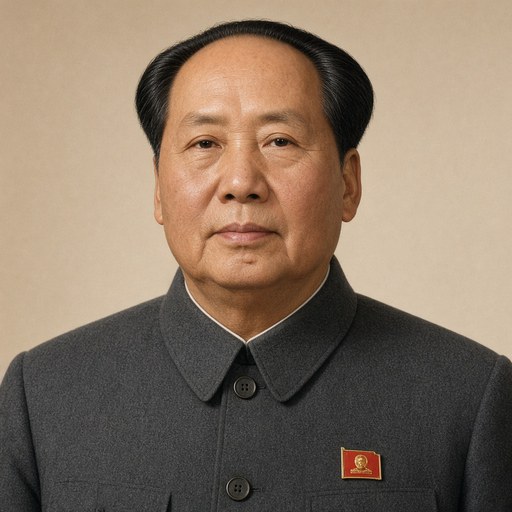
Firmly Trust the Great Majority of the Masses
 Mao Zedong · Chairman of the Central Committee of the Communist Party of China
- Context
- Mao addressed a meeting on October 13, 1957, urging firm trust in the great majority of the masses, defending the rectification campaign's new forms and the anti-rightist struggle, and outlining the revised agricultural development programme.
- Main themes
- Great blooming, great contending, great debate and big-character posters, trust in the great majority of the masses, fear of disorder and of being unable to step down, test of the socialist revolution, ten per cent opposed to socialism and two per cent diehards, anti-rightist struggle and treatment of rightists, remoulding of bourgeois intellectuals, four stages of rectification, forty-article agricultural development programme, elimination of the four pests, steel output targets over three five-year plans
- Duration
- ~55 min
- Words
- 6,611
- Sentences
- 416
- Readability
- 61
- Grade
- 8.7
- Syntax
- 2.80
- Vocabulary
- 2.16
Translated from Chinese Source: GitHub qinglee/maoxuan (毛泽东选集) ↗
The broad sphere of national life a sentence belongs to. Every sentence has an Arena, so it is the denominator the other indices are read against.
Other416 sentences in 28 paragraphs
Now the rectification campaign has found a form, and that form is great blooming, great contending, great debate and big-character posters. This is a new form created by the masses, and it differs from the forms our Party adopted in the past. In the rectification at Yan'an there were some big-character posters too, but at that time we did not promote them. Later, in the "three checks and three rectifications," we did not adopt this form either. In the period of the revolutionary war, nobody paid us wages and we had no factories making guns and artillery. Our Party and army relied on the soldiers, on the local people, on the masses. So over a long period a democratic style of work took shape. But at that time there was no great blooming, great contending, great debate and big-character posters like we have now. What was the reason? The reason was that gongs and drums were sounding all around, we were fighting a war, and the class struggle was so acute that it would have been bad to have such a great uproar internally. Now things are different. The war is over, and the whole country except Taiwan Province has been liberated. That is why this new form has appeared. A new revolutionary content has to find a new form. The present revolution is a socialist revolution, its purpose is to build a socialist country, and it has found this new form. This form can be spread quickly and learned quickly. It can be learned in a few months.
People have two main fears about great blooming, great contending, great debate and big-character posters. One is the fear of disorder. Are you afraid of disorder? I think many people are. The other is the fear of being unable to step down gracefully. Factory directors, co-operative chairmen, school principals and Party committee secretaries are afraid that once things open up and the fire starts burning, they will have no way to step down. It is easier to persuade people now, but back in May it was very hard. The thirty-four universities and colleges in Beijing held a great many meetings before they opened up. Why need we not be afraid? Why is opening up beneficial? Is great blooming and great contending beneficial, or small blooming and small contending, or no blooming and no contending? No blooming and no contending is harmful. Small blooming and small contending cannot solve problems. It has to be great blooming and great contending. With great blooming and great contending, first, there will be no disorder, and second, nobody will be left unable to step down. Of course there are individual exceptions. Ding Ling, for example, cannot step down. Then there is Feng Xuefeng, who was setting fires with the aim of burning down the Communist Party, and he cannot step down either. Those are a minority, they are rightists. Everybody else need not fear being unable to step down. They can step down. It is nothing more than faults such as bureaucratism, sectarianism and subjectivism: correct them if you have them, and there is nothing to be afraid of. The basis is to trust the great majority of the masses, to trust that the great majority of the people are good. Most workers are good people, and most peasants are good people. Within the Communist Party and the Youth League, most people are good. They do not want to throw our country into chaos. The majority of the bourgeois intellectuals, the capitalists and the members of the democratic parties can be remoulded. So we must not fear disorder. There will be no disorder; there cannot be disorder. We should trust the majority. And does this majority mean fifty-one per cent? No, it means ninety to ninety-eight per cent.
The socialist revolution is new to all of us. In the past we carried out only the democratic revolution, which was bourgeois in character. It did not destroy individual ownership or national capitalist ownership. It destroyed only imperialist ownership, feudal ownership and bureaucrat-capitalist ownership. So many people were able to get through the test of the democratic revolution. Among them, some were not enthusiastic about a thorough democratic revolution and only got through reluctantly. Others were willing to work for a thorough democratic revolution and got through this test. Now comes the test of socialism, and some people find it hard to pass. For example, in Hubei there was a Party member of hired-farmhand origin whose family had been beggars for three generations. After Liberation he stood up, prospered, and became a cadre at district level. This time he was extremely dissatisfied with socialism, strongly opposed co-operativization, wanted "freedom," and opposed unified purchase and sale. Now an exhibition has been held about him to give people class education, and he wept bitterly and said he was willing to correct his mistakes. Why is the test of socialism so hard to pass? Because this test means breaking capitalist ownership and turning it into socialist ownership by the whole people, and breaking individual ownership and turning it into socialist collective ownership. Of course this struggle will go on for many years. Exactly how long the transition period will last is still hard to determine. This year is a flood crest in the struggle. Will there be a flood crest every year from now on, just as the Yellow River has its flood crest every year? I am afraid not. But crests like this one will still come in future.
How many people in the whole country actually do not approve of socialism? I have sounded this out with comrades from many localities. Of the country's total population, roughly ten per cent do not approve of socialism or oppose it. This includes the landlord class, the rich peasants, part of the well-to-do middle peasants, part of the national bourgeoisie, part of the bourgeois intellectuals, part of the upper urban petty bourgeoisie, and even a few individual workers and poor and lower-middle peasants. What is ten per cent of six hundred million? It is sixty million people. That is no small number, and it must not be underestimated.
When we say we must firmly trust the great majority of the masses, we have two starting points. First, ninety per cent of our people approve of socialism. This includes the proletariat, the poor peasants who are the semi-proletariat in the countryside, the lower-middle peasants, and also the majority of the upper petty bourgeoisie, the majority of the bourgeois intellectuals, and part of the national bourgeoisie. Second, among those who do not approve of or who oppose socialism, how many are the most diehard elements? These include the ultra-rightists, the counter-revolutionaries and the saboteurs, and also those who do not sabotage but are very stubborn and may carry their stubborn heads with them into their coffins. Probably only about two per cent. What is two per cent of the country's population? Twelve million. Twelve million people, if they were gathered together with guns in their hands, would be a very large army. Then why will there be no great upheaval under heaven? Because they are scattered: in this co-operative and that co-operative, in this village and that village, in this factory and that factory, in this school and that school, in this Communist Party branch and that Communist Party branch, in this Youth League branch and that Youth League branch, in this democratic party branch and that democratic party branch. They are scattered everywhere and cannot gather together, and so there will be no great upheaval under heaven.
Within what scope does the socialist revolution take place, and between which classes is the struggle? It is the struggle of the working people, led by the proletariat, against the bourgeoisie. Our country's proletariat is relatively small in number, but it has vast allies. The most important are the poor and lower-middle peasants in the countryside, who make up seventy per cent of the rural population or a bit more. The well-to-do middle peasants make up about twenty per cent of the rural population. The well-to-do middle peasants today fall roughly into three parts: those who support co-operativization, forty per cent; those who waver, forty per cent; and those who oppose it, twenty per cent. Over these few years, through education and remoulding, the landlords and rich peasants have also become differentiated, and some of them now do not completely oppose socialism. The bourgeoisie and the bourgeois intellectuals must also be analysed. Do not think that they all oppose socialism. That is not the fact. Of the country's total population, ninety per cent approve of socialism. We must trust this majority. Through work and great debate, we may win over another eight per cent, making it ninety-eight per cent. The diehards who resolutely oppose socialism are only two per cent. Of course, we must pay attention, as Comrade Deng Xiaoping said just now, that this is still a very large force.
The rich peasants are the bourgeoisie of the countryside, and in the countryside hardly anyone listens to what they say. The landlords have an even fouler reputation. The comprador bourgeoisie has long since stunk. The bourgeoisie and the bourgeois intellectuals, the upper petty bourgeoisie of the countryside (the well-to-do middle peasants), the upper petty bourgeoisie of the cities (some of the better-off small proprietors) and their intellectuals: these people do have some influence. The intellectuals in particular are in great demand; nothing can be done without them. Running schools requires university professors and primary and secondary school teachers, running newspapers requires journalists, putting on operas requires actors, and construction requires scientists, engineers and technicians. There are now five million intellectuals and seven hundred thousand capitalists, together about six million people. With five people to a family, five times six makes thirty million people. The bourgeoisie and their intellectuals are relatively the most educated and the most technically skilled. That is also why the rightists stick their tails up. Didn't Luo Longji say that the small intellectuals of the proletariat are not able to lead a big intellectual of the petty bourgeoisie like him? He does not say he is bourgeois; he insists on calling himself petty bourgeois, a big intellectual of the petty bourgeoisie. In my view, not only the small intellectuals of the proletariat, but even workers and peasants who can barely read a few characters are far wiser than Luo Longji.
The bourgeoisie and their intellectuals, the upper petty bourgeoisie and their intellectuals, the rightists and middle elements among them, are not convinced of the leadership of the Communist Party and the proletariat. When it comes to supporting the Communist Party and supporting the Constitution, they do support them, they do raise their hands, but in their hearts they are not so convinced. Here we must draw a distinction: the rightists are antagonistic, the middle elements are half convinced and half unconvinced. Haven't some people said that the Communist Party cannot lead in this and cannot lead in that? Not only the rightists think this way; some of the middle elements do too. In short, by their account, it is just about all over: the Communist Party would have to move abroad, and the proletariat would have to go to another planet. Because you are no good at this and no good at that! Whatever line of work you mention, the rightists say you are no good at it. The main purpose of this debate is to win over the middle elements who are half convinced and half unconvinced, to make them understand what exactly this law of social development is, and that they still have to listen to the proletariat, which has little education, and in the countryside listen to the poor and lower-middle peasants. In terms of education, the proletariat and the poor and lower-middle peasants cannot match them, but when it comes to revolution, it is the proletariat and the poor and lower-middle peasants who are capable. Can the majority be persuaded of this? Yes, the majority can be persuaded. The majority of the bourgeoisie, the majority of the bourgeois intellectuals and the majority of the upper petty bourgeoisie can be persuaded. The majority of university professors, primary and secondary school teachers, artists, writers, scientists and engineers can be persuaded. Those who are not quite convinced will gradually come round in a number of years.
On the basis of the majority supporting socialism, and at this particular time, the appearance of this form of great blooming, great contending, great debate and big-character posters is very beneficial. This form has no class character. Great blooming, great contending, big-character posters and so on can be used by rightists too. Thanks to the rightists, the word "great" was their invention. In my speech of 27 February this year I did not talk about great blooming, great contending or great debate; there was no word "great." Last May, when we met here and talked about letting a hundred flowers bloom, that was a "blooming," and letting a hundred schools of thought contend, that was a "contending," and there was no word "great." Moreover, it was limited to a hundred flowers blooming in literature and art and a hundred schools contending on academic questions. Later the rightists wanted to bring in politics, meaning that every question should be opened to blooming and contending. They called it the period of blooming and contending, and moreover they wanted great blooming and great contending. This shows that the slogan can be used by the proletariat and also by the bourgeoisie, by the left, by the middle and by the right. Which class do great blooming, great contending, great debate and big-character posters actually benefit? In the final analysis, they benefit the proletariat and do not benefit the bourgeois rightists. The reason is that ninety per cent of the people do not want the country thrown into chaos and want to build socialism, and of the ten per cent who do not approve of or who oppose socialism, many are wavering, while the elements who resolutely oppose socialism are only two per cent. Can you create chaos? So the slogan of great blooming and great contending, and the form and method of great blooming, great contending, great debate and big-character posters, in the final analysis benefit the majority and benefit the self-remoulding of the majority. Of the two roads, one socialist and one capitalist, in the final analysis they benefit socialism.
We must not fear disorder, and we must not fear being unable to step down. The rightists cannot step down, but they can still find a way down. According to dialectics, I think the rightists will divide into two. Quite a large number of rightists may, as the general trend takes hold, think things through, change for the better, become more honest and less obstinate. When that time comes, we will take off their caps, stop calling them rightists, and even give them work. A small number of the most diehard may never repent and go to their coffins wearing the rightist cap. That is nothing much to worry about; there will always be such people.
This uproar by the rightists has let us take the measure of things. On the one hand, ninety per cent approve of socialism, and we may win over as many as ninety-eight per cent. On the other hand, ten per cent do not approve of or oppose socialism, and among them the diehards who resolutely oppose socialism are only two per cent. Having taken this measure, we know where we stand. Under the leadership of the proletarian party, on the basis of the majority supporting socialism, by using our method of great blooming, great contending, great debate and big-character posters, we can avoid an incident like the one in Hungary, and we can also avoid an incident like the one now happening in Poland. We do not need to close down a periodical as Poland did; all we need is for the Party paper to publish one or two editorials. On Wenhui Bao, we wrote two editorials criticising it. The first was not thorough and did not get to the heart of the matter, so we published a second editorial, and the paper corrected itself. Xinmin Bao also corrected itself. In Poland that won't work. There the question of counter-revolution has not been solved, the question of the rightists has not been solved, the question of which road to take has not been solved, and they do not take up the struggle against bourgeois ideology, so closing a periodical stirred up trouble. I think matters in China are easy to handle. I have never been a pessimist. Didn't I say there will be no disorder, and that we need not fear disorder? Disorder can be turned into a good thing. Wherever the opening up has been thorough, after the ghosts have wailed for a while and there has been a spell of great disorder, things have become easier to handle.
Before Liberation our country had only four million industrial workers; now there are twelve million workers. Although the working class is small in number, it is the only class that has a future. All the other classes are transitional classes, and they will all pass over to the working class. The peasants will first become collectivized peasants, and in the second step they will become workers on state farms. The bourgeoisie is to be eliminated. That does not mean eliminating the people; it means eliminating this class. The people are to be remoulded. Bourgeois intellectuals must be remoulded, and petty-bourgeois intellectuals must also be remoulded. They can be gradually remoulded into proletarian intellectuals. I have said, "If the skin does not survive, where can the hair attach itself?" If intellectuals do not attach themselves to the proletariat, they are in danger of becoming "gentlemen on the beam." Many people have now joined trade unions, and some say: having joined a trade union, haven't we become the working class? No. Some people joined the Communist Party and still opposed the Communists. Weren't Ding Ling and Feng Xuefeng Communist Party members who opposed the Communists? Joining a trade union does not make you working class. There still has to be a process of remoulding. Members of the democratic parties, university professors, literary figures and writers now have no worker friends and no peasant friends. That is a very great shortcoming. Take Fei Xiaotong. He found more than two hundred senior intellectuals as friends, in Beijing, Shanghai, Chengdu, Wuhan, Wuxi and other places. He could not get out of that circle, and he even consciously organized these people and spoke for them in the great blooming and great contending. That is exactly where he came to grief. I say, can you change a bit? Don't go for those two hundred; go among the workers and peasants and find another two hundred. I think all intellectuals should go among the masses of workers and peasants to find friends. Real friends are to be found among the workers and peasants. Make friends with veteran workers. Among the peasants, do not lightly go and make friends with well-to-do middle peasants; make friends with poor and lower-middle peasants. Veteran workers see the direction very clearly, and poor and lower-middle peasants see the direction very clearly.
The rectification has four stages: opening up, counter-attack, rectification and study. That is, first great blooming and great contending, second counter-attacking the rightists, third rectifying and improving, and finally, studying some Marxism-Leninism, like a gentle breeze and a mild rain, holding some small group meetings, and carrying out some criticism and self-criticism. The rectification documents issued by the Central Committee of the Communist Party of China in May this year spoke of a gentle breeze and a mild rain. At the time many people disagreed, mainly the rightists. They wanted a violent storm, and in the end that proved very beneficial. We had foreseen this at the time. Because that is how the rectification in Yan'an went: you talked about a gentle breeze and a mild rain, and what came was a violent storm, but in the end it came back to a gentle breeze and a mild rain. In a factory, when big-character posters go up by the thousands, the factory leaders feel very bad. For about ten days some people wanted to quit, wanted to resign, said they couldn't stand it, couldn't eat or sleep. The Party committee secretaries at the universities in Beijing couldn't eat or sleep. At that time the rightists said you could not refute them, only they could bloom and contend. And we also said: let them open up, do not refute them. So in May we did not refute, and before 8 June we refuted nothing at all, and so everything was fully aired. Of what was aired, probably more than ninety per cent was correct, and a few per cent were rightist statements. At that time you simply had to grit your teeth and listen, and after listening, counter-attack. Every unit must go through such a stage. Every factory and every co-operative must carry out this rectification. The army is doing it this way now too. It is very necessary to do it like this. If you don't, the "free market" will develop again. Some things in the world are just that strange: if there is no rectification for three years, then in the Communist Party, the Youth League, the democratic parties, among university professors, primary and secondary school teachers, journalists, engineers and scientists, many strange views will appear again, and capitalist ideas will raise their heads again. Just as a house has to be swept every day and a face has to be washed every day, I think from now on there should be a rectification roughly once a year, lasting a month or so each time. Perhaps there will be another flood crest then. The present flood crest was not created by us; it was created by the rightists. Didn't we say: Gao Gang appeared in the Communist Party, so is it possible that your democratic parties don't have a single Gao Gang? I just don't believe it. Now the Communist Party has again produced people like Ding Ling, Feng Xuefeng and Jiang Feng. Haven't your democratic parties produced such people too?
The bourgeoisie and the bourgeois intellectuals must admit that they need to be remoulded. The rightists do not admit that they need remoulding, and they influence some other people to be unwilling to be remoulded as well, saying they have already been remoulded. Zhang Naiqi said, remoulding, how can that be borne? That is pulling out your sinews and flaying your skin. We talk about shedding the old self and changing one's very bones, and he says shedding the old self and changing one's bones means pulling out sinews and flaying skin. This gentleman: who is going to pull out his sinews and flay his skin? Many people have forgotten what our aim is, why we are doing this, and what the advantages of socialism are. Why do we need ideological remoulding? It is so that bourgeois intellectuals can establish a proletarian world outlook and be remoulded into proletarian intellectuals. The old intellectuals will be forced to change whether they like it or not, because new intellectuals are rising. In terms of learning, you may say they are not up to it now, but they will be in future. When this batch of new people comes up, they will put the old scientists, old engineers, old professors and old teachers in check, and force them to move forward. We estimate that the majority can move forward, and that a part of them can be remoulded into proletarian intellectuals.
The proletariat must create its own contingent of intellectuals, just as the bourgeoisie must create its own contingent of intellectuals. A class's political power cannot do without its own intellectuals. If America did not have such intellectuals, how could its bourgeois dictatorship work? We have the dictatorship of the proletariat, and we must create the proletariat's own contingent of intellectuals, including all intellectuals who came from the old society and who, through remoulding, have truly taken a firm stand on the side of the working class. Among the rightists who are unwilling to change, Zhang Naiqi is probably one. If you ask him to become a proletarian intellectual, he refuses. He says he has long since changed, that he is a "red bourgeois." It is a matter of self-report and public assessment: you can report on yourself, but everyone else still has to assess it. We say: you are not there yet, Zhang Naiqi, you are a white bourgeois. Some people say: first expert, then red. So-called first expert then red means first white then red. If he is not red now and will only become red later, then what colour is he now? White, of course. Intellectuals must be both red and expert at the same time. To be red, they must make up their minds to thoroughly remould their bourgeois world outlook. This does not require reading a great many books. What it requires is genuinely understanding what the proletariat is, what the dictatorship of the proletariat is, why only the proletariat has a future while the other classes are all transitional classes, why our country must take the socialist road and cannot take the capitalist road, why there must be leadership by the Communist Party, and other such questions.
Many people simply would not listen to what I said on 30 April. "If the skin does not survive, where can the hair attach itself?" I said China has five skins. Three old ones: imperialist ownership, feudal ownership and bureaucrat-capitalist ownership. In the past intellectuals made their living off these three skins. In addition they relied on national capitalist ownership and on the ownership of small producers, that is, petty-bourgeois ownership. Our democratic revolution was a revolution against the first three skins, and counting from Lin Zexu it went on for more than a hundred years. The socialist revolution is a revolution against the last two skins: national capitalist ownership and small-producer ownership. None of these five skins exists any longer. The three old skins have long ceased to exist, and the other two no longer exist either. So what skin is there now? There is the skin of socialist public ownership. Of course this in turn has two parts: ownership by the whole people and collective ownership. Who do people live off now? Whether democratic parties, university professors, scientists or journalists, they live off the working class, live off the collective peasants, live off ownership by the whole people and collective ownership. In a word, they live off socialist public ownership. Those five old skins are gone, and this hair is now flying about in the sky, and when it comes down it does not land firmly. The intellectuals still look down on this new skin. The proletariat, the poor and lower-middle peasants — they are really too unsophisticated: they know nothing of astronomy above and nothing of geography below, and are beneath all the "three religions and nine schools." He is unwilling to accept Marxism-Leninism. In the past many people opposed this Marxism-Leninism. The imperialists opposed it, and Chiang Kai-shek opposed it every day, saying "communism does not suit China's national conditions," so that everyone was terribly afraid of the thing. For intellectuals to accept Marxism-Leninism and remould their bourgeois world outlook into a proletarian world outlook takes a process, and moreover it requires a socialist ideological revolutionary movement. This year's movement is opening up this road.
Now some organs and schools, after fighting the rightists, have found everything calm and quiet, and they are sitting comfortably and refusing to make changes in response to the many correct opinions that were raised. This problem has arisen in some organs and schools in Beijing. I think this rectification-and-improvement stage will bring another high tide of blooming and contending. Put up a big-character poster: why haven't you made changes? Put them in check. This checkmating is very effective. Rectification and improvement needs a short period, say one or two months. Then there must be study, studying some Marxism-Leninism, like a gentle breeze and a mild rain, with some criticism and self-criticism; that is the fourth stage. This study, of course, is not a matter of one or two months. It is just that, as this movement comes to a pause, it will arouse interest in study.
The counter-attack on the rightists has to come to a pause sometime! Some rightists have anticipated this. One of them said: this storm is bound to pass, that's all. Quite right. You cannot go on fighting rightists forever, every day, every year. For instance, the atmosphere of fighting the rightists here in Beijing is now not so intense, because the fighting is more or less done; but it is not over yet, and we must not slacken. Now some rightists refuse to the death to surrender. Luo Longji and Zhang Naiqi, for example, refuse to the death to surrender. I think we should still try to persuade them, talk to them a few times. If they still flatly refuse to be convinced, can you hold meetings with them every day? A part of them are diehards who will never be willing to change, and so be it. They are very few in number. Leave them there, leave them for decades, and see what they do. The majority will always move forward.
Are we going to throw the rightists into the sea? We will not throw away a single one. Because the rightists are anti-Communist, anti-people and anti-socialist, they are a hostile force. But for now we do not treat them the way we treat landlords and counter-revolutionaries, and the basic sign of this is that we do not take away their right to vote. There may be individual cases where the right to vote must be taken away and the person sent to reform through labour. We adopt the method of not arresting people and not depriving them of the vote, giving them room to turn around, so as to help divide them. Didn't I say just now that they fall into two kinds? One kind, after correcting themselves, can have the rightist cap removed and be returned to the ranks of the people. The other kind stays stubborn to the end, right up until they meet the King of Hell. He'll say: I never surrendered; Lord Yama, see how much "backbone" I have! He is a loyal servant of the bourgeoisie. The rightists are connected with the feudal remnants and the counter-revolutionaries; they are in communication and echo each other. As for that Wenhui Bao, the landlords were delighted to read it. They bought it and read it out to the peasants, frightening them: look, it's printed in the newspaper! They wanted to settle old scores. The imperialists and Chiang Kai-shek are also in communication with the rightists. For example, the reactionaries in Taiwan and Hong Kong strongly supported Chu Anping's "Party's empire," Zhang Bojun's "political design institute," and Luo Longji's "rehabilitation commission." American imperialism is also very sympathetic to the rightists. I once asked you all: if the Americans fought their way to Beijing, what would you do? What attitude would you take? What would you prepare to do? Would you join the Americans in forming a maintenance committee? Or would you go up into the mountains with us? I said my idea is to go up into the mountains: first stop Zhangjiakou, second stop Yan'an. I said that to take the matter to its extreme, to make the point thoroughly, not being afraid of disorder. Even if America occupied half of China, I would not be afraid. Didn't Japan occupy most of China? And didn't we later fight our way to a new China? I have told the Japanese that we should thank Japanese imperialism. Their aggression did us a lot of good: it aroused our whole nation to oppose Japanese imperialism and raised the political consciousness of our people.
The rightists do not tell the truth. They are dishonest and do bad things behind our backs. Who knew that Zhang Bojun had done so many bad things? I think with people like this, the higher their official post, the bigger the revolt they stage. The Zhang-Luo alliance liked the two slogans "long-term coexistence and mutual supervision" and "let a hundred flowers bloom, let a hundred schools of thought contend" best of all. They used these two slogans against us. We say long-term coexistence, and they go for short-term coexistence. We say mutual supervision, and they refuse to accept supervision. For a while they were very frenzied, and in the end they turned into their opposite: long-term coexistence became short-term coexistence. What about Zhang Bojun's ministerial post? I am afraid he can no longer be a minister. A rightist as minister — I fear the people would not approve! There are also some well-known rightists who were people's deputies. What do we do now? I am afraid they will be hard to place. Ding Ling, for example, can no longer be a people's deputy. For some people, I fear it would not be good to give them no post at all and no work to do. Take Qian Weichang, for example: I think he can still be a professor, but he can no longer be vice-president. There are some others who probably cannot be professors for the time being either, because the students won't listen to them. So what should they do? They can be given some other work in the school, so that they undergo some remoulding, and then teach again after a few years. All these questions need to be considered; it is a troublesome problem. Revolution is a troublesome business. How to deal with the rightists and how to place them — I ask all of you to discuss this question.
As for the situation in the various democratic parties and at the grass roots, I am afraid even you leaders do not have the full measure of it. Resolute rightists can, at certain times and in certain units, stir the water so muddy that we cannot see the bottom. When you check, they are in fact only one or two per cent. Drop a handful of alum in and you can see the bottom. This rectification is dropping in a handful of alum. After great blooming, great contending and great debate, you can see the bottom. You can see the bottom in factories and in the countryside, you can see the bottom in schools, and we also have the measure of the Communist Party, the Youth League and the democratic parties.
Now I will say something about the forty articles of the agricultural development programme. After two years of practice, the basic requirement is still four, five, eight: grain yields per mu of four hundred jin north of the Yellow River, five hundred jin north of the Huai River, and eight hundred jin south of the Huai River. This target is to be reached in twelve years; that is the essential point. The programme as a whole has basically not been changed; only a few articles have been changed. Some questions have already been resolved; for example the question of co-operativization has basically been resolved, and the corresponding articles have been revised. Some things that were not stressed before, such as agricultural machinery and chemical fertilizer, are now to be pursued on a large scale, and the articles stress them. And the order of some articles has been rearranged. After this revised draft of the agricultural development programme has been discussed at the joint meeting of the Standing Committee of the National People's Congress and the Standing Committee of the CPPCC, it will be republished and taken to the countryside throughout the country for discussion. Factories can discuss it as well, and so can all circles and all the democratic parties. This draft agricultural development programme was put forward by the Communist Party of China. It was designed by the political design institute of the Central Committee of the Communist Party of China, not by Zhang Bojun's "political design institute."
It is very necessary to mobilize all the peasants to discuss this agricultural development programme. We have to build up a surge of energy. In the second half of last year and the first half of this year there was a slackening, and with the rightists in town and country stirring things up, the energy dropped even further. Now the rectification and the anti-rightist struggle have built that energy up again. On the whole, the forty articles of the agricultural development programme fairly well suit China's national conditions; they are not subjectivist. There were some subjectivist things in them originally, and we have now corrected them. Generally speaking, there is hope of fulfilling this programme. Our China can be transformed: lack of knowledge can be transformed into knowledge, and lack of spirit can be transformed into spirit.
The programme includes eliminating the four pests, that is, wiping out rats, sparrows, flies and mosquitoes. I am very interested in this matter. I don't know how you all feel. I expect you are interested too! Eliminating the four pests is a great sanitation and hygiene campaign, and a campaign to break down superstition. Getting rid of these few things is not easy either. Eliminating the four pests also calls for great blooming, great contending, great debate and big-character posters. If we mobilize the whole people to do it and achieve some results, I think people's state of mind will change, and the spirit of our Chinese nation will be lifted by it. We want to make our nation rise up with spirit.
There is also hope of doing family planning well. This matter too must go through great debate, with several years of trials, several years of extension, and several years of popularization.
There are a great many things for us to do. The forty articles of the agricultural development programme alone contain many things to be done. And that is only the agricultural plan; there are also the industrial plan and the plan for culture and education. When three five-year plans have been completed, the face of our country will have changed.
We expect that after three five-year plans, annual steel output can reach twenty million tons. This year it is five million two hundred thousand tons, and in roughly another ten years we can probably reach that target. India's steel output in 1952 was one million six hundred thousand tons; now it is a little over one million seven hundred thousand tons. In five years it increased by only a hundred-odd thousand tons. And us? In 1949 we had only one hundred and ninety thousand tons. In the three-year rehabilitation period we reached over one million tons. In another five years we reached five million two hundred thousand tons, an increase of more than three million tons in five years. In another five years we can exceed ten million tons, or a little more, reaching eleven million five hundred thousand tons. Then, with the third five-year plan, can we reach twenty million tons? It is possible.
I say this country of ours has every hope. The rightists say there is no hope. That is completely wrong. They have no confidence because they oppose socialism, so of course they have no confidence. We persist in socialism, and we are fully confident.
The original Chinese. The tags above are read on the English translation's sentences.
现在整风找出了一种形式,就是大鸣,大放,大辩论,大字报。这是群众创造的一种新形式,跟我们党历史上采取过的形式是有区别的。延安那一次整风,也出了一点大字报,但是那个时候我们没有提倡。后来“三查三整”,也没有采取这种形式。在革命战争时期,没有人给我们发饷,没有制造枪炮的工厂,我们的党和军队就是依靠战士,依靠当地人民,依靠群众。所以,长期以来,形成了一种民主作风。但是,那个时候,就没有现在这样的大鸣,大放,大辩论,大字报。这是什么理由?就是那个时候金鼓齐鸣,在打仗,阶级斗争那么尖锐,如果内部这么大闹,那就不好了。现在不同了,战争结束了,全国除台湾省外都解放了。所以,就出现了这种新形式。新的革命内容,它要找到新的形式。现在的革命是社会主义革命,是为了建设社会主义国家,它找到了这种新形式。这种形式,可以很快普及,很快学会,几个月就可以学会。
对大鸣、大放、大辩论、大字报,主要有两怕:一个是怕乱。你们怕不怕乱?我看有许多人是怕乱的。还有一个是怕下不得台。当工厂厂长的,当合作社主任的,当学校校长的,当党委书记的,怕一放出来,火一烧,怎么下台呀?现在容易说通了,在五月间那个时候,就很不容易说服人。北京三十四个大专院校,开了很多会才放开。为什么可以不怕?为什么放有利?大鸣大放有利,还是小鸣小放有利?或者不鸣不放有利?不鸣不放是不利的,小鸣小放不能解决问题,还是要大鸣大放。大鸣大放,一不会乱,二不会下不得台。当然,个别的人除外,比如丁玲,她就下不得台。还有冯雪峰,他在那里放火,目的是要烧共产党,就下不得台。那是少数人,是右派。其它的人就不要怕下不得台,可以下台的。无非是官僚主义、宗派主义、主观主义之类的毛病,有则改之,不应当怕。基础就是要相信群众的大多数,相信人民中间的大多数是好人。工人的大多数是好人,农民的大多数是好人。共产党里,青年团里,大多数是好人。他们不是想要把我们国家搞乱。资产阶级知识分子、资本家、民主党派成员的多数,是可以改造的。所以我们不要怕乱,不会乱,乱不了。应当相信多数,这里所谓多数,是不是百分之五十一呢?不是的,是百分之九十到百分之九十八。
社会主义革命对我们都是新的。我们过去只搞过民主革命,那是资产阶级性质的革命,不破坏个体所有制,不破坏民族资本主义所有制,只破坏帝国主义所有制,封建主义所有制,官僚资本主义所有制。所以,有许多人,民主革命这一关可以过来。这里头,有些人对彻底的民主革命就不热心,是勉强过来的;有些人对彻底的民主革命是肯干的,这一关过来了。现在是过社会主义的关,有些人就难过。比如,湖北有那么一个雇农出身的党员,他家是三代要饭,解放后翻身了,发家了,当了区一级干部。这回他非常不满意社会主义,非常不赞成合作化,要搞“自由”,反对统购统销。现在开了他的展览会,进行阶级教育,他痛哭流涕,表示愿意改正错误。为什么社会主义这个关难过呢?因为这一关是要破资本主义所有制,使它变为社会主义全民所有制,要破个体所有制,使它变为社会主义集体所有制。当然,这个斗争要搞很多年的,究竟多长时间叫过渡时期,现在也还很难定。今年是斗争的一个洪峰。以后是不是年年要来一个洪峰?象每年黄河的洪峰要来一样,我看恐怕不是那样。但是,这样的洪峰,以后也还会有的。
现在,全国究竟有多少人不赞成社会主义?我和许多地方同志摸了这个底。在全国总人口中间,大概有百分之十的人,是不赞成或者反对社会主义的。这里包括地主阶级,富农,一部分富裕中农,一部分民族资产阶级,一部分资产阶级知识分子,一部分城市上层小资产阶级,甚至个别的工人、贫下中农。六亿人口的百分之十是多少呢?是六千万人。这个数目不小,不要把它看小了。
我们说要坚定地相信群众的大多数,有两个出发点:第一,我们有百分之九十的人赞成社会主义。这里包括无产阶级,农村里头半无产阶级的贫农,下中农,还有上层小资产阶级的多数,资产阶级知识分子的多数,以及一部分民族资产阶级。第二,在不赞成或者反对社会主义的人里边,最顽固的分子,包括极右派,反革命,搞破坏的,还有不搞破坏但很顽固的,可能要带着顽固头脑到棺材里面去的,这样的人有多少呢?大概只有百分之二左右。全国人口的百分之二是多少呢?就是一千二百万。一千二百万人,如果集合起来,手里拿了枪,那是个很大的军队。但是,为什么天下又不会大乱呢?因为他们是分散在这个合作社,那个合作社;这个农村,那个农村;这个工厂,那个工厂;这个学校,那个学校;这个共产党支部,那个共产党支部;这个青年团支部,那个青年团支部;这个民主党派的支部,那个民主党派的支部;是分散在各处,不能集合,所以天下不会大乱。
社会主义革命是在一个什么范围内的革命,是一些什么阶级之间的斗争呢?就是无产阶级领导劳动人民同资产阶级之间的斗争。我国无产阶级数目比较小,但是它有广大的同盟军,最主要的就是农村里头的贫农、下中农,他们占农村人口的百分之七十或者还要多一点。富裕中农大约占农村人口的百分之二十。现在的富裕中农大体分三部分:赞成合作化的,占百分之四十;动摇的,占百分之四十;反对的,占百分之二十。这几年来,经过教育改造,地主、富农也有分化,现在也有不完全反对社会主义的。对资产阶级和资产阶级知识分子,也要加以分析,不要以为他们都是反对社会主义的,事实不是那样。在全国总人口中,赞成社会主义的,有百分之九十。我们要相信这个多数。经过工作,经过大辩论,还可能争取百分之八,就变成百分之九十八。坚决反社会主义的死硬派,只有百分之二。当然,要注意,刚才邓小平同志讲了,它还是一个很大的力量。
富农是农村的资产阶级,他们在农村说话没有什么人听。地主的名声更臭。买办资产阶级早就臭了。资产阶级和资产阶级知识分子,农村的上层小资产阶级(富裕中农),城市的上层小资产阶级(一些比较富裕的小业主)和他们的知识分子,这些人就有些影响了。特别是这个知识分子吃得开,那一样都缺不了他。办学校要有大学教授、中小学教员,办报纸要有新闻记者,唱戏要有演员,搞建设要有科学家、工程师、技术人员。现在知识分子有五百万人,资本家有七十万人,加在一起,约计六百万人,五口之家,五六就是三千万人。资产阶级和他们的知识分子是比较最有文化的,最有技术的。右派翘尾巴也在这里。罗隆基不是讲过吗,无产阶级的小知识分子就领导不了他这个小资产阶级的大知识分子。他不说他是资产阶级,一定要说他是小资产阶级,是小资产阶级的大知识分子。我看,不仅是无产阶级的小知识分子,就是大字不认得几个的工人、农民,也比他罗隆基高明得多。
资产阶级和他们的知识分子,上层小资产阶级和他们的知识分子,他们里头的右派和中间派,对于共产党、无产阶级的领导是不服气的。讲拥护共产党,拥护宪法,那也是拥护的,手也是举的,但是心里是不那么服气的。这里头就要分别了,右派是对抗的,中间派是半服半不服的。不是有人讲共产党这样也不能领导,那样也不能领导吗?不仅右派有这个思想,中间派有些人也有。总而言之,照他们的说法,差不多就完了,共产党非搬到外国不可,无产阶级非上别的星球不可。因为你这样也不行,那样也不行嘛!无论讲那一行,右派都说你不行。这一次辩论的主要目的,就是争取半服半不服的中间派,使他们懂得这个社会发展规律究竟是一件什么事,还是要听文化不高的无产阶级的话,在农村里头要听贫农、下中农的话。讲文化,无产阶级、贫农、下中农不如他们,但是讲革命,就是无产阶级、贫农、下中农行。这可不可以说服多数人?可以说服多数人。资产阶级的多数,资产阶级知识分子的多数,上层小资产阶级的多数,是可以说服的。大学教授、中小学教员、艺术家、文学家、科学家、工程师中的多数,是可以说服的。不大服气的,过若干年,慢慢就会服气了。
在多数人拥护社会主义这个基础上,在现在这个时候,出现大鸣、大放、大辩论、大字报这种形式,很有益处。这种形式是没有阶级性的。什么大鸣、大放、大字报,右派也可以搞。感谢右派,“大”字是他们发明的。我在今年二月二十七日的讲话中,并没有讲什么大鸣,大放,大辩论,没有这个“大”字。去年五月,我们在这里开会讲百花齐放,那是一个“放”,百家争鸣,那是一个“鸣”,就没有这个“大”字,并且是限于文学艺术上的百花齐放,学术问题上的百家争鸣。后来右派要涉及政治,就是什么问题都要鸣放,叫作鸣放时期,而且要搞大鸣大放。可见,这个口号无产阶级可以用,资产阶级也可以用,左派可以用,中间派可以用,右派也可以用。大鸣、大放、大辩论、大字报,究竟对那个阶级有利?归根结底,对无产阶级有利,对资产阶级右派不利。原因是,百分之九十的人不愿意国家乱,而愿意建成社会主义,百分之十不赞成或者反对社会主义的人中间,有许多人是动摇的,至于坚决反社会主义的分子,只有百分之二。你乱得了呀?所以,大鸣大放的口号,大鸣、大放、大辩论、大字报的方式和方法,归根结底有利于多数人,有利于多数人的自我改造。两条道路,一条社会主义,一条资本主义,归根结底有利于社会主义。
我们不要怕乱,也不要怕下不得台。右派是下不了台的,但也还是可以下台。按照辩证法,我看右派会一分为二。可能有相当多的右派分子,大势所趋,他们想通了,转好了,比较老实,比较不十分顽固了,那个时候把帽子一摘,就不要叫右派了,并且还要安排工作。少数极顽固的,可能死不改悔,戴着右派帽子进棺材,那也没有什么了不起,这样的人总是会有的。
右派这么闹一下,使我们摸了一个底:一方面,赞成社会主义的,是百分之九十,可能争取到百分之九十八;另一方面,不赞成或者反对社会主义的,是百分之十,其中坚决反社会主义的死硬派只有百分之二。摸了这样的底,就心中有数了。在无产阶级政党的领导下,在多数人拥护社会主义的基础上,用我们这个大鸣、大放、大辩论、大字报的办法,可以避免匈牙利那样的事件,也可以避免现在波兰发生的那样的事件。我们不需要象波兰那样封一个刊物,我们只要党报发一两篇社论就行了。对文汇报,我们写了两篇社论批评它,头一篇不彻底,没有讲透问题,再发第二篇社论,它就自己改。新民报也是它自己改。在波兰就不行,他们那里反革命的问题没有解决,右派的问题没有解决,走那条道路的问题没有解决,又不抓对资产阶级思想的斗争,所以封一个刊物就惹起事来了。我看中国的事情好办,我是从来不悲观的。我不是说过,乱不了,不怕乱吗?乱子可以变成好事。凡是放得彻底的地方,鬼叫一个时候,大乱一阵,事情就更好办了。
我国解放以前只有四百万产业工人,现在是一千二百万工人。工人阶级人数虽然少,但只有这个阶级有前途,其它的阶级都是过渡的阶级,都要过渡到工人阶级那方面去。农民头一步过渡到集体化的农民,第二步要变为国营农场的工人。资产阶级要灭掉。不是讲把人灭掉,是把这个阶级灭掉,人要改造。资产阶级知识分子要改造,小资产阶级知识分子也要改造,可以逐步地改造过来,改造成无产阶级知识分子。我讲过,“皮之不存,毛将焉附”,知识分子如果不附在无产阶级身上,就有作“梁上君子”的危险。现在许多人进了工会,有人说进了工会岂不就变成工人阶级了吗?不。有的人进了共产党,他还反共,丁玲、冯雪峰不就是共产党员反共吗?进了工会不等于就是工人阶级,还要有一个改造过程。现在民主党派的成员、大学教授。文学家、作家,他们没有工人朋友,没有农民朋友,这是一个很大的缺点。比如费孝通,他找了二百多个高级知识分子朋友,北京、上海、成都、武汉、无锡等地都有。他在那个圈子里头出不来,还有意识地组织这些人,代表这些人大鸣大放。他吃亏就在这个地方。我说,你可不可以改一改呀?不要搞那二百个,要到工人、农民里头去另找二百个。我看知识分子都要到工农群众中去找朋友,真正的朋友是在工人、农民那里。要找老工人做朋友。在农民中,不要轻易去找富裕中农做朋友,要找贫农、下中农做朋友。老工人辨别方向非常之清楚,贫农、下中农辨别方向非常之清楚。
整风有四个阶段:放,反,改,学。就是一个大鸣大放,一个反击右派,一个整改,最后还有一个,学点马克思列宁主义,和风细雨,开点小组会,搞点批评和自我批评。今年五月一比中共中央发表的整风文件中讲和风细雨,当时许多人不赞成,主要是右派不赞成,他们要来一个急风暴雨,结果很有益处。这一点我们当时也估计到了。因为延安那一次整风就是那样,你讲和风细雨,结果来了个急风暴雨,但是,最后还是归结到和风细雨。一个工厂,大字报一贴,几千张,那个工厂领导人也是很难受的。有那么十天左右的时间,有些人就不干了,想辞职,说是受不了,吃不下饭,睡不着觉。北京那些大学的党委书记就吃不下饭,睡不着觉。那时候右派他们说,你们不能驳,只能他们鸣放。我们也讲,要让他们放,不要驳。所以,五月我们不驳,六月八日以前,我们一概不驳,这样就充分鸣放出来了。鸣放出来的东西,大概百分之九十以上是正确的,有百分之几是右派言论。在那个时候,就是要硬着头皮听,听了再反击。每个单位都要经过这么一个阶段。这个整风,每个工厂,每个合作社都要搞。现在军队也是这样搞。这样搞一下很必要。只要你不搞,“自由市场”又要发展的。世界上有些事就是那么怪,三年不整风,共产党、青年团、民主党派、大学教授、中小学教员、新闻记者、工程师、科学家里头,又要出许多怪议论,资本主义思想又要抬头。比如房子每天要打扫,脸每天要洗一样,整风我看以后大体上一年搞一次,一次个把月就行了。也许那时候还要来一点洪峰。现在这个洪峰不是我们造成的,是右派造成的。我们不是讲过吗?共产党里头出了高岗,你们民主党派一个高岗都没有呀?我就不信。现在共产党又出了丁玲、冯雪峰、江丰这么一些人,你们民主党派不是也出了吗?
资产阶级和资产阶级知识分子,要承认有改造的必要。右派就不承认自己有改造的必要,而且影响其它一些人也不大愿意改造,说自己已经改造好了。章乃器说,改造那怎么得了,那叫做抽筋剥皮。我们说要脱胎换骨,他说脱胎换骨就会抽筋剥皮。这位先生,谁人去抽他的筋,剥他的皮?许多人忘记了我们的目的是干什么,为什么要这么搞,社会主义有什么好处。为什么要思想改造?就是为了要资产阶级知识分子建立无产阶级世界观,改造成为无产阶级知识分子。那些老知识分子会要逼得非变不可,因为新知识分子起来了。讲学问,你说他现在不行,他将来是会行的。这批新的人出来了,就对老科学家、老工程师、老教授、老教员将了一军,逼得他们非前进不可。我们估计,大多数人是能够前进的,一部分是能够改造成无产阶级知识分子的。
无产阶级必须造就自己的知识分子队伍,这跟资产阶级要造就它自己的知识分子队伍一样。一个阶级的政权,没有自己的知识分子那是不行的。美国没有那样一些知识分子,它资产阶级专政怎么能行?我们是无产阶级专政,一定要造就无产阶级自己的知识分子队伍,包括从旧社会来的经过改造真正站稳工人阶级立场的一切知识分子。右派中间那些不愿意变的,大概章乃器算一个。你要他变成无产阶级知识分子,他就不干,他说他早已变好了,是“红色资产阶级”。自报公议嘛,你自报可以,大家还要公议。我们说,你还不行,你章乃器是白色资产阶级。有人说,要先专后红。所谓先专后红,就是先白后红。他在这个时候不红,要到将来再红,这个时候不红,他是什么颜色呀?还不是白色的。知识分子要同时是红的,又是专的。要红,就要下一个决心,彻底改造自己的资产阶级世界观。这并不是要读很多书,而是要真正弄懂什么叫无产阶级,什么叫无产阶级专政,为什么只有无产阶级有前途,其它阶级都是过渡的阶级,为什么我们这个国家要走社会主义道路,不能走资本主义道路,为什么一定要共产党领导等等问题。
我在四月三十日讲的那些话,许多人就听不进去。“皮之不存,毛将焉附”?我说中国有五张皮。旧有的三张:帝国主义所有制,封建主义所有制,官僚资本主义所有制。过去知识分子就靠这三张皮吃饭。此外,还靠一个民族资本主义所有制,一个小生产者所有制即小资产阶级所有制。我们的民主革命,是革前三张皮的命,从林则徐算起,一直革了一百多年。社会主义革命是革后两张皮:民族资本主义所有制和小生产者所有制。这五张皮现在都不存了。老皮三张久已不存,另外两张也不存了。现在有什么皮呢?有社会主义公有制这张皮。当然,这又分两部分,一个全民所有制,一个集体所有制。现在靠谁吃饭?民主党派也好,大学教授也好,科学家也好,新闻记者也好,是吃工人阶级的饭,吃集体农民的饭,是吃全民所有制和集体所有制的饭,总起来说,是吃社会主义公有制的饭。那五张旧皮没有了,这个毛呢,现在就在天上飞,落下来也不扎实。知识分子还看不起这张新皮,什么无产阶级、贫农、下中农,实在是太不高明了,上不知天文,下不知地理,“三教九流”都不如他。他不愿接受马克思列宁主义。这个马克思列宁主义,过去反对的人多,帝国主义反对,蒋介石天天反,说是“共产主义不适合中国国情”,害得大家生怕这个东西。知识分子接受马克思列宁主义,把他的资产阶级世界观改造成无产阶级世界观,这要一个过程,而且要有一个社会主义思想革命运动。今年这个运动,就是开辟这条道路。
现在有些机关、学校,反过右派之后,风平浪静,他就舒舒服服,对提出来的许多正确意见就不肯改了。北京的一些机关、学校就发生这个问题。我看,这个整改又要来一个鸣放高潮。把大字报一贴,你为什么不改?将一军。这个将军很有作用。整改,要有一个短时期,比如一两个月。还要学,学点马克思列宁主义,和风细雨,搞点批评和自我批评,那是在第四个阶段。这个学,当然不是一两个月了,只是讲这个运动告一段落,引起学习的兴趣。
反击右派总要告一个段落嘛!这一点,有的右派估计到了。他说,这个风潮总要过去就是了。很正确呀,你不能老反右派,天天反,年年反。比如,现在北京这个反右派的空气,就比较不那么浓厚了,因为反得差不多了,不过还没有完结,不要松劲。现在有些右派死不投降,象罗隆基、章乃器就是死不投降。我看还要说服他,说几次,他硬是不服,你还能天天同他开会呀?一部分死硬派,他永远不肯改,那也就算了。他们人数很少,摆到那里,摆他几十年,听他怎么办。多数人总是要向前进的。
是不是要把右派分子丢到海里头去呢?我们一个也不丢。右派,因为他们反共反人民反社会主义,所以是一种敌对的力量。但是,现在我们不把他们当作地主、反革命分子那么对待,其基本标志,就是不取消他们的选举权。也许有个别的人,要取消他的选举权,让他劳动改造。我们采取不提人,又不剥夺选举权的办法,给他们一个转弯的余地,以利于分化他们。不是刚才讲分两种人吗?一种是改正了以后,可以把右派分子帽子摘掉,归到人民的队伍;一种就是顽固到底,一直到见阎王。他说,我是不投降的,阎王老爷你看我多么有“骨气”呀!他是资产阶级的忠臣。右派跟封建残余、反革命是有联系的,通气的,彼此呼应的。那个文汇报,地主看了非常高兴,他就买来对农民读,吓唬农民说,你看报纸上载了的呀!他想倒算。还有帝国主义、蒋介石跟右派也是通气的。比如台湾、香港的反动派,对储安平的“党天下”,章伯钧的“政治设计院”,罗隆基的“平反委员会”,是很拥护的。美帝国主义也很同情右派。我曾经跟各位讲过,假如美国人打到北京,你们怎么样?采取什么态度?准备怎么做?是跟美国一起组织维持会?还是跟我们上山?我说,我的主意是上山,第一步到张家口,第二步就到延安。说这个话是极而言之,把问题讲透,不怕乱。你美国占领半个中国我也不怕。日本不是占领了大半个中国吗?后来我们不是打出一个新中国来了吗?我跟日本人谈过,要感谢日本帝国主义,他们这个侵略对于我们很有好处,激发了我们全民族反对日本帝国主义,提高了我国人民的觉悟。
右派不讲老实话,他不老实,瞒着我们干坏事。谁晓得章伯钧搞了那么多坏事?我看这种人是官越做得高,反就越造得大。章罗同盟对长期共存、互相监督,百花齐放、百家争鸣这两个口号最喜欢了。他们利用这两个口号反对我们。我们说要长期共存,他们搞短期共存;我们说要互相监督,他们不接受监督。一个时期他们疯狂得很,结果走到反面,长期共存变成短期共存。章伯钩的部长怎么样呀?部长恐怕当不成了。右派当部长,人民恐怕不赞成吧!还有一些著名的右派,原来是人民代表,现在怎么办?恐怕难安排了。比如丁玲,就不能当人民代表了。有些人,一点职务不安排,一点工作不给做,恐怕也不好。比如钱伟长,恐怕教授还可以当,副校长就当不成了。还有一些人,教授恐怕暂时也不能当,学生不听。那末干什么事呢?可以在学校里头分配一点别的工作,让他有所改造,过几年再教书。这些问题都要考虑,是一个麻烦的问题。革命这个事情就是一个麻烦的事情。对右派如何处理,如何安排,这个问题请诸位去议一下。
各民主党派什么情况,基层什么情况,恐怕你们这些负责人也不摸底。坚决的右派分子,在一个时候,在一些单位,可以把水搞得很混,使我们看不见底。一查,其实只有那么百分之一、二。一把明矾放下去,就看见了底。这次整风,就是放一把明矾。大鸣、大放、大辩论之后,就看得见底了。工厂、农村看得见底,学校看得见底,对共产党、青年团、民主党派,也都有底了。
现在,我讲一讲农业发展纲要四十条。经过两年的实践,基本要求还是那个四、五、八,就是粮食亩产黄河以北四百斤,淮河以北五百斤,淮河以南八百斤。十二年要达到这个目标,这是基本之点。整个纲要基本上没有改,只是少数条文改了。有些问题已经解决了,如合作化问题就基本上解决了,相应的条文就作了修改。有些过去没有强调的,如农业机械、化学肥料,现在要大搞,条文上就加以强调了。还有条文的次序有些调动。这个修改过的农业发展纲要草案,经过人大常委和政协常委联席会议讨论以后,要重新公布,拿到全国农村中去讨论。工厂也可以讨论,各界、各民主党派也可以讨论。这个农业发展纲要草案,是中国共产党提出的,是中共中央这个政治设计院设计出来的,不是章伯钧那个“政治设计院”设计出来的。
发动全体农民讨论这个农业发展纲要很有必要。要鼓起一股劲来。去年下半年今年上半年松了劲,加上城乡右派一间,劲就更不大了,现在整风反右又把这个劲鼓起来了。范说,农业发展纲要四十条是比较适合中国国情的,不是主观主义的。原来有些主观主义的东西,现在我们把它改掉了。后的说来,实现这个纲要是有希望的。我们中国可以改造,无知识可以改造得有知识,不振作可以改造得振作。
纲要里头有一个除四害,就是消灭老鼠、麻雀、苍蝇、蚊子。我对这件事很有兴趣,不晓得诸位如何?恐怕你们也是有兴趣的吧!除四害是一个大的清洁卫生运动,是一个破除迷信的运动。把这几样东西搞掉也是不容易的。除四害也要搞大鸣、大放、大辩论、大字报。如果动员全体人民来搞,搞出一点成绩来,我看人们的心理状态是会变的,我们中华民族的精神就会为之一振。我们要使我们这个民族振作起来。
计划生育也有希望做好。这件事也要经过大辩论,要几年试点,几年推广,几年普及。
我们要做的事情很多。农业发展纲要四十条里头就有很多事情要做。那仅是农业计划,还有工业计划和文教计划。三个五年计划完成以后,我们国家的面貌是会有个改变的。
我们预计,经过三个五年计划,钢的年产量可以搞到两千万吨。今年是五百二十万吨,再有十年大概就可以达到这个目标了。印度一九五二年钢产量是一百六十万吨,现在是一百七十几万吨,它搞了五年只增加十几万吨。我们呢?一九四九年只有十九万吨,三年恢复时期搞到一百多万吨,又搞了五年,达到五百二十万吨,五年就增加三百多万吨。再搞五年,就可以超过一千万吨,或者稍微多一点,达到一千一百五十万吨。然后,搞第三个五年计划,是不是可以达到两千万吨呢?是可能的。
我说我们这个国家是完全有希望的。右派说没有希望,那是完全错误的。他们没有信心,因为他们反对社会主义,那当然没有信心。我们坚持社会主义,我们是完全有信心的。