




Economic and Financial Problems in the Period of the War of Resistance Against Japan
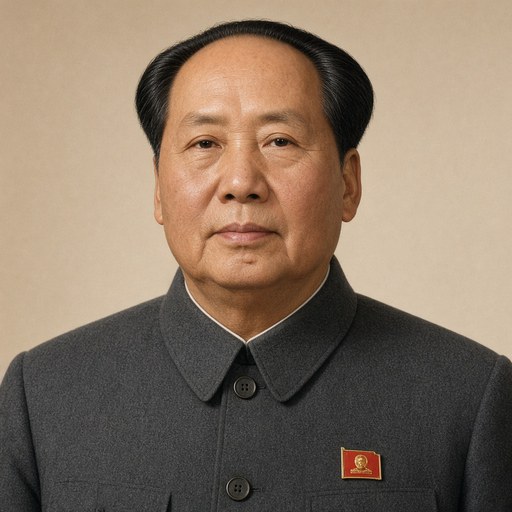
 Mao Zedong · Chairman of the Central Committee of the Communist Party of China
- Context
- Mao addressed the Senior Cadres' Conference of the Shaanxi-Gansu-Ningxia Border Region in December 1942 on economic and financial policy, setting out the slogan "develop the economy and ensure supplies" and announcing a campaign for better troops and simpler administration.
- Main themes
- Develop the economy and ensure supplies, Shaanxi-Gansu-Ningxia Border Region finances, self-supporting army and public economy, Kuomintang blockade and anti-Communist frictions, people's grain and bond burden, rejection of conservative and unrealistic views, give consideration to both public and private interests, better troops and simpler administration, lightening the people's burden, war of resistance against Japan
- Duration
- ~17 min
- Words
- 1,999
- Sentences
- 76
- Readability
- 43
- Grade
- 13.8
- Syntax
- 3.30
- Vocabulary
- 2.08
Translated from Chinese Source: GitHub qinglee/maoxuan (毛泽东选集) ↗
The broad sphere of national life a sentence belongs to. Every sentence has an Arena, so it is the denominator the other indices are read against.
Other76 sentences in 9 paragraphs
Develop the economy and ensure supplies: this is the general policy of our economic work and our financial work. But there are many comrades who one-sidedly attach importance to finance and do not understand the importance of the economy as a whole; their minds go round and round all day long in the circle of purely financial questions of revenue and expenditure, and however much they go round, they still cannot solve the problem. This is because an outdated, conservative point of view is making mischief in the minds of these comrades. They do not know that while a good or bad financial policy can certainly affect the economy, it is the economy that determines finance. Never has it been possible to solve financial difficulties without a foundation in the economy, and never has it been possible to make finances ample without developing the economy. The financial problem of the Shaanxi-Gansu-Ningxia Border Region is the problem of supplying living expenses and operating expenses for tens of thousands of troops and functionaries, that is, the problem of supplying funds for the War of Resistance against Japan. These funds are all provided through the taxes paid by the people and through the production of the tens of thousands of troops and functionaries themselves. If we do not develop the people's economy and the public economy, we shall have nothing to do but fold our hands and await death. Financial difficulties can be solved only through down-to-earth and effective economic development. The conservative point of view, which forgets about developing the economy and forgets about opening up sources of revenue, and which attempts to solve financial difficulties by cutting down indispensable financial expenditure, cannot solve any problem at all.
Over the past five years we have gone through several stages. The greatest difficulty came in 1940 and 1941, when the Kuomintang's two anti-Communist frictions both occurred. We were at one time reduced almost to having no clothes to wear, no cooking oil, no paper, no vegetables, no shoes or socks for the soldiers, and no bedding for the functionaries in winter. The Kuomintang tried to strangle us by cutting off our funds and imposing an economic blockade, and our difficulties were truly enormous. But we pulled through. This was not only because the people of the Border Region gave us grain to eat, but above all because we resolved to do the work ourselves and built up our own public economy. The Border Region Government set up many self-supporting industries; the army launched a large-scale production campaign and developed agriculture, industry and commerce with self-sufficiency as the aim; and the tens of thousands of people in the organizations and schools also developed a similar self-supporting economy. This self-supporting economy developed by the army and by the organizations and schools is a special product of the special conditions of the present time; under other historical conditions it would be unreasonable and incomprehensible, but at present it is entirely reasonable and entirely necessary. It was by these means that we overcame our difficulties. Has not the truth that only by developing the economy can we ensure supplies been proved to us by clear and indisputable historical facts? Now, although we still have many difficulties, the foundation of our public economy has already been laid. With one more year, 1943, our foundation will be even more solid.
The line of developing the economy is the correct line, but development does not mean reckless or groundless development. Some comrades, disregarding the concrete conditions of this time and this place, are clamouring emptily for development; for instance, they demand the building of heavy industry and put forward plans for a big salt industry and a big armaments industry, all of which are unrealistic and cannot be adopted. The Party's line is the correct line of development; on the one hand, we must oppose the outdated, conservative point of view, and on the other, we must oppose grandiose plans that are hollow and unrealistic. This is the Party's struggle on two fronts in financial and economic work.
We must develop the public economy, but we must not forget the importance of the help the people give us. The people have given us grain to eat: 90,000 tan in 1940, 200,000 tan in 1941 and 160,000 tan in 1942, ensuring food grain for the army and the functionaries. Up to 1941, the grain production of our public agriculture was still very meagre, and for grain we were still relying on the common people. Although in the future we must certainly step up the army's grain production, for the time being we can still rely mainly only on the common people. Although the Shaanxi-Gansu-Ningxia Border Region is a rear area that has not suffered the direct ravages of war, it is vast in territory and sparsely populated, with a population of only 1,500,000, and it is not easy for it to supply so much grain. The common people transport public salt for us and pay money in lieu of salt transport, and in 1941 they also bought 5,000,000 yuan of government bonds, which is also no small burden. To meet the needs of resisting Japan and building the nation, the people ought to bear this burden, and the people understand this necessity very well. When the government is in extreme difficulty, it is also necessary to ask the people to bear a little more, and the people understand this too. But while we take from the people, we must at the same time help the people's economy to grow and to be replenished. That is to say, we must take appropriate steps and measures to help the development of the people's agriculture, animal husbandry, handicrafts, salt industry and commerce, so that the people gain something even as they lose something, and so that what they gain exceeds what they lose; only thus can we sustain a protracted War of Resistance against Japan.
Some comrades, disregarding the needs of the war, insist simply that the government should practise "benevolent government". This is a wrong point of view. For if the War of Resistance is not won, so-called "benevolent government" will be bestowed only on Japanese imperialism and will have nothing to do with the people. Conversely, although the people's burden may be somewhat heavy for a time, if the difficulties of the government and the army are overcome, the War of Resistance is sustained and the enemy is defeated, the people will have good days to live; this is the great benevolent government of a revolutionary government.
Another wrong point of view is to disregard the difficulties of the people and to care only about the needs of the government and the army, draining the pond to catch the fish and making endless exactions. This is the thinking of the Kuomintang, and we must never inherit it. For a time we have increased the people's burden, but we immediately set to work to build up the public economy. In the two years 1941 and 1942, the part of their needs that the army and the organizations and schools met by doing the work themselves made up the greater part of their total needs. This is a miracle without precedent in Chinese history, and it is the material foundation that makes us unconquerable. The more our self-supporting economy develops, the more we can lighten the taxes we impose on the people. In the first stage, from 1937 to 1939, we took very little from the people; during this stage the people were given ample opportunity to recuperate. The years 1940 to 1942 were the second stage, in which the people's burden increased. From 1943 on, we can enter a third stage. If our public economy continues to develop in the two years 1943 and 1944, and if our troops in the Shaanxi-Gansu-Ningxia Border Region gain the opportunity during these two years to engage wholly or mostly in farming on reclaimed land, then after two years the people's burden can again be lightened, and the people can again recuperate. This trend can be realized, and we should prepare to bring it about.
We must refute these various biased views and put forward our Party's correct slogan, which is "Develop the economy and ensure supplies". With regard to the relationship between the public and the private, it is "Give consideration to both public and private interests", or "Give consideration to both the army and the people". We consider that only such slogans are correct slogans. Only by developing the public and private economies in a way that seeks truth from facts can financial supplies be ensured. Even in times of difficulty, we must still pay attention to the limits of taxation, so that although the burden is heavy, the people are not harmed. And as soon as we find a way, we must lighten the people's burden so as to let the people recuperate.
The Kuomintang die-hards consider that construction in the Border Region is hopeless and that the Border Region's difficulties are insurmountable, and every day they are waiting for the Border Region to "collapse". There is no need for us to argue with such people; they will never see the day of our "collapse", for we shall only grow and flourish. They do not know that under the leadership of the Communist Party and the revolutionary government of the Border Region, the masses of the people always support the Party and the government. The Party and the government will certainly also find ways in economic and financial matters to pull through any serious difficulty. Of our present difficulties, some have already been overcome and others will soon be overcome. We have been through times many times more difficult than the present, and we pulled through those difficulties too. The difficulties of the base areas in northern and central China today are much greater than those of the Shaanxi-Gansu-Ningxia Border Region; there is serious fighting there every day, they have held out for five and a half years, and they will certainly be able to keep holding out until victory. There is no pessimism ahead of us; we can overcome any difficulty.
After this Senior Cadres' Conference of the Shaanxi-Gansu-Ningxia Border Region, we shall put into effect "better troops and simpler administration". This time, the policy of better troops and simpler administration must be strict, thorough and universal, not perfunctory, half-hearted and partial. In carrying out better troops and simpler administration this time, we must achieve five aims: simplification, unification, efficiency, economy and opposition to bureaucracy. These five have a great bearing on our economic and financial work. Simplification reduces non-productive expenditure and increases productive income; this not only has a direct good effect on finances, but can also reduce the people's burden and benefit the people's economy. The evil practices of disunity, assertion of independence and each going his own way in the organs of economic and financial work must be overcome, and a unified working system must be established that responds to direction as one wishes and carries policies and rules through to the end. Once such a unified system is established, working efficiency can be raised. Economy is something to which all working organs must pay attention, and the economic and financial organs especially so. Practising economy will save a large amount of unnecessary and wasteful expenditure, which may amount to tens of millions of yuan. Personnel engaged in economic and financial work must also overcome the bureaucracy that exists, in some cases in a very serious form, such as corruption, putting on airs, useless "formalization", red tape and so on. If we fully carry out these five requirements in all the systems of the Party, the government and the army, then this campaign for better troops and simpler administration will have achieved its aim, our difficulties will certainly be overcome, and we shall be able to shut the mouths of those who sneer that we are going to "collapse".
The original Chinese. The tags above are read on the English translation's sentences.
发展经济,保障供给,是我们的经济工作和财政工作的总方针。但是有许多同志,片面地看重了财政,不懂得整个经济的重要性;他们的脑子终日只在单纯的财政收支问题上打圈子,打来打去,还是不能解决问题。这是一种陈旧的保守的观点在这些同志的头脑中作怪的缘故。他们不知道财政政策的好坏固然足以影响经济,但是决定财政的却是经济。未有经济无基础而可以解决财政困难的,未有经济不发展而可以使财政充裕的。陕甘宁边区的财政问题,就是几万军队和工作人员的生活费和事业费的供给问题,也就是抗日经费的供给问题。这些经费,都是由人民的赋税及几万军队和工作人员自己的生产来解决的。如果不发展人民经济和公营经济,我们就只有束手待毙。财政困难,只有从切切实实的有效的经济发展上才能解决。忘记发展经济,忘记开辟财源,而企图从收缩必不可少的财政开支去解决财政困难的保守观点,是不能解决任何问题的。
五年以来,我们经过了几个阶段。最大的一次困难是在一九四〇年和一九四一年,国民党的两次反共磨擦,都在这一时期。我们曾经弄到几乎没有衣穿,没有油吃,没有纸,没有菜,战士没有鞋袜,工作人员在冬天没有被盖。国民党用停发经费和经济封锁来对待我们,企图把我们困死,我们的困难真是大极了。但是我们渡过了困难。这不但是由于边区人民给了我们粮食吃,尤其是由于我们下决心自己动手,建立了自己的公营经济。边区政府办了许多的自给工业;军队进行了大规模的生产运动,发展了以自给为目标的农工商业;几万机关学校人员,也发展了同样的自给经济。军队和机关学校所发展的这种自给经济是目前这种特殊条件下的特殊产物,它在其它历史条件下是不合理的和不可理解的,但在目前却是完全合理并且完全必要的。我们就用这些办法战胜了困难。只有发展经济才能保障供给这一真理,不是被明白无疑的历史事实给我们证明了吗?到了现在,我们虽则还有很多的困难,但是我们的公营经济的基础,已经打下了。一九四三年再来一年,我们的基础就更加稳固了。
发展经济的路线是正确的路线,但发展不是冒险的无根据的发展。有些同志不顾此时此地的具体条件,空嚷发展,例如要求建设重工业,提出大盐业计划、大军工计划等,都是不切实际的,不能采用的。党的路线是正确的发展路线,一方面要反对陈旧的保守的观点,另一方面又要反对空洞的不切实际的大计划。这就是党在财政经济工作中的两条战线上的斗争。
我们要发展公营经济,但是我们不要忘记人民给我们帮助的重要性。人民给了我们粮食吃:一九四〇年的九万担,一九四一年的二十万担,一九四二年的十六万担,保证了军队和工作人员的食粮。截至一九四一年,我们公营农业中的粮食生产一项,还是很微弱的,我们在粮食方面还是依靠老百姓。今后虽然一定要加重军队的粮食生产,但是暂时也还只能主要地依靠老百姓。陕甘宁边区虽然是没有直接遭受战争破坏的后方环境,但是地广人稀,只有一百五十万人口,供给这样多的粮食,是不容易的。老百姓为我们运公盐和出公盐代金,一九四一年还买了五百万元公债,也是不小的负担。为了抗日和建国的需要,人民是应该负担的,人民很知道这种必要性。在公家极端困难时,要人民多负担一点,也是必要的,也得到人民的谅解。但是我们一方面取之于民,一方面就要使人民经济有所增长,有所补充。这就是对人民的农业、畜牧业、手工业、盐业和商业,采取帮助其发展的适当步骤和办法,使人民有所失同时又有所得,并且使所得大于所失,才能支持长期的抗日战争。
有些同志不顾战争的需要,单纯地强调政府应施“仁政”,这是错误的观点。因为抗日战争如果不胜利,所谓“仁政”不过是施在日本帝国主义身上,于人民是不相干的。反过来,人民负担虽然一时有些重,但是战胜了政府和军队的难关,支持了抗日战争,打败了敌人,人民就有好日子过,这个才是革命政府的大仁政。
另外的错误观点,就是不顾人民困难,只顾政府和军队的需要,竭泽而渔,诛求无已。这是国民党的思想,我们决不能承袭。我们一时候加重了人民的负担,但是我们立即动手建设了公营经济。一九四一年和一九四二年两年中,军队和机关学校因自己动手而获得解决的部分,占了整个需要的大部分。这是中国历史上从来未有的奇迹,这是我们不可征服的物质基础。我们的自给经济愈发展,我们加在人民身上的赋税就可以愈减轻。一九三七年至一九三九年的第一个阶段中,我们取之于民是很少的;在这一阶段内,大大地休养了民力。一九四〇年至一九四二年为第二阶段,人民负担加重了。一九四三年以后,可以走上第三阶段。如果我们的公营经济在一九四三年和一九四四年两年内是继续发展的,如果我们在陕甘宁边区的军队在这两年内获得全部或大部屯田的机会,那末,在两年以后,人民负担又可减轻了,民力又可得到休养了。这个趋势是可能实现的,我们应该准备这样做。
我们要批驳这样那样的偏见,而提出我们党的正确的口号,这就是“发展经济,保障供给”。在公私关系上,就是“公私兼顾”,或叫“军民兼顾”。我们认为只有这样的口号,才是正确的口号。只有实事求是地发展公营和民营的经济,才能保障财政的供给。虽在困难时期,我们仍要注意赋税的限度,使负担虽重而民不伤。而一经有了办法,就要减轻人民负担,借以休养民力。
国民党的顽固分子觉得边区的建设是无希望的,边区的困难是不可克服的困难,他们每天都在等待着边区“塌台”。对于这种人,我们用不着和他们辩论,他们是永远也看不到我们“塌台”的日子的,我们只会兴盛起来。他们不知道在共产党和边区革命政府的领导下,人民群众总是拥护党和政府的。党和政府在经济和财政方面也一定有办法,足以渡过任何严重的困难。我们现在的困难,有的已经渡过,有的快要渡过。我们曾经历过比现在还要困难到多少倍的时候,那样的困难我们也渡过了。现在华北华中各根据地的困难,比陕甘宁边区要大得多,那里天天有严重的战争,那里已经支持了五年半,那里也一定能够继续支持,直到胜利。在我们面前是没有悲观的,我们能够战胜任何的困难。
这次陕甘宁边区高级干部会议以后,我们就要实行“精兵简政”。这一次精兵简政,必须是严格的、彻底的、普遍的,而不是敷衍的、不痛不痒的、局部的。在这次精兵简政中,必须达到精简、统一、效能、节约和反对官僚主义五项目的。这五项,对于我们的经济工作和财政工作,关系极大。精简之后,减少了消费性的支出,增加了生产的收入,不但直接给予财政以好影响,而且可以减少人民的负担,影响人民的经济。经济和财政工作机构中的不统一、闹独立性、各自为政等恶劣现象,必须克服,而建立统一的、指挥如意的、使政策和制度能贯彻到底的工作系统。这种统一的系统建立后,工作效能就可以增加。节约是一切工作机关都要注意的,经济和财政工作机关尤其要注意。实行节约的结果,可以节省一大批不必要的和浪费性的支出,其数目可以达到几千万元。从事经济和财政业务的工作人员,还必须克服存在着的有些还是很严重的官僚主义,例如贪污现象,摆空架子,无益的“正规化”,文牍主义等等。如果我们把这五项要求在党的、政府的、军队的各个系统中完全实行起来,那我们的这次精兵简政,就算达到了目的,我们的困难就一定能克服,那些笑我们会要“塌台”的人们的嘴巴也就可以被我们封住了。