




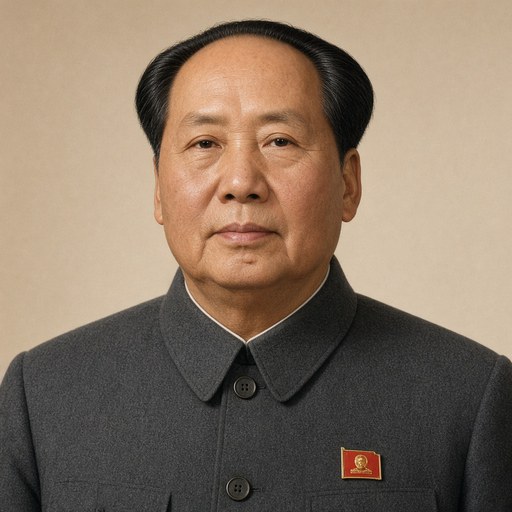
The Present Situation and Our Tasks
 Mao Zedong · Chairman of the Central Committee of the Communist Party of China
- Context
- Mao delivered a report on the present situation and tasks of the revolution, dated December 25, 1947, declaring that the People's Liberation Army had gone over to the offensive and setting out the ten military principles and land reform policy.
- Main themes
- Turning point of the Chinese People's Liberation War, defeat of Chiang Kai-shek and U.S. imperialism, ten principles of military strategy, land reform and the Outline Land Law, alliance with poor and middle peasants, reorganisation of the Party ranks, confiscation of bureaucrat-capital, protection of national industry and commerce, New-Democratic economic structure, broad national united front, world anti-imperialist camp led by the Soviet Union, weakness of U.S. imperialism
- Duration
- ~55 min
- Words
- 6,578
- Sentences
- 223
- Readability
- 35
- Grade
- 15.4
- Syntax
- 3.46
- Vocabulary
- 2.35
Translated from Chinese Source: GitHub qinglee/maoxuan (毛泽东选集) ↗
The broad sphere of national life a sentence belongs to. Every sentence has an Arena, so it is the denominator the other indices are read against.
Other223 sentences in 16 paragraphs
I
The revolutionary war of the Chinese people has now reached a turning point. That is to say, the Chinese People's Liberation Army has repelled the offensive of the several million reactionary troops of Chiang Kai-shek, the lackey of the United States, and has itself gone over to the offensive. As early as the first year of this war, from July 1946 to June 1947, the People's Liberation Army had already repulsed Chiang Kai-shek's attacks on several fronts and forced Chiang Kai-shek into a defensive position. And in the first quarter of the second year of the war, from July to September 1947, the People's Liberation Army went over to the offensive on a nationwide scale, smashing Chiang Kai-shek's counter-revolutionary plan of continuing to carry the war into the Liberated Areas in an attempt to destroy them completely. Now the war is no longer being fought mainly in the Liberated Areas but in the Kuomintang areas; the main forces of the People's Liberation Army have already advanced into the Kuomintang areas. On this land of China, the Chinese People's Liberation Army has turned back the counter-revolutionary wheel of U.S. imperialism and its lackey, the Chiang Kai-shek bandit gang, sending it along the road to destruction, and has pushed forward its own revolutionary wheel along the road to victory. This is a historic turning point. It is the turning point from growth to extinction of Chiang Kai-shek's twenty years of counter-revolutionary rule. It is the turning point from growth to extinction of the rule of imperialism in China, which has lasted for more than a hundred years. This is a great event. It is great because it has occurred in a country with a population of 475 million, and once it has occurred it will inevitably lead to victory throughout the country. It is also great because it has occurred in the East of the world, where more than a thousand million people, half of mankind, suffer under the oppression of imperialism. The shift of the Chinese people's war of liberation from the defensive to the offensive cannot fail to cause rejoicing among these oppressed nations. At the same time, it is also a help to the oppressed peoples now struggling in the countries of Europe and America.
II
From the day Chiang Kai-shek launched his counter-revolutionary war, we have said that not only must we defeat Chiang Kai-shek, but we can defeat him. We must defeat Chiang Kai-shek because the war he launched is a counter-revolutionary war, directed by U.S. imperialism, against China's national independence and the liberation of the Chinese people. The task of the Chinese people, after the end of the Second World War and the overthrow of Japanese imperialism, is to carry out the New-Democratic reforms politically, economically and culturally, to achieve the unification and independence of the country, and to change China from an agricultural into an industrial country. Yet it was precisely at this time, after the victorious conclusion of the anti-fascist Second World War, that U.S. imperialism and its lackeys in various countries took the place of German and Japanese imperialism and their lackeys and formed a reactionary camp, against the Soviet Union, against the people's democracies of Europe, against the workers' movements in the capitalist countries, against the national movements in the colonies and semi-colonies, and against the liberation of the Chinese people. At such a time, the Chinese reactionaries headed by Chiang Kai-shek, exactly like Wang Ching-wei, the lackey of Japanese imperialism, acted as lackeys of U.S. imperialism, sold China to the United States, launched a war against the Chinese people and tried to block the advance of the cause of the Chinese people's liberation. At such a time, if we had shown weakness, if we had shown a readiness to yield, if we had not dared to rise resolutely and oppose counter-revolutionary war with revolutionary war, China would have become a dark world and the future of our nation would have been lost. The Chinese Communist Party led the Chinese People's Liberation Army in resolutely waging a patriotic, just and revolutionary war against Chiang Kai-shek's offensive. Basing itself on the science of Marxism-Leninism, the Chinese Communist Party soberly assessed the international and domestic situation and knew that the attacks of all reactionaries, internal and external, not only must be defeated but can be defeated. When dark clouds appeared in the sky, we pointed out that this was only a temporary phenomenon, that the darkness would soon pass and the dawn was just ahead. In July 1946, when the Chiang Kai-shek bandit gang launched its nationwide counter-revolutionary war, it believed that three to six months would suffice to defeat the People's Liberation Army. It reckoned that it had two million regular troops, over a million irregular troops, and over a million men in rear-area military organs and units, a total military force of over four million; that it had used the time to complete its preparations for the offensive; that it had regained control of the big cities; that it held a population of over 300 million; that it had taken over the entire equipment of a million Japanese troops in China; and that it had obtained huge military and financial aid from the U.S. government. It also reckoned that the Chinese People's Liberation Army was very weary after eight years of the War of Resistance Against Japan and far inferior to the Kuomintang army in numbers and equipment; that the Liberated Areas of China had a population of only a little over 100 million, that in most of these areas the reactionary feudal forces had not yet been eliminated, and that land reform was neither universal nor thorough, which is to say that the rear of the People's Liberation Army was not yet consolidated. Proceeding from this assessment, the Chiang Kai-shek bandit gang, in disregard of the Chinese people's desire for peace, finally tore up the cease-fire agreement between the Kuomintang and the Communist Party signed in January 1946 and the resolutions of the Political Consultative Conference of all parties, and launched an adventurist war. At that time we said that Chiang Kai-shek's superiority in military strength was only a temporary phenomenon, only a factor that would work temporarily; that the aid of U.S. imperialism was likewise only a factor that would work temporarily; that the anti-popular character of Chiang Kai-shek's war and the question of whom the people supported and whom they opposed were factors that would work constantly; and that in this respect the People's Liberation Army held the superiority. The patriotic, just and revolutionary character of the war waged by the People's Liberation Army will inevitably win the support of the people of the whole country. This is the political basis for defeating Chiang Kai-shek. The experience of eighteen months of war has fully proved our judgement.
III
In seventeen months of fighting (from July 1946 to the end of November 1947, December not yet counted), we have killed, wounded or captured a total of 1,690,000 of Chiang Kai-shek's regular and irregular troops, of whom 640,000 were killed or wounded and 1,050,000 were captured. In this way our army repulsed Chiang Kai-shek's offensive, preserved the basic areas of the Liberated Areas, and went over to the offensive itself. We have been able to do this, so far as military matters are concerned, because we carried out a correct strategy. Our military principles are: (1) Attack dispersed, isolated enemy forces first; attack concentrated, strong enemy forces later. (2) Take small and medium cities and extensive rural areas first; take big cities later. (3) Make the destruction of the enemy's effective strength our main objective; do not make the holding or seizing of a city or place our main objective. The holding or seizing of a city or place is the outcome of destroying the enemy's effective strength, and often a city or place can be held or seized for good only after it has changed hands a number of times. (4) In every battle, concentrate an absolutely superior force (two, three, four and sometimes even five or six times the enemy's strength), encircle the enemy forces completely, strive to wipe them out thoroughly and do not let any escape from the net. In special circumstances, use the method of dealing the enemy crushing blows, that is, concentrate all our strength to make a frontal attack and an attack on one or both of his flanks, with the aim of wiping out one part and routing another so that our army can swiftly move its troops to smash other enemy forces. Strive to avoid battles of attrition in which we lose more than we gain or only break even. In this way, although inferior as a whole (in terms of numbers), we are absolutely superior in every part and every specific campaign, and this ensures victory in the campaign. As time goes by, we shall become superior as a whole, till we have wiped out all the enemy. (5) Fight no battle unprepared, fight no battle you are not sure of winning; make every effort to be well prepared for each battle, make every effort to ensure victory in the given set of conditions as between the enemy and ourselves. (6) Give full play to our style of fighting: courage in battle, no fear of sacrifice, no fear of fatigue, and continuous fighting (that is, fighting successive battles in a short time without rest). (7) Strive to wipe out the enemy while he is in motion. At the same time, pay attention to the tactics of positional attack and capture enemy fortified points and cities. (8) With regard to attacking cities, resolutely seize all enemy fortified points and cities which are weakly defended. At opportune moments, seize all enemy fortified points and cities which are defended with moderate strength and where circumstances permit. Wait until conditions are ripe and then take all enemy fortified points and cities which are strongly defended. (9) Replenish our strength with all the arms and most of the personnel captured from the enemy. Our army's main sources of manpower and matériel are at the front. (10) Make good use of the intervals between campaigns to rest, train and consolidate our troops. Periods of rest, training and consolidation should not in general be very long, and the enemy should so far as possible be permitted no breathing space. These are the main methods the People's Liberation Army has used in defeating Chiang Kai-shek. They are the result of the tempering of the People's Liberation Army in long years of fighting against domestic and foreign enemies and are completely suited to our present situation. The Chiang Kai-shek bandit gang and the U.S. imperialist military personnel in China are well acquainted with these methods of ours. Chiang Kai-shek has repeatedly assembled his generals and officers for training and distributed our military writings and documents captured in the war for them to study, in an attempt to find ways of coping with us. The U.S. military personnel have suggested to Chiang Kai-shek this or that strategy and tactics for destroying the People's Liberation Army, and have trained his troops and supplied military equipment. But none of these efforts can save the Chiang Kai-shek bandit gang from defeat. This is because our strategy and tactics are based on a people's war; no army opposed to the people can use our strategy and tactics. On the basis of a people's war, and on the basis of such principles as unity between army and people, unity between commanders and fighters, and the disintegration of the enemy forces, the People's Liberation Army has built up its own powerful revolutionary political work, and this is a major factor in our victory over the enemy. When we avoided the deadly blows of superior enemy forces and shifted our forces in order to wipe out the enemy in motion, and so deliberately gave up many cities, our enemies were jubilant. They took this for their victory and our defeat. They were befuddled by this so-called victory of the moment. On the very afternoon that Changchiakow was occupied, Chiang Kai-shek ordered the convening of his reactionary National Assembly, as though his reactionary rule from then on would be as secure as Mount Tai. The U.S. imperialists too jumped for joy, as though their insane plan to turn China into a U.S. colony could from then on be realized without hindrance. But as time went by, the tune of Chiang Kai-shek and his American masters changed. Now is the time when all our enemies, internal and external, are gripped by pessimism. They sigh and moan and cry out about crisis; not a shadow of joy is to be seen. In eighteen months, most of Chiang Kai-shek's senior field commanders were replaced because of defeats. Among them were Liu Chih at Chengchow, Hsueh Yueh at Hsuchow, Wu Chi-wei in northern Kiangsu, Tang En-po in southern Shantung, Wang Chung-lien in northern Honan, Tu Yu-ming and Hsiung Shih-hui at Shenyang, and Sun Lien-chung at Peiping. Chen Cheng, Chiang Kai-shek's Chief of the General Staff, who bore responsibility for directing the whole conduct of the war, has also been stripped of this command authority and demoted to commander of one theatre in the Northeast. And during the period when Chiang Kai-shek himself took over overall command from Chen Cheng, there came about the situation in which Chiang Kai-shek's troops went from the offensive to the defensive and the People's Liberation Army from the defensive to the offensive. The Chiang Kai-shek reactionary clique and its American masters ought now to feel that they have made mistakes. For a long period after Japan's surrender, they regarded all the efforts of the Chinese Communist Party, which represented the wishes of the Chinese people, to strive for peace and oppose civil war, as signs of timidity and weakness. They overestimated their own strength and underestimated the strength of the revolution, recklessly launched a war, and thus fell into the trap of their own making. The strategic calculations of our enemies have been utterly defeated.
IV
Now, compared with eighteen months ago, the rear of the People's Liberation Army has also become much more consolidated. This is the result of our Party's carrying out land reform, resolutely standing on the side of the peasants. During the War of Resistance Against Japan, in order to establish an anti-Japanese united front with the Kuomintang and to unite with those who at that time could still oppose Japanese imperialism, our Party voluntarily changed its pre-war policy of confiscating the land of the landlords and distributing it to the peasants into a policy of reducing rent and interest; this was entirely necessary. After Japan's surrender, the peasants urgently demanded land, and we promptly made the decision to change the land policy from reduction of rent and interest to confiscation of the land of the landlord class and its distribution to the peasants. The directive issued by the Central Committee of our Party on May 4, 1946 expressed this change. In September 1947, our Party convened a National Land Conference, which drew up the Outline Land Law of China and immediately put it into general effect in all areas. This step not only confirmed the line of last year's May 4 Directive but also clearly corrected certain inconsistencies in last year's May 4 Directive. The Outline Land Law of China provides that, under the principle of abolishing the feudal and semi-feudal system of exploitation and introducing the system of "land to the tillers", land shall be equally distributed on the basis of population. This is the most thorough method of eliminating the feudal system, and it fully suits the demands of the broad masses of China's peasants. In order to carry out land reform resolutely and thoroughly, it is necessary in the villages not only to organize the broadest mass peasant associations, including farm labourers, poor peasants and middle peasants, and their elected committees, but above all to organize poor peasant leagues, including the mass of poor peasants and farm labourers, and their elected committees, as the legal organs for carrying out land reform, and the poor peasant leagues should become the leading core of all rural struggles. Our policy is to rely on the poor peasants, to unite firmly with the middle peasants, and to eliminate the feudal and semi-feudal system of exploitation by the landlord class and the old-type rich peasants. The land and property to which landlords and rich peasants are entitled must not exceed that of the peasant masses. But the ultra-Left, mistaken policy of "no land for landlords and bad land for rich peasants", which was once carried out in the period from 1931 to 1934, should not be repeated either. The proportion of landlords and rich peasants in the rural population varies from place to place, but in general it is only about 8 per cent (calculated by households), while the land they own generally amounts to 70 to 80 per cent of all the land. Thus the people against whom our land reform is directed are very few, whereas those in the villages who can and should take part in the united front for land reform number over 90 per cent (of households). Two basic principles must be borne in mind here: first, the demands of the poor peasants and farm labourers must be satisfied, which is the most basic task of land reform; second, we must firmly unite with the middle peasants and not harm their interests. As long as we grasp these two basic principles, we shall surely be able to accomplish the task of land reform victoriously. The reason why the land and part of the property of the old-type rich peasants in excess of the equal share should be taken out for distribution is that China's rich peasants generally have a heavy feudal and semi-feudal character of exploitation; most rich peasants rent out land and lend money at usurious rates as well, and the conditions under which they hire labour are also semi-feudal. It is also because they hold larger amounts of land and of better quality, so that without equal distribution the demands of the poor peasants and farm labourers cannot be satisfied. But according to the provisions of the Outline Land Law, rich peasants should generally be treated differently from landlords. In land reform, the middle peasants have shown that they favour equal distribution, because equal distribution does not harm their interests. In equal distribution, part of the middle peasants' land remains unchanged and part of them gain land; only a section of the well-to-do middle peasants have a small surplus of land, and they too are willing to give it up for equal distribution, because after equal distribution their burden of land tax is also lightened. Even so, in equal distribution of land every locality must still pay attention to the opinions of the middle peasants, and if the middle peasants do not agree, concessions should be made to them. In confiscating and distributing the land and property of the feudal class, attention must be paid to the needs of certain middle peasants. In determining class status, care must be taken not to wrongly place in the rich-peasant category people who are in fact middle peasants. Middle-peasant activists must be drawn into the work of the peasant association committees and of the government. In land tax and in the burden of supporting the war, the principle of fairness and reasonableness must be adopted. These are the concrete policies our Party must adopt in carrying out the strategic task of firmly uniting with the middle peasants. The whole Party must understand that the thorough reform of the land system is a basic task of the Chinese revolution at the present stage. If we can solve the land problem universally and thoroughly, we shall have obtained the most basic condition for defeating all our enemies.
V
In order to carry out land reform resolutely and thoroughly and to consolidate the rear of the People's Liberation Army, it is necessary to reorganize the ranks of the Party. The rectification movement within our Party during the War of Resistance Against Japan was generally effective. This effectiveness lay mainly in enabling our leading bodies and the broad ranks of cadres and Party members to grasp further the basic orientation of the unity of the universal truth of Marxism-Leninism with the concrete practice of the Chinese revolution. In this respect our Party has made great progress over the several historical periods before the War of Resistance. But the problems of impure class composition and impure style of work in the Party's local organizations, especially in its basic rural organizations, have not been solved. In the eleven years from 1937 to 1947, our Party organization grew from several tens of thousands of members to 2,700,000 members, an enormous leap forward. This has made our Party stronger than any party in the history of China. It made it possible for us to defeat Japanese imperialism and repulse Chiang Kai-shek's offensive, and to lead the Liberated Areas with a population of over 100 million and the People's Liberation Army of two million. But shortcomings followed. That is, many landlord elements, rich-peasant elements and riffraff took the opportunity to sneak into our Party. In the villages they have seized control of many Party, government and people's organizations, lorded it over the people, bullied them, distorted the Party's policies, cut these organizations off from the masses and prevented land reform from being thorough. This serious situation poses before us the task of reorganizing the ranks of the Party. If this task is not solved, we cannot advance in the countryside. The Party's National Land Conference discussed this question thoroughly and laid down appropriate steps and methods. These steps and methods are now being resolutely carried out in all areas together with the decision on equal distribution of land. Of first importance among them is to develop criticism and self-criticism within the Party and to expose thoroughly the erroneous ideas and serious phenomena in the organizations of every locality that depart from the Party's line. All comrades in the Party must understand that solving this problem of impurity within the Party and reorganizing the ranks of the Party, so that the Party can stand wholly in the same direction as the broadest labouring masses and lead them forward, is a decisive link in solving the land problem and supporting a protracted war.
VI
To confiscate the land of the feudal class and turn it over to the peasants, to confiscate the monopoly capital headed by Chiang Kai-shek, T. V. Soong, H. H. Kung and Chen Li-fu and turn it over to the New-Democratic state, and to protect the national industry and commerce: these are the three great economic programmes of the New-Democratic revolution. The four big families, Chiang, Soong, Kung and Chen, in the twenty years they have been in power, have amassed enormous fortunes valued at between 10,000 million and 20,000 million U.S. dollars and monopolized the economic lifelines of the whole country. This monopoly capital, combined with state power, has become state monopoly capitalism. This state monopoly capitalism, closely tied up with foreign imperialism, the domestic landlord class and the old-type rich peasants, has become comprador-feudal state monopoly capitalism. This is the economic basis of Chiang Kai-shek's reactionary regime. This state monopoly capitalism oppresses not only the workers and peasants but also the urban petty bourgeoisie, and damages the middle bourgeoisie. This state monopoly capitalism reached its peak during the War of Resistance Against Japan and after Japan's surrender, and it has prepared ample material conditions for the New-Democratic revolution. This capital is popularly known in China as bureaucrat-capital. This capitalist class is known as the bureaucrat-capitalist class, otherwise the big bourgeoisie of China. Besides abolishing the privileges of imperialism in China, the task of the New-Democratic revolution at home is to destroy the exploitation and oppression by the landlord class and the bureaucrat-capitalist class (the big bourgeoisie), to change the comprador-feudal relations of production, and to liberate the fettered productive forces. The upper petty bourgeoisie and the middle bourgeoisie, who are oppressed and injured by these classes and their state power, although they are also bourgeois, can take part in the New-Democratic revolution or remain neutral. They have no ties with imperialism, or have fewer ties, and they are the real national bourgeoisie. Wherever the state power of New Democracy extends, these classes must be firmly and unhesitatingly protected. Among the upper petty bourgeoisie and middle bourgeoisie in the areas ruled by Chiang Kai-shek, a small section, the right-wing elements of these classes, have reactionary political tendencies; they spread illusions for U.S. imperialism and the Chiang Kai-shek reactionary clique and oppose the people's democratic revolution. While their reactionary tendencies can still influence the masses, we should carry on exposure work among the masses who come under their influence, strike at their political influence among the masses and free the masses from their influence. But political blows and economic elimination are two different things, and if we confuse the two we shall make mistakes. The only objects that the New-Democratic revolution is to eliminate are feudalism and monopoly capitalism, only the landlord class and the bureaucrat-capitalist class (the big bourgeoisie), and not capitalism in general, nor the upper petty bourgeoisie and the middle bourgeoisie. Because of the backwardness of China's economy, even after the revolution is victorious throughout the country it will still be necessary for a long period to allow the capitalist economy represented by the broad upper petty bourgeoisie and middle bourgeoisie to exist; and, in accordance with the division of labour in the national economy, it will still be necessary for all those parts of it that are beneficial to the national economy to develop; it will still remain an indispensable part of the national economy as a whole. By the upper petty bourgeoisie we mean the small industrialists and merchants who employ workers or shop assistants. In addition, there are the broad ranks of independent small industrialists and merchants who employ no workers or shop assistants; needless to say, these small industrialists and merchants must be firmly protected. After the revolution is victorious throughout the country, since the New-Democratic state will hold the huge state enterprises taken over from the bureaucrat-capitalist class, which control the economic lifelines of the whole country, and since it will also have an agricultural economy liberated from the feudal system, which, although for quite a long time still basically scattered and individual, can be led gradually in the future towards development in the direction of co-operatives, under these conditions there is no danger in the existence and development of these small and medium capitalist elements. The same holds for the new rich-peasant economy that will inevitably arise in the countryside after land reform. Ultra-Left, mistaken policies towards the economic elements of the upper petty bourgeoisie and the middle bourgeoisie, such as our Party committed in the period from 1931 to 1934 (excessively high wages and conditions of labour, excessively high rates of income tax, encroachment on industrialists and merchants in land reform, and setting as the aim not the development of production, the prosperity of the economy, consideration for both public and private interests and benefit to both labour and capital, but a short-sighted, one-sided so-called welfare of the workers), must absolutely not be repeated. If these mistakes are repeated, they will inevitably damage the interests of the labouring masses and of the New-Democratic state. One article of the Outline Land Law of China states: "The property and lawful business of industrialists and merchants shall be protected from infringement." The industrialists and merchants referred to here mean all independent small industrialists and merchants and all small and medium capitalist elements. To sum up, the economic structure of New China is as follows: (1) the state-operated economy, which is the leading element; (2) the agricultural economy, developing step by step from individual to collective; (3) the economy of the independent small industrialists and merchants and the small and medium private capital economy. These constitute the entire national economy of New Democracy. And the guiding principle for the national economy of New Democracy must closely follow the general objective of developing production, promoting economic prosperity, giving consideration to both public and private interests and benefiting both labour and capital. All principles, policies and measures that depart from this general objective are wrong.
VII
In October 1947, the People's Liberation Army issued a manifesto, which said: "Unite workers, peasants, soldiers, students and businessmen, all the oppressed classes, all people's organizations, all democratic parties, all national minorities, overseas Chinese everywhere and other patriots, form a national united front, overthrow the dictatorial government of Chiang Kai-shek and establish a democratic coalition government." This is the most basic political programme of the People's Liberation Army and also of the Chinese Communist Party. On the surface, our revolutionary national united front in the present period seems to have narrowed compared with the period of the War of Resistance. But in reality it is only in the present period, only after Chiang Kai-shek sold the nation's interests to U.S. imperialism and launched an anti-popular nationwide civil war, only after the crimes of U.S. imperialism and the Chiang Kai-shek reactionary ruling clique have been fully exposed before the Chinese people, that our national united front has truly widened. In the period of the War of Resistance, Chiang Kai-shek and the Kuomintang had not yet entirely lost their prestige among the Chinese people and could still deceive many. It is different now; all their deceptions have been exposed by their own actions, they no longer have any masses and are completely isolated. In contrast to the Kuomintang, the Chinese Communist Party not only has won the trust of the broadest masses in the Liberated Areas, but in the Kuomintang areas and in the big cities controlled by the Kuomintang it has also won the support of the broad masses. If in 1946 a section of the intellectuals of the upper petty bourgeoisie and middle bourgeoisie under Chiang Kai-shek's rule still harboured ideas of a so-called third road, then now such ideas have gone bankrupt. By adopting a thoroughgoing land policy, our Party has won the heartfelt support of a far broader mass of peasants than in the period of the War of Resistance. Because of the aggression of U.S. imperialism, the oppression of Chiang Kai-shek and our Party's correct policy of resolutely protecting the interests of the masses, our Party has won the sympathy of the broad masses of the working class, the peasantry, the urban petty bourgeoisie and the middle bourgeoisie in the areas ruled by Chiang Kai-shek. These masses, because they are hungry, because they are politically oppressed, and because Chiang Kai-shek's anti-popular civil war has deprived the people of every means of livelihood, have been continually raising struggles against U.S. imperialism and the Chiang Kai-shek reactionary government; their basic slogans are against hunger, against persecution, against civil war and against U.S. interference in China's internal affairs. Before the War of Resistance, during it, and even for a period after Japan's surrender, their political consciousness had not reached such a level. Therefore we say that our New-Democratic revolutionary united front is now broader than in any previous period, and also more solid than in any previous period. This matter is connected not only with our land policy and our urban policy, but also closely with the victories of the People's Liberation Army and with the general political situation: Chiang Kai-shek's shift from the offensive to the defensive, the People's Liberation Army's shift from the defensive to the offensive, and the entry of the Chinese revolution into a new high tide. Now that people see that the downfall of Chiang Kai-shek's rule is unavoidable, it is natural that they should place their hopes in the Chinese Communist Party and the People's Liberation Army. For the New-Democratic revolution in China to win victory, it is impossible without the broadest united front, embracing the overwhelming majority of the population of the whole nation. Moreover, this united front must be under the firm leadership of the Chinese Communist Party. Without the firm leadership of the Chinese Communist Party, no revolutionary united front can win victory. In 1927, when the Northern Expedition reached its high tide, the capitulationists in the leading organs of our Party voluntarily gave up the leadership over the peasant masses, the urban petty bourgeoisie and the middle bourgeoisie, and above all gave up the leadership over the armed forces, and so caused the defeat of that revolution. During the War of Resistance Against Japan, our Party opposed ideas akin to this capitulationist thinking, namely, making concessions to the Kuomintang's anti-popular policies, trusting the Kuomintang more than the people's masses, not daring to arouse the masses boldly to struggle, not daring to expand the Liberated Areas and the people's army in the Japanese-occupied areas, and handing over the leadership of the War of Resistance to the Kuomintang. Our Party waged a resolute struggle against this weak, incompetent, rotten thinking that violated the principles of Marxism-Leninism, resolutely carried out the political line of "developing the progressive forces, winning over the middle forces and isolating the diehard forces", and resolutely expanded the Liberated Areas and the People's Liberation Army. In this way we ensured not only that our Party could defeat Japanese imperialism during the period of Japanese aggression, but also that after Japan's surrender, when Chiang Kai-shek conducted his counter-revolutionary war, our Party could switch smoothly and without loss to the path of opposing Chiang Kai-shek's counter-revolutionary war with the people's revolutionary war, and in a short time win great victories. All comrades in the Party must bear these historical lessons firmly in mind.
VIII
When the Chiang Kai-shek reactionary clique launched its nationwide anti-popular civil war in 1946, the reason it dared to take the risk was that it relied not only on its own superior military strength but mainly on U.S. imperialism, which it regarded as "exceptionally strong" and "invincible in the world", with the atom bomb in its hand. On the one hand, it thought that U.S. imperialism could supply its military and financial needs like a flowing stream; on the other hand, it presumptuously imagined that a so-called "inevitable war between the United States and the Soviet Union" and a so-called "inevitable outbreak of a third world war" would come. This dependence on U.S. imperialism is a common characteristic of the reactionary forces in all countries of the world since the end of the Second World War. It reflects the seriousness of the blow the Second World War dealt to world capitalism, the weakness of the reactionaries in various countries and their psychological panic and loss of confidence, and the strength of the world's revolutionary forces, which makes the reactionaries in every country feel there is no way out except to rely on the aid of U.S. imperialism. But in reality, is U.S. imperialism after the Second World War really as strong as Chiang Kai-shek and the reactionaries of all countries imagine? Can it really supply Chiang Kai-shek and the reactionaries of all countries like a flowing stream? It is not so. The economic strength which U.S. imperialism built up during the Second World War has run up against an unstable and steadily shrinking domestic market and international market. A further shrinking of the market will bring on the outbreak of an economic crisis. The war boom in the United States is only a passing phenomenon. Its strength is only superficial and temporary. The irreconcilable contradictions at home and abroad are like a volcano, threatening U.S. imperialism every day, and U.S. imperialism is sitting on this volcano. This situation has driven the U.S. imperialists to draw up a plan for enslaving the world, and like wild beasts they are rushing about in Europe, Asia and other places, gathering together the reactionary forces of all countries, the dregs spurned by their peoples, to form an imperialist and anti-democratic camp against all the democratic forces headed by the Soviet Union, preparing for war, hoping that some day in the future, in the distant future, they can launch a third world war and defeat the democratic forces. This is a presumptuous plan. The democratic forces of the whole world must defeat this plan, and they are fully able to defeat it. The strength of the world's anti-imperialist camp exceeds the strength of the imperialist camp. The superiority is on our side, not on the enemy's side. The anti-imperialist camp headed by the Soviet Union has taken shape. The socialist Soviet Union, free of crises, developing upward and loved by the broad masses of the people of the world, already has a strength exceeding that of imperialist America, which is gravely threatened by crises, declining downward and opposed by the broad masses of the people of the world. The people's democracies of Europe are consolidating themselves internally and uniting with one another. The people's anti-imperialist forces in the capitalist countries of Europe, headed by France and Italy, are growing. Within the United States there exist people's democratic forces which are growing stronger every day. The peoples of Latin America are not slaves obedient to U.S. imperialism. Throughout Asia a great national liberation movement has arisen. All the forces of the anti-imperialist camp are uniting and advancing. The Communist and Workers' Parties of nine European countries have already formed an Information Bureau and published a manifesto calling on the peoples of the world to rise against the imperialist plan of enslavement. This manifesto has lifted the spirits of the oppressed peoples of the world, pointed out the direction of their struggle and strengthened their confidence in victory. The reactionaries of the whole world are thrown into confusion and alarm before this manifesto. All the anti-imperialist forces in the countries of the East should also unite to oppose the oppression of imperialism and of the reactionaries within their own countries, and take the liberation of the more than a thousand million oppressed people of the East as the goal of their struggle. Our own destiny must be fully in our own hands. We should eliminate from our own ranks all ideas of weakness and incompetence. All views that overestimate the strength of the enemy and underestimate the strength of the people are wrong. Together with the democratic forces of the whole world, if we all exert ourselves, we shall surely be able to defeat the imperialist plan of enslavement, prevent the outbreak of a third world war, overthrow the rule of all reactionaries and win the victory of lasting peace for mankind. We know soberly that on our road forward there will still be all kinds of obstacles and difficulties, and we should be prepared to deal with the maximum resistance and struggle of all our enemies, internal and external. But as long as we can master the science of Marxism-Leninism, trust the masses, stay close to the masses and lead them forward, we shall be fully able to surmount any obstacle and overcome any difficulty, and our strength will be invincible. This is the historic era in which capitalism and imperialism are heading for extinction throughout the world and socialism and people's democracy are heading for victory throughout the world. The dawn is just ahead; we should exert ourselves.
The original Chinese. The tags above are read on the English translation's sentences.
一
中国人民的革命战争,现在已经达到了一个转折点。这即是中国人民解放军已经打退了美国走狗蒋介石的数百万反动军队的进攻,并使自己转入了进攻。还在一九四六年七月至一九四七年六月此次战争的第一个年头内,人民解放军即已在几个战场上打退了蒋介石的进攻,迫使蒋介石转入防御地位。而从战争第二年的第一季,即一九四七年七月至九月间,人民解放军即已转入了全国规模的进攻,破坏了蒋介石将战争继续引向解放区、企图彻底破坏解放区的反革命计划。现在,战争主要地已经不是在解放区内进行,而是在国民党统治区内进行了,人民解放军的主力已经打到国民党统治区域里去了。中国人民解放军已经在中国这一块土地上扭转了美国帝国主义及其走狗蒋介石匪帮的反革命车轮,使之走向覆灭的道路,推进了自己的革命车轮,使之走向胜利的道路。这是一个历史的转折点。这是蒋介石的二十年反革命统治由发展到消灭的转折点。这是一百多年以来帝国主义在中国的统治由发展到消灭的转折点。这是一个伟大的事变。这个事变所以带着伟大性,是因为这个事变发生在一个拥有四亿七千五百万人口的国家内,这个事变一经发生,它就将必然地走向全国的胜利。这个事变所以带着伟大性,还因为这个事变发生在世界的东方,在这里,共有十万万以上人口(占人类的一半)遭受帝国主义的压迫。中国人民的解放战争由防御转到进攻,不能不引起这些被压迫民族的欢欣鼓舞。同时,对于正在斗争的欧洲和美洲各国的被压迫人民,也是一种援助。
二
从蒋介石发动反革命战争的一天起,我们就说,我们不但必须打败蒋介石,而且能够打败他。我们必须打败蒋介石,是因为蒋介石发动的战争,是一个在美帝国主义指挥之下的反对中国民族独立和中国人民解放的反革命的战争。中国人民的任务,是要在第二次世界大战结束、日本帝国主义被打倒以后,在政治上、经济上、文化上完成新民主主义的改革,实现国家的统一和独立,由农业国变成工业国。然而恰在这时,在反法西斯的第二次世界大战胜利地结束以后,美国帝国主义及其在各国的走狗代替德国和日本帝国主义及其走狗的地位,组成反动阵营,反对苏联,反对欧洲各人民民主国家,反对各资本主义国家的工人运动,反对各殖民地半殖民地的民族运动,反对中国人民的解放。在这种时候,以蒋介石为首的中国反动派,和日本帝国主义的走狗汪精卫一模一样,充当美国帝国主义的走狗,将中国出卖给美国,发动战争,反对中国人民,阻止中国人民解放事业的前进。在这种时候,如果我们表示软弱,表示退让,不敢坚决地起来用革命战争反对反革命战争,中国就将变成黑暗世界,我们民族的前途就将被断送。中国共产党领导中国人民解放军坚决地进行了爱国的正义的革命的战争,反对蒋介石的进攻。中国共产党依据马克思列宁主义的科学,清醒地估计了国际和国内的形势,知道一切内外反动派的进攻,不但是必须打败的,而且是能够打败的。当着天空中出现乌云的时候,我们就指出:这不过是暂时的现象,黑暗即将过去,曙光即在前头。当着一九四六年七月,蒋介石匪帮发动全国规模的反革命战争的时候,蒋介石匪帮认为,只须三个月至六个月,就可以打败人民解放军。他们认为他们有正规军二百万,非正规军一百余万,后方军事机关和部队一百余万,共有军事力量四百余万人;他们已经利用时间完成了进攻的准备;他们重新控制了大城市;他们拥有三万万以上的人口;他们接收了日本侵华军队一百万人的全部装备;他们取得了美国政府在军事上和财政上的巨大援助。他们又认为,中国人民解放军在八年抗日战争中已经打得很疲倦,而且在数量上和装备上远不及国民党军队;中国解放区还只有一万万多一点的人口,其中大部分地区的反动封建势力还没有被肃清,土地改革还不普遍和不彻底,就是说,人民解放军的后方还不是巩固的。从这种估计出发,蒋介石匪帮就不顾中国人民的和平愿望,最后地撕毁在一九四六年一月间签订的国共两党的停战协定和各党派政治协商会议的决议,发动了冒险的战争。那时,我们说,蒋介石军事力量的优势,只是暂时的现象,只是临时起作用的因素;美国帝国主义的援助,也只是临时起作用的因素;蒋介石战争的反人民的性质,人心的向背,则是经常起作用的因素;而在这方面,人民解放军则占着优势。人民解放军的战争所具有的爱国的正义的革命的性质,必然要获得全国人民的拥护。这就是战胜蒋介石的政治基础。十八个月战争的经验,充分地证明了我们的论断。
三
十七个月(一九四六年七月至一九四七年十一月为止,十二月的尚未计入)作战,共打死、打伤、俘虏了蒋介石正规军和非正规军一百六十九万人,其中打死和打伤的有六十四万人,俘虏的有一百零五万人。这样,就使我军打退了蒋介石的进攻,保存了解放区的基本区域,并使自己转入了进攻。我们所以能够如此,在军事方面来说,是因为执行了正确的战略方针。我们的军事原则是:(1)先打分散和孤立之敌,后打集中和强大之敌。(2)先取小城市、中等城市和广大乡村,后取大城市。(3)以歼灭敌人有生力量为主要目标,不以保守或夺取城市和地方为主要目标。保守或夺取城市和地方,是歼灭敌人有生力量的结果,往往需要反复多次才能最后地保守或夺取之。(4)每战集中绝对优势兵力(两倍、三倍、四倍、有时甚至是五倍或六倍于敌之兵力),四面包围敌人,力求全歼,不使漏网。在特殊情况下,则采用给敌以歼灭性打击的方法,即集中全力打敌正面及其一翼或两翼,求达歼灭其一部、击溃其另一部的目的,以便我军能够迅速转移兵力歼击他部敌军。力求避免打那种得不偿失的、或得失相当的消耗战。这样,在全体上,我们是劣势(就数量来说),但在每一个局部上,在每一个具体战役上,我们是绝对的优势,这就保证了战役的胜利。随着时间的推移,我们就将在全体上转变为优势,直到歼灭一切敌人。(5)不打无准备之仗,不打无把握之仗,每战都应力求有准备,力求在敌我条件对比下有胜利的把握。(6)发扬勇敢战斗、不怕牺牲、不怕疲劳和连续作战(即在短期内不休息地接连打几仗)的作风。(7)力求在运动中歼灭敌人。同时,注重阵地攻击战术,夺取敌人的据点和城市。(8)在攻城问题上,一切敌人守备薄弱的据点和城市,坚决夺取之。一切敌人有中等程度的守备、而环境又许可加以夺取的据点和城市,相机夺取之。一切敌人守备强固的据点和城市,则等候条件成熟时然后夺取之。(9)以俘获敌人的全部武器和大部人员,补充自己。我军人力物力的来源,主要在前线。(10)善于利用两个战役之间的间隙,休息和整训部队。休整的时间,一般地不要过长,尽可能不使敌人获得喘息的时间。以上这些,就是人民解放军打败蒋介石的主要的方法。这些方法,是人民解放军在和国内外敌人长期作战的锻炼中产生出来,并完全适合我们目前的情况的。蒋介石匪帮和美国帝国主义的在华军事人员,熟知我们的这些军事方法。蒋介石曾多次集训他的将校,将我们的军事书籍和从战争中获得的文件发给他们研究,企图寻找对付的方法。美国军事人员曾向蒋介石建议这样那样的消灭人民解放军的战略战术;并替蒋介石训练军队,接济军事装备。但是所有这些努力,都不能挽救蒋介石匪帮的失败。这是因为我们的战略战术是建立在人民战争这个基础上的,任何反人民的军队都不能利用我们的战略战术。在人民战争的基础上,在军队和人民团结一致、指挥员和战斗员团结一致以及瓦解敌军等项原则的基础上,人民解放军建立了自己的强有力的革命的政治工作,这是我们战胜敌人的重大因素。当着我们避开优势敌人的致命打击,并转移军力求得在运动中歼灭敌人,而主动地放弃许多城市的时候,我们的敌人是兴高采烈了。他们认为这就是他们的胜利和我们的失败。他们被一时的所谓胜利冲昏了头脑。张家口被占领的当天下午,蒋介石即下令召集他的反动的国民大会,似乎他的反动统治从此可以安如泰山了。美国帝国主义分子也手舞足蹈,似乎他们将中国变为美国殖民地的狂妄计划,从此可以毫无阻碍地实现了。但是,随着时间的推移,蒋介石及其美国主子的腔调也发生了变化。现在是一切国内外敌人都被他们的悲观情绪所统治的时候。他们唉声叹气,大叫危机,一点欢乐的影子也看不见了。十八个月中,蒋介石的前线高级指挥官,大部分因为战败被撤换。这里有郑州的刘峙,徐州的薛岳,苏北的吴奇伟,鲁南的汤恩伯,豫北的王仲廉,沈阳的杜聿明、熊式辉,北平的孙连仲等人。负指挥全部作战责任的蒋介石的参谋总长陈诚,亦被取消此种指挥职权,降为东北一个战场的指挥官。而在蒋介石自己代替陈诚担任全局指挥的期间,却发生了蒋军由进攻转入防御,人民解放军由防御转入进攻这样一个局面。蒋介石反动集团及其美国主子,现在应当感觉到他们自己的错误了。他们将日本投降以后一个长时间内,中国共产党代表中国人民的愿望,力争和平反对内战的一切努力,看作是胆怯和力量薄弱的表现。他们过高地估计了自己力量,过低地估计了革命力量,冒险地发动战争,因而落在他们自己布置的陷阱里。我们敌人的战略打算是彻底地输了。
四
现在,比较十八个月以前,人民解放军的后方也巩固得多了。这是由于我党坚决地站在农民方面实行土地改革的结果。在抗日战争时期,为着同国民党建立抗日统一战线和团结当时尚能反对日本帝国主义的人们起见,我党主动地把抗日以前的没收地主土地分配给农民的政策,改变为减租减息的政策,这是完全必需的。日本投降以后,农民迫切地要求土地,我们就及时地作出决定,改变土地政策,由减租减息改为没收地主阶级的土地分配给农民。我党中央一九四六年五月四日发出的指示,就是表现这种改变。一九四七年九月,我党召集了全国土地会议,制定了中国土地法大纲,并立即在各地普遍实行。这个步骤,不但肯定了去年《五四指示》的方针,而且对于去年《五四指示》中的某些不彻底性作了明确的改正。中国土地法大纲规定,在消灭封建性和半封建性剥削的土地制度、实行耕者有其田的土地制度的原则下,按人口平均分配土地。这是最彻底地消灭封建制度的一种方法,这是完全适合于中国广大农民群众的要求的。为着坚决地彻底地进行土地改革,乡村中不但必须组织包括雇农贫农中农在内的最广泛群众性的农会及其选出的委员会,而且必须首先组织包括贫农雇农群众的贫农团及其选出的委员会,以为执行土地改革的合法机关,而贫农团则应当成为一切农村斗争的领导骨干。我们的方针是依靠贫农,巩固地联合中农,消灭地主阶级和旧式富农的封建的和半封建的剥削制度。地主富农应得的土地和财产,不能超过农民群众。但是,曾经在一九三一年至一九三四年期间实行过的所谓“地主不分田,富农分坏田”的过左的错误的政策,也不应重复。地主富农在乡村人口中所占的比例,虽然各地有多有少,但按一般情况来说,大约只占百分之八左右(以户为单位计算),而他们占有的土地,按照一般情况,则达全部土地的百分之七十至八十。因此,我们的土地改革所反对的对象,人数甚少,而乡村中能够参加和应当参加土地改革统一战线的人数(户数),则有大约百分之九十以上这样多。这里必须注意两条基本原则:第一,必须满足贫农和雇农的要求,这是土地改革的最基本的任务;第二,必须坚决地团结中农,不要损害中农的利益。只要我们掌握了这两条基本原则,我们的土地改革任务就一定能够胜利地完成。旧式富农按照平分原则所多余的土地及其一部分财产之所以应当拿出来分配,是因为中国的富农一般地带着很重的封建和半封建剥削的性质,富农大都兼出租土地和放高利贷,其雇佣劳动的条件亦是半封建的。还因为他们所占的土地数量较多,质量较好,如不平分则不能满足贫雇农的要求。但是按照土地法大纲的规定,对待富农和对待地主一般地应当有所区别。土地改革中,中农表现赞成平分,这是因为平分并不损害中农利益。在平分时,中农中一部分土地不变动,一部分增加了土地,只有一部分富裕中农有少数多余的土地,他们也愿意拿出来平分,这是因为在平分后他们的土地税的负担也减轻了。虽然如此,各地在平分土地时,仍须注意中农的意见,如果中农不同意,则应向中农让步。在没收分配封建阶级的土地财产时应当注意某些中农的需要。在划分阶级成分时,必须注意不要把本来是中农成分的人,错误地划到富农圈子里去。在农会委员会中,在政府中,必须吸收中农积极分子参加工作。在土地税和支援战争的负担上,必须采取公平合理的原则。这些,就是我党在执行巩固地联合中农这一战略任务时所必须采取的具体政策。全党必须明白,土地制度的彻底改革,是现阶段中国革命的一项基本任务。如果我们能够普遍地彻底地解决土地问题,我们就获得了足以战胜一切敌人的最基本的条件。
五
为了坚决地彻底地实行土地改革,巩固人民解放军的后方,必须整编党的队伍。抗日战争时期我党内部的整风运动,是一般地收到了成效的。这种成效,主要地是在于使我们的领导机关和广大的干部和党员,进一步地掌握了马克思列宁主义的普遍真理和中国革命的具体实践的统一这样一个基本的方向。在这点上我们党是比抗日以前的几个历史时期,大进一步了。但是,在党的地方组织方面,特别是在党的农村基层组织方面所存在的成分不纯和作风不纯的问题,则没有获得解决。一九三七年至一九四七年,十一年时间内,我们党的组织,由几万党员,发展到了二百七十万党员,这是一个极大的跃进。这使我们的党成了一个在中国历史上空前强大的党。这使我们有可能打败日本帝国主义,并打退蒋介石的进攻,领导一万万以上人口的解放区和二百万人民解放军。但是缺点也就跟着来了。这即是有许多地主分子、富农分子和流氓分子乘机混进了我们的党。他们在农村中把持许多党的、政府的和民众团体的组织,作威作福,欺压人民,歪曲党的政策,使这些组织脱离群众,使土地改革不能彻底。这种严重情况,就在我们面前提出了整编党的队伍的任务。这个任务如果不解决,我们在农村中就不能前进。党的全国土地会议彻底地讨论了这个问题,并规定了适当的步骤和方法。这些步骤和方法,现在正和平分土地的决定一道在各地坚决地实施。其中首先重要的,是在党内展开批评和自我批评,彻底地揭发各地组织内的离开党的路线的错误思想和严重现象。全党同志必须明白,解决这个党内不纯的问题,整编党的队伍,使党能够和最广大的劳动群众完全站在一个方向,并领导他们前进,是解决土地问题和支援长期战争的一个决定性的环节。
六
没收封建阶级的土地归农民所有,没收蒋介石、宋子文、孔祥熙、陈立夫为首的垄断资本归新民主主义的国家所有,保护民族工商业。这就是新民主主义革命的三大经济纲领。蒋宋孔陈四大家族,在他们当权的二十年中,已经集中了价值达一百万万至二百万万美元的巨大财产,垄断了全国的经济命脉。这个垄断资本,和国家政权结合在一起,成为国家垄断资本主义。这个垄断资本主义,同外国帝国主义、本国地主阶级和旧式富农密切地结合着,成为买办的封建的国家垄断资本主义。这就是蒋介石反动政权的经济基础。这个国家垄断资本主义,不但压迫工人农民,而且压迫城市小资产阶级,损害中等资产阶级。这个国家垄断资本主义,在抗日战争期间和日本投降以后,达到了最高峰,它替新民主主义革命准备了充分的物质条件。这个资本,在中国的通俗名称,叫做官僚资本。这个资产阶级,叫做官僚资产阶级,即是中国的大资产阶级。新民主主义的革命任务,除了取消帝国主义在中国的特权以外,在国内,就是要消灭地主阶级和官僚资产阶级(大资产阶级)的剥削和压迫,改变买办的封建的生产关系,解放被束缚的生产力。被这些阶级及其国家政权所压迫和损害的上层小资产阶级和中等资产阶级,虽然也是资产阶级,却是可以参加新民主主义革命,或者保守中立的。他们和帝国主义没有联系,或者联系较少,他们是真正的民族资产阶级。在新民主主义的国家权力到达的地方,对于这些阶级,必须坚决地毫不犹豫地给以保护。蒋介石统治区域的上层小资产阶级和中等资产阶级,其中有为数不多的一部分人,即这些阶级的右翼分子,存在着反动的政治倾向,他们替美国帝国主义和蒋介石反动集团散布幻想,他们反对人民民主革命。当着他们的反动倾向尚能影响群众时,我们应当向着接受他们影响的群众进行揭露的工作,打击他们在群众中的政治影响,使群众从他们的影响之下解放出来。但是,政治上的打击和经济上的消灭是两件事,如果混同这两件事,我们就要犯错误。新民主主义革命所要消灭的对象,只是封建主义和垄断资本主义,只是地主阶级和官僚资产阶级(大资产阶级),而不是一般地消灭资本主义,不是消灭上层小资产阶级和中等资产阶级。由于中国经济的落后性,广大的上层小资产阶级和中等资产阶级所代表的资本主义经济,即使革命在全国胜利以后,在一个长时期内,还是必须允许它们存在;并且按照国民经济的分工,还需要它们中一切有益于国民经济的部分有一个发展;它们在整个国民经济中,还是不可缺少的一部分。这里所说的上层小资产阶级,是指雇佣工人或店员的小规模的工商业者。此外,还有不雇佣工人或店员的广大的独立的小工商业者,对于这些小工商业者,不待说,是应当坚决地保护的。革命在全国胜利以后,由于新民主主义国家手里有着从官僚资产阶级接收过来的控制全国经济命脉的巨大的国家企业,又有从封建制度解放出来、虽则在一个颇长时间内在基本上仍然是分散的个体的、但是在将来可以逐步地引向合作社方向发展的农业经济,在这些条件下,这种小的和中等的资本主义成分,其存在和发展,并没有什么危险。土地改革后,在农村中必然发生的新的富农经济,也是如此。对于上层小资产阶级和中等资产阶级经济成分采取过左的错误的政策,如像我们党在一九三一年至一九三四年期间所犯过的那样(过高的劳动条件,过高的所得税率,在土地改革中侵犯工商业者,不以发展生产、繁荣经济、公私兼顾、劳资两利为目标,而以近视的片面的所谓劳动者福利为目标),是绝对不许重复的。这些错误如果重犯,必然要损害劳动群众的利益和新民主主义国家的利益。中国土地法大纲上有一条规定:“保护工商业者的财产及其合法的营业,不受侵犯。”这里所说的工商业者,就是指的一切独立的小工商业者和一切小的和中等的资本主义成分。总起来说,新中国的经济构成是:(1)国营经济,这是领导的成分;(2)由个体逐步地向着集体方向发展的农业经济;(3)独立小工商业者的经济和小的、中等的私人资本经济。这些,就是新民主主义的全部国民经济。而新民主主义国民经济的指导方针,必须紧紧地追随着发展生产、繁荣经济、公私兼顾、劳资两利这个总目标。一切离开这个总目标的方针、政策、办法,都是错误的。
七
一九四七年十月,人民解放军发表宣言,其中说:“联合工农兵学商各被压迫阶级、各人民团体、各民主党派、各少数民族、各地华侨和其它爱国分子,组成民族统一战线,打倒蒋介石独裁政府,成立民主联合政府。”这就是人民解放军的、也是中国共产党的最基本的政治纲领。从表面上看来,现在时期,比较抗日时期,我们的革命的民族统一战线,似乎是缩小了。但是在实际上,只是在现在时期,只是在蒋介石出卖民族利益给美国帝国主义,发动反人民的全国规模的国内战争之后,只是在美国帝国主义和蒋介石反动统治集团的罪恶已经在中国人民面前暴露无遗之后,我们的民族统一战线才是真正地扩大了。在抗日时期,蒋介石和国民党在中国人民中还没有完全丧失威信,他们还有许多的欺骗作用。现在不同了,他们的一切欺骗都已被他们自己的行为所揭穿,他们已经没有什么群众,他们已经完全孤立了。和国民党相反,中国共产党不但在解放区得到最广大人民群众的信任;在国民党统治区,在国民党控制的大城市,也得到了广大人民群众的拥护。如果说,在一九四六年,在蒋介石统治下的上层小资产阶级和中等资产阶级的知识分子中,还有一部分人怀着所谓第三条道路的想法,那末,在现在,这种想法已经破产了。由于我党采取了彻底的土地政策,使我党获得了比较抗日时期广大得多的农民群众的衷心拥护。由于美国帝国主义的侵略、蒋介石的压迫和我党坚决保护群众利益的正确方针,我党获得了蒋介石统治区域工人阶级、农民阶级、城市小资产阶级和中等资产阶级的广大群众的同情。这些群众,因为挨饿,因为政治上受压迫,因为蒋介石的反人民的内战夺去了人民的一切活路,他们就不断地掀起了反对美国帝国主义和蒋介石反动政府的斗争,他们的基本口号是反饥饿,反迫害,反内战和反对美国干涉中国内政。而在抗日以前,在抗日时期,乃至在日本投降后的一个时期,他们的觉悟都没有达到这样的程度。因此我们说,我们的新民主主义的革命的统一战线,现在比过去任何时期都要广大,也比过去任何时期都要巩固。这件事,不但同我们的土地政策和城市政策相联系,而且同人民解放军的胜利,同蒋介石由进攻转入防御,人民解放军由防御转入进攻,中国革命已经进入新的高潮时期,这一总的政治形势,密切地联系着。现在,人们看到了蒋介石统治的灭亡已经不可避免,因而将希望寄托在中国共产党和人民解放军身上,这是很自然的道理。中国新民主主义的革命要胜利,没有一个包括全民族绝大多数人口的最广泛的统一战线,是不可能的。不但如此,这个统一战线还必须是在中国共产党的坚强的领导之下。没有中国共产党的坚强的领导,任何革命统一战线也是不能胜利的。在一九二七年北伐战争达到高潮的时期,我党领导机关的投降主义分子,自愿地放弃对于农民群众、城市小资产阶级和中等资产阶级的领导权,尤其是放弃对于武装力量的领导权,使那次革命遭到了失败。抗日战争时期,我党反对了和这种投降主义思想相类似的思想,即是对于国民党的反人民政策让步,信任国民党超过信任人民群众,不敢放手发动群众斗争,不敢在日本占领地区扩大解放区和扩大人民的军队,将抗日战争的领导权送给国民党。我党对于这样一种软弱无能的腐朽的违背马克思列宁主义原则的思想,进行了坚决的斗争,坚决地执行了“发展进步势力,争取中间势力,孤立顽固势力”的政治路线,坚决地扩大了解放区和人民解放军。这样,就不但保证了我党在日本帝国主义侵略时期能够战胜日本帝国主义,而且保证了我党在日本投降以后蒋介石举行反革命战争时期,能够顺利地不受损失地转变到用人民革命战争反对蒋介石反革命战争的轨道上,并在短时期内取得了伟大的胜利。这些历史教训,全党同志都要牢记。
八
蒋介石反动集团在一九四六年发动全国规模的反人民的国内战争的时候,他们之所以敢于冒险,不但依靠他们自己的优势的军事力量,而且主要地依靠他们认为是“异常强大”的、“举世无敌”的、手里拿着原子弹的美国帝国主义。一方面,以为它能够像流水一样地供给他们以军事上和财政上的需要;另一方面,狂妄地设想所谓“美苏必战”,所谓“第三次世界大战必然爆发”。这种对于美国帝国主义的依赖,是第二次世界大战结束以后全世界各国反动势力的共同特点。这件事,反映了第二次世界大战给予世界资本主义的打击的严重性,反映了各国反动派力量的薄弱及其心理的恐慌和丧失信心,反映了全世界革命力量的强大,使得各国反动派除了依靠美国帝国主义的援助,就感到毫无出路。但是,在实际上,在第二次世界大战以后的美国帝国主义,是否真如蒋介石和各国反动派所设想的那么强大呢?是否真能像流水一样地接济蒋介石和各国反动派呢?并不如此。美国帝国主义在第二次世界大战期间所增强起来的经济力量,遇着了不稳定的日趋缩小的国内市场和国际市场。这种市场的进一步缩小,就要引起经济危机的爆发。美国的战争景气,仅仅是一时的现象。它的强大,只是表面的和暂时的。国内国外的各种不可调和的矛盾,就像一座火山,每天都在威胁美国帝国主义,美国帝国主义就是坐在这座火山上。这种情况,迫使美国帝国主义分子建立了奴役世界的计划,像野兽一样,向欧亚两洲和其它地方乱窜,集合各国的反动势力,那些被人民唾弃的渣滓,组成帝国主义和反民主的阵营,反对以苏联为首的一切民主势力,准备战争,企图在将来,在遥远的时间内,有一天发动第三次世界大战打败民主力量。这是一个狂妄的计划。全世界民主势力必须打败这个计划,也完全能够打败它。全世界反帝国主义阵营的力量超过了帝国主义阵营的力量。优势是在我们方面,不是在敌人方面。以苏联为首的反帝国主义阵营,已经形成。没有危机的、向上发展的、受到全世界广大人民群众爱护的社会主义的苏联,它的力量,现在就已经超过了被危机严重威胁着的、向下衰落的、受到全世界广大人民群众反对的帝国主义的美国。欧洲各人民民主国家,正在巩固其内部,并互相团结起来。以法意为首的欧洲各资本主义国家内的人民的反帝国主义力量,正在发展。美国内部,存在着日趋强大的人民民主势力。拉丁美洲的人民,并不是顺从美国帝国主义的奴隶。整个亚洲,兴起了伟大的民族解放运动。反帝国主义阵营的一切力量,正在团结起来,并正在向前发展。欧洲九个国家的共产党和工人党,业已组成了情报局,发表了号召全世界人民起来反对帝国主义奴役计划的檄文。这篇檄文,振奋了全世界被压迫人民的精神,指示了他们的斗争方向,巩固了他们的胜利信心。全世界的反动派,在这篇檄文面前惊惶失措。东方各国一切反帝国主义的力量,也应当团结起来,反对帝国主义和各国内部反动派的压迫,以东方十万万以上被压迫人民获得解放为奋斗的目标。我们自己的命运完全应当由我们自己来掌握。我们应当在自己内部肃清一切软弱无能的思想。一切过高地估计敌人力量和过低地估计人民力量的观点,都是错误的。我们和全世界民主力量一道,只要大家努力,一定能够打败帝国主义的奴役计划,阻止第三次世界大战使之不能发生,推翻一切反动派的统治,争取人类永久和平的胜利。我们清醒地知道,在我们的前进道路上,还会有种种障碍,种种困难,我们应当准备对付一切内外敌人的最大限度的抵抗和挣扎。但是,只要我们能够掌握马克思列宁主义的科学,信任群众,紧紧地和群众一道,并领导他们前进,我们是完全能够超越任何障碍和战胜任何困难的,我们的力量是无敌的。现在是全世界资本主义和帝国主义走向灭亡,全世界社会主义和人民民主主义走向胜利的历史时代,曙光就在前面,我们应当努力。