




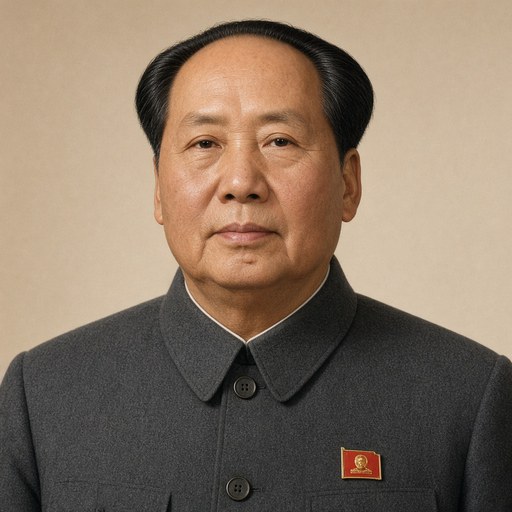
Problems of War and Strategy
 Mao Zedong · Chairman of the Central Committee of the Communist Party of China
- Context
- Mao addressed a Chinese Communist Party conference on November 6, 1938, during the War of Resistance Against Japan, arguing that war is the central task of the revolution and urging the whole Party to study military affairs.
- Main themes
- Armed seizure of political power, characteristics of the Chinese revolution, war as the principal form of struggle, party command of the gun, war history of the Kuomintang, war history of the Chinese Communist Party, shifts from civil war to national war, strategic position of anti-Japanese guerrilla warfare, guerrilla and regular warfare, eighteen advantages of guerrilla warfare, study of military theory
- Duration
- ~46 min
- Words
- 5,567
- Sentences
- 176
- Readability
- 33
- Grade
- 16.4
- Syntax
- 3.43
- Vocabulary
- 2.27
Translated from Chinese Source: GitHub qinglee/maoxuan (毛泽东选集) ↗
The broad sphere of national life a sentence belongs to. Every sentence has an Arena, so it is the denominator the other indices are read against.
Other176 sentences in 39 paragraphs
I China's Characteristics and Revolution
The central task and the highest form of war and revolution is the armed seizure of political power, is war settling the issue. This Marxist-Leninist principle of revolution is universally correct; whether in China or in foreign countries, it is correct in every case.
But under the same principle, as regards the manner in which proletarian parties carry out this principle under various conditions, it is not uniform, owing to the difference in conditions. In the capitalist countries, in periods when there is no fascism and no war, the conditions there are that inside the country the feudal system no longer exists, and what exists is the bourgeois democratic system; externally there is no national oppression, and what exists is one's own nation oppressing other nations. Based on these characteristics, the task of the proletarian parties of the capitalist countries lies in, through prolonged legal struggle, educating the workers, building up their strength, and preparing finally to overthrow capitalism. There, it is prolonged legal struggle, it is making use of the parliamentary rostrum, it is economic and political strikes, it is organizing trade unions and educating the workers. The form of organization there is legal, and the form of struggle is bloodless (non-war). On the question of war, the Communist Parties there oppose the imperialist wars of their own countries; if such a war occurs, the Party's policy is to bring about the defeat of the reactionary government of their own country. The only war they themselves want is the civil war under preparation. But this war, until the bourgeoisie is in a state of real impotence, until the majority of the proletariat has the determination to rise in armed insurrection and to wage war, until the peasant masses have already voluntarily come to the aid of the proletariat, insurrection and war should not be launched. When the time for insurrection and war comes, it is again first to occupy the cities and then to attack the countryside, and not the reverse of this. All this is what the Communist Parties of the capitalist countries once did in this way, and what was confirmed in the October Revolution in Russia.
China, however, is different. China's characteristics are: it is not an independent and democratic country, but a semi-colonial and semi-feudal country; internally it has no democratic system, and suffers oppression by the feudal system; externally it has no national independence, and suffers oppression by imperialism. Therefore, there is no parliament that can be utilized, and no legal right to organize the workers to hold strikes. Here, the task of the Communist Party is, fundamentally, not to enter into insurrection and war through prolonged legal struggle, nor first to occupy the cities and afterwards take the countryside, but to take the opposite road.
For the Chinese Communist Party, when imperialism is not launching armed attack, it is either, together with the bourgeoisie, to carry on civil war against the warlords (the running dogs of imperialism), for example the Guangdong war and the Northern Expedition from 1924 to 1927; or to unite the peasants and the urban petty bourgeoisie and carry on civil war against the landlord class and the comprador bourgeoisie (likewise the running dogs of imperialism), for example the Agrarian Revolutionary War from 1927 to 1936. When imperialism launches armed attack, it is then to unite all classes and strata in the country that oppose the foreign aggressors, and carry on a national war directed outward, for example the present War of Resistance Against Japan.
All this indicates the difference between China and the capitalist countries. In China, the principal form of struggle is war, and the principal form of organization is the army. All else, for example the organization of the people and the struggles of the people and so on, is all very important, is all definitely indispensable, definitely must not be ignored, but all is for the sake of war. All organization and struggle before the outbreak of war is for the purpose of preparing for war, for example that period from the May Fourth Movement (1919) to the May Thirtieth Movement (1925). All organization and struggle after the outbreak of war, then, directly or indirectly coordinates with the war; for example, in the period of the Northern Expedition, all organization and struggle in the rear of the revolutionary army directly coordinated with the war, and all organization and struggle within the areas ruled by the Northern warlords indirectly coordinated with the war. Again, for example, in the period of the Agrarian Revolutionary War, all organization and struggle inside the Red areas directly coordinated with the war, and all organization and struggle outside the Red areas indirectly coordinated with the war. And again, for example, in the present period of the War of Resistance Against Japan, all organization and struggle in the rear of the anti-Japanese army and in the areas occupied by the enemy army is likewise directly or indirectly coordinated with the war.
"In China, it is armed revolution opposing armed counter-revolution. This is one of the characteristics of the Chinese revolution, and also one of the advantages of the Chinese revolution." This judgment of Comrade Stalin's is entirely correct; whether as regards the Northern Expedition, as regards the Agrarian Revolutionary War, or as regards today's War of Resistance Against Japan, it is correct in all cases. These wars are all revolutionary wars; the objects the wars oppose are all counter-revolution; the principal elements participating in the wars are all the revolutionary people; the only difference lies in whether it is civil war or national war; whether it is war carried on by the Communist Party alone or war carried on jointly by the two parties, the Kuomintang and the Communist Party. Of course, these distinctions are important. They indicate that the main body of the war has a distinction of broad and narrow (the alliance of workers and peasants, or the alliance of workers, peasants and the bourgeoisie), and that the object of the war has a distinction of internal and external (opposing domestic enemies, or opposing foreign enemies; and domestic enemies are further divided into the Northern warlords or the Kuomintang), and indicate that China's revolutionary war has dissimilar content in the various periods of its historical course. Yet all are armed revolution opposing armed counter-revolution, all are revolutionary wars, and all express the characteristics and advantages of the Chinese revolution. The judgment that revolutionary war "is one of the characteristics of the Chinese revolution, and also one of the advantages of the Chinese revolution" entirely suits China's circumstances. The principal task of China's proletarian party, and the task it has faced almost from the beginning, is to unite as many allies as possible, organize armed struggle, and, according to circumstances, oppose internal or external armed counter-revolution, and struggle to win national and social liberation. In China, apart from armed struggle, there is no place for the proletariat and the Communist Party, and no revolutionary task whatsoever can be accomplished.
On this point, our Party, in the five or six years from its founding in 1921 up until it took part in the Northern Expedition in 1926, had insufficient understanding. At that time it did not understand the extreme importance of armed struggle in China, did not seriously prepare for war and organize an army, and did not pay attention to the study of military strategy and tactics. In the course of the Northern Expedition, it neglected the winning over of the army and one-sidedly laid stress on the mass movement; as a result, once the Kuomintang turned reactionary, all the mass movements collapsed. For a long period after 1927, many comrades still placed the Party's central task on preparing urban insurrections and on work in the White areas. The fundamental change of some comrades on this question came after the victory in opposing the enemy's third "encirclement and suppression" in 1931. But there was still no change of the whole Party; some comrades still did not think as we do now.
Experience tells us that China's problems cannot be solved apart from armed force. To recognize this is of advantage for carrying on a victorious War of Resistance Against Japan hereafter. The concrete facts of the armed resistance of the whole people in the War of Resistance Against Japan will educate the whole Party to recognize further the importance of this question; every Party member must at every moment be prepared to take up arms and go to the front. This conference of ours has further decided that the main aspect of the Party's work is in the war zones and behind the enemy lines, and has given a still clearer orientation. As for such phenomena as some Party members being willing to do the Party's organizational work, willing to do the work of the mass movement, but unwilling to study war and take part in war, and some schools not paying attention to encouraging students to go to the front, this is still a dose of good medicine suited to the illness. Within the greater part of China's territory, the Party's organizational work and mass-movement work are directly linked to armed struggle; there is not, and cannot be, separate and isolated Party work or mass movement. In a part of the rear relatively distant from the war zones (such as Yunnan, Guizhou and Sichuan) and in a part of the areas controlled by the enemy (such as Beiping, Tianjin, Nanjing and Shanghai), the Party's organizational work and mass movement also coordinate with the war, and can only and should only obey the demands of the front. In one sentence, the whole Party must pay attention to war, study military affairs, and prepare to fight.
II The War History of the Chinese Kuomintang
Let us take a look at the history of the Kuomintang, take a look at how it has paid attention to war; this is of benefit.
From the time Sun Yat-sen organized small revolutionary groups, he carried out several armed uprisings against the Qing. By the period of the Tongmenghui, it was even more filled with the deeds of armed uprising, up until the Revolution of 1911, which by armed force overthrew the Qing dynasty. In the period of the Chinese Revolutionary Party, an armed movement against Yuan Shikai was carried out. The later southward movement of the navy, the Northern Expedition from Guilin, and the founding of Whampoa were all Sun Yat-sen's undertakings of war.
Chiang Kai-shek replaced Sun Yat-sen and created the Kuomintang's age of military full flourish. He looks upon the army as life itself, and has passed through the three periods of the Northern Expedition, civil war, and resistance against Japan. The Chiang Kai-shek of the past ten years is counter-revolutionary. For the sake of counter-revolution, he created a huge "Central Army." He who has an army has power; war settles everything — this basic point he has grasped very tightly. On this point, we should learn from him. On this point, both Sun Yat-sen and Chiang Kai-shek are our teachers.
After the Revolution of 1911, all the warlords loved their soldiers as their own lives; they all set store by the principle that "he who has an army has power."
Tan Yankai was a clever bureaucrat; he rose and fell several times in Hunan, and never served as provincial governor alone, but wanted to be military governor and concurrently provincial governor. Later, when he became Chairman of the National Government in Guangdong and in Wuhan, he still concurrently held the post of commander of the Second Army. China has many such warlords; they all understand China's characteristics.
China also has some political parties that do not want an army; the principal one among them is the Progressive Party, but it too understood that it had to rely on a warlord before it could hold office. Yuan Shikai, Duan Qirui and Chiang Kai-shek (those attached to Chiang being the Political Science Clique, transformed from a section of the Progressive Party) became its backers.
A few small parties whose history is not long, such as the Youth Party and others, have no army, and therefore cannot make any showing.
The bourgeois political parties of foreign countries do not need each directly to command a portion of the army. China, however, is different; owing to feudal division, among the groups or parties of the landlords or the bourgeoisie, whoever has guns has power, and whoever has more guns has greater power. A proletarian party situated in such an environment should see clearly the centre of the problem.
Communist Party members do not contend for personal command of the army (they absolutely must not contend for it, and must never again learn from Zhang Guotao), but they must contend for the Party's command of the army, and must contend for the people's command of the army. Now it is a national war of resistance, and we must also contend for the nation's command of the army. To suffer from infantile disorder on the question of command of the army is certainly to get not a single thing. For several thousand years the laboring people have fallen for the old tricks of deception and intimidation of the reactionary ruling classes, and it is very hard for them to awaken to the importance of themselves grasping the gun. The oppression of Japanese imperialism and the war of resistance of the whole people have pushed the laboring people onto the stage of war; Communist Party members should become the most conscious leaders of this war. Every Communist Party member should understand this truth: "Political power comes out of the barrel of a gun." Our principle is that the Party commands the gun, and the gun is absolutely not permitted to command the Party. But with guns one can indeed also build a Party; the Eighth Route Army built a big Party in North China. One can also build cadres, build schools, build culture, and build the mass movement. Everything in Yan'an was built by the gun. Everything comes out of the barrel of a gun. Viewed from the standpoint of the Marxist theory of the state, the army is the principal component of state power. Whoever wants to seize state power, and wants to keep it, should have a powerful army. Some people laugh at us as holding the "theory of the omnipotence of war." Yes, we are believers in the omnipotence of revolutionary war; this is not bad, it is good, it is Marxist. The guns of the Russian Communist Party built a socialism. We want to build a democratic republic. The experience of class struggle in the era of imperialism tells us: the working class and the laboring masses can defeat the armed bourgeoisie and landlords only by the force of the gun; in this sense, we may say that the whole world can be remade only by means of the gun. We are advocates of the abolition of war; we do not want war; but war can be abolished only by going through war; to be without the gun one must take up the gun.
III The War History of the Chinese Communist Party
Although our Party, in the three or four years from 1921 (the founding of the Chinese Communist Party) to 1924 (the First National Congress of the Kuomintang), did not understand the importance of directly preparing for war and organizing an army; and from 1924 to 1927, and even for a period after that, its understanding of this was still insufficient; yet beginning with its participation in the Whampoa Military Academy in 1924, it had already entered a new stage and begun to understand the importance of military affairs. Through assisting the Kuomintang in the Guangdong war and the Northern Expedition, the Party had already taken hold of a part of the army. The revolution failed, and bitter lessons were learned; thereupon there were the Nanchang Uprising, the Autumn Harvest Uprising and the Guangzhou Uprising, and it entered the new period of creating the Red Army. This period was an extremely critical period in which our Party thoroughly recognized the importance of the army. Without the Red Army of this period and the wars it carried on — that is to say, if the Communist Party had adopted Chen Duxiu's liquidationism — today's War of Resistance Against Japan and its being sustained over a long period would be inconceivable.
The emergency conference of the Party Centre on August 7, 1927, opposed Right opportunism in politics and enabled the Party to advance a great step. The Fourth Plenary Session of the Sixth Central Committee in January 1931 nominally opposed "Left" opportunism in politics, but in reality committed anew the error of "Left" opportunism. The content and historical role of these two conferences were not the same, but neither of these two conferences emphatically touched upon questions of war and strategy; this was a reflection of the fact that at that time the centre of gravity of the Party's work had not yet been placed upon war. After the Party Centre moved to the Red areas in 1933, the situation underwent a fundamental change, but on questions of war (and on all principal questions) errors of principle were again committed, causing the revolutionary war to suffer serious losses. The Zunyi Conference of 1935, however, was principally directed against opportunism in war, and placed the question of war in the first place; this was a reflection of the environment of war. Up to today, we can say with confidence that the Chinese Communist Party, in seventeen years of struggle, has not only tempered a firm Marxist political line, but has also tempered a firm Marxist military line. We not only know how to apply Marxism to solve political problems, but also know how to apply Marxism to solve problems of war; we have not only brought up a large body of powerful backbone cadres able to run the Party and run the state, but have also brought up a large body of powerful backbone cadres able to run the army. This is a revolutionary fresh flower watered by the hot blood of countless martyrs; it is not only the glory of the Chinese Communist Party and the Chinese people, but also the glory of the Communist Parties of the world and the people of the world. Within the scope of the world, there are still only the three armies led by the Communist Parties of the three countries, the Soviet Union, China and Spain, that belong to the side of the proletariat and the laboring people; the Parties of the other countries still have no military experience, and so our army and our military experience are especially worthy of being treasured.
In order victoriously to carry on today's War of Resistance Against Japan, expanding and consolidating the Eighth Route Army, the New Fourth Army, and all the guerrilla units led by our Party is extremely important. Under this principle, the Party should dispatch the best, and a sufficient number, of Party members and cadres to the front. Everything for victory at the front; organizational tasks must be subordinated to political tasks.
IV The Shifts in the Party's Military Strategy in the Civil War and the National War
The question of changes in our Party's military strategy deserves to be given study. It will be spoken of as divided into the two processes of civil war and national war.
The process of the civil war may, in the main, be divided into two strategic periods, an earlier and a later. In the earlier period, what was principal was guerrilla warfare; in the later period, what was principal was regular warfare. But the so-called regular warfare was of the Chinese type; it was manifested only in concentrating forces to fight mobile warfare and in a certain degree of concentration and planning in command and in organization; in other respects it was still of a guerrilla character, of a low level, and cannot be classed together with foreign armies, and it also differed somewhat from the army of the Kuomintang. Therefore, this kind of regular warfare, in a certain sense, is guerrilla warfare raised to a higher level.
In the process of the War of Resistance Against Japan, as far as our Party's military tasks are concerned, it will also, in the main, be divided into two strategic periods. In the earlier period (including the two stages of strategic defense and strategic stalemate), what is principal is guerrilla warfare; in the later period (the stage of strategic counter-offensive), what will be principal is regular warfare. But the guerrilla warfare of the earlier period of the War of Resistance Against Japan has much content different from the guerrilla warfare of the earlier period of the civil war, because it is the Eighth Route Army, regular in character (to a certain degree), that is dispersed to carry out guerrilla tasks; the regular warfare of the later period of the War of Resistance Against Japan will also differ from the regular warfare of the later period of the civil war; this is said in envisaging that, after the army is equipped with new-type weapons, the army and operations will undergo a great transformation. The army at that time will acquire a high degree of concentration and organization; operations will acquire a high degree of regularity, greatly reducing their guerrilla character; what is of a low level will change into what is of a high level, and what is of the Chinese type will change into what is of the world type. This will be the undertaking of the stage of strategic counter-offensive.
From this it can be seen that, between the two processes of the civil war and the War of Resistance Against Japan and the four strategic periods, there exist in all three strategic shifts. The first is the shift between domestic guerrilla warfare and domestic regular warfare. The second is the shift between domestic regular warfare and anti-Japanese guerrilla warfare. The third is the shift between anti-Japanese guerrilla warfare and anti-Japanese regular warfare.
Among the three shifts, the first shift once encountered very great difficulties. Here there were tasks on two sides. On the one hand, it was necessary to oppose the Right tendency of localism and guerrilla-ism, of wallowing in guerrilla character and being unwilling to shift toward regular character; this arose because cadres underestimated the already changed enemy situation and tasks. In this respect, taking the Central Red Area as an example, arduous work of education was done before it was gradually brought to shift over. On the other hand, it was necessary to oppose the "Left" tendency of excessively valuing regularization, of centralism and adventurism; this arose because a section of the leading cadres overestimated the enemy situation and the tasks, and, without looking at the actual conditions, mechanically applied foreign experience. In this respect, in the Central Red Area, over a long period of three years (before the Zunyi Conference), an extremely great sacrifice was paid, and only then was it corrected out of the lesson of blood. This correction was the achievement of the Zunyi Conference.
The second shift was one situated between two different processes of war; this was a matter of the autumn of 1937 (after the Marco Polo Bridge Incident). At this time, the enemy was new, namely Japanese imperialism; the friendly army was the former enemy, the Kuomintang (it still harbored hostility toward us); the battlefield was North China, vast in territory (temporarily the front of our army, but before long it would become the enemy's rear for a long period). Our strategic shift was an extremely grave shift carried out under these special circumstances. Under these special circumstances, the former regular army and mobile warfare had to be transformed into a guerrilla army (what is meant is dispersed employment, not organization and discipline) and guerrilla warfare, before they could conform to the enemy situation and the tasks. But such a shift then manifested itself, in appearance, as a retrogressive shift, and therefore this shift ought to have been extremely difficult. What might have occurred at this time was, on the one hand, the tendency to take the enemy lightly, and on the other hand, the disease of fearing Japan; these all occurred in the Kuomintang. When the Kuomintang shifted from the battlefield of civil war to the battlefield of national war, mainly because it took the enemy lightly, and at the same time there also existed a kind of disease of fearing Japan (represented by Han Fuju and Liu Zhi), it suffered many losses that ought not to have been suffered. We, however, carried out this shift quite smoothly; not only did we not suffer setback, but on the contrary we won greatly. This was obtained because the broad ranks of cadres in good time accepted the correct guidance of the Centre and flexibly observed the situation, although serious disputes had once occurred between the Centre and a section of the military cadres. This shift bears extremely greatly upon the perseverance, development and victory of the entire War of Resistance Against Japan, and upon the future of the Chinese Communist Party; one has only to think of the historical significance of anti-Japanese guerrilla warfare for the destiny of China's national liberation, and one will know it. China's anti-Japanese guerrilla warfare, as regards its special vastness and protracted character, is not only unprecedented in the East, but may also be unprecedented in the entire history of mankind.
As for the third shift, from anti-Japanese guerrilla warfare to anti-Japanese regular warfare, it belongs to the future of the development of the war; it is estimated that at that time new circumstances and new difficulties will again arise, and for the present we need not speak of it.
V The Strategic Position of Anti-Japanese Guerrilla Warfare
Speaking of the War of Resistance Against Japan as a whole, regular warfare is primary and guerrilla warfare is auxiliary, because the final destiny of the War of Resistance Against Japan can be settled only by regular warfare. As far as the whole country is concerned, in the three strategic stages of the whole process of the War of Resistance Against Japan (defense, stalemate, counter-offensive), in both the first and the last stages, regular warfare is primary, supplemented by guerrilla warfare. In the middle stage, owing to the situation in which the enemy holds on to the occupied areas and we, though preparing the counter-offensive, are not yet able to carry out the counter-offensive, guerrilla warfare will manifest itself as the principal form, supplemented by regular warfare; but this, in the whole war, is only one stage among the three stages, although its duration may be the longest. Hence, speaking of the whole, regular warfare is primary and guerrilla warfare is auxiliary. If one does not recognize this situation, does not understand that regular warfare is the key to settling the final destiny of the war, and does not pay attention to the building of the regular army and to the study and direction of regular warfare, one cannot defeat Japan. This is one aspect.
But guerrilla warfare occupies an important strategic position in the whole war. Without guerrilla warfare, if one neglects the building of guerrilla detachments and guerrilla armies, and neglects the study and direction of guerrilla warfare, one will likewise be unable to defeat Japan. The reason is that the greater half of China will become the enemy's rear; if there is not the most extensive and most persevering guerrilla warfare, and the enemy is allowed to sit in secure occupation, utterly without worry about the rear, then the losses of our main forces on the front will certainly be great, the enemy's offensive will certainly be still more rampant, a situation of stalemate will be hard to appear, continued resistance may waver; even if not so, then our counter-offensive strength will be insufficiently prepared, when the counter-offensive comes there will be no response, the enemy's consumption may obtain compensation, and other such unfavorable circumstances will all occur. If these circumstances appear, and one does not in good time develop extensive and persevering guerrilla warfare to overcome them, to defeat Japan will also be impossible. Therefore, although guerrilla warfare occupies an auxiliary position in the war as a whole, it in fact occupies an extremely important strategic position. To resist Japan while neglecting guerrilla warfare is undoubtedly extremely wrong. This is the other aspect.
The possibility of guerrilla warfare exists so long as the condition of a large country is present; therefore ancient times also had guerrilla warfare. But the perseverance of guerrilla warfare can appear only under the leadership of the Communist Party. Hence the guerrilla wars of ancient times were for the most part guerrilla wars that failed; only in modern times, when there are large countries that have a Communist Party, countries such as the Soviet Union and China in the period of civil war, is there victorious guerrilla warfare. On the question of war, the division of labor between the two parties, the Kuomintang and the Communist Party, in the War of Resistance Against Japan, speaking of present and general conditions, is that the Kuomintang undertakes regular warfare on the front and the Communist Party undertakes guerrilla warfare behind the enemy lines; this is necessary, it is appropriate, and they need each other, coordinate with each other, and assist each other.
From this it can be understood how important and necessary it is that our Party's military strategic orientation shifted from the regular warfare of the later period of the civil war to the guerrilla warfare of the earlier period of the War of Resistance Against Japan. Summing up its advantages, there are the following eighteen items: (1) reducing the occupied areas of the enemy army; (2) expanding the base areas of our army; (3) in the stage of defense, coordinating with operations on the front and pinning the enemy down; (4) in the stage of stalemate, holding fast to the base areas behind the enemy lines, which favors the reorganization of the army on the front; (5) in the stage of counter-offensive, coordinating with the front and recovering lost territory; (6) most rapidly and most effectively expanding the army; (7) most universally developing the Communist Party, so that a branch can be organized in every village; (8) most universally developing the mass movement, so that the entire people behind the enemy lines, apart from the enemy's strongpoints, can all be organized; (9) most universally establishing anti-Japanese democratic political power; (10) most universally developing anti-Japanese culture and education; (11) most universally improving the people's livelihood; (12) most convenient for disintegrating the enemy's army; (13) most universally and most enduringly influencing the hearts of the people of the whole country and rousing the morale of the whole country; (14) most universally pushing forward the progress of friendly armies and friendly parties; (15) suiting the condition that the enemy is strong and we are weak, so that we ourselves suffer fewer losses and win more battles; (16) suiting the condition that the enemy is small and we are big, so that the enemy suffers more losses and wins fewer battles; (17) most rapidly and most effectively creating large numbers of leading cadres; (18) most convenient for solving the problem of provisions.
In the long struggle, guerrilla detachments and guerrilla warfare should not stop at their original position, but develop toward a higher stage, and gradually change into a regular army and regular warfare; of this too there is no doubt. We shall, by passing through guerrilla warfare, accumulate strength, and build ourselves into one of the decisive factors in smashing Japanese imperialism.
VI Pay Attention to the Study of Military Questions
All questions of the mutual hostility of the two armies are settled by relying on war; China's survival or extinction hinges on the victory or defeat of the war. Therefore, the study of military theory, the study of strategy and tactics, and the study of political work in the army admit of no delay. Although the study of tactics is insufficient, the comrades who have engaged in military work for ten years have already had many achievements, and have already put forward many new things based on Chinese conditions; the shortcoming lies in their not having been summed up. The study of questions of strategy and questions of the theory of war has up to now still been limited to the work of an extremely small number of people. The study of political work has achievements of the first order; so rich is its experience, and so many and so good are its new creations, that in the whole world, apart from the Soviet Union, it is we who are to be counted; but the shortcoming lies in the insufficiency of comprehensiveness and of systematic character. For the needs of the whole Party and the whole country, the popularization of military knowledge has become an urgent task. All of this should be paid attention to hereafter, and the theory of war and strategy is the backbone of everything. Through the study of military theory, to arouse interest and call upon the whole Party to pay attention to the study of military questions, I consider necessary.
The original Chinese. The tags above are read on the English translation's sentences.
一 中国的特点和革命
战争革命的中心任务和最高形式是武装夺取政权,是战争解决问题。这个马克思列宁主义的革命原则是普遍地对的,不论在中国在外国,一概都是对的。
但是在同一个原则下,就无产阶级政党在各种条件下执行这个原则的表现说来,则基于条件的不同而不一致。在资本主义各国,在没有法西斯和没有战争的时期内,那里的条件是国家内部没有了封建制度,有的是资产阶级的民主制度;外部没有民族压迫,有的是自己民族压迫别的民族。基于这些特点,资本主义各国的无产阶级政党的任务,在于经过长期的合法斗争,教育工人,生息力量,准备最后地推翻资本主义。在那里,是长期的合法斗争,是利用议会讲坛,是经济的和政治的罢工,是组织工会和教育工人。那里的组织形式是合法的,斗争形式是不流血的(非战争的)。在战争问题上,那里的共产党是反对自己国家的帝国主义战争;如果这种战争发生了,党的政策是使本国反动政府败北。自己所要的战争只是准备中的国内战争。但是这种战争,不到资产阶级处于真正无能之时,不到无产阶级的大多数有了武装起义和进行战争的决心之时,不到农民群众已经自愿援助无产阶级之时,起义和战争是不应该举行的。到了起义和战争的时候,又是首先占领城市,然后进攻乡村,而不是与此相反。所有这些,都是资本主义国家的共产党所曾经这样做,而在俄国的十月革命中证实了的。
中国则不同。中国的特点是:不是一个独立的民主的国家,而是一个半殖民地的半封建的国家;在内部没有民主制度,而受封建制度压迫;在外部没有民族独立,而受帝国主义压迫。因此,无议会可以利用,无组织工人举行罢工的合法权利。在这里,共产党的任务,基本地不是经过长期合法斗争以进入起义和战争,也不是先占城市后取乡村,而是走相反的道路。
对于中国共产党,在帝国主义没有武装进攻的时候,或者是和资产阶级一道,进行反对军阀(帝国主义的走狗)的国内战争,例如一九二四年至一九二七年的广东战争和北伐战争;或者是联合农民和城市小资产阶级,进行反对地主阶级和买办资产阶级(同样是帝国主义的走狗)的国内战争,例如一九二七年至一九三六年的土地革命战争。在帝国主义举行武装进攻的时候,则是联合国内一切反对外国侵略者的阶级和阶层,进行对外的民族战争,例如现在的抗日战争。
所有这些,表示了中国和资本主义国家的不同。在中国,主要的斗争形式是战争,而主要的组织形式是军队。其它一切,例如民众的组织和民众的斗争等等,都是非常重要的,都是一定不可少,一定不可忽视,但都是为着战争的。在战争爆发以前的一切组织和斗争,是为了准备战争的,例如五四运动(一九一九年)至五卅运动(一九二五年)那一时期。在战争爆发以后的一切组织和斗争,则是直接或间接地配合战争的,例如北伐战争时期,革命军后方的一切组织和斗争是直接地配合战争的,北洋军阀统治区域内的一切组织和斗争是间接地配合战争的。又如土地革命战争时期,红色区域内部的一切组织和斗争是直接地配合战争的,红色区域外部的一切组织和斗争是间接地配合战争的。再如现在抗日战争时期,抗日军后方的和敌军占领地的一切组织和斗争,也同样是直接或间接地配合战争的。
“在中国,是武装的革命反对武装的反革命。这是中国革命的特点之一,也是中国革命的优点之一。”斯大林同志的这一论断是完全正确的;无论是对于北伐战争说来,对于土地革命战争说来,对于今天的抗日战争说来,都是正确的。这些战争都是革命战争,战争所反对的对象都是反革命,参加战争的主要成分都是革命的人民;不同的只在或者是国内战争,或者是民族战争;或者是共产党单独进行的战争,或者是国共两党联合进行的战争。当然,这些区别是重要的。这些表示了战争主体有广狭的区别(工农联合,或工农资产阶级联合),战争对象有内外的区别(反对国内敌人,或反对国外敌人;国内敌人又分北洋军阀或国民党),表示了中国革命战争在其历史进程的各个时期中有不相同的内容。然而都是武装的革命反对武装的反革命,都是革命战争,都表示了中国革命的特点和优点。革命战争“是中国革命的特点之一,也是中国革命的优点之一”,这一论断,完全适合于中国的情况。中国无产阶级政党的主要的和差不多开始就面对着的任务,是联合尽可能多的同盟军,组织武装斗争,依照情况,反对内部的或外部的武装的反革命,为争取民族的和社会的解放而斗争。在中国,离开了武装斗争,就没有无产阶级和共产党的地位,就不能完成任何的革命任务。
在这一点上,我们党从一九二一年成立直至一九二六年参加北伐战争的五六年内,是认识不足的。那时不懂得武装斗争在中国的极端的重要性,不去认真地准备战争和组织军队,不去注重军事的战略和战术的研究。在北伐过程中,忽视了军队的争取,片面地着重于民众运动,其结果,国民党一旦反动,一切民众运动都塌台了。一九二七年以后的一个长时期中,许多同志把党的中心任务仍旧放在准备城市起义和白区工作方面。一些同志在这个问题上的根本的转变,是在一九三一年反对敌人的第三次“围剿”胜利之后。但也还没有全党的转变,有些同志仍旧没有如同现在我们这样想。
经验告诉我们,中国的问题离开武装就不能解决。认识这一点,对于今后进行胜利的抗日战争是有利益的。抗日战争中全民武装反抗的具体事实,将教育全党进一步地认识这个问题的重要性,每个党员都要时刻准备武装上前线。我们这次会议又决定党的主要工作方面是在战区和敌后,更给了一个明确的方针。这对于有些党员愿作党的组织工作,愿作民众运动的工作,而不愿研究战争和参加战争,有些学校没有注意鼓励学生上前线,等等现象,还是一剂对症的良药。大部分中国领土内党的组织工作和民众运动工作是直接联系于武装斗争的,没有也不能有单独的孤立的党的工作或民众运动。一部分距离战区较远的后方(如云南、贵州、四川)和一部分敌人控制的地区(如北平、天津、南京、上海),党的组织工作和民众运动也是配合战争的,只能也只应服从前线的要求。一句话,全党都要注重战争,学习军事,准备打仗。
二 中国国民党的战争史
我们来看一看国民党的历史,看一看它是如何地注意于战争,是有益处的。
从孙中山组织革命的小团体起,他就进行了几次反清的武装起义。到了同盟会时期,更充满了武装起义的事迹,直至辛亥革命,武装推翻了清朝。中华革命党时期,进行了武装的反袁运动。后来的海军南下,桂林北伐和创设黄埔,都是孙中山的战争事业。
蒋介石代替孙中山,创造了国民党的全盛的军事时代。他看军队如生命,经历了北伐、内战和抗日三个时期。过去十年的蒋介石是反革命的。为了反革命,他创造了一个庞大的“中央军”。有军则有权,战争解决一切,这个基点,他是抓得很紧的。对于这点,我们应向他学习。在这点上,孙中山和蒋介石都是我们的先生。
辛亥革命后,一切军阀,都爱兵如命,他们都看重了“有军则有权”的原则。
谭延闿是一个聪明的官僚,他在湖南几起几覆,从来不做寡头省长,要做督军兼省长。他后来做了广东和武汉的国民政府主席,还是兼了第二军军长。中国有很多这样的军阀,他们都懂得中国的特点。
中国也有些不要军队的政党,其中主要的一个是进步党,但是它也懂得必须靠一个军阀才有官做。袁世凯、段祺瑞、蒋介石(附蒋的是进步党之一部转变而成的政学系)就成了它的靠山。
历史不长的几个小党,如青年党等,没有军队,因此就闹不出什么名堂来。
外国的资产阶级政党不需要各自直接管领一部分军队。中国则不同,由于封建的分割,地主或资产阶级的集团或政党,谁有枪谁就有势,谁枪多谁就势大。处在这样环境中的无产阶级政党,应该看清问题的中心。
共产党员不争个人的兵权(决不能争,再也不要学张国焘),但要争党的兵权,要争人民的兵权。现在是民族抗战,还要争民族的兵权。在兵权问题上患幼稚病,必定得不到一点东西。劳动人民几千年来上了反动统治阶级的欺骗和恐吓的老当,很不容易觉悟到自己掌握枪杆子的重要性。日本帝国主义的压迫和全民抗战,把劳动人民推上了战争的舞台,共产党员应该成为这个战争的最自觉的领导者。每个共产党员都应懂得这个真理:“枪杆子里面出政权”。我们的原则是党指挥枪,而决不容许枪指挥党。但是有了枪确实又可以造党,八路军在华北就造了一个大党。还可以造干部,造学校,造文化,造民众运动。延安的一切就是枪杆子造出来的。枪杆子里面出一切东西。从马克思主义关于国家学说的观点看来,军队是国家政权的主要成分。谁想夺取国家政权,并想保持它,谁就应有强大的军队。有人笑我们是“战争万能论”,对,我们是革命战争万能论者,这不是坏的,是好的,是马克思主义的。俄国共产党的枪杆子造了一个社会主义。我们要造一个民主共和国。帝国主义时代的阶级斗争的经验告诉我们:工人阶级和劳动群众,只有用枪杆子的力量才能战胜武装的资产阶级和地主;在这个意义上,我们可以说,整个世界只有用枪杆子才可能改造。我们是战争消灭论者,我们是不要战争的;但是只能经过战争去消灭战争,不要枪杆子必须拿起枪杆子。
三 中国共产党的战争史
我们党虽然在一九二一年(中国共产党成立)至一九二四年(国民党第一次全国代表大会)的三四年中,不懂得直接准备战争和组织军队的重要性;一九二四年至一九二七年,乃至在其以后的一个时期,对此也还认识不足;但是从一九二四年参加黄埔军事学校开始,已进到了新的阶段,开始懂得军事的重要了。经过援助国民党的广东战争和北伐战争,党已掌握了一部分军队。革命失败,得了惨痛的教训,于是有了南昌起义、秋收起义和广州起义,进入了创造红军的新时期。这个时期是我们党彻底地认识军队的重要性的极端紧要的时期。没有这一时期的红军及其所进行的战争,即是说,假如共产党采取了陈独秀的取消主义的话,今天的抗日战争及其长期支持是不能设想的。
一九二七年八月七日党中央的紧急会议反对了政治上的右倾机会主义,使党大进了一步。一九三一年一月的六届四中全会,在名义上反对政治上的“左”倾机会主义,在实际上重新犯了“左”倾机会主义的错误。这两个会议的内容和历史作用是不一样的,但是这两个会议都没有着重地涉及战争和战略的问题,这是当时党的工作重心还没有放在战争上面的反映。一九三三年党的中央迁至红色区域以后,情形有了根本的改变,但对于战争问题(以及一切主要问题),又犯了原则性的错误,致使革命战争遭受了严重的损失。一九三五年的遵义会议,则主要地是反对战争中的机会主义,把战争问题放在第一位,这是战争环境的反映。到今天为止,我们可以自信地说,中国共产党在十七年的斗争中,不但锻炼出来了一条坚强的马克思主义的政治路线,而且锻炼出来了一条坚强的马克思主义的军事路线。我们不但会运用马克思主义去解决政治问题,而且会运用马克思主义去解决战争问题;不但造就了一大批会治党会治国的有力的骨干,而且造就了一大批会治军的有力的骨干。这是无数先烈的热血浇灌出来的革命的鲜花,不但是中国共产党和中国人民的光荣,而且是世界共产党和世界人民的光荣。在世界范围内,还只有苏联、中国、西班牙三国共产党所领导的三个军队,是属于无产阶级和劳动人民方面的,其它各国的党都还没有军事经验,所以我们的军队和军事经验特别值得宝贵。
为了胜利地进行今天的抗日战争,扩大和巩固八路军、新四军和一切我党所领导的游击队,是非常重要的。在此原则下,党应派遣最好的和足够数量的党员和干部上前线。一切为了前线的胜利,组织任务须服从于政治任务。
四 国内战争和民族战争中党的军事战略的转变
我们党的军事战略的变化问题,值得给以研究。分为国内战争和民族战争两个过程来说。
国内战争的过程,大体上可以分为前后两个战略时期。在前期,主要的是游击战争;在后期,主要的是正规战争。但所谓正规战争是中国型的,只表现在集中兵力打运动战和指挥上、组织上的某种程度的集中性和计划性方面,其它则仍是游击性的,低级的,不能和外国军队一概而论,也和国民党的军队有些不同。因此,这种正规战,在某种意义上,是提高了的游击战。
在抗日战争的过程中,就我党的军事任务说来,也将大体上分为两个战略时期。在前期(包括战略防御和战略相持两个阶段),主要的是游击战争;在后期(战略反攻阶段),主要的将是正规战争。但抗日战争前期的游击战争,和国内战争前期的游击战争有许多不同的内容,因为是用正规性(某种程度上)的八路军去分散执行游击任务;抗日战争后期的正规战争也将不同于国内战争后期的正规战争,这是设想在装备了新式武器之后,军队和作战将要起一个大的变革而说的。这时的军队将获得高度的集中性和组织性,作战将获得高度的正规性,大大减少其游击性,低级的将变到高级的,中国型的将变到世界型的。这将是战略反攻阶段中的事业。
由此看来,国内战争和抗日战争两个过程和四个战略时期之间,共存在着三个战略的转变。第一个,国内游击战争和国内正规战争之间的转变。第二个,国内正规战争和抗日游击战争之间的转变。第三个,抗日游击战争和抗日正规战争之间的转变。
三个转变中,第一个转变曾经遇到很大的困难。这里有两方面的任务。一方面,要反对沉溺于游击性而不愿向正规性转变的右的地方主义和游击主义的倾向,这是由于干部对已经变化的敌情和任务估计不足而发生的。这一方面,拿中央红色区域来说,曾经作了艰苦的教育工作,才使之逐渐地转变过来。又一方面,则要反对过分地重视正规化的“左”的集中主义和冒险主义的倾向,这是由于一部分领导干部对敌情和任务估计过分,并且不看实情,机械地搬用外国经验而发生的。这一方面,在中央红色区域,曾经在三年的长时间内(遵义会议以前),付出了极大的牺牲,然后才从血的教训中纠正过来。这种纠正是遵义会议的成绩。
第二个转变是处于两个不同的战争过程之间的,这是一九三七年秋季(卢沟桥事变后)的事情。这时,敌人是新的,即日本帝国主义,友军是过去的敌人国民党(它对我们仍然怀着敌意),战场是地域广大的华北(暂时的我军正面,但不久就会变为长期的敌人后方)。我们的战略转变,是在这些特殊情况之下进行的一个极其严重的转变。在这些特殊的情况下,必须把过去的正规军和运动战,转变成为游击军(说的是分散使用,不是说的组织性和纪律性)和游击战,才能同敌情和任务相符合。但是这样的一个转变,便在现象上表现为一个倒退的转变,因此这个转变应该是非常困难的。这时可能发生的,一方面是轻敌倾向,又一方面是恐日病,这些在国民党中都是发生了的。国民党当它从国内战争的战场向民族战争的战场转变时,主要由于轻敌,同时也存在着一种恐日病(以韩复榘、刘峙为代表),而遭受了很多不应有的损失。然而我们却相当顺利地执行了这个转变,不但未遭挫败,反而大大地胜利了。这是由于广大的干部适时地接受了中央的正确指导和灵活地观察情况而获得的,虽然曾经在中央和一部分军事干部之间发生过严重的争论。这一转变关系于整个抗日战争的坚持、发展和胜利,关系于中国共产党的前途非常之大,只要想一想抗日游击战争在中国民族解放命运上的历史意义,就会知道的。中国的抗日游击战争,就其特殊的广大性和长期性说来,不但在东方是空前的,在整个人类历史上也可能是空前的。
至于由抗日游击战争到抗日正规战争的第三个转变,则属于战争发展的将来,估计那时又将发生新的情况和新的困难,现在可以不去说它。
五 抗日游击战争的战略地位
在抗日战争的全体上说来,正规战争是主要的,游击战争是辅助的,因为抗日战争的最后命运,只有正规战争才能解决。就全国来说,在抗日战争全过程的三个战略阶段(防御、相持、反攻)中,首尾两阶段,都是正规战争为主,辅之以游击战争。中间阶段,由于敌人保守占领地、我虽准备反攻但尚不能实行反攻的情况,游击战争将表现为主要形态,而辅之以正规战;但这在全战争中只是三个阶段中的一个阶段,虽然其时间可能最长。故在全体上说来,正规战争是主要的,游击战争是辅助的。不认识这一情况,不懂得正规战争是解决战争最后命运的关键,不注意正规军的建设和正规战的研究和指导,就不能战胜日本。这是一方面。
但游击战争是在全战争中占着一个重要的战略地位的。没有游击战争,忽视游击队和游击军的建设,忽视游击战的研究和指导,也将不能战胜日本。原因是大半个中国将变为敌人的后方,如果没有最广大的和最坚持的游击战争,而使敌人安稳坐占,毫无后顾之忧,则我正面主力损伤必大,敌之进攻必更猖狂,相持局面难以出现,继续抗战可能动摇,即若不然,则我反攻力量准备不足,反攻之时没有呼应,敌之消耗可能取得补偿等等不利情况,也都要发生。假如这些情况出现,而不及时地发展广大的和坚持的游击战争去克服它,要战胜日本也是不可能的。因此,游击战争虽在战争全体上居于辅助地位,但实占据着极其重要的战略地位。抗日而忽视游击战争,无疑是非常错误的。这是又一方面。
游击战争的可能,只要具备大国这个条件就存在的,因此古代也有游击战争。但是游击战争的坚持,却只有在共产党领导之下才能出现。故古代的游击战争大都是失败的游击战争,只有现代有了共产党的大国,如像内战时期的苏联和中国这样的国家,才有胜利的游击战争。在战争问题上,抗日战争中国共两党的分工,就目前和一般的条件说来,国民党担任正面的正规战,共产党担任敌后的游击战,是必须的,恰当的,是互相需要、互相配合、互相协助的。
由此可以懂得,我们党的军事战略方针,由国内战争后期的正规战争转变为抗日战争前期的游击战争,是何等重要和必要的了。综合其利,有如下十八项:(一)缩小敌军的占领地;(二)扩大我军的根据地;(三)防御阶段,配合正面作战,拖住敌人;(四)相持阶段,坚持敌后根据地,利于正面整军;(五)反攻阶段,配合正面,恢复失地;(六)最迅速最有效地扩大军队;(七)最普遍地发展共产党,每个农村都可组织支部;(八)最普遍地发展民众运动,全体敌后人民,除了敌人的据点以外,都可组织起来;(九)最普遍地建立抗日的民主政权;(十)最普遍地发展抗日的文化教育;(十一)最普遍地改善人民的生活;(十二)最便利于瓦解敌人的军队;(十三)最普遍最持久地影响全国的人心,振奋全国的士气;(十四)最普遍地推动友军友党进步;(十五)适合敌强我弱条件,使自己少受损失,多打胜仗;(十六)适合敌小我大的条件,使敌人多受损失,少打胜仗;(十七)最迅速最有效地创造出大批的领导干部;(十八)最便利于解决给养问题。
在长期奋斗中,游击队和游击战争应不停止于原来的地位,而向高级阶段发展,逐渐地变为正规军和正规战争,这也是没有疑义的。我们将经过游击战争,积蓄力量,把自己造成为粉碎日本帝国主义的决定因素之一。
六 注意研究军事问题
两军敌对的一切问题依靠战争去解决,中国的存亡系于战争的胜负。因此,研究军事的理论,研究战略和战术,研究军队政治工作,不可或缓。战术的研究虽然不足,但十年来从事军事工作的同志们已有很多的成绩,已有很多根据中国条件而提出的新东西,缺点在于没有总结起来。战略问题和战争理论问题的研究,至今还只限于极少数人的工作。政治工作的研究有第一等的成绩,其经验之丰富,新创设之多而且好,全世界除了苏联就要算我们了,但缺点在于综合性和系统性的不足。为了全党和全国的需要,军事知识的通俗化,成为迫切的任务。所有这些,今后都应该注意,而战争和战略的理论则是一切的骨干。从军事理论的研究,引起兴趣,唤起全党注意于军事问题的研究,我认为是必要的。