




Vigorously Promote Investigation and Research
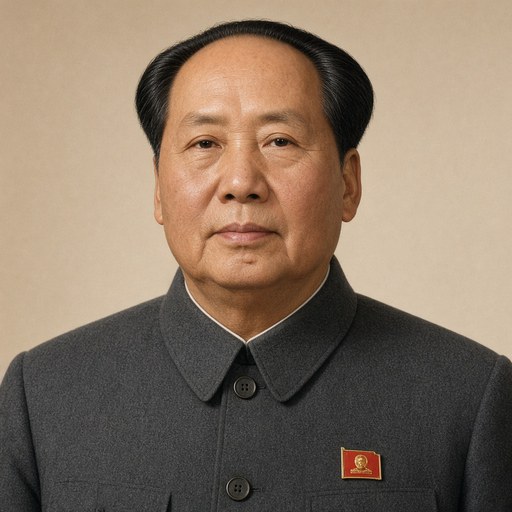
 Mao Zedong · Chairman of the Central Committee of the Communist Party of China
- Context
- Mao addressed the Central Work Conference of the Communist Party on January 13, 1961, urging officials to carry out investigation and research, proposing that 1961 be a year of seeking truth from facts and calling for slower, consolidated economic construction.
- Main themes
- Investigation and research, clear grasp of the situation, firm resolve, correct methods, going bankrupt to repay debts, unequal exchange with the peasantry, shortening the capital construction front, slowing the pace of socialist construction, seeking truth from facts, Zhengzhou and Shanghai Conferences, steel output comparison with Western Europe
- Duration
- ~19 min
- Words
- 2,248
- Sentences
- 114
- Readability
- 60
- Grade
- 9.8
- Syntax
- 2.89
- Vocabulary
- 1.97
Translated from Chinese Source: GitHub qinglee/maoxuan (毛泽东选集) ↗
The broad sphere of national life a sentence belongs to. Every sentence has an Arena, so it is the denominator the other indices are read against.
Other114 sentences in 15 paragraphs
This Central Work Conference has gone somewhat better than the last few, and everyone's head is somewhat clearer. Take, for example, the question of combining cool-headedness with enthusiasm: in the past there was never enough cool-headedness and a bit too much heat; this time the combination has improved on the past, problems have been analysed, and we have a fairly good grasp of the real situation. Of course, there is still a great deal that we do not have a real grasp of, as far as the Centre and the provincial level are concerned. We are working in the direction of getting to the bottom of things, and that is a step forward. Do the secretaries, Standing Committee members and committee members of the provincial Party committees, including the first secretaries of the prefectural Party committees, have a real grasp of things? If they did, there would be no problem. But it must be said that they too have taken a step forward compared with the past; they are moving, and they are using the method of pilot projects to find out how things stand.
I hope that when you comrades go back, you will carry out investigation and research: put the small matters aside, set aside part of your time, take a few assistants, and go and investigate and study one or two production teams and one or two communes. In the cities, investigate thoroughly one or two factories and one or two urban people's communes. A provincial first secretary has to investigate both the countryside and the cities, so this has to be well planned. The point of going to investigate is to have a real grasp of things in your own mind; without that you cannot act. To understand the situation you have to use your eyes to look, your mouth to ask, and your hands to take notes. When you talk with people you also have to know how to talk, or you will be deceived. You have to see whether the masses look pale and sallow from hunger, whether their grain is very short, or sufficient, or ample; that can be seen.
In recent years our comrades have stopped doing investigation and research. If we do no investigation and research and act only on imagination and guesswork, our work has no foundation. So I ask you comrades, when you go back, to make investigation and research a widespread practice, to start in everything from actual conditions, and not to make decisions when you are not sure. Investigation and research is not all that difficult; it does not take all that much time, and you do not need to investigate all that many units. For example, one or two production teams and one or two communes in the countryside, one or two factories, one or two shops and one or two schools in the city, add up to only about ten in all. You do not have to do all of these investigations in person. If you do one or two in the countryside and one or two in the city yourself, that is enough. You should organize investigation and research teams and guide them in their work. For example, the investigation of Jiangshiwo in Baodi County was not done by us at the Centre; it was done by the Central Rural Work Department. I regard that as a great achievement on their part. The material on Tonghaikou in Mianyang County was produced by comrades in Hubei Province; the Xinyang investigation was done by the Xinyang Prefectural Party Committee; the Lingbao County investigation was done by comrades of the Henan Provincial Party Committee. Investigation and research is extremely important. We must teach all provincial Party secretaries, together with the members of the provincial Standing Committees, the leading comrades at provincial level and in the various provincial departments, the prefectural Party secretaries, the county Party secretaries and the commune Party secretaries, how to do investigation and research. If they do not investigate, they will not be clear about the situation. A commune Party secretary does not necessarily know about all the equalization and transfer of resources going on inside the commune. A commune has on average about thirty production teams; how could he know so much? Impossible! But there is a way: of the thirty production teams, it is enough for him to investigate three, one of the worst, one average, and one of the best.
We speak of a clear grasp of the situation, firm resolve, and correct methods; we must have these three things.
The first is a clear grasp of the situation. This is the foundation of all work; if the situation is not clear, there is nowhere to begin. Therefore we must get a real grasp of the situation, and we must do investigation and research.
The second is firm resolve. We have been in session for more than twenty days at this conference; the situation has gradually become clear and resolve has gradually grown, but it is still uneven. Some comrades have talked of going bankrupt to pay off debts. That doesn't sound very nice, granted, but in reality that is exactly what we must do: go bankrupt to pay off debts. If the county and commune levels go bankrupt in order to repay their debts, then let them start again from scratch. The proletariat cannot expropriate the working people; it cannot expropriate the peasants and the urban small producers. It can only expropriate the expropriators. That is a basic principle. The bourgeoisie and the landlord class expropriated the working people; it was by ruining those small producers that the proletariat came into being. Their methods of expropriation were a bit more "clever" than those of some of our people. They gradually, step by step, drove small producers into debt and bankruptcy, whereas some of our people simply took people's things all at once. Building up commune-owned and state-owned economies by such means will not do. For example, in purchasing agricultural and sideline products, grades and prices were pushed down, which is extremely unequal exchange; it was done far too harshly and cut us off from the masses. Carrying out principles is easy to talk about, and many of our comrades understand it, but putting it into practice is rather harder.
Now, do all the provincial first secretaries have such firm resolve to go bankrupt to repay debts? I think we will have to wait and see. In future the provinces will turn out to be uneven; that too is the law of uneven development. We shall see which provinces actually go bankrupt to repay their debts, make full restitution, and are able to unite the peasant masses around themselves. Within a single province, among its several dozen or more than a hundred counties, there will also be unevenness.
The third is correct methods. During the War of Resistance against Japan and the War of Liberation, we were rather more conscientious about investigation and research; we paid attention to starting from actual conditions and to seeking truth from facts. When you make decisions on the basis of investigation and research and a clear grasp of the situation, your resolve is firm and your methods are correct. Methods means measures and ways of doing things; to carry out guidelines and policies you need a set of methods. Guidelines and policies are not mentioned among these three points, because we already have guidelines and policies. Even with good guidelines and policies, if the situation is not clear to you, your resolve is not firm and your methods are not correct, it is as good as having none. The guidelines and policies of the Zhengzhou Conference were correct, except for one point, which was not to settle accounts. The Zhengzhou Conference ended in early March. Then there was the experience of Zhejiang and the experience of Macheng, and by the Shanghai Conference in April we drew up the eighteen points and decided that old accounts must definitely be settled. That comment I wrote came even earlier. In those two months I wrote more than twenty thousand characters of comments. Waging a war of words is not much use; twenty thousand characters, or twice that, had no effect. When the counties, communes and teams below block things off, what can you do? At that time our provincial and prefectural levels did not have the shared understanding they have now. One comrade said that the Zhengzhou Conference won people over by pressure, not by persuasion. That was so; at that time there was a gap in understanding.
On agriculture, that is all I will say.
And industry? We have got some grasp of the real situation and must keep on getting a grasp of it. Roughly speaking, the overall plan for this year is to shorten the front of capital construction, shorten the industrial front, and shorten the heavy-industry front. Apart from coal, timber, mining, railways and so on, everything else must be cut back. Above all the capital construction front must be shortened. This year there will be no new capital construction, only projects already under construction or urgently needed; and not all of the projects under construction or urgently needed will be carried out this year either. Some of them will not be done this year; if a head is scabby, let it stay scabby.
As for a long-term plan, we cannot draw one up yet. We need to work at it for another ten years before we can.
As things now look, we should not be in such a great hurry in building socialism. If you are in too great a hurry you cannot get things done; the more you hurry, the less gets done. Better to slow down a bit and advance in waves. It is like walking: you walk for a while, then rest a little. An army on the march has long halts and short halts, combining work and rest, with exertion and with rest. Between two campaigns there must also be rest and consolidation. We have been meeting for more than twenty days this time, and of course we are pretty tired, but we have not met every morning, afternoon and evening. This conference does not count as a "gathering of immortals"; it has been quite intense, but not extremely intense, and there have been relatively few documents. In the past, whenever we held a meeting we passed a great many resolutions, thinking they would work, but in fact they did not work so well. Many resolutions do not necessarily work, and few do not necessarily work either; the key still lies in whether the situation is clear, whether the resolve is firm, and whether the methods are correct.
Today I read a news item saying that West Germany produced 34 million tons of steel last year, Britain's steel output last year was 24 million tons, and France produced 16 million tons the year before last and 17 million tons last year. All of them took many years to get there. I think we should go slowly for a few years and then see. This year, next year and the year after, let us work more solidly. We must not chase empty fame and bring real disaster on ourselves. We must do consolidation work, improve the quality of products, increase their varieties and specifications, raise the level of management, and raise labour productivity.
In short, we are still not very clear about the situation at home, our resolve is not very firm, and our methods are not altogether correct. We must get a grasp of the real situation in the provinces, municipalities and autonomous regions in batches, taking the twenty-seven localities separately. Within each province, each municipality and each autonomous region, the work must in turn be divided up by prefecture, county and commune. How about making this year a year of seeking truth from facts? In Hebei Province there is Hejian County; in the Han dynasty a prince was enfeoffed there, known as Prince Xian of Hejian. In the *Book of Han*, in the biography of Liu De, Prince Xian of Hejian, Ban Gu says that he "sought truth from facts," and this phrase has been handed down to this day. Proposing that this year be a year of seeking truth from facts does not, of course, mean that in the past we did not seek truth from facts at all. Our Party has a tradition of seeking truth from facts, which means integrating the universal truth of Marxism-Leninism with China's actual conditions. But since the founding of the People's Republic, and especially in the last few years, we have lost our grasp of actual conditions; probably our offices have grown too big. I myself am one whose office has grown too big. The kind of investigation and research I used to do in Jiangxi, I now do very little of. This year I should do some. When this conference is over, I intend to go somewhere and do some investigation and research. Otherwise I will not have a real grasp of actual conditions. Without getting a thorough grasp of one rural commune, one urban commune, one factory, one school, one shop and one army company, it won't do. In fact, getting a thorough grasp of the situation in these few units is about enough.
Now we can see a direction, which is that you comrades are going to restore the spirit of seeking truth from facts.
The original Chinese. The tags above are read on the English translation's sentences.
这一次中央工作会议,开得比过去几次都要好一些,大家的头脑比较清醒一些。比如关于冷热结合这个问题,过去总是冷得不够,热得多了一点,这一次结合得比过去有进步,对问题有分析,情况比较摸底。当然,现在有许多情况,就中央和省一级来说,还是不摸底。我们是向着摸清底的方向去做,这就进了一步。省委的书记、常委、委员,包括地委第一书记,他们就摸底吗?如果摸底就不成问题了。但是应该说,也比过去进了一步,在动,在用试点的方法去了解情况。
我希望同志们回去之后,要搞调查研究,把小事撇开,用一部分时间,带几个助手,去调查研究一两个生产队、一两个公社。在城市要彻底调查一两个工厂、一两个城市人民公社。一个省委第一书记,又要调查农村又要调查城市,这就要好好部署一下。去做调查,就是要使自己心里有底,没有底是不能行动的。了解情况,要用眼睛看,要用口问,要用手记。谈话的时候还要会谈,不然就会受骗。要看群众是不是面有菜色,群众的粮食究竟是很缺,还是够,还是很够,这是看得出来的。
这些年来,我们的同志调查研究工作不做了。要是不做调查研究工作,只凭想像和估计办事,我们的工作就没有基础。所以,请同志们回去后大兴调查研究之风,一切从实际出发,没有把握就不要下决心。调查研究工作,并不那么困难,时间并不要那么多,调查的单位也不要那么多。比如,在农村搞一两个生产队、一两个公社,在城市搞一两个工厂、一两个商店、一两个学校,加在一起也只有十个左右。这些调查并不都要自己亲身去搞。自己亲身搞的,农村有一两个、城市有一两个就够了。要组织调查研究的班子,指导他们去搞。比如宝坻县江石窝的调查,就不是我们中央去搞的,是中央农村工作部搞的。我看,这是他们的一大功劳。沔阳县通海口的材料,是湖北省的同志搞的;信阳的调查,是信阳地委搞的;灵宝县的调查,是河南省委的同志搞的。调查研究极为重要,要教会所有的省委书记加上省委常委、省一级和省的各个部门的负责同志、地委书记、县委书记、公社党委书记做调查研究。他们不做调查,情况就不清楚。公社内部平调的情况,公社的党委书记不一定都知道。一个公社平均有三十个生产队左右,他怎么会知道那么多呢?不可能嘛!但是,有一个办法,三十个生产队他调查三个就行了,一个最坏的,一个中等的,一个最好的。
我们讲情况明,决心大,方法对,要有这三条。
第一条情况明。这是一切工作的基础,情况不明,一切无从着手。因此要摸清情况,要做调查研究。
第二条决心大。这次会议我们开了二十几天,情况逐步明了了,决心逐步增大了,但是决心还是参差不齐。有些同志讲到要破产还债。这个话讲得不那么好听就是了,实际上就是要破产还债。县、社两级,如果为了还债,破产了,那就再白手起家。无产阶级不能剥夺劳动者,不能剥夺农民和城市小生产者,只能剥夺剥夺者,这是一条基本原则。资产阶级、地主阶级是剥夺劳动人民的,他们使那些小生产者破产,才有了无产阶级。他们剥夺的方法比我们一些人“高明”一点。他们是逐步逐步地使小生产者欠账、破产,而我们一些人是一下子就把人家的东西拿过来。用这种方法来建立社有经济、国有经济是不行的。比如收购农副产品压级压价,非常不等价,搞得太凶,脱离群众。执行原则,这个话好讲,我们许多同志也是懂得的,但实行起来就比较困难了。
现在,是不是所有的省委第一书记都有那么大的决心破产还债呢?我看还要看。将来会出现各省参差不齐的情况,这也是不平衡规律。要看究竟哪些省破产还债,彻底退赔,能将农民群众团结在自己周围。一个省内几十个县或者一百多个县里头,也会出现参差不齐的情况的。
第三条方法对。抗日战争时期,解放战争时期,我们做调查研究比较认真一些,注意从实际出发,实事求是。通过调查研究,情况明了来下决心,决心就大,方法也就对。方法就是措施、办法,实现方针、政策要有一套方法。这三条里头没有提方针、政策,因为我们已经有了方针、政策。有了好的方针、政策,你情况不明,决心不大,方法不对,还是等于没有。郑州会议的方针政策是对的,只有一条不对,就是不要算账。郑州会议是三月初开完的。有浙江的经验,有麻城的经验,到了四月上海会议就搞了十八条,决定旧账坚决要算。我写的那个批语还早嘛。那两个月我动笔批的文字有两万字以上。打笔墨官司没有多少用,两万字也好,再加一倍也好,不起作用。底下县、社、队封锁,你有什么办法。我们的省、地两级没有像现在这么一致的认识。有个同志讲,郑州会议是压服的,不是说服的。那也是了,那个时候认识上有个距离。
关于农业,我只讲这么一点。
工业呢?我们已经摸了一些底,还要继续摸底。大体上今年的盘子,要缩短基本建设战线,缩短工业战线,缩短重工业战线。除了煤炭、木材、矿山、铁道等,别的都要缩短。特别是要缩短基本建设战线,今年不搞新的基建,只搞正在建的或急需建的项目;正在建的和急需建的项目也不是今年统统都搞,其中有一部分今年也不搞,癞痢头就让他癞痢头。
至于长远计划,现在还作不出来。我们还要再搞十年才能作。
现在看来,搞社会主义建设不要那么十分急。十分急了办不成事,越急就越办不成,不如缓一点,波浪式地向前发展。这同人走路一样,走一阵要休息一下。军队行军有大休息、小休息,劳逸结合,有劳有逸。两个战役之间也要休息整顿。我们这次会开了二十多天,当然相当累了,但也不是每天上午、下午、晚上都开会。这次会不算“神仙会”,是相当紧张的会,但也不那么十分紧张,文件也比较少。过去我们开一次会议,决议很多,以为这些决议会灵,其实并不那么灵。会议的决议,多不一定灵,少也不一定灵,关键还是在于情况明不明,决心大不大,方法对不对。
今天看了一条消息,说西德去年搞了三千四百万吨钢,英国去年钢产量是两千四百万吨,法国前年搞了一千六百万吨,去年是一千七百万吨。他们都是搞了很多年才达到的。我看我们搞几年慢腾腾的,然后再说。今年、明年、后年搞扎实一点。不要图虚名而招实祸。我们要做巩固工作,提高产品质量,增加品种、规格,提高管理水平,提高劳动生产率。
总之,我们对国内情况还是不太明,决心也不大,方法也不那么对。我们要分批摸各省、市、自治区的底,二十七个地方分开来摸。每一个省,每一个市,每一个自治区又按地、县、公社分头去摸。今年搞一个实事求是年好不好?河北省有个河间县,汉朝封了一个王叫河间献王。班固在《汉书·河间献王刘德》中说他“实事求是”,这句话一直流传到现在。提出今年搞个实事求是年,当然不是讲我们过去根本一点也不实事求是。我们党是有实事求是传统的,就是把马列主义的普遍真理同中国的实际相结合。但是建国以来,特别是最近几年,我们对实际情况不大摸底了,大概是官做大了。我这个人就是官做大了,我从前在江西那样的调查研究,现在就做得很少了。今年要做一点,这个会开完,我想去一个地方,做点调查研究工作。不然,对实际情况就不摸底。不摸清一个农村公社,不摸清一个城市公社,不摸清一个工厂,不摸清一个学校,不摸清一个商店,不摸清一个连队,就不行。其实,摸清这么几个单位的情况就差不多了。
现在我们看出了一个方向,就是同志们要把实事求是的精神恢复起来了。