




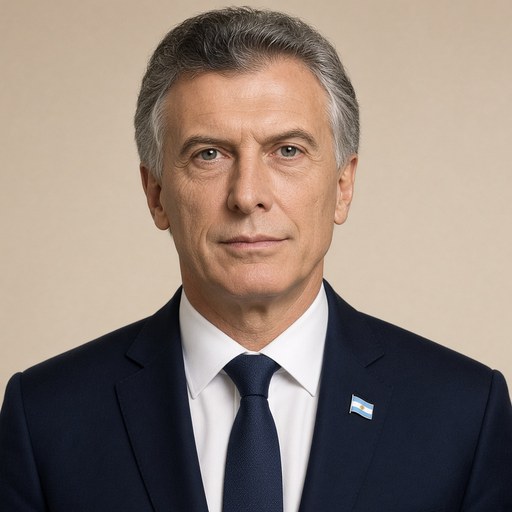
President Mauricio Macri inaugurated the new railway workshop in Tolosa.
 Mauricio Macri · President of Argentina
- Context
- Macri inaugurated the reopened Tolosa railway workshop in Buenos Aires Province on July 13, 2019, after nearly twenty years of closure.
- Main themes
- Railway workshop reopening, public transport safety investment, sense of belonging and community, state neglect of infrastructure, railway workers and heritage, Tolosa railway depot, Roca railway line, government infrastructure commitment
- Duration
- ~15 min
- Words
- 1,796
- Sentences
- 31
- Readability
- 31
- Grade
- 22.3
- Syntax
- 3.85
- Vocabulary
- 1.87
Translated from Spanish
The broad sphere of national life a sentence belongs to. Every sentence has an Arena, so it is the denominator the other indices are read against.
Other31 sentences in 11 paragraphs
PRESIDENT.- Good morning, good morning, what joy, the truth is I also share this moment with a lot of joy, a lot of joy, I know what it means for the people of Tolosa, Julio, I know what it means for this great railway family, especially for the Roca family, it is a very special moment, the reopening of this workshop after almost twenty years, twenty years.
The truth is that it is something that goes through something very deep, right?, especially for those who were there, who experienced the loss, and suddenly, when they thought that the only thing left was resignation, suddenly it changed, things changed.
Come here, Pablito, because they also told me that you are a Gallardo from Estudiantes, so we are better off, pincha.
PABLO.- Like the vast majority of people here.
Is the vast majority of people here pinchas? Very good. I have a huge affection for the pinchas because they gave me perhaps the best number nine in the history of Club Atlético Boca Juniors, Don Martín Palermo, yes sir, a great player, a great person besides being a scorer that we all miss, because we would like to have a scorer like that on all our teams. But tell me, Pablo, what did it mean when a few months ago we started talking about reopening the workshop, that we needed it, that it had to do with the safety of the people? What did you think, where were you, what were you doing?
PABLO.- Nothing, a very big emotion, as they said, I was part of the process of the closure in 2001, something that for the vast majority of us here was very sad, the case of the public depot in Tolosa is part of my history, I started my professional career, I graduated working in a depot; my dad entered in '45, at 15 years old, and retired in '94, and I had the chance to work two years with him at the depot, and today I find myself here participating in the reopening, the truth is a very big emotion. At some point, I left Roca, I went through the rest of the lines, and fate brought me back to Roca, and I told Marcelo that I wouldn’t have been able to stand seeing the opening of Tolosa from the sidelines. There is a great sense of belonging, what I say, there is a very strong sense of belonging in Roca. So, a very big emotion.
PRESIDENT.- How nice, because that’s what we live for, belonging, feeling identified, part of, committed, protagonists, and the truth is that it is quite incredible, as María Eugenia said, that for forty years the State has not invested in safety in Roca, forty years, that’s a long time, forty years, I was twenty, so I still aspired to be a great football player. just kidding, I was already a clumsy player from the start. But María Eugenia, it’s fashionable now the things that other people comment about your statements, in that era for sure, yes, five years, it was definitely virginal.
But speaking seriously now, forty years, I was also doing some calculations, it’s like those people who use the train every day, it’s about 20 thousand trips, twenty thousand trips that the State didn’t invest a penny in their safety, a penny, so that’s 20 thousand trips that were left to their fate. And there are people who didn’t have that luck, they didn’t have it, and today it hurts them in their hearts, really, it hurts deeply. And we all have to think that it could have happened to any of us, any of us could have had a child, a brother, a father on that train, who also experienced the same thing, the lack of investment, the lack of care, in something so. I don’t say easy, but typical of the time, which was to transform a manual brake into an automatic brake, an investment, compared to everything that a railway means, which was minor, and there was no priority given to taking care of the tracks and the equipment. And so we spent many years neglecting many things, like this workshop, like the one in Mechita, which I was also lucky to visit with María Eugenia and see the joy of the workers as today the 350 who will give dynamism to this one, who will return to Tolosa that noise of these machines when they move, because that noise, when silence comes, everyone misses it, maybe when there is that noise there are also complaints, but when it goes away, it is missed, right? and now it returns, it returns to maintain these machines every day, we have bought many machines, I also want to take the opportunity to congratulate Guillo, Marcelo Orfila, Manuela, there is Juampi, let everyone who has been part of making this workshop operational today stand up, please. Because without any of them, none of them, I want to tell the Argentines, they have a railway past, they are all people who took on the responsibility and commitment to work for the Argentines, and the incredible thing is that all of them - Guillermo Fiad is also missing, who didn’t come today, who is also involved in the repairs, or Lemos from Belgrano Cargas, that’s what they told me, that they were all jealous here because I always talk about cargo and didn’t talk about passengers, I am very proud of everything that is being done here, that all of you are doing regarding passengers- But they didn’t have a history like you, Pablito, and today they are passionate, it seems like they have been railway workers all their lives, there is something about the train, the train has a special attraction, it has something that transmits strength, reliability, presence; and the truth is that seeing what is happening here today, what is happening in Mechita, and seeing this revolution of trains that just a few days ago with María Eugenia and Guillermo we were together with Horacio at the San Martín viaduct, and before it was Mitre, and this revolution cannot stop, because we have just begun, we all know that there is so much more to improve, so much more to improve the quality of service, the times, the reliability, the safety, because now we want the automatic brakes, which are one hundred percent on the 71 electrified kilometers of Roca, Guillo, so we are all really calm and continue to improve the quality of everything that pertains to passenger service, because there are many hours spent in public transport throughout the life of a worker, so it is a very important part. And this revolution of trains is not the only one, because this also extends to cargo trains, which get jealous but the truth is that it is also part of the railway family, and the truth is that for that worker from Jujuy, from Salta, who today can see that their vegetables, that their beans can reach the port and be exported to the world, that is work, that is work; and if that person doesn’t have that railway, they are left without work, they are left without being able to do what today you will be happy to do again, which is to work with these impressive machines. So it is very important, and again, these 700 kilometers of track that we repaired, from Jujuy, Salta, Santiago del Estero, Chaco to Santa Fe, we have to do the same with San Martín, which we have underway, but we have to gather funds bit by bit, because it is never enough, everything is a priority, so that all of Cuyo connects as well, and also so that the railway helps to accelerate the development of another revolution which is energy in Vaca Muerta. And all of this is happening alongside the revolution of highways, roads, ports, airports, and the Internet, because also in an Argentina that we want to develop regional economies, and we want every Argentine in their place to be able to live and develop their family, without having to go to a big city because there is no work in their place, they also need virtual connectivity, so this that we have moved from less than 16 percent of the territory to more than 70 percent of the territory and 90 percent of the people having 4G, and millions of small towns with internet, and double the rural schools with internet, so that kids can also be educated there with the same knowledge, the same opportunities as kids who can have in the best schools in the City of Buenos Aires, and achieving equality of opportunities is fundamental.
And these are the foundations, the foundations that we have built working together every day for these three and a half years, and there is still much more to do, because the world evolves, and everyone is discussing the future of work, because the equipment you see today has nothing to do with that of twenty years ago when the workshop closed, and here besides that, there is something else that is very good, the evolution of understanding the participation now the role that women have, that today we have women maintaining, turning wheels, and we need them, because women are very capable and very valuable, and this new stage in Argentina needs the active presence of women in all places.
So I say: we are doing something that has never been done, because we decided three and a half years ago to stop complaining, to stop looking for someone to blame somewhere else on planet Earth and to assume that we are the ones here who are solely responsible for our future, and that the future goes through truth, through doing, doing in teams, dialoguing, trusting that the other can contribute something; and the other cannot fail, the other has to do their job a little better every day, because we all depend on each other, if the train runs poorly, if the planes run poorly, if the trucks run poorly, if the schools don’t teach, we all suffer. We all need to improve every day if we want to have a different place in this coming world, we cannot sit back and watch, this is not a football match that we watch on television, this is a match that all Argentines play.
And today is an important day, important because we turned a page of negative history to transform it into positive. So, again, from the heart, congratulations to all. This plaque that Pablo carries is for all those who made this possible. Thank you very much, thank you very much indeed.
The original Spanish. The tags above are read on the English translation's sentences.
PRESIDENTE.- Buenos días, buenos días, qué alegría, la verdad también comparto este momento con mucha alegría, mucha alegría, sé lo que significa para los tolosanos, Julio, sé lo que significa para esta gran familia ferroviaria, especialmente a la familia del Roca, es un momento muy especial la reapertura de este taller después de casi veinte años, veinte años.
La verdad que es algo que pasa por algo muy profundo, ¿no?, especialmente desde aquellos que estuvieron, que tuvieron la pérdida, y que de golpe, cuando pensaban que lo único que cabía era la resignación, de golpe cambió, la cosa cambió.
Vení Pablito, que aparte me dijeron que sos Gallardo de Estudiantes, así andamos mejor, pincha.
PABLO.- Como la gran mayoría de acá.
¿La gran mayoría de acá son pinchas? Muy bien. Yo tengo un enorme afecto por los pinchas porque me dieron tal vez el mejor nueve de la historia que tuvo el Club Atlético Boca Juniors, Don Martín Palermo, sí señor, un grande, una gran persona aparte de ser un goleador que todos extrañamos, porque querríamos tener un goleador así en todos nuestros equipos. Pero contame Pablo, ¿qué significó cuando hace unos meses empezamos a hablar de que había que reabrir el taller, que lo necesitábamos, que tenía que ver con la seguridad de la gente? ¿Qué pensaste, dónde estabas, qué estabas haciendo?
PABLO.- Nada, una emoción muy grande, como dijeron, me tocó formar parte del proceso del cierre en el 2001, algo que para la gran mayoría delos que estamos acá fue muy triste, el caso del depósito público de Tolosa es parte de mi historia, inicié mi carrera laboral, profesional, me recibí trabajando en un depósito; mi papá entró en el ’45, a los 15 años, y se jubiló en el ’94, y me tocó trabajar dos años con él depósito, y hoy me encuentro acá participando de la reapertura, la verdad que una emoción muy grande. En algún momento me fui del Roca, pasé por el resto de las líneas, y el destino hizo que vuelva al Roca, y le decía a Marcelo que no me hubiera bancado ver la apertura de Tolosa viéndolo del banco. Hay un sentimiento de pertenencia, lo que yo digo, hay un sentimiento de pertenencia muy grande en el Roca. Así que una emoción muy grande.
PRESIDENTE.- Qué lindo, porque de eso vivimos, de la pertenencia, de sentirnos identificados, parte, comprometidos, protagonistas, y la verdad que es bastante increíble, como decía María Eugenia, que durante cuarenta años el Estado no haya invertido en seguridad en el Roca, cuarenta años, es mucho tiempo, cuarenta años, yo tenía veinte, así que aspiraba todavía a ser un gran jugador de fútbol…, mentira, ya era pata dura de entrada. Pero María Eugenia, que está de moda las cosas que comentan otras personas acerca de tus estados, en esa era seguro, sí, cinco años, era virginal seguro. (APLAUSOS)
Pero hablando ahora en serio, cuarenta años, también estuve haciendo algunas cuentas, es como aquellas personas que usan todos los días el tren, son como 20 mil viajes, veinte mil viajes que el Estado no puso un peso en su seguridad, un peso, entonces son 20 mil viajes que estuvieron abandonados a su suerte. Y hay gente que no tuvo esa suerte, no la tuvo, y hoy le duele en el corazón, de verdad, le duele profundo. Y todos tenemos que pensar que nos pudo haber pasado a cualquiera de nosotros, cualquiera de nosotros pudo haber tenido un hijo, un hermano, un padre en ese tren, que también vivió lo mismo, la falta de inversión, la falta de cuidado, en algo tan…, no digo fácil, pero propio de la época, que era transformar un freno manual en un freno automático, una inversión, al lado de todo lo que significa un ferrocarril, que era menor, y no se tuvo prioridad en poner cuidado de las vías y de los equipos. Y así fuimos muchos años abandonando muchas cosas, como fue este taller, como fue el de Mechita, que yo tuve la suerte también de ir con María Eugenia y ver la alegría de los trabajadores como hoy la tienen los 350 que le van a dar dinámica a este, que van a devolverle a Tolosa ese ruido de estos equipos cuando se mueven, porque ese ruido, cuando viene el silencio, todo el mundo extraña, tal vez cuando hay ese ruido hay también quejas, pero cuando se va se lo extraña, ¿no?, y ahora vuelve, vuelve para mantener todos los días estos equipos, hemos comprado muchos equipos, quiero también aprovechar a felicitar a Guillo, a Marcelo Orfila, a Manuela, ahí está Juampi, que se paren todos los que han hecho parte de que este taller esté funcionando hoy, por favor. (APLAUSOS) Que sin haber ninguno de ellos, ninguno de ellos, quiero decirles a los argentinos, tienen un pasado ferroviario, todos son gente asumió la responsabilidad y el compromiso de trabajar por los argentinos, y lo increíble es que todos ellos -también falta Guillermo Fiad, que no vino hoy, que también tiene que ver con la reparación, o Lemos del Belgrano Cargas, eso me dijeron, que estaban todos celosos acá porque yo hablo siempre de las cargas y no hablaba de los pasajeros, estoy muy orgulloso de todo lo que se está haciendo acá, que están haciendo todos ustedes con el tema pasajeros- Pero ellos no tenían historia como vos Pablito, y hoy están apasionados, parece que hubiesen sido toda la vida ferroviarios, tiene algo el tren, el tren tiene alguna atracción especial, tiene algo que transmite en la fuerza, la confiabilidad, la presencia; y la verdad que ver lo que pasa hoy acá, lo que pasa en Mechita, y ver que esta revolución de los trenes que hace unos días nomás con María Eugenia y Guillermo estuvimos junto a Horacio con el viaducto del San Martín, y antes fue el Mitre, y esta revolución no puede parar, porque recién comenzamos, todos sabemos que hay muchísimo más por mejorar, muchísimo más por mejorar la calidad del servicio, los tiempos, la fiabilidad, la seguridad, porque ahora queremos que los frenos automáticos, que están cien por cien en los 71 kilómetros electrificados del Roca, Guillo, así estamos todos realmente tranquilos y seguir mejorando la calidad de todos lo que hace al servicio de los pasajeros, porque son muchas horas que se transcurre en el transporte público a lo largo de la vida de un trabajador, entonces es una parte muy importante. Y esta revolución de los trenes no es la única, porque esto también se extiende al tren de cargas, que se ponen celosos pero la verdad que también es parte de la familia ferroviaria, y la verdad que para ese trabajador de Jujuy, de Salta, que hoy puede ver que sus legumbres, que sus porotos pueden llegar hasta el puerto y exportarse al mundo, eso es trabajo, eso es trabajo; y si esa persona no tiene ese ferrocarril se queda sin trabajo, se queda sin poder hacer lo que hoy ustedes van a estar felices de volver a hacer, que es trabajar con estos fierros impresionantes. Entonces es muy importante, y de vuelta, estos 700 kilómetros de vía que reparamos, desde Jujuy, Salta, Santiago del Estero, el Chaco hasta Santa Fe, hay que hacer lo mismo con el San Martín, que lo tenemos en marcha, pero hay que juntar manguito por manguito, porque nunca alcanza, todo es prioritario, para todo el Cuyo se conecte también, y también que el ferrocarril ayude a impulsar a mayor velocidad el desarrollo de otra revolución que es la de la energía en Vaca Muerta. Y todo eso está sucediendo junto a la revolución de las autopistas, de las rutas, de los puertos, de los aeropuertos, de Internet, porque también en una Argentina que queremos desarrollar las economías regionales, y queremos que cada argentino en su lugar pueda vivir y desarrollar su familia, sin tener que ir hacia una gran ciudad porque en su lugar no hay trabajo, también necesitan la conectividad virtual, entonces esto que hayamos pasado de menos del 16 por ciento del territorio a más del 70 por ciento del territorio y del 90 de la gente que tiene 4G, y millones de pequeñas localidades con internet, y el doble de las escuelas rurales con internet, para que los chicos también se pueda educar ahí con los mismos conocimientos, las mismas posibilidades que los chicos que puedan tener en las mejores escuelas de la Ciudad de Buenos Aires, y lograr igualdad de oportunidades es fundamental.
Y estas son las bases, las bases que hemos hecho trabajando juntos todos los días estos tres años y medio, y todavía faltan muchas más, porque el mundo evoluciona, y todo el mundo discute sobre el futuro del trabajo, porque los equipos que ves vos hoy no tienen nada que ver con los de hace veinte años cuando se cerró el taller, y acá además no tiene nada que ver otra cosa que es muy buena, la evolución de entender la participación ahora el rol que tiene la mujer, que hoy tenemos mujeres manteniendo, torneando ruedas, y las necesitamos, porque las mujeres son muy capaces y muy valiosas, y esta nueva etapa en la Argentina necesita la presencia activa de la mujer en todos los lugares.
Entonces digo: estamos haciendo algo que nunca se había hecho, porque decidimos hace tres años y medio dejar de quejarnos, dejar de buscar responsables en alguna otra parte del planeta Tierra y asumir que somos los que estamos acá los únicos responsables de nuestro futuro, y que el futuro pasa desde la verdad, por el hacer, el hacer en equipo, el dialogar, el confiar en que el otro te pueda aportar algo; y el otro no puede fallar el otro tiene que hacer su trabajo todos los días un poco mejor, porque todos dependemos de todos, si el tren anda mal, si los aviones andan mal, si los camiones andan mal, si las escuelas no enseñan, todos nos perjudicamos. Todos necesitamos mejorar todos los días si queremos tener un lugar distinto en este mundo que viene, no podemos sentarnos a mirar, esto no es un partido de futbol que miramos por televisión, esto es un partido que jugamos todos los argentinos.
Y hoy es un día importante, importante porque dimos vuelta una página de la historia negativa para transformarla en positiva. Así que, de vuelta, de corazón felicitaciones a todos. Esta plaqueta que lleva Pablo es para todos los que han hecho posible esto. Muchas gracias, muchas gracias de verdad. (APLAUSOS)