




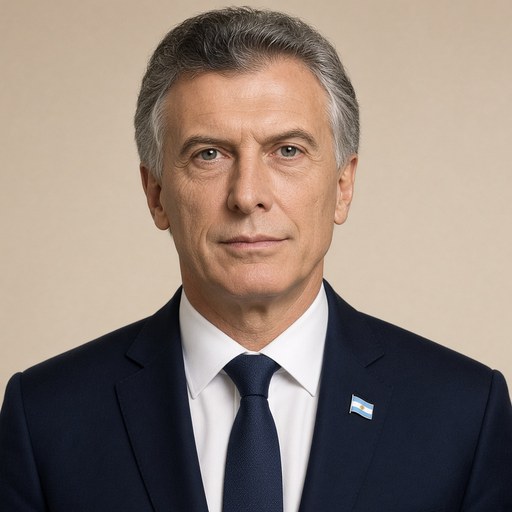
President Mauricio Macri at a meeting with young people on climate change.
 Mauricio Macri · President of Argentina
- Context
- Macri addressed a youth climate change meeting in Argentina on September 20, 2019, discussing environmental policies and government climate initiatives.
- Main themes
- Climate change, urban sustainability, city densification, green infrastructure, renewable construction materials, plastic waste reduction, youth engagement, environmental policy, Buenos Aires green agenda, C40 cities network, energy efficiency, cultural change
- Duration
- ~17 min
- Words
- 2,053
- Sentences
- 46
- Readability
- 38
- Grade
- 19.1
- Syntax
- 3.72
- Vocabulary
- 1.86
Translated from Spanish
The broad sphere of national life a sentence belongs to. Every sentence has an Arena, so it is the denominator the other indices are read against.
Other46 sentences in 14 paragraphs
What an ugly day we have, right? Look at this, total sky blue, total sky blue, yes sir.
But well, the truth is that today we are mobilized for something very important, very important, it’s good that all that energy you have is being channeled into something that when we talk about politics, it always has to think about how to take care of people. Today there is a topic that concerns us, that occupies all of us, transversally, globally, which is climate change and all these things that are happening as a result of climate change. Just yesterday I went to visit Volcán, that small town in Jujuy that a couple of years ago woke up under stones and mud, and these are things that are happening with increasing frequency, and that force us to think that there is something we are doing wrong and we are being held accountable, and mainly that it has been done wrong for a long time, but that there was no awareness of all this. And now yes, now in this globalized world, now in this world that with these little devices that are filming me connect us immediately with the whole world, it makes us know and have to assume responsibilities and the consequences of what is happening. And I want to tell you that you can count on me.
I learned a lot from the wonderful experience of being Mayor, as the Italians call me, I love being called Sindaco, of such a wonderful city as the City of Buenos Aires, and there we started to go to the C40 meeting with the most important cities and this was at the core, it was the axis of everything, how to develop it, with livability, the improvement of the city based on the green agenda. And we made a lot of progress in many things, in a country that also has a serious problem, except for the City of Buenos Aires which is not ideal but is reasonable, in the rest of the country if you come from different places in the country you know it and those who have traveled, the big problem we have is that all the cities are spread out. The city of Córdoba must be the one that suffers the most from that situation, and that is an absolute waste of energy, the cost of services, of bringing them kilometers from the center, people who do not have public transport, everyone has to move in their car, on their motorcycle to go to work, instead of walking, instead of biking, all these friendly transport systems that do not consume energy.
Well, all this about densifying cities, we have already taken this to the country in these three and a half years of saying “gentlemen, the urban sprawl of each city cannot grow anymore” and we have convinced most of the provinces to go in that direction and move towards densification so that we are also closer, closer to our work. Because also what a waste of time, right? Those hours that people spend traveling to and from work, going to and from school, to the hospital. Well, we did a lot there and we also did a lot in the recycling issue and incredible things happened because in society, which is often reluctant to change, when we implemented the plastic bag ban, we said “enough with the plastic bags,” and everyone accepted it and plastic bags in supermarkets ended, and many things can be done, that we must continue doing.
Of course, the focus must also be on new technology for construction, here we are all used to the idea that if you don’t have a house made of bricks, you don’t have a house, and brick is the least sustainable thing there is, it really is a disaster in thermal balance. We are innovating, starting, and I tell you that I was just with Jose and Brenda, and I told them that before they leave they should go see my new toy, because a year ago I don’t know if you saw it on Facebook, I went to Córdoba to see some crazy people who developed a system that with plastic waste, plastic bottles in general, they compress them in a very basic way with some very basic tools, they make frames of one by one, they put a (audio jump) and stack one on top of the other and the thermal insulation is something incredible, incredible, and they are made for a third of the cost of a traditional house. And I made a zoom here, to hold meetings outside, which made me angry because when they finished the construction they had put two heating-cooling units, and I said “why? If this doesn’t need it.” But it seems that someone wanted to bill for a couple of unnecessary units, it always happens, but the truth is that they have never turned on and it really works. The truth is that the environment generated, the sustainability of this system, the same as all these new prefabricated panels that exist, that work, the wood that works, but it is part of the cultural change, leading people to think that it doesn’t have to be brick for it to be your house and that it adds up. And also when we arrived at the Nation, here with Sergio we created the first National Climate Change Cabinet.
And the other day with Sergio we had the last meeting, last month, and I don’t know if we have another one this year, and the truth is that the progress we had made, you made the report, and it was really impressive. I said “look at that, how everyone is getting involved,” because it seems impressive to see that my ministries that have nothing to do with the topic suddenly get involved in what we can do to be more sustainable. Obviously, the big challenge is energy, and that is where I feel we have made the most progress, because what we have done in renewable energies has been truly spectacular, from one point something in the energy matrix with clean energies, today we are dispatching twelve percent, more than we have, because there is low consumption and more renewables are dispatched.
And how crazy Argentines are, because we are always a factory of permanent opportunities, that here we are determined to turn them into present and future realities, but wind energy appeared, and where are the best winds in the world? In Patagonia. And solar energy appeared, and where is the best solar radiation in the world? In all of northwestern Argentina.
And the truth is that the projects are impressive, I don’t know if you have been able to travel south and see those gigantic windmills that from the first to the current have tripled the generation capacity and the load is above 60 percent, there are practically no wind projects in the world that have this level of performance, all the winds in Patagonia. And in solar, we are about to finish this project that will be the largest in South America, more than a million panels in Caucharí at four thousand meters high, and yesterday I told the people of Jujuy “do you realize that you not only have tourism that has increased by 50 percent in the number of people visiting Jujuy -and those who haven’t gone to Jujuy yet should go, because the Quebrada is unique- but you will also be a global potential for energy from renewable solar energy,” and that makes the people of Jujuy very proud, as we all should be of these things we can do.
But it’s not just that, because more than twenty provinces have projects: biomass, biogas, small hydro projects, and they are functioning, the truth is that there are already over 50 in operation, 90 under construction, we are really going to have a presence in renewable energy that I hope is just the beginning and that allows us to really replace all fossil fuels as soon as possible.
And I also feel very happy and proud that -also boosting tourism- we have doubled the National Parks in just three and a half years, that is really impressive.
I have visited some of them, if you haven’t gone, go because they are wonderful places and they align with the new type of tourism, more adventure, in contact with nature, that is being generated all over the world, so there too. And we have also managed to approve the first Marine Protected Area.
But the challenges must continue, they must continue, in the City we already have in the curriculum the topic of sustainable education, in environmental care, we need that to extend to all provinces, unfortunately there is a lot of asymmetry between what we have done at the National level, City and many provinces that still do not have records, do not have inspectors to care for the environment, so we have to push for this agenda -as happens to us in many things- to become naturalized and integrated into the different provincial and municipal governments, right? It also happens with access to public information, the mechanisms of transparency, which are very much linked to this, because if we do not have information it is difficult to know who is polluting, who is harming the environment, if they are complying with doing things, and the truth is that when there is no information, there is no access to information, everything is generated based on suspicions and prejudices, and then that leads you to error. So the best thing is to have transparent information about what is happening, and I think that is really important.
So I believe that this is an agenda that has begun, it has just begun here, we were among the first to commit to the Paris Agreement, and we remain very committed, and it forces us to renew ourselves, because unfortunately the results are globally very inferior to what we need, to what we are committed to. So Argentina in these years has been part of those who push for many things for positive global solutions for all, and I think we need to be attentive to continue working on everything that is within our reach: energy, plastics, recycling, responsible consumption, these are all very important things that we must carry out. And also in the other chapter, from where we are, we are certainly not going to improve, so we have to make strong investments in adaptation, because today unfortunately if we do not, entire communities will continue to lose their livelihoods, their homes, and all these things will repeat, because this issue of recurrence, “this happens once every hundred years” I already learned in the City of Buenos Aires, the first time I was flooded they told me “this happens once every hundred years,” the following year the guy told me “it happens once every hundred years,” “look, I’m the same, you are repeating the same answer to me, something has changed.” We did the works that needed to be done so that it wouldn’t flood anymore, but much more is needed, I won’t say anything more than today.
So I tell you that in this we have to hammer away, we have to hammer away every day, and we have to set an example, we have to preach by example, from the small things, not washing more clothes than one can reuse, to towels, every gesture counts, the damage we do is a little bit each of the billions of inhabitants, it’s not that one person does a lot more damage than everyone else. So I think it’s every day, every day and convincing and educating from a young age in school our children so that they start with that awareness and that will make it much easier. And in the meantime, battling with the big ones, who are sometimes a bit stubborn, that we have to change, and that changing is rejuvenating, right? Because as in everything we set out, we can do it, yes we can, yes it is possible, I thank you for being here and please go see the zoom, it’s really good. Thank you, love to all.
The original Spanish. The tags above are read on the English translation's sentences.
Qué feo día nos tocó, ¿no? Mirá lo que es, celeste total, celeste total, sí señor.
Pero bueno la verdad que hoy estamos movilizados por algo muy importante, muy importante, está bueno que toda esa energía que tienen la estemos canalizando en algo que cuando hablamos de que la política tiene que estar siempre pensando a partir de cómo cuidar a la gente, hoy hay un tema que nos preocupa, que nos ocupa a todos, trasversalmente, globalmente, que es el cambio climático y todas estas cosas que están sucediendo a partir del cambio climático. Justo ayer fui visitar Volcán, ese pequeño pueblo de Jujuy que hace un par de años amaneció debajo de las piedras y del barro, y son esas cosas que cada vez se producen con más frecuencia, y que nos obligan a pensar que hay algo que estamos haciendo mal y nos están pasando la cuenta, y principalmente que se está haciendo mal hace mucho tiempo, pero que no se tenía conciencia de todo eso. Y ahora sí, ahora en este mundo globalizado, ahora en este mundo que con estos aparatitos que me están filmando nos conectan inmediatamente con todo el mundo, hace que sepamos y tengamos que asumir responsabilidades y que consecuencias de lo que está sucediendo. Y yo quiero decirles que cuentan conmigo. (APLAUSOS)
Aprendí mucho a partir de la experiencia maravillosa de ser Alcalde, como me dice los italianos que me encanta Sindaco, de una Ciudad tan maravillosa como la Ciudad de Buenos Aires y ahí apenas comenzamos empezamos a ir a la reunión del C40 con las ciudades más importantes y esto estaba en el eje, era el eje de todo cómo desarrollarla, con vivencia, la mejora de la ciudad a partir de la agenda verde. Y ahí avanzamos muchísimo, en muchas cosas, en un país que también tiene un problema grave, excepto la Ciudad de Buenos Aires que no es el ideal pero es razonable, en el resto del país si ustedes vienen de distintos de lugares del país lo saben y los que han viajado, el gran problema que tenemos es que todas las ciudades están extendidas. La ciudad de Córdoba debe ser la que más sufre esa situación, y eso es derroche absoluto de energía, el costo de los servicios, de llevarlos a kilómetros del centro, gente que no tiene transporte públicos, todos tienen que moverse en su auto, en su moto para ir a trabajar, en vez de ir caminando, en vez de ir en bicicleta, todos estos sistemas de transporte amigables que no consumen energía.
Bueno, todo esto de densificar las ciudades, esto ya lo hemos llevado al país en estos tres años y medios de decir “señores las manchas urbanas de cada ciudad no pueden crecer más” y hemos convencido a la mayoría de las provincias de ir en esa dirección y avanzar a que se comience a densificar para que además estemos más cerca, más cerca de nuestro trabajo. Porque también qué tiempo perdido, ¿no? Esas horas que la gente se pasa viajando para ir y venir del trabajo, ir y venir a la escuela, al hospital. Bueno, ahí hicimos muchos y también hicimos mucho en el tema de reciclado y pasaron cosas increíbles porque en la sociedad, que muchas veces es renuente a cambiar, cuando pusimos lo de las bolsitas, dijimos “basta de las bolsitas”, y todo el mundo acepto y se acabaron las bolsas de plástico en los supermercados, y muchas cosas que se pueden ir haciendo, que hay que seguir haciendo.
Por supuesto el eje tiene que ser también la nueva tecnología para construir, acá estamos todos acostumbrados a que el que no tiene una casa con ladrillos, no tiene casa, y el ladrillo es lo menos sustentable que hay, la verdad es un desastre en el balance térmico. Estamos innovando, empezando, y les digo que recién estaba con Jose y Brenda, y les decía que antes de irse vayan a ver mi juguete nuevo, porque hace un año no sé si lo vieron en Facebook me fui a Córdoba a ver unos locos que desarrollaron un sistema que con deshechos plásticos, botellas plásticos en general, las comprimen en una cosa muy elemental con unos herramentales muy elementales, hacen unos bastidores de uno por uno, les ponen una (salto de audio) y van montando uno arriba de otro y el aislamiento térmico es algo increíble, increíble, y se hacen por un tercio del valor de la casa tradicional. Y me hice acá un zum, para hacer reuniones ahí afuera, que me hicieron enojar porque cuando terminaron la construcción les habrían puesto dos equipos de frio-calor, y le digo “¿para qué? Si esto no necesita”. Pero se ve que alguno quiso facturar un par de equipos innecesarios, siempre te pasa, pero la verdad que nunca se han prendido y realmente funciona. La verdad que el ambiente que se genera, la sustentabilidad de este sistema, lo mismo que todos estos paneles nuevos, prefabricados que hay, que funcionan, la madera que funciona, pero es parte del cambio cultural, ir llevando a la gente a pensar que no tiene que ser ladrillo para que sea tu casa y que sume. Y también cuando llegamos a la Nación, acá con Sergio hicimos el primer Gabinete del cambio climático nacional. (APLAUSOS)
Y el otro día con Sergio tuvimos la última reunión, el mes pasado, y creo que no sé si nos toca otra más este año, y la verdad que los avances que habíamos tenido, vos hiciste el informe, y la verdad que fue muy impresionante. Yo decía “mirá vos, cómo se va todo el mundo enganchado”, porque te parece impresionante ver que mis ministerios que no tienen nada que ver con la temática, de golpe se pongan en eso de qué podemos hacer para ser más sustentables. Obviamente el gran desafío es energía, y ahí es donde siento que hemos hecho más avances, porque lo que hemos hecho en energías renovables ha sido realmente espectacular, de uno coma algo en la matriz energética con energías limpias, hoy estamos despachando el doce por ciento, más de lo que tenemos, porque hay bajo consumo y despacha más renovables. (APLAUSOS)
Y qué locos los argentinos, porque siempre somos una fábrica de oportunidades permanentes, que acá estamos decididos a transformarlas en realidades de presente y de futuro, pero apareció la energía eólica, ¿y dónde están los mejores vientos del mundo? En la Patagonia. Y apareció la energía solar, ¿y dónde está la mejor radiación solar del mundo? En todo el noroeste argentino.
Y la verdad que los proyectos son impresionantes, no sé si han podido viajar al sur y ver los molinos esos gigantescos que del primero al actual han triplicado la capacidad de generación y la carga está arriba del 60 por ciento, no hay prácticamente proyectos eólicos en el mundo que tengan este nivel de rendimiento, todos los vientos en la Patagonia. Y en lo solar, estamos por terminar este proyecto que va a ser el más grande de Sudamérica, más de un millón de paneles en Caucharí a cuatro mil metros de altura, y ayer les decía a los jujeños “se dan cuenta que ustedes no solamente en turismo que han aumentado un 50 por ciento la gente que va a visitar a Jujuy -y el que no ha ido a Jujuy todavía vaya, porque es única la Quebrada- sino que además van a ser ustedes potencial mundial de energía a partir de la energía renovable solar”, y a los jujeños eso los hace poner muy orgullosos, como tenemos que estar todos de estas cosas que podemos hacer.
Pero no solo es eso, porque son más de veinte provincias que tienen proyectos: biomasa, biogás, pequeños proyectos hídricos, y están funcionando, la verdad que son 50 y pico ya en funcionamiento, 90 en construcción, vamos a llegar realmente a tener una presencia en el tema renovable que espero que tan solo sea el comienzo y que nos permita realmente ir suplantando todo lo fósil lo antes posible.
Y además me siento muy contento y orgulloso de que -también potenciando el turismo- hemos duplicado los Parques Nacionales en tan solo tres años y medio, eso es realmente impresionante. (APLAUSOS)
A algunos los he visitado, si ustedes no han ido vayan porque son lugares maravillosos y van en línea con el nuevo tipo de turismo, más aventura, en contacto con la naturaleza, que se está generando en el mundo entero, así que ahí también. Y también hemos logrado aprobar la primer Área Marina Protegida. (APLAUSOS)
Pero los desafíos deben continuar, deben continuar, en la Ciudad ya tenemos en la currícula el tema de la educación sustentable, en el cuidado del medio ambiente, necesitamos que eso se extienda a todas las provincias, lamentablemente hay mucha asimetría entre lo que hemos hecho en Nación, Ciudad y muchas provincias que todavía no tienen ni registros, no tienen inspectores para cuidar el medio ambiente, o sea tenemos que empujar para que esta agenda -como nos pasa en muchas cosas- se vaya naturalizando e integrando a los distintos gobiernos provinciales y municipales, ¿no?, también pasa con el acceso a la información pública, los mecanismos de transparencia, que están muy ligados a esto, porque si no tenemos información es difícil saber quién está contaminando, quién está dañando el medio ambiente, si están cumpliendo en hacer las cosas, y la verdad cuando no hay información, no hay acceso a la información después se genera todo en base a sospechas y prejuicios, y después eso te lleva al error. Entonces lo mejor es tener información transparente de lo que está sucediendo, y creo que eso es realmente importante.
Así que creo que es una agenda que ha comenzado, tan solo ha comenzado acá, nosotros fuimos de los primeros en comprometernos con el acurdo de la COP de París, y seguimos muy comprometidos, y nos obliga a renovarnos, porque lamentablemente los resultados son a nivel global muy inferiores a lo que necesitamos, a lo comprometido. Entonces la Argentina en estos años debe ha sido parte de aquellos que empujan en muchas cosas por soluciones globales positivas para todos, y creo que tenemos que estar atentos a seguir trabajando en todo lo que esté a nuestro alcance: energía, plásticos, reciclado, consumo responsable, son todas cosas muy importantes que tenemos que llevar a cabo. Y también en el otro capítulo, que es de donde estamos seguramente no vamos a mejorar, con lo cual tenemos que hacer fuertes inversiones en la adaptación, porque hoy lamentablemente sino nos va a seguir pasando que comunidades enteras pierdan vidas de trabajo, sus casas, y todas estas cosas se repitan, porque ya este tema de la recurrencia, “esto pasa una vez cada cien años” ya en la Ciudad de Buenos Aires lo aprendí, la primera vez que se me inundó me dijeron “esto pasa una vez cada cien años”, al año siguiente me dijo el tipo “pasa una vez cada cien años”, “mirá que soy le mismo, me estás repitiendo la misma respuesta, hay algo que cambió”. Hicimos las obras que había que hacer para que no se inunde más, pero falta mucho más, no voy a decir más nada que hoy... (RISAS Y APLAUSOS)
Así que les digo que en esto hay que machacar, hay que machacar todos los días, y hay que dar el ejemplo, hay que predicar con el ejemplo, desde las pequeñas cosas, de no lavar de más ropa que uno puede volver a reutilizar, a las toallas, cada gesto vale, el daño lo hacemos un cachito cada uno de los miles de millones de habitantes, no es que uno solo hace un montón de daño superior a todos los demás. Entonces creo que es de cada día, todos los días y convenciendo y educando desde chiquitos en el colegio a nuestros niños para que ya arranquen con esa conciencia y que eso lo va a hacer mucho más fácil. Y mientras tanto batallar con los grandes, que a veces son un poco tercos, de que hay que cambiar, y que cambiar es rejuvenecerse, ¿o no? (APLAUSOS) Porque como en todo lo que nos planteamos, estamos pudiendo, sí podemos, sí se puede, les agradezco que estén acá y por favor vayan a ver el zoom que está muy bueno. Gracias, cariño a todos. (APLAUSOS)