




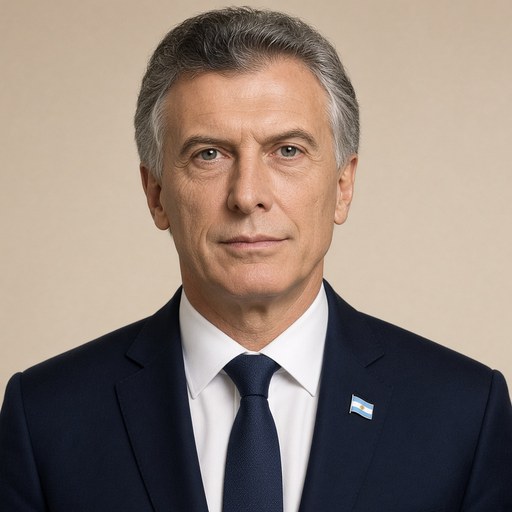
Words of President Mauricio Macri at the presentation of the draft Civil and Commercial Procedural Code.
 Mauricio Macri · President of Argentina
- Context
- Macri addressed lawyers, judges, and officials at the presentation of Argentina's draft Civil and Commercial Procedural Code on September 23, 2019.
- Main themes
- Judicial reform, new Civil and Commercial Procedural Code, access to justice, transparency and truth in legal proceedings, oral court processes, electronic case management, rule of law, civic participation in reform, institutional trust, efficiency in justice system
- Duration
- ~9 min
- Words
- 1,058
- Sentences
- 52
- Readability
- 60
- Grade
- 9.9
- Syntax
- 3.15
- Vocabulary
- 1.93
Translated from Spanish
The broad sphere of national life a sentence belongs to. Every sentence has an Arena, so it is the denominator the other indices are read against.
Other52 sentences in 13 paragraphs
Good morning. Thank you for joining us for the presentation of this project for the new Civil and Commercial Procedural Code of the Nation.
For me, this topic, as an engineer, in this room I feel like a frog from another well today. But the truth is that we are here called together, and I truly thank you, because something very sad has always happened to us Argentinians with Justice. If we ask anyone what they think of it, surely, you know, today they do not have a good opinion. They think it is slow, that it is full of bureaucracy, of back and forth. And perhaps worst of all, they will surely tell us that it is far from the people and that it never puts individuals as a priority. Argentinians need to be able to believe in our Justice. We need to trust in it, trust that it is there to defend us, to protect us. To know that it is there to serve us, to respond to our demands and help us when we need it. Thanks to the enormous effort of many, we are making progress in this regard.
In these three and a half years, we have worked alongside you, lawyers, judges, officials, to correct this situation. And this new Code, like many other results that Germán just mentioned, is the fruit of this work. So I want to especially thank you for your commitment and effort to want to change reality. And we are changing it based on values that are non-negotiable for us. The value of truth, of transparency, and the culture of dialogue. When I say they are non-negotiable for us, I mean for all Argentinians, because we can no longer accept being lied to or being told the truth. We can no longer accept having serious and reliable institutions or not having them. We can no longer accept living in permanent confrontation or living in healthy coexistence. If processes take years, there is no Justice. Argentinians need to change this system and not a superficial change, not a patch. A serious change, like all the changes we have undertaken in these three and a half years.
And this new Procedural Code that is being presented today is precisely to resolve those conflicts that are part of everyone's day-to-day life more quickly and efficiently, because beyond the big cases that we see on television, that we see in the newspapers, Justice is also about the most common conflicts. The one that has to be there when, for example, it is necessary to define the food regime, the child support payments, when someone has a traffic accident, when someone is a victim of malpractice, or when there are commercial conflicts, which is something that happens every day. And for that, we are sending this project to Congress. And among the new features it includes is something that has always driven me crazy, that I do not understand how we did not do it before, which is the duty to tell the truth. It seems to me an incredible obviousness that one cannot lie to the judge, and in the current Code, it is not mandatory to tell the truth; one can give false testimony without that having any consequences. It is really incredible; that is not right.
I also highlight what Germán said, which I found fascinating in the program follow-up meetings, the oral processes, in which the judge is present, with the best results because when we look at each other, face to face, and listen to each other, the culture of agreement grows. A value that I have always defended in all aspects of my life, including in politics.
And as Germán said, today, civil trials are already a reality in many parts of the country. And, thanks to that, we have gone from 5, 7 to sometimes less than one. But, in the worst cases, a year and a few months. And we reach agreements. That is wonderful, giving time back to people, predictability.
And also, this project seeks for management to be one hundred percent electronic. This makes it more agile, simpler, more transparent, as we have already achieved in the national government where all procedures are through electronic files; there is no more paper.
All of this, absolutely everything, all these changes are a demonstration that it is possible, that it is possible to improve what does not work. It is a demonstration that we cannot resign ourselves, that we do not have to resign ourselves because "things have always been this way," because we can be better. We just have to want to be better and make the concrete changes that are necessary. As complex and as simple as that.
That is why I want to thank, as Germán did, all those who were part of this project, which for those who do not know it is a web platform where any Argentine can participate and give ideas to improve justice. A very participatory thing. We have had huge meetings at the CCK, and it is truly impressive how the entire apparatus, the entire judicial structure has mobilized to try to improve.
And I am very proud to know that there are so many Argentinians committed to contributing their ideas so that Justice is faster, closer, modern, something so important for a society that wants to be independent because, just as we say that if Justice is slow it is not justice, if Justice is not independent it is not Justice. In these years we have worked hard to ensure that politics does not intervene in Justice. It is important now that Justice can defend that independence.
Again, thank you especially, Minister Garavano, Germán, and the 21 experts from the Drafting Commission who prepared this document. I know it must have taken you a lot of work, but you know that Argentinians have been waiting for it and deserved it for decades.
Together, we are achieving a serious change, a change that was born from our hearts, and that is for the Argentinians of today and for those to come. And that expresses my deep gratitude to all of you, and the call to continue working to be ever closer as Justice and as Argentinians in resolving our problems.
Thank you very much to all.
The original Spanish. The tags above are read on the English translation's sentences.
Buenos días. Gracias por acompañarnos en la presentación de este proyecto del nuevo Código Procesal Civil y Comercial de la Nación.
Para mí, este tema, como ingeniero, en este salón soy como un sapo de otro pozo en el día de la fecha. Pero, la verdad es que estamos acá convocados, y realmente les agradezco, porque a los argentinos siempre nos pasó algo muy triste con la Justicia. Si le preguntamos a cualquiera qué piensa de ella seguramente, ustedes saben, hoy no tenga una buena opinión. Piensan que es lenta, que está llena de burocracia, de idas y vueltas. Y, tal vez lo peor, seguro nos diga que está lejos de la gente y que nunca pone a las personas como prioridad. Los argentinos necesitamos poder creer en nuestra Justicia. Necesitamos confiar en ella, confiar en que está para defendernos, para protegernos. Saber que está para servirnos, para responder a nuestras demandas y ayudarnos cuando lo necesitamos. Gracias al esfuerzo enorme de muchos estamos avanzando en este sentido.
En estos tres años y medio trabajamos junto a ustedes, abogados, jueces, funcionarios, para corregir esta situación. Y este nuevo Código, como muchos otros resultados que mencionó Germán recién, son el fruto de este trabajo. Así que les quiero agradecer especialmente a ustedes por su compromiso y esfuerzo para querer cambiar la realidad. Y la estamos cambiando sobre la base de valores que son innegociables para nosotros. El valor de la verdad, el de la transparencia y la cultura del diálogo. Cuando digo que son innegociables para nosotros digo para todos los argentinos, porque ya no nos da lo mismo que nos mientan o que nos digan la verdad. No nos da lo mismo tener instituciones serias y confiables o no tenerlas. No nos da lo mismo vivir en la confrontación permanente o vivir en una sana convivencia. Si los procesos tardan años no hay Justicia. Los argentinos necesitamos cambiar este sistema y no un cambio superficial, no un parche. Un cambio en serio, como todos los cambios que hemos encarado en estos tres años y medio.
Y este nuevo Código Procesal que se presenta hoy es justamente para resolver más rápido y de manera más eficiente esos conflictos que son parte del día a día de todos, porque más allá de los grandes casos, que vemos en la televisión, que vemos en los diarios, la Justicia es también la de los conflictos más corrientes. Esa que tiene que estar ahí cuando, por ejemplo, hay que definir el régimen alimentario, las cuotas alimentarias de los hijos, cuando alguien tiene un accidente de tránsito, cuando alguien es víctima de una mala praxis, o cuando hay conflictos comerciales, que es algo de todos los días. Y para eso estamos enviando este proyecto al Congreso. Y entre las novedades que incluye es algo que a mí siempre me ha vuelto loco, que no entiendo cómo no lo hicimos antes, que es el deber de decir verdad. A mí me parece una obviedad increíble que uno no pueda mentirle al juez, y en el Código actual no es obligatorio decir la verdad, uno puede dar un falso testimonio sin que eso tenga ninguna consecuencia. Es realmente increíble, eso no está bien.
También destaco lo que decía Germán, que a mí en las reuniones de seguimiento del programa me apasionó, los procesos orales, en los que está presente el juez, con los mejores resultados porque, cuando nos miramos, cara a cara, y nos escuchamos, crece la cultura del acuerdo. Un valor que siempre defendí, en todos los aspectos de mi vida, incluida en la política.
Y como decía Germán, hoy, los juicios civiles ya son una realidad en muchas partes del país. Y, gracias a eso, pasamos de 5, 7 a, a veces, menos de uno. Pero, en el peor de los casos, un año y poquitos meses. Y llegamos a acuerdos. Eso es maravilloso, devolverle tiempo a la gente, previsibilidad.
Y también, este proyecto busca que la gestión sea cien por cien electrónica. Esto la vuelve más ágil, más simple, más transparente, como ya lo hemos logrado en el Gobierno nacional que todos los trámites son por expediente electrónico, ya no hay más papel.
Todo esto, absolutamente todo, todos estos cambios son una muestra de que se puede, que se puede mejorar lo que no funciona. Es una muestra de que no nos podemos resignar, que no nos tenemos que resignar porque "las cosas siempre fueron así”, porque podemos ser mejores. Sólo tenemos que querer ser mejores, y hacer los cambios concretos que hagan falta. Tan complejo y tan simple como eso.
Por eso, quiero agradecer, como lo hizo Germán, a todos los que fueron parte de este proyecto, que para los que no lo conocen es una plataforma web, donde cualquier argentino puede participar y dar ideas para mejorar la justicia. Una cosa muy participativa. Hemos tenido enormes reuniones en el CCK, y realmente impresionante cómo se ha movilizado todo el aparato, toda la estructura judicial para tratar de mejorar.
Y me da mucho orgullo saber que hay tantos argentinos comprometidos a aportar sus ideas para que la Justicia sea más rápida, cercana, moderna, algo tan importante para una sociedad que quiere ser independiente porque, así como decimos que si la Justicia es lenta no es justicia, si la Justicia no es independiente no es Justicia. En estos años trabajamos mucho para que la política no interviniera en la Justicia. Es importante ahora que la Justicia pueda defender esa independencia.
De vuelta, gracias especialmente, ministro Garavano, Germán, y a los 21 expertos de la Comisión Redactora que prepararon este documento. Sé que les debe haber llevado mucho trabajo, pero ustedes saben que los argentinos lo esperábamos y lo merecíamos hace décadas.
Entre todos, estamos logrando un cambio en serio, un cambio que nació de nuestro corazón, y que es para los argentinos de hoy y para los que vienen. Y eso expresa mi profundo agradecimiento por todos ustedes, y la convocatoria a que sigamos trabajando en estar cada vez más cerca como Justicia y como argentinos en la resolución de nuestros problemas.
Muchas gracias a todos.