




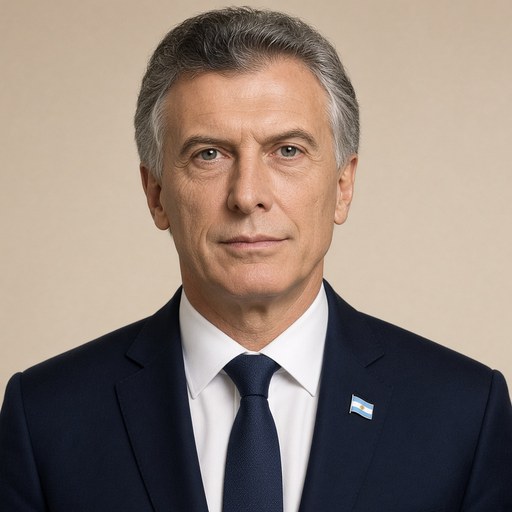
President Mauricio Macri presents the Public Information Access Bill.
 Mauricio Macri · President of Argentina
- Context
- Macri addressed a formal ceremony at the Casa Rosada on April 7, 2016, to announce the submission of a Public Information Access Bill to Argentina's National Congress.
- Main themes
- Public information access legislation, government transparency, anti-corruption measures, blind trust creation, Panama Papers allegations, citizen participation, state accountability, trust in government, access to public records
- Duration
- ~10 min
- Words
- 1,235
- Sentences
- 38
- Readability
- 56
- Grade
- 13.5
- Syntax
- 3.34
- Vocabulary
- 1.86
Translated from Spanish
The broad sphere of national life a sentence belongs to. Every sentence has an Arena, so it is the denominator the other indices are read against.
Other38 sentences in 17 paragraphs
Good afternoon everyone, we have moved – with Frigerio – from the heat in Misiones to the cold in the Salón Blanco; if one does not get sick with such temperature changes, it would be a miracle. I feel that today is a very important day, it is one of those days where this enormous responsibility, which has been assigned to me by the vote of the Argentines, makes me feel that I have been placed in a position where I can make a great difference. And today I refer to that enormous debt of years and years that the State has with the Argentines, which is the debt of transparency.
I have always said that to govern is to serve others, that to govern is to care, to be close, to listen to what are the real things that will change people's lives. But all of that can be done if there is trust, based on something central which is truth and transparency. That trust that, today, I told the young people in Misiones, that we must first have in ourselves that we can do things much better as a country, trust in one another, among us Argentines; the trust of the world in Argentina and the trust in its rulers because if that does not exist, no matter how much effort one makes, we will not achieve it.
And precisely in relation to this, I know that there are some people concerned about these allegations from the "Panama Papers," which have come out and involved me. I want to tell you, today – once again – that I am very calm, that I have complied with the law, that I have reported the truth and that I have nothing to hide. And in that regard, I not only made the initial declaration stating that I was not a shareholder, that – as a director – I did not receive any type of compensation and that I made my sworn declaration from the first day I undertook a public task, as Head of Government in a correct manner, but I also took all those papers to the Anti-Corruption Office for them to verify.
And furthermore, tomorrow, I will be presenting myself before the civil justice to request – something called – "Declaration of Certainty," I believe, Minister. For engineers, these terms are a bit strange: "Declaration of Certainty" with all that information so that a judge can verify that what I have said is true and that there has been no malicious omission in my Sworn Declaration, from the year 2007 or 2008, from 2007.
And of course, I am also at the disposal of any other judge who requires information to verify what I am saying. But precisely, in line with this, which is so important, today is a crucial day in our history because I want to announce that we have sent a Public Access to Information Law to the National Congress.
This law - I am fortunate to tell you - incorporates very good proposals that have been made over the past few years by various legislators from different political parties. And this is very good because it once again demonstrates that we can work together and that through dialogue we can add up.
And this law seeks to bring transparency; it seeks to bring participation because not only should people know what is being done by the State, but they should also be able to participate and express their opinions, because the State does not belong to those who govern – as I have said throughout all the months of the campaign – and the funds we manage are not ours, they are the people's funds. And they have the right to know how we allocate them, how we execute our budgets. And this law will allow anyone to request data, documents, records, and the official will have to respond within fifteen days, otherwise they may be sanctioned.
And for that, we have also created an office for access to information or as we said, an agency that is specifically responsible for that and a person in charge who will not only be available to explain how this system works, but will also ensure that all officials respond in a timely manner and, if not, they will be responsible for promoting sanctions.
Clearly, we must put an end to corruption; it is something that harms us, that hurts us. And for that, as a contribution, I have decided to create a blind trust. What is that? It is to allocate to a place, to a group of independent people who will manage all my assets and they will take care of administering them while I carry out my public task, without having contact with me.
This has never been done; no president has done it and they ask me why I do it. Well, I do it precisely because I do not want there to be any doubt in our relationship, that you do not doubt for a moment that I am here to try to help you, to help you move forward, to help you have a better future. And this is the way for me to detach myself from everything that has to do with my own and for other people, independently, to manage it.
But I also do it to demonstrate that we are not all the same, that clearly, our vocation is to work from this Government to help all Argentines live better.
So, the Public Access to Information Law will go in that direction. The person in charge will have that task and in addition, we want to generate a national agency, where all provinces and municipalities participate and also advance in this direction that has to do with what we call "open government," a government where everyone can access, I insist once again, all available information.
This is the path we all have to manage from now on.
So, I believe that this is the path that Argentina is embarking on, an Argentina that must recognize what has happened in the world. In 1990, there were only thirteen countries in the world that had these access to information laws, which the city of Buenos Aires has had for many years. In 2012, there were already more than 90; I do not know how many there are today, but more than 90 countries had it, and there is also a global organization working for open governments that brings together more than 80 countries, where Argentina, from now on, will be extremely active in generating these tools for participation and control, which will clearly improve public performance.
This is the path we have embarked on, the path we must continue to follow; I will return to work on my obsession today and in these months, which is to reduce inflation and generate employment. But to achieve that and all the things we will achieve together, it is essential that we all do what is necessary to generate trust. Trust is that good that cannot be seen, that cannot be touched, but that will energize all our work.
So, we all have to do what is in our power for that, so that we all regain trust and thus build the country we dream of.
Thank you all and let’s work for this Argentina that we love.
The original Spanish. The tags above are read on the English translation's sentences.
Buenas tardes a todos, hemos pasado - con Frigerio – del calor en Misiones al frío en el Salón Blanco, si uno no se enferma con tanto cambio de temperatura sería un milagro. Siento que hoy es un día muy importante, es uno de esos días, donde esta enorme responsabilidad, que me ha asignado el voto de los argentinos me hace sentir que me ha puesto en un lugar, donde uno puedo hacer una gran diferencia. Y hoy me refiero a esa enorme deuda de años y años, que tiene el Estado con los argentinos, que es la deuda de la transparencia.
Yo he dicho siempre que gobernar es servir a los demás, que gobernar es cuidar, es estar cerca, es escuchar cuáles son las cosas reales que le van a cambiar la vida a la gente. Pero todo eso se puede hacer si existe confianza, basado en algo central que es la verdad y la transparencia. Esa confianza que, hoy, le decía a los jóvenes en Misiones, que primero tenemos que tener en nosotros mismos de que podemos hacer las cosas mucho mejor como país, la confianza en el otro, entre nosotros los argentinos; la confianza del mundo con la Argentina y la confianza con sus gobernantes porque si no existe eso, por más esfuerzo que uno haga no lo vamos a lograr.
Y justamente a propósito de eso, sé que hay alguna gente preocupada por estas denuncias de los “Panamá Papers”, que ha salido y me ha involucrado a mí. Yo quiero decirles, hoy – una vez más – que estoy muy tranquilo, que he cumplido con la ley, que he informado la verdad y que no tengo nada que ocultar. Y en ese camino no sólo hice la declaración inicial diciendo que no era accionista, que – como director – no recibí ningún tipo de retribución y que hice mi declaración jurada, desde el primer día que ejercí una tarea pública, como Jefe de Gobierno en forma correcta, sino que además llevé todos esos papeles a la Oficina Anticorrupción para que los verifique.
Y además, mañana, me voy a estar presentando ante la justicia civil para pedir – algo que se llama – “Declaración de Certeza”, creo, ministro. Para los ingenieros estos términos son medio raros: “Declaración de Certeza” con toda esa información para que un juez verifique que lo que he dicho es verdad y que no ha habido una omisión maliciosa en mi Declaración Jurada, del año 2007 o 2008, de la del 2007.
Y además, por supuesto, que estoy a disposición de cualquier otro juez que requiera información para verificar esto que estoy diciendo. Pero justamente, en línea con esto, que es tan importante, hoy es un día justamente crucial en nuestra historia porque quiero anunciarles que mandamos una Ley de Acceso a la Información Pública, al Congreso de la Nación.
Esta ley - tengo la suerte de decirles - que recoge propuestas muy buenas que se había hecho, a lo largo de estos últimos años, por parte de distintos legisladores de distintos partidos políticos. Y esto es muy bueno porque vuelve a demostrar que podemos trabajar juntos y dialogando podemos sumar.
Y esta ley lo que busca es traer transparencia; es traer participación porque no sólo que la gente sepa lo que se hace desde el Estado, sino que también pueda participar y opinar, porque el Estado no es de los que gobiernan- como lo he dicho durante todos los meses de campaña - y los dineros que administramos no son nuestros, son los dineros de la gente. Y ellos tienen derecho a saber cómo los destinamos, cómo ejecutamos nuestros presupuestos. Y esta ley va a permitir que cualquier persona pueda pedir datos, documentos, registros y que el funcionario tenga que contestar en quince días, sino podrá ser sancionado.
Y para eso, también creamos una oficina de acceso a la información o como lo decíamos, un organismo que se ocupa justamente, de eso y una persona encarga que, no solo va a estar a disposición para explicar cómo se utiliza este sistema, sino que va a velar que todos los funcionarios contesten en tiempo y forma y, sino, él se va a ocupar de impulsar las sanciones.
Claramente, tenemos que terminar con la corrupción, es algo que nos daña, que nos lastima. Y para eso también, como aporte, he decido hacer un fideicomiso ciego.¿Qué es eso? Es destinar a un lugar, a un conjunto de personas independientes y las cuales van a disponer de todos mis bienes y ellos se van a ocupar de administrarlos mientras dure mi tarea pública, sin tener contacto conmigo.
Esto nunca se había hecho, ningún presidente lo había hecho y me preguntan por qué lo hago. Bueno, lo hago, justamente, porque no quiero que exista ninguna duda en nuestra relación, que vos no dudes ni por un instante que yo estoy acá para intentar ayudarte, ayudarte a que salgas adelante, ayudarte a que tengan un mejor futuro. Y esta es la manera de que yo me desligue de todo lo que tiene que ver con lo mío y que otras personas, en forma independiente, lo administren.
Pero también lo hago para demostrar que no somos todos iguales, que claramente, nuestra vocación es trabajar desde este Gobierno para ayudar a que todos los argentinos podamos vivir mejor.
Entonces, la Ley de Acceso a la Información Pública, va a en esa dirección. La persona encargada va a tener esa tarea y además, queremos generar un organismo nacional, donde todas las provincias y municipios participen y también avancen en esta dirección que tiene que ver con lo que nosotros llamamos “gobierno abierto”, un gobierno en donde todo el mundo puede acceder, insisto una vez más, a toda la información disponible.
Este es el camino en el cual todos tenemos que administrarnos de acá en adelante.
Entonces, creo que ese es el camino que emprende la Argentina, una Argentina que tiene que reconocer lo que ha pasado en el mundo. En el año 90, había solo trece países en el mundo que tenían estas leyes de acceso a la información, que la ciudad de Buenos Aires tiene hace ya muchos años. En el 2012, ya había más de 90, no sé cuántas habrá hoy, pero más de 90 países lo tenía, y hay también una organización mundial de trabajo por gobiernos abiertos que nuclea más de 80 países, donde la Argentina, a partir de ahora, va a ser sumamente activa para, insisto, generar estas herramientas de participación y de control, que van a mejorar claramente la actuación pública.
Este es el camino que hemos emprendido, el camino que tenemos que seguir adelante, yo volveré a trabajar en mi obsesión de hoy y de estos meses que es bajar la inflación y generar empleo. Pero para lograr eso y todas las cosas que vamos a lograr juntos, es fundamental es que abonemos, que todos hagamos lo que corresponda a cada uno para generar confianza. La confianza es ese bien que no se ve, que no se toca pero que va a dinamizar toda nuestra tarea.
Entonces, todos tenemos que hacer lo que esté a nuestras manos para eso, para que todos volvamos confiar a así, construyamos el país que soñamos.
Gracias a todos y a trabajar por esta Argentina que amamos. (APLAUSOS)