




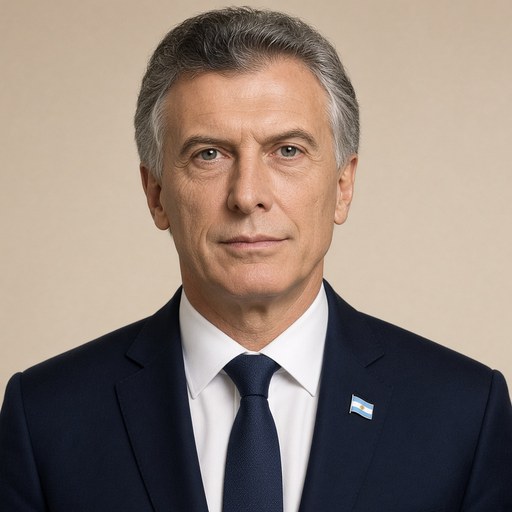
Speech by President Mauricio Macri at the opening of the 135th ordinary session of the Congress of the Nation of Argentina.
 Mauricio Macri · President of Argentina
- Context
- Macri addressed the Argentine Congress on March 1, 2017, opening the 135th ordinary legislative session and outlining his government's progress and priorities.
- Main themes
- Poverty reduction, economic recovery, infrastructure development, legislative collaboration, dialogue and unity, government transparency, long-term planning, drug trafficking, social inclusion, democratic governance
- Duration
- ~47 min
- Words
- 5,690
- Sentences
- 318
- Readability
- 51
- Grade
- 10.6
- Syntax
- 2.83
- Vocabulary
- 2.17
Translated from Spanish
The broad sphere of national life a sentence belongs to. Every sentence has an Arena, so it is the denominator the other indices are read against.
Other318 sentences in 220 paragraphs
Governors, members of the Supreme Court, representatives of the diplomatic corps, special guests, members of Congress, dear Argentinians.
I am here for the second time opening a legislative session. I hope that this year in the relationship between the Executive Branch and Congress we can repeat much of what we experienced last year: responsible and collaborative work.
Together we were able to go beyond our legitimate differences and pass necessary laws to begin to solve many problems.
I start, then, by thanking the goodwill of these chambers and calling on them to continue advancing. I also thank all Argentinians for understanding that to achieve the changes the country needs, time is required.
We always knew that the road would be difficult. There are many who do not want things to change, who resist, who put obstacles in the way.
But that should not discourage us. We must continue to move forward, holding on to our convictions and our values, convinced that we are better than this life we are leading.
We Argentinians have had to shoulder the burden, but we are achieving changes.
Together we are laying the foundations on which a country grows: roads, ports, water, sewage, energy, bridges, airports. That which needed to be done and was not done, because no one dared to think long-term, to change things seriously, to build the foundations for the country we want.
It was easier to look at the short term, which may be attractive but runs out and leaves many people worse off than before.
We are building the fundamental structure of a country that contains us all, the Argentinians of the present and the future.
We have overcome the most difficult part of this transition and the country is changing. Argentina is getting back on its feet.
Signs of improvement in the economy are appearing. I am sure that 2017 will be better than the previous year.
And even more importantly, the same will happen in 2018 and 2019. Each year we will be better because we are laying solid and lasting foundations.
Our greatest challenge is to lift millions of Argentinians out of poverty. To do this we need more agreements and more realities, less exaltation and fewer symbols, less narrative and more truth.
Speaking the truth means communicating the figures, the real ones, and also talking about the obstacles we encounter and telling them that the situation requires the contribution of all.
It is calling for participation so that all Argentinians can work together in the task of changing the country.
It is recognizing that this path carries difficulties and taking measures to care for those who suffer the most.
As a country, we must take charge of our problems and provide strong responses that require a change in mentality and a new way of relating to one another.
What complicates our development are our own limitations, our tendency to get bogged down in problems and reject possible solutions.
We must put an end to the confrontation that has stalled us and give way to a culture of dialogue, understanding, work, and enthusiasm.
Some may find it less epic than the rhetoric of great battles, but we did not assume the presidency to have a monument built for us.
We are here to build an Argentina where every person can project the life they hope for.
We do not believe in messianic leadership. We came to politics to provide solutions, dialoguing and working together.
Let us continue collaborating with one another. With the humility and maturity to understand that change is achieved together, day by day.
A year ago I shared the diagnosis of the situation in which we found the country when we took office: it came from years of simulation and an intentional and organized attempt to hide the real problems.
Since that day, 12 months of work have passed to reverse this situation and implement a comprehensive government plan, with 8 objectives and 100 priorities.
This plan guides us in those three dreams that I invited you to share last year: zero poverty, combating drug trafficking, and uniting Argentinians.
Today, I want to share those advances in the roadmap so that all Argentinians know where we are going, what the direction is, and the overall vision of the country we project.
My main concern and priority is to reduce poverty. And as I have said many times, I hope that our government, my government, is evaluated by the success we have in this objective.
Because governing is a human task. It involves accompanying and caring for those who need a response from the State.
It also involves taking the necessary measures for the country to grow and generate opportunities for all.
Later I will refer to these measures, but first I want to talk to you about those who need a more urgent response.
We received a country where 1 in 3 Argentinians is in poverty or total exclusion. It is a real figure, according to the statistics from INDEC that we can trust again after many years.
It is much more than a number. They are people who, while we are here in this chamber, are waiting for concrete solutions.
Despite the fears that many wanted to impose, we maintained, expanded, and strengthened social rights, mainly in pensions, family allowances, and social tariffs.
We made many rights that were only on paper a reality, and we also created new rights such as the Universal Pension for the Elderly.
With almost 9 million family allowances, we reached the highest coverage value of this system. More than 1.5 million children began to receive family allowances or allowances for children.
And we did not wait for them to come to the offices of Anses; we went to find all the children who did not even have a DNI.
The best way to equalize opportunities is to bring the State where it did not reach before. Without clientelism or political operators.
We implemented "The State in Your Neighborhood," operations in the most vulnerable places, where you can process your DNI, the AUH, vaccinate your children, and get advice on employment, social tariffs, and other services.
The presence of the State also translates into social infrastructure works.
We cannot allow that in a country like ours, 12 million Argentinians live in slums and precarious neighborhoods, without water or basic services.
When I say that we are working seriously to build the foundations for growth, I am talking about this. About something as basic as turning on a tap and having clean water come out.
We have already identified the most critical areas. This year we will improve the situation of more than 480,000 families, urbanizing 381 informal settlements, with drinking water, sewage, illuminated sidewalks, and quality public spaces.
We are finishing water and sewage works in more than 100 of the most vulnerable localities, most of them in the territory of the Belgrano Plan, such as the case of the "Wichi Asunción" community in Salta, where by the end of the year 650 families will have drinking water for the first time.
We received the country where only 41% of Argentinians had sewage. By the end of these four years, 75% will have it, and 100% in urban areas will have drinking water.
15 million Argentinians today have neither social security nor private health insurance. We created Universal Health Coverage so that they are protected and receive care if they have a problem.
Last year we strengthened union health services, recognizing a historical debt they claimed and making reforms to better serve their members.
The backbone of our health system is primary care. Here is Luis, a doctor from La Rioja, who did thirty consecutive days of shifts to attend to emergencies. That demonstrates all that we have to do but also the enormous commitment that our doctors have to care for us.
I care that every child, every teenager, and adult has the knowledge and tools to protect their health.
In the coming days, we will launch the Disability Plan, because we also want to work on today's human rights.
Housing and health are fundamental, but true opportunities arise with education.
We are determined to carry out an educational revolution throughout the country.
We want our future to be characterized by growth without poverty, development without exclusion, and teachers without frustrations.
We want young people to see the future as a challenge, where opportunities find them every day.
We must draw inspiration from children, who have the purest imagination, the most honest hearts, the deepest gaze, and the fullest confidence.
The trust of the little ones compels us to be great. Their future is at stake, and our decisions must go beyond any difference.
Education unites us.
We must revolutionize education so that they go to school with the enthusiasm to learn and do not drop out.
Today half of the children do not finish high school.
In a few days, we will launch the "I Will Attend" program to stop dropouts and reach out to those who have already left.
No matter where they are born, children must have the same opportunities.
No matter where they learn, they must have access to technology to connect with each other and with the world. There are no longer distances for rural schools. We will connect 2,000 to the internet via the ARSAT-2 satellite.
And we are working to ensure that more and more young people can reach university and graduate. Public universities have a fundamental role. That is why we increased their budget and articulated them with other educational and scientific systems.
Teachers have a key role.
We need trained, motivated, and recognized teachers. Wherever they teach, they must be able to realize their vocations and have a decent salary.
We must support them in their work, especially when they are victims of aggression, as is the case of Mónica and Raquel, in Rosario de la Frontera, Salta, who were attacked by a mother in front of other students when they wanted to fail a girl. Or María Marta, who was threatened with a bullet for wanting to take an exam.
To protect teachers, whom I do not believe Baradel needs anyone to protect him, I ask you to pass a law that increases the penalties for those who attack them.
And to improve, we must measure. In 2016, nearly 900,000 students participated in the "Learning Operation."
I ask you to consider the project for the creation of the Institute for Educational Quality Assessment with the depth it deserves.
To work together, we promoted the Commitment to Education, where the educational community and the provinces have a voice and participate.
This educational revolution needs to join the impressive technological changes we are experiencing.
A year ago we promised that, continuing a program from the previous government, in four years even the most remote village would be connected to the internet.
In 2015 we had 65 localities connected. Today we have tripled that figure, and by the end of the year there will be 800.
I said that the most urgent thing is to take care of the most vulnerable.
Every 37 hours a woman dies from gender violence.
We all united in the cry "Not one less."
It is a challenge that we must face together, putting an end to macho violence.
We must end the cultural patterns that normalize aggression against women. The fundamental element is education, from politics, school, and in every home. That is why we launched the National Plan against gender violence.
Last year we made progress on an essential measure to care for our elders. With the historical reparation, we ended a decades-long scam, and today nearly 1,000,000 retirees have what they are entitled to.
To reduce poverty, Argentina must grow. We have not grown or generated jobs for five years. Many people are suffering, but we are getting out.
In 2017 the economy will grow. We are working on the underlying issues so that it is the beginning of a period of sustained growth, year after year.
We must create a context of trust; trust in our growth potential and that inflation will be under control.
Inflation is toxic. It destroys workers' wages, makes saving difficult, paralyzes investment, and prevents us from looking long-term.
Previous governments fostered it and wanted to hide it. We confront it, and today it is on a clear downward path. The Central Bank met its targets: in the second half of the year, inflation was 8.9%, which annualized is the lowest since 2008.
The trend is clear. Business owners and workers should take into account the new targets set by the Central Bank for 2017 of inflation between 12% and 17%.
The Central Bank has set a target for 2019 of inflation of less than 5%. We know that this is possible with an independent Central Bank. Experience shows that countries that reduced their inflation grew much more by achieving it.
We have already tried high inflation: the economy grows less, and wages are always caught up and surpassed by it.
For years the State turned its back on this reality and refused to update the non-taxable minimum of the Income Tax.
We reversed that damage by updating the non-taxable minimum and adjusting the scales without falling into irresponsible populism.
Thanks to the trust we generated, last year we came out of the default that isolated us for 15 years. This allowed us to rejoin the world and gain international credibility. Today the country finances itself in the market at lower rates, credit is beginning to flow for families and businesses.
Between 2015 and 2016, we reduced the fiscal deficit from 5.2% to 4.6% of GDP. After years of manipulation, we passed a budget calculated on real numbers. For 2017, we committed to meet the target of a 4.2% deficit, and the targets for 2018 and 2019 are 3.2% and 2.2%.
A clear example of increasing trust is the success of the tax amnesty. As of January 31, we collected nearly 115 billion pesos, which will allow us to make payments for historical reparations to retirees.
On that foundation of trust, we must work to become more competitive every day.
We want an Argentina that strengthens its work culture and rewards that work so that increasingly better living standards reach Argentines.
To face the difficulties of the transition, we have been taking the necessary measures. We modified unemployment insurance and launched the productive transformation program to help those with growth projects connect with workers who need to reintegrate into sustainable jobs.
Argentina has great opportunities in various sectors.
Argentines working in the fields have the potential to gain a place in the world's supermarkets.
By improving their conditions, producers responded with investment and growth. In 2016, tractor sales increased by 25%, harvester sales by 54%, and planter sales by 80%. We are experiencing the highest wheat harvest in history, a total record harvest of 130 million tons.
This means more exports, more trade, more transport, and more jobs throughout Argentina.
We opened 22 new international markets for 40 national products.
Tourism can bring millions of people. After 15 years, we regulated the law that refunds VAT in hospitality to foreign tourists.
We must find, together, a responsible way to take advantage of the gigantic mining potential we have in our country, taking care of the environment and benefiting the people.
And we have dozens of industrial and service sectors of international level.
With these and other activities, dialoguing with entrepreneurs and workers, we took measures such as the National Tourism Plan and the Auto Parts Law.
We need an entrepreneurs' law so that those with an idea can launch that project easily. Like the SME Law, which generated tax relief, promoted investments, reduced withholdings, and increased credit, now we need to give a boost to entrepreneurs.
For Argentina to become a technological hub, we will send a modification to the Personal Data Protection Law: this way, more companies will be able to settle and generate jobs.
2016 was the first year since the currency controls were imposed in 2011 in which exports increased: 2% in dollars and 7% in quantities compared to 2015.
But we have to change a lot for productivity and exports to reach our real potential.
We need a serious and profound tax reform to stop crushing those who create and have a more equitable, progressive, and simplified system. This year we will work together on this path in the Bicameral Commission for Tax Reform.
Opportunistic attitudes have prevented us from reaching a consensus on reform. The nation and provinces must approach this discussion with generosity, responsibility, and a long-term vision to tackle a problem we have been dragging for decades.
We still have the reform of the co-participation law pending, which, according to our Constitution, we should have done 20 years ago.
We are supporting those who want to increase productivity. During 2016, nearly a million people participated in employment and training programs.
Competitiveness is not achieved through devaluation, nor at the expense of workers. We achieve it together, unleashing barriers, on a long but lasting path.
The Vaca Muerta agreement shows us the way, where the nation, provinces, workers, and companies set the conditions to regain leadership and momentum in our energy production, and the first investments are already starting to come in.
To grow, we need more credit at lower rates, for longer terms, and in our currency.
This is built with trust, with time, with the state reducing its fiscal deficit, and with public banks more committed to the development of SMEs.
Also with better regulations: Congress already has a new Capital Market law to channel savings for investment and job creation.
Science, technology, and innovation are key to growth.
We will promote public and private investment in scientific research, technological development, and productive innovation.
We want scientists to be able to do more and better research, and to create a bridge where the linkage and transfer with the productive sector is a reality.
We must ensure that development reaches the entire country. With the Belgrano Plan, we began to settle a historical debt with the northern provinces.
And in February, we launched the Patagonia Project with all the governors of the region.
Regional economies need infrastructure to grow.
We are implementing the most ambitious National Transport Plan in history, which will improve the safety of all Argentines and generate tens of thousands of jobs.
The Plan will also lower logistics costs, helping the comprehensive development of the country and preventing more Argentines from having to leave the place where they were born in search of work.
The works generate jobs and set the country in motion.
In four years, we expect to build 2,800 kilometers of highways, the same as we had when we arrived. There are already 1,100 under construction, and by the end of this year, we will have 25,000 kilometers of roads under construction, something unprecedented in the history of Argentina.
The Freight Railway Plan includes the repair of 1,600 kilometers of Belgrano Cargas tracks, with 500 km already under reconstruction. It also addresses a historical demand from the northern provinces, and by the end of the year, we expect to begin the reconstruction of San Martín Cargas.
We are modernizing airports to improve their safety, double air traffic, increase exports, and strengthen tourism.
With the works we did at Tucumán airport, blueberry exports grew by 58%.
In 2016, we took concrete steps to guarantee energy security and mitigate the impact of climate change.
After a decade of waste and corruption, we began to normalize the energy sector so that families, businesses, and factories have energy when they need it.
In this process, we left no one behind: today nearly 4 million users receive social tariffs. That is 1 in 3 households.
We also have the obligation to reduce our impact on climate change, something that many Argentines suffer firsthand, with floods and droughts.
We declared 2017 as the year of renewable energies, and with the RenovAr Plan, we launched 59 projects that will generate energy in 17 provinces with a private investment of nearly 4 billion dollars, which will create tens of thousands of jobs in the next two years.
We reopened the National Park Rangers School and advanced in the creation of protected areas such as the “El Rincón” Wildlife Reserve in Santa Cruz; the Aconquija National Park in Tucumán; the Iberá Wetlands in Corrientes, and the Impenetrable Chaco. I hope this Congress will pass the laws to turn these areas into national parks.
And I reaffirm our commitment to double the area of protected natural areas.
Insecurity is one of the greatest anxieties and concerns of Argentines.
We started by reconstructing criminal statistics: we had no real numbers since 2008.
We sent part of the federal forces to the places with the most violence problems and began to work together with the governors. For example, in Rosario, we reduced the homicide rate by 20% and qualified robberies by more than 30%.
We did the same in the province of Buenos Aires, where we are assisting 31 municipalities with more than 6,000 federal forces.
For Argentines to live more peacefully, we must work as a team.
Together we have recaptured more than 2,300 fugitives from justice.
We must also take care of those who protect us, providing them with equipment, technology, and training. We extended the training plan for federal non-commissioned officers from 4 to 9 months and opened a high-performance training center for senior levels, where federal and provincial forces will train together.
If we want to solve the problem of insecurity, we need to have a serious debate about a new Juvenile Criminal Responsibility System.
To combat drug trafficking, we must all work together. In August, we invited governors, ministers, deputies, senators, members of the judiciary, representatives of religious institutions, and other organizations from all provinces to jointly assume the Commitment Argentina Without Drug Trafficking.
This fight requires us to work in various fields, including border protection, urban improvements, criminal intelligence, and prevention, because it is not enough to go after the supply. That is why we declared a National Emergency in Addiction matters.
We are working in the most complex areas of our borders and incorporated a third radar, so we will be able to monitor them 24 hours a day, 7 days a week.
We will regain control of the territory that the state has been losing. More presence and urban improvements are essential to prevent the establishment of criminal networks.
An example is the Safe Neighborhoods Program in Barrio 31, formerly Villa 31, where with state intervention, the homicide rate was reduced by 72%. We will replicate this experience in other high-violence neighborhoods across the country.
We are focused on dismantling the chain of each drug organization. The work has begun, and little by little we are seeing results.
In 2016, we seized 30% more cocaine and by-products and 600% more ecstasy.
Congress supported these efforts with the passage of laws such as the flagrancy law, which achieves sanctions within 48 hours to end the so-called revolving door.
Moving forward, we will need to debate projects such as the law against paco, the reform of the criminal procedural code, the law on the extinction of domain of the assets of drug criminals, and the reform of the prison system.
For Argentines to live more peacefully, our justice system needs to change. We believe in an independent justice that responds quickly to the people.
We are advancing in the Justice 2020 plan, which seeks to achieve a comprehensive reform of the judicial system and make justice close to the community, modern, agile, and transparent.
Congress has already approved several Justice 2020 laws and has others under study.
We see that investigations are starting to be conducted freely, and that is positive. But we need progress. More than two years after his death, we want to know what happened to prosecutor Nisman and with his complaint. It is one of the many wounds to heal to start building a united country.
The works, the projects, all the achievements we need, we will achieve if we unite.
For years we were led to a permanent confrontation, suffering persecutions and a style of thinking that disqualified the other.
Dialogue is not just our methodology. It is our way of understanding politics and life.
We began to return to the provinces the money from the co-participation that belonged to them because we want a federal Argentina.
Our main function is to serve Argentines; that is why we talk to journalists and answer questions to be accountable to society.
We stopped using public media and cultural programs as partisan or ideological tools.
Even a good initiative like Tecnópolis had been used for partisan purposes. Good initiatives must remain. We maintained Tecnópolis, equipped it with pluralistic content, and took it to several provinces.
Culture must unite us and foster our capacity for innovation based on pluralism.
Argentina has returned to dialogue. The officials of my government and I personally continue to knock on doors to hear directly what people have to say to us.
Politics itself must change to represent that change that is already in society.
One of the disappointments of 2016 was the little progress of political reform.
The law that makes presidential debates mandatory was passed, but not the electoral reform.
It is a shame that in the 21st century we continue to vote with an archaic system that lends itself to trickery.
Let us strive to keep trickery away from politics in 2019.
Corruption is an evil that taints politics. Behind corruption are millions of Argentines without sewage, destroyed roads, and tragedies that could have been avoided, like the one in Once.
Today, public works have ceased to be synonymous with corruption.
Thanks to savings, through transparent bidding and proper contracting of suppliers, we saved 32 billion pesos in transportation.
That money is enough to build the Chaco-Corrientes bridge, which we have long awaited, and the Santa Fe-Paraná bridge, or to build 65 bus rapid transit systems like the one we are building in La Matanza.
Corruption is fought with transparency and integrity. In this sense, the National Congress made great strides last year with the passage of the public information access law and the law of the repentant.
All governments, national, provincial, and municipal, must deepen our public integrity policies to safeguard the transparency and trust placed in us.
As I said a few weeks ago at the press conference, I asked the Anti-Corruption Office to create a mechanism to separate my actions in the face of any suspicion regarding a potential conflict of interest.
I want everything to be transparent and open, so that no one doubts the decisions made by this president, and my ethical duty is to defend the public interest and the State's assets.
In the coming days, we will publish two decrees on trials and contracts for managing conflicts of interest.
Ethics and transparency are not only an obligation of the public sector but also involve the private sector. Therefore, following the highest international standards, I ask Congress to debate and pass the Corporate Responsibility Law.
Until recently, the State manipulated public statistics. Today, Argentines have reliable statistics, something essential to know where we stand.
We have incorporated technology: we implemented the electronic file system in all ministries and the Digital Country Plan in more than 800 municipalities to streamline and improve management.
We are elevating public employment. In 2016, we trained 25,000 employees, and this year we expect to triple that number so that more and more people working in the State feel the pride of concretely improving the lives of others.
We see the 21st century and the world as a source of opportunities and not as a threat.
The benefits of integration go beyond the economic. We want our companies to integrate into global value chains and for foreign investment to generate jobs in Argentina.
Integration also involves collaborating in the fight against organized crime, enriching ourselves with other cultures, and cooperating on the great challenges of the planet, from climate change to peace.
We must remember the blessing of living in a zone of peace, thanks to the strategic alliance with Brazil and with Mercosur, which is much more than a trade platform.
We resolved pending issues with Mercosur and the countries of the region and began to think about the challenges of the future. We established mature and pragmatic relationships with all countries in the world: we received visits from dozens of heads of state and government, including 5 members of the G7.
In 2017, we will organize the World Trade Organization Conference and the regional meeting of the World Economic Forum.
Next year, Argentina will host the G20, one of the most important forums in the world.
This is the way to advance our interests, including our legitimate claim to the Malvinas Islands, South Georgia, and South Sandwich Islands.
Dialogue strengthens our position and allows us to come closer to finding a definitive solution to this prolonged dispute.
Argentina is increasingly a leading actor in the region and in the world; and it is starting to be known for its successes, for its virtues, and not for its flaws.
Moreover, all of this allows us to enhance employment and development opportunities for all Argentines.
Last year, I told you that what made sense for my presidency is to work to achieve the happiness of all Argentines and to care for those who have suffered for years from the disappointment of the State.
For the first time in years, there is a government that wants to care for all Argentines, especially those who are worried about insecurity, about their future and that of their children; and that prevents them from connecting with the most important thing we have in our lives: our loved ones.
I want to delve into this even though it may not be customary for a presidential speech: the most important, most fulfilling, happiest moments of our lives are linked to our affections.
Because feelings, emotions are the most real things we have. And that is what the country is made of. A society is an immense affective network.
But it is impossible for us to connect with those emotions if we cannot pay the bills at the end of the month or cannot put food on our table.
That is why today I am happy that 15 months ago we began to walk in the direction of that country we owe ourselves, that we deserve, that we have to build.
But for that, we must finish convincing ourselves that we are the generation that came to change history, that came to face the 21st century, that looks at the 21st century saying: “we want to place Argentina there, as an integrated, just, democratic, leading country.”
But this world we have today is a world full of uncertainties, of volatilities. We see the tension in the political debates in the central countries, the developed countries, crossed by globalization, migratory flows, technological revolution.
Self-driving cars, synthetically produced food, artificial intelligence, robots, genetic revolution; all topics that have long ceased to be science fiction.
In the face of this, I feel, and I want to convey to you, that in these novelties there are tools that can help us solve our problems, but for that, we must stop having a petty, small agenda, denying what is happening in the world.
There is no more room for cynicism; we must believe, we really have to act. We owe it to ourselves, to our children, to our children's children. We no longer have excuses.
I have been governing Argentina for 15 months, and the more I travel around the country, the more I see you working, the more I listen to you reasoning, the more convinced I am that we have everything we need to move forward.
Just look at what we have done in these 15 months, how we have laid the foundations to build a serious country.
Argentina is already growing based on solid, sustainable policies over time, without shortcuts and without lies. No more being given the present to rob us of the future. With the truth.
I am moved, I am truly moved every time I see that we are millions of Argentines who believe in what we are doing, who believe that change is possible.
I have spoken with many; they have conveyed their concerns, their dreams, their aspirations. Some asked me for help, and others criticized me. It is logical, it is legitimate; I am the president of all Argentines, and that is how democracy works.
But the words that have stuck with me are perhaps very simple, which they told me over and over: don’t give up, don’t give up, Mauricio.
And I say to you today: let us not give up.
Let us not surrender; let us reaffirm our conviction for change, let us not listen to the voices of those who want to discourage us, who never wanted change, and who do not even make self-criticism of what they have done in the past.
We need each other. We all need each other because this that we have started, this decision we have made to produce this serious change, is not a matter of a leader, it is not a matter of a government or a coalition. It is something that resides, that lies in the heart of all Argentines, due to the conviction we have for that change.
That is why today I tell you: Argentina is getting back on its feet. That is why today more than ever we must trust in our ability to do things together, in our ability to act, in the enthusiasm to do.
That is the truth. Therefore, with this idea in mind, with this feeling in my heart, I formally inaugurate the ordinary sessions of the Honorable Congress of the Nation.
Thank you very much.
The original Spanish. The tags above are read on the English translation's sentences.
Señores gobernadores, miembros de la Corte Suprema, representantes de los cuerpos diplomáticos, invitados especiales, miembros del Congreso, queridos argentinos.
Estoy acá por segunda vez abriendo un período legislativo. Espero que este año en la relación del Poder Ejecutivo con el Congreso podamos repetir mucho de lo que vivimos el año anterior: un trabajo responsable y colaborativo.
Juntos pudimos ir más allá de nuestras legítimas diferencias y aprobar leyes necesarias para comenzar a resolver muchos problemas.
Empiezo, entonces, agradeciendo la buena voluntad de estas cámaras y convocándolas a seguir avanzando. Agradezco también a todos los argentinos por entender que para conseguir los cambios que necesita el país hace falta tiempo.
Siempre supimos que el camino iba a ser difícil. Son muchos los que no quieren que las cosas cambien, que se resisten, que ponen palos en la rueda.
Pero eso no nos tiene que desanimar. Tenemos que seguir avanzando, aferrados a nuestras convicciones y a nuestros valores, convencidos de que somos mejores que esta vida que estamos llevando.
Los argentinos tuvimos que poner el hombro pero estamos logrando cambios.
Juntos estamos sentando las bases sobre las que un país crece: rutas, puertos, agua, cloacas, energía, puentes, aeropuertos. Eso que faltaba hacer y no se hacía, porque nadie se animaba al largo plazo, a cambiar las cosas en serio, a construir las bases para edificar el país que queremos.
Era más fácil mirar el corto plazo, que puede ser atractivo pero se agota y deja a muchas personas peor que antes.
Estamos construyendo la estructura fundamental de un país que nos contenga a todos, a los argentinos del presente y del futuro.
Superamos lo más difícil de esta transición y el país está cambiando. Argentina se está poniendo de pie.
Aparecen las señales de una mejora en la economía. El 2017 será, estoy seguro, mejor que el año anterior.
Y más importante aún, lo mismo pasará en 2018 y 2019. Cada año vamos a estar mejor porque estamos sentando bases sólidas y duraderas.
Nuestro desafío más grande es sacar a millones de argentinos de la pobreza. Para hacerlo necesitamos más acuerdos y más realidades, menos exaltación y menos símbolos, menos relato y más verdad.
Hablar con la verdad es comunicar las cifras, las reales, y también hablar de los obstáculos que encontramos y decirles que la situación requiere del aporte de todos.
Es convocar a participar para que todos los argentinos colaboremos juntos en la tarea de cambiar al país.
Es reconocer que este camino conlleva dificultades y tomar las medidas para cuidar a los que más sufren.
Como país, tenemos que hacernos cargo de nuestros problemas y dar respuestas contundentes que exigen un cambio de mentalidad y una nueva manera de vincularnos.
Lo que complica nuestro desarrollo son nuestras propias limitaciones, nuestra tendencia a empantanarnos en problemas y rechazar las soluciones posibles.
Hay que acabar con el enfrentamiento que nos ha estancado y dar paso a una cultura del diálogo, de comprensión, de trabajo y entusiasmo.
A algunos les parecerá menos épico que la retórica de las grandes batallas, pero no asumimos la presidencia para que nos hagan un monumento.
Estamos acá para construir una Argentina donde cada persona pueda proyectar la vida que espera.
No creemos en los liderazgos mesiánicos. Vinimos a la política a aportar soluciones, dialogando y trabajando juntos.
Sigamos colaborando unos con otros. Con la humildad y la madurez de entender que el cambio se logra juntos, día a día.
Hace un año compartí el diagnóstico de la situación en que encontramos el país cuando asumimos: venía de años de simulación y de un intento intencional y organizado de ocultar los verdaderos problemas.
Desde ese día, pasaron 12 meses de trabajo para revertir esta situación y poner en marcha un plan de gobierno integral, con 8 objetivos y 100 prioridades.
Este plan nos guía en esos tres sueños que el año pasado los invité a compartir: pobreza cero, combatir al narcotráfico y unir a los argentinos.
Hoy, quiero compartir esos avances en la hoja de ruta para que todos los argentinos sepamos hacia dónde vamos, cuál es el rumbo y la visión general del país que proyectamos.
Mi principal preocupación y prioridad es reducir la pobreza. Y como ya lo he dicho muchas veces, espero que nuestro gobierno, mi gobierno, se evalúe por el éxito que tengamos en este objetivo.
Porque gobernar es una tarea humana. Implica acompañar y cuidar a quienes necesitan una respuesta del Estado.
Implica también tomar las medidas necesarias para que el país crezca y genere oportunidades para todos.
Más adelante voy a referirme a estas medidas pero primero quiero hablarles de aquellos que necesitan una respuesta más urgente.
Recibimos un país donde 1 de cada 3 argentinos está en la pobreza o la exclusión total. Es una cifra real, según las estadísticas del INDEC que después de muchos años podemos volver a confiar.
Es mucho más que un número. Son personas que, mientras estamos acá en este recinto, esperan soluciones concretas.
Pese a los miedos que muchos querían imponer, mantuvimos, ampliamos y fortalecimos derechos sociales, principalmente en jubilaciones, asignaciones familiares y tarifas sociales.
Hicimos realidad muchos derechos que estaban sólo en los papeles y además creamos nuevos derechos como la Pensión Universal a los Adultos Mayores.
Con casi 9 millones de asignaciones familiares, alcanzamos el valor más alto de la cobertura de este régimen. Más de 1 millón y medio de chicos comenzaron a recibir asignaciones familiares o por hijo.
Y no esperamos que vengan a las oficinas de la Anses, fuimos a buscar a todos los chicos que no tenían ni DNI.
La mejor manera de igualar oportunidades es llevar el Estado donde antes no llegaba. Sin clientelismos ni punteros.
Implementamos El Estado en tu Barrio, operativos en los lugares más vulnerables, donde se puede tramitar el DNI, la AUH, vacunar a tus hijos y asesorarse sobre empleo, tarifas sociales y otros servicios.
La presencia del Estado también se traduce en obras de infraestructura social.
No podemos permitir que en un país como el nuestro haya 12 millones de argentinos viviendo en villas y barrios precarios, sin agua ni servicios básicos.
Cuando les digo que trabajamos en serio para construir las bases del crecimiento hablo de esto. De algo tan básico como abrir una canilla y que salga agua limpia.
Ya identificamos las zonas más críticas. Este año vamos a mejorar la situación de más de 480.000 familias, urbanizando 381 asentamientos informales, con agua potable, cloacas, veredas iluminadas y espacios públicos de calidad.
Estamos terminando obras de agua y cloacas en más de 100 localidades de las más vulnerables, la mayoría en el territorio del Plan Belgrano, como es el caso de la comunidad “Wichi Asunción”, en Salta, donde para fin de año 650 familias tendrán por primera vez agua potable.
Recibimos el país donde sólo el 41% de los argentinos tenía cloacas. Al fin de estos cuatro años el 75% las tendrán y el 100 por 100 en las zonas urbanas tendrán agua potable.
15 millones de argentinos hoy no tienen ni obra social ni prepaga. Creamos la Cobertura Universal de Salud para que estén protegidos y si tienen un problema reciban atención.
El año pasado fortalecimos a las obras sociales sindicales, reconociendo una deuda histórica que reclamaban y haciendo reformas para servir mejor a sus afiliados.
La columna vertebral de nuestro sistema de salud es la atención primaria. Acá está Luis, un médico de La Rioja, que hizo treinta días seguidos guardia para atender las emergencias. Eso demuestra todo lo que tenemos por hacer pero también el enorme compromiso que tienen nuestros médicos por cuidarnos.
Me importa que cada chico, cada adolescente y adulto tenga los conocimientos y las herramientas para proteger su salud.
Lanzaremos en los próximos días el Plan de Personas con Discapacidad, porque también queremos trabajar los derechos humanos de hoy.
La vivienda y la salud son fundamentales, pero las verdaderas oportunidades nacen con la educación.
Estamos decididos a llevar adelante una revolución educativa en todo el país.
Queremos que a nuestro futuro le sobre crecimiento sin pobreza, desarrollo sin exclusión y maestros sin frustraciones.
Queremos que a los jóvenes el futuro se les presente como un desafío, donde las oportunidades los encuentren a diario.
Tenemos que inspirarnos en los chicos, que tienen la imaginación más pura, el corazón más honesto, la mirada más profunda y la confianza más plena.
La confianza de los pequeños nos obliga a ser grandes. Es su futuro lo que está en juego, y nuestras decisiones deben ir más allá de cualquier diferencia.
La educación nos une.
Tenemos que revolucionar la educación para que vayan a la escuela con el entusiasmo de aprender y que no abandonen.
Hoy la mitad de los chicos no termina el secundario.
En pocos días lanzaremos el programa Asistiré, para detener la deserción e ir a buscar a aquellos que ya abandonaron.
Nazcan donde nazcan, los chicos tienen que tener las mismas oportunidades.
Aprendan donde aprendan, tienen que contar con la tecnología para estar conectados entre sí y con el mundo. Ya no hay distancias para las escuelas rurales. Conectaremos 2.000 a internet a través del satélite ARSAT-2.
Y estamos trabajando para que cada vez más jóvenes puedan llegar a la universidad y recibirse. Las universidades públicas tienen un rol fundamental. Por eso aumentamos su presupuesto y las articulamos con los demás sistemas educativos y el científico.
Los docentes tienen un papel clave.
Necesitamos docentes formados, motivados y reconocidos. Enseñen donde enseñen, tienen que poder realizarse en sus vocaciones y tener un salario digno.
Tenemos que apoyarlos en su tarea, especialmente cuando son víctimas de agresiones, como es el caso de Mónica y Raquel, en Rosario de la Frontera, Salta, que cuando quisieron no pasar a una chica de año fueron agredidas por su madre delante de las demás alumnas. O María Marta, que por querer tomar un examen fue amenazada con una bala.
Para cuidar a los docentes, que no creo que Baradel necesite que nadie lo cuide, les pido que sancionen una ley que agrave las penas a quienes los agreden.
Y para mejorar, hay que medir. En 2016, casi 900 mil alumnos participaron del Operativo Aprender.
Les pido que traten el proyecto de creación del Instituto de Evaluación de la Calidad Educativa con la profundidad que se merece.
Para trabajar juntos, impulsamos el Compromiso por la Educación, donde la comunidad educativa y las provincias tienen voz y participan.
Esta revolución educativa necesita sumarse a los impresionantes cambios tecnológicos que vivimos.
Hace un año prometimos que, continuando un programa del anterior gobierno, en cuatro años hasta el pueblito más alejado iba a estar conectado a internet.
En 2015 contábamos con 65 localidades conectadas. Hoy hemos triplicado esa cifra y a fin de año serán 800.
Dije que lo más urgente es ocuparnos de los más vulnerables.
Cada 37 horas una mujer muere por violencia de género.
Todos nos unimos en el grito “Ni una menos”.
Es un desafío que tenemos que encarar juntos, poniendo fin a la violencia machista.
Tenemos que terminar con los patrones culturales que naturalizan la agresión a la mujer. El elemento fundamental es la educación, desde la política, la escuela y en cada casa. Por eso pusimos en marcha el Plan Nacional contra la violencia de género.
El año pasado avanzamos en una medida indispensable para cuidar a nuestros abuelos. Con la reparación histórica, terminamos con una estafa de décadas y hoy casi 1.000.000 de jubilados tienen lo que les corresponde.
Para reducir la pobreza, la Argentina tiene que crecer. Hace cinco años que no crecemos ni generamos empleo. Hay mucha gente que sufre pero estamos saliendo.
En 2017 la economía va a crecer. Estamos trabajando en las cuestiones de fondo para que sea el comienzo de un período de crecimiento sostenido, año a año.
Debemos crear un contexto de confianza; confianza en nuestro potencial de crecimiento y en que la inflación estará bajo control.
La inflación es tóxica. Destruye el salario de los trabajadores, dificulta ahorrar, paraliza la inversión y nos impide mirar a largo plazo.
Los gobiernos anteriores la fomentaron y la quisieron esconder. Nosotros la enfrentamos y hoy está en un claro camino descendente. El Banco Central cumplió con sus metas: en el segundo semestre la inflación fue del 8,9%, que anualizada es la más baja desde el 2008.
La tendencia es clara. Empresarios y trabajadores deberían tener en cuenta las nuevas metas que se ha impuesto el Banco Central para el 2017 de una inflación entre el 12% y el 17%.
El Banco Central se fijó un objetivo para 2019 de una inflación de menos del 5%. Sabemos que eso es posible con un Banco Central independiente. La experiencia muestra que los países que bajaron su inflación crecieron muchísimo más al conseguirlo.
Ya probamos con alta inflación: la economía crece menos y los salarios siempre son alcanzados y superados por ella.
Durante años el Estado le dio la espalda a esta realidad y se negó a actualizar el mínimo no imponible del Impuesto a los Ingresos.
Nosotros revertimos ese daño, actualizando el mínimo no imponible y corriendo las escalas sin caer en el populismo irresponsable.
Gracias a la confianza que generamos, el año pasado salimos del default que nos aisló durante 15 años. Eso nos permitió incorporarnos al mundo y tener credibilidad internacional. Hoy el país se financia en el mercado a tasas menores, el crédito comienza a fluir para las familias y las empresas.
Entre 2015 y 2016 redujimos el déficit fiscal del 5,2% al 4,6% del PBI. Después de años de manipulación, sancionamos un presupuesto calculado sobre números reales. Para 2017, nos comprometimos a cumplir con la meta de 4,2% de déficit, y las metas del 2018 y 2019 son de 3,2% y 2,2%.
Un claro ejemplo de que la confianza aumenta es el éxito del sinceramiento fiscal. Al 31 de enero recaudamos casi 115 mil millones de pesos, lo que nos permitirá hacer los pagos de la reparación histórica a los jubilados.
Sobre esa base de confianza tenemos que trabajar para ser cada día más competitivos.
Queremos una Argentina que fortalezca su cultura del trabajo y retribuya ese trabajo para que cada vez mejores estándares de vida alcancen a los argentinos.
Para enfrentar las dificultades de la transición fuimos tomando las medidas que hacían falta. Modificamos el seguro de desempleo y lanzamos el programa de transformación productiva para ayudar a quienes tienen proyectos de crecimiento a encontrarse con los trabajadores que necesitan reinsertarse en empleos sostenibles.
La Argentina tiene grandes oportunidades en distintos sectores.
Los argentinos que trabajan en el campo tienen potencial para ganar lugar en los supermercados del mundo.
Al mejorar sus condiciones, los productores respondieron con inversión y crecimiento. En 2016 la venta de tractores aumentó 25%, la de cosechadoras 54%, la de sembradoras 80%. Estamos teniendo la cosecha más alta de la historia de trigo, una cosecha récord total de 130 millones de toneladas.
Esto significa más exportación, más comercio, más transporte y más trabajo en toda la Argentina.
Abrimos 22 nuevos mercados internacionales para 40 productos nacionales.
El turismo puede traer millones de personas. Después de 15 años reglamentamos la ley que devuelve el IVA en hotelería a los turistas extranjeros.
Tenemos que encontrar, entre todos, la manera responsable de aprovechar la gigantesca potencialidad minera que tenemos en nuestro país, cuidando el ambiente y favoreciendo a la gente.
Y tenemos decenas de sectores industriales y de servicios de nivel internacional.
Con estas y otras actividades, dialogando con empresarios y trabajadores, tomamos medidas como el Plan Nacional de Turismo y la Ley Autopartista.
Necesitamos una ley de emprendedores para que quienes tengan una idea puedan lanzar ese proyecto con facilidad. Como la Ley PyME, que generó alivio fiscal, fomento a inversiones, menos retenciones, más crédito, ahora necesitamos darle un empuje a los emprendedores.
Para que la Argentina se convierta en un polo tecnológico, enviaremos una modificación a la Ley de Protección de Datos Personales: así, más empresas podrán radicarse y generar trabajo.
2016 fue el primer año desde que se impuso el cepo cambiario en 2011 en el que aumentaron las exportaciones: 2% en dólares y 7% en cantidades respecto de 2015.
Pero tenemos que cambiar mucho para que la productividad y las exportaciones lleguen a nuestro real potencial.
Necesitamos una reforma tributaria seria y profunda para dejar de aplastar a quienes crean y tener un sistema más equitativo, progresivo y simplificado. Este año trabajaremos juntos en este camino en la Comisión Bicameral para la Reforma Tributaria.
Las actitudes oportunistas nos han impedido consensuar una reforma. Nación y provincias tenemos que ir a esta discusión con generosidad, responsabilidad y una visión de largo plazo para encarar un problema que arrastramos hace décadas.
Todavía tenemos pendiente la reforma de la ley de coparticipación que, según nuestra Constitución, deberíamos haberlo hecho hace 20 años.
Estamos acompañando a quienes quieran aumentar la productividad. Durante 2016, casi un millón de personas participaron en programas de empleo y capacitación.
La competitividad no se consigue con una devaluación, ni a costa de los trabajadores. La conseguimos juntos, desatando trabas, en un camino largo pero duradero.
El acuerdo de Vaca Muerta nos muestra el camino, donde Nación, provincias, trabajadores y empresas fijamos las condiciones para recuperar el liderazgo y el empuje en nuestra producción de energía y ya se empiezan a recibir las primeras inversiones.
Para crecer, necesitamos más crédito a menores tasas, a plazos más largos y en nuestra moneda.
Esto se construye con confianza, con tiempo, con el Estado que reduce su déficit fiscal y con bancos públicos más comprometidos con el desarrollo de las PyMES.
También con mejores regulaciones: el Congreso ya tiene una nueva ley de Mercado de Capitales para canalizar el ahorro para la inversión y la generación de empleo.
La ciencia, la tecnología y la innovación son clave para el crecimiento.
Vamos a fomentar la inversión pública y privada en investigación científica, desarrollo tecnológico e innovación productiva.
Queremos que los científicos puedan hacer cada vez más y mejor investigación, y crear un puente donde la vinculación y la transferencia con el sector productivo sea una realidad.
Tenemos que lograr que el desarrollo llegue a todo el país. Con el Plan Belgrano empezamos a saldar una deuda histórica con las provincias del norte.
Y en febrero lanzamos el Proyecto Patagonia con todos los gobernadores de la región.
Las economías regionales necesitan infraestructura para crecer.
Estamos implementando el Plan Nacional de Transporte más ambicioso de la historia, que va a mejorar la seguridad de todos los argentinos y generar decenas de miles de puestos de trabajo.
El Plan también va a bajar los costos logísticos, ayudando al desarrollo integral del país y evitando que más argentinos tengan que abandonar el lugar donde nacieron en busca de un trabajo.
Las obras generan trabajo y ponen en marcha el país.
En cuatro años esperamos construir 2.800 kilómetros de autopistas, los mismos que teníamos cuando llegamos. Ya hay 1.100 en construcción y para el fin de este año vamos a tener 25.000 kilómetros de rutas en obra, algo inédito en la historia de la Argentina.
El Plan Ferroviario de Cargas incluye la reparación de 1.600 kilómetros de vías del Belgrano Cargas, ya hay 500 km en reconstrucción. También una demanda histórica de las provincias del norte y para fin de año esperamos poner en reconstrucción el San Martín Cargas.
Estamos modernizando los aeropuertos para mejorar su seguridad, duplicar el tránsito aéreo, aumentar las exportaciones y fortalecer el turismo.
Con las obras que hicimos en el aeropuerto de Tucumán la exportación de arándanos creció un 58%.
En 2016 dimos pasos concretos para garantizar la seguridad energética y mitigar el impacto en el cambio climático.
Después de una década de despilfarro y corrupción, empezamos a normalizar el sector energético para que las familias, los comercios y las fábricas tengan energía cuando la necesitan.
En este proceso no dejamos a nadie atrás: hoy casi 4 millones de usuarios reciben tarifa social. Eso es 1 de cada 3 hogares.
Tenemos también la obligación de reducir nuestro impacto en el cambio climático, cosa que muchos argentinos sufren en primera persona, con inundaciones y sequías.
Declaramos el año 2017 como el año de las energías renovables, y con el Plan RenovAr pusimos 59 proyectos en marcha que generarán energía en 17 provincias con una inversión privada de casi 4.000 millones de dólares, que generará decenas de miles de puestos de trabajo en los próximos dos años.
Reabrimos la Escuela de Guardaparques Nacionales y avanzamos en la creación de áreas protegidas como la Reserva Natural Silvestre “El Rincón” en Santa Cruz; el Parque Nacional Aconquija en Tucumán; los Esteros del Iberá en Corrientes y el Impenetrable chaqueño. Espero que este Congreso sancione las leyes para convertir estas áreas en parques nacionales.
Y ratifico nuestro compromiso de duplicar la superficie de áreas naturales protegidas.
La inseguridad es una de las máximas angustias y preocupaciones de los argentinos.
Empezamos por reconstruir la estadística criminal: no teníamos números reales desde el 2008.
Enviamos parte de las fuerzas federales a los lugares con más problemas de violencia y comenzamos a trabajar juntos con los gobernadores. Por ejemplo, en Rosario redujimos un 20% la tasa de homicidios y más de un 30% los robos calificados.
Lo mismo hicimos en la provincia de Buenos Aires, donde estamos asistiendo a 31 municipios con más de 6 mil efectivos de fuerzas federales.
Para que los argentinos puedan vivir más tranquilos tenemos que trabajar en equipo.
Juntos hemos recapturado a más de 2.300 prófugos de la Justicia.
Debemos cuidar también a quienes nos cuidan, darles equipamiento, tecnología y capacitación. Extendimos el plan de formación de suboficiales federales de 4 a 9 meses y abrimos un centro de formación de alto rendimiento para los niveles superiores, donde se capacitarán fuerzas federales y provinciales juntas.
Si queremos resolver el problema de la inseguridad tenemos que dar un debate serio sobre un nuevo Sistema de Responsabilidad Penal Juvenil.
Para combatir el narcotráfico tenemos que trabajar todos juntos. En agosto invitamos a gobernadores, ministros, diputados, senadores, miembros de la Justicia, representantes de instituciones religiosas y otras organizaciones de todas las provincias a asumir juntos el Compromiso Argentina Sin Narcotráfico.
Este combate nos obliga a trabajar en distintos campos, incluyendo la protección de nuestras fronteras, las mejoras urbanas, la inteligencia criminal y la prevención, porque no alcanza con ir detrás de la oferta. Por eso declaramos la Emergencia Nacional en materia de Adicciones.
Estamos trabajando en los puntos más complejos de nuestras fronteras e incorporamos un tercer radar, así vamos a poder monitorearlas 24 horas por día los 7 días de la semana.
Vamos a recuperar el control del territorio que el Estado fue perdiendo. Más presencia y mejoras urbanas son fundamentales para prevenir la instalación de redes criminales.
Un ejemplo es el Programa Barrios Seguros, en el Barrio 31, ex Villa 31, con la intervención estatal la tasa de homicidios se redujo en un 72%. Vamos a replicar esta experiencia en otros barrios con alta violencia en todo el país.
Estamos concentrados en desarmar la cadena de cada narco-organización. El trabajo comenzó y de a poco vamos viendo sus resultados.
En 2016 incautamos 30% más de cocaína y subproductos y 600% más de éxtasis.
El Congreso acompañó estos esfuerzos con la sanción de leyes como la de flagrancia, que logra sanciones en 48 horas para terminar con la llamada puerta giratoria.
Hacia delante, tendremos que debatir proyectos como la ley contra el paco, la reforma del código procesal penal, la ley de extinción de dominio de los bienes de narco-criminales y la reforma del sistema penitenciario.
Para que los argentinos puedan vivir más tranquilos nuestra Justicia necesita cambiar. Creemos en una Justicia independiente, que dé respuesta rápida a la gente.
Estamos avanzando en el plan Justicia 2020, que busca lograr una reforma integral del sistema judicial y hacer una Justicia cercana a la comunidad, moderna, ágil y transparente.
El Congreso ya aprobó varias leyes de Justicia 2020 y tiene otras en estudio.
Vemos que se empieza a investigar con libertad y eso es positivo. Pero necesitamos avances. A más de dos años de su muerte, queremos saber qué pasó con el fiscal Nisman y con su denuncia. Es una de las tantas heridas a curar para empezar a construir un país unidos.
Las obras, los proyectos, todos los logros que necesitamos, los vamos a alcanzar si nos unimos.
Durante años fuimos conducidos a un enfrentamiento permanente, padeciendo persecuciones y un estilo de pensamiento que descalificaba al otro.
El diálogo no es sólo nuestra metodología. Es nuestra manera de entender la política y la vida.
Comenzamos a devolver a las provincias el dinero de la coparticipación que les correspondía porque queremos una argentina federal.
Nuestra función principal es servir a los argentinos; por eso hablamos con los periodistas y respondemos a las preguntas para rendir cuentas a la sociedad.
Dejamos de hacer de los medios públicos y de los programas culturales herramientas partidarias o ideológicas.
Incluso una buena iniciativa como Tecnópolis había sido usada con fines partidarios. Las buenas iniciativas tienen que permanecer. Mantuvimos Tecnópolis, la dotamos de contenidos pluralistas y la llevamos a varias provincias.
La cultura nos tiene que unir y fomentar nuestra capacidad de innovación a partir del pluralismo.
La Argentina ha vuelto al diálogo. Los funcionarios de mi gobierno y yo personalmente seguimos tocando el timbre para escuchar directamente lo que la gente nos tenga para decir.
La política misma tiene que cambiar para representar ese cambio que ya está en la sociedad.
Una de las decepciones del año 2016 fue el escaso avance de la reforma política.
Fue sancionada la ley que hace obligatorios los debates presidenciales, pero no la reforma electoral.
Es una vergüenza que en el siglo XXI sigamos votando con un sistema arcaico que se presta a la trampa.
Esforcémonos para que en el 2019 alejemos la trampa de la política.
La corrupción es un mal que envicia lo político. Detrás de la corrupción hay millones de argentinos sin cloacas, rutas destrozadas, y tragedias que se pudieron haber evitado como la de Once.
Hoy la obra pública dejó de ser un sinónimo de corrupción.
Gracias a los ahorros, a partir de licitaciones transparentes y contratación de proveedores como corresponde se ahorraron en transporte 32.000 millones de pesos.
Ese dinero alcanza para construir el puente Chaco-Corrientes, que tanto esperamos, y el puente Santa Fe-Paraná, o para hacer 65 metrobuses del largo del que estamos haciendo en La Matanza.
La corrupción se combate con transparencia e integridad. En este sentido, el Congreso de la Nación hizo grandes avances el año pasado con la sanción de la ley de acceso a la información pública y la ley del arrepentido.
Todos los gobiernos, nacional, provinciales y municipales, debemos profundizar nuestras políticas de integridad pública para cuidar la transparencia y la confianza depositada en nosotros.
Como dije hace unas semanas en la conferencia de prensa, pedí a la Oficina Anticorrupción que cree un mecanismo para separar mi actuación ante cualquier suspicacia frente a un potencial conflicto de intereses.
Quiero que todo sea transparente y abierto, que nadie dude de las decisiones que toma este presidente, y mi deber ético es defender el interés público y el patrimonio del Estado.
En los próximos días publicaremos dos decretos sobre juicios y contrataciones para la gestión de conflictos de intereses.
La ética y la transparencia no es sólo una obligación del sector público sino que compromete también al sector privado. Por eso, siguiendo los más altos estándares internacionales, pido al Congreso que debata y sancione la ley de Responsabilidad Empresaria.
Hasta hace poco tiempo, el Estado manipulaba las estadísticas públicas. Hoy los argentinos tenemos estadísticas confiables, algo indispensable, para saber dónde estamos parados.
Incorporamos tecnología: implementamos el sistema de expediente electrónico en todos los ministerios y el Plan País Digital en más de 800 municipios para agilizar y mejorar la gestión.
Estamos jerarquizando el empleo público. En 2016 capacitamos a 25.000 empleamos y este año esperamos triplicar esta cifra para que cada vez más las personas que se desempeñan en el Estado sientan el orgullo de mejorar en forma concreta la vida de los demás.
Vemos al siglo XXI y al mundo como una fuente de oportunidades y no como una amenaza.
Los beneficios de la integración van más allá de lo económico. Queremos que nuestras empresas se inserten en las cadenas globales de valor y que la inversión extranjera genere empleo en la Argentina.
La inserción tiene que ver también con colaborar en la lucha contra el crimen organizado, con enriquecernos con otras culturas, con colaborar en los grandes desafíos del planeta, desde el cambio climático hasta la paz.
Tenemos que recordar la bendición que significa vivir en una zona de paz, gracias a la alianza estratégica con Brasil y con el Mercosur que es mucho más que una plataforma comercial.
Resolvimos problemas pendientes con el Mercosur y los países de la región y comenzamos a pensar los desafíos del futuro. Establecimos relaciones maduras y pragmáticas con todos los países del mundo: recibimos las visitas de decenas de jefes de Estado y gobierno, entre ellos, 5 de los integrantes del G7.
En 2017 vamos a organizar la Conferencia de la Organización Mundial del Comercio y la reunión regional del Foro Económico Mundial.
El año que viene la Argentina será sede del G20, uno de los foros más importantes del mundo.
Este es el camino para avanzar en nuestros intereses, incluyendo nuestro legítimo reclamo por las Islas Malvinas, Georgias y Sandwich del Sur.
El diálogo fortalece nuestra posición y nos permite acercarnos para encontrar una solución definitiva a este prolongado diferendo.
Argentina es cada vez más un actor protagónico en la región y en el mundo; y empieza a ser conocida por sus aciertos, por sus virtudes, y no por sus defectos.
Además, todo esto nos permite potenciar las oportunidades de empleo y desarrollo para todos los argentinos.
El año pasado les dije que lo que hacía sentido a mi presidencia es trabajar para lograr la felicidad de todos los argentinos y cuidar a aquellos que sufren hace años la decepción del Estado.
Por primera vez en años, hay un gobierno que quiere cuidar a todos los argentinos, especialmente a aquellos que están preocupados por la inseguridad, por su futuro y el de sus hijos; y eso no les permite tomar contacto con lo más importante que tenemos en nuestras vidas: nuestros afectos.
Quiero profundizar en esto por más que no sea habitual para un discurso presidencial: los momentos más importantes, más plenos, más felices de nuestras vidas están vinculados con los afectos.
Porque los sentimientos, las emociones son lo más real que tenemos. Y de eso está hecho el país. Una sociedad es una inmensa red afectiva.
Pero es imposible que podamos tomar contacto con esas emociones si no podemos pagar las cuentas a fin de mes o no podemos poner comida en nuestra mesa.
Por eso hoy estoy contento de que hace 15 meses hayamos comenzado a caminar en la dirección de ese país que nos debemos, que nos merecemos, que tenemos que construir.
Pero para eso tenemos que terminar de convencernos de que somos la generación que vino a cambiar la historia, que vino a enfrentar el siglo XXI, que mira el siglo XXI diciendo: “queremos poner a la Argentina ahí, como un país integrado, justo, democrático, protagonista”.
Pero, este mundo que tenemos hoy es un mundo lleno de incertidumbres, de volatilidades. Vemos la tensión los debates políticos en los países centrales, los países desarrollados, cruzados por la globalización, las corrientes migratorias, la revolución tecnológica.
Autos que se manejan solos, alimentos que se producen en forma sintética, inteligencia artificial, robots, revolución genética; todos temas que hace rato dejaron de ser ciencia ficción.
Frente a esto yo siento, y quiero transmitirles, que en esas novedades hay herramientas que pueden ayudarnos a resolver nuestros problemas, pero para eso tenemos que dejar de tener una agenda mezquina, pequeña, negar lo que pasa en el mundo.
No hay más lugar para cinismos, hay que creer, realmente tenemos que actuar. Nos lo debemos a nosotros, a nuestros hijos, a los hijos de nuestros hijos. Ya no tenemos más excusas.
Hace 15 meses que gobierno la Argentina, y cuanto más viajo por el país, cuanto más los veo trabajar, cuanto más los escucho razonar, más estoy convencido de que tenemos todo lo que se necesita para salir adelante.
Basta mirar lo que hemos hecho en estos 15 meses, cómo hemos echado bases para construir un país serio.
La Argentina ya está creciendo y en base a políticas sólidas, sostenibles en el tiempo, sin atajos y sin mentiras. Basta de que nos regalen el presente para robarnos el futuro. Con la verdad.
Me emociona, realmente me emociona mucho cada vez que veo que somos millones los argentinos que creemos en lo que estamos haciendo, que creemos que el cambio es posible.
He hablado con muchos, me transmitieron sus preocupaciones, sus sueños, sus aspiraciones. Algunos me pidieron ayuda y otros me criticaron. Es lógico, es legítimo, soy el presidente de todos los argentinos y así es la democracia.
Pero las palabras que más me quedaron son tal vez muy simples, que me dijeron una y otra vez: no aflojes, no aflojes, Mauricio.
Y yo les digo hoy: no aflojemos.
No nos demos por vencidos, ratifiquemos nuestra convicción por el cambio, no escuchemos las voces de aquellos que nos quieren desanimar, que nunca quisieron el cambio, y que ni siquiera hacen autocrítica de lo que han hecho en el pasado.
Nos necesitamos. Nos necesitamos todos porque esto que hemos comenzado, esta decisión que hemos tomado de producir este cambio en serio, no es cuestión de un líder, no es cuestión de un gobierno o una coalición. Es algo que radica, se halla en el corazón de todos los argentinos, por la convicción que tenemos por ese cambio.
Por eso, hoy les digo: la Argentina se está poniendo de pie. Por eso, hoy más que nunca tenemos que confiar en nuestra capacidad de hacer juntos, en nuestra capacidad de hacer, en el entusiasmo de hacer.
Esa es la verdad. Por eso, con esta idea en la mente, con este sentimiento en mi corazón, doy formalmente inauguradas las sesiones ordinarias del Honorable Congreso de la Nación.
Muchas gracias.