




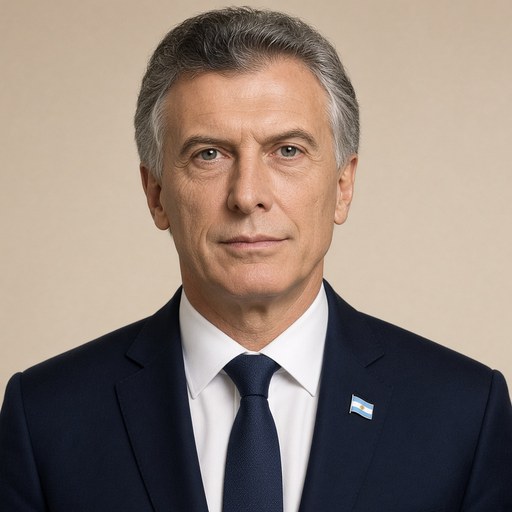
Words of President Macri at the Third Business Summit of the Pacific Alliance, Chile.
 Mauricio Macri · President of Argentina
- Context
- Macri addressed the Third Business Summit of the Pacific Alliance in Chile on June 30, 2016, outlining Argentina's political reforms and regional integration vision.
- Main themes
- Pacific Alliance regional integration, Mercosur convergence, infrastructure and energy integration, poverty reduction and social inclusion, education and entrepreneurship, fight against drug trafficking, Argentina's economic reform, public-private partnership, building networks over walls, job creation and knowledge economy
- Duration
- ~12 min
- Words
- 1,383
- Sentences
- 40
- Readability
- 40
- Grade
- 16.1
- Syntax
- 3.63
- Vocabulary
- 1.97
Translated from Spanish
The broad sphere of national life a sentence belongs to. Every sentence has an Arena, so it is the denominator the other indices are read against.
Other40 sentences in 16 paragraphs
Good morning, almost afternoon: we are ready to go to lunch, but I want to tell Alberto Sala that I am really upset, with all due respect, and you will understand. I have dedicated my whole life to business, then to sports, then to being Mayor, now President so that my true talent – which you did not express – can be recognized, which is that I am a great dancer. So I hope that next time, when you introduce me, you include that in the curriculum.
But well, thank you for this invitation to this forum that is so important, as my colleagues have said, at a special moment in the world, controversial, where I believe that we are more those who are clear that we will have a future if we are able to build networks and not walls; those of us who understand that we must enhance exchange and support integration.
And I wanted to briefly talk to you about some visions of the region, after the commitments we have made in this new political stage of Argentina, and what we have done in these brief months. And the region, precisely, in light of everything that is happening in the world presents itself as a wonderful place, as the elected president of Peru expressed well, that we are far away. Today it is a huge window; today it presents itself as a region without military conflicts between countries; without religious problems; with wonderful and abundant raw materials, still – in many cases – undeveloped and with a valuable human resource, which is our people. That – I insist – opens up enormous opportunities for us. Clearly, on that path we must enhance integration.
In this new stage, we have relaunched Mercosur, because we want a Mercosur of the 21st century, but that clearly has a vision of convergence with the Pacific Alliance. I believe that is the best path, absolutely better for everyone.
And the second thing that must start now – simultaneously – is to try to integrate our infrastructures. There is also much to be done here, much to improve logistics in this region. I imagine today that there is no other way – as I have discussed with President Bachelet – than in light of the new discoveries we have had in unconventional energy, to think of a unique energy matrix for Argentina, Chile, and we hope to integrate Bolivia, Brazil, Uruguay, and Paraguay.
So I believe that on that path there is a lot to be done, a lot to generate, and I think the good thing is that we all agree on the diagnosis. And all of this clearly must be done always thinking that there is a single reality, which is to work public and private together; increasingly with these contracting systems that accelerate, that facilitate, that allow sharing knowledge in the region.
In Argentina – as I have told you – six months ago there was a total political change; this change implies that we want to be part of the world stage; we want to be part of the solutions to global problems and we want to clearly focus our efforts on three fundamental objectives: the first has to do with Argentina moving towards what means zero poverty, building solutions for all Argentines, and that clearly means – as the President of Costa Rica also said – a huge challenge in education including innovation, entrepreneurship as fundamental tools so that our young people can be part of job creation in the knowledge society. Because what we need are clearly many more millions of quality jobs.
On that path, also, as a second objective is to unite Argentines. Also to leave behind – as I expressed – the internal conflicts in each country to put energy into that, as they say in the field, that if one wants to go fast, go alone, but if you want to go far, you must go together. And united by the law, by institutions, by internal respect, by non-impunity, by clear rules of the game, that reward the effort of the people. That effort that dignifies, that effort that leads you to the most important thing in this world, which is to achieve happiness in family, happiness in affections and in values.
And part of this agenda – as a third point – is the frontal fight against drug trafficking, which in many of our countries has meant enormous pain, but we are in time to avoid worse situations. And there we also have to work in a network, with all the available technology, because this is a topic that affects the entire region and that precisely endangers those values that I highlighted at the beginning, as values of attractiveness for the development of our region.
Argentina, in which we started to work, was an Argentina with a stagnant economy; for 5 years there was no growth, with high inflation, with severe infrastructure problems, and we started doing things that are not easy, that have to do with the honest assessment of the variables of our economy. We had to make enormous increases in tariffs, but at the same time we were very concerned about social inclusion; what I call the construction of a huge bridge between what we are and what we must and will be, that bridge we all have to cross. That is why we implemented many additional social policies, which include social tariffs for services. We also made the Central Bank independent to regain a stable, reliable currency, and we are already starting to see results in reducing inflation, and we launched, perhaps, the most important infrastructure plan in our history, to which we are calling all companies in the world, because the good engineering we have in Argentina will not be enough to build all the infrastructure we want and need at the speed we require.
Because clearly, as an opportunity for Argentina and the region, is to be an important player in what is called the challenge of the world, in terms of food security. Argentina can double its food production in the next five to six years. And for that, it requires more ports, better use of waterways, more roads, more energy, that is, productive infrastructure, in general.
And at the same time, we are also launching our contribution – as the President of Costa Rica also cited – already signed and committed, at the last Summit, in Paris, in terms of renewable energy. We are also lucky, and this time we are determined to take advantage of that luck that we Argentines have always had and have not taken advantage of, to have, perhaps, the third largest wind reserve in the world and the second solar. So we are launching the first tenders for renewable energies to try to balance our energy matrix. The goal is, in these first years, 10,000 new megawatts in renewable energies.
And we are also trying, while protecting the jobs we have, sector by sector to study what integration means. Argentina comes from many years of a closed economy, so we have to go to an orderly transition, not critical towards Mercosur integration; I hope soon with the Pacific Alliance and then with the whole world.
We believe that beyond uncertainties there is an enormous future for our region; we are sure that we have all understood that with greater institutionalization, with better and clearer rules of what needs to be done, we will have more investment, and investment is what leads us to employment, and employment is what leads us to fulfill our commitment to equality of opportunities and to reduce poverty.
I hope I can count on the entrepreneurs of the Pacific Alliance, who accompany us, many of you are already in Argentina, and I want you to know that you are very, very welcome and that we deeply believe in the entrepreneurial spirit; we believe in the development of private initiative, respectful of the laws, of tax payment, of environmental care, but a joint work – as I told you a few moments ago – between the public and private sectors is the solution to the development of our region.
Thank you, and I hope we continue, shortly, working together.
The original Spanish. The tags above are read on the English translation's sentences.
Buenos días, casi tardes: estamos listos para ir a almorzar, pero yo quiero decirle a Alberto Sala, que estoy realmente disgustado, con todo respeto, y usted sabrá entender. Yo me he dedicado toda la vida a la empresa, después al deporte, después a ser Alcalde, ahora presidente para que se reconozca mi verdadero talento – que usted no expresó – que es que soy un gran bailarín. (APLAUSOS Y RISAS). Así que espero que la próxima vez, cuando me introduzca ponga en la currícula eso.
Pero bueno, gracias por esta invitación, a este foro que es tan importante, como lo decían mis colegas, en un momento especial del mundo, controvertido, donde creo que somos más los que tenemos claro, que tendremos futuro aquellos que seamos capaces de construir redes y no paredes; aquellos que entendamos que hay que potenciar el intercambio y apoyar a la integración.
Y yo quería brevemente hablarles un poco de algunas visiones de la región, después de los compromisos que hemos asumido en esta nueva etapa política de la Argentina, y lo que hemos hecho en estos breves meses. Y la región, justamente, frente a todo lo que está sucediendo en el mundo se presenta como un lugar maravilloso, eso que bien expresó el presidente electo del Perú, que estamos lejos. Hoy es una ventana enorme; hoy se presenta como una región sin conflictos bélicos entre los países; sin problemas religiosos; con maravillosas y abundantes materias primas, todavía –en muchos casos – no desarrolladas y con un valioso recurso humano, que es nuestra gente. Eso – insisto – nos abre enormes oportunidades. Claramente en ese camino tenemos que potenciar la integración.
Nosotros en esta nueva etapa hemos relanzado el Mercosur, porque queremos un Mercosur del siglo XXI, pero que claramente tenga una visión de convergencia con la Alianza del Pacífico. Creo que ese el camino mejor, absolutamente mejor para todos.
Y lo segundo que tiene que empezar ahora – simultáneamente – es tratar de integrar nuestras infraestructuras. Acá también hay mucho por hacer, mucho para mejorar la logística en esta región. Yo hoy me imagino que no cabe otro camino – como lo he hablado con la presidenta Bachelet – que ante los descubrimientos nuevos, que hemos tenido en energía no convencional que pensemos en una matriz energética única, para la Argentina, Chile y esperemos integrar a Bolivia, Brasil, Uruguay y Paraguay.
Entonces creo que en ese camino hay muchísimo por hacer, muchísimo para generar y creo que lo bueno es que estamos todos coincidiendo en el diagnóstico. Y todo esto claramente hay que hacerlo pensando siempre que hay una única realidad, que es trabajar público privado en conjunto; cada vez más con estos sistemas de contratación que aceleran, que facilitan, que permiten compartir el conocimiento en la región.
En la Argentina – como les he dicho – hace seis meses se produjo un cambio político total; este cambio implica que queremos ser parte del escenario mundial; queremos ser parte de las soluciones de los problemas globales y queremos claramente precisar nuestro esfuerzo en tres objetivos fundamentales: el primero, tiene que ver con que la Argentina camine hacia lo que significa pobreza cero, construyendo soluciones para todos los argentinos y eso significa claramente – como también dijo el presidente de Costa Rica – un enorme desafío en la educación incluyendo la innovación, el emprendedorismo como herramientas fundamentales para que nuestros jóvenes puedan ser parte de la creación de trabajo en la sociedad del conocimiento. Porque lo que necesitamos son claramente son muchos más millones de puestos de trabajo de calidad.
En ese camino, también, como segundo objetivo está el unir a los argentinos. También dejar atrás – como expresaba – los conflictos internos en cada país para poner la energía en eso, como dicen en el campo, que si uno quiere ir rápido que vaya solo, pero si quiere ir lejos hay que ir unidos. Y unidos por la ley, por las instituciones, por el respeto interno, por la no impunidad, por las reglas del juego claras, que premian el esfuerzo de la gente. Ese esfuerzo que dignifica, ese esfuerzo que te lleva a lo más importante de este mundo que es lograr ser felices en familia, felices en los afectos y en los valores.
Y parte de esta agenda – como tercer punto – es el combate frontal al narcotráfico, que en muchos de nuestros países ha significado un enorme dolor, pero que estamos a tiempo para evitar situaciones peores. Y ahí también tenemos que trabajar en red, con toda la tecnología disponible, porque este es un tema que afecta a toda la región y que justamente pone en peligro esos valores que destaqué, al principio, como valores de atractividad hacía el desarrollo de nuestra región.
La Argentina, en la cual arrancamos a trabajar, era una Argentina con una economía estancada; hace 5 años que no se crecía, con una alta inflación, con problemas de infraestructuras severos y arrancamos haciendo cosas que no son fáciles, que tienen que ver con el sinceramiento de las variables de nuestra economía. Tuvimos que hacer enormes aumentos de las tarifas, pero a la vez nos preocupamos muchísimo por la inclusión social; lo que yo llamo la construcción de un enorme puente entre lo que somos y lo que debemos y vamos a ser, ese puente lo tenemos que cruzar todos. Por eso implementamos muchas y adicionales políticas sociales, que incluyen tarifas sociales para los servicios. También independizamos el Banco Central para volver a tener una moneda estable, confiable y ya empezamos a tener resultados en la reducción de la inflación y lanzamos, tal vez, el plan de infraestructura más importante de nuestra historia, al cual estamos convocando a todas las empresas del mundo, porque la buena ingeniería que tenemos en la Argentina no va ser suficiente para hacer toda la infraestructura que queremos y necesitamos a la velocidad que la precisamos.
Porque claramente como oportunidad de la Argentina y de la región es ser un jugador importante en lo que se llama el desafío del mundo, en términos de seguridad alimentaria. La Argentina puede duplicar su producción de alimentos, en los próximos cinco a seis años. Y para eso requiere de más puertos, de mejor aprovechamiento de las vías navegables, más caminos, más energía, o sea infraestructura productiva, en general.
Y a la vez, también, estamos lanzándonos a hacer nuestro aporte - como también citó el presidente de Costa Rica – ya firmado y comprometido, en la última Cumbre, en París, en términos de energía renovables. También tenemos la suerte, y esta vez estamos decididos a aprovechar esa suerte que siempre hemos tenido los argentinos y no hemos aprovechado, de tener, tal vez, la tercera reserva eólica del mundo y segunda solar. Así que estamos lanzando las primeras licitaciones de energías renovables para intentar ir balanceando nuestra matriz energética. El objetivo es, en estos primeros años, 10.000 megas nuevos, en energías renovables.
Y también estamos intentando, cuidando los empleos que tenemos, sector por sector estudiar qué significa la integración. La Argentina viene de muchos años de una economía cerrada, entonces tenemos que ir a una transición ordenada, no crítica hacía la integración Mercosur; espero en breve con la Alianza del Pacífico y después con el mundo entero.
Creemos que más allá de las incertidumbres hay un enorme futuro para nuestra región; estamos seguros que todos hemos entendido que a mayor institucionalidad, a mejores y más reglas claras de qué es lo que hay que hacer vamos a tener más inversión y la inversión es la que nos lleva al empleo y el empleo es lo que nos lleva a resolver nuestro compromiso con la igualdad de oportunidades y con reducir la pobreza.
Espero que cuento con los empresarios de la Alianza del Pacífico, que nos acompañan, ya muchos de ustedes están en la Argentina y quiero que sepan que son muy, pero muy bienvenidos y que creemos profundamente en el espíritu emprendedor; creemos en el desarrollo de la iniciativa privada, respetuosa de la leyes, del pago de impuestos, del cuidado del medioambiente, pero un trabajo conjunto – como les decía hace unos instantes – entre el sector público y el privado es la solución al desarrollo de nuestra región.
Gracias y espero que sigamos, en breve, trabajando juntos. (APLAUSOS).