




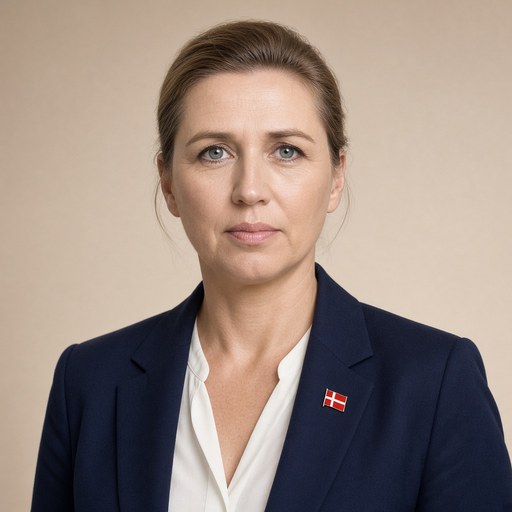
Prime Minister Mette Frederiksen's speech at the conference on the future of Denmark.
 Mette Frederiksen · Prime Minister of Denmark
- Context
- Frederiksen addressed a national conference in Fredericia on August 24, 2021, launching a broad public debate on Denmark's future direction over the next decade.
- Main themes
- Future of Denmark, democratic dialogue and reform, post-pandemic economic recovery, climate crisis, social cohesion, labor market and employment, education and innovation, globalization challenges, Denmark's societal model, long-term national vision
- Duration
- ~17 min
- Words
- 2,024
- Sentences
- 214
- Readability
- 52
- Grade
- 8.3
- Syntax
- 2.20
- Vocabulary
- 2.03
Translated from Danish
The broad sphere of national life a sentence belongs to. Every sentence has an Arena, so it is the denominator the other indices are read against.
Other214 sentences in 114 paragraphs
A heartfelt welcome. And thank you for clearing your calendars for a whole day to discuss the future of Denmark.
A year and a half ago, during the darkest weeks, I was not sure that we would be able to gather here in Fredericia in August 2021—in a Denmark where everyday life and the economy were so strongly on the way back.
We said that good and consistent epidemic management would be the best for the Danish economy. We did not know if we would be right. We were.
The Danish economy is back and booming. Most people are employed again. We are standing much stronger than we dared to hope.
But. And there is a but. The fundamental challenges that Denmark faced before the crisis are still here.
And most unfortunately, they have in common that we have been talking about them for decades. Trying to solve them. Without reaching the goal.
I and the government have plenty of ideas. Some good ones, too. But we also have our limitations. Blind spots, if you will.
Since we did not choose polarization—just as people did not choose division—but chose community as a way through the crisis, why not see if we can agree on which path we should take with our society over the next ten years?
This requires a better democratic conversation.
There are many words in Danish politics. And in the public sphere. But conversation—it has almost vanished.
When was the last time we heard a politician truly give an opponent credit?
If we do not soon get the conversation going, we are guilty of making ourselves and our society dumber than we need to be.
We need to make each other wiser. Move forward. Move Denmark.
“The fact is that democracy never lives by virtue of laws and paragraphs. It lives in and by living people.”
So wrote Hal Koch in 1945. Back then, Denmark and the world had to rise after World War II.
Now we must move forward after the worst crisis since then.
Corona confirmed the strength of our societal model.
An informed and determined population that looks out for each other. A competitive business sector. A responsible labor movement. Capable authorities. Adaptable institutions.
On top of that, we have a healthy economy.
Sustainable public finances. Control over debt. Unemployment did not take hold during the crisis.
And although there are unfortunately sectors that are still struggling, the general picture is that the Danish economy is back to the level it was before the pandemic. Employment is at a record high. Exports are growing. There is optimism.
We could stop here. But Denmark can do more.
And the way forward must be: Reforms. Education. More people in work. Growth. Innovation.
When I look back, I honestly think that we in recent decades have been too powerless in the face of the major development trends.
On the one hand, we politicians interfere in everything. An anecdote I have told before: When I became Minister of Employment, I wanted to take the unemployment benefit legislation home to read. But it would nearly take three days to print it out and two trucks to deliver it.
On the other hand, we have almost given up. In the face of centralization. Bureaucratization. The negative consequences of globalization.
The Danish reaction to the corona crisis was, in my eyes, the first, largest, and most encouraging example of the opposite.
We could have let the pandemic ravage our country. We chose the opposite.
When you can do that, you can do anything.
* * *
This is our common positive starting point as we now look ahead.
With today’s conference, we will start a broad debate about the future of Denmark.
If any of you expect concrete initiatives. Millions of kroner for good causes. Then I must disappoint you.
That will not come today.
Instead, we will continuously present large and coherent proposals. The first one will come soon. Others later. The work of the coming years will be to reform Denmark step by step.
And in that process, we will engage as many as possible in the vision for Denmark in ten years. The more people who are involved in shaping our future, the better it will be.
And we will strive to set aside automatic reactions.
In the publication we are releasing today, there are more questions than answers.
It is an open invitation to you.
* * *
We are dependent on each other. We need each other. The pandemic has shown us that as well.
Therefore, we must view social policy, education, culture, the labor market, integration, tax policy, business policy, climate policy, security policy, preparedness, and the cohesion of society—all of it together.
We have set out ten advancements for Denmark over the next ten years.
They are displayed on the screen behind me.
First,
greener.
The UN’s latest climate report is grim reading. The climate crisis is the greatest global challenge of our time.
The climate crisis must be solved. It requires urgent action from the global community. Denmark must push for ambitious, binding climate agreements internationally and in the EU.
We must move forward here at home. The next stop will be a new agricultural agreement.
Denmark must lead the way. The green transition creates new jobs—not fewer.
Thus, the green is also an important building block to make us richer
—this is the second advancement. But only if we educate for the needs that businesses have.
My best guess is that the biggest obstacle to reaching 70 percent is something entirely different than what most point to.
We will make the necessary decisions. But I believe the biggest obstacle is that we will lack the skilled workers who will make it happen in reality. If we do not have electricians, then wind turbines will not go up.
Digitalization, new technology, automation, and green transition are advancing and changing job functions, business models, and ways of conducting business.
This places enormous demands on the labor market.
It is also a future that looks good for Denmark. And creates new opportunities.
But how do we provide better conditions for you businesses?
Not least for the small and medium-sized enterprises, which account for two out of three jobs in the private sector?
And how do we ensure that research is conducted more out in the companies? And what about risk capital?
The third advancement is more skilled.
The journey of Danes through the education system is a huge success story.
But when I must dwell on the problems—as I have said I will—there is also plenty to address.
45,000 young people aged 15-24 who are doing nothing. Who have neither an education nor a job after primary school—45,000.
It is a huge catastrophe.
I honestly believe that this number surprises many.
It corresponds to all the residents here in Fredericia Municipality being neither in a job nor in education. Not having anything to get up for. We cannot accept that.
The main path in our education system has become that most take a gymnasium education and then a higher education.
But it is skilled labor that businesses will be lacking.
Imagine if we can get the young people's climate engagement, education, production, and jobs to come together in a higher unity.
This leads to the next—
More diligent.
We must work. More people must work. And preferably more.
We must see work as much more than just economy and livelihood. Perhaps even call for a new value campaign.
Going to work and earning your own money should be a focal point for our society. For upcoming reforms. For our culture.
We have built Denmark on work. On taking pride in working. Dignity. Independence. Community.
We must never give up on people, expect too little, and set too few demands.
This is also my approach to a more responsible integration policy. Unfortunately, there are many, especially women with a non-Western background, who do not have a job to get up to.
This problem has been recognized by government after government. But no one has yet managed to solve it.
It is unsustainable. The only reasonable demand is that if you come to Denmark, you do everything to learn our language, get a job, support yourself and your children.
The sixth advancement safer has gained unfortunate relevance with the disaster in Afghanistan.
A disaster that gives rise to a broader reflection—not if we should take responsibility, but how we should take responsibility. It is a discussion we must have with our allies in NATO and the EU.
Denmark is and must be an active and proud member of the global community. We have a long tradition of fighting for our values in the world: Democracy. Solidarity. Women's rights.
And here at home, we must be prepared for security issues. Not least in relation to new agendas. Health. Technology. Cyberattacks. Climate change.
We must have a collective imagination to envision that our reality can change in a short time.
The seventh advancement is about how we create a fairer society.
We must act where the differences are too great. And the social contract is too weak. For if trust cracks, and powerlessness takes root, we lose the necessary cohesion.
How do we create real equal opportunities in our society?
How do we, for example, address the excessive inequality in health, which is unfortunately a fact, despite an extensive public health system?
The next advancement is that our welfare society must be warmer.
I could launch into a long praise of the welfare society. There is much to commend. But now we have decided to talk about the problems. So let me say it as I see it.
It is as if we have forgotten in far too many places why we created the welfare society.
It is as if something else has taken over: Strategies. Micromanagement. Pseudo-work.
We are in the process of draining the world’s best societal model of the most important thing.
Trust that others will do their jobs. Trust that people can solve problems themselves. Trust that genuine, heartfelt welfare is created in the meeting between people.
We must dial down the micromanagement from above. And dial up professionalism and leadership out in the institutions.
It is not easy. It will require a lot from all of us. But it is a task we must and shall take on.
The ninth advancement is stronger
—we must improve opportunities for both rural and urban areas.
Urbanization and centralization are general trends. But they are also largely the result of previous decisions that have been made.
The last advancement freer brings me back to the point I started with: We need a real conversation with each other.
Danish society is built on freedom in a double sense.
First, economic prosperity and a social safety net give individuals the freedom to live a life with many opportunities.
Second, cultural education and democratic conversation are prerequisites for a free society.
Therefore, Denmark must not only be richer economically. We must also be richer in spirit, education, and democratic engagement.
The crisis has shown how important art, culture, and our national community are.
To such an extent that I believe we have the potential for a new golden age for Danish sports—you have shown that all summer—and for art and culture.
In the same breath, I will call for a golden age for Danish debate culture.
The harsh tone of social media is a problem. Our way of talking to each other should not be dictated by the algorithms of multinational companies.
We politicians have a responsibility to ensure that the small does not always become the largest. And that the largest does not fade away like the small details.
The media also have that responsibility.
Far too often, an unfortunate spiral of individual cases, hearings, and hasty legislation arises—which unfortunately steals attention from the real problem.
Denmark is a fantastic country. We owe it to ourselves and each other to tackle the right and important societal problems. Discuss them thoroughly and openly. Find solutions.
Let the work begin! I look forward to it!
The original Danish. The tags above are read on the English translation's sentences.
Hjertelig velkommen. Og tak, fordi I har ryddet kalenderen en hel dag for at diskutere fremtidens Danmark.
For halvandet års tid siden. I de mørkeste uger. Var jeg ikke sikker på, at vi i august 2021 ville kunne være sammen her i Fredericia – i et Danmark, hvor hverdagen og økonomien var så stærkt på vej tilbage.
Vi sagde, at god og konsekvent epidemihåndtering ville være det bedste for dansk økonomi. Vi vidste ikke, om vi ville få ret. Det fik vi.
Dansk økonomi er tilbage og buldrer derudaf. De fleste er i arbejde igen. Vi står langt stærkere, end vi havde turdet håbe.
Men. Og der er et men. De grundlæggende udfordringer, Danmark stod overfor inden krisen. De er her stadigvæk.
Og de fleste har desværre det til fælles, at vi har talt om dem i årtier. Forsøgt at løse dem. Uden at komme i mål.
Jeg og regeringen har masser af ideer. Også nogle gode af slagsen. Men vi har også vores begrænsninger. Blinde vinkler om man vil.
Når vi nu ikke valgte polariseringen – som folk ikke valgte splittelsen – men valgte fællesskabet som en vej gennem krisen. Hvorfor så ikke se, om vi kan blive enige om, hvilken vej vi skal gå med vores samfund de næste ti år?
Det kræver en bedre demokratisk samtale.
Der er mange ord i dansk politik. Og i det offentlige rum. Men samtale – det er næsten forvundet.
Hvornår har vi sidst hørt en politiker sådan rigtigt give en modstander ret?
Hvis ikke vi snart får gang i samtalen, gør vi os skyldige i, at vi og vores samfund bliver dummere, end vi behøver at være.
Vi har brug for at gøre hinanden klogere. Flytte os. Flytte Danmark.
”Sagen er nemlig den, at demokratiet aldrig lever i kraft af love og paragraffer. Det lever i og ved levende mennesker.”
Sådan skrev Hal Koch i 1945. Dengang skulle Danmark og verden rejse sig efter Anden Verdenskrig.
Nu skal vi videre efter den værste krise siden dengang.
Corona bekræftede styrken i vores samfundsmodel.
En oplyst og viljestærk befolkning, som passer på hinnden. Et konkurrencedygtigt erhvervsliv. En ansvarlig fagbevægelse. Dygtige myndigheder. Omstillingsparate institutioner.
Oveni det har vi en sund økonomi.
Holdbare offentlige finanser. Styr på gælden. Ledigheden har ikke bidt sig fast under krisen.
Og selvom der desværre er brancher, som stadig har det svært. Så er det generelle billede, at dansk økonomi er tilbage på niveauet før pandemien. Beskæftigelsen er rekordhøj. Eksporten vokser. Der er optimisme.
Vi kunne stoppe her. Men Danmark kan mere.
Og vejen fremad er nødt til at være: Reformer. Uddannelse. Flere i arbejde. Vækst. Innovation.
Når jeg ser tilbage, så synes jeg ærlig talt, at vi i de seneste årtier har været for afmægtige over for de store udviklingstendenser.
På den ene side blander vi politikere os i alt. En anekdote, jeg har fortalt før: Da jeg blev beskæftigelsesminister, ville jeg have dagpengelovgivningen med hjem at læse. Men det ville nærmet tage tre døgn at printe den ud og to lastbiler at bringe den ud.
På den anden side har vi nærmest givet op. Over for centralisering. Bureaukratisering. De negative konsekvenser af globaliseringen.
Danskernes reaktion på coronakrisen var i mine øjne det første, største og mest opmuntrende eksempel på det modsatte.
Vi kunne have ladet pandemien rasere vores land. Vi valgte det modsatte.
Når man kan det. Så kan man, hvad man vil.
* * *
Det er vores fælles positive udgangspunkt, når vi nu skal se frem.
Med konferencen i dag vil vi starte en bred debat om fremtidens Danmark.
Hvis nogen af jer forventer konkrete initiativer. Millioner af kroner til gode formål. Så må jeg skuffe jer.
Det kommer ikke i dag.
Vi vil derimod løbende fremlægge store og sammenhængende udspil. Det første inden længe. Andre senere. De kommende års arbejde bliver at reformere Danmark skridt for skridt.
Og i den proces vil vi engagere så mange som muligt i visionen for Danmark om ti år. Jo flere, der er med til at forme vores fremtid, jo bedre bliver den.
Og vi vil bestræbe os på selv at lægge automatreaktionerne væk.
I den publikation, som vi offentliggør i dag, er der flere spørgsmål end svar.
Det er en åben invitation til jer.
* * *
Vi er afhængige af hinanden. Vi har brug for hinanden. Det har pandemien også vist os.
Derfor skal vi se socialpolitikken, uddannelserne og kulturen, arbejdsmarkedet, integrationen, skattepolitik, erhvervspolitik, klimapolitik, sikkerhedspolitik, beredskabet, samfundets sammenhængskraft – det hele samlet.
Vi har opstillet ti fremskridt for Danmark de næste ti år.
De står på skærmen bag mig.
For det første
grønnere.
FN’s seneste klimarapport er dyster læsning. Klimakrisen er den største globale udfordring i vor tid.
Klimakrisen skal løses. Det kræver akut handling fra verdenssamfundet. Danmark skal presse på for ambitiøse, bindende klimaaftaler internationalt og i EU.
Vi skal videre herhjemme. Næste stop bliver en ny landbrugsaftale.
Danmark skal gå foran. Den grønne omstilling skaber nye arbejdspladser – ikke færre.
Dermed er det grønne også en vigtig byggeklods til at gøre os
rigere
– det andet fremskridt. Men kun hvis vi uddanner til de behov virksomhederne har.
Mit bedste bud er, at den største forhindring for, om vi når 70 procent, er en helt anden end den, de fleste peger på.
Vi skal nok træffe de nødvendige beslutninger. Men jeg tror, den største forhindring er, at vi kommer til at mangle de faglærte, der skal få det til at ske i virkeligheden. Hvis ikke vi har elektrikere. Så kommer der ikke vindmøller op.
Digitalisering, ny teknologi, automatisering og grøn omstilling vinder frem og ændrer jobfunktioner, forretningsmodeller og måder at drive virksomhed på.
Det stiller enormt store krav til arbejdsmarkedet.
Det er også en fremtid, der ligger godt for Danmark. Og skaber nye muligheder.
Men hvordan giver vi bedre vilkår til jer virksomheder?
Ikke mindst til de små og mellemstore virksomheder, som står for to ud af tre job i den private sektor?
Og hvordan sikrer vi, at der forskes i mere ude på virksomhederne? Og hvad med risikovillig kapital?
Det tredje fremskridt er
dygtigere.
Danskernes rejse gennem uddannelsessystemet er en kæmpe succeshistorie.
Men når jeg skal dvæle ved problemerne. Som jeg har sagt, jeg vil. Så er der også nok at tage fat på.
45.000 unge i alderen 15-24 år, som ikke laver noget. Som hverken har en uddannelse eller et arbejde efter folkeskolen – 45.000.
Det er en kæmpe katastrofe.
Jeg tror ærlig talt, at det tal kommer bag på mange.
Det svarer til, at alle indbyggere her i Fredericia Kommune hverken var i job eller uddannelse. Ikke har noget at stå op til. Vi kan ikke være det bekendt.
Hovedvejen i vores uddannelser er blevet, at de fleste tager en gymnasial uddannelse og derefter en videregående uddannelse.
Men det er faglært arbejdskraft, virksomhederne kommer til at mangle.
Tænk, hvis vi kan få de unges klimaengagement, uddannelserne, produktion og arbejdspladser til at gå op i en højere enhed.
Det leder frem til det næste –
Flittigere.
Vi skal arbejde. Flere skal arbejde. Og gerne mere.
Vi skal se arbejde som meget mere end økonomi og forsørgelse. Måske sågar blæse til en ny værdikamp.
At gå på arbejde og tjene sine egne penge skal være et omdrejningspunkt for vores samfund. For kommende reformer. For vores kultur.
Vi har bygget Danmark på arbejde. På at sætte en ære i at arbejde. Værdighed. Selvstændighed. Fællesskab.
Vi må aldrig opgive mennesker, forvente for lidt og stille for få krav.
Det er også min indgang til en
ansvarligere
integrationspolitik. Der er desværre mange især kvinder med ikke-vestlig baggrund, som ikke har et arbejde at stå op til.
Det problem har regering efter regering erkendt. Men ingen har hidtil formået at løse det.
Det er uholdbart. Eneste rimelige krav er, at kommer man til Danmark, så gør man alt for at lære vores sprog, komme i arbejde, forsørge sig selv og sine børn.
Det sjette fremskridt
sikrere
har fået en ulykkelig aktualitet med katastrofen i Afghanistan.
En katastrofe, som giver anledning til en bredere refleksion – ikke
om
vi skal tage ansvar, men
hvordan
vi skal tage ansvar. Det er en drøftelse, vi skal tage med vores allierede i NATO og i EU.
Danmark er og skal være et aktivt og stolt medlem af verdenssamfundet. Vi har en lang tradition for at kæmpe for vores værdier i verden: Folkestyre. Solidaritet. Kvinders rettigheder.
Og herhjemme skal vi være beredte på sikkerhedsspørgsmål. Ikke mindst i forhold til nye dagsordener. Sundhed. Teknologi. Cyberangreb. Klimaforandringer.
Vi skal have en kollektiv fantasi til at forestille os, at vores virkelighed kan ændre sig på kort tid.
Det syvende fremskridt handler om, hvordan vi skaber et
retfærdigere
samfund.
Vi skal sætte ind, hvor forskellene er for store. Og samfundskontrakten for svag. For hvis tilliden slår sprækker, og afmagten slår rod, så mister vi den nødvendige sammenhængskraft.
Hvordan skaber vi reelt lige muligheder i vores samfund?
Hvordan gør vi for eksempel op med den alt for store ulighed i sundhed. Som desværre er et faktum, trods et udbygget offentligt sundhedssystem?
Det næste fremskridt handler om, at vores velfærdssamfund skal være
varmere.
Jeg kunne kaste mig ud i en lang lovprisning af velfærdssamfundet. Der er meget at rose. Men nu har vi besluttet os for tale om problemerne. Så lad mig sige det, som jeg ser det.
Det er, som om vi alt for mange steder har glemt, hvorfor vi skabte velfærdssamfundet.
Det er, som om noget andet har fået overtaget: Strategier. Detailstyring. Pseudoarbejde.
Vi er i gang med at dræne verdens bedste samfundsmodel for det vigtigste.
Tilliden til, at andre passer deres arbejde. Tilliden til, at mennesker selv kan løse problemer. Tilliden til, at ægte, hjertevarm velfærd skabes i mødet mellem mennesker.
Vi må skrue ned for detailstyring oppefra. Og skrue op for faglighed og ledelse ude på institutionerne.
Det er ikke let. Det vil kræve meget af os alle sammen. Men det er en opgave, vi må og skal tage på os.
Det niende fremskridt er
stærkere
– vi skal forbedre mulighederne for både land og by.
Urbanisering og centralisering er generelle tendenser. Men også i høj grad resultatet af tidligere beslutninger, der er truffet.
Det sidste fremskridt
friere
bringer mig tilbage den pointe, jeg indledte med: Vi har behov for en rigtig samtale med hinanden.
Det danske samfund bygger på frihed i dobbelt forstand.
For det første giver økonomisk velstand og et socialt sikkerhedsnet den enkelte frihed til at leve et liv med mange muligheder.
For det andet er kulturel dannelse og demokratisk samtale forudsætninger for et frit samfund.
Derfor skal Danmark ikke kun være rigere rent økonomisk. Vi skal også være rigere på ånd, dannelse og demokratisk engagement.
Krisen har vist, hvor vigtige kunsten, kulturen og vores nationale fællesskab er.
I en sådan grad, at jeg tror, vi har potentialet for en ny guldalder for dansk idræt – det har I vist hele sommeren – og for kunst og kultur.
I samme åndedrag vil jeg opfordre til en guldalder for den danske debatkultur.
De sociale mediers hårde tone er et problem. Vores måde at tale med hinanden på skal ikke dikteres af multinationale selskabers algoritmer.
Vi politikere har et ansvar for, at det små ikke altid bliver det største. Og det største ikke fortoner sig som de små detaljer.
Det ansvar har medierne også.
Alt for ofte opstår der en uheldig spiral af enkeltsager, samråd og forhastet lovgivning – som desværre stjæler opmærksomheden fra det egentlige problem.
Danmark er et fantastisk land. Vi skylder os selv og hinanden at tage fat på de rigtige og vigtige samfundsproblemer. Diskutere dem grundigt og fordomsfrit. Finde løsninger.
Lad arbejdet begynde! Jeg glæder mig!