




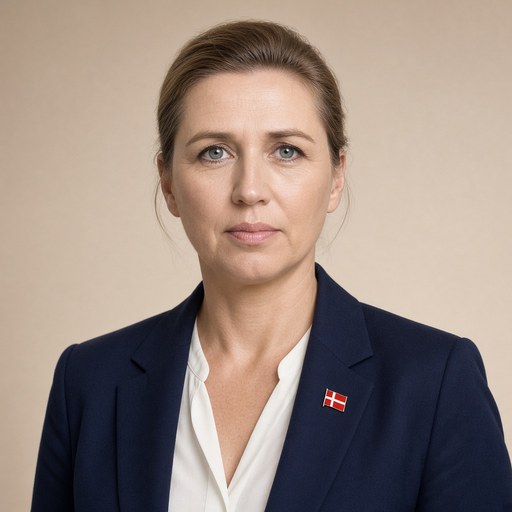
Prime Minister Mette Frederiksen's speech at the summit on elderly welfare in Fredericia on January 30, 2024.
 Mette Frederiksen · Prime Minister of Denmark
- Context
- Frederiksen addressed a national summit on elderly welfare in Fredericia on January 30, 2024, to launch the government's elderly care reform agenda.
- Main themes
- Elderly care reform, self-determination for the elderly, new public management critique, welfare society values, care worker recognition and pay, human-centered welfare, dignity in old age, employee empowerment, elderly policy as welfare crown jewel
- Duration
- ~17 min
- Words
- 2,068
- Sentences
- 214
- Readability
- 74
- Grade
- 5.0
- Syntax
- 2.31
- Vocabulary
- 1.83
Translated from Danish
The broad sphere of national life a sentence belongs to. Every sentence has an Arena, so it is the denominator the other indices are read against.
Other214 sentences in 103 paragraphs
Dear everyone.
How wonderful it is to see so many people here in Fredericia with a single purpose: To discuss something that is the most important in our country.
Our elderly. Our old.
You, who have created modern Denmark.
For no matter how you turn it, elderly policy – a good old age – is one of the crown jewels in a proper welfare society.
A dignified and secure elderly care. Which works well in many places. But which needs both change and improvement.
My speech today is for our elderly. Their relatives. You, who have chosen to dedicate your working life to other people.
And to all of you who care that the end of life should be as good and as secure as possible.
Welcome.
* * *
It came in the 90s. Sneaking in. It has taken hold. Has in many ways changed our welfare society into a poorer version of itself.
New public management.
The belief that market logics can be transferred to relationships between people. A top-down management logic. Forms, documentation, and control.
We see it everywhere in welfare. Not least in the elderly sector.
And that is actually why we are here today. Because we want to change that.
To put the human being back at the center again. Both you, who have become older or old.
And you, who are social and health helpers or assistants, whose professionalism, and indeed also humanity, has difficult conditions when everything is determined from above.
I fundamentally believe that we humans thrive best when we are masters of our own lives. And that does not disappear the day we grow old.
Throughout your lives, you have been used to making your own decisions. About what you want. And what you do not want.
We need to be better at holding on to that self-determination when old age sets in.
Even when one day you can no longer do everything yourself. And need help from the rest of us.
That is why self-determination is a central value for the government's elderly reform.
* * *
The second thing that is absolutely crucial is the employees.
It has been said before. You are the everyday heroes of welfare.
I would not be able to say it if it were not because we have just secured a pay raise. I will return to that.
But when we have invited you here today, it is because it is you who make welfare succeed every single day.
And we know as a government that we cannot do anything in the elderly sector if we do not do it together.
I encounter your great significance every single time I travel around our country.
I recently visited Tjørnehaven in Galten. There I met a health helper. That is what she still calls herself. Grethe. Great commitment, friendly smile.
And she has been doing her job for – hold on – 45 years.
Today, Grethe is 70 years old. But simply cannot stop. Because as she says: 'I enjoy going to work.'
And now I will just make a parenthesis, because Ruth, who I am sitting with here at the table. I do not know you. You are 80 years old and have just celebrated your 30th anniversary in Hørsholm Municipality. And work as a social and health helper. 80 years old.
Give her a hand.
And in a way, you are, excuse me Ruth, now I am going to give a speech about you, that was not my intention. But you are actually a very good example of what this is about.
Because when I came to our table, I thought you were one of the elderly I was supposed to meet. But then you were one of the employees.
And that is what we need to remember, perhaps especially us politicians. That our elderly and our old are just as different as everyone else in this society.
And we cannot create elderly care that fits everyone. Therefore, we need to let it be free. So that our employees and our leaders, our relatives, and the elderly themselves, of course, can define what is right.
Well, we stay in Galten. And it is a lovely nursing home you have there.
And there I also meet Aske, who is also here today. Aske is not 80. He is around 20. Also a funny story.
Aske was actually going around thinking he would be an engineer. But then a summer job comes along. Now Aske is in a permanent substitute position. Extremely good at his job.
And I just want to say that the elderly love him. And now he knows that he should not be an engineer. But that he should instead dedicate his life to working with other people.
And that reminds me that last Friday I was in Odder. There I meet Tina who is at work. And it is also a fantastic story.
Because at work, Tina has her two children aged 5 and 8 with her. She is a single mother. When she has a weekend shift, she takes both kids to work.
Well, we hit the dance floor, me and Bent, one of the residents, and we have Aya Filippa with us, who is Tina's daughter.
A completely wonderful moment. Where those two little kids run around. Dance with the elderly. Serve a sip of juice. And create joy.
But then I cannot help but think, as I drive away: What happened in our welfare society that made it surprising today to see two children on the dance floor in a nursing home?
So thank you to Tina for breaking all the barriers. And a reminder to the rest of us that we went too far. Down a path that does not concern what is most important. Namely relationships.
And it is only the employees who can create relationships. We others cannot.
* * *
So therefore, a thank you to all you fantastic employees who every single day, and not least every single night, show up and are the arm around the shoulder. And the eyes that our elderly need to look into.
You must continue to make a difference. Because that is what you do.
And we others must at the same time ensure that the conditions for your work improve.
Just a couple of weeks ago, I was at the social and health school in Odense.
Here I heard it for the umpteenth time. A skilled young woman told me the story, and I have heard it again and again, namely that when she says in primary school, "I want to be a social and health assistant." There is a primary school teacher who says: "You have too good a head to go that way."
If this were a one-off example, I would not be worried. I just hear it again and again.
I do not think anyone intended it. But we became a country with educational snobbery. And we need to do something about that.
Because there are no degrees that are finer than others. In fact, it is probably almost the opposite. It does not get finer than when you dedicate your working life to other people.
In just a few years, we will lack thousands of you who work in our elderly sector.
That may sound technical. But it will mean that there are elderly people who do not get out of bed.
That is what it will mean. That there are old people who are not allowed to have the whole afternoon but are put to bed before they actually want to. That is what it will mean. Therefore, this is one of the most serious issues.
That is why we have made an extraordinary pay raise. And that the money in the pay raise is especially going to our social and health helpers and assistants. It is our responsibility. Which we are in the process of lifting.
But the cultural battle. From the desk to the people. That is something all of us here today must take on together.
* * *
When we gather here today, it is not only to celebrate all the places where things are going well. When we are here today, it is because we do not have the elderly care we dream of everywhere. And that we want.
And here we politicians need to be self-critical.
When mistakes have been made over time. And mistakes happen when people work with people. Our reaction has been even more oversight, even more regulation, and even more control.
Often with the best of intentions. Probably also quite often because we have not had a better answer.
The better answer we must find together with you.
And the result of all this is that there are too many who have become spectators. Both to their own professionalism and to their own everyday life.
And when that distance grows. Because you employees know well what the elderly need. And the elderly know it at least well. But when you are not allowed to provide it, you become tired of going to work. And that is why we need to create a better space for professional pride.
* * *
We politicians need to take a step back. We need to take responsibility for the framework. Step back and trust that you, who are leaders. And you, who are employees. And you, who are volunteers, and thank you for that. That you can create the best framework.
The elderly should decide more for themselves.
And the social and health assistant, nurse, or another professional who comes through the door should ideally be someone you have seen before. Familiar faces matter for security and trust.
And we can do even more. Across professions.
So let’s get rid of much of the bureaucracy and documentation.
And that goes for the leaders too. Because there is a reason we have a leader in our nursing homes. It is so that the person can lead. But if we others top-down manage everything, then the leadership space is gone.
And that is why we also believe that the leaders should be given more freedom. So you have time for your employees. So they have time for the elderly.
One elderly supervision in the future. The inspections should control less. It should happen on the same day. So you have more time and more elbow room. For exactly your leadership.
We expand and strengthen the free choice. So the elderly have more freedom of choice in their everyday lives. And we will of course also add extra money.
Money cannot stand alone. But we also cannot do this without adding more money. So we will do that too.
* * *
Well. Where am I going with all this? We often talk about when we talk about children that there is only one childhood.
But there is also only one old age.
And the vast majority of elderly people in Denmark have a good old age. Live many years without needing help, care, and support. But when that need arises. Then the welfare society must be there.
Will this be complicated?
Yes.
Will there be mistakes in the future?
Yes.
Should we politicians then next time there is a mistake be better at taking a step back and saying that this must be handled locally, both by leaders and employees?
Yes.
For with trust and freedom also comes responsibility. And I am sure that you can take on that responsibility.
And when we have asked all of you to come to Fredericia today, it is also because almost everything that is in the government's proposal for the elderly reform, those are ideas we have received from you. Over the years.
It was Ældre Sagen that proposed the fixed teams.
It is the employees who have said: "Show us trust now."
It is the leader who has told us about the inspections.
And I could go on like this.
And it is the young, skilled upcoming social and health helpers and assistants who have asked me to convey the message to the rest of Denmark: "Drop the educational snobbery."
We cannot do without our skilled employees. Let us give them the respect that you have earned.
And that the rest of society needs.
Thank you so much for being here today.
We look forward to the discussion.
The original Danish. The tags above are read on the English translation's sentences.
Kære allesammen.
Hvor er det dog fantastisk at se så mange mennesker her i Fredericia med ét eneste formål: At diskutere noget af det, der er det aller-allervigtigste i vores land.
Vores ældre. Vores gamle.
Jer, der har skabt det moderne Danmark.
For ligegyldigt hvordan man vender og drejer det, så er ældrepolitik – et godt ældreliv – en af kronjuvelerne i et ordentligt velfærdssamfund.
En værdig og tryg ældrepleje. Som mange steder fungerer godt. Men som trænger til både forandring og til forbedring.
Min tale i dag er til vores ældre. Deres pårørende. Jer, der har valgt at dedikere jeres arbejdsliv til andre mennesker.
Og til alle jer, der går op i, at livets afslutning skal være så god og så tryg som mulig.
Velkommen.
* * *
Det kom i 90’erne. Snigende. Det har taget om sig. Har på mange måder ændret vores velfærdssamfund til en dårligere udgave af sig selv.
New public management.
Troen på, at markedets logikker kan overføres til relationer mellem mennesker. En styringslogik oppefra og ned. Skemaer, dokumentation og kontrol.
Vi ser det alle steder i velfærden. Ikke mindst på ældreområdet.
Og det er faktisk derfor, vi er her i dag. For det ønsker vi at ændre.
At få mennesket i centrum igen. Både dig, der er blevet ældre eller gammel.
Og dig, der er social- og sundhedshjælper eller -assistent, hvis faglighed, og faktisk også menneskelighed, har trange vilkår, når alt er bestemt oppefra.
Jeg tror grundlæggende på, at vi mennesker trives bedst, når vi er herrer i vores eget liv. Og det forsvinder ikke den dag vi bliver gamle.
Hele jeres liv har I været vant til at træffe jeres egne beslutninger. Om hvad I har lyst til. Og ikke lyst til.
Den selvbestemmelse skal vi være bedre til at holde fast i, når alderdommen indtræffer.
Også når I en dag ikke længere kan alting selv. Og får brug for hjælp af os andre.
Derfor er selvbestemmelse en central værdi for regeringens ældrereform.
* * *
Det andet, der er helt afgørende, det er medarbejderne.
Det er sagt før. I er hverdagens og velfærdens helte og heltinder.
Jeg vil ikke kunne få mig til at sige det, hvis det ikke var fordi, vi lige havde sikret et lønløft. Det vender jeg tilbage til.
Men når vi har inviteret jer i dag. Så er det fordi, det er
jer, der får velfærden til at lykkes hver eneste dag.
Og vi ved som regering godt, at vi ikke kan gøre noget som helst på ældreområdet, hvis ikke vi gør det her sammen.
Jeres store betydning møder jeg hver eneste gang, jeg er rundt i vores land.
Jeg har lige besøgt Tjørnehaven i Galten for nylig. Der møder jeg en sygehjælper. Det kalder hun sig stadigvæk. Grethe. Stort engagement, venligt smil.
Og den måde har hun gået til sit arbejde i – hold nu fast – 45 år.
I dag er Grethe 70 år. Men kan simpelthen ikke holde op. For som hun siger: ’Jeg nyder at gå på arbejde’.
Og nu laver jeg lige en parentes, fordi Ruth, som jeg sidder ved bord med her. Jeg kender dig ikke. Du er 80 år gammel og har lige haft 30 års jubilæum i Hørsholm Kommune. Og arbejder som social- og sundhedshjælper. 80 år gammel.
Giv hende lige en hånd.
Og på en eller anden måde er du jo, undskyld Ruth, nu kommer jeg til at holde tale om dig, det var egentlig ikke meningen. Men du er jo egentlig et meget godt billede på, hvad der her handler om.
For da jeg kom hen til vores bord, troede jeg, at du var en af de ældre, jeg skulle møde. Men så var du en af medarbejderne.
Og det er jo det, vi skal huske, måske især os politikere. At vores ældre og vores gamle er lige så forskellige, som alle mulige andre er i det her samfund.
Og vi kan ikke lave en ældrepleje, som passer til alle. Derfor bliver vi nødt til at slippe den fri. Så vores medarbejdere og vores ledere, vores pårørende og de ældre selv, selvfølgelig, kan få lov til definere, hvad det er, der er det rigtige.
Nå, vi bliver lige i Galten. Og det er et dejligt plejehjem, I har der.
Og der møder jeg også Aske, som også er her i dag. Aske han er ikke 80. Han er omkring de 20. Også en sjov historie.
Aske gik egentlig rundt og troede, at han skulle være ingeniør. Men så kommer der et sommerjob. Nu er Aske i et fast vikariat. Sindssyg god til sit arbejde.
Og jeg vil bare sige, at de gamle, de elsker ham. Og nu ved han, at han ikke skal være ingeniør. Men at han i stedet skal dedikere sit liv til at arbejde med andre mennesker.
Og det minder mig om, at sidste fredag var jeg i Odder. Der møder jeg Tina som er på arbejde. Og det er også en fantastisk historie.
Fordi med på arbejde, der har Tina sine to børn på 5 og 8. Hun er enlig mor. Når hun har weekendvagt, så tager hun begge ungerne med på arbejde.
Nå, vi ryger på dansegulvet, mig og Bent, en af beboerne, og vi har Aya Filippa med, som er Tinas datter.
Fuldstændig vidunderlig stund. Hvor de der to små unger drøner rundt. Danser med de gamle. Serverer en tår saftevand. Og skaber glæde.
Men så kan jeg ikke lade være med at tænke, da jeg kører der fra: Hvad var det, der skete i vores velfærdssamfund, der gjorde, at man i dag bliver overrasket, når man ser to børn på dansegulvet på et plejehjem?
Så tak til Tina for at bryde alle barriererne. Og en påmindelse til os andre om, at vi gik for langt. Ud ad et spor, som ikke handler om det, der er det vigtigste. Nemlig relationer.
Og det er kun medarbejderne, der kan skabe relationer. Det kan vi andre nemlig ikke.
* * *
Så derfor en tak til alle jer fantastiske medarbejdere, der hver eneste dag, og ikke mindst hver eneste nat, møder ind og er den arm omkring skulderen. Og de øjne, som vores ældre har behov for at kigge ind i.
I skal blive ved med at gøre en forskel. For det er det, I gør.
Og vi andre må så samtidig sikre, at vilkårene for jeres arbejde bliver bedre.
For kun et par uger siden var jeg på sosu-skolen i Odense.
Her hørte jeg det for-gud-ved-hvilken-gang. En dygtig ung kvinde fortælle mig den historie, og jeg har hørt den igen og igen, nemlig at da hun i folkeskolen siger ”jeg vil gerne være social- og sundhedsassistent”. Så er der en folkeskolelærer, der siger: ”Du har for godt et hoved til at gå den vej”.
Hvis det her var et enkeltstående eksempel, ville jeg ikke være bekymret. Jeg hører det bare igen og igen.
Jeg tror ikke, der er nogen, som har ønsket det. Men vi blev et land med uddannelsessnobberi. Og det bliver vi nødt til at få gjort noget ved.
For der er ikke uddannelser, som er finere end andre. Faktisk forholder det sig faktisk nok næsten modsat. At det bliver ikke finere, end når man dedikerer sit arbejdsliv til andre mennesker.
I løbet af ganske få år kommer vi til at mangle tusindvis af jer, der arbejder på vores ældreområde.
Det kan lyde som teknik. Men det kommer til at betyde, at der er ældre, som ikke kommer ud af sengen.
Det er dét, det kommer til at betyde. At der er gamle, der ikke får lov til at have hele eftermiddagen, men bliver lagt i seng, før de egentlig har lyst til det. Det er dét, det kommer til at betyde. Derfor er det her noget af det aller-allermest alvorlige.
Det er derfor, vi har lavet et ekstraordinært lønløft. Og at pengene i lønløftet ikke mindst går til vores social- og sundhedshjælpere og -assistenter. Det er vores ansvar. Som vi er i gang med at løfte.
Men kulturkampen. Fra skrivebord til mennesker. Den bliver alle os, der er her i dag, nødt til at tage sammen.
* * *
Når vi er samlet her i dag. Så er det ikke kun for at hylde alle de steder, det går godt. Når vi er her i dag, så er det, fordi vi ikke alle steder har den ældrepleje, vi drømmer om. Og som vi gerne vil have.
Og her bliver vi politikere nødt til at være selvkritiske.
Når der er sket fejl igennem tiden. Og der sker fejl, når mennesker arbejder med mennesker. Så har vores reaktion været endnu mere tilsyn, endnu mere regulering og endnu mere kontrol.
Ofte i bedste mening. Nok også ret ofte fordi vi ikke har haft et bedre svar.
Det bedre svar skal vi finde sammen med jer.
Og resultatet af alt det her er, at der er for mange, som er blevet tilskuere. Både til deres egen faglighed og til deres egen hverdag.
Og når den afstand vokser. Fordi I medarbejdere ved godt, hvad de ældre har brug for. Og de ældre ved det i hvert fald godt. Men når I så ikke kan få lov til at give det. Så bliver man træt af at gå på arbejde. Og derfor bliver vi nødt til at skabe et bedre rum for faglig stolthed.
* * *
Vi politikere skal træde et skridt tilbage. Vi skal tage ansvaret for rammerne. Træde et skridt tilbage og stole på, at jer, der er ledere. Og jer, der er medarbejdere. Og jer, der er frivillige, og tak for det. At I kan skabe de bedste rammer.
De ældre skal bestemme mere selv.
Og den social- og sundhedsassistent, sygeplejerske eller en anden fagperson, der kommer ind ad døren, skal gerne være én, du har set før. Kendte ansigter betyder noget for trygheden og for tilliden.
Og vi kan godt gøre endnu mere. På tværs af faglighederne.
Så væk med meget af bureaukratiet og dokumentationen.
Og det gælder også for lederne. For der er jo en grund til, at vi har en leder på vores plejehjem. Det er jo for, at personen skal lede. Men hvis vi andre topstyrer alting, så er ledelsesrummet jo væk.
Og derfor tror vi også på, at lederne skal slippes mere fri. Så du får tid til dine medarbejdere. Så de får tid til de ældre.
Èt ældretilsyn i fremtiden. Tilsynene skal kontrollere mindre. Det skal ske på samme dag. Så du får mere tid og mere albuerum. Til præcis din ledelse.
Vi udvider og styrker det frie valg. Så de ældre får mere valgfrihed i hverdagen. Og vi tilfører selvfølgelig også ekstra penge.
Penge kan ikke stå alene. Men vi kan heller ikke gøre det her uden at tilføre flere penge. Så det gør vi også.
* * *
Nå. Hvor vil jeg hen med alt det her? Vi taler ofte om, når vi taler børn, at der kun én barndom.
Men der er også kun én alderdom.
Og langt de fleste ældre i Danmark har en god alderdom. Lever mange år uden at have behov for hjælp, pleje og omsorg. Men når det behov opstår. Så skal velfærdssamfundet være der.
Bliver det bøvlet det her?
Ja.
Vil der opstå fejl i fremtiden?
Ja.
Skal vi politikere så næste gang, der er en fejl, blive bedre til at træde et skridt tilbage og sige, at det må man klare lokalt, leder såvel som medarbejder?
Ja.
For med tillid og med frihed følger også ansvar. Og jeg er sikker på, at I kan løfte det ansvar.
Og når vi har bedt jer alle sammen om at komme en tur til Fredericia i dag, så er det også fordi at nærmest alt det, der står i regeringens forslag til ældrereformen, dét er ideer, vi har fået af jer. Igennem årene.
Det var Ældre Sagen, der foreslog det med de faste teams.
Det er medarbejderne, der har sagt: ”Vis os nu tillid”.
Det er lederen, der har fortalt os om tilsynene.
Og sådan kunne jeg blive ved.
Og det er de unge, dygtige kommende social- og sundhedshjælpere og -assistenter, der har bedt mig overbringe beskeden til resten af Danmark: ”Drop det uddannelsessnobberi”.
Vi kan ikke undvære vores dygtige medarbejdere. Lad os give dem den respekt, som I har fortjent.
Og som resten af samfundet har behov for.
Tusind tak for, at I er med i dag.
Vi glæder os til diskussionen.