




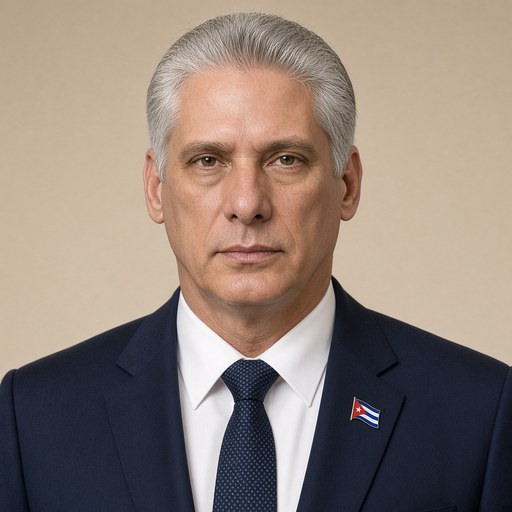
Conference "The Management of Science and Innovation in the General Education System in Cuba"
 Miguel Díaz-Canel · President of Cuba
- Context
- Díaz-Canel addressed the XVIII International Pedagogy Congress 2023 in Havana on January 31, 2023, delivering a conference on science and innovation in Cuba's general education system.
- Main themes
- Science and innovation in education, Cuban education system, pedagogy congress, literacy and human development, role of teachers, blockade impact on Cuba, Sustainable Development Goals, Group of 77+China, José Martí's educational philosophy, Fidel Castro's legacy in education, global education challenges, multilateral educational cooperation
- Duration
- ~32 min
- Words
- 3,864
- Sentences
- 122
- Readability
- 20
- Grade
- 18.3
- Syntax
- 3.36
- Vocabulary
- 2.31
Translated from Spanish
The broad sphere of national life a sentence belongs to. Every sentence has an Arena, so it is the denominator the other indices are read against.
Other122 sentences in 90 paragraphs
Esteemed representatives of the international organizations accompanying us;
Sisters and brothers;
Friends;
Teachers:
Welcome to Havana and to the XVIII edition of the International Congress Pedagogy 2023, and I thank the Ministry of Education of the Republic of Cuba for the opportunity to share with you a conference that focuses on the management of science and innovation in the general education system in Cuba.
I thank you all for your presence in our homeland, amidst the difficult economic and social conditions that the world is facing today, exacerbated in our case by the oppressive circumstance of six decades of blockade and now, in addition, with a completely intensified blockade.
Here it is confirmed that educators are willing to work, every day and at all hours, for the improvement of their peoples and to unite in the search for the best paths to turn into reality the Martian preaching that “to be cultured is the only way to be free.”
This has been the inspiring principle of the educational work of the Revolution since the dazzling days of the Literacy Campaign, the first step in the tireless labor of human emancipation, which has not ceased since Fidel proclaimed, at the foot of the monument to the Apostle, in the square that bears his name, that Cuba was a territory free of illiteracy.
It is still moving to see the images and hear the shouts of: “Fidel, Fidel, tell us what else we should do!”, with which hundreds, thousands of young people celebrated the first victory over ignorance on that December 22, 1961.
And Fidel, a permanent disciple of Martí, far exceeded the question of that youth, which was that of our parents. “Study, study, study!” was one of the most important tasks since then, alongside the defense of the country, always threatened.
From sixth to ninth grade, from ninth to twelfth, from twelfth to the municipalization of the university, studying became what we all do regardless of age.
Thanks to that, we are this rare small country, poor in material resources, that has a human capital only comparable to the most developed nations of the First World. And Fidel, the first name we mention before every triumph of Cuban talent; because Fidel is the undisputed father of the epic journey undertaken in pursuit of “being cultured to be free” which, while climbing levels of improvement in the people, demanded higher quality standards in teaching and in the sciences associated with education.
One of the culminating points of that search has been these Pedagogy Congresses, rich in the exchange of experiences and which have proven to be an important measure of the pedagogical level of Cuba compared to its peers around the world.
Placed in the position of learning, we recognize how each meeting, since 1986, has contributed to redesigning the paths of Education and consequently the educational directions of our countries.
Alongside Fidel, educators will always remember the first Minister of Education, the very young Armando Hart, and later José Ramón Fernández, affectionately remembered as “the Gallego,” also creators and magnificent interpreters of the national pedagogical ideal that, with the collective genius of dozens of names that would make the recount very long, are part of the Cuban educational heritage, always in perfection.
This edition of Pedagogy is distinguished by including in its agenda the First Meeting of Education Ministers of the Group of 77+China, whose pro tempore presidency is held by Cuba this year.
Undoubtedly, this Congress will enhance the role of Education as the main lever for the use of science, technology, and innovation, from the perspective of a developing education that promotes interest in science and leads students to knowledge through different avenues.
The educational process is the greatest expression of the art of teaching and thinking, the place and moment in which the intelligence of the men and women who will solve the problems we will face as humanity is educated. The teacher is the main innovator.
In our view, it will never be with weapons, no matter how modern and expensive they are, that the critical global situation, marked by a multidimensional crisis stemming from the unjust international economic order, will be resolved. On the contrary, such a situation demands the creation of spaces like this, useful for discussing research agendas and educational policies from various theoretical perspectives and methodological proposals that, through education, lead human beings along the paths of dialogue, understanding, and cooperation. “Salvation lies in creating,” José Martí would say.
According to data provided by UNESCO, one in five children drops out of primary school before reaching fifth grade, a very serious figure considering that the quality and coverage of education are linked not only to the training of human resources but also to the willingness to work and commitment of our governments to the Sustainable Development Goals by 2030.
Additionally, in the last three years, the situation created by the spread of the COVID-19 pandemic revealed the problems and weaknesses of educational systems and compelled us to identify how many reserves we still have, from educational innovation, to perfect, update, and contextualize them.
The effects of these imbalances multiply for countries like Cuba, punished for years by the arbitrary policies of blockade and unilateral coercive measures of the Government of the United States, which refuses to recognize and accept the existence of an economic model alternative to predatory capitalism.
At the Summit of the Non-Aligned Movement, I expressed an idea that you, I am sure, will support with more commitment and concrete actions: “It is not possible to predict with precision the dimension of the consequences of COVID. The high number of infected and the considerable human losses show its devastating impact on an increasingly interconnected world that, however, has not been able to exalt this interconnection in a supportive manner and today pays the price of its inability to correct the serious social imbalances. Let us say it honestly: if we had globalized solidarity as the market was globalized, history would be different.”
Educators understand and defend that education is essential for the development of our countries and that without it, it is impossible to promote true inclusive and sustainable development, as education reduces inequalities and creates equal opportunities to exercise freedoms and citizen rights.
Our educational systems are the result of the policies and the will of our governments to bet on a better tomorrow, aware that the future is forged today in our classrooms.
In this sense, education is also strategic for the recovery of the social and economic effects, exacerbated by the COVID-19 pandemic and never an expense that competes with the solution to other problems of current reality.
And it is not by chance that unity, a watchword in difficult times, coincides with the motto that the Congress has maintained since 1993 to the present.
Through SDG 4, we committed to ensuring inclusive, equitable, and quality education and to promoting lifelong learning opportunities for all, but only with educational innovation can we turn that aspiration into a movement to advance towards an education that leaves no one behind and fosters coexistence, that narrows the digital divide to take advantage of technologies, promotes learning and collaborative work, the acquisition of values such as solidarity, autonomy, resilience, and critical and innovative thinking that prepares new generations of citizens.
Under these premises, in 2018 we formulated the idea that governmental management should have as one of its pillars the activities of science and innovation, alongside social communication and digital transformation, as transformative social forces in the face of the multiple economic, social, political, and cultural challenges that emanate, like water from a fountain, from the development model we promote.
Allow me to share, then, our experience in implementing a Government Management System based on Science and Innovation (SGGCI) that stems from the need to strengthen the role of government in promoting activities of science, technology, and innovation, in close connection with the development process, whose objectives are included in our National Economic and Social Development Plan until 2030 (PNDES 2030).
Today I can say that this SGGCI is not only being implemented with encouraging results but is constantly enriched in the battle to resolve the insufficient connection between universities and science and technical entities and the search for creative solutions to problems that arise in the economic and social development process of the country, both in the production of goods and services and in the areas of public administration, science, technology, and innovation (CTI), education, culture, and others.
Cuba has a rich tradition of thought and political action, closely related to the exercise of teaching, which dates back to the origins of Cuban nationality with eminent figures such as Félix Varela, José de la Luz y Caballero, José Martí, and extraordinary scientists like Carlos Juan Finlay, Álvaro Reynoso, Tomás Romay, among many others, who strove to turn knowledge, science, and education into engines of development and social transformation.
This tradition reaches and is redefined in the contemporary world by the historical leader of the Cuban Revolution, Commander in Chief Fidel Castro Ruz, who can be considered the founder of revolutionary national science and the promoter of the advances that in fields such as education, health, and science the country has experienced in the last six decades.
On these solid foundations rests what we are trying to do today, also under the stimulus of the experiences accumulated over several decades, in which we repeatedly asked ourselves what would be the best ways to promote the role of knowledge, science, technology, and innovation in our development model; how to perfect the action of the Government, at all levels, to support that purpose.
The Vision of the Nation on which the PNDES 2030 rests provides a regulatory framework in which to support the effort in science, technology, and innovation, as it is not only about having more science and more scientists, with more publications and patents, but that these capacities allow for the promotion of prosperous, sustainable development, characterized by social justice and that ensures the independence and sovereignty for which Cubans have fought for two centuries.
All this demands a lot of knowledge, many human, scientific, and technological resources; very solid articulations between the knowledge sector and the sector of the production of goods and services, as well as public policies that support the capacities we have and must build.
These are the great reasons to consider that science and innovation are fundamental pillars of our governmental management, in all areas and levels, in all state bodies, especially education in its commitment outlined by Fidel in 1960 that “Cuba must necessarily be a country of men of science, of men of thought.”
The government system fulfills the function, among other aspects, of setting priorities and distributing resources; promoting the presence of expert knowledge in decision-making; supporting the formulation, monitoring, and evaluation of public policies; promoting interactions and eliminating barriers; extending the scenarios of innovation to all spaces and sectors of society; generating motivations and incentives among the actors; strengthening institutions; promoting the values and approaches inherent to innovation among the population and decision-making in the country.
Systematizing the conceptual bases for strengthening Government Management based on Science and Innovation, we conclude:
Figure 1 shows the graphic representation of the SGGCI.
The application of the System puts us in better conditions to rethink local development strategies as guides to channel community work and local development projects from the endogenous potential of innovation and creative governance, that is, to create networks of actors that interact and collaborate in the production, dissemination, and use of knowledge, that foster entrepreneurship, intrapreneurship, creativity, and innovation also at the local level.
It is about generating in those spaces systemic innovative dynamics in which governments, businesses, producers, citizens, media, the educational system, credit institutions, representations of ministries, schools, etc., all work in a network.
The implementation of government policies at the territorial scale also demands the mobilization of expert knowledge in those spaces. We are paying special attention to territorial development and the decentralization of competencies, resources, and decisions. It constitutes an important innovation in our development model to assume the relevance of local development and work for its growing institutionalization within the national dynamic.
All of this supports the prominence of municipalities, popular councils, communities, and the citizens who inhabit them, opening new possibilities for the deployment of what is outlined in the previously discussed Vision of the Nation.
There is a Policy in place to promote territorial development, which is embodied in several legal norms that support it, especially Decree 33/2021 "For the strategic management of territorial development."
Local development occupies an important place on the agenda of the Cuban State and Government. We appreciate a growing recognition of the role of knowledge, science, technology, and innovation in local development. The education and higher education systems, as well as the science, technology, and innovation sectors, strengthen their projection towards the territories.
We were in the design of this system when the COVID-19 pandemic arrived in Cuba, and it provided us with the first tools to reaffirm the value of science and innovation in facing the toughest challenges.
According to the UNESCO report of 2021, globally "The pandemic has dynamized knowledge systems." In Cuba, it has done so significantly. Let us see:
The first cases of COVID-19 in Cuba were recorded on March 11, 2020. But the country had reacted to the epidemic long before that. BioCubaFarma, through its representatives in China, obtained early information about the outbreak in Wuhan. This valuable information, along with reports and recommendations from the WHO, activated an intense process of scientific debate and unleashed a wave of proposals for research and development projects in response to the pandemic.
The Council of Ministers approved an initial Plan for the Prevention and Control of the new Coronavirus. A national protocol for managing the disease was defined. In February 2020, the Science Group and the Observatory for the Response to COVID-19 were created, and since then, research projects and innovations have multiplied.
This peculiar situation encouraged a strategy aimed at leveraging existing capacities: a robust medical-pharmaceutical biotechnology industry, a developed health system, an education system capable of supporting this effort throughout the country, and a qualified human potential with the values that guide the behaviors of our professionals, scientists, health personnel, and the population in general, resulting from our educational system.
These capacities, along with values such as social cohesion, public trust in management, among others, were the levers we could rely on to advance towards the creation of new capacities, including the greatest possible technological autonomy (vaccines, ventilators, medications, health protocols), and to provide the necessary response to the enormous challenge of the pandemic.
These are the background of a key moment: on May 19, 2020, the day we called on our scientific and technological community to work on the search for our own vaccine candidates.
With minimal resources, this scientific and technological community has contributed five vaccine candidates, three of which have been approved as vaccines, allowing Cuba to have 87.9% of its population vaccinated with three doses today. Vaccination, of course, has required an extraordinary response from the health system and the entire population.
But the fight against COVID-19 has left us with much more. It allowed us to accumulate important learnings in terms of intersectoral, inter-institutional, and interdisciplinary articulations to solve complex problems and demonstrated that they can catalyze the achievement of the objectives contained in our PNDES 2030.
The management system created allows for systematic dialogue between scientists and the Government. This scientific advice is expressed in macroprograms, through which the country organizes progress towards fulfilling the National Economic and Social Development Plan. These macroprograms, in which the efforts of ministries, universities, research centers, and social organizations converge, are as follows:
Each of these macroprograms has expert groups that actively engage in dialogue with decision-makers. These processes require the multiplication of human capacities, knowledge, science, technology, and innovation at the local level. Capacities in individuals, but also in institutions and public policies.
Consistent with these results and contributions, the general education system of the country has taken science and innovation as a pillar of its management.
This science and innovation management system reaffirms the character and social mandate of Education and the management of educational scientific activity, in which four important elements are distinguished:
Educational research The training of scientific potential The socialization, publication, and recognition of Results The management of educational scientific information
The continuous improvement of the general education system is managed from a project of the MINED that belongs to the Macroprogram of Human Development, Equity, and Social Justice; however, to ensure compliance with the objectives of the program, the project, and the established indicators, close links and relationships with the other macroprograms, programs, and projects are identified. To cite just one example, with the Program for access and quality of social services, in which, in addition, organizations such as: MES, MINSAP, MINCULT, and INDER, political and social organizations participate.
In that system, a fundamental role is played by the Central Institute of Pedagogical Sciences (ICCP), which since 1976 has developed research on the Cuban educational system and attends to the scientific training of the cadres and teachers of the Ministry of Education.
We place special importance on the faculties of Education at universities, particularly the University of Pedagogical Sciences (UCP) Enrique José Varona, in Havana, in promoting scientific research and innovation in local educational decision-making and in raising the professionalism of teachers and strengthening community transformation projects, intersectoral coordination in the network work of educational institutions for new forms of curricular work, and attention to talents and families, among other aspects.
With the faculty of UCP Enrique José Varona, monthly meetings are held to analyze the current problems we still have, their possible solutions, and the research we must undertake to provide solutions.
In addition, we work prospectively on issues that allow us to increase the efficiency of our educational institutions, promote developmental teaching, the use of artificial intelligence, and the greater and better use of digital systems and the informatization and educational integration of society, relying on advanced studies in neuroscience and contemporary psychology.
The sectoral Program of Science, Technology, and Innovation "Cuban educational system. Development perspectives" is being developed, which groups thirty national research projects related to solving important scientific problems present in that line of development and is executed in complementarity with 16 universities, CITMA, companies, and the Ministry of Education.
With the application of the Science and Innovation Management System in general education, the following main actions are developed:
The Strategy of Science, Technology, and Innovation was approved in the Technical Advisory Council and the Management Council of MINED for the determination of problems and priorities, as well as the Strategy for the Training of Doctors, which mark the main lines of research and innovation:
The innovation system of MINED is oriented towards the improvement of the educational institution as a fundamental scenario, which is represented in Figure 2.
Among the scientific results of the year 2022, the following stand out:
The interrelations and scope of these scientific results are illustrated in Figure 3.
The main research topics addressed by the University of Pedagogical Sciences Enrique José Varona are:
They also constitute scientific results of the year 2022:
Among the innovations, the following stand out:
The development of the Science and Innovation Management System of MINED achieves the following impacts:
Raising the professional level of managers and teachers through the completion of doctoral studies.
Conclusions:
It is a happy coincidence that this meeting takes place within the framework of the activities honoring the Centenary of the birth of José Ramón Fernández Álvarez, who was Minister of Education for many years and whom all generations of teachers trained under his direction and who knew of his work remember and admire for his selflessness, patriotism, and absolute dedication to Cuban Education and to always elevating the teaching profession, which he considered a fundamental pillar for the continuity of the work of the Revolution and therefore the future of our nation.
Many teachers carefully keep the letters he sent to each one, in which he conveyed the main lines of educational work and guided how to develop them, how to encourage and prepare families, and how to apply the best conceptions of pedagogical science in our country in their work.
He himself was an example of a teacher in the multiple exchanges with students from pedagogical schools, one of his most beloved institutions and a follower of the founding fathers of Cuban Pedagogy, particularly José de la Luz y Caballero, from whom he adopted as a principle his well-known phrase: "Let us have the Teaching and Cuba will be ours."
Under Fernández's leadership, these meetings for the unity of educators began, as an essential space for exchange, the consolidation of the efforts of teachers and our educational systems, that door that invites us to work to find solutions to our problems and to make a better and fairer world a reality.
We have learned that science and innovation have answers for everything. Without a doubt, the path of knowledge is our path. And in it, universities and educational institutions play a key role.
The Government Management of MINED, based on Science and Innovation, must continue to enhance the path of change in the renewal of its ways of doing, strengthening attention to academic training, the development of research projects associated with the Sectoral Program of MINED or not associated, the socialization of results, and the recognition system, for the successful achievement of its mission.
We move forward aware that the greatest challenges are yet to come and be resolved, but we have learned that with science and innovation we will always be able to face them, and that "A better education is possible."
In 2003, exactly 20 years ago, in one of the many uncertain moments the world has experienced in this young century, at the closing of the Pedagogy Congress of that year, Fidel surprised the audience with a message of optimism that no one expected.
I choose those words to conclude mine because, upon reviewing them, I feel they were meant for this moment and because, as Cubans know well: Fidel had the ability to travel to the future and return to tell about it. I quote:
"Today the world is sinking deeper into a great and unprecedented crisis. All the bitterness that you have been expressing at each meeting and express more and more in the face of the denial of resources for the most sacred of tasks that humanity demands, education, will have its moment of reward, of light, and of hope."
"Therefore, never be discouraged nor forget what I already mentioned: 'A better world is possible.' This is assured by someone who has lived dreaming and has more than once had the rare privilege of seeing dreams that he had not even dreamed become realities."
That will always be the role of educators: dreamers and doers of a better possible world. Thank you for coming to Cuba to share dreams and efforts to make them a reality.
Thank you, thank you very much, TEACHERS!
The original Spanish. The tags above are read on the English translation's sentences.
Excelentísimos representantes de los organismos internacionales que nos acompañan;
Hermanas y hermanos;
Amigas y amigos;
Maestros:
Bienvenidos a La Habana y a la XVIII edición del Congreso Internacional Pedagogía 2023, y agradezco al Ministerio de Educación de la República de Cuba la oportunidad de compartir con ustedes una conferencia que versa sobre la gestión de la ciencia y la innovación en el sistema de la educación general en Cuba.
Agradezco a todos su presencia en nuestra Patria, en medio de las difíciles condiciones económicas y sociales que vive hoy el mundo, agravadas en nuestro caso por la opresiva circunstancia de seis décadas de bloqueo y ahora, además, con un bloqueo totalmente recrudecido.
Aquí se confirma que los educadores están dispuestos a trabajar, cada día y a toda hora, por el mejoramiento de sus pueblos y a unirse en la búsqueda de los mejores caminos para convertir en hecho la prédica martiana de que “ser culto es el único modo de ser libre”.
Ha sido ese el principio inspirador de la obra educacional de la Revolución desde los deslumbrantes días de la Campaña de Alfabetización, primer paso en la infatigable labor de emancipación humana, que no ha cesado desde que Fidel proclamó, a los pies del monumento al Apóstol, en la Plaza que lleva su nombre, que Cuba era territorio libre de analfabetismo.
Todavía emociona ver las imágenes y escuchar los gritos de: “¡Fidel, Fidel, dinos qué otra cosa debemos hacer!”, con los que cientos, miles de jóvenes celebraron la primera victoria sobre la ignorancia ese 22 de diciembre de 1961.
Y Fidel, discípulo permanente de Martí, superó con creces la pregunta de aquella juventud, que era la de nuestros padres. ¡Estudiar, estudiar, estudiar!, fue una de las tareas más importantes desde entonces junto a la de la defensa del país, siempre amenazado.
Del sexto al noveno grado, del noveno al duodécimo, del duodécimo a la municipalización de la universidad, estudiar se convirtió en lo que hacemos todos sin importar la edad.
Gracias a eso somos este raro país pequeño y pobre en recursos materiales que dispone de un capital humano solo comparable a las naciones más desarrolladas del Primer Mundo. Y Fidel, el primer nombre que citamos ante cada triunfo del talento cubano; porque Fidel es el padre indiscutible de la epopeya emprendida en pos de “ser cultos para ser libres” que, a la par que escalaba grados de superación en el pueblo, demandaba mayores índices de calidad en la docencia y en las ciencias asociadas a la enseñanza.
Uno de los puntos culminantes de esa búsqueda fueron estos Congresos de Pedagogía, ricos en intercambio de experiencias y que han resultado para Cuba un importante medidor del nivel pedagógico ante sus iguales del resto del mundo.
Puestos en el lugar de aprender, reconocemos cómo cada encuentro, desde 1986, ha contribuido al rediseño de los caminos de la Educación y por consiguiente de los rumbos educativos de nuestros países.
Junto a Fidel, los educadores recordarán siempre al primer ministro de Educación, el muy joven Armando Hart, y luego a José Ramón Fernández, familiarmente recordado como el “Gallego”, creadores también e intérpretes magníficos del ideal pedagógico nacional que, con el genio colectivo de decenas de nombres que harían muy largo el recuento, forman parte del patrimonio educativo cubano, siempre en perfeccionamiento.
La presente edición de Pedagogía se distingue por incluir en su agenda la Primera Reunión de Ministros de Educación del Grupo de los 77+China, cuya presidencia pro tempore ocupa Cuba durante este año.
Sin dudas, este Congreso potenciará el papel de la Educación como principal resorte para el uso de la ciencia, la tecnología y la innovación, desde la perspectiva de una enseñanza desarrolladora que promueva el interés por la ciencia y lleve a los estudiantes al conocimiento por diferentes vías.
Es el proceso educativo la mayor expresión del arte de enseñar y pensar, el lugar y momento en que se educa la inteligencia de los hombres y mujeres que resolverán los problemas que enfrentaremos como humanidad. Es el maestro el principal innovador.
En nuestro criterio, jamás será con armas, por modernas y costosas que sean, como se resolverá la crítica situación global, signada por una crisis multidimensional que se deriva del injusto orden económico internacional. Por el contrario, tal situación demanda la creación de espacios como este, útiles para la discusión de agendas de investigación y políticas educativas desde diversas perspectivas teóricas y propuestas metodológicas que, a través de la educación, conduzcan a los seres humanos por los caminos del diálogo, el entendimiento, la cooperación. “La salvación está en crear”, diría José Martí.
Según datos aportados por la Unesco, uno de cada cinco niños abandona la escuela primaria antes de llegar a quinto grado, dato muy grave si se considera que la calidad y cobertura de la educación están vinculados no solo a la formación de recursos humanos, sino a la voluntad de trabajo y compromiso de nuestros gobiernos con los Objetivos de Desarrollo Sostenible hasta el año 2030.
Adicionalmente, en los últimos tres años, la situación creada por la propagación de la pandemia de COVID-19, mostró los problemas y debilidades de los sistemas educativos y nos compulsó a identificar cuántas reservas tenemos aún, desde la innovación educativa, para perfeccionarlos, actualizarlos y contextualizarlos.
Los efectos de esos desajustes se multiplican para países como Cuba, castigados durante años por las arbitrarias políticas de bloqueo y medidas coercitivas unilaterales del Gobierno de los Estados Unidos, el que se niega a reconocer y aceptar la existencia de un modelo económico alternativo al capitalismo depredador.
En la Cumbre del Movimiento de Países No Alineados expresé una idea que ustedes, estoy seguro, acompañarán con más compromiso y acciones concretas: “No es posible predecir con exactitud la dimensión de las consecuencias de la COVID. La alta cifra de infectados y las cuantiosas pérdidas humanas muestran su devastador impacto en un mundo cada vez más interconectado que, sin embargo, no ha sido capaz de enaltecer esta interconexión de manera solidaria y hoy paga el precio de su incapacidad para corregir los graves desequilibrios sociales. Digámoslo con honestidad: si hubiéramos globalizado la solidaridad como se globalizó el mercado, la historia sería otra.”
Los educadores comprenden y defienden que la educación es primordial para el desarrollo de nuestros países y que sin ella resulta imposible impulsar un verdadero desarrollo inclusivo y sostenible, por cuanto la educación reduce desigualdades y crea igualdad de oportunidades para hacer uso de las libertades y derechos ciudadanos.
Nuestros sistemas educativos son el resultado de las políticas y de la voluntad de nuestros gobiernos de apostar por un mañana mejor, conscientes de que el futuro se forja hoy en nuestras aulas.
En ese sentido la educación resulta también estratégica para la recuperación de los efectos sociales y económicos, recrudecidos por la pandemia de COVID-19 y nunca un gasto que compite con la solución a otros problemas de la realidad actual.
Y no es casual que la unidad, palabra de orden en tiempos difíciles, coincida con el lema que mantiene el Congreso desde el año 1993 hasta la actualidad.
A través del ODS 4 nos comprometimos a garantizar una educación inclusiva, equitativa y de calidad y a promover oportunidades de aprendizaje a lo largo de la vida para todos y todas, pero solo con la innovación educativa podremos convertir esa aspiración en un movimiento para avanzar en el logro de una educación que no deje a nadie atrás y que fomente la convivencia, que acorte la brecha digital para aprovechar las tecnologías, fomentar el aprendizaje y el trabajo colaborativo, la adquisición de valores como la solidaridad, la autonomía, la resiliencia y un pensamiento crítico e innovador que prepare a las nuevas generaciones de ciudadanos.
Bajo esas premisas, en el año 2018 formulamos la idea de que la gestión gubernamental debería tener como uno de sus pilares las actividades de ciencia e innovación, junto a la comunicación social y la transformación digital, como fuerzas sociales transformadoras ante los múltiples desafíos económicos, sociales, políticos, culturales que dimanan, como el agua de un surtidor, del modelo de desarrollo que impulsamos.
Permítanme compartir, entonces, nuestra experiencia en la implementación de un Sistema de Gestión de Gobierno basado en Ciencia e Innovación (SGGCI) y que parte de la necesidad de fortalecer el papel del gobierno en el impulso a las actividades de ciencia, tecnologías e innovación, en estrecha conexión con el proceso de desarrollo, cuyos objetivos están recogidos en nuestro Plan Nacional de Desarrollo Económico y Social hasta el año 2030 (PNDES 2030).
Hoy puedo decir que ese SGGCI, no solo se va implementando con resultados alentadores, sino que se enriquece de forma constante en la batalla por resolver la insuficiente conexión entre las universidades y las entidades de ciencia y técnica y la búsqueda de soluciones creativas a problemas que surgen en el proceso de desarrollo económico y social del país, tanto en la producción de bienes y servicios como en los ámbitos de la administración pública, las actividades de ciencia, tecnología e innovación (CTI), la educación, la cultura y otros.
Cuba cuenta con una riquísima tradición de pensamiento y acción política, muy relacionada con el ejercicio del magisterio, que se remonta a los orígenes de la nacionalidad cubana con figuras eminentes como Félix Varela, José de la Luz y Caballero, José Martí y científicos extraordinarios como Carlos Juan Finlay, Álvaro Reynoso, Tomás Romay, entre muchos otros, quienes se esforzaron por convertir el conocimiento, la ciencia y la educación en motores de desarrollo y transformación social.
Esa tradición llega y es redimensionada en el mundo contemporáneo por el líder histórico de la Revolución Cubana, el Comandante en Jefe Fidel Castro Ruz, quien puede considerarse el fundador de la ciencia nacional revolucionaria e impulsor de los avances que en campos como educación, salud y ciencia ha experimentado el país en las últimas seis décadas.
Sobre esos sólidos cimientos descansa lo que intentamos hacer hoy, también bajo el estímulo de las experiencias acumuladas en varias décadas, en las que reiteradamente nos preguntábamos cuáles serían las mejores vías para impulsar el papel del conocimiento, la ciencia, la tecnología y la innovación en nuestro modelo de desarrollo; cómo perfeccionar la acción del Gobierno, a todos los niveles, para respaldar ese propósito.
La Visión de la Nación en la que descansa el PNDES 2030 proporciona un marco normativo en el cual apoyar el esfuerzo en ciencia, tecnología e innovación, por cuanto no se trata solo de tener más ciencia y más científicos, con más publicaciones y patentes, sino de que esas capacidades permitan impulsar un desarrollo próspero, sostenible, caracterizado por la justicia social y que nos asegure la independencia y la soberanía por la cual los cubanos hemos luchado durante dos siglos.
Todo esto demanda mucho conocimiento, muchos recursos humanos, científicos y tecnológicos; muy sólidas articulaciones entre el sector del conocimiento y el sector de la producción de bienes y servicios, así como políticas públicas que respalden las capacidades con que contamos y debemos construir.
Esas son las grandes razones para considerar que ciencia e innovación son pilares fundamentales de nuestra gestión gubernamental, en todos los ámbitos y niveles, en todos los organismos del Estado, en especial la educación en su compromiso trazado por Fidel en 1960 de que “Cuba tiene que ser necesariamente un país de hombres de ciencia, de hombres de pensamiento”.
El sistema de gobierno cumple la función, entre otros aspectos, de situar prioridades y distribuir recursos; promover la presencia del conocimiento experto en la toma de decisiones; respaldar la formulación, seguimiento y evaluación de políticas públicas; promover interacciones y eliminar barreras; extender los escenarios de la innovación a todos los espacios y sectores de la sociedad; generar motivaciones e incentivos en los actores; fortalecer la institucionalidad; promover los valores y enfoques propios de la innovación entre la población y la toma de decisiones en el país
Sistematizando las bases conceptuales para el fortalecimiento de la Gestión de Gobierno basada en Ciencia e Innovación, concluimos:
En la Figura 1 se muestra la representación gráfica del SGGCI.
La aplicación del Sistema nos pone en mejores condiciones para repensar las Estrategias de desarrollo local como guías para encauzar el trabajo comunitario y los proyectos de desarrollo local desde las potencialidades endógenas de innovación y gobierno creativo, es decir, crear redes de actores que interactúen y colaboren en la producción, difusión y uso del conocimiento, que fomenten el emprendimiento, el intraemprendimiento, la creatividad, la innovación también a escala local.
Se trata de generar en esos espacios dinámicas innovadoras sistémicas en las que participen gobiernos, empresas, productores, ciudadanos, medios de comunicación, sistema educativo, instituciones de crédito, representaciones de ministerios, escuelas, etcétera, todos trabajando en red.
La implementación de las políticas gubernamentales a escala territorial demanda también la movilización del conocimiento de expertos en esos espacios. Especial interés le estamos prestando al desarrollo territorial y la descentralización de competencias, recursos y decisiones. Constituye una importante innovación en nuestro modelo de desarrollo asumir la relevancia del desarrollo local y trabajar por su creciente institucionalización dentro de la dinámica nacional.
Todo ello respalda el protagonismo de los municipios, consejos populares, comunidades y los ciudadanos que los habitan, abriendo nuevas posibilidades al despliegue de lo previsto en la Visión de la Nación ya comentada.
Se dispone de una Política para impulsar el desarrollo territorial que se concreta en varias normas jurídicas que la respaldan, en especial el Decreto 33/2021 “Para la gestión estratégica del desarrollo territorial”.
El desarrollo local ocupa un importante lugar en la agenda del Estado y Gobierno cubanos. Apreciamos un creciente reconocimiento del papel del conocimiento, la ciencia, la tecnología y la innovación en el desarrollo local. Los sistemas de educación y educación superior y de ciencia, tecnología e innovación fortalecen su proyección hacia los territorios.
En el diseño de este sistema estábamos cuando llegó a Cuba la pandemia de la COVID-19, y este nos dio las primeras armas para reafirmar el valor de la ciencia y la innovación para enfrentar los más duros desafíos.
De acuerdo con el informe de la Unesco del año 2021, a nivel global “La pandemia ha dinamizado los sistemas de conocimiento”. En Cuba lo ha hecho de manera significativa. Veamos:
Los primeros casos de COVID-19 en Cuba se registraron el 11 de marzo de 2020. Pero el país había reaccionado a la epidemia desde mucho antes. BioCubaFarma, a través de sus representantes en China, obtuvo información temprana sobre el brote en Wuhan. Esa valiosa información, junto con los reportes y recomendaciones de la OMS, activaron un intenso proceso de debate científico y desataron una ola de propuestas de proyectos de investigación-desarrollo en respuesta a la pandemia.
El Consejo de Ministros aprobó un primer Plan para la Prevención y Control del nuevo Coronavirus. Se definió un protocolo nacional para el manejo de la enfermedad. En febrero de 2020 se crearon el Grupo de Ciencia y el Observatorio para el Enfrentamiento de la COVID-19, y desde entonces se han multiplicado los proyectos de investigación y las innovaciones.
Esta peculiar situación alentó una estrategia orientada a aprovechar capacidades existentes: una robusta industria biotecnológica médico-farmacéutica, un sistema de salud desarrollado, un sistema de educación con posibilidades de apoyar ese esfuerzo a todo lo largo y ancho del país y un potencial humano calificado y con los valores que guían las conductas de nuestros profesionales, científicos, el personal de salud y la población en general, resultado de nuestro sistema educativo.
Esas capacidades, junto a valores como la cohesión social, la confianza de la población en la gestión pública, entre otros, eran las palancas a las que podíamos recurrir para avanzar hacia la creación de nuevas capacidades, incluida la mayor autonomía tecnológica posible (vacunas, ventiladores pulmonares, medicamentos, protocolos sanitarios), y ofrecer la respuesta necesaria al descomunal desafío de la pandemia.
Estos son los antecedentes de un momento clave: el 19 de mayo de 2020, día en que convocamos a nuestra comunidad científica y tecnológica a trabajar en la búsqueda de candidatos vacunales propios.
Con recursos mínimos esa comunidad científica y tecnológica ha aportado cinco candidatos vacunales, tres de ellos aprobados como vacunas, que han permitido que hoy Cuba tenga el 87,9 % de su población vacunada con tres dosis. La vacunación, por supuesto, ha demandado una respuesta extraordinaria del sistema de salud y de toda la población.
Pero el combate contra la COVID-19 nos ha dejado mucho más. Nos permitió acumular aprendizajes importantes en materia de articulaciones intersectoriales, interinstitucionales e interdisciplinarias para resolver problemas complejos y la demostración de que ellas pueden catalizar el alcance de los objetivos contenidos en nuestro PNDES 2030.
El sistema de gestión creado permite el diálogo sistemático entre los científicos y el Gobierno. Este asesoramiento científico se expresa en macroprogramas, a través de los cuales el país organiza el avance para el cumplimiento del Plan Nacional de Desarrollo Económico y Social. Esos macroprogramas, en los cuales convergen los esfuerzos de los ministerios, universidades, centros de investigación y organizaciones sociales son los siguientes:
Cada uno de esos macroprogramas cuenta con grupos de expertos que dialogan activamente con los decisores. Estos procesos demandan la multiplicación de las capacidades humanas, de conocimiento, ciencia, tecnología e innovación a nivel local. Capacidades en los individuos, pero también en las instituciones y las políticas públicas.
Coherentemente con estos resultados y aportes el sistema de educación general del país asumió como un pilar de su gestión la ciencia y la innovación.
Este sistema de gestión de ciencia e innovación ratifica el carácter y encargo social de la Educación y la gestión de la actividad científica educacional en las que se distinguen cuatro elementos importantes:
La investigación educativa La formación del potencial científico La socialización, publicación y reconocimiento de los Resultados La gestión de la información científico educacional
El perfeccionamiento continuo del sistema de educación general se gestiona desde un proyecto del MINED que pertenece al Macroprograma de Desarrollo Humano, Equidad y Justicia Social; sin embargo, para asegurar el cumplimiento de los objetivos del programa, del proyecto y de los indicadores establecidos, se identifican estrechos vínculos y relaciones con los restantes macroprogramas, programas y proyectos. Por solo citar un ejemplo, con el Programa de acceso y calidad de los servicios sociales, en el que participan, además, organismos como: MES, MINSAP, MINCULT e INDER, organizaciones políticas y sociales.
En ese sistema un papel fundamental lo tiene el Instituto Centra de Ciencias Pedagógicas (ICCP), que desde el año 1976 desarrolla investigaciones sobre el sistema educativo cubano y atiende la formación científica de los cuadros y docentes del Ministerio de Educación.
Especial importancia concedemos a las facultades de Educación de las universidades y particularmente a la Universidad de Ciencias Pedagógicas (UCP) Enrique José Varona, de La Habana, en el impulso a las investigaciones científicas y la innovación en la toma de decisiones educativas locales y a la elevación de la profesionalidad de los docentes y el fortalecimiento de los proyectos de transformación de las comunidades, la coordinación intersectorial en el trabajo en red de las instituciones educativas para las nuevas formas de trabajo curriculares y la atención a los talentos y las familias, entre otros aspectos.
Con el claustro de la UCP Enrique José Varona se realizan mensualmente encuentros para analizar los problemas actuales que aún tenemos, sus posibles soluciones y las investigaciones que debemos enfrentar para dar solución.
Además, trabajamos perspectivamente en temas que permitan elevar la eficiencia de nuestras instituciones educativas, impulsar la enseñanza desarrolladora, el empleo de la inteligencia artificial y el mayor y mejor uso de los sistemas digitales y la informatización e integración educativa de la sociedad, apoyándonos en los estudios avanzados de las neurociencias y la psicología contemporáneas.
Se desarrolla el Programa sectorial de Ciencia, Tecnología e Innovación “Sistema educativo cubano. Perspectivas de desarrollo”, que agrupa treinta proyectos de investigación nacionales que tienen que ver con la solución de importantes problemas científicos presentes en esa línea de desarrollo y se ejecutan en complementariedad con 16 universidades, el CITMA, empresas y el Ministerio de Educación.
Con la aplicación del Sistema de Gestión de Ciencia e Innovación en la educación general se desarrollan como principales acciones las siguientes:
Se aprobó la Estrategia de Ciencia, Tecnología e Innovación en el Consejo Técnico Asesor y el Consejo de Dirección del MINED para la determinación de problemáticas y prioridades, así como la Estrategia de Formación de Doctores, las cuales signan las principales líneas de investigación e innovación:
El sistema de innovación del MINED está orientado al perfeccionamiento de la institución educativa como escenario fundamental, lo cual aparece representado en la Figura 2.
Entre los resultados científicos del año 2022 se destacan:
Las interrelaciones y envergadura de estos resultados científicos se grafican en la Figura 3.
Los principales temas de investigación abordados por la Universidad de Ciencias Pedagógicas Enrique José Varona son:
También constituyen resultados científicos del año 2022:
Entre las innovaciones sobresalen:
El desarrollo del Sistema de Gestión de Ciencia e Innovación del MINED logra los siguientes impactos:
Elevación del nivel profesional de los directivos y docentes mediante la realización de estudios de doctorado
Conclusiones:
Es una feliz coincidencia que este encuentro se desarrolle en el marco de las actividades de homenaje al Centenario del nacimiento de José Ramón Fernández Álvarez, quien fuera ministro de Educación durante muchos años y quien todas las generaciones de maestros que se formaron bajo su dirección y conocieron de su trabajo recuerdan y admiran por su abnegación, patriotismo y dedicación absoluta a la Educación cubana y a enaltecer siempre la profesión del magisterio, al que consideraba pilar fundamental para la continuidad de la obra de la Revolución y por tanto del futuro de nuestra nación.
Muchos docentes guardan con esmero las cartas que enviaba a cada uno y en las que trasmitía las líneas principales del trabajo educacional y orientaba cómo desarrollarlas, cómo alentar y preparar a las familias y cómo aplicar en su trabajo las mejores concepciones de la ciencia pedagógica en nuestro país.
Fue, él mismo, un ejemplo de maestro en los múltiples intercambios con los estudiantes de las escuelas pedagógicas, una de sus más queridas instituciones y un seguidor de los padres fundadores de la Pedagogía cubana, en particular de José de la Luz y Caballero, de quien asumió como principio su conocida frase: “Tengamos al Magisterio y Cuba será nuestra”.
Bajo la Dirección de Fernández comenzaron estos encuentros por la unidad de los educadores, como espacio esencial para el intercambio, la consolidación de los esfuerzos de los maestros y de nuestros sistemas educativos, esa puerta que nos convida a trabajar por encontrar soluciones a nuestros problemas y a hacer realidad un mundo mejor y más justo.
Hemos aprendido que la ciencia y la innovación tienen respuesta para todo. Sin dudas el camino del conocimiento es nuestro camino. Y en él las universidades y las instituciones educativas desempeñan un papel clave.
La Gestión de Gobierno del MINED, basada en Ciencia e Innovación, deberá continuar potenciando la ruta del cambio en la renovación de sus formas de hacer, fortaleciendo la atención a la formación académica, el desarrollo de proyectos de investigación asociados al Programa Sectorial del MINED o no asociados, la socialización de los resultados y el sistema de reconocimientos, para el logro exitoso del cumplimiento de su misión.
Avanzamos conscientes de que los mayores retos están por venir y resolverse, pero hemos aprendido que con la ciencia y la innovación siempre podremos enfrentarlos, y de que “Una educación mejor es posible”.
En el año 2003, hace exactamente 20 años, en uno de los tantos momentos inciertos que ha vivido el mundo en este joven siglo, en la clausura del Congreso de Pedagogía de aquel año, Fidel sorprendió al auditorio con un mensaje de optimismo que nadie esperaba.
Elijo aquellas palabras para terminar las mías porque, al repasarlas, siento que fueron pensadas para este momento y porque, lo saben bien los cubanos: Fidel tenía la capacidad de viajar al futuro y regresar para contarlo. Cito:
“Hoy el mundo se sumerge cada día más en una gran e inédita crisis. Toda la amargura que ustedes vienen expresando en cada encuentro y expresan cada vez más ante la negación de recursos para la más sagrada de las tareas que la humanidad demanda, la educación, tendrá su momento de premio, de luz y de esperanza”.
“Por ello, no desalentarse jamás ni olvidar aquello que ya mencioné: ‘Un mundo mejor es posible’. Se lo asegura alguien que ha vivido soñando y más de una vez ha tenido el raro privilegio de ver convertidos en realidades sueños que ni siquiera había soñado”.
Eso serán siempre los pedagogos: soñadores y hacedores de un mundo mejor posible. Gracias por venir a Cuba a compartir sueños y empeños para hacerlos realidad.
Gracias, muchas gracias, ¡MAESTROS!