





- Context
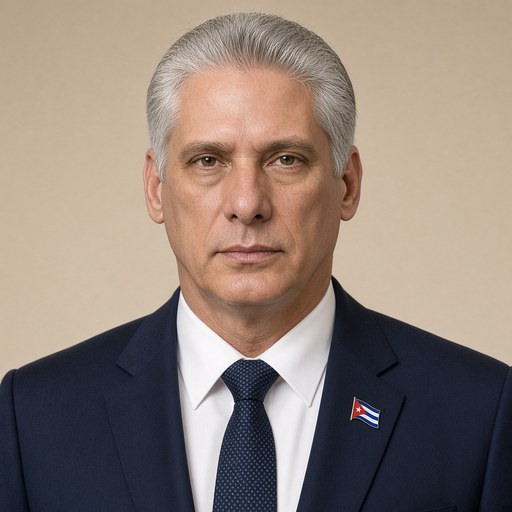
- Díaz-Canel addressed an international forum in Havana on January 30, 2023, celebrating the 170th anniversary of Cuban national hero José Martí's birth.
- Main themes
- José Martí's legacy and universality, Cuban solidarity and anti-blockade struggle, sowing ideas and consciousness, geopolitical reconfiguration and imperialism, rise of fascism and far-right movements, media manipulation and disinformation, global inequality and poverty, environmental and pandemic challenges, Latin American unity and Bolivarian ideal, Monroe Doctrine and U.S. interference, progressive intellectual vanguard, balance of the world
- Duration
- ~19 min
- Words
- 2,274
- Sentences
- 80
- Readability
- 29
- Grade
- 16.2
- Syntax
- 3.40
- Vocabulary
- 2.60
Translated from Spanish
The broad sphere of national life a sentence belongs to. Every sentence has an Arena, so it is the denominator the other indices are read against.
Other80 sentences in 53 paragraphs
Dear sisters and brothers;
Dear friends and Martí enthusiasts from all over who come to celebrate with us the 170th anniversary of our National Hero and Apostle of the Second Independence, José Martí:
Cuba highly values the response that so many prestigious personalities from different regions of the world have given to the call launched by the José Martí Project for International Solidarity. The enthusiastic presence of everyone here brings us great joy and deeply honors us.
It means a lot that around 620 academics, writers, journalists, teachers, students, workers, scientists, and specialists from various fields of knowledge, coming from nearly 90 countries, gather in Havana to reflect on Martí's thought and its impressive universality.
If Martí has brought you to us, regardless of political beliefs, it is because in each of you, in your lives or in your works, the ideals of that man who for Cubans is "the idea of good that he described," according to the unforgettable words of Fidel, ignited just as these events were beginning.
Today, a Cuba cruelly impacted by more than six decades of blockade opens its arms to you and receives you with gratitude, now facing a heightened blockade and a sustained campaign to discredit its political system with the goal, never abandoned, of isolating and subjugating us.
But the solidarity we have given and received as an irrenunciable value and principle of the Revolution cannot be blocked, just as the consciousness of the peoples cannot be annulled.
Twenty years ago, Commander in Chief Fidel Castro, who can be named without a shadow of a doubt as the best disciple of the Apostle, warned us:
"Against the sophisticated and destructive weapons with which they want to intimidate us and subject us to an unjust, irrational, and unsustainable world economic and social order: ¡sow ideas!, ¡sow ideas! ¡And sow ideas!; ¡sow consciousness!, ¡sow consciousness! ¡And sow consciousness!".
Sowing ideas and consciousness remains the answer as humanity enters the third decade of the 21st century, facing unprecedented challenges regarding the environment, the fight against viruses and pandemics, the escalation of armed conflicts accompanied by manipulations of all kinds in networks and traditional media, and an unbridled arms race. All of this contributing to the increasingly grave tragedy of hunger and extreme poverty, in contrast to the abhorrent increase in the opulence of a tiny number of privileged individuals in the world.
The most alarming tensions of the present are related to the sharp rejection by the main world power and its allies to accept the prominence of new economic powers and the consequent geopolitical reconfiguration.
We remain far from the "balance of the world" that Martí aspired to and to which Our America, now independent from European and American empires and united in the Bolivarian ideal, should contribute. The Monroe Doctrine, with its two hundred years of interference and interventions, is revived in the declarations and actions of the empire.
But in the United States, there also emerges, as a counterpoint to monroeism, an intellectual vanguard committed to the fate of those whom Martí called "the poor of the earth" and to denouncing the warlike adventures in which the current U.S. administration is involved.
Some representatives of that vanguard are with us today, and we greet them with gratitude and affection.
The possibility of systematically consolidating dialogue with that sector of independent thought in the United States encourages and comforts us. Their voices synthesize a very lucid vision and a great moral height and will be heard more and more inside and outside their country for their invaluable contributions to the noble mission of "sowing ideas" and "sowing consciousness".
At this particularly dramatic moment in history, we constantly see how lies, shamelessly repeated, influence electoral processes, and how emotions are manipulated in media and networks to demonize progressive leaders and favor far-right candidates.
Hegemonic media decide what deserves to become news and how it should be treated, responding to an unmovable agenda that precisely pursues imperial interests.
The debate of ideas is replaced by the most primitive exchange of slanders and insults while hate speech and expressions of fanaticism, polarization, intolerance, racism, and contempt for "the other" proliferate.
A hundred years after the March on Rome, organized in October 1922 by Mussolini, the resurgence of fascism is visible in different regions of the world.
For all these reasons, it is of utmost importance that we participate in the tribute to José Martí on the 170th anniversary of his birth, adding his contributions to this ecumenical, plural, multidisciplinary forum of thought for emancipation and cultural resistance.
Together we are raising here one of those "trenches of ideas" that, as Martí assured, "are worth more than trenches of stone".
Now more than ever, we need appropriate spaces to listen to each other, to reason collectively, to understand each other, to come closer in all that we may have in common, and to debate our differences in a cultured and civilized manner.
I fully subscribe to the platform outlined by the Organizing Committee: it is not possible to accept that globalization continues to be marked by "the selfishness of the powerful" and by "hegemonizing and excluding trends".
We are indeed obliged to work towards building "a world in balance, in peace (...), where diversity is respected, truly democratic, ecologically sustainable, socially just, and where the sovereignty of nations is affirmed." We must "fight for the balance of the world"! We must "impose dialogue over force" and "contribute to the formation of a thought that allows us to constructively face the complex and varied challenges of the 21st century".
Let us not forget that Fidel considered the globalization process as something inevitable; but he called for us all to found a "globalization of solidarity".
We will only advance in designing that superior future we need through honest and transparent dialogue, among equals, free from arrogant and haughty postures; only with the conscious exercise of cooperation and fraternity; only based on irrenunciable moral principles and adherence to multilateralism and the foundations of coexistence among nations; only renouncing hegemonic pretensions, blackmail, and impositions; only discarding the language of threats and weapons and adopting the language of reason and culture.
Dear friends:
The COVID-19 pandemic, from which the planet is still not fully liberated, leaves very harsh and bitter lessons. Just as values and virtues that uplift were manifested and there were notable examples of generosity, nobility, and solidarity, traits associated with a terrible ethical crisis that the world is experiencing were also revealed, linked to a system that promotes selfishness and fierce competitiveness. The most shameful profit-seeking around vaccines, medicines, and essential medical equipment was unleashed.
The crudely commercial vision of health services and the pharmaceutical industry showed the inhumane face of capitalism and neoliberalism. The lowest and meanest impulses in privileged sectors and political elites surfaced: the profit motive, insensitivity towards the vulnerable, the demagogic use of tragedy for electoral purposes, in short, money coldly deciding on life and death.
Cuba concentrated all its efforts on saving human lives. During the worst chapter of the pandemic, in the midst of a perversely intensified blockade, our scientists managed to create effective Cuban vaccines, and the country ranked among those with the highest vaccination rates worldwide. At the same time, we helped other countries. We demonstrated with actions that solidarity was the only way to face such a complex health crisis of global proportions.
We are indeed obliged to work towards building "a world in balance, in peace (...), where diversity is respected, truly democratic, ecologically sustainable, socially just, and where the sovereignty of nations is affirmed." Photo: Ismael Batista
Referring particularly to the Conference, it was very encouraging to review the scientific program and see the extraordinary richness of the topics discussed during these working days. It is undoubtedly a success to include in the framework of this great event an International Meeting of Martí Chairs, a Workshop of historians, and a Youth Forum, to mention just three notable examples.
It is stimulating that, in the midst of a global cultural crisis and the rise of pragmatic trends, Martí Chairs have taken solid root in many universities. The reading of Martí represents an exceptional antidote against the frivolous climate created by the hegemonic entertainment industry, the same industry that promotes forgetfulness and colonized versions of history.
Historians, along with professors and teachers, are key pieces in the path towards decolonization and emancipation. It is very valuable, on the other hand, that the nefarious Monroe Doctrine has been carefully analyzed, which, although it is 200 years old, continues to be used as an instrument of domination over the peoples of the south of the Río Bravo and as an attempt at imperial refutation of Bolivarian and Martí ideals.
Regarding the Youth Forum, the reflections made there are very useful contributions in the battle for cultural decolonization as another effort to stop the plan to dull the new generations, to push them towards frivolity, to distance them from all social commitment, from all responsibility, thanks to the torrent of trivial messages that flows through social networks, commercial propaganda, fashion industries, and the uncritical exaltation of the "rich and famous".
We must especially appreciate the presence that has been given to one of the most alarming and distressing dilemmas facing humanity: the climate crisis, provoked, as we know, by the irresponsible and ruthless plundering of the planet's resources carried out by large corporations with the suicidal complicity of ruling elites.
From Havana, from this event, many authoritative voices have raised a new alert that must be heard. Fidel was one of the world leaders who warned very early and with irrefutable arguments of the imminent danger of extinction facing the human species, and Cuba has followed his example in all international forums and has repeatedly insisted on the urgency of addressing with the utmost rigor and urgency what the vanguard of the global scientific community demands of us.
We are pleased to know that there are scholars in Europe studying Fidel's thought regarding climate change and other areas, who have come to share with us the results of their research. Likewise, it is beautiful to see that Martí's legacy continues to be studied in different regions and through very diverse perspectives. Cuba has that privilege: to have two men of colossal ethical and intellectual stature, very Cuban, deeply Latin American and Caribbean, and indisputably universal. Martí and Fidel are two definitive pillars of our culture, our history, and our destiny.
Furthermore, aside from the permanent presence of Martí and his brightest and most contributory disciple, Fidel, there has been discussion in these hours of such relevant educators as Simón Rodríguez, Bolívar's teacher, and the unforgettable Brazilian philosopher and educator Paulo Freire.
Among the axes of the Conference have also been essential concepts such as democracy and participation; the indissoluble links of humanism, science, and ethics, and the defense of peace in the most difficult circumstances. We are encouraged that so many women and men of thought have gathered in Cuba to discuss the ideas that can save us from so many traps and dead ends.
Together we are raising here one of those "trenches of ideas" that, as Martí assured, "are worth more than trenches of stone." Photo: Ismael Batista
With his sensitivity as a poet and essayist, the Cuban and Martí follower Roberto Fernández Retamar lamented the relevance of "Nuestra América" on the centenary of that unsurpassable text by José Martí.
Retamar said at that time: "This fact seems sad to me, for it implies, above all, that the empire against which Martí stood with David's sling is today a brash and quarrelsome Goliath (or, as the admirable American intellectual Noam Chomsky says, gangster-like), the contemporary Leviathan, the 'monster' in whose 'entrails' the Cuban lived in times that, compared to the present, seem a sweet spring."
What could you add today to Retamar's words about everything you have found in your studies of Martí's work as a sign, warning, alert, urgent notices that still need to be addressed and resolved?
I express Cuba's willingness to offer, from the presidency of the Group of 77 plus China, to promote debate and actions on these issues that concern all our peoples.
Let us continue to sow ideas and sow awareness, dear friends. Let us globalize love, respect, solidarity, and dialogue in the face of hatred, selfishness, abuses, contempt, and the degrading madness of believing that there are men and women superior to the rest.
We still have much to do so that the absolute validity of Martí's ideals stops hurting where it was not attended to and becomes the total confirmation of his revolutionary apostolate, of his visionary analysis of the profound imbalances that, instead of being resolved, have deepened.
Those who lived in his time recount that a man without education who guarded the door during a speech by Martí in Tampa, emotionally repeated one of his phrases, and some incredulously asked him if he really understood what he was saying, to which the man, with the last name Quiroga, replied: No, I didn’t understand much of what he said; but when he spoke, I felt like crying.
That was a profound expression of faith. The deep faith in his ideals and the truth as a guide allowed Martí, as later Fidel, to mobilize consciousness, make the Revolution, and sustain it, even without them present.
Both spoke and wrote tirelessly for their contemporaries and for ours. For their time and for this one.
Let us insist then on the most difficult task to which they dedicated all their energies: to balance the world!
Until Victory, Always!
(Cubaminrex-Granma)
The original Spanish. The tags above are read on the English translation's sentences.
Queridas hermanas y hermanos;
Queridas amigas y amigos martianos de todas partes que vienen a celebrar con nosotros los 170 años de nuestro Héroe Nacional y Apóstol de la Segunda Independencia, José Martí:
Cuba valora altamente la respuesta que tantas personalidades prestigiosas de distintas regiones del mundo dieron a la convocatoria lanzada por el Proyecto José Martí de Solidaridad Internacional. La entusiasta presencia de todos aquí nos alegra y nos honra profundamente.
Significa mucho que alrededor de 620 académicos, escritores, periodistas, maestros, estudiantes, trabajadores, científicos y especialistas de distintas ramas del saber, provenientes de cerca de 90 países, se reúnan en La Habana para reflexionar en torno al pensamiento martiano y a su impresionante universalidad.
Si Martí los ha traído hasta nosotros, al margen de credos políticos, es porque en cada uno de ustedes, de sus vidas o de sus obras, prendió el ideario de aquel hombre que para los cubanos es “la idea del bien que él describió”, según palabras inolvidables de Fidel, justo cuando se iniciaban estos eventos.
Hoy les abre los brazos y los recibe agradecida una Cuba cruelmente impactada por más de seis décadas de bloqueo, y ahora con bloqueo recrudecido y una sostenida campaña de desprestigio de su sistema político con el objetivo, jamás abandonado, de aislarnos y someternos.
Pero la solidaridad que hemos dado y recibido como valor y principio irrenunciable de la Revolución, no ha podido ser bloqueada, como no puede ser anulada la conciencia de los pueblos.
Hace 20 años el Comandante en Jefe Fidel Castro, quien puede nombrarse, sin sombra de duda alguna, como el mejor discípulo del Apóstol, nos advertía:
“Frente a las armas sofisticadas y destructoras con que quieren amedrentarnos y someternos a un orden económico y social mundial injusto, irracional e insostenible: ¡sembrar ideas!, ¡sembrar ideas! ¡Y sembrar ideas!; ¡sembrar conciencia!, ¡sembrar conciencia! ¡Y sembrar conciencia!”.
Sembrar ideas y conciencia sigue siendo la respuesta, cuando la Humanidad se adentra en la tercera década del siglo XXI, enfrentando retos inéditos en lo que concierne al medio ambiente, a la lucha contra virus y pandemias, a la escalada de conflictos bélicos acompañados por manipulaciones de toda índole en redes y medios tradicionales y por una desenfrenada carrera armamentista. Todo eso tributando a la tragedia cada vez más grave del hambre y de la pobreza extrema, en contraste con el incremento aberrante de la opulencia de un número ínfimo de privilegiados en el mundo.
Las más alarmantes tensiones del presente tienen que ver con el rechazo tajante de la principal potencia mundial y de sus aliados a aceptar el protagonismo de nuevas potencias económicas y el consiguiente reacomodo geopolítico.
Seguimos muy lejos del “equilibrio del mundo” al que aspiraba Martí y al que debía contribuir Nuestra América ya independiente de los imperios europeos y del estadounidense y unida en el ideal bolivariano. La Doctrina Monroe, con sus doscientos años de injerencia e intervenciones, reverdece en declaraciones y acciones del imperio.
Pero en los Estados Unidos también resurge, como contrapartida al monroísmo, una vanguardia intelectual comprometida con la suerte de aquellos que Martí llamó “los pobres de la tierra” y con la denuncia de las aventuras guerreristas en la que está involucrada la actual administración norteamericana.
Algunos representantes de esa vanguardia están hoy con nosotros, y los saludamos con agradecimiento y afecto (Aplausos).
La posibilidad de consolidar, de modo sistemático, el diálogo con ese sector del pensamiento independiente de los Estados Unidos nos anima y reconforta. Sus voces sintetizan una visión muy lúcida y una gran altura moral y serán escuchadas cada día más dentro y fuera de su país por los aportes de utilidad invaluable a la noble misión de “sembrar ideas” y “sembrar conciencia”.
En este momento particularmente dramático de la historia vemos constantemente cómo la mentira, repetida impúdicamente influye en los procesos electorales, y cómo se manipulan las emociones, en medios y redes, para satanizar a líderes progresistas y favorecer a candidatos de ultraderecha.
Los medios hegemónicos deciden qué merece convertirse en noticia y cómo debe ser tratada, respondiendo a una agenda inamovible que persigue puntualmente los intereses imperiales.
El debate de ideas es sustituido por el más primitivo intercambio de calumnias e injurias mientras proliferan los discursos de odio y las expresiones de fanatismo, polarización, intolerancia, racismo y desprecio hacia “el otro”.
A 100 años de la marcha sobre Roma, organizada en octubre de 1922 por Mussolini, el resurgimiento del fascismo es visible en distintas regiones del mundo.
Por todas estas razones es de la mayor importancia que participemos en el homenaje a José Martí en el 170 aniversario de su natalicio, sumando sus aportes a este foro ecuménico, plural, multidisciplinario, del pensamiento de la emancipación y de la resistencia cultural.
Juntos estamos levantando aquí una de esas “trincheras de ideas” que, como aseguró Martí, “valen más que trincheras de piedra”.
Hoy más que nunca necesitamos espacios apropiados para escucharnos, para razonar colectivamente, para entendernos, para aproximarnos en todo aquello que podamos tener en común y debatir de manera culta y civilizada nuestras discrepancias.
Suscribo plenamente la plataforma trazada por el Comité Organizador: no es posible aceptar que la globalización siga marcada por “el egoísmo de los poderosos” y por “tendencias hegemonizadoras y excluyentes”.
Estamos obligados, efectivamente, a trabajar en la edificación de “un mundo en equilibrio, en paz (…), donde se respete la diversidad, verdaderamente democrático, ecológicamente sustentable, socialmente justo y donde se afirme la soberanía de las naciones”. ¡Tenemos que “luchar por el equilibrio del mundo”! Hay que “imponer el diálogo sobre la fuerza” y “contribuir a la conformación de un pensamiento que permita enfrentar, de manera constructiva, los complejos y variados desafíos del siglo XXI”.
No olvidemos que Fidel consideró el proceso globalizador como algo inevitable; pero convocó a fundar entre todos una “globalización de la solidaridad”.
Solo avanzaremos en el diseño de ese futuro superior que necesitamos a través del diálogo honesto y transparente, entre iguales, ajeno a posturas soberbias y arrogantes; solo con el ejercicio consciente de la cooperación y de la fraternidad; solo a partir de principios morales irrenunciables y del apego al multilateralismo y a los fundamentos de la convivencia entre naciones; solo renunciando a pretensiones hegemónicas, a chantajes e imposiciones; solo desechando el lenguaje de las amenazas y de las armas y asumiendo el lenguaje de la razón y de la cultura.
Queridas amigas y amigos:
La pandemia de la COVID-19, de la que aún no se libera totalmente el planeta, deja lecciones muy duras y muy amargas. Así como se manifestaron valores y virtudes que enaltecen y hubo notables ejemplos de generosidad, de nobleza, de espíritu solidario, también se revelaron rasgos propios de la terrible crisis ética que vive el mundo, asociados a un sistema que promueve el egoísmo y una competitividad feroz. Se desató el más vergonzoso afán de lucro en torno a vacunas, medicamentos y equipos médicos imprescindibles.
La visión crudamente comercial de los servicios de salud y de la industria farmacéutica mostró el rostro inhumano del capitalismo y del neoliberalismo. Salieron a flote los impulsos más bajos y mezquinos en sectores privilegiados y en las cúpulas políticas: el afán de lucro, la insensibilidad hacia los desvalidos, el uso demagógico de la tragedia para fines electorales, en fin, el dinero decidiendo fríamente sobre la vida y la muerte.
Cuba concentró todos sus esfuerzos en salvar vidas humanas. Durante el peor capítulo de la pandemia, en medio de un bloqueo perversamente recrudecido, nuestros científicos lograron crear vacunas cubanas efectivas, y el país se colocó entre los de mayor índice de vacunación a nivel mundial. Al propio tiempo, ayudamos a otros países. Demostramos con hechos que la solidaridad era la única vía para enfrentar una crisis sanitaria tan compleja, de proporciones globales.
Estamos obligados, efectivamente, a trabajar en la edificación de “un mundo en equilibrio, en paz (…), donde se respete la diversidad, verdaderamente democrático, ecológicamente sustentable, socialmente justo y donde se afirme la soberanía de las naciones”. Foto: Ismael Batista
Refiriéndome particularmente a la Conferencia, fue muy alentador revisar el programa científico y comprobar la extraordinaria riqueza de los temas que se trataron durante estas jornadas de trabajo. Significa un acierto indudable la inclusión en el marco de este gran evento de un Encuentro internacional de Cátedras Martianas, de un Taller de historiadores y de un Foro Juvenil, por solo mencionar tres ejemplos notables.
Es estimulante que, en medio de una crisis cultural global y del auge de las tendencias pragmáticas, hayan echado raíces sólidas en muchas universidades las Cátedras Martianas. La lectura de Martí significa un antídoto excepcional frente al clima frívolo creado por la industria hegemónica del entretenimiento, la misma industria que promueve la desmemoria y las versiones colonizadas de la historia.
Los historiadores, junto a profesores y maestros, son piezas claves en el camino hacia la descolonización y la emancipación. Es muy valioso, por otra parte, que se haya analizado detenidamente la nefasta Doctrina Monroe que, aunque cumple 200 años, sigue siendo empleada como un instrumento de dominación sobre los pueblos del sur del Río Bravo y como un intento de refutación imperial de los ideales bolivarianos y martianos.
En cuanto al Foro Juvenil, las reflexiones que allí se hicieron resultan contribuciones muy útiles en la batalla por la descolonización cultural como un empeño más para frenar el plan de atontar a las nuevas generaciones, de empujarlas hacia la frivolidad, de apartarlas de todo compromiso social, de toda responsabilidad, gracias al torrente de mensajes triviales que fluye a través de las redes sociales, de la propaganda comercial, de las industrias de la moda y la exaltación acrítica de los “ricos y los famosos”.
Hay que agradecer en especial la presencia que ha tenido en este evento uno de los dilemas más alarmantes y angustiosos que afronta la especie humana: la crisis climática, provocada, como sabemos, por la depredación irresponsable y despiadada de los recursos del planeta que llevan adelante las grandes corporaciones con la complicidad suicida de las élites gobernantes.
Desde La Habana, desde este evento, muchas voces autorizadas lanzaron un nuevo llamado de alerta que debe ser escuchado. Fidel fue uno de los líderes mundiales que advirtió muy tempranamente y con argumentos irrebatibles el peligro inminente de extinción que corre la especie humana, y Cuba ha seguido su ejemplo en todos los foros internacionales y ha insistido reiteradamente en la urgencia de atender con el máximo rigor y la mayor premura lo que nos exige la vanguardia de la comunidad científica mundial.
Nos alegra conocer que hay en Europa estudiosos del pensamiento de Fidel en lo que respecta al cambio climático y en otras áreas, que han venido a compartir con nosotros los resultados de sus investigaciones. Del mismo modo, resulta hermoso comprobar que el legado de Martí sigue siendo estudiado en distintas regiones y a través de muy diversos puntos de vista. Cuba tiene ese privilegio: contar con dos hombres de colosal estatura ética e intelectual, muy cubanos, raigalmente latinoamericanos y caribeños e indiscutiblemente universales. Martí y Fidel son dos pilares definitivos de nuestra cultura, de nuestra historia y de nuestro destino.
Además, aparte de la presencia permanente de Martí y de su discípulo y continuador más brillante y aportador, Fidel, se ha hablado en estas horas de educadores tan relevantes como Simón Rodríguez, el maestro de Bolívar, y el inolvidable filósofo y pedagogo brasileño Paulo Freire.
Entre los ejes de la Conferencia han estado también conceptos esenciales como democracia y participación; los vínculos indisolubles de humanismo, ciencia y ética, y la defensa de la paz en las más difíciles circunstancias. Nos alienta que tantas mujeres y tantos hombres de pensamiento se hayan dado cita en Cuba para discutir en torno a las ideas que pueden salvarnos de tantas trampas y de tantos callejones sin salida.
Juntos estamos levantando aquí una de esas “trincheras de ideas” que, como aseguró Martí, “valen más que trincheras de piedra”. Foto: Ismael Batista
Con su sensibilidad de poeta y ensayista, el cubano y martiano Roberto Fernández Retamar se lamentaba de la vigencia de “Nuestra América” al cumplirse un siglo de aquel texto insuperable de José Martí.
Decía Retamar en aquel momento: “Este hecho me parece triste, pues implica, sobre todo, que el imperio contra el cual Martí se irguió con la honda de David, es hoy un Goliat bravucón y pendenciero (o, como dice el admirable intelectual norteamericano Noam Chomsky, gangsteril), el Leviatán contemporáneo, el ‘monstruo’ en cuyas ‘entrañas’ había vivido el cubano en tiempos que comparados con los actuales parecen una dulce primavera”.
¿Qué no podrían ustedes agregar hoy a esas palabras de Retamar sobre todo lo que han ido encontrando en sus estudios de la obra de Martí como señalamiento, advertencia, alerta, avisos de urgencia que estén por atenderse y resolverse todavía?
Les expreso la voluntad de Cuba para ofrecernos, desde la presidencia del Grupo de los 77 más China, a promover el debate y las acciones sobre estos temas que conciernen a todos nuestros pueblos.
Sigamos sembrando ideas y sembrando conciencia, queridas amigas y amigos. Globalicemos el amor, el respeto, la solidaridad, el diálogo frente al odio, el egoísmo, los atropellos, el desprecio, la denigrante locura de creer que hay hombres y mujeres superiores al resto.
Tenemos mucho que hacer todavía para que la absoluta vigencia del ideario martiano deje de doler donde no fue atendido y se convierta en la confirmación total de su apostolado revolucionario, de su visionario análisis de los profundos desequilibrios que en lugar de resolverse se han profundizado.
Cuentan los que vivieron su época que un hombre sin estudios que cuidaba la puerta durante un discurso de Martí en Tampa, repetía emocionado una de sus frases y algunos le preguntaron incrédulos si lo había entendido realmente, a lo que el hombre, de apellido Quiroga, contestó: No, yo no le entendí mucho lo que decía; pero cuando él hablaba yo tenía ganas de llorar (Aplausos).
Fue esa una expresión profunda de fe. La fe profunda en sus ideales y la verdad como guía le permitieron a Martí, como más tarde a Fidel, movilizar conciencia, hacer la Revolución y sostenerla, aun sin ellos presentes.
Los dos hablaron y escribieron infatigablemente para sus contemporáneos y para los nuestros. Para su tiempo y para este.
Insistamos entonces en la tarea más difícil y a la que ellos consagraron todas sus energías: ¡equilibrar el mundo!
¡Hasta la Victoria Siempre!
(Cubaminrex-Granma)