




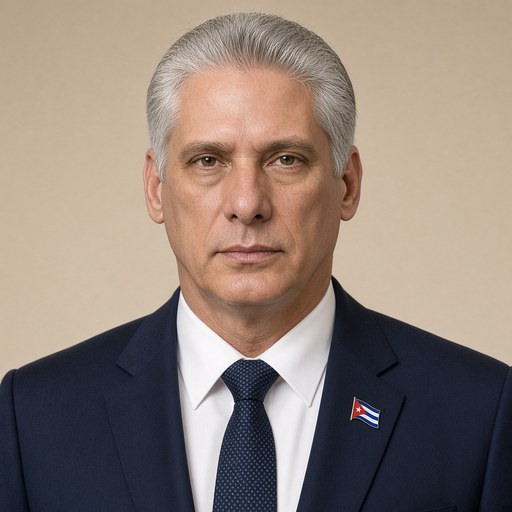
Final words at the Meeting with different sectors of society on the Family Code.
 Miguel Díaz-Canel · President of Cuba
- Context
- Díaz-Canel addressed Cuban society representatives at the Palace of the Revolution on September 22, 2022, urging support for the upcoming Family Code referendum.
- Main themes
- Family Code referendum, family diversity and inclusion, legal recognition of all family types, love as legal principle, Cuban society and social change, unity and diversity, religious and doctrinal opposition, generational rights, democratic legislative process, José Martí's philosophy
- Duration
- ~12 min
- Words
- 1,402
- Sentences
- 38
- Readability
- 38
- Grade
- 17.1
- Syntax
- 3.46
- Vocabulary
- 2.10
Translated from Spanish
The broad sphere of national life a sentence belongs to. Every sentence has an Arena, so it is the denominator the other indices are read against.
Other38 sentences in 22 paragraphs
I want to begin by infinitely thanking all of you for being here this afternoon at the Palace of the Revolution, sharing ideas and experiences from the sincere and intimate position with which you have expressed yourselves, and I believe this will also contribute greatly to the reflection of those who can appreciate the discussion and debate we have had today.
It must be said that you have shared, from your experiences, from truly sensitive and moving life stories, why this Code is important for all of us. From your own experiences, from your own narratives, I can also reaffirm my convictions regarding this law, and I can share them with our people by participating in this meeting.
I believe we need to pause and consider how the Family Code came about: it was born not only from the Law, but it was born from the people as a social necessity; our society had changed, we had recognized a heterogeneity in our society, and we needed a Code that was in line with that heterogeneity.
When one analyzes the Code in its twenty-five versions, written, revised, and agreed upon by experts from all disciplines related to family law, it is a norm conceived and created by the entire Cuban society, because it emerged from the everyday experiences of Cuban families over decades, from cases in law offices and courts, from complaints and lawsuits, from medical consultations and scientific debates, and from practices and experiences that were also analyzed inside and outside the country.
There is not a single article in the Code that does not have a basis in real life, because the Code is simply what we are. The Code is also Cuba, and it has provided us with a learning experience; it has taught us to be less selfish and to think more as a society, to be more inclusive, to work on the feelings of uplifting all that we can for our fellow human beings, for our compatriots.
I want to thank once again all those who have worked on its construction and perfection, to those who promote and defend it with solid arguments, to those who have shown us in that masterful exercise of education on family law the beautiful diversity that has been forged in this nation over the years, and even over the centuries. There is also a historical analysis of what Cuban society is.
The Code has values; the Code updates and perfects legal institutions, family relationships, the obligation to provide sustenance, marriage, common-law unions, filiation regardless of its origin, parental relationships, guardianship and protection, and progressive autonomy. It is a monumental work due to the amount of knowledge and experiences that comprise it and due to a wonderful uniqueness; it turned love into law, it also turned affection into law, and in that it reminds us of a Marti saying. Martí said: “Let love be the fashion. Let those who do not love be marked, so that the penalty may convert them.” And I believe we will achieve that with this Code.
It must also be recognized that in that diversity there are people of doctrine and faith who rightfully defend their conception. All I would suggest is to rethink, because unfortunately they have not come to understand that the Code does not deny their rights; the Code protects the type of family they defend, but also other types of families that exist, and here we have had witnesses to all that diversity.
The Code does not impose, the Code does not obligate, the Code does not decree that a particular type of family must exist; it recognizes all those that exist inspired by love and other human feelings. Therefore, denying the existence of other types of families is an act of exclusion that denies the inclusion present in that Code, and I believe that exclusion harms and holds us back.
One should ask: Why the Code now? Well, to deny its content would be to deny fundamental rights of millions of Cubans; it would mean remaining stuck in the 20th century when we are already living in the third decade of the 21st century. And the Yes must be now and not later, because later could be too late: people age and their life and family projects have a time to be realized, and it would be inconsistent to delay them if we have come to such humanistic valuations as those contemplated in this entire democratic process.
On the other hand, the generation that is currently being born and those to come have the right to be born under advanced laws in tune with their time. They tomorrow would not understand why we did not do it in this time, as many have told us in these months – and here are stories you have expressed – through painful experiences and life stories marked by suffering and misunderstanding, that they wish everything had been decided earlier and that they are waiting for those decisions after we approve the Code.
It is a Code of unity, the unity that is the talisman and the insurance of the Cuban nation and that was not possible in our history until we understood that to have unity we had to recognize diversity, and it has been a principle that we have also fostered to sustain unity in our America. Therefore, supporting the Code is betting on unity in diversity.
And the Yes vote, I believe, must be an affirmative, approving, confirming vote, a vote for progress, for development, for triumph, for the future, because the Family Code proposes above all, as the champion said, respect for the human being, respect for all; in it we are recognizing and accepting the differences that already exist in our society, it is simply rational, it is realistic; it provides the guarantees that allow us to form a family, to enjoy a family life free from discrimination and violence; it gives us the opportunity to be happy, the right to exist and also to be recognized, to grow in an environment of happiness, love, and understanding.
It proposes full equality between women and men, the full development of sexual and reproductive rights; it protects both motherhood and fatherhood; it promotes responsible development; it guarantees equality in filiation, respect for the free right of personality, of intimacy, for the personal and family life project that is chosen, and recognizes care as a right. I believe that is another category that we elevate to a superlative level with this Code.
It protects people and families in vulnerable situations and also those who are in situations of disability.
One can honestly disagree with one or more articles of the Code, but it would be a mistake to deny the entire Code for that reason; it would be to disregard that this disagreement exists precisely because of the wide diversity of interests on issues that the entirety of this norm addresses. Therefore, for me, it is a contradiction to appreciate on one hand the numerous contributions of the Code to family law and, at the same time, for one particular aspect, to deny the Code and deny all its significance.
Someone said a few days ago that it is essential to put oneself in the other’s shoes, to attend to and try to feel what other people feel, those who have suffered, to whom this Code is directed: to the homeless child, to the elderly who are not counted on to make transcendent decisions in the home they once founded; to the couple without natural offspring, to the person who has a sexual orientation towards someone of the same sex, to the family built by love that due to conventions and prejudices is forced to hide that love.
It is a Code of love and affection that protects all and highlights the solidarity of Cubans above selfishness and exclusion.
Therefore, I call, as Leonardo has said, to read it and interpret it with the heart, to vote with the heart, to vote for Cuba. And I am sure that on September 25, free, sovereign Cubans, masters of the chosen destiny, will exercise our right to vote.
Voting Yes means saying Yes to unity, to the Revolution, to socialism, and it means saying Yes to Cuba!
I am grateful for this meeting that also helps us grow in our convictions.
Thank you very much to all.
The original Spanish. The tags above are read on the English translation's sentences.
Quiero, ante todo, agradecer infinitamente a todos ustedes por haber estado esta tarde compartiendo aquí en el Palacio de la Revolución ideas, vivencias, desde la posición tan sincera y tan íntima con que ustedes se han expresado, y creo que esto va a aportar mucho también en la reflexión de las personas que puedan apreciar la discusión y el debate que hoy hemos tenido.
Hay que decir que ustedes han contado desde vivencias, desde historias de vida realmente sensibles y conmovedoras por qué es importante para todos nosotros este Código. Desde sus propias vivencias, desde sus propios relatos yo puedo también ratificar mis convicciones, las que tengo sobre esta ley, y también compartirlas con nuestro pueblo al participar en este encuentro.
Creo que tenemos que detenernos en cómo surgió el Código de las Familias: nació no solo desde el Derecho, sino nació desde el pueblo como una necesidad social, había cambiado nuestra sociedad, habíamos reconocido una heterogeneidad en nuestra sociedad y necesitábamos un Código que estuviera a tenor con esa heterogeneidad.
Cuando uno analiza el Código en sus veinticinco versiones, escrito, revisado, consensuado por expertos de todas las disciplinas relacionadas con el Derecho de las familias, es una norma concebida y creada por toda la sociedad cubana, porque emergió de experiencias cotidianas de las familias cubanas a lo largo de décadas, de casos en bufetes y tribunales, de denuncias y pleitos, de consultas médicas y debates científicos, y de prácticas y experiencias que también se analizaron dentro y fuera del país.
No hay un solo artículo del Código que no tenga un basamento en la vida real, porque el Código es sencillamente lo que somos. El Código también es Cuba y nos ha aportado un aprendizaje, nos ha enseñado a ser menos egoístas y a pensar más como sociedad, a ser más inclusivos, a trabajar los sentimientos de enaltecer todo lo que podamos a nuestros semejantes, a nuestros compatriotas.
Yo quiero agradecer una vez más a todos los que han trabajado en su construcción y en su perfeccionamiento, a quienes lo promueven y lo defienden con sólidos argumentos, a quienes nos han demostrado en ese ejercicio magistral de educación sobre Derecho de familia la hermosa diversidad que se ha forjado en esta nación a lo largo de años, e incluso a lo largo de siglos. También ahí hay un análisis histórico de lo que es la sociedad cubana.
El Código tiene valores, el Código actualiza y perfecciona las instituciones jurídicas, familiares, el parentesco, la obligación de dar alimento, el matrimonio, la unión de hecho, la filiación cualquiera que sea su origen, las relaciones parentales, la guarda y la protección y la autonomía progresiva. Es una obra monumental por la cantidad de saberes y experiencias que lo conforman y por una singularidad maravillosa; convirtió el amor en ley, convirtió también el afecto en ley, y en eso nos recuerda una sentencia martiana. Martí decía: “Que el amor sea la moda. Que se marque al que no ame, para que la pena lo convierta”. Y yo creo que eso lo vamos a lograr con este Código.
Hay que reconocer también que en esa diversidad hay personas de doctrina y de fe que con todo derecho defienden su concepción. Yo lo único que les sugeriría es volver a pensar, porque lamentablemente no han llegado a comprender que el Código no niega sus derechos; el Código lo que hace es proteger el tipo de familia que ellos defienden, pero también otros tipos de familias que existen, y aquí hemos tenido testigos de toda esa diversidad.
El Código no impone, el Código no obliga, el Código no decreta que debe existir algún tipo de familia en particular, reconoce todas las que existen inspiradas en el amor y en otros sentimientos humanos. Por lo tanto, negar la existencia de otros tipos de familias es un acto de exclusión que niega la inclusión presente en ese Código, y creo que la exclusión daña y nos atrasa.
Habría que preguntarse: ¿Por qué el Código ahora? Bueno, negar su contenido sería negar derechos fundamentales de millones de cubanas y cubanos; sería quedarnos asentados del siglo XX, cuando ya estamos viviendo la tercera década del siglo XXI. Y el Sí tiene que ser ahora y no más adelante, porque más adelante podría ser demasiado tarde: las personas envejecen y sus proyectos de vida y de familia tienen un tiempo para hacerse y sería inconsecuente entonces demorarlos, si hemos llegado a valoraciones tan humanistas como las que han estado contempladas en todo este proceso democrático.
Por otra parte, la generación que ahora mismo está naciendo y las que están por venir tienen derecho a nacer bajo leyes de avanzada en sintonía con su época. Ellas y ellos mañana no entenderían por qué no lo hicimos en este tiempo, como tantos en estos meses –y aquí hay historias que ustedes han expresado– nos han dicho a través de dolorosas experiencias e historias de vida marcadas por el sufrimiento y la incomprensión, que ojalá todo se hubiera decidido antes y que están esperando de esas decisiones posterior a que aprobemos el Código.
Es un Código de unidad, la unidad que es el talismán y el seguro de la nación cubana y que no fue posible en nuestra historia hasta que no comprendimos que para tener unidad había que reconocer la diversidad, y ha sido un principio que también hemos fomentado para sostener la unidad en nuestra América. Por lo tanto, apoyar el Código es apostar por la unidad en la diversidad.
Y el voto Sí, yo creo que tiene que ser un voto afirmativo, aprobativo, confirmativo, de avance, de desarrollo, de triunfo, de futuro, porque el Código de las Familias plantea ante todo, como dijo el campeón, el respeto al ser humano, el respeto a todas y todos; en él estamos reconociendo y estamos aceptando las diferencias que ya existen en nuestra sociedad, sencillamente es racional, es realista; da las garantías que nos permiten constituir una familia, disfrutar una vida familiar libre de discriminación y violencia; nos da la oportunidad de ser felices, el derecho a existir y además a ser reconocidos, a crecer en un entorno de felicidad, de amor y de comprensión.
Plantea la igualdad plena entre mujeres y hombres, el desarrollo pleno de los derechos sexuales y reproductivos; protege tanto la maternidad como la paternidad; promueve el desarrollo responsable; garantiza la igualdad filiatoria, el respeto al libre derecho de la personalidad, de la intimidad, al proyecto de vida personal y familiar que se escoja, y reconoce el cuidado como derecho. Creo que esa es otra categoría que llevamos a un nivel superlativo con este Código.
Protege a las personas y familias en situación de vulnerabilidad y también a los que están en situación de discapacidad.
Se puede discrepar honestamente en alguno o más artículos del Código, pero sería un error negar todo el Código por eso; sería desconocer que esa discrepancia existe justamente por la amplia diversidad de intereses de temas que atiende la totalidad de esta norma. Por lo tanto, para mí es un contrasentido apreciar por una parte los numerosos aportes del Código al derecho de la familia y, al mismo tiempo, por un aspecto en particular, negar el Código y negar toda su transcendencia.
Alguien decía hace unos días que es imprescindible ponerse en la piel del otro, atender y tratar de sentir lo que sienten las demás personas, las que han sufrido, a las que está orientado este Código: a la niña o el niño sin hogar, a los ancianos con quienes no se cuenta para tomar decisiones trascendentales en el propio hogar que ellos un día fundaron; a la pareja sin descendencia natural, a la persona que tiene orientación sexual hacia una persona del mismo sexo, a la familia armada por el amor que debido a convenciones y a prejuicios es obligada a esconder ese amor.
Es un Código de amor y de afectos que protege a todas y a todos y destaca la solidaridad de cubanas y cubanos por encima del egoísmo y de la exclusión.
Por lo tanto, yo convoco, como ha dicho Leonardo, a leerlo e interpretarlo con el corazón, a votar con el corazón, a votar por Cuba. Y estoy seguro de que el 25 de septiembre cubanas y cubanos libres, soberanos y dueños del destino elegido ejerceremos nuestro derecho al voto.
¡Votar Sí, es decir Sí por la unidad, por la Revolución, por el socialismo, y es decir Sí por Cuba!
Agradecido por este encuentro que también nos hace crecernos en nuestras convicciones.
Muchas gracias a todos.