





- Context
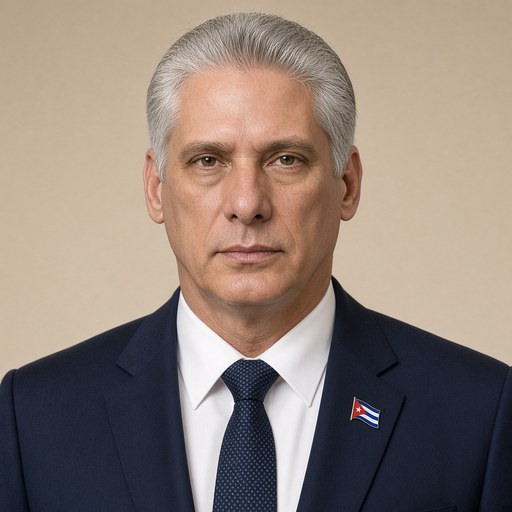
- Díaz-Canel addressed a July 26th anniversary celebration in Cienfuegos, Cuba, marking the Moncada Barracks assault and defending the Revolution amid ongoing US sanctions.
- Main themes
- Cuban Revolution anniversary, anti-imperialism and blockade resistance, historical memory and youth education, socialism and social justice, pre-revolutionary inequality, US economic war against Cuba, pandemic control achievements, national identity and revolutionary heritage, territorial development, media and ideological struggle
- Duration
- ~26 min
- Words
- 3,157
- Sentences
- 124
- Readability
- 33
- Grade
- 15.0
- Syntax
- 3.01
- Vocabulary
- 2.35
Translated from Spanish
The broad sphere of national life a sentence belongs to. Every sentence has an Arena, so it is the denominator the other indices are read against.
Other124 sentences in 75 paragraphs
Dear Army General Raúl Castro Ruz, leader of the Cuban Revolution;
Present Moncadistas;
Friends of the solidarity movement with Cuba who accompany us;
Dear, combative, and revolutionary people of Cienfuegos;
Compatriots:
We are already on the 26th! We return to Cienfuegos and we return to an in-person event after two years without celebrations of this kind.
This possibility is the result of a feat: the control of the pandemic, under the conditions of a six-decade economic war, with our own efforts and resources.
And it is also an opportunity: it allows the leadership of the Party and the Government to recognize and highlight the results of a territory.
The traditional beauty of the Pearl of the South, which has multiplied in the works in salute to July 26, shows us how much can impact our territories and our eternal celebrations those associated with a historic day. That adds another fundamental value.
Next year marks 70 years since those assaults that changed the history of Cuba. The living protagonists come out of the books to explain to students the reasons that led them to sacrifice their young lives on the altar of the Homeland, with no certainty other than faith in their ideals.
Now they are here, and it is a great honor for us to know the testimony of their revolutionary lives, in which they shared battles and sleepless nights with Fidel, Raúl, Ramiro, Almeida, Abel, Haydeé, and Melba, not only during that action but in the seven decades that followed. Their valuable memories are part of our way of understanding and loving the Revolution with the deep conviction that we are part of it.
But that experience also poses a challenge in the training of new generations, those who, for biological reasons, will no longer have the opportunity to know the heroes of a fundamental chapter in national history up close. So fundamental that it is impossible to explain Cuban socialism without the reasons that led Fidel and the Generation of the Centenary to assault barracks with simple rifles and an arsenal of ideas.
The imperial logic, which we have spoken about in recent days, bets on amnesia and social paralysis. They intend that, under the pressure of the material needs generated by their infamous 63-year blockade, the spirit of resistance of the people will falter and that even the last generation will forget why a socialist revolution was made by the humble, with the humble, and for the humble, 90 miles from the American dream.
It also bets on alienation, that history will be just a past of sacrifices from which new generations must escape if they want to have a place in the "vanity fair," in the illusion forged by the universal entertainment industry, according to which a beautiful and satisfied middle class enjoys the benefits of modernity, an exclusive territory for winners who will be served by the excluded from the system.
In that world of forgetfulness, History Will Absolve Me would cease to interest young people, because it is from another time and was made to cure other ills.
In the unlikely event that this were to happen, as our Venezuelan brothers say, it would be difficult for future Cubans to know that when American companies were practically owners of Cuba, their great allies were the army, the police, eviction, the machete plan, torture, and death.
They would ignore that the great majorities had no ownership of the land they worked, nor of the houses they lived in. That, in general, the poor and the black and mestizo could only enter through the back door of businesses and mansions. That women were at a total social disadvantage compared to men. That the most recurrent image in urban landscapes was that of street children: shoeshiners, newspaper sellers, messengers of any business, homeless, sick, and hungry. And the most common sight in rural landscapes was childhood with bellies swollen with parasites.
Not all the acts we have yet to celebrate would suffice, and I assure you that we will celebrate, to expose the reasons why those young people, who today are the venerable grandparents or great-grandparents of the new ones, renounced their personal dreams and sold what little they had to go to an uncertain combat.
The media that oppose us will surely say tomorrow that the Cuban President lashed out at capitalism with "rhetoric of the past."
The truth is just the opposite. We are interested in preventing the past from returning. The future cannot be the past! Because the Cuba of the day after, the one they dream of sending us with Yankee gunboats and on deck the infamous congressmen who vote there in favor of all the laws against their own country of origin, that Cuba would be a return to the day after the assault on Moncada: a bloodbath, a revenge of hatred, and the reinstatement of everything that the assailants intended to change and that only the Revolution transformed forever.
Although in the midst of a regrettable and long blackout mixed with the suffocating summer of these days some may feel that nothing is worse than the streak of negative events we have been suffering and seek relief by cursing, deep down in their souls everyone understands that, inefficiencies aside, the blockade is at the root, in the trunk, in the branches, and in the fruits of our economic difficulties.
And, although he will not publicly acknowledge it, even an annexationist knows that the Cuban problems will not be resolved by those who created and maintain them with absolute contempt for the world’s condemnation of that scandalous abuse that has lasted for more than half a century.
Cuba is not alone! It has never been! Cuba represents not only the alternative to the unjust and exclusionary order that prevails in the world. We are also the possibility for that world to prove that there is space for all ideas and political systems; for democracy, so often proclaimed as violated, to be recognized in all its diversity.
Socialism cannot continue to be defamed in the name of freedom while all doors are closed to trade, finance, and business for the countries that we attempt it.
The economic, financial, and commercial blockade, the furious persecution that has become that policy of a powerful empire against a small nation is, right now, the best proof that socialism does work, because even under the fire that means being blocked we have raised a work of social justice that places us at the level of the most advanced countries in key indicators of human development such as infant mortality, life expectancy at birth, access to health, education, culture, or sports, and levels of citizen security and protection.
In the midst of the deep and sustained shortages of so many years, under the suffocating pressures of a war economy – because that is an economy under blockade – we have never renounced the socialist aspiration to benefit everyone, offering them multiple possibilities for human realization.
We believe above all in happiness as a result of personal and collective fulfillment, based on the real possibilities of each individual to access knowledge and participate actively in the society in which they live.
We have achieved something in that endeavor. It is evident in the signs that distinguish the Cuban emigrant from the tens of thousands of their peers from the rest of the world. Most of ours have education for which their families did not have to pay, even specialized studies of the highest level that in other countries burden the graduate for a lifetime.
In general, they are distinguished by their knowledge and the quality of their professional training, as well as the different treatment they receive for political reasons. Although practically no one talks about the Cuban Adjustment Act anymore, that differentiated treatment of our nationals to feed the anti-socialist discourse by declaring a non-existent persecution is part of the central objective of the war against the Cuban Revolution: to crush the alternative, demonize socialism, and prevent other peoples from being inspired by this experience.
There is no other explanation for the maintenance of the blockade against Cuba, so incompatible with the discourses of freedom, democracy, and human rights that American politicians love to preach. All the rhetoric against Cuban socialism clashes and denies itself in the face of that undeniable truth.
Our conclusion is that the blockade is maintained because without it this country would be a model of human society too subversive for the world order. And those who think otherwise from the "other side of the street," from those who impose and maintain the blockade against all civilized and humanist logic, should lift it totally and unconditionally now! Take away our pretext!
If they take away that pretext, then the world will respect you and will judge Cuba.
Compatriots:
In the time that has passed since the last celebration of July 26, we approved a new Constitution and legal norms that place the country at the forefront in guaranteeing rights for all, as has just been verified in the most recent sessions of the National Assembly, by approving the monumental Family Code. I call on you to support it in the referendum in September.
The debates on those sensitive issues have awakened consciences and deepened knowledge about the diverse and plural Cuban society, which has not ceased to shake off burdens, prejudices, and brakes since the Revolution triumphed.
In that same period, American society has regressed almost a century in terms of women's rights, by denying the existence of the constitutional right to abortion. In addition, it has sparked global solidarity in the face of the epidemic of shootings and massacres in schools and public places.
Few times has the contrast drawn by Martí been so clear when describing the two halves of the continent, the two Americas that grew in opposite directions: the “one that must be saved with its Indians, and goes from less to more … [and the] one that drowns its Indians in blood, and goes from more to less.”
When we evaluate the harsh circumstances we have gone through in the last year, since the complex days of July 2021, it is fair to highlight the international solidarity among the forces that our country has counted on as support for its impressive resistance.
In July of last year, under great pressure, the United States managed to obtain the pronouncement of a handful of countries, apparently concerned about what was happening in Cuba, while ignoring or turning a blind eye to the harsh conditions to which millions of people were subjected under the impact of COVID-19.
It is still moving to remember the formidable expressions of support from governments, parliamentarians, political organizations, friendship groups, artists, intellectuals, leaders, and religious groups, as well as individuals from all over the world who sympathize with just causes and oppose abuse. Among them stand out the numerous expressions of solidarity and empathy from people of Cuban origin residing in many countries, including the United States.
In the face of the evident material shortages suffered during the most critical moments of the pandemic, Cuba received solidarity support from several governments of friendly countries, as well as from groups and individuals. That help has not been limited to important material resources to support the efforts of the Public Health System to face the pandemic, but has also included food and other sensitive supplies for the consumption of the population.
To cite only the most significant, we received valuable shipments for the direct benefit of our people from Venezuela, Bolivia, Mexico, Vietnam, Nicaragua, China, Russia, Italy, Japan, Saint Vincent and the Grenadines, and the Dominican Republic, among others.
About 170 companies and entrepreneurs from 29 countries, and 171 friendship associations, solidarity groups, and Cubans residing abroad from 43 countries, provided us with assistance.
From the United States even, we have counted, particularly in the last year, on repeated expressions of friendship and commitment from organizations such as Pastors for Peace, the Venceremos Brigade, Code Pink, Bridges of Love, Answer Coalition, The People’s Forum, Wyckoff Medical Center, Alianza Martiana, to name just a few. Also the support of the Puerto Rican brigade Juan Rius Rivera and the youth of the Party for Socialism and Liberation of the United States, here present.
These join many other expressions from organizations in Latin America and the Caribbean, Europe, Africa, Asia, and the Middle East, with a long history and tradition of support for the Cuban Revolution and opposition to American aggression.
We received, simultaneously, vigorous political expressions of support and solidarity.
First of all, I highlight the beautiful words about Cuba, pronounced by the President of the United Mexican States, Andrés Manuel López Obrador, when commemorating the 238th anniversary of the birth of the Liberator Simón Bolívar.
That heartfelt message from the beloved people of Mexico to the Cuban people, in recognition of our dignified resistance against the criminal blockade of the United States, has been reiterated more than once in AMLO's morning briefings with the overwhelming force of coherence and truth.
The publication in a full-page of the influential newspaper The New York Times of a powerful call for Cuba to be allowed to live, and the subsequent projection of that call on a facade in the central Union Square, in New York City, constituted powerful expressions of solidarity at a time when we were going through the most difficult stages of the pandemic, the effects of the intensification of imperialist hostility, and the fierce campaign of slander and discredit against Cuba.
These are just the most visible expressions of an active and unwavering solidarity that has not been able to be overshadowed or destroyed by the campaigns of boycott and lies against the Revolution. A historical exercise of affection among nations, which does not appear in laws but has been inscribed with indelible ink in the DNA of the Cuban people.
Solidarity and internationalism have guided Cuba's foreign policy since the revolutionary triumph of 1959. Over the years, we have known how to share and embrace the just causes of other peoples, almost always based on shared sacrifice.
From very early on, we have considered that we have a debt of gratitude to international solidarity. Therefore, those who think it is possible to isolate Cuba will always be mistaken. We enjoy broad and active relations with practically the entire international community. Every year, the member states of the United Nations vote almost unanimously against the economic blockade of the United States, and our country has recognition, prestige, and authority for its contribution to international cooperation and its active and constructive participation in international forums.
Compatriots:
In the recently concluded sessions of the National Assembly, measures were announced that seek to mobilize, in the shortest possible time, supplies and financial resources that we currently lack. In the coming weeks, details of their implementation will be provided. If we want to achieve positive results in less time, it is essential to act with responsibility, seriousness, and discipline.
Many friends and admirers of our process continuously ask us what the Revolution is today. Not in concept, which Fidel already gave us, but in the way it is verified in practice.
That answer will correspond to social scientists, to scholars of revolutionary processes, who will be able to distinguish better than we do what we are doing. However, I have some terms very clear: democracy and popular participation, humanism, the will to transform, creativity, innovation, commitment, ideals, and revolutionary passion.
We can add other experiences that we gain from developing the direction of the country in direct contact with the people. Under pressure, the needs—which have grown and deepened throughout Cuba with the scourge of the reinforced blockade, the pandemic, and the impact of all the crises that the planet suffers—awaken in some selfishness, ambitions, and attitudes as harmful as corruption, which undermine even the greatest efforts of the State to cushion inequalities and address vulnerabilities.
The years of harmful egalitarianism are over, but social justice remains our guide. It is what sustains the balance of a society like ours; we cannot leave it in discourse.
It is a fact that where local governments neglect the essential control and underestimate the capacity of natural leaders and neighborhood organizations, crime weakens social work.
We know it. The people denounce it. Corruption is a cancer that corrodes everything, that irritates, that demobilizes, and that goes against the socialist ideal. We will not allow it to invade us; we fight it and will continue to do so without respite.
Comrades:
Considering the dramatic conditions in which the entire planet operates today, besieged by the multiple crises generated by climate change, wars, pandemics, corruption, organized crime, and other evils, we have some advantages to face it: the accumulated experience in the degree of creative resistance—as I like to call it—clear objectives and priorities, and the unity, the dear and precious unity conquered over years of struggle, after many setbacks and as a reward for successive victories of the Martian and Fidelista ideals of the Revolution.
At the beginning of our event this morning, we heard words from Fidel in one of the first celebrations of July 26 in the 1960s.
I would like to reiterate them now as an expression of the links of history that explain the enigma of a victorious Revolution:
“If we had given up after Moncada, or if we had given up after Granma, or when we were left with very few men, when we regrouped seven men with rifles, if we had accepted the idea of defeat, we would have been defeated. We were not defeated simply because we never adopted the idea of defeat.
“And that must always be our attitude, and that must be the great lesson of our history (…)
“The assault on Moncada can be said to constitute the first assault on one of the many fortresses that would have to be taken later. There were many Moncadas left to take. Among other things, there was the Moncada of illiteracy, and our people did not hesitate to attack that fortress; they attacked it and took it; the Moncada of ignorance; the Moncada of inexperience; the Moncada of underdevelopment; the Moncada of the lack of technicians, of the lack of resources in all areas. And our people have not hesitated to also undertake the assault on those fortresses…” End of quote, which fits very well with the current moments.
It is our generation's turn to assault the fortresses of economic inefficiency, bureaucracy, insensitivity, and hatred. On their ruins, we will build the possible prosperity. Without ceasing to demand Down with the blockade!
Let us make a better country ourselves!
History gives us strength, inspires us, drives us, and encourages us! If they could, we can!
Eternal glory to the heroes and martyrs of July 26!
Until Victory, Always!
Socialism or Death!
Homeland or Death!
We will overcome!
The original Spanish. The tags above are read on the English translation's sentences.
Querido General de Ejército Raúl Castro Ruz, líder de la Revolución Cubana;
Moncadistas presentes;
Amigas y amigos del movimiento de solidaridad con Cuba que nos acompañan;
Querido, combativo y revolucionario pueblo cienfueguero (Aplausos) ;
Compatriotas:
¡Ya estamos en 26! Volvemos a Cienfuegos y volvemos a un acto presencial después de dos años sin celebraciones de este tipo.
Esta posibilidad es fruto de una proeza: el control de la pandemia, bajo las condiciones de una guerra económica de seis décadas, con esfuerzos y recursos propios.
Y es también una oportunidad: le permite a la dirección del Partido y el Gobierno reconocer y destacar los resultados de un territorio.
La tradicional belleza de la Perla del Sur, que se ha multiplicado en las obras en saludo al 26 de Julio, nos muestra cuánto pueden impactar en nuestros territorios y en nuestras eternas celebraciones las que son asociadas a un día histórico. Eso le añade otro valor fundamental.
El año próximo se cumplirán 70 de aquellos asaltos que cambiaron la historia de Cuba. Los protagonistas vivos salen de los libros para explicarles a los estudiantes las razones que los llevaron a sacrificar sus jóvenes vidas en el altar de la Patria, sin más certeza que la fe en sus ideales.
Ahora están aquí y nos honra enormemente conocer el testimonio de sus vidas revolucionarias, en las que compartieron combates y desvelos con Fidel, Raúl, Ramiro, Almeida, Abel, Haydeé y Melba, no solo durante aquella acción, sino en las siete décadas posteriores. Sus valiosas memorias son parte de nuestro modo de entender y amar a la Revolución con la profunda convicción de que somos parte de ella.
Pero esa experiencia nos plantea también un desafío en la formación de las nuevas generaciones, las que por razones biológicas no tendrán ya la posibilidad de conocer de cerca a los héroes de un capítulo fundamental de la historia nacional. Tan fundamental, que no es posible explicar el socialismo cubano sin las razones que llevaron a Fidel y a la Generación del Centenario a asaltar cuarteles con sencillos fusiles y un arsenal de ideas.
La lógica imperial, de la que hemos hablado en estos días, apuesta a la amnesia y a la parálisis social. Pretenden que, bajo la presión de las necesidades materiales generadas por su infame bloqueo de 63 años, claudique el espíritu de resistencia del pueblo y hasta la última generación olvide por qué se hizo una Revolución socialista de los humildes, con los humildes y para los humildes a 90 millas del sueño americano.
También apuesta a la enajenación, a que la historia sea solo un pasado de sacrificios de los que deben escapar las nuevas generaciones si quieren tener un lugar en la “feria de las vanidades”, en la ilusión forjada por la industria del entretenimiento universal, según la cual una clase media bonita y satisfecha disfruta de las bondades de la modernidad, territorio exclusivo para triunfadores que serán servidos por los excluidos del sistema.
En ese mundo de olvidos, La historia me absolverá dejaría de interesar a los jóvenes, porque es de otro tiempo y se hizo para curar otros males.
En el supuesto negado de que eso ocurriera, como dicen los hermanos venezolanos, difícilmente los cubanos del futuro llegarían a saber que cuando las empresas norteamericanas eran prácticamente dueñas de Cuba, sus grandes aliados eran el ejército, la policía, el desalojo, el plan de machete, la tortura y la muerte.
Ignorarían que las grandes mayorías no tenían propiedad sobre la tierra que trabajaban, ni sobre las casas donde vivían. Que, en general, los pobres y los negros y mestizos solo podían entrar por la puerta trasera de los negocios y las mansiones. Que las mujeres estaban en total desventaja social frente a los hombres. Que la imagen más recurrente en los paisajes urbanos era la de los niños de la calle: limpiabotas, vendedores de diarios, mensajeros de cualquier negocio, desamparados, enfermos y hambrientos. Y lo más común en los paisajes rurales era una infancia con los vientres inflamados de parásitos.
No bastarían todos los actos que nos faltan por celebrar, y les garantizo que celebraremos, para exponer las razones por las que aquellos jóvenes, que hoy son los venerables abuelos o bisabuelos de los nuevos, renunciaron a sus sueños personales y vendieron lo poco que tenían para irse a un combate incierto.
Los medios que nos adversan seguramente dirán mañana que el Presidente cubano cargó contra el capitalismo con “retórica del pasado”.
La verdad es justamente lo contrario. Nos interesa impedir que el pasado vuelva. ¡El futuro no puede ser el pasado! Porque la Cuba del día después, esa que sueñan mandarnos con las cañoneras yanquis y sobre cubierta los infames congresistas que allá votan a favor de todas las leyes contra su propio país de origen, esa Cuba, sería el retorno al día después del asalto al Moncada: un baño de sangre, una revancha del odio y la reinstauración de todo aquello que los asaltantes pretendían cambiar y que solo la Revolución transformó para siempre.
Aunque en medio de un lamentable y largo apagón mezclado con el sofocante verano de estos días algunos pueden sentir que nada es peor que la racha de eventos negativos que venimos sufriendo y buscan alivio maldiciendo, en el fondo de sus almas todos comprenden que, ineficiencias aparte, el bloqueo está en la raíz, en el tronco, en las ramas y en los frutos de nuestras dificultades económicas.
Y, si bien no lo reconocerá públicamente, hasta un anexionista conoce que los problemas cubanos no van a resolverlos quienes los han creado y los mantienen con absoluto desprecio por la condena mundial a ese escandaloso abuso que dura ya más de medio siglo.
¡Cuba no está sola! ¡No lo ha estado nunca! Cuba representa no solo la alternativa al orden injusto y excluyente que impera en el mundo. Somos también la posibilidad que tiene ese mundo de probar que hay espacio para todas las ideas y sistemas políticos; para que la democracia, tan proclamada como violada, sea reconocida en toda su diversidad.
El socialismo no puede seguir siendo difamado en nombre de la libertad, mientras se le cierran todas las puertas para el comercio, las finanzas, los negocios a los países que lo intentamos.
El bloqueo económico, financiero y comercial, la rabiosa persecución en que se ha convertido esa política de un imperio poderoso contra una pequeña nación es, ahora mismo, la mejor prueba de que sí funciona el socialismo, porque aun bajo el fuego que significa estar bloqueados hemos levantado una obra de justicia social que nos coloca al nivel de los países más avanzados en indicadores claves del desarrollo humano como la mortalidad infantil, la esperanza de vida al nacer, el acceso a la salud, la educación, la cultura o el deporte y los niveles de seguridad y protección ciudadanas.
En medio de las profundas y sostenidas escaseces de tantos años, bajo las asfixiantes presiones de una economía de guerra –porque eso es una economía bajo bloqueo–, no hemos renunciado jamás a la aspiración socialista de beneficiar a todos, ofreciéndoles múltiples posibilidades de realización humana.
Creemos sobre todo en la felicidad como resultado de la realización personal y colectiva, a partir de las posibilidades reales de cada individuo de acceder al conocimiento y participar activamente en la sociedad en la que vive.
Algo hemos logrado en ese empeño. Se advierte en las señales que distinguen al emigrante cubano de las decenas de miles de sus iguales del resto del mundo. La mayoría de los nuestros tienen estudios por los cuales sus familiares no tuvieron que pagar, incluso estudios especializados, de altísimo nivel que en otros países endeudan al graduado para toda la vida.
En general los distingue el conocimiento y la calidad de su formación profesional, tanto como el diferente trato que reciben por razones políticas. Aunque prácticamente nadie hable ya de la Ley de Ajuste Cubano, ese tratamiento diferenciado a nuestros nacionales para que alimenten el discurso antisocialista declarando una persecución inexistente, es parte del objetivo central de la guerra contra la Revolución Cubana: aplastar la alternativa, demonizar el socialismo, evitar que otros pueblos se inspiren en esta experiencia.
No hay otra explicación para el sostenimiento del bloqueo contra Cuba, tan incompatible con los discursos de libertad, democracia y derechos humanos que tanto les gusta dictar a los políticos norteamericanos. Toda la retórica contra el socialismo cubano choca y se niega a sí misma frente a esa innegable verdad.
Nuestra conclusión es que el bloqueo se mantiene porque sin él este país sería un modelo de sociedad humana demasiado subversivo para el orden mundial. Y quienes opinen lo contrario desde la “acera de enfrente”, desde los que imponen y sostienen el bloqueo contra toda lógica civilizada y humanista, ¡que lo levanten total e incondicionalmente ya! ¡Quítennos el pretexto! (Aplausos.)
Si nos quitan ese pretexto, entonces el mundo los va a respetar a ustedes y juzgará a Cuba.
Compatriotas:
En el tiempo transcurrido desde la última celebración del 26 de Julio, aprobamos una nueva Constitución y normas jurídicas que colocan al país a la vanguardia en la garantía de los derechos para todos, como acaba de verificarse en las más recientes sesiones de la Asamblea Nacional, al aprobar el monumental Código de las Familias. Los convoco a respaldarlo en el referendo de septiembre.
Los debates sobre esos sensibles temas han despertado conciencias y han profundizado el conocimiento sobre la diversa y plural sociedad cubana, que no ha dejado de sacudirse lastres, prejuicios y frenos desde que triunfó la Revolución.
En ese mismo periodo, la sociedad norteamericana retrocedió casi un siglo en cuanto a derechos de la mujer, al negar la existencia del derecho constitucional al aborto. Además, concitó la solidaridad mundial frente a la epidemia de tiroteos y masacres en las escuelas y lugares públicos.
Pocas veces fue tan claro el contraste que dibujó Martí al describir a las dos mitades del continente, las dos Américas que crecían en sentido inverso: la “que ha de salvarse con sus indios, y va de menos a más … [y la] que ahoga en sangre a sus indios, y va de más a menos”.
Cuando evaluamos las duras circunstancias por las que hemos transitado en el último año, desde los complejos días de julio de 2021, es justo destacar la solidaridad internacional entre las fuerzas con las que ha contado nuestro país como apoyo a su impresionante resistencia.
En julio del año pasado, a fuerza de grandes presiones, Estados Unidos logró el pronunciamiento de un puñado de países, aparentemente preocupados por lo que acontecía en Cuba, mientras ignoraban o cerraban los ojos ante las duras condiciones a las que se sometía a millones de personas bajo el impacto de la COVID-19.
Todavía emociona recordar las formidables expresiones de respaldo de gobiernos, parlamentarios, organizaciones políticas, grupos de amistad, artistas, intelectuales, líderes y agrupaciones religiosas, movimientos sindicales y sociales, además de individuos de todas partes del mundo que simpatizan con las causas justas y se oponen al abuso. Entre ellos destacan las numerosas expresiones de solidaridad y empatía de las personas de origen cubano residentes en muchos países, incluyendo los Estados Unidos.
Frente a las evidentes carencias materiales padecidas en los momentos más críticos de la pandemia, Cuba recibió respaldo solidario de varios gobiernos de países amigos, así como de grupos e individuos. Esa ayuda no se ha limitado a recursos materiales importantes de apoyo al esfuerzo del Sistema de Salud Pública para enfrentar la pandemia, sino que ha incluido alimentos y otros insumos sensibles para el consumo de la población.
Por citar solo los más significativos, nos llegaron valiosos cargamentos para beneficio directo de nuestro pueblo desde Venezuela, Bolivia, México, Vietnam, Nicaragua, China, Rusia, Italia, Japón, San Vicente y las Granadinas y República Dominicana, entre otros.
Unas 170 empresas y empresarios de 29 países, y 171 asociaciones de amistad, solidaridad y de cubanos residentes en el extranjero, de 43 países, nos prestaron ayuda.
Desde Estados Unidos incluso, hemos contado, durante el último año en particular, con reiteradas manifestaciones de amistad y compromiso por parte de organizaciones como Pastores por la Paz, la Brigada Venceremos, Code Pink, Puentes de Amor, Answer Coalition, The People´s Forum, Centro Médico Wyckoff, Alianza Martiana, por solo mencionar algunas (Aplausos). También el apoyo de la brigada puertorriqueña Juan Rius Rivera y los jóvenes del Partido por el Socialismo y Liberación de los Estados Unidos, aquí presentes (Aplausos).
Estas se unen a muchas otras expresiones de organizaciones en Latinoamérica y el Caribe, Europa, África, Asia y el Medio Oriente, con una larga trayectoria y tradición de respaldo a la Revolución Cubana y de oposición a la agresión estadounidense.
Recibimos, simultáneamente, vigorosas expresiones políticas de apoyo y solidaridad.
En primer lugar, destaco las hermosas palabras sobre Cuba, pronunciadas por el Presidente de los Estados Unidos Mexicanos, Andrés Manuel López Obrador, al conmemorar el 238 aniversario del natalicio del Libertador Simón Bolívar.
Ese sentido mensaje del entrañable pueblo de México al pueblo cubano, en reconocimiento a nuestra digna resistencia frente al criminal bloqueo de los Estados Unidos, ha sido reiterado más de una vez en Las Mañaneras de AMLO con la estremecedora fuerza de la coherencia y la verdad.
La publicación en una página entera del influyente periódico The New York Times de un reclamo poderoso a que se permita a Cuba vivir, y la posterior proyección de ese reclamo en una fachada de la céntrica plaza Union Square, de la ciudad de Nueva York, constituyeron poderosas expresiones de solidaridad en los momentos en que transitábamos por las etapas más difíciles de la pandemia, los efectos del recrudecimiento de la hostilidad imperialista y de la feroz campaña de calumnias y descrédito contra Cuba.
Esas son apenas las expresiones más visibles de una solidaridad activa e invariable, que no ha podido opacarse ni destruirse con las campañas de boicot y mentiras contra la Revolución. Un ejercicio histórico del afecto entre las naciones, que no figura en las leyes pero se ha inscrito con tinta indeleble en el ADN del cubano.
La solidaridad y el internacionalismo guían la política exterior de Cuba desde el triunfo revolucionario de 1959. A lo largo de los años hemos sabido compartir y abrazar las causas justas de otros pueblos, casi siempre sobre la base del sacrificio compartido.
Desde muy temprano hemos considerado que tenemos una deuda de gratitud con la solidaridad internacional. Por eso, se equivocará siempre el que considere posible aislar a Cuba. Disfrutamos de relaciones amplias y activas con prácticamente toda la comunidad internacional. Cada año los Estados miembros de las Naciones Unidas votan de manera casi unánime en rechazo al bloqueo económico de los Estados Unidos, y nuestro país cuenta con reconocimiento, prestigio y autoridad por su aporte a la cooperación internacional y su activa y constructiva participación en los foros internacionales.
Compatriotas:
En las recién concluidas sesiones de la Asamblea Nacional se anunciaron medidas que buscan movilizar, en el menor tiempo posible, abastecimientos y recursos financieros de los que hoy carecemos. En las próximas semanas se informarán los detalles de su implementación. Si queremos tener resultados positivos en menos tiempo, es imprescindible actuar con responsabilidad, con seriedad y con disciplina.
Muchos amigos y admiradores de nuestro proceso nos preguntan continuamente qué es la Revolución hoy. No en el concepto, que ya Fidel nos dio, sino en el modo en que se verifica en la práctica.
Les corresponderá esa respuesta a los científicos sociales, a los estudiosos de los procesos revolucionarios, quienes sabrán distinguir mejor que nosotros lo que hacemos. Sin embargo, tengo muy claros algunos términos: democracia y participación popular, humanismo, voluntad de transformación, creatividad, innovación, compromiso, ideales y pasión revolucionaria (Aplausos).
Podemos agregar otras experiencias que nos aporta desarrollar la dirección del país en contacto directo con el pueblo. Bajo la presión, las necesidades —que han crecido y se han profundizado en toda Cuba con el azote del bloqueo reforzado, la pandemia y el impacto de todas las crisis que sufre el planeta— despiertan en algunos egoísmos, ambiciones y actitudes tan nocivas como la corrupción, que minan hasta los mayores esfuerzos del Estado por amortiguar las desigualdades y atender las vulnerabilidades.
Los años del dañino igualitarismo pasaron, pero la justicia social sigue siendo nuestra guía. En ella se sostiene el equilibrio de una sociedad como la nuestra, no podemos dejarla en el discurso.
Es un hecho que allí donde los gobiernos locales descuidan el control imprescindible y subestiman la capacidad de los líderes naturales y las organizaciones barriales, la delincuencia debilita la obra social.
Lo sabemos. Lo denuncia el pueblo. La corrupción es un cáncer que todo lo corroe, que irrita, que desmoviliza, y que va contra el ideal socialista. No dejaremos que nos invada, la combatimos y seguiremos haciéndolo sin tregua.
Compañeras y compañeros:
Considerando las dramáticas condiciones en que se mueve todo el planeta hoy, asediado por las múltiples crisis que generan el cambio climático, guerras, pandemia, corrupción, crimen organizado y otros males, tenemos algunas ventajas para enfrentarlo: la experiencia acumulada en el grado de resistencia creativa —como me gusta llamarle—, objetivos y prioridades claros y la unidad, la cara y preciosa unidad conquistada a lo largo de años de lucha, después de muchos reveses y como premio tras sucesivas victorias del ideario martiano y fidelista de la Revolución.
Al comenzar nuestro acto esta mañana escuchamos palabras de Fidel en una de las primeras celebraciones del 26 de Julio en los años sesenta del siglo pasado.
Me gustaría reiterarlas ahora como expresión de los enlaces de la historia que explican el enigma de una Revolución victoriosa:
“Si nosotros nos hubiéramos dado por vencidos después del Moncada, o si nosotros nos hubiéramos dado por vencidos después del Granma, o cuando nos quedamos con muy pocos hombres, que nos volvimos a reunir siete hombres con fusiles, si hubiéramos aceptado la idea de la derrota, habríamos estado derrotados. No fuimos derrotados sencillamente porque jamás adoptamos la idea de la derrota.
“Y esa debe ser siempre nuestra actitud, y esa debe ser la gran enseñanza de nuestra historia (…)
"El asalto al Moncada puede decirse que constituía el primer asalto a una de las tantas fortalezas que habrían de ser tomadas después. Quedaban muchos Moncada por tomar. Quedaban, entre otras cosas, el Moncada del analfabetismo, y nuestro pueblo tampoco vaciló en atacar aquella fortaleza, la atacó y la tomó; el Moncada de la ignorancia; el Moncada de la inexperiencia; el Moncada del subdesarrollo; el Moncada de la falta de técnicos, de la falta de recursos en todos los órdenes. Y nuestro pueblo no ha vacilado en emprender también el asalto de esas fortalezas…” Fin de la cita, que viene muy bien a los momentos actuales.
A nuestra generación le corresponde asaltar las fortalezas de la ineficiencia económica, la burocracia, la insensibilidad, el odio. Sobre sus restos construiremos la prosperidad posible. Sin dejar de exigir ¡Abajo el bloqueo! (Exclamaciones de:
¡Abajo!)
¡Vamos a hacer un país mejor nosotros mismos! (Exclamaciones de: ¡Vamos!)
¡La historia nos da fuerzas, nos inspira, nos impulsa y nos alienta! ¡Si ellos pudieron, nosotros podremos!
¡Gloria eterna a los héroes y mártires del 26 de Julio! (Exclamaciones de: ¡Gloria!)
¡Hasta la Victoria, Siempre!
¡Socialismo o Muerte!
¡Patria o Muerte!
¡Venceremos!
(Exclamaciones de: ¡Viva Raúl!, ¡Viva Fidel!)
(Ovación.)