




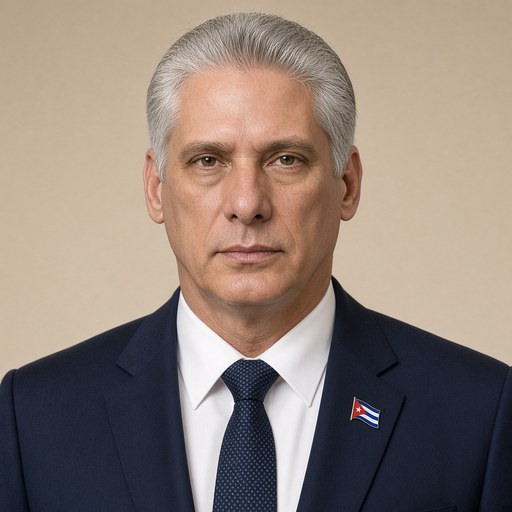
Intervention by President Miguel Díaz-Canel at the Social Forum of the Human Rights Council in Geneva.
 Miguel Díaz-Canel · President of Cuba
- Context
- Díaz-Canel addressed the UN Human Rights Council Social Forum in Geneva on November 3, 2023, focusing on technology, inequality, and Cuba's scientific achievements.
- Main themes
- Science and technology for human rights, Palestinian human rights crisis, global inequality and development gaps, US blockade of Cuba, Cuba's COVID-19 vaccine achievements, food insecurity and chronic hunger, sustainable development and 2030 Agenda, access to technology in Global South, capitalism and poverty, biotechnology and innovation
- Duration
- ~8 min
- Words
- 980
- Sentences
- 33
- Readability
- 17
- Grade
- 17.9
- Syntax
- 3.37
- Vocabulary
- 2.10
Translated from Spanish
The broad sphere of national life a sentence belongs to. Every sentence has an Arena, so it is the denominator the other indices are read against.
Other33 sentences in 28 paragraphs
Mr. President:
I thank you for the opportunity to speak at this Social Forum of the Human Rights Council, an example of a platform where various actors can address issues related to human rights on an equal footing each year.
We also welcome the designation of the Islamic Republic of Iran as President of this session of the Forum, and we wish its representatives success in their leadership and an active participation from the greatest diversity of possible actors.
We raise our voice also for the millions of Palestinians who, for 75 years of illegal occupation of their territories, have been victims of the most serious violations of their human rights. The current escalation by the State of Israel has further exacerbated a humanitarian catastrophe of extreme proportions that must cease immediately!
A ceasefire is urgently needed that translates into unequivocal respect for the right to life and an end to the killings of civilians and innocent people.
Mr. President:
As protagonists or witnesses, we are witnessing an unprecedented development in the field of technology and innovation that has changed the very course of life on the planet, significantly increased economic productivity and efficiency, and placed humanity in a position to achieve what just a few decades ago sounded like a science fiction story.
It is paradoxical, however, that amid this scientific and technical growth, the development gaps between central and peripheral countries in the international system are exponentially widening, and humanity is increasingly close to the abyss of disappearance due to the indiscriminate actions of man on his own natural living conditions.
How is it conceivable that, in 2023, in a world where supposedly technology is at the service of human development, only 36% of people from low-income countries have received a single dose of COVID-19 vaccination? How can it be explained that, according to 2022 data, about 735 million people, 9% of the global population, suffer from chronic hunger and more than 2.4 billion people experience moderate to severe food insecurity, when the world has the capacity to produce enough food for all its inhabitants?
There is no doubt that the prevailing development paradigms in today's world cause poverty and exclusion for the majority. Simply put, the irrational patterns of production and consumption of capitalism, under the dictates and blind laws of the market, disregard the most valuable thing: human life and dignity.
Mr. President:
Since 1959, Cuba has made great efforts to develop its own scientific and technological system and to apply its results for the well-being of its people and sustainable development.
Cuba has a National Economic and Social Development Plan until 2030, aligned with the 2030 Agenda and its Sustainable Development Goals, which gives a leading role to innovation and scientific research, with concrete impacts in areas such as health, education, biotechnology, agriculture, energy, environment, and culture.
We have a government management system based on science and innovation that has become an important strength for the preservation of our sovereignty.
The costly and complex investment in scientific research and development processes, which are already challenging for countries in the Global South, is exacerbated in the case of Cuba by the extremely intensified application of the economic, commercial, and financial blockade by the United States.
To cite just one example, during the COVID-19 pandemic, the U.S. government prevented the supply of ventilators, hindered the acquisition of medical oxygen in third countries, and did not authorize the purchase of supplies for the development of Cuban vaccine candidates.
Despite this blockade and thanks to our solid systems of science and health, strengthened by the talent of our scientists, Cuba developed three vaccines against COVID-19, which allowed us to immunize more than 90% of the Cuban population and, simultaneously, support other countries in the fight against the pandemic.
We were the first country in the world to vaccinate its pediatric population, starting at two years old, with our own vaccines of proven effectiveness.
The Cuban biotechnology industry ensured that 85% of the products used in the coronavirus treatment protocols were produced in the country, while Cuban researchers developed a unique model of lung ventilator.
Mr. President:
To ensure that science, technology, and innovation contribute to the realization of the human rights of all without exclusion, it is imperative to eliminate the gaps that inequity generates in access to these technologies, and to create the capacities so that scientific and technological development aligns with commitments to sustainable development.
Let us truly put scientific and technical development at the service of the right to a healthy, clean, and sustainable environment. The transfer of technologies, the creation of capacities, and the provision of new and additional financial resources by developed countries, without conditions, are urgent.
Let us transform the exclusionary and obsolete international financial architecture in place. Let us rebuild the system of economic relations at the global level, so that scientific and technical progress is an integral part of the inalienable right of peoples to development and does not further inflate the already unpayable external debt.
Let us make science, technology, and innovation fundamental tools to guarantee the full exercise of human rights, both civil and political as well as economic, social, and cultural.
Cuba can – and has the will to do so – share the experiences accumulated over six decades of political action aimed at human development, despite the genocidal blockade that has been in place for the same duration of constantly reinforced coercive actions against the Cuban people.
The Revolution of Fidel Castro, of Raúl Castro, and of the historic generation of both, which is continued by current generations, has survived this prolonged economic war through the effort and talent of a people empowered by years of investment in education, science, and innovation, with universal and free access for all its citizens, without exclusions.
We will never stop fighting for a better possible world!
Thank you very much.
The original Spanish. The tags above are read on the English translation's sentences.
Señor Presidente:
Agradezco la oportunidad de intervenir en este Foro Social del Consejo de Derechos Humanos, un ejemplo de plataforma en la que cada año diversos actores pueden abordar, en pie de igualdad, los temas relacionados con los derechos humanos.
Saludamos, igualmente, la designación de la República Islámica de Irán como Presidente de esta sesión del Foro, y deseamos a sus representantes éxitos en su conducción y una activa participación de la mayor diversidad de actores posibles.
Alzamos nuestra voz también por los millones de palestinos que durante 75 años de ocupación ilegal de sus territorios han sido víctimas de las más graves violaciones de sus derechos humanos. La actual escalada del Estado de Israel ha agudizado aún más una catástrofe humanitaria de proporciones extremas ¡que debe cesar de inmediato!
Urge un cese al fuego que se traduzca en el respeto inequívoco al derecho a la vida y en el fin de los asesinatos de civiles y personas inocentes.
Señor presidente:
Como protagonistas o testigos, asistimos a un desarrollo sin precedentes en el campo de la tecnología y la innovación que ha modificado el curso mismo de la vida en el planeta, ha aumentado considerablemente la productividad y eficiencia económicas, y ha puesto al ser humano en condiciones de alcanzar lo que apenas unas décadas atrás sonaba a relato de ciencia ficción.
Resulta paradójico, sin embargo, que en medio de este crecimiento científico-técnico se agudicen exponencialmente las brechas de desarrollo entre países del centro y la periferia del sistema internacional, y la humanidad esté cada vez más cerca del abismo de la desaparición por la acción indiscriminada del hombre sobre sus propias condiciones naturales de vida.
¿Cómo se concibe que, en 2023, en un mundo en que supuestamente la tecnología está al servicio del desarrollo humano, solo el 36 % de las personas provenientes de países de bajos ingresos haya recibido una sola dosis de vacunación contra la COVID-191? ¿Cómo se explica que, según datos de 2022, unos 735 millones de personas, el 9 % de la población mundial, sufren hambre crónica y más de 2 400 millones de personas padecen inseguridad alimentaria de moderada a severa, cuando el mundo dispone de la capacidad de producir suficiente alimento para todos sus habitantes?
No caben dudas de que los paradigmas de desarrollo imperantes en el mundo actual provocan pobreza y exclusión de las mayorías. Sencillamente, los irracionales patrones de producción y consumo del capitalismo, bajo los designios y leyes ciegas del mercado, desdeñan lo más valioso: la vida y la dignidad humanas.
Señor Presidente:
Desde 1959, Cuba ha hecho grandes esfuerzos por desarrollar un sistema científico-tecnológico propio y por aplicar sus resultados en función del bienestar de su pueblo y del desarrollo sostenible.
Cuba cuenta con un Plan Nacional de Desarrollo Económico y Social hasta 2030, alineado con la Agenda 2030 y sus Objetivos de Desarrollo Sostenible, que le otorga un papel protagónico a la innovación y a la investigación científica, con impactos concretos en esferas como la salud, educación, biotecnología, agricultura, energía, medio ambiente y cultura.
Disponemos de un sistema de gestión de gobierno basado en ciencia e innovación que ha devenido en importante fortaleza para la preservación de nuestra soberanía.
La costosa y compleja inversión en procesos de investigación y desarrollo científico de por sí retadores para los países del Sur, se acentúa en el caso de Cuba por la aplicación recrudecida en extremo del bloqueo económico, comercial y financiero de Estados Unidos.
Por solo citar un ejemplo, durante la pandemia de COVID-19 el Gobierno de los Estados Unidos impidió el suministro de ventiladores pulmonares, obstaculizó la adquisición de oxígeno medicinal en terceros países y no autorizó la compra de insumos para el desarrollo de los candidatos vacunales cubanos.
Pese a este cerco y gracias a que contamos con sólidos sistemas de ciencia y salud, fortalecidos con el talento de nuestros científicos, Cuba desarrolló tres vacunas contra la COVID-19, las que nos permitieron inmunizar más del 90 % de la población cubana y, simultáneamente, apoyar a otros países en el combate contra la pandemia.
Fuimos el primer país del mundo en vacunar a su población pediátrica, a partir de los dos años, con vacunas propias de demostrada efectividad.
La industria biotecnológica cubana logró que el 85 % de los productos empleados en los protocolos de tratamiento del coronavirus fueran elaborados en el país, mientras que investigadores cubanos desarrollaron un modelo propio de respirador pulmonar.
Señor Presidente:
Para garantizar que la ciencia, la tecnología y la innovación contribuyan a la realización de los derechos humanos de todos sin exclusión, es imperativo eliminar las brechas que la inequidad genera en el acceso a estas tecnologías, y crear las capacidades para que el desarrollo científico-tecnológico esté en línea con los compromisos en materia de desarrollo sostenible.
Pongamos verdaderamente el desarrollo científico-técnico en función del derecho a un medio ambiente sano, limpio y sostenible. Resulta impostergable la trasferencia de tecnologías, la creación de capacidades y la provisión de recursos financieros nuevos y adicionales por parte de los países desarrollados, sin condicionamientos.
Transformemos la excluyente y obsoleta arquitectura financiera internacional vigente. Refundemos el sistema de relaciones económicas a nivel global, para que el progreso científico-técnico sea parte integral del derecho inalienable de los pueblos al desarrollo y no engrose aún más la ya impagable deuda externa.
Hagamos de la ciencia, la tecnología y la innovación herramientas fundamentales para garantizar el ejercicio pleno de los derechos humanos, tanto civiles y políticos como económicos, sociales y culturales.
Cuba puede –y tiene la voluntad para hacerlo– compartir las experiencias acumuladas en seis décadas de accionar política en función del desarrollo humano, pese al genocida bloqueo que acumula el mismo tiempo de acciones coercitivas constantemente reforzadas contra el pueblo cubano.
La Revolución de Fidel Castro, de Raúl Castro y de la histórica generación de ambos, a la que dan continuidad las generaciones actuales, ha sobrevivido a esa prolongada guerra económica con el esfuerzo y el talento de un pueblo empoderado por años de inversión en la educación, la ciencia y la innovación, con acceso universal y gratuito para todos sus ciudadanos, sin exclusiones.
¡Nunca dejaremos de luchar por un mundo mejor posible!
Muchas gracias.