




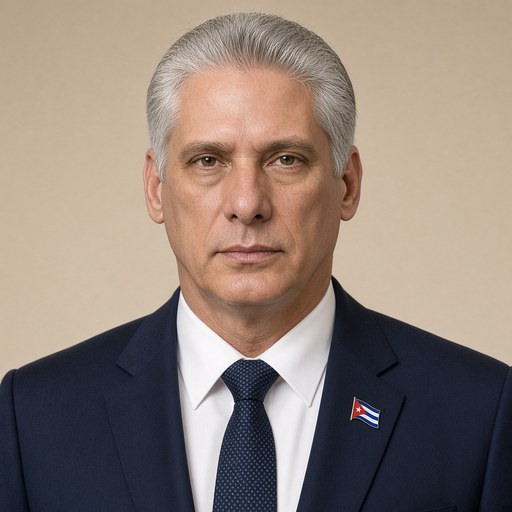
Speech delivered at the Summit of Heads of State and Government on Migration, Palenque Meeting: for a fraternal neighborhood and well-being.
 Miguel Díaz-Canel · President of Cuba
- Context
- Díaz-Canel addressed the Summit of Heads of State and Government on Migration in Palenque, Mexico, on October 22, 2023, to discuss the regional irregular migration crisis.
- Main themes
- Irregular migration, US hostile policy toward Cuba, economic blockade, Cuban Adjustment Act, socioeconomic causes of migration, regional coordination, Israeli aggression against Palestinians, climate change and migration, migrant safety, US-Cuba relations
- Duration
- ~10 min
- Words
- 1,220
- Sentences
- 46
- Readability
- 33
- Grade
- 15.0
- Syntax
- 3.33
- Vocabulary
- 2.29
Translated from Spanish
The broad sphere of national life a sentence belongs to. Every sentence has an Arena, so it is the denominator the other indices are read against.
Other46 sentences in 31 paragraphs
Dear heads of state and government present;
Heads of delegations;
Guests:
Our first words express a vigorous condemnation of the genocide and aggression being carried out by Israel against the Palestinian people, the condemnation of the ruthless massacre of defenseless people, a shame for humanity that must cease.
I sincerely thank the Government of Mexico and especially the authorities of the state of Chiapas for the warm welcome at a meeting armed with the urgency that always accompanies pressing matters.
And again, thank you, my friend, brother Andrés Manuel for the initiative. We truly needed this regional dialogue, to meet and address with frankness and realism the drama of irregular migration that hits us every day with painful news, because only in a coordinated manner could we decipher the multiple causes and consequences of the problem, and only then will we be able to advance in its possible solutions.
There is no other way to face the remarkable increase in irregular migration flows.
According to public figures, between 2022 and the current year, more than 4 million migrants have transited irregularly through the countries of the region that are on the route to the United States. These are numbers never seen before.
In general, we know well what factors provoke this phenomenon, but it is worth investigating the main motivations of our fellow citizens, because it is our responsibility to temper the problem and mitigate its negative effects, while guaranteeing the safety of migrants.
Although other politically motivated versions may be imposed, there is an undeniable truth: the fundamental cause of irregular migration lies in the socioeconomic conditions of the countries of origin – which have been exacerbated by the impact of the pandemic – and the aspiration of migrants to settle and work in the United States, where labor market offers attract those who dream of a more prosperous economic scenario than that of their surroundings, and do not always find it.
Family ties and vulnerabilities associated with climate change can also be mentioned.
None of these motivations are foreign to Cuba. However, the migratory potential of Cubans is additionally stimulated, in a very significant way, by the hostile policy of the United States towards our country.
This hostile policy, which has a direct and extraordinary impact on the Cuban migration flow and a collateral effect on the countries of the region through which this migration transits, is expressed in three fundamental components:
First, there is the economic blockade, which has been criminally reinforced in recent years with a comprehensive and far-reaching system of coercive measures aimed, by definition, at depressing the standard of living of the Cuban population, reducing their real income, and causing them to suffer hunger and misery. The unjust, absurd, and arbitrary designation of Cuba as a state sponsor of terrorism has a significant weight in the economic effect of this policy.
Second, and for political reasons, the Government of the United States grants preferential treatment to Cubans who arrive at its southern border or its maritime borders in order to settle permanently in that country. In their vast majority, these migrants are accepted regardless of the status with which they arrived at the border or managed to cross it. Consequently, many Cubans trust that, unlike nationals from other countries, their chances of establishing themselves in the United States are very high if they manage to reach the border by any means.
Third, and also for political reasons, there is a federal law in the United States called the Cuban Adjustment Act, according to which any Cuban who has entered that country after January 1, 1959 has the opportunity to obtain permanent residency after one year of having arrived. This is a unique privilege that no national from any other country enjoys. It is exclusive to Cubans and provides an extraordinary incentive for the migrant.
More than a decade ago, in his capacity as President of the Republic, Army General Raúl Castro, leader of the Revolution and to whom we owe important changes introduced since then in our migration law for its necessary updating, drew attention to the great ignorance that prevails in the world regarding the policy towards Cuba, in the following terms:
“No one in the major international press talks about the aforementioned Adjustment Act; it is as if it did not exist. Cuban emigrants are, as a result of the lie repeated thousands of times, referred to as ‘political exiles’ fleeing communism. That is to say, for them, citizens of Cuba ‘escape,’ while from the rest of the world, they emigrate.
“What would happen if a Latin American, Asian, or African adjustment law were enacted in the United States or the European Union? The answer is obvious. There is the gigantic wall built on the northern border of Mexico and the thousands of deaths that occur year after year in deserts and seas adjacent to the centers of world power.”
On the other hand, the impunity of U.S. authorities towards migrants who have resorted to the theft of a crop-dusting aircraft, or others who travel as stowaways on civilian aircraft, in addition to stimulating illegal emigration from Cuba, sets very dangerous precedents for the safety of international civil aviation, which violates the migration agreements signed between the two countries.
All these practices respond to purely political motivations and lack any legitimacy or moral justification.
These regulations clearly express how the Government of the United States prioritizes destabilization objectives against Cuba over its national priorities in migration matters.
Between Cuba and the United States, there are several agreements, still in force, that were conceived to ensure that migration between the two countries is orderly, regular, and safe, and to promote the full normalization of bilateral migration relations. However, the actions I have commented on by the Government of the United States go against such objectives and hinder their fulfillment.
It is impossible to understand the volume and nature of the migration flows of Cubans transiting through countries in the region towards the United States without considering the weight of these factors that singularize and reinforce them.
Modifying the structural causes of Cuban migration, both regular and irregular, and fundamentally influencing the reduction of Cuban migrant flows through various countries is in the hands of the U.S. authorities.
As I have said recently, in general, Cubans who leave Cuba legally become irregular migrants, subjected to all kinds of risks and dangers, even to their lives, in the transit towards the United States.
When there is a will to act in that direction, I assure you that you will always have the commitment and cooperation of Cuba.
Cuba's migration policy favors the travel of Cuban citizens abroad and their return to Cuba.
We maintain bilateral mechanisms for migration cooperation with several nations in the region, and exchange migration alerts with others, with the aim of implementing the tools that allow for a regular, orderly, and safe flow of travelers; and, at the same time, combat the trafficking of irregular migrants and human trafficking.
This type of meeting is very valuable for our fellow citizens, for their families, for our societies, and for the relations between our countries. It reinforces the sense of brotherhood of Our America.
Once again, thank you very much, Chiapas; thank you very much, Mexico! Thank you very much, brother Andrés Manuel!
The original Spanish. The tags above are read on the English translation's sentences.
Estimados jefes de Estado y de Gobierno presentes;
Jefes de delegaciones;
Invitados:
Nuestras primeras palabras expresan una enérgica condena al genocidio y la agresión que ejecuta Israel contra el pueblo palestino, la condena a la despiadada masacre de personas indefensas, una vergüenza para la humanidad que debe cesar.
Agradezco sinceramente al Gobierno de México y en especial a las autoridades del estado de Chiapas por la amable acogida en una cita armada con la prisa que ponen siempre las urgencias.
Y nuevamente, gracias amigo, hermano Andrés Manuel por la iniciativa. Necesitábamos en verdad este diálogo regional, encontrarnos y abordar con franqueza y realismo el drama de la migración irregular que todos los días nos golpea con noticias dolorosas, porque solo de manera coordinada podríamos descifrar las múltiples causas y consecuencias del problema y solo así lograremos avanzar en sus posibles soluciones.
No hay otro modo de enfrentar el notable incremento de los flujos migratorios irregulares.
De acuerdo con las cifras públicas, entre 2022 y lo que va de 2023, más de 4 millones de migrantes han transitado irregularmente por los países de la región que están en la ruta hacia Estados Unidos. Son números nunca antes vistos.
En general conocemos bien qué factores provocan este fenómeno, pero no sobra indagar en las principales motivaciones de nuestros conciudadanos, porque nos corresponde atemperar el problema y mitigar sus efectos negativos, garantizando al mismo tiempo la seguridad de los migrantes.
Aunque se pretendan imponer otras versiones, políticamente motivadas, hay una verdad insoslayable: la causa fundamental de la migración irregular está en las condiciones socioeconómicas de los países de procedencia –que se acentúa tras el impacto de la pandemia– y la aspiración de los migrantes de asentarse y trabajar en los Estados Unidos, donde las ofertas del mercado laboral atraen a quienes sueñan con un escenario económico más próspero que el de sus entornos y no siempre lo encuentran.
Pueden mencionarse también los lazos familiares y las vulnerabilidades asociadas al cambio climático.
Ninguna de esas motivaciones es ajena para Cuba. Sin embargo, el potencial migratorio cubano se ve adicionalmente estimulado, de manera muy significativa, por la política de hostilidad de los Estados Unidos hacia nuestro país.
Esta política hostil, que impacta de forma directa y extraordinaria sobre el flujo migratorio cubano y de manera colateral en los países de la región por los que transita esa migración, se expresa en tres componentes fundamentales:
En primer lugar, está el bloqueo económico, reforzado en los últimos años de manera criminal con un sistema integral y abarcador de medidas coercitivas dirigidas, por definición, a deprimir el nivel de vida de la población cubana, reducir sus ingresos reales y hacerla sufrir hambre y miseria. La injusta, absurda y arbitraria calificación de Cuba como Estado patrocinador del terrorismo tiene un peso significativo en el efecto económico de esa política.
En segundo lugar y por razones políticas, el Gobierno de los Estados Unidos otorga un tratamiento privilegiado a los cubanos que llegan a su frontera sur o a sus fronteras marítimas con el fin de establecerse permanentemente en ese país. En su inmensa mayoría, esos migrantes son aceptados con independencia del estatus con que hayan llegado a la frontera o hayan logrado cruzarla. Por consiguiente, muchos cubanos confían en que, a diferencia de los nacionales de otros países, sus posibilidades de lograr establecerse en los Estados Unidos son muy altas si logran llegar a la frontera por cualquier vía.
En tercer lugar y también por razones políticas, existe en los Estados Unidos una ley federal llamada Ley de Ajuste Cubano, según la cual todo cubano que haya entrado a ese país después del 1ro de enero de 1959 tiene la oportunidad de obtener su residencia permanente al cabo de un año de haber llegado. Se trata de un privilegio singular que no disfruta el nacional de ningún otro país. Es exclusivo para los cubanos y brinda un incentivo extraordinario para el migrante.
Hace más de una década y en su condición de Presidente de la República, el General de Ejército Raúl Castro, líder de la Revolución y a quien debemos importantes cambios introducidos desde entonces en nuestra ley migratoria para su necesaria actualización, llamaba la atención sobre la gran ignorancia que prevalece en el mundo acerca de la política hacia Cuba, en los siguientes términos:
“Nadie en la gran prensa internacional habla de la citada Ley de Ajuste, es como si no existiera. Los emigrados cubanos son, a resultas de la mentira repetida miles de veces, denominados ‘exiliados políticos’ que escapan del comunismo. Es decir, para ellos de Cuba los ciudadanos ‘se escapan’, mientras que del resto del mundo emigran.
“¿Qué pasaría si en Estados Unidos o la Unión Europea se pusiera en vigor una ley de ajuste latinoamericano, asiático o africano? La respuesta es obvia. Ahí está el gigantesco muro construido en la frontera norte de México y las miles de muertes que, año tras año, se producen en desiertos y mares aledaños a los centros del poder mundial”.
Por otra parte, la impunidad de las autoridades estadounidenses ante migrantes que se han valido del robo de una aeronave de fumigación, u otros que viajan como polizón en aeronaves civiles, además de estimular la emigración ilegal desde Cuba, sienta precedentes muy peligrosos para la seguridad de la aeronáutica civil internacional, lo que incumple los acuerdos migratorios firmados entre los dos países.
Todas estas prácticas responden a motivaciones netamente políticas y carecen de legitimidad o justificación moral alguna.
Esas regulaciones expresan de manera muy clara cómo el Gobierno de los Estados Unidos antepone los objetivos de desestabilización contra Cuba a sus prioridades nacionales en materia migratoria.
Entre Cuba y los Estados Unidos existen varios acuerdos, aún vigentes, que fueron concebidos para asegurar que la migración entre los dos países fuera ordenada, regular y segura, y para promover la plena normalización de las relaciones migratorias bilaterales. Sin embargo, las acciones sobre las que he comentado por parte del Gobierno de los Estados Unidos van en sentido opuesto a tales objetivos e impiden su cumplimiento.
Resulta imposible comprender el volumen y la naturaleza de los flujos migratorios de cubanos que transitan por países de la región con destino a los Estados Unidos, sin considerar el peso de estos factores que la singularizan y refuerzan.
Modificar las causas estructurales de la migración cubana, tanto la regular como la irregular, e influir de manera fundamental en la reducción de los flujos de migrantes cubanos por diversos países está en manos de las autoridades norteamericanas.
Como he dicho recientemente, en general cubanas y cubanos que salen legalmente de Cuba se convierten en migrantes irregulares, sometidos a todo tipo de riesgos y peligros, incluso de sus vidas, en el tránsito hacia los Estados Unidos.
Cuando exista la voluntad de actuar en esa dirección, les aseguro que contarán siempre con el compromiso y la cooperación de Cuba.
La política migratoria cubana favorece los viajes de los ciudadanos cubanos al exterior y su regreso a Cuba.
Mantenemos mecanismos bilaterales de cooperación migratoria con varias naciones de la región, e intercambio de alertas migratorias con otros, con el objetivo de implementar las herramientas que permitan alcanzar un flujo de viajeros regular, ordenado y seguro; y, al mismo tiempo, combatir el tráfico de migrantes irregulares y la trata de personas.
Este tipo de encuentros tiene mucho valor para nuestros conciudadanos, para sus familias, para nuestras sociedades y para las relaciones entre nuestros países. Es lo que refuerza el sentido de hermandad de Nuestra América.
Otra vez, ¡muchas gracias, Chiapas; muchas gracias, México! ¡Muchas gracias, hermano Andrés Manuel!