




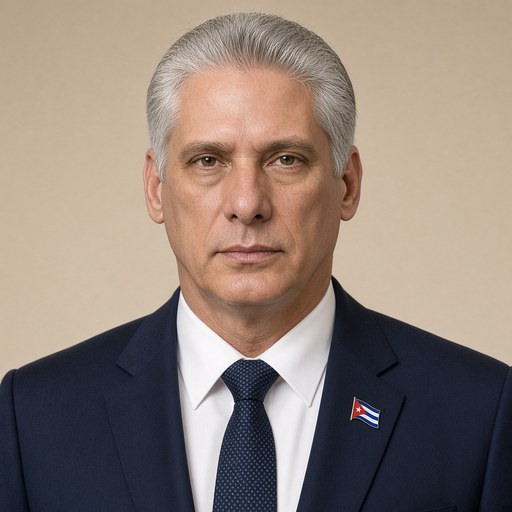
Intervention by President Miguel Díaz-Canel Bermúdez at the IX Summit of Heads of State and Government of CELAC
 Miguel Díaz-Canel · President of Cuba
- Context
- Díaz-Canel addressed the IX CELAC Summit of Heads of State and Government in Honduras on April 9, 2025, urging regional unity against US unilateralism.
- Main themes
- Latin American and Caribbean unity, US unilateralism and Monroe Doctrine, CELAC cohesion, migrant deportations and human rights violations, multilateralism and international law, Panama Canal sovereignty, climate change and Caribbean vulnerability, regional cooperation, economic complementarity, Guantánamo Bay, armed conflicts and global tensions, sovereign equality
- Duration
- ~17 min
- Words
- 1,982
- Sentences
- 66
- Readability
- 24
- Grade
- 17.0
- Syntax
- 3.32
- Vocabulary
- 2.42
Translated from Spanish
The broad sphere of national life a sentence belongs to. Every sentence has an Arena, so it is the denominator the other indices are read against.
Other66 sentences in 57 paragraphs
Dear Heads of State and Government of Latin America and the Caribbean;
Heads of delegations and guests:
I want to thank the brotherly Honduran people and, in particular, President Xiomara Castro, for their generous hospitality and congratulate them on the work they have done at the helm of the Community of Latin American and Caribbean States, an organization constantly threatened by divisive winds, which have been navigated through united efforts like the one that brings us together here today.
I believe that never before has the need for the peoples of Latin America and the Caribbean to "walk in a tight square, like silver in the roots of the Andes," as José Martí warned, been so visible and urgent. He lived in the monster, knew its entrails, and understood, like Bolívar, that only unity would save us.
The actions undertaken by the current Government of the United States challenge multilateralism and International Law by disregarding basic principles such as peaceful coexistence and sovereign equality among states.
As Cuba has been warning with concern in successive meetings, the current U.S. administration is shaping an aggressive agenda marked by unilateralism on issues of migration, drug trafficking, international trade, and climate change, among others; to which is now added the attempt to control our relations with extra-regional partners.
The Government of the United States threatens and seeks to legitimize the imposition of unilateral coercive measures, without respect for the legal frameworks of other countries. It seeks to turn blackmail, harassment, and political manipulation into common practices against our nations.
The deportations of immigrants, many of whom are sent to high-security prisons under harsh conditions, are occurring indiscriminately, without respect for due process, without demonstration of guilt, and in severely repressive conditions. These practices constitute unacceptable abuses of power and violations of the most basic rights of Latin American and Caribbean citizens.
For example, Venezuelan nationals, whose only fault seems to have been lacking legal status in the United States, have ended up imprisoned in facilities meant for highly dangerous criminals, with no knowledge of when they will be released or what legal recourse protects them, and without any evidence that they are criminals.
The Naval Base, located in illegally occupied Cuban territory in the province of Guantánamo, has been used again to imprison migrants, a brutal and illegal act that threatens the security and peace of Cuba and the region.
There is also an attempt to control infrastructures such as the Panama Canal, whose sovereignty is exercised by Panamanians.
This declared U.S. return to the Monroe Doctrine can only be confronted with unity, which means a strong and cohesive CELAC around its founding principles and its historical legacy, brief yet already substantial.
In a feeble attempt to justify this aggressive behavior, the U.S. government presents itself as a victim state, taken advantage of by the rest of the world, and claims that it is merely defending its legitimate right to overcome abuse. This is an opportunistic distortion of history and reality.
It is to be expected that new attempts will arise to weaken us, paralyze us, or fracture regional structures, knowing that division would weaken us.
Today we reiterate here what Army General Raúl Castro Ruz said at the Third CELAC Summit, held in Costa Rica in 2015: "Developing unity in diversity, cohesive action, and respect for differences will continue to be our primary purpose and an unavoidable necessity (...)".
It is with that spirit that Cuba proposes to face current challenges, placing common interests and objectives above differences and acting as a true regional community.
At a time when the world is experiencing an escalation of tensions, an increase in armed conflicts and unconventional wars, as well as a deepening of inequalities, social exclusion, and poverty, it is crucial to unite efforts and work together for the well-being, peace, and security of the Latin American and Caribbean peoples.
It is urgent to expand cooperation, identify beneficial projects for our nations, and take advantage of the complementarities among the economies of the region.
To this end, it is essential to coordinate positions, defend the historical consensus of the Community, and identify common visions on other issues of interest to the nations.
Speaking with one voice in international forums will always be an important contribution to the struggle of developing countries for the establishment of a democratic, just, equitable international order that respects the sovereign equality of all states.
We must act without further delay to strengthen responses to climate change. We say this from the battered Caribbean, which suffers the effects of increasingly devastating hurricanes.
If the irrational and unsustainable patterns of production and consumption of affluent societies do not change urgently and significantly, it will not be possible to limit the increase in the average annual temperature to 1.5°C above pre-industrial levels. For some countries, this challenge means their very existence.
In the name of a country that has resisted for more than six decades the human and material consequences of an economic and financial blockade that has intensified in the cruelest terms, we demand the immediate cessation of unilateral coercive measures against developing countries, which violate the principles and norms of International Law.
This criminal method, which seeks to turn peoples against their governments, has spread as a practice that contaminates and poisons international economic relations, given the almost absolute power of the empire over global financial institutions.
Cuba knows well the cost of this policy, which has hardened brutally in recent years. The U.S. government continues to be bent on suffocating the Cuban people, provoking political instability with its cruel and illegal economic war, and precipitating the violent overthrow of the government and the constitutional order.
Its unfounded and unilateral decision to once again include the country on the fraudulent list of states that supposedly sponsor terrorism, just hours after the new President took office, severely impacts our development aspirations and serves as a pretext to strengthen the blockade against Cuba and the extraterritorial effects of the blockade that also harm citizens, peoples, and businesses in our region.
Now, the infamous campaign against the medical cooperation programs that Cuba provides to more than fifty nations is added, launching false accusations against the island's solidarity work and its positive and significant impact on the lives of millions of people in Latin America, the Caribbean, and the world.
The restrictions on visas for anyone on the planet who supports or benefits from these programs constitute vulgar blackmail, a scandalous and flagrant threat, and an unjustified aggression.
This new pressure not only seeks to punish Cuba and the altruistic and humanitarian vocation of its professionals but also reflects a complete disregard for the health of the peoples and communities that receive the benefits of Cuban medical services.
It is illusory to think that the U.S. government, instead of sending soldiers and weapons, could send doctors under the same solidarity and preferential conditions as Cuba does.
Cuba reaffirms its willingness to maintain the cooperation agreed upon with each country that has requested it, through legal agreements, under the norms and international practice, which has been firmly and transparently defended, particularly in recent weeks, by the sister nations of the Caribbean.
We reject in the strongest terms the criminal and immoral policies imposed by the United States against the Cuban people, and we call on the nations present here to support Cuba's legitimate right to live and develop in peace, without blockades or smear campaigns.
I take this opportunity to thank the historical support of CELAC for the lifting of the illegal economic, commercial, and financial blockade of the United States against Cuba and for the demand for the exclusion of the country from the spurious list of states that supposedly sponsor terrorism.
Dear colleagues:
In the face of the imperialist intentions to recolonize us and threaten the territorial integrity of nations, CELAC can play a key role if we speak out with a firm and united voice in rejection of the use and threat of the use of force in the region.
Thus, we honor the commitment made with the Proclamation of Latin America and the Caribbean as a Zone of Peace, a paradigm for fostering good neighborly relations among our countries, and with others in the region.
We reaffirm our strongest support for the Government of Venezuela, its President Nicolás Maduro, and the heroic Bolivarian people, whose resistance and sovereign will will prevail in the face of imperialist aggression.
We reaffirm our support for Nicaragua, for its co-presidents Daniel Ortega and Rosario Murillo in the defense of their sovereignty and self-determination, against attempts at destabilization and external interference.
We confirm Cuba's support for Caribbean nations in their right to receive fair, special, and differentiated treatment, as well as reparations for the damages of colonialism and slavery.
All our support and solidarity to the brotherly Plurinational State of Bolivia in the defense of sovereignty against U.S. interference.
We also reiterate our unequivocal commitment to the self-determination and independence of Puerto Rico; the peace efforts in Colombia; and Argentina's right over the Malvinas, South Sandwich Islands, and South Georgia and the surrounding maritime spaces.
We favor peace, stability, and development in Haiti, and defend the legitimate right of its people to find a peaceful and sustainable solution to the historical and new challenges they face.
At this moment of pain, I extend our condolences to the people and government of the Dominican Republic, and to the families of the victims.
And here, as in all scenarios where Cuba acts and participates, we firmly condemn the genocide against the Palestinian people committed by Israel, supported by the arms, funds, and veto of the United States in the United Nations, under the cover of the complicit silence of others.
We appreciate the encouraging message and support extended by our comrade Xi Jinping, President of the People's Republic of China, for the successful celebration of this Summit.
We recognize the relevant contributions of China towards the development of the region, and for the firm political will to carry out tangible projects that benefit our peoples based on complementarity and mutual respect.
The China-CELAC Forum, created from the agreements adopted at the Second CELAC Summit in Havana in 2014, has been enriched over the years as an effective space for concertation and deepening multifaceted relations between China and the region.
We welcome the upcoming ministerial meeting of the Forum in May in Beijing, in which Cuba will be present, and we will work together among all parties to ensure its success, considering the opportunities it offers to address the challenges of the uncertain and complex global scenario.
Latin American and Caribbean friends:
Cuba will always be at the forefront of efforts to strengthen CELAC and advance towards integration that allows repositioning Latin America and the Caribbean on the international stage.
As the historical leader of the Cuban Revolution, Commander in Chief Fidel Castro Ruz, expressed: "To that integrated and united Latin America, Cuba is willing to belong, to discuss any issue with it, and even to shed its blood defending what is today the first trench of independence and sovereignty of our peoples."
We fully trust that President Gustavo Petro and sister Colombia will know how to lead the Community during the year 2025, and we support their proposal to host a common multilateral agenda; as we welcome Claudia's proposal for a summit on the well-being and prosperity of Latin America and the Caribbean.
In that endeavor, and guided by the maxim of unity in diversity, solidarity, and cooperation, I reiterate that you can always count on Cuba.
The gravity of this hour of multiplied threats demands the multiplication of united forces. Only unity can save us. Let us not delay any longer the dreamed and fought-for integration, from Bolívar to our days, by the bravest sons of Our America.
Long live CELAC!
Long live our peoples!
Thank you very much.
The original Spanish. The tags above are read on the English translation's sentences.
Estimados Jefes de Estado y de Gobierno de América Latina y el Caribe;
Jefes de delegaciones e invitados:
Quiero agradecer al hermano pueblo hondureño y, de manera especial, a la presidenta Xiomara Castro, su generosa hospitalidad y felicitarlos por el trabajo desempeñado al frente de la Comunidad de Estados Latinoamericanos y Caribeños, una organización constantemente amenazada por vientos divisionistas, que se han podido sortear con gestiones unitarias como la que nos convoca hoy aquí.
Creo que nunca antes fue tan visible y urgente para los pueblos de América Latina y el Caribe la necesidad de “andar en cuadro apretado, como la plata en las raíces de los Andes”, adelantada advertencia de José Martí, quien vivió en el monstruo, conoció sus entrañas y comprendió, como Bolívar, que solo la unidad nos salvaría.
Las acciones emprendidas por el actual Gobierno de Estados Unidos desafían el multilateralismo y el Derecho Internacional, al desconocer principios básicos como la convivencia pacífica y la igualdad soberana entre los Estados.
Como Cuba ha venido advirtiendo con preocupación en sucesivas reuniones, la actual administración estadounidense está conformando una agenda agresiva, marcada por el unilateralismo en temas de migración, narcotráfico, comercio internacional y cambio climático, entre otros; a lo que se suma ahora el intento de controlar nuestras relaciones con socios extrarregionales.
El Gobierno de Estados Unidos amenaza y pretende legitimar la imposición de medidas coercitivas unilaterales, sin respeto al ordenamiento de los demás países. Procura convertir el chantaje, el acoso y la manipulación política en prácticas habituales contra nuestras naciones.
Las deportaciones de inmigrantes, muchos de ellos hacia cárceles de alta seguridad con bajos métodos, están ocurriendo de forma indiscriminada, sin respeto al debido proceso, sin demostración de culpabilidad y en condiciones duramente represivas. Esas prácticas constituyen abusos inaceptables de poder y violaciones de los derechos más elementales de ciudadanos latinoamericanos y caribeños.
Por ejemplo, nacionales venezolanos, cuya única falta parece haber sido carecer de estatus legal en Estados Unidos, han terminado encarcelados en prisiones destinadas a criminales altamente peligrosos, sin conocerse cuándo quedarán liberados o qué recurso legal los ampara, y sin que se haya ofrecido evidencia de que se trate de delincuentes.
La Base Naval, situada en territorio cubano ilegalmente ocupado en la provincia de Guantánamo, ha vuelto a emplearse para encarcelar migrantes, acto brutal e ilegal que amenaza la seguridad y la paz de Cuba y de la región.
Se intenta, igualmente, controlar infraestructuras como el Canal de Panamá, cuya soberanía la ejercen los panameños.
Este declarado retorno estadounidense a la Doctrina Monroe solo puede ser enfrentado con unidad, lo que equivale a decir con una CELAC fuerte y cohesionada en torno a sus principios fundacionales y a su acervo histórico, breve aún pero ya sustancial (Aplausos).
En un intento poco convincente de justificar esta conducta agresiva, el Gobierno estadounidense se presenta como Estado víctima, del cual se aprovecha el resto del mundo, y afirma que solo defiende su legítimo derecho a superar el abuso. Se trata de una distorsión oportunista de la historia y de la realidad.
Es de esperar que surjan nuevos intentos para debilitarnos, paralizarnos o fracturar las estructuras regionales, sabiendo que la división nos debilitaría.
Hoy reiteramos aquí lo dicho por el General de Ejército Raúl Castro Ruz en la Tercera Cumbre de la CELAC, celebrada en Costa Rica en el 2015: “Desarrollar la unidad en la diversidad, la actuación cohesionada y el respeto a las diferencias seguirá siendo nuestro primer propósito y una necesidad ineludible (…)”.
Es con ese espíritu que Cuba propone encarar los desafíos actuales, colocando los intereses y objetivos comunes por encima de las diferencias y actuando como una auténtica comunidad regional.
En momentos en que el mundo vive una escalada de tensiones, un aumento de los conflictos bélicos y las guerras no convencionales, así como una profundización de las desigualdades, la exclusión social y la pobreza, resulta crucial unir esfuerzos y trabajar juntos por el bienestar, la paz y la seguridad de los pueblos latinoamericanos y caribeños.
Urge ampliar la cooperación, identificar proyectos beneficiosos para nuestras naciones y aprovechar las complementariedades entre las economías de la región.
Para ello resulta imprescindible concertar posiciones, defender los consensos históricos de la Comunidad e identificar visiones comunes en otros temas de interés para las naciones.
Pronunciarnos con una sola voz en foros internacionales será siempre una importante contribución a la lucha de los países en desarrollo por la instauración de un orden internacional democrático, justo, equitativo y respetuoso de la igualdad soberana de todos los Estados.
Hay que actuar sin más dilaciones para fortalecer las respuestas al cambio climático. Lo decimos desde el golpeado Caribe, que sufre los efectos de huracanes cada vez más devastadores.
Si los patrones irracionales e insostenibles de producción y consumo de las sociedades opulentas no cambian de manera urgente y significativa, no se podrá limitar el aumento de la temperatura media anual a 1,5°C con respecto a los niveles preindustriales. Para algunos países ese desafío significa la existencia misma.
En nombre de un país que resiste por más de seis décadas ya las consecuencias humanas y materiales de un bloqueo económico y financiero, que se ha recrudecido en los términos más crueles, exigimos el cese inmediato de medidas coercitivas unilaterales contra países en desarrollo, que violan los principios y normas del Derecho Internacional.
Ese método criminal, que busca echar a los pueblos contra sus gobiernos, se ha ido extendiendo como práctica que contamina y enrarece las relaciones económicas internacionales, dado el poder casi absoluto del imperio sobre las instituciones financieras globales.
Cuba conoce a fondo el costo de esa política, que se ha endurecido de manera brutal en los últimos años. El Gobierno de los Estados Unidos continúa empeñado en asfixiar al pueblo cubano, provocar inestabilidad política con su cruel e ilegal guerra económica y precipitar el derrocamiento por la fuerza del Gobierno y el orden constitucional.
Su decisión infundada y unilateral de incorporar al país nuevamente a la fraudulenta lista de Estados que supuestamente patrocinan el terrorismo, apenas horas después de la toma de posesión del nuevo Presidente, impacta de forma severa nuestras aspiraciones de desarrollo y sirve de pretexto para fortalecer el cerco contra Cuba y los efectos extraterritoriales del bloqueo que también perjudican a ciudadanos, pueblos y empresas de nuestra región.
A ello se suma ahora la infame campaña contra los programas de cooperación médica que Cuba brinda a más de cincuenta naciones, lanzando falaces acusaciones contra la labor solidaria de la isla y su positivo y significativo impacto en la vida de millones de personas en América Latina, el Caribe y el mundo.
Las restricciones a las visas de cualquier persona en el planeta que apoye o se beneficie de dichos programas constituyen un chantaje vulgar, una amenaza escandalosa y flagrante y una injustificada agresión.
Esa nueva presión no solo pretende castigar a Cuba y la vocación altruista y humanista de sus profesionales, sino que refleja un absoluto desprecio por la salud de los pueblos y las comunidades que reciben los beneficios de los servicios médicos cubanos.
Es iluso pensar que el Gobierno de los Estados Unidos, en lugar de soldados y armas, pueda enviar médicos en las mismas condiciones solidarias y preferenciales que lo hace Cuba (Aplausos).
Cuba ratifica su voluntad de mantener la cooperación pactada con cada país que lo ha requerido, mediante acuerdos legales, al amparo de las normas y la práctica internacional, la cual ha sido defendida con firmeza y transparencia, particularmente en las últimas semanas, por las hermanas naciones del Caribe.
Rechazamos en los términos más enérgicos las políticas criminales e inmorales impuestas por Estados Unidos contra el pueblo cubano, y llamamos a las naciones aquí presentes a respaldar el legítimo derecho de Cuba a vivir y desarrollarse en paz, sin bloqueos ni campañas de difamación.
Aprovecho la ocasión para agradecer el respaldo histórico de la CELAC al levantamiento del ilegal bloqueo económico, comercial y financiero de los Estados Unidos contra Cuba y a la demanda de exclusión del país de la lista espuria de Estados supuestos patrocinadores del terrorismo.
Estimados colegas:
Frente a las intenciones del imperialismo de recolonizarnos y atentar contra la integridad territorial de las naciones, la CELAC puede desempeñar un papel clave si nos pronunciamos con voz firme y unida en rechazo al uso y a la amenaza del uso de la fuerza en la región.
Honramos así el compromiso adoptado con la Proclama de América Latina y el Caribe como Zona de Paz, paradigma para fomentar relaciones de buena vecindad entre nuestros países, y de otros con la región.
Ratificamos el más firme respaldo al Gobierno de Venezuela, a su presidente Nicolás Maduro y al heroico pueblo bolivariano, cuya resistencia y voluntad soberana prevalecerán frente a las agresiones imperialistas.
Reafirmamos el apoyo a Nicaragua, a sus copresidentes Daniel Ortega y Rosario Murillo en la defensa de su soberanía y autodeterminación, ante los intentos de desestabilización e injerencia externa.
Confirmamos el respaldo de Cuba a las naciones caribeñas en su derecho a recibir un trato justo, especial y diferenciado, así como una reparación por los daños del colonialismo y la esclavitud.
Todo nuestro apoyo y solidaridad al hermano Estado Plurinacional de Bolivia en la defensa de la soberanía contra la injerencia estadounidense.
Reiteramos igualmente el compromiso inequívoco con la autodeterminación e independencia de Puerto Rico; los esfuerzos de paz en Colombia; y el derecho de Argentina sobre las islas Malvinas, Sandwich del Sur y Georgias del Sur y los espacios marítimos circundantes.
Favorecemos la paz, la estabilidad y el desarrollo en Haití, y defendemos el legítimo derecho de su pueblo a encontrar una salida pacífica y sostenible a los históricos y a los nuevos desafíos que enfrenta.
En este momento de dolor traslado nuestras condolencias al pueblo y Gobierno de República Dominicana, y a los familiares de las víctimas.
Y aquí, como en todos los escenarios donde actúa y participa Cuba, condenamos firmemente el genocidio contra el pueblo palestino que comete Israel, apoyado por las armas, los fondos y el veto de Estados Unidos en las Naciones Unidas, al amparo del silencio cómplice de otros.
Apreciamos el mensaje alentador y de apoyo extendido por el compañero Xi Jinping, presidente de la República Popular China, a la celebración exitosa de esta Cumbre.
Reconocemos las contribuciones relevantes de China en pos del desarrollo de la región, y por la firme voluntad política de llevar a cabo proyectos tangibles que benefician a nuestros pueblos sobre la base de la complementariedad y el respeto mutuo.
El Foro China-CELAC, creado a partir de los acuerdos adoptados en la Segunda Cumbre de la CELAC en La Habana en el año 2014, se ha enriquecido a lo largo de estos años como un espacio efectivo de concertación y profundización de las relaciones multifacéticas entre China y la región.
Acogemos con beneplácito la próxima celebración de la reunión ministerial del Foro en el mes de mayo en Beijing, en la cual Cuba estará presente y trabajaremos en conjunto entre todas las partes para asegurar sus éxitos, considerando las oportunidades que brinda para asumir los desafíos del incierto y complejo escenario global.
Amigos latinoamericanos y caribeños:
Cuba siempre estará en la primera línea de los esfuerzos por fortalecer la CELAC y avanzar hacia una integración que permita reposicionar a América Latina y el Caribe en el escenario internacional.
Como expresara el líder histórico de la Revolución Cubana, el Comandante en Jefe Fidel Castro Ruz: “A esa América Latina integrada y unida, Cuba está dispuesta a pertenecer, a discutir con ella cualquier tema, e incluso a derramar su sangre defendiendo lo que es hoy la primera trinchera de la independencia y soberanía de nuestros pueblos”.
Confiamos plenamente en que el presidente Gustavo Petro y la hermana Colombia sabrán conducir a la Comunidad durante el año 2025, y apoyamos su propuesta de acoger una agenda común multilateral; como acogemos la propuesta de Claudia, de una cumbre por el bienestar y la prosperidad de América Latina y el Caribe.
En ese empeño, y guiados por la máxima de la unidad en la diversidad, la solidaridad y la cooperación, les reitero que siempre podrán contar con Cuba.
La gravedad de esta hora de amenazas multiplicadas exige la multiplicación de fuerzas unitarias. Solo la unidad puede salvarnos. No demoremos más la integración soñada y peleada, desde Bolívar hasta nuestros días, por los más bravos hijos de Nuestra América.
¡Viva la CELAC!
¡Vivan nuestros pueblos!
Muchas gracias (Aplausos).