




Havana: city of dignity, bastion of resistance to the longest, most unjust, and genocidal blockade ever imposed against an entire people.
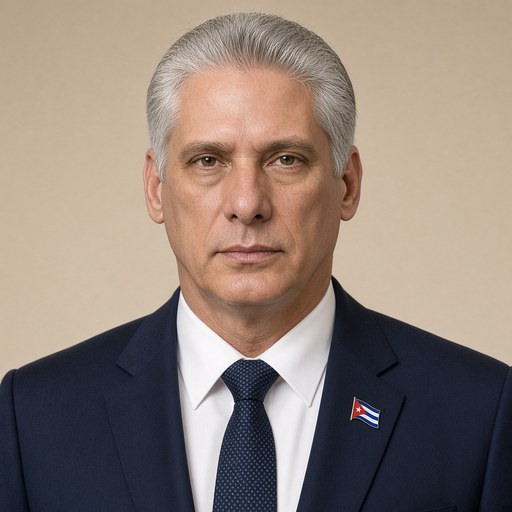
 Miguel Díaz-Canel · President of Cuba
- Context
- Díaz-Canel addressed international dignitaries at celebrations marking the 500th anniversary of the founding of Havana, Cuba, on November 18, 2019.
- Main themes
- Havana's 500th anniversary, Cuban resistance and sovereignty, US blockade, Cuban Revolution history, international solidarity, Latin American unity, cultural heritage, socialist identity, Non-Aligned Movement, ALBA-TCP integration, peace and diplomacy, neoliberalism opposition
- Duration
- ~8 min
- Words
- 924
- Sentences
- 26
- Readability
- 28
- Grade
- 18.2
- Syntax
- 3.65
- Vocabulary
- 2.37
Translated from Spanish
The broad sphere of national life a sentence belongs to. Every sentence has an Arena, so it is the denominator the other indices are read against.
Other26 sentences in 17 paragraphs
Dear friends who have come from so many corners of the world to celebrate the 500 years of our beloved capital:
It has been half a millennium since the founding of the village of San Cristóbal de La Habana here, which since then has been a point of arrival and departure, of meeting and permanence in this world that those who did not know it called New. But they called it well, because there is always something surprising on this side of the Atlantic, where our archipelago is a key and a bridge, a door or a wall, depending on who arrives and with what spirit they arrive. Open, hospitable, kind, and supportive to friends. Closed, impassable, invincible to those who attempt to subdue it.
Numerous Heads of State and Government, Kings, Princes, Ministers, and artistic and literary personalities, creators from all disciplines, and representatives from the most diverse regions and political beliefs have enhanced the history of Havana by becoming protagonists and witnesses of Cuba's noble ecumenical vocation. Three Catholic Popes have also visited us in the last 20 years: John Paul II, Benedict XVI, and Francis, as well as Patriarch Kirill of the Russian Orthodox Church.
In 2016, in a historic meeting that ended a thousand-year schism, the highest authorities of two branches of Christianity met here: the Catholic Church and the Orthodox Church. At that time, Pope Francis said that Havana was on its way to becoming the Capital of Unity.
It is a fitting title for a city that previously deserved the title of World Heritage Site, and more recently that of Marvelous City, and which many also recognize as a city of Peace, because here the Proclamation of a Zone of Peace for Latin America and the Caribbean was signed in 2014.
And we say this with pride, but also with pain, at a moment of instability, crisis, and uncertainty in various points of the world and in our own region. When our celebration, conceived and thought of with so much emotion and joy, is accompanied by the bitter taste of the blow to a sister nation, where right now our doctors and health workers, missionaries of life, who have only love to oppose to hate, are suffering harassment and threats.
Looking to the future from the past we commemorate today, because memory is a fundamental basis of human spirituality, Havana that welcomes you refers us to a cumulative of multiple cultural contributions, of rebellion and resistance, and of milestones that impact the history of Humanity.
In our bay, the battleship Maine exploded, a pretext to start the first war of modern imperialism. Through the bustling Malecón avenue, the Caravan of Freedom entered the Capital, bringing the Cuban Revolution, with Commander-in-Chief Fidel Castro at the forefront.
At one of our most emblematic corners, 23 and 12, Cuba declared itself the first socialist state in the Western Hemisphere, and along the entire Havana coastline, the images of an army of young people defending our sovereignty during "the bright and sad days of the Caribbean Crisis" were immortalized forever.
And in the Plaza de la Revolución José Martí, the political and administrative heart of the country, popular gatherings have taken place that rank among the most massive in the world, including the first and second declarations of Havana, in defense of sovereignty, independence, and national dignity.
This City is the cradle and home of renowned Cubans of worldwide fame such as Félix Varela, José Martí, Carlos Juan Finlay, José Raúl Capablanca, Bola de Nieve, Alejo Carpentier, Alicia Alonso, and an endless list of other creators born elsewhere but residing here, to permanently nourish the feeling that we are a nation blessed by the number of men and women of extraordinary values who feel the special pride of calling themselves Cubans.
Our Havana has hosted two Summits of the Non-Aligned Movement, an Ibero-American Summit, a Summit of the Group of 77 plus China, and a Summit of the Community of Latin American and Caribbean States.
Here, countless bilateral and multilateral agreements have been signed that impact international relations. And here took place the first, historic, and heartfelt meetings between Fidel and Chávez, from which the agreements for the creation of ALBA-TCP would be born, a paradigmatic integration project that will celebrate its 15th anniversary in December.
From one of its hills stands the University of Havana, alma mater of Higher Education in Cuba. A city of sciences, dance, cinema, literature, significant sports and cultural events, of friendship and solidarity with the peoples of Africa, Asia, and Latin America, Havana can also be considered today as an example of resistance against neoliberalism and imperialism, a meeting point for all those in the world who defend justice, true democracy, that which considers the fate of the poor of the earth and not just the economically powerful elites, and also for all those who believe that a better world is possible, without interference or imperial domination.
And it is worth reaffirming today: this is also, 60 years ago, the city of dignity, bastion of resistance to the longest, most unjust, and genocidal blockade ever applied against an entire people by a powerful empire.
Havana, beautiful and simple, as you will have already verified, is hospitable and safe for its citizens and all who visit it and learn to understand its unique and admirable way of being and making happy those who love it.
Once again, welcome, dear friends, and thank you for joining us in the celebrations for the half millennium of our beloved Capital.
The original Spanish. The tags above are read on the English translation's sentences.
Estimados amigos que han venido de tantos rincones del mundo a saludar los 500 años de nuestra amada capital:
Hace medio milenio que se fundó aquí la villa de San Cristóbal de La Habana, la que desde entonces sería punto de llegada y de partida, de encuentro y de permanencia en este mundo que llamaron Nuevo los que no lo conocían. Pero así lo llamaron bien, porque siempre hay algo sorprendente de este lado del Atlántico, donde nuestro archipiélago es llave y puente, puerta o muralla, según quien llegue y con los ánimos que llegue. Abierta, hospitalaria, amable y solidaria para los amigos. Cerrada, infranqueable, invencible para quienes intenten someterla.
Numerosos Jefes de Estado y Gobierno, Reyes, Príncipes, Ministros y personalidades artísticas, literarias, creadores de todas las disciplinas y representantes de las más diversas regiones y credos políticos, han prestigiado la historia habanera al convertirse en protagonistas y testigos de la noble vocación ecuménica de Cuba. Tres Papas católicos nos han visitado también en los últimos 20 años: Juan Pablo II, Benedicto XVI y Francisco, y el Patriarca Kirill de la Iglesia Ortodoxa de toda Rusia.
En 2016, en un encuentro histórico que puso fin a un cisma de mil años, aquí se encontraron las máximas autoridades de dos ramas del cristianismo: la Iglesia Católica y la Iglesia Ortodoxa. Entonces el Papa Francisco dijo que La Habana iba camino de ser Capital de la Unidad.
Es un título justo para la que antes mereció el de Patrimonio de la Humanidad, y más reciente el de Ciudad Maravilla, y que muchos reconocen también como ciudad de Paz, porque aquí fue firmada en 2014 la Proclama de Zona de Paz para América Latina y el Caribe.
Y lo decimos con orgullo, pero también con dolor, en un momento de inestabilidad, crisis e incertidumbre en disímiles puntos de la geografía mundial y en nuestra propia región. Cuando nuestra celebración, pensada y concebida con tanta emoción y alegría, se acompaña del amargo sabor del golpe a una nación hermana, donde ahora mismo sufren acoso y amenaza nuestros médicos y trabajadores de la salud, misioneros de la vida, que solo tienen amor para oponer al odio.
Mirando al futuro desde el pasado que hoy conmemoramos, porque la memoria es base fundamental de la espiritualidad humana, La Habana que los recibe nos remite a un acumulado de múltiples aportaciones culturales, de rebeldía y resistencia y de hitos que impactan en la historia de la Humanidad.
En nuestra bahía estalló el acorazado Maine, pretexto para iniciar la primera guerra del imperialismo moderno. Por la bulliciosa avenida del Malecón, entró la Caravana de la Libertad que trajo a la Capital la Revolución cubana, con el Comandante en Jefe Fidel Castro al frente.
En una de nuestras más emblemáticas esquinas, 23 y 12, Cuba se declaró como el primer estado socialista del hemisferio occidental y en todo el litoral habanero quedaron inmortalizadas para siempre las imágenes de un ejército de muchachos defendiendo nuestra soberanía en «los días luminosos y tristes de la Crisis del Caribe».
Y en la Plaza de la Revolución José Martí, corazón político y administrativo del país, se han realizado concentraciones populares que califican entre las más masivas del mundo, entre ellas la primera y la segunda declaración de La Habana, en defensa de la soberanía, la independencia y la dignidad nacional.
Esta Ciudad es cuna y hogar de cubanos insignes de renombre mundial como Félix Varela, José Martí, Carlos Juan Finlay, José Raúl Capablanca, Bola de Nieve, Alejo Carpentier, Alicia Alonso y una lista infinita de otros creadores nacidos en otras partes, pero radicados aquí, para alimentar de forma permanente la sensación de que somos una nación bendecida por la cantidad de hombres y mujeres de extraordinarios valores que sienten el especial orgullo de llamarse cubanos.
Nuestra Habana ha sido sede de dos Cumbres del Movimiento de Países no Alineados, una Cumbre Iberoamericana, una Cumbre del Grupo de los 77 más China y una Cumbre de la Comunidad de Estados Latinoamericanos y Caribeños.
Aquí se han firmado innumerables acuerdos bilaterales y multilaterales que impactan en las relaciones internacionales. Y aquí se produjeron los primeros, históricos y entrañables encuentros entre Fidel y Chávez, de los que nacerían los acuerdos para la creación del ALBA-TCP, proyecto de integración paradigmático que en diciembre cumplirá 15 años.
Desde una de sus colinas destaca la Universidad de La Habana, alma máter de la Educación Superior en Cuba. Ciudad de las ciencias, de la danza, del cine, la literatura, de significativos eventos deportivos, culturales, de amistad y solidaridad con los pueblos de África, Asia y América Latina, también puede considerarse hoy a La Habana como ejemplo de la resistencia contra el neoliberalismo y el imperialismo, punto de encuentro de todos los que en el mundo defienden la justicia, la democracia verdadera, esa que contempla la suerte de los pobres de la tierra y no solo de las élites económicamente poderosas y también de todos los que creen que es posible un mundo mejor, sin injerencias ni dominaciones imperiales.
Y no sobra reafirmarlo hoy: esta es también, hace 60 años, la ciudad de la dignidad, bastión de la resistencia al bloqueo más prolongado, injusto y genocida que se haya aplicado contra todo un pueblo por un poderoso imperio.
La Habana, bella y sencilla, como habrán comprobado ya, es hospitalaria y segura para sus ciudadanos y todos cuantos la visiten y aprendan a entender su manera única y admirable de ser y hacer feliz a cuantos la amen.
Sean otra vez bienvenidos, queridos amigos, y gracias por acompañarnos en los festejos por el medio milenio de nuestra amada Capital.
(Cubaminrex-Granma)