




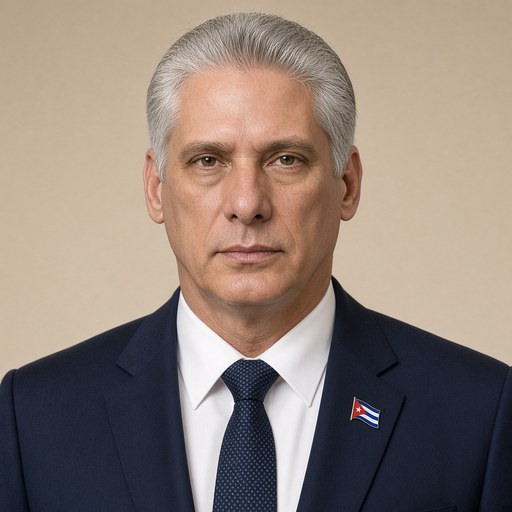
Speech delivered by Miguel Díaz-Canel Bermúdez at the closing of the XI Congress of the Federation of Cuban Women.
 Miguel Díaz-Canel · President of Cuba
- Context
- Díaz-Canel addressed the closing session of the XI Congress of the Federation of Cuban Women in Havana on March 9, 2024, coinciding with International Women's Day.
- Main themes
- Federation of Cuban Women, women's empowerment, Cuban Revolution, International Women's Day, resistance against U.S. blockade, gender equality, food sovereignty, Palestinian solidarity, history of Cuban women's struggle, socialist feminism, community development
- Duration
- ~25 min
- Words
- 3,024
- Sentences
- 100
- Readability
- 31
- Grade
- 16.3
- Syntax
- 3.35
- Vocabulary
- 2.33
Translated from Spanish
The broad sphere of national life a sentence belongs to. Every sentence has an Arena, so it is the denominator the other indices are read against.
Other100 sentences in 71 paragraphs
Dear Army General Raúl Castro Ruz, leader of the Cuban Revolution;
Comrades of the leadership of the Party, the State, and the Government;
Dear federated members:
First of all, our congratulations to Teresa on her well-deserved reelection as Secretary General of the organization of Cuban women, and to the comrades elected to the Direction of the FMC, its National Committee, and Secretariat, who are an excellent representation of Cuban women.
Congratulations, comrades! Congratulations and thank you!
Endless thanks for this joy with which you have enlivened your Congress, you who face the most difficult moments of a nation that has been hardened by adversity, without losing tenderness.
Thank you for the love of daughters, mothers, grandmothers, that the hatred of the powerful and cowardly neighbor has never been able to extinguish.
Thank you for the creative resistance, which you symbolize like no one else, and which inspires us, constantly renewing the energies of the Revolution.
Thank you for these unique songs, those personal and collective stories of economic empowerment in defense of sustainable development, of participation in food production and in the defense of food sovereignty, of community work and patriotism that you have brought to Havana from every corner of our archipelago, defining Cuban women as victors of the impossible!
Once again, we have seen here how there are good experiences that inspire us with the certainty that we can overcome the intensified blockade with our own talent, with our own effort, with our own work, as demonstrated here by Cuban women. Still, those good experiences are exceptions, and now we must achieve that we multiply those exceptions and turn them into the rule.
Nothing can the hatred of those who live off the business of attacking the Revolution do against the strength of Cuban women, because from the times of Ana Betancourt, Mariana Grajales, Amalia Simoni to the times of Haydeé, Melba, Vilma, Celia, the Pelotón de las Marianas, and any of you, who are gathered here to speak of your dreams and also of your complaints, the tender but firm strength of Cuban women is love.
Although when it comes to defending their children, their homeland, their conquests, and their rights, they can transform into fearsome Cuban lions, even in those moments, what moves them is revolutionary love, a powerful feeling that conquers all.
For that fundamental reason, it will always be a great honor and a high responsibility to speak to Cuban women. And it is especially so today, as you close your XI Congress, coinciding with International Women's Day, a date marked by the rebellion of women against a globally prevailing discriminatory order that has not yet disappeared.
We cannot overlook in the tribute of this day that on a day like this in 1908, in New York, 129 textile workers were burned alive in a factory from which they were prevented from leaving to claim their rights. In their martyrdom, the declaration of International Women's Day was inspired.
It was socialist women, led by the proudly communist Clara Zetkin, who managed to honor March 8 in 1910, at the Second Socialist Women's Conference in Copenhagen. They not only vindicated the value of the New York workers but also promoted an advanced set of demands recognizing women as a social force that cannot be ignored and that should enjoy political and economic rights on an equal footing with men.
More than a century has passed since those events, and although the demands in the struggles of women have changed, discrimination and various forms of violence against them still persist, to the shame of all humanity, without a solution in capitalist societies.
Today, from this Congress, we once again condemn, in a vigorous manner, the genocide and extermination that Israel exercises with the support of the Government of the United States against the Palestinian people and, in particular, against the women and children of Palestine.
The Cuban Revolution, with its profound emancipatory and humanist vocation, since its triumph on January 1, 1959, promoted the development of an inclusive model based on equality and social justice, focusing its public policies on the elimination of all forms of discrimination, particularly those that, due to gender, affect women.
It is no coincidence that Cuba was the first country to sign, and the second to ratify, the Convention on the Elimination of All Forms of Discrimination Against Women, thereby assuming the commitment, as a State Party, to comply with that important binding international legal norm.
It would be just a little more than a year and a half after the revolutionary triumph when, on August 23, 1960, the Federation of Cuban Women was founded, and at that event, with Fidel's prominent presence, its recognized eternal President, the always beloved heroine of the Cuban Revolution, Vilma Espín Guillois, was elected.
With the Federation, as our people know it, Cuban women would integrate into a single organization that, from its inception, achieved the incorporation of women into employment and the programs of social and economic changes of the Revolution, adding new tasks and responsibilities at the social and community level throughout its historical development.
Cuban women would thus come to have a transcendental role in society, earned through effort, example, and tenacity. As Fidel said: "No one has made greater sacrifices than she (...) nor has anyone risen so high as to turn daily effort into a feat." The logic of socialist construction with the Revolution surpassed the logic of capitalism in terms of the emancipation of Cuban women.
In reviewing the achievements of the Federation of Cuban Women, it is necessary to evoke the legacy and action of Fidel, Raúl, and Vilma, and with them, all the comrades, hundreds, thousands of comrades who would be impossible to name now, who over the years have driven and made irreversible within the Revolution the female conquests of our society.
But they also instilled in us the spirit of dissatisfaction, which compels us to turn this day of tribute into a reminder of all that remains to be done and advanced, which essentially involves uprooting all vestiges of discrimination and violence that still threaten us.
As I have said more than once, we recognize all that the Revolution has done for women, but we cannot remain stagnant or complacent. There is still much to do! We must still break cultural barriers or mental frameworks that underlie and end up belittling women or wounding their rights, their dignity, their rightful place in a society that aspires to the highest degree of social justice possible. We still have a long way to go!
Dear comrades:
Between the X and this XI Congress, the National Program for the Advancement of Women was designed and approved, the best expression of the political will of the State, which encourages progress towards gender equality in the country, an approach on which we still observe misunderstanding and prejudices that we must eradicate.
Although the principles of the Program are essentially not new, they do expand the impact of the Revolution in this area and enhance it comprehensively, so that the process of transformations in which the country is currently immersed does not provoke setbacks in what has been achieved. And wherever something like that may occur, it must be corrected immediately.
To guarantee the implementation of the National Program for the Advancement of Women, an extensive, intense work plan is deployed, which commits all the bodies of the Central State Administration, as well as various institutions down to the provincial and municipal levels. The objective is to ensure that the gender perspective predominates in the design of public policies and that there is sensitive monitoring of all issues involving the development of women in society.
The legislative advances that support those political projections are eloquent: the approval of the Family Code, the Penal Code, the Law on Criminal Execution, the Law on Criminal Procedure, the Code of Processes, the Comprehensive Strategy for the Prevention and Attention to Gender Violence, and the Protocol for action in situations of discrimination, violence, and harassment in the workplace.
In these legal instruments, we have very valuable tools to uphold the rights won and to conquer others that are pending.
The confrontation of gender violence and all forms of discrimination occupies a central place in the contents of those norms, but also in the actions and measures contemplated in the National Program for the Advancement of Women.
Although the reprehensible scourge of violence against women does not reach in Cuba the brutal expressions that occur in other countries, the cases that appear with lamentable frequency are sufficient to outrage us and act, to not remain expectant, impassive, and tolerant.
The enemies of the Revolution conveniently and tendentiously use and manipulate the figures. For the Cuban State, a single case is alarming and unacceptable. These are people, human beings, lives that have been cut short or are being wounded right now as a result of the persistence of degrading patterns, of a patriarchy incompatible with the principles of a socialist society.
A single name of a violated woman should be enough to make us feel outraged and act energetically at the political and legal level, but always aware that this cannot be a one-day struggle, but a permanent purpose.
The anti-Cuban subversive platforms attempt to impose the narrative that there is femicide in Cuba, a term that indicates supposed state inaction in the face of violent acts based on gender. We can categorically assure here that this is a media construction, completely foreign to the Cuban reality. There can be no impunity in Cuba, much less in the face of crimes motivated by any type of discrimination and, above all, against women!
The legal norms I mentioned earlier have very precise sections that classify as a crime the most diverse figures that can undermine the physical, psychological, or moral integrity of women.
The Interior Order system has the primary mission of confronting and bringing to justice all the perpetrators of these acts. At the same time, the court system, adhering to the law, provides for high and exemplary sentences for the perpetrators of such crimes.
Just to cite one example, in 2023, Cuban courts sentenced 61 individuals for the murder of women. In 93% of the cases, the sentences exceeded twenty years, and five individuals are serving life imprisonment.
These are just a couple of data points that illustrate the zero tolerance of the Cuban State towards this type of behavior. However, I believe we all agree that it is not enough to confront these crimes with the Police and the courts. It is urgent to improve the systems of popular and family education at the community level, with a prophylactic and preventive approach.
In particular, preventive action is required in the community, in the neighborhood, with the timely identification of each case prone to violence for gender reasons. Alerts, early reporting, attention, and treatment as part of the influence on the social and family environment where it manifests must be the priority for the organizations that exist there.
On the other hand, we will not give up on continuing to be a cultured, educated, and informed society, and in those vital processes that traverse education and social communication, it is essential to promote the condemnation of any manifestation of violence or discrimination.
Dear comrades:
This Congress, from the grassroots level, has promoted deep and very critical discussions of the problems of the organization, especially in the current circumstances.
Identifying the weakening of the grassroots structures, that is, the block and the delegation, as one of the main problems, compels the leadership of the Federation of Cuban Women to seek the most urgent and effective ways for its revitalization in the shortest possible time. Failing to do so would break the logic of the profound social and mass sense of this organization that groups nearly 4.5 million federated members across the country, but whose action is embodied in the more than 14,000 blocks and 82,000 grassroots delegations. It is there or not where the FMC exists, depending on how it carries out its work.
The blocks and their grassroots delegations are essential for social work, house by house, family by family, woman by woman, which is the essence of ideological work and gains greater strength in the current context.
Preventive, educational, and social care work at the community level needs the vision and action of the Federation of Cuban Women and must be the center of the fundamental activity of the organization, particularly in the 1,236 communities identified with vulnerable situations.
I see no more sensitive and generous gaze than that of women when they have to face in their environment the presence of young people disconnected from study and work, of people with addictions, of single mothers with more than two children, of helpless elderly people, who often walk around us, deprived of fundamentally humane treatment.
Those people, as we have been repeating in recent weeks, cannot be left behind; they must feel the weight of concern and attention from all our organizations, with the Federation of Cuban Women at the forefront, due to its mass character, the nature of its missions, and the sensitivity of women to face these challenges.
It is true that the organization alone will not be able to solve everyone's problems, but this imposes a permanent and integrated work with the rest of the community factors, and especially with social workers.
To achieve this and at the same time revitalize the grassroots structures, we must also advance in the training of leaders at all levels, another of the problems identified by you.
The Revolution of women in the Revolution was initiated by leaders with a solid Martian education and, therefore, a deep humanist, altruistic, and solidarity vocation. These qualities allowed them to understand and address all the sensitive phenomena and issues of our society, at the local and community levels, which have been taken on for years by the Federation of Cuban Women.
In those and in thousands of examples that the emotional memory of our neighborhoods holds, the most beautiful feminine tradition pulses, and the main challenge of the current generations of Cuban women beats.
The current leaders and federated members must constantly draw from those virtues to drive the motivation for the work of the Federation in the new generations with as much impetus as possible. That motivation must never be absent in such an uplifting work of the human spirit as are the objectives and missions pursued by the organization.
To instill that spirit in the work of the federated members, it is necessary to eradicate formalism, methods, and ways of doing things that have been overcome by time and the rapid advancement of technologies. It is essential to uphold the principles from new platforms and means of communication; to connect with the girls in their neighborhoods and in their study and work centers. Bringing the FMC to its time is the first step to ensure their participation in the organization.
Dear federated members:
Always remember and carry with you that phrase from Fidel that we have quoted several times today, when he said that you are a Revolution within the Revolution.
Always be a revolution, in the semantic and political sense of that word, constantly revolutionizing yourselves, without yielding space to routine, complacency, or conformity with what works poorly or does not work, simply.
Continue to go out, as Fidel called you from the very first day, to conquer the world and to remain at the center of this Revolution, with the enthusiasm and creative spirit of the Cuban woman since the emergence of the nation.
In our hard struggle to confront and overcome the blockade without waiting for it to be lifted; to guarantee the greatest degree of social justice possible in the current complex economic environment; to correct the distortions in the implementation of economic measures and to face cleanly and decisively the negative trends and the growing phenomena of corruption and illegality that the historical enemy of the Revolution feeds with the hope that a social explosion will be unleashed, we count on the will, dignity, and courage of Cuban women to continue saving the homeland, the Revolution, and socialism with the invincible strength of the love of the Cuban woman!
The ethics of the cadres has been and will be a pillar of the Revolution and, as Che said, “its backbone.” The cadres come from the ranks of the people, in the midst of difficulties and shortages they choose the path of sacrifice, of doing, creating, and transforming. The trust of the people is placed in the cadres; their ethics is the shield where all the actions of influence and subversion from the empire have crashed in an attempt to tarnish their example.
The highest historical leaders, Fidel and Raúl, and the Party leadership have given and will continue to give evidence of a frontal, transparent, and zero-tolerance fight against manifestations of lack of ethics and exemplary behavior among the cadres, always in the name of the people and for the unity of our homeland.
Let us act as Army General Raúl Castro Ruz asked us in his speech on the occasion of the 65th Anniversary of the Revolution, in Santiago de Cuba: “I call on all our cadres to reflect every day on what more can be done to justify the trust and exemplary support of our compatriots, even in the midst of so many needs, to not be naive or triumphalist, to avoid bureaucratic responses and any manifestation of routine and insensitivity, to find realistic solutions with what we have, without dreaming that something will fall from the sky.”
Cuban women have much to contribute, and the Revolution needs much from Cuban women, not only resisting but more than anything, fighting.
I conclude with the words of recognition and encouragement that the Army General told us at the end of the 10th Congress:
“More than ever, we need the strength and morale of our women”.
Eternal glory to the beloved Vilma!
Socialism or Death!
Homeland or Death!
We will overcome!
(Cubaminrex - Presidency of Cuba)
The original Spanish. The tags above are read on the English translation's sentences.
Querido General de Ejército Raúl Castro Ruz, líder de la Revolución Cubana;
Compañeras y compañeros de la dirección del Partido, el Estado y el Gobierno;
Queridas federadas:
Ante todo, nuestras felicitaciones para Teresa por su merecida reelección como Secretaria General de la organización de las mujeres cubanas, y a las compañeras elegidas para la Dirección de la FMC, de su Comité Nacional y Secretariado, que son una excelente muestra de la mujer cubana (Aplausos).
¡Felicidades compañeras! ¡Felicidades y gracias!
Gracias infinitas por esta alegría con la que han animado su Congreso, ustedes, que enfrentan sin miedo los momentos más difíciles de una nación que se ha curtido en la dificultad, sin perder la ternura.
Gracias por el amor de hijas, madres, abuelas, que el odio del vecino poderoso y cobarde no ha podido nunca apagar.
Gracias por la resistencia creativa, que ustedes simbolizan como nadie, y que nos inspira, renovando constantemente las energías de la Revolución.
Gracias por estos cantos únicos, esas historias personales y colectivas de empoderamiento económico en defensa del desarrollo sostenible, de participación en la producción de alimentos y en la defensa de la soberanía alimentaria, del trabajo comunitario y del patriotismo que ustedes han traído a La Habana desde cada rincón de nuestro archipiélago, definiendo a las mujeres cubanas como ¡vencedoras de imposibles!
Una vez más aquí hemos visto cómo hay buenas experiencias que nos inspiran en la certeza de que podemos vencer el bloqueo recrudecido con nuestro propio talento, con nuestro propio esfuerzo, con nuestro propio trabajo, como lo han demostrado aquí las mujeres cubanas. Todavía esas buenas experiencias son excepciones, y ahora tenemos que lograr que esas excepciones las multipliquemos y las convirtamos en regla.
Nada puede el odio de los que viven del negocio de atacar a la Revolución contra la fuerza de la mujer cubana, porque desde los tiempos de Ana Betancourt, de Mariana Grajales, de Amalia Simoni hasta los tiempos de Haydeé, Melba, Vilma, Celia, el Pelotón de las Marianas y de cualquiera de ustedes, las que están reunidas aquí para hablar de sus sueños y también de sus quejas, la tierna pero firme fuerza de las mujeres cubanas es el amor.
Aunque a la hora de defender a sus hijos, a la patria, sus conquistas y sus derechos pueden transformarse en temibles leonas cubanas, aun en esos momentos, lo que las mueve es el amor revolucionario, poderoso sentimiento que todo lo vence.
Por esa razón fundamental será siempre un gran honor y una alta responsabilidad hablarles a las mujeres cubanas. Y lo es especialmente hoy, cuando ustedes clausuran su XI Congreso, coincidiendo con el Día Internacional de la Mujer, una fecha marcada por la rebeldía de las mujeres contra un orden discriminatorio imperante a nivel global, que aún no ha desaparecido.
No podemos soslayar en el homenaje de esta jornada que un día como este de 1908, en Nueva York, 129 obreras textiles fueron quemadas vivas en una fábrica de la que se les impidió salir a reclamar sus derechos. En su martirologio se inspiró la declaración del Día Internacional de la Mujer.
Fueron mujeres socialistas, lideradas por la orgullosamente comunista Clara Zetkin, las que lograron honrar el 8 de Marzo en 1910, en la Segunda Conferencia de Mujeres Socialistas, en Copenhague. Ellas no solo reivindicaron el valor de las obreras neoyorquinas, sino que promovieron un avanzado pliego de demandas en el que se reconocía a la mujer como una fuerza social que no puede ser ignorada, y que debía gozar de los derechos políticos y económicos en pie de igualdad con los hombres.
Más de un siglo ha transcurrido desde aquellos acontecimientos y, aunque las demandas en las luchas de las mujeres han cambiado, la discriminación y diversas formas de violencia hacia ellas aún persisten, para vergüenza de la humanidad toda, sin solución en las sociedades capitalistas.
Hoy desde este Congreso condenamos una vez más, de manera enérgica, el genocidio y el exterminio que ejerce Israel con el apoyo del Gobierno de los Estados Unidos contra el pueblo palestino y, en particular, contra las mujeres y niños de Palestina.
La Revolución Cubana, con su profunda vocación emancipadora y humanista, desde su triunfo el 1ro. de Enero de 1959, promovió el desarrollo de un modelo inclusivo sustentado en la igualdad y la justicia social, enfocando sus políticas públicas hacia la eliminación de toda forma de discriminación, particularmente aquellas que, por motivo de género, afectan a la mujer.
No es casual que Cuba fuera el primer país en firmar, y el segundo en ratificar, la Convención sobre la eliminación de todas las formas de discriminación contra la mujer, con lo cual asumió el compromiso, como Estado Parte, de cumplir con esa importante norma jurídica internacional de carácter vinculante.
Transcurriría apenas un poco más de un año y medio del triunfo revolucionario, cuando el 23 de agosto de 1960 se funda la Federación de Mujeres Cubanas, y en aquel acto, con la presencia protagónica de Fidel, se eligió a su reconocida Presidenta eterna, la siempre entrañable heroína de la Revolución Cubana, Vilma Espín Guillois (Aplausos).
Con la Federación, como le conoce nuestro pueblo, las mujeres cubanas se integrarían en una sola organización que, desde su nacimiento, logró la incorporación de la mujer al empleo y a los programas de cambios sociales y económicos de la Revolución, sumando en su devenir histórico nuevas tareas y responsabilidades a nivel social y comunitario.
La mujer cubana pasaría así a tener un rol trascendental en la sociedad, ganado a base de esfuerzo, ejemplo y tesón. Como dijo Fidel: “Nadie como ella ha hecho los mayores sacrificios (...) ni se ha empinado tanto hasta convertir en hazaña el esfuerzo cotidiano”. La lógica de la construcción socialista con la Revolución superó a la lógica del capitalismo en materia de emancipación de la mujer cubana.
Repasando los logros de la Federación de Mujeres Cubanas, es obligado evocar el legado y la acción de Fidel, Raúl y Vilma, y con ella el de todas las compañeras, cientos, miles de compañeras que sería imposible nombrar ahora, quienes a lo largo de estos años impulsaron e hicieron irreversibles dentro de la Revolución las conquistas femeninas de nuestra sociedad.
Pero ellos también nos inculcaron el espíritu de la insatisfacción, que nos obliga a convertir esta jornada de homenaje en recordación de todo lo pendiente por hacer y avanzar, que implica, en esencia, arrancar de raíz todos los vestigios de discriminación y violencia que aún nos acechan.
Como he dicho más de una vez, reconocemos todo lo que ha hecho la Revolución por la mujer, pero no podemos quedarnos detenidos ni complacidos. ¡Hay mucho que hacer todavía! Aún debemos romper barreras culturales o esquemas mentales que subyacen y terminan menospreciando a la mujer o lacerando sus derechos, su dignidad, su justo lugar en una sociedad que aspira al mayor grado de justicia social posible. ¡Aún nos queda camino por recorrer!
Queridas compañeras:
Entre el X y este XI Congreso se diseñó y aprobó el Programa Nacional para el Adelanto de las Mujeres, la mejor expresión de la voluntad política del Estado, que incentiva el avance hacia la igualdad de género en el país, un enfoque sobre el que aún observamos incomprensión y prejuicios que debemos erradicar.
Aunque los postulados del Programa, en esencia, no son nuevos, sí amplían el impacto de la Revolución en este ámbito, y lo potencian de forma integral, de manera que el proceso de transformaciones en el que está inmerso el país ahora mismo, no provoque retrocesos en lo conquistado. Y dondequiera que pueda darse algo así, corregirlo de inmediato.
Para garantizar la implementación del Programa Nacional para el Adelanto de las Mujeres se despliega un extenso plan de trabajo, intenso, que compromete a todos los organismos de la Administración Central del Estado, así como a las diversas instituciones hasta el nivel de provincias y municipios. El objetivo es garantizar que en el diseño de las políticas públicas predomine el enfoque de género y haya un seguimiento sensible a todos los asuntos que involucran el desarrollo de las mujeres en la sociedad.
Los avances legislativos que respaldan esas proyecciones políticas son elocuentes: la aprobación del Código de las Familias, el Código Penal, la Ley de Ejecución Penal, la Ley de Proceso Penal, el Código de Procesos, la Estrategia Integral de Prevención y la Atención a la Violencia de Género, y el Protocolo de actuación ante situaciones de discriminación, violencia y acoso en el ámbito laboral.
En estos instrumentos legales tenemos herramientas muy valiosas para hacer prevalecer los derechos conquistados y para conquistar otros pendientes.
El enfrentamiento a la violencia de género y a todo tipo de discriminación tiene un lugar central en los contenidos de esas normas, pero también en las acciones y medidas que contempla el Programa Nacional para el Adelanto de las Mujeres.
Aunque el repudiable flagelo de la violencia contra la mujer no alcance en Cuba expresiones brutales que se dan en otros países, los casos que aparecen con lamentable frecuencia resultan suficientes para indignarnos y actuar, para no permanecer expectantes, impasibles y tolerantes.
Los enemigos de la Revolución usan y manipulan conveniente y tendenciosamente las cifras. Para el Estado cubano un solo caso resulta alarmante e inaceptable. Se trata de personas, de seres humanos, de vidas que han sido tronchadas o que están siendo laceradas ahora mismo como resultado de la vigencia de patrones denigrantes, de un patriarcado incompatible con los principios de una sociedad socialista.
Un solo nombre de mujer violentada debe ser suficiente para sentirnos indignados y actuar con energía a nivel político y legal, pero siempre conscientes de que esta no puede ser la lucha de un día, sino un propósito permanente.
Las plataformas subversivas anticubanas intentan imponer la matriz de que en Cuba existe feminicidio, término que indica supuesta inacción estatal ante hechos violentos por razón de género. Podemos asegurar aquí, categóricamente, que esa es una construcción mediática, ajena por completo a la realidad cubana. ¡No puede haber impunidad en Cuba, mucho menos ante delitos motivados por cualquier tipo de discriminación y, ante todo, contra la mujer!
Las normas jurídicas que mencioné anteriormente tienen apartados muy precisos que tipifican como delito las más diversas figuras que pueden menoscabar la integridad física, psicológica o moral de las mujeres.
El sistema de Orden Interior tiene la misión primordial de enfrentar y poner a disposición de los tribunales a todos los autores de estos hechos. A la par, el sistema de tribunales, apegado a la ley, prevé condenas altas y ejemplarizantes para los comisores de ese tipo de delitos.
Por solo citar un ejemplo, en el año 2023 los tribunales cubanos sancionaron a 61 sujetos autores de asesinato de mujeres. En el 93 % de los casos las sanciones sobrepasaron los veinte años, y cinco sujetos cumplen privación perpetua de libertad.
Son solo un par de datos que ilustran la tolerancia cero del Estado cubano frente a este tipo de conducta. No obstante, creo que todos coincidimos en que no basta enfrentar estos delitos con la Policía y los tribunales. Urge perfeccionar los sistemas de educación popular y familiar a nivel comunitario, con enfoque profiláctico y preventivo.
De manera particular, se requiere acción preventiva en la comunidad, en el barrio, con la identificación oportuna de cada caso proclive a violencia por motivos de género. Los llamados de alerta, la denuncia temprana, la atención y el tratamiento como parte de la influencia sobre el medio social y familiar donde se manifieste deben ser la prioridad para las organizaciones que allí existen.
Por otra parte, no vamos a renunciar a seguir siendo una sociedad culta, instruida y educada, y en esos procesos que son vitales y que transitan por la educación y la comunicación social es preciso promover la condena de cualquier manifestación de violencia o discriminación.
Queridas compañeras:
Este Congreso, desde el nivel de base, ha promovido discusiones profundas y muy críticas de los problemas de la organización, especialmente en las circunstancias actuales.
Identificar el debilitamiento de las estructuras de base, es decir, del bloque y la delegación, como una de las problemáticas principales, obliga a la dirección de la Federación de Mujeres Cubanas a buscar las más urgentes y efectivas vías para su revitalización en el más corto tiempo posible. No hacerlo rompería la lógica del profundo sentido social y de masas de esta organización que agrupa a cerca de 4 millones y medio de federadas en todo el país, pero cuya acción se corporiza en los más de 14 000 bloques y 82 000 delegaciones de base. Es allí o no donde está la FMC, según realice su trabajo.
Los bloques y sus delegaciones de base son imprescindibles para el trabajo social, casa a casa, familia a familia, mujer a mujer, que es esencia del trabajo ideológico y cobra mayor fuerza en el contexto actual.
El trabajo preventivo, educativo y de atención social a nivel comunitario necesita de la visión y acción de la Federación de Mujeres Cubanas y debe ser centro de la actividad fundamental de la organización, particularmente en las 1 236 comunidades identificadas con situación de vulnerabilidad.
No veo mirada más sensible y generosa que la femenina cuando tiene que enfrentar en su entorno la presencia de jóvenes desvinculados del estudio y del trabajo, de personas con adicciones, de madres solteras con más de dos hijos, de ancianos desvalidos, que muchas veces transitan a nuestro alrededor, privados de un tratamiento elementalmente humano.
Esas personas, como hemos estado repitiendo en las últimas semanas, no pueden quedar atrás, tienen que sentir el peso de la preocupación y la atención de todas nuestras organizaciones, con la Federación de Mujeres Cubanas en la vanguardia, por su carácter masivo, la naturaleza de sus misiones y la sensibilidad de la mujer para enfrentar estos desafíos.
Es cierto que por sí sola la organización no podrá resolver los problemas de todos, pero ello impone un trabajo permanente e integrado con el resto de los factores de la comunidad y muy especialmente los trabajadores sociales.
Para lograr esto y al mismo tiempo revitalizar las estructuras de base, hay que avanzar también en la preparación de los dirigentes a todos los niveles, otro de los problemas identificados por ustedes.
La Revolución de la mujer en la Revolución la iniciaron dirigentes de sólida formación martiana y, por tanto, profunda vocación humanista, altruista y solidaria. Esas cualidades les permitieron entender y atender todos los fenómenos y temas sensibles de nuestra sociedad, a nivel local y a nivel comunitario, los que durante años han sido asumidos por la Federación de Mujeres Cubanas.
En esos y en miles de ejemplos que guarda la memoria afectiva de nuestros barrios palpita la más hermosa tradición femenina y late el principal desafío de las actuales generaciones de cubanas.
De esas virtudes deben nutrirse constantemente las actuales dirigentes y federadas para impulsar con el mayor ímpetu posible la motivación por el trabajo de la Federación en las nuevas generaciones. Esa motivación no puede faltar nunca en una obra tan enaltecedora del espíritu humano como son los objetivos y misiones que persigue la organización.
Para impregnar ese espíritu en la labor de las federadas es preciso erradicar formalismos, métodos y formas de hacer que fueron vencidos por el tiempo y el veloz avance de las tecnologías. Es preciso sostener los principios desde las nuevas plataformas y medios de comunicación; conectar con las muchachas en sus barrios y en sus centros de estudio y de trabajo. Llevar la FMC a su tiempo, es el primer paso para garantizar su participación en la organización.
Queridas federadas:
Recuerden y lleven siempre consigo aquella frase de Fidel que hemos citado varias veces hoy, cuando dijo que ustedes son una Revolución dentro de la Revolución.
Sean siempre una revolución, en el sentido semántico y político de esa palabra, revolucionándose constantemente, sin ceder espacio a la rutina, al acomodamiento, a la conformidad con lo que funciona mal o no funciona, sencillamente.
Sigan saliendo, como las convocara Fidel desde el primer día, a conquistar el mundo y a seguir estando en el centro de esta Revolución, con el entusiasmo y el espíritu creador de la mujer cubana desde el surgimiento de la nación.
En nuestra dura pelea por enfrentar y vencer el bloqueo sin esperar que lo levanten; por garantizar el mayor grado de justicia social posible en el complejo entorno económico actual; por corregir las distorsiones en la implementación de las medidas económicas y enfrentar limpia y decisivamente las tendencias negativas y los crecientes fenómenos de corrupción e ilegalidad que el enemigo histórico de la Revolución alimenta con la esperanza de que se desencadene un estallido social, ¡contamos con la voluntad, la dignidad y el valor de las cubanas para seguir salvando la patria, la Revolución y el socialismo con la fuerza invencible del amor de la mujer cubana! (Aplausos.)
La ética de los cuadros ha sido y será un pilar de la Revolución y, como decía el Che, “su columna vertebral”. Los cuadros salen de las filas del pueblo, en medio de las dificultades y carencias escogen el camino del sacrificio, el de hacer, crear y transformar. En los cuadros está depositada la confianza del pueblo, su ética es el escudo donde se han estrellado todas las acciones de influencia y subversión del imperio para intentar ultrajar su ejemplo.
Los máximos líderes históricos, Fidel y Raúl, y la Dirección del Partido han dado y continuarán dando muestras de un combate frontal, transparente y sin tolerancia contra las manifestaciones de falta de ética y ejemplaridad de los cuadros, siempre en nombre del pueblo y por la unidad de nuestra patria (Aplausos).
Actuemos como nos ha pedido el General de Ejército Raúl Castro Ruz en su discurso en ocasión del Aniversario 65 de la Revolución, en Santiago de Cuba: “A todos nuestros cuadros los convoco a meditar cada día sobre qué más puede hacerse para justificar la confianza y el ejemplar respaldo de nuestros compatriotas, aun en medio de tantas necesidades, a no ser ingenuos ni triunfalistas, a evitar respuestas burocráticas y cualquier manifestación de rutina e insensibilidad, a encontrar soluciones realistas con lo que tenemos, sin soñar que algo nos vaya a caer del cielo”.
Las mujeres cubanas tienen mucho que aportar y la Revolución necesita mucho de las mujeres cubanas, no solo resistiendo, sino más que todo combatiendo (Aplausos).
Culmino con las palabras de reconocimiento y aliento que nos dijera el General de Ejército al finalizar el X Congreso:
“Más que nunca nos hace falta la fuerza y la moral de nuestras mujeres” (Aplausos).
¡Gloria eterna a la entrañable Vilma! (Exclamaciones de: “¡Gloria!”)
¡Socialismo o Muerte!
¡Patria o Muerte!
¡Venceremos! (Exclamaciones de: “¡Venceremos!”)
(Cubaminrex - Presidencia de Cuba)
(Ovación.)