




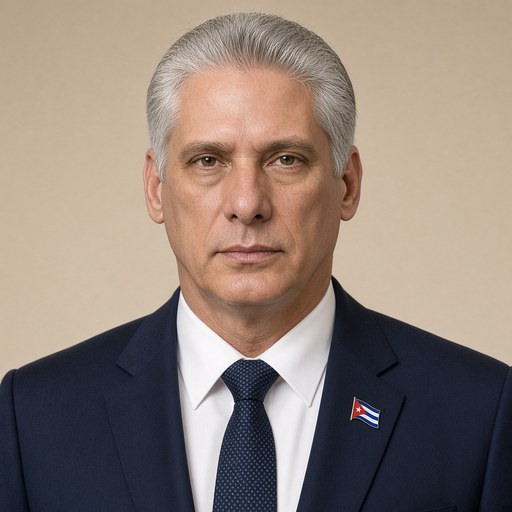
Speech delivered by the President of the Republic at the solidarity event in Freedom Park, South Africa.
 Miguel Díaz-Canel · President of Cuba
- Context
- Díaz-Canel addressed a solidarity event at Freedom Park, Pretoria, on August 23, 2023, honoring Cuban internationalists and celebrating Cuba-South Africa ties.
- Main themes
- Cuba-Africa solidarity, Cuban internationalism, anti-apartheid struggle, decolonization of Africa, Cuban-South African historical ties, tribute to fallen Cuban fighters, Nelson Mandela and African heroes, Cuban national identity and African roots, Freedom Park symbolism, Fidel Castro and Che Guevara's legacy, Angola independence
- Duration
- ~17 min
- Words
- 1,973
- Sentences
- 74
- Readability
- 37
- Grade
- 14.7
- Syntax
- 3.14
- Vocabulary
- 2.43
Translated from Spanish
The broad sphere of national life a sentence belongs to. Every sentence has an Arena, so it is the denominator the other indices are read against.
Other74 sentences in 56 paragraphs
Dear President of the Freedom Park complex, Hlengiwe Mgabadelli;
Dear Executive Director of this complex, Jane Mufamadi;
Dear friends and leaders of the solidarity movement with Cuba in South Africa, from the Tripartite Alliance, Mapaila, Mbalula, Luvuno, all of you;
Dear compatriots who serve as collaborators and dear and beloved Cubans residing in South Africa;
Dear friends and comrades;
In short, sisters and brothers:
On behalf of our people, I thank you for the warm welcome in South Africa and your sincere expressions of support and solidarity towards Cuba.
We begin our visit today to this beautiful sister nation, just hours after we were here, paying tribute to Cuba's dear friend Nelson Mandela and to the fallen Cuban heroes in the struggle for the liberation of Africa, and now we feel very excited to share this impressive event with you.
It will always be an honor to visit the homeland of Nelson Mandela, Joe Slovo, Chris Hani, Oliver Tambo, Walter and Albertina Sisulu, Winnie Mandela, and the enormous array of heroes and heroines who suffered persecution, imprisonment, torture, humiliation, and offenses, but never renounced the struggle for the dignity of their people and to bequeath to future generations a new country, free of hatred and exclusions.
This meeting is very moving because it takes place in the emblematic Freedom Park, a monumental complex full of symbolism, where we can feel the liberating spirit of all those who fought for an Africa with no other owner than the Africans themselves and for a united and integrated South Africa, without inhuman divisions, without segregation or humiliating racism.
Cuba cannot be just another visitor in Freedom Park, because this is also a place of tribute to the Cuban internationalists who put their lives at the service of a noble and just cause: the battles for the total decolonization of the African continent and for the end of the odious apartheid regime.
To them and to all the heroes of the deeds that are venerated here, we come to pay homage as our first act on South African soil. Without the heroism, without the sacrifice, without the dedication of all those whose names are inscribed here, the history of this country and this continent would be definitively different, and the world would not look at the new South Africa with the respect it does, which its people earned by fighting cleanly for the rights that were denied to them for centuries.
For Cuba, which considers it a child, it means a lot to know that Che is one of the international leaders honored here and that Fidel's name was added in 2017 to the 2,288 Cuban fighters who fell in Africa, who had been listed since the Park's inauguration in 2012.
Fidel and Che are paradigms of Cuban internationalism and architects of our country's relations with Africa since the very triumph of the Cuban Revolution.
More than once, in Fidel's voice, we proudly declared ourselves Latino-Africans. And consistent with the recognition of that identity, the Government has promoted the active promotion of initiatives in favor of the peoples of this continent and in defense of Africa in all possible scenarios.
The modest Cuban contribution that is recognized here, along with the thousands of compatriots who have worked in internationalist missions in Africa since 1963, has been and will continue to be a felt and voluntary expression of the interest in settling our debt to humanity, to that part of humanity from which we emerged as peoples devoted to freedom and human emancipation.
More than a million African children were taken to Cuba to be turned into slaves by force, who contributed singularities to the Cuban genome and also decisively contributed to the formation of our identity as a people. Their ancestral culture, their religions, their customs contribute strength, color, resistance, and creativity to the powerful ajiaco that we are.
"All mixed," said Nicolás Guillén, Cuba's national poet and personal friend of some of the most prominent African leaders he met in Paris or Havana.
As a result of the mixing of African slaves, European conquerors, and Asian immigrants, the Cuban nationality is formed, in which we also recognize an important contribution from the heroism and dedication of those who shone on the battlefields for Cuban independence and against slavery in the 19th century. Africa has been part of the essence of our nationality since then and also from the internationalist campaigns. Without their contributions before and after the shared battles, Cuba would not be what it is today, and Cubans would not be who we are.
It is worth remembering that since the triumph of the Cuban Revolution in 1959, the country actively supported the struggle against apartheid. Cuba firmly opposed the racist government of South Africa in international forums and even confronted them on the battlefield in defense of the independence and sovereignty of Angola.
Cuba denounced very early on the imprisonment of Nelson Mandela and his comrades, when today's supposed champions of freedom and human rights labeled them as terrorists.
How proud we Cubans feel when reading in Madiba's autobiography The Long Walk to Freedom, that when he was in prison, he found inspiration in Fidel Castro, Che Guevara, and the Cuban Revolution.
Since 1961, even before the Rivonia Trial, young South Africans from the anti-apartheid forces began to arrive in Cuba to receive professional training in Medicine and other sciences. It was the first group of many others who in the following decades would receive professional training and military training in Cuba.
It is also a great source of satisfaction to have contributed decisively to the end of apartheid with the victory at Cuito Cuanavale, in Angola, in 1988, an action that changed the balance of power in Southern Africa by achieving – after intense quadripartite negotiations – the longed-for independence of Namibia and sentencing the death of the odious apartheid regime.
When it is said that Cuba's relations with Africa are of blood, it refers to two dimensions: the one that comes from the genes left by Africans and their descendants in Cuba and the one that is in the generous blood that we together shed to achieve that Africa freed itself from colonialism and apartheid.
Dear brothers:
From the Caribbean, thousands of kilometers away from this beloved country, the noble and brave Cuban people resist with the infinite courage and dignity that our ancestors bequeathed to us, facing colossal challenges.
We continue to face the criminal economic, commercial, and financial blockade, which has been intensified with malice during the pandemic as a demonstration of the intention to wound the most sacred of rights: the right to life. To provoke hunger and despair, to make the entire Cuban population suffer in an attempt to extract political concessions is, simply put, the model of genocide designed by the United States through its infamous Mallory Memorandum in 1960 to establish the blockade.
As a culmination of this genocidal policy, the immoral inclusion of Cuba in the list of supposed sponsors of terrorism has sought to cut off the flow of financial resources to the country.
The U.S. government has also aimed to sabotage the international cooperation that Cuba provides in the field of health, based on a crude campaign to discredit it. The media war has also become a powerful weapon of these times, but in that arena, we have also gone out to fight and to win.
Cuba persists in its desire to show that it is possible to build fairer, more humane, and more supportive societies, where unity is a key element to save the Revolution.
Those who expect the new generations of Cubans to betray their past and renounce their future are mistaken.
We are the continuity of the Revolution, not its rupture! We will keep eternal loyalty to the legacy of Fidel Castro and to the values in which the great friend of Cuba, Nelson Mandela, believed, promoted, and defended!
In this struggle, the friends of solidarity with Cuba have been very consistently involved. The creation of FOCUS and its branches in various provinces, the active support of the forces of the Alliance in this movement, and the participation of numerous people in actions supporting Cuba, even outside these structures, garner the highest recognition and gratitude from our people.
Cuba attests that solidarity has no price. It is given without expecting anything in return. We know the satisfaction that comes from giving and also from receiving.
South Africa brought together the solidarity movements with Cuba in Africa under the First Regional Conference in 1995, and is preparing to celebrate a new edition in October. Thanking you is little for what your organizers do, as it is that infinite debt that can only be repaid with love, with the sincere friendship we have managed to build.
Dear comrades:
Today is August 23, the 63rd anniversary of the creation of the Federation of Cuban Women (FMC). Women have achieved a more prominent place in our country in the destinies of the nation as a result of the work of the FMC and the inclusive policies of the Revolution.
We congratulate all Cuban women on this day, especially those who accompany us this morning at Freedom Park.
Cuban international cooperation, of which many women are a part, will continue to develop to the extent of our capabilities and the identification of new opportunities for its development.
Cuba's response has been clear and was demonstrated when the COVID-19 pandemic hit this very country: we will continue saving lives and seeking the health and well-being of human beings wherever we are requested.
We recognize the doctors and health personnel working in South Africa, even in very remote areas.
We thank the South African authorities and especially its people for the care and ongoing support to the Cuban personnel for more than twenty years.
The cooperation of the hundreds of Cuban collaborators who today provide services in education, construction, water resources, and other important sectors will continue, to whom we also send our fraternal embrace.
Even amid our limitations and shortages, Cuba will continue to contribute to the training of young Africans. In South Africa, we maintain the Mandela-Fidel Program through which more than 2,000 doctors have graduated.
Comrades and friends:
Allow me to also address the Cubans residing in South Africa present at this event, who have not disconnected from their homeland and maintain a relationship of closeness and respect towards it. I extend a warm greeting to all of you.
As part of the process of updating the Cuban economic model and the internal debates in the interest of having a better country, we have a modern Constitution to which the Cubans residing abroad contributed, as well as the new Family Code and other laws that we will continue to approve. In those spaces, the more active participation of Cubans residing abroad has been taken into account, and that is why the Conference on Nation and Emigration has been convened, which, as a continuation of the Dialogue of 1978, will allow for exchange with the main authorities of the country on issues of interest to all.
Sisters and brothers; dear friends:
Allow me, finally, to return to the meaning of this place, which constitutes a sacred site, a heritage of South Africa, but which we also feel in Cuba.
In the name of those who fell for the freedom and sovereignty of Africa, South Africa, and Cuba, for peace and harmony among nations and human beings, let us fight for friendship to become indestructible and for future generations of South Africans and Cubans to take pride in the bonds we bequeath to them.
Eternal glory to all those who fell in the struggles against colonialism, racism, and apartheid!
Amandla!
Until Victory Always!
Long live the friendship between South Africa and Cuba!
Thank you very much.
The original Spanish. The tags above are read on the English translation's sentences.
Estimada Presidenta del complejo Freedom Park, Hlengiwe Mgabadelli;
Estimada Directora Ejecutiva de este complejo, Jane Mufamadi;
Estimados amigos y líderes del movimiento de solidaridad con Cuba en Sudáfrica, de la Alianza Tripartita, Mapaila, Mbalula, Luvuno, todos ustedes;
Estimados compatriotas que prestan servicios como colaboradores y estimados y queridos cubanos que residen en Sudáfrica;
Queridos amigos y camaradas;
En fin, sisters and brothers:
En nombre de nuestro pueblo, les agradezco la calurosa acogida en Sudáfrica y sus sinceras expresiones de apoyo y solidaridad hacia Cuba.
Iniciamos nuestra visita hoy a esta bella nación hermana, cuando solo hace unas horas estamos en ella, rindiendo homenaje al entrañable amigo de Cuba Nelson Mandela y a los héroes cubanos caídos en la lucha por la liberación de África, y ahora nos sentimos muy emocionados compartiendo con ustedes este impresionante acto.
Siempre será un honor visitar la Patria de Nelson Mandela, de Joe Slovo, de Chris Hani, de Oliver Tambo, Walter y Albertina Sisulu, de Winnie Mandela y la enorme pléyade de héroes y heroínas que sufrieron persecución, cárcel, torturas, humillación y ofensas, pero jamás renunciaron a la lucha por la dignidad de su pueblo y para legar a las generaciones posteriores un nuevo país, libre de odios y exclusiones.
Es muy emocionante este encuentro porque tiene lugar en el emblemático Parque de la Libertad, Freedom Park, complejo monumental cargado de simbolismos, donde podemos sentir que late el espíritu libertario de todos los que lucharon por un África sin más dueño que los propios africanos y por una Sudáfrica unida e integrada, sin divisiones inhumanas, sin segregacionismos ni racismos humillantes.
Cuba no puede ser un visitante más en Freedom Park, porque este es también un lugar de tributo a los internacionalistas cubanos que pusieron sus vidas al servicio de una noble y justa causa: las batallas por la total descolonización del continente africano y por el fin del oprobioso régimen del apartheid.
A ellos y a todos los héroes de las gestas que aquí se veneran, venimos a rendirles homenaje como primer acto en tierra sudafricana. Sin el heroísmo, sin el sacrificio, sin la entrega de todos los que tienen sus nombres inscritos aquí, la historia de este país y de este continente sería definitivamente otra y el mundo no miraría a la nueva Sudáfrica con el respeto que la mira y que ganó su pueblo peleando limpiamente por los derechos que le fueron conculcados durante siglos.
Para Cuba, que lo considera un hijo, significa mucho saber que el Che es uno de los líderes internacionales honrados aquí y que el nombre de Fidel se agregó en 2017 a los 2 288 combatientes cubanos caídos en África, que figuraban desde la inauguración del Parque en 2012.
Fidel y el Che son paradigmas del internacionalismo cubano y artífices de las relaciones de nuestro país con África desde el triunfo mismo de la Revolución Cubana.
Más de una vez, en voz de Fidel, nos declaramos orgullosamente latinoafricanos. Y consecuentes con el reconocimiento de esa identidad, el Gobierno ha impulsado la promoción activa de iniciativas en favor de los pueblos de este continente y en la defensa de África en todos los escenarios posibles.
La modesta contribución cubana que aquí se reconoce, junto a los miles de compatriotas que han laborado en misiones internacionalistas en África desde 1963, ha sido y seguirá siendo sentida y voluntaria expresión del interés por saldar nuestra deuda con la humanidad, con esa parte de la humanidad de la que emergimos como pueblos devotos de la libertad y la emancipación humana.
Más de un millón de hijos africanos fueron llevados a Cuba para convertirlos en esclavos por la fuerza, quienes aportaron singularidades al genoma cubano y además contribuyeron de modo decisivo a la formación de nuestra identidad como pueblo. Su cultura ancestral, sus religiones, sus costumbres tributan fuerza, color, resistencia y creatividad al poderoso ajiaco que somos.
"Todo mezclado", decía Nicolás Guillén, poeta nacional de Cuba y amigo personal de algunos de los más prominentes líderes africanos que conoció en París o en La Habana.
Como resultado de la mezcla de los esclavos africanos, los conquistadores europeos y los emigrantes asiáticos se conforma la nacionalidad cubana, en la que reconocemos un importante aporte también del heroísmo y la consagración de quienes brillaron en los campos de batalla por la independencia cubana y contra la esclavitud en el siglo XIX. África es parte de la esencia de nuestra nacionalidad desde entonces y también a partir de las campañas internacionalistas. Sin sus aportes antes y después de las batallas compartidas, Cuba no sería lo que es hoy, los cubanos no seríamos lo que somos (Aplausos).
Cabe recordar que desde el triunfo de la Revolución Cubana en 1959 el país apoyó activamente la lucha contra el apartheid. Cuba se opuso firmemente al gobierno racista de Sudáfrica en los foros internacionales y llegó a enfrentarlos en el campo de batalla en defensa de la independencia y soberanía de Angola.
Cuba denunció desde muy temprano el encarcelamiento de Nelson Mandela y sus camaradas, cuando los supuestos paladines de la libertad y los derechos humanos de hoy los catalogaban como terroristas.
Cuánto orgullo sentimos los cubanos al leer en la autobiografía de Madiba La larga marcha hacia la libertad, que cuando él estaba en prisión encontró inspiración en Fidel Castro, Che Guevara y la Revolución Cubana (Aplausos).
Desde 1961, incluso antes del Juicio Rivonia, comenzaron a llegar a Cuba jóvenes sudafricanos de las fuerzas anti apartheid, para recibir capacitación profesional en Medicina y otras ciencias. Fue el primer grupo de muchos otros que en las décadas siguientes recibirían en Cuba formación profesional y entrenamiento militar.
Es también motivo de enorme satisfacción el haber contribuido de modo decisivo al fin del apartheid con la victoria en Cuito Cuanavale, en Angola, en 1988, acción que propició el cambio de la correlación de fuerzas en África Austral al lograrse –tras intensas negociaciones cuatripartitas– la anhelada independencia de Namibia y sentenciar la defunción del régimen oprobioso del apartheid (Aplausos).
Cuando se dice que las relaciones de Cuba con África son de sangre, se alude a dos dimensiones: la que proviene de los genes que dejaron los africanos y sus descendientes en Cuba y la que está en la sangre generosa que juntos derramamos para lograr que África se librara del colonialismo y del apartheid.
Queridos hermanos:
Desde el Caribe, a miles de kilómetros de distancia de este querido país, el noble y valiente pueblo cubano resiste con el infinito valor y la dignidad que nos legaron nuestros ancestros, haciendo frente a colosales desafíos.
Seguimos enfrentando el criminal bloqueo económico, comercial y financiero, recrudecido con saña en plena pandemia como muestra de la intención de lacerar el más sagrado de los derechos: el derecho a la vida. Provocar hambre y desesperación, hacer sufrir a toda la población cubana para tratar de arrancar concesiones políticas es, sencillamente, el modelo de genocidio que diseñó Estados Unidos a través de su infame Memorando Mallory, en 1960, para establecer el bloqueo (Aplausos).
Como colofón de esta política genocida, la inmoral inclusión de Cuba en la lista de supuestos patrocinadores del terrorismo ha pretendido cortar el flujo de recursos financieros al país.
El Gobierno estadounidense se ha propuesto también sabotear la cooperación internacional que Cuba brinda en la esfera de la salud, a partir de una burda campaña para desprestigiarla. La guerra mediática se ha convertido también en una poderosa arma de estos tiempos, pero en ese terreno también hemos salido a combatir y a vencer.
Cuba persiste en su afán de mostrar que es posible construir sociedades más justas, humanas y solidarias, donde la unidad resulta un elemento clave para salvar a la Revolución.
Se equivocan aquellos que esperan que las nuevas generaciones de cubanas y cubanos traicionen su pasado y renuncien a su futuro.
¡Somos la continuidad de la Revolución, no su ruptura! (Aplausos). ¡Guardaremos eterna lealtad al legado de Fidel Castro y a los valores en los que creyó, promovió y defendió el gran amigo de Cuba Nelson Mandela! (Aplausos.)
En ese batallar se han insertado de manera muy consistente los amigos de la solidaridad con Cuba. La creación de FOCUS y sus filiales en diversas provincias, el acompañamiento activo de las fuerzas de la Alianza en este movimiento y la participación de numerosas personas en acciones de apoyo a Cuba, aun fuera de estas estructuras, concita el mayor reconocimiento y agradecimiento de nuestro pueblo.
Cuba atestigua que la solidaridad no tiene precio. Se brinda sin esperar nada a cambio. Conocemos la satisfacción que provoca cuando se da y también cuando se recibe.
Sudáfrica nucleó a los movimientos de solidaridad con Cuba en África bajo la Primera Conferencia Regional en 1995, y se apresta a celebrar en octubre una nueva edición. Agradecerles es poco por lo que hacen sus organizadores, pues se trata de esa deuda infinita que solo puede pagarse con amor, con la amistad sincera que hemos logrado edificar (Aplausos).
Queridos compañeros:
Hoy es 23 de agosto, aniversario 63 de la creación de la Federación de Mujeres Cubanas (FMC). Las mujeres han logrado ocupar en nuestro país un lugar más prominente en los destinos de la nación como resultado de la gestión de la FMC y de las políticas inclusivas de la Revolución.
Felicitamos a todas las cubanas en este día, en especial a las que nos acompañan esta mañana en el Freedom Park (Aplausos).
La cooperación internacional cubana, de la que son parte muchas mujeres, seguirá desarrollándose en la medida de nuestras capacidades y de la identificación de nuevas oportunidades para su desarrollo.
La respuesta de Cuba ha sido clara y se demostró cuando la pandemia de COVID-19 en este propio país: continuaremos salvando vidas y procurando la salud y el bienestar del ser humano dondequiera que se nos solicite (Aplausos).
Reconocemos a los médicos y al personal de la salud que laboran en Sudáfrica, incluso en zonas muy lejanas.
Agradecemos a las autoridades sudafricanas y en especial a su pueblo por el cuidado y acompañamiento permanente al personal cubano por más de veinte años.
Continuará la cooperación de los cientos de colaboradores cubanos que brindan hoy servicios en educación, construcción, recursos hidráulicos y otros importantes sectores, a quienes igualmente transmitimos nuestro abrazo fraterno (Aplausos).
Aun en medio de nuestras limitaciones y escaseces, Cuba continuará contribuyendo a la formación de jóvenes africanos. En Sudáfrica mantenemos el Programa Mandela-Fidel a través del cual se han graduado más de 2 000 médicos (Aplausos).
Compañeros y amigos:
Permítanme dirigirme también a los cubanos residentes en Sudáfrica presentes en este acto, quienes no se han desligado de su patria y mantienen una relación de cercanía y respeto hacia ella. A todas y todos traslado un caluroso saludo.
Como parte del proceso de actualización del modelo económico cubano y de los debates internos en el interés por tener un mejor país, contamos con una moderna Constitución a cuya concepción contribuyeron los cubanos residentes en el exterior, así como el nuevo Código de las Familias y otras leyes que seguiremos aprobando. En esos espacios se ha tenido en cuenta la participación más activa de los cubanos residentes en el exterior y por eso se ha convocado a la Conferencia Nación y Emigración que, como continuidad del Diálogo de 1978, permitirá el intercambio con las principales autoridades del país sobre temas de interés para todos.
Hermanas y hermanos; estimados amigos:
Permítanme, finalmente, regresar al significado de este lugar, que constituye un sitio sagrado, patrimonio de Sudáfrica, pero que también lo sentimos en Cuba.
En nombre de los caídos por la libertad y soberanía de África, Sudáfrica y Cuba, por la paz y la armonía entre las naciones y los seres humanos, luchemos porque la amistad se haga indestructible y que las futuras generaciones de sudafricanos y cubanos se enorgullezcan de los vínculos que les legamos.
¡Gloria eterna a todos los caídos en las luchas contra el colonialismo, el racismo y el apartheid!
¡Amandla! (Exclamaciones de: ¡Awethu!) [1]
¡Hasta la Victoria Siempre! (Exclamaciones.)
¡Viva la amistad entre Sudáfrica y Cuba! (Exclamaciones.)
Muchas gracias.
(Ovación.)
[1] Amandla significa poder en lengua Zulú y Awettu significa al pueblo. Es una consigna que usan los partidos y el pueblo sudafricano desde la época de la lucha anti apartheid. Se pronuncia Amándla y Auétu.