




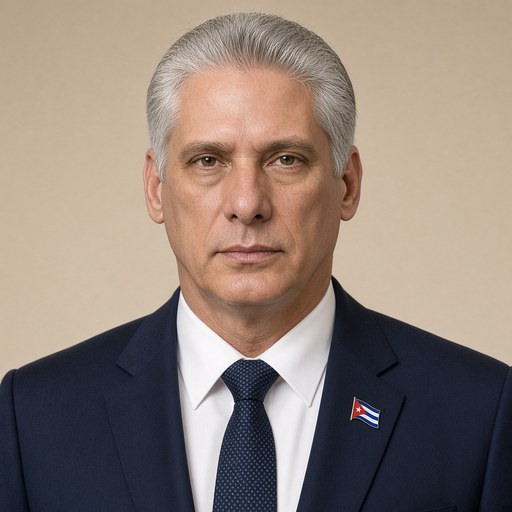
Speech delivered by Miguel Mario Díaz-Canel Bermúdez, First Secretary of the Central Committee of the Communist Party of Cuba and President of the Republic, at the closing of the Fourth Ordinary Period of Sessions of the National Assembly of People's Power.
 Miguel Díaz-Canel · President of Cuba
- Context
- Díaz-Canel addressed the National Assembly of People's Power at the Palace of Conventions on December 20, 2024, closing its Fourth Ordinary Period of Sessions in the X Legislature.
- Main themes
- US blockade and sanctions, Cuban revolutionary resistance, international economic order, social justice, climate change, far-right global trends, presidential accountability, national self-criticism, sovereignty and international law, sustainable development, Cuba's domestic challenges
- Duration
- ~65 min
- Words
- 7,830
- Sentences
- 267
- Readability
- 31
- Grade
- 16.2
- Syntax
- 3.13
- Vocabulary
- 2.33
Translated from Spanish
The broad sphere of national life a sentence belongs to. Every sentence has an Arena, so it is the denominator the other indices are read against.
Other267 sentences in 169 paragraphs
The only alternative is to fight until victory always.
Speech delivered by Miguel Mario Díaz-Canel Bermúdez, First Secretary of the Central Committee of the Communist Party of Cuba and President of the Republic, at the closing of the Fourth Ordinary Period of Sessions of the National Assembly of People's Power in its X Legislature, at the Palace of Conventions, on December 20, 2024, "Year 66 of the Revolution."
(Transcription - Presidency of the Republic)
Dear Army General Raúl Castro Ruz, leader of the Cuban Revolution, who is with us today with his legendary energy, as recognized by his fighters and all his people;
Dear comrade Esteban Lazo, President of the National Assembly of People's Power and of the Council of State;
Dear comrades:
I come before you, as every year, to fulfill a difficult duty: to report, to explain the enormous efforts and the still insufficient results in the presidential management, in the face of the colossal obstacles imposed on us by six decades of blockade and the prevailing injustice in international economic relations, which have turned the world into a betting market, with few options for nations that, like Cuba, refuse to accept the law of the strongest.
My greatest dream is to one day come to this Assembly, genuinely of the people, to tell you that we defeated the blockade with its 243 additional knots and that we emerged from the spurious list of state sponsors of terrorism, where we should have never been. Once those obstacles are overcome, everything would depend on what we are capable of doing and promoting with the heroism, intelligence, and creativity that distinguish us as a people.
The truth is the reverse of that dream: the blockade, its knots, and the spurious list have no expiration date. It is the style of empires: to impose punishments and extend them over time.
Cuba is the country with the longest duration under blockade, but it is not the only one. We constantly receive news of people and countries besieged by sanctions. The new hawks, even before taking office, speak of "peace through strength." They deeply despise diplomacy as a means for understanding with nations they do not consider their equals, whom they look down upon.
Aware of the unjust configuration of international economic relations and the far-right trends that are being imposed at the regional and global levels, as a political response to global economic imbalances, in Cuba we have set out to concentrate forces and efforts on defending the chosen social system, guaranteeing the maximum possible social justice under the current circumstances.
This is undoubtedly the most difficult task of an era that, at the universal level, has imposed an irrational, wasteful, and selfish consumerist model as a measure of progress, leading the planet to the brink of self-destruction.
As Marxist, Marti, and Fidelist revolutionaries, we will not tire of fighting against the pro-imperialist, fascist, warmongering, exclusionary, and predatory currents that threaten our species. And we will continue to insist on the development of a humanist, solidarity-based, just, and environmentally responsible model.
The most recent Conference of the Parties on the Climate Change Convention points to the selfishness, deception, and lack of honesty with which the most powerful have acted over the years, as the main culprits for the rise in temperature on Earth and environmental erosion.
It is increasingly evident that the world needs to move towards the construction of a new international order, with the participation of all, in which Cuba is willing to contribute.
That must be a just, equitable, and peaceful order, that respects the sovereignty of all nations on equal terms, adhering to International Law; that promotes sustainable development, overcomes the immense inequalities and inequities that feed on exploitation and the concentration of wealth; that puts an end to aggression and usurpation, to the threat and use of unilateral coercive economic measures for political purposes.
It is urgent and unavoidable to act in that direction, although it will require calling upon the will of many. From here, we reaffirm that ours will not be lacking to advance in that direction in all possible scenarios.
I insist on the characteristics of the global context in this challenging year that is ending, because the weight of those circumstances on the concrete reality of the nation cannot be underestimated.
Only those who believe that the whole world is their village and are unaware of the giants that roam the sky devouring worlds, as Martí warned in Our America, can abstract themselves from the global uncertainty in this tumultuous time. No country can live and develop outside the prevailing economic order, especially if it tries to do so with the noose of a genocidal blockade.
That, clearly, does not exempt the State and the Government from the essential self-criticism, nor does it free us from the analysis of the dissatisfactions. On the contrary, it obliges us to a deep and responsible search for everything we have done, so that the results that deserve to be multiplied emerge, where it was possible. And also to confront what hinders, obstructs, prevents progress and must be swept away from the national landscape, already sufficiently burdened by the economic war to which we are subjected with systematic and unparalleled malice.
Just behind the reservations and motivations that explain the advances and also the errors and inertia that put brakes on them, we are going to the provinces and municipalities, and we have found everything in terms of attitudes and results. But what has dazzled us totally and definitively is the heroism of the Cuban people, an intangible yet colossal value that, as we have said before, deserves a monument and will never be enough.
This year we have made 130 visits to provinces, of which 19 were to municipalities affected by devastating natural events such as the two hurricanes and the earthquakes, from whose aftermath we have not yet fully recovered.
To our satisfaction, the method is proving effective in seeking explanations for the differences observed between territories of similar development that have had very unequal results in the face of common problems.
In live and direct exchanges with the people, we confirm every day the importance of arguing, controlling, stimulating, promoting solutions, systematizing and socializing good work experiences and results so that they become references.
These exchanges filled with learning are not something we invented. They are lessons we learned in Fidel's political school, which always found in the people the answer to the problems of the people, and in Raúl's permanent advice to act with our ears to the ground. No bureau or meeting can replace those encounters that are helping us see in situ what we do not always manage to understand from the coldness of a report.
As I already said in the IX Plenary of the Party, this is how a deep and heartfelt conviction is strengthened, which multiplies for me in those tours of the municipalities of the country. It is enough to see on the ground what so many compatriots and collectives are doing, raising the most imaginative solutions to everyday problems, fighting with the weapons of work, in the harshest conditions due to the lack of resources, to confirm that there are indeed ways out.
That is what I call creative resistance, a concept that is by no means abstract that explains the inexplicable: the triumph of a small and resource-poor people over their powerful adversary.
Once said by Commander-in-Chief Fidel Castro Ruz: "What we have in the future we have to create ourselves, we have to conquer it with our arms, with our sweat, and with our intelligence. We can achieve a lot and we can go very far, because we have what others do not have: the amount of accumulated talent of our society, the number of developed intelligences. With what we have, we can achieve whatever we want."
In those ideas our creative resistance is affirmed and sustained, the weapon that the enemy does not know.
Later I will inform about other strategies, measures, and decisions that should allow us to overcome the greatest internal difficulties, always from that strength, that power, those reserves of talent and intelligence developed by Cuban society in response to the siege that seeks to suffocate us.
Now allow me to return to the international context, particularly everything related to the changes that are reconfiguring the global geopolitical map with impact in all areas.
Comrades:
This year 2024 comes to its final days with a highly concerning international scenario.
The threat of a nuclear conflagration is closer than at any other time in over half a century. The expansionist ambition of imperialism, driven by the United States through NATO, raises the danger of the use of nuclear weapons in Europe to seriously concerning limits.
The genocide against the Palestinian people by Israel, with the open support of the United States and other allies, is already one of the most ruthless atrocities known to humanity. And it occurs in plain sight, with the impotence of the United Nations, the International Criminal Court, and the multitude of international organizations supposedly conceived to promote and protect human rights.
The blatant Israeli ambition to redesign the political map of the Middle East through force and with the support of powerful allies is a disgrace to the international community. The aggression against Lebanon is an international crime. The aggressive efforts to destroy the territorial integrity and dismember Syria are another crime of similar magnitude. In that region of the world, there exists the danger of a conflagration of global dimensions whose control no one can assure.
The precedents being recorded and the open impunity of the aggressors threaten to complicate in the future any possibility of uniting the will of the international community to safeguard peace. At the same time, expressions of racism, ethnic supremacy, and contempt for foreign populations and religions are reaching extremes not seen since the defeat of the Nazis in 1945.
We are aware of the possible implications associated with the arrival to power in the United States of a new government in which politicians with very aggressive intentions against Cuba will have great influence. As we have said, it was a foreseeable scenario and we have been preparing in advance.
We are also fully aware of what the outgoing government in the United States has done in these four years, which is to bet on the collapse of the Revolution through the ruthless application of the system of coercive measures established by its predecessor to reinforce the economic blockade.
It did not even have the decency to alleviate its economic aggression in the harshest moments of COVID-19 or when we faced natural disasters or others. With incredible cynicism, it even came to identify these episodes as allies, a behavior that will be hard to forget.
Those acts confirmed the criminal essence of imperialist ambition regarding the Cuban nation: a ruthless and unrelenting attack against the standard of living, the means of livelihood, and the development prospects of the Cuban people.
We know some of the threats disseminated by the most aggressive anti-Cuban sectors with the entry of the new government. We will remain alert, but without fear.
Of course, they will not divert us from the immediate and daily tasks and duties to solve economic problems, overcome the difficulties we face, and steer growth and development. That is our priority.
With the United States, we are willing to dialogue and develop relationships of respect, on equal footing, that are mutually beneficial, as with the rest of the countries. But we will firmly confront any attempt at interference in internal affairs. This is a known position and should not surprise anyone.
We will continue to be open to relating to the people of the United States, to share experiences, to get to know each other better, with the greatest transparency and freedom, trying to evade the harsh prohibitions that the Government of that country imposes on its own people in order to prevent their natural bond with a dignified and friendly neighbor, in the absurd attempt to prevent them from knowing the real Cuba.
Despite the aforementioned imperial efforts to isolate us, our small nation was admitted this year as an associated member of the BRICS group, a new instance of concertation and cooperation that brings together significant economic, productive, technological, population, territorial potential, and great natural wealth.
With all the member countries of that group, we have developed very good relations and share similar purposes. It is an instance that opens new commercial, investment, and cooperation opportunities that we must know how to take advantage of.
We participated in the celebrations that took place in Moscow on the occasion of the 79th anniversary of the defeat of fascism in Europe, a conflict in which the Russian people played a decisive role, with whose government we have continued to strengthen bilateral relations.
We have received support and deepened fraternal relations with China, Vietnam, and Laos. We defined the potential to increase economic and commercial relations with the Eurasian Union. We achieved important advances in ties with the countries of the Gulf Cooperation Council.
The almost unanimous rejection by the international community of the economic blockade imposed by the United States was strongly reaffirmed at the United Nations General Assembly, where it also became evident that numerous governments are calling for the United States to remove Cuba from the list of state sponsors of terrorism.
In our America, we continue to bet on the indispensable integration and are committed, first and foremost, to the Bolivarian Alliance ALBA-TCP, founded by our Commander in Chief and Commander Chávez, and whose 20th anniversary we celebrated a few days ago in sister Venezuela, further strengthening the historic relations of friendship, solidarity, and cooperation that unite us in the common struggle against the empire's aggression.
We reiterate our support for Nicaragua from here.
We also reaffirm our active and natural membership in the Community of Latin American and Caribbean States, whose members signed here in Havana the Proclamation of the region as a Zone of Peace.
This year, the support from Latin America and the Caribbean against the economic blockade of the United States was preserved, in the face of any attempt to undermine the consensus, which was left absolutely isolated.
We had the opportunity to participate as guests in the inauguration ceremony of President Claudia Sheinbaum in Mexico, a country with which we share deep fraternal ties and with which we expanded relations during the presidency of Cuba's proven friend Andrés Manuel López Obrador, and which we will continue to expand going forward.
We maintained our commitment to peace in Colombia, including our role as guarantors in the processes in which we are involved. At the beginning of the year, a session of the dialogue table between the Colombian Government and a delegation from the ELN took place in Havana.
With our brother countries that are members of CARICOM, we continue to work based on common interests and the long-standing relationship of friendship, respect, and trust that we have built over the years.
Also, at the beginning of the year, Cuba's responsibility as President of the Group of 77 and China came to an end, after a performance in 2023 that called for the effort and commitment to effectively represent developing countries in various international scenarios. We also participated and contributed to the success of the Summit of the Group and that of the Non-Aligned Movement, both held in Uganda.
Cuba's foreign policy continues to rest on principled positions, on the anti-imperialist struggle, on the defense of peace, on the promotion of solidarity and internationalism; in the search for relations of friendship and cooperation with all countries, in the preservation and promotion of International Law.
In the context of the harsh conditions that the country has faced this year, we can say that we have received broad and deep international solidarity, for which we are grateful, coming from many nations, both from governments and from organizations and individuals, as well as from international bodies.
They are sensitive to the situation in the country, and the vast majority have absolute clarity about the extraordinary conditions of disadvantage that the worsening economic blockade imposes. They understand that it is a fundamental obstacle to development, regardless of the effort made, the characteristics of the economic model, and the problems that, like any other country in the world, we have. Also, it must be said, they have confidence in the ability of this people to overcome the current difficulties, no matter how great they may be.
Deputies:
The year that is ending should be recorded as one of the most difficult for Cuba due to the accumulated impacts over the last five years, due to the already mentioned worsening of the blockade and the unacceptable, false, and malicious inclusion of the country on a list of those supposedly supporting terrorism.
The last few months have been particularly complex. In a few weeks, we faced two hurricanes, two intense earthquakes, and an energy emergency, with all its consequences: damage to the infrastructure of essential service systems for the people, impacts on more than 50,000 homes, and the dramatic loss of family and personal belongings of tens of thousands of people in the affected territories.
Today we can say that 20% of the affected homes have been recovered. The damage to the electrical infrastructure was resolved 15 days after Hurricane Oscar passed, 28 days after Rafael; 48 hours after the earthquake in Granma and 12 hours in Santiago de Cuba.
In addition, 45 of the 50 affected irrigation machines are now ready; 11,991 of the more than 17,000 hectares of damaged plantations have been updated; 154 of 190 pig farms and 79 of 134 poultry farms, as well as 33 of 60 cultivation houses, and we continue in recovery.
In truly dramatic days due to the severity of the events, in areas of the country already seriously affected by the lack of resources, we have also appreciated the strength and persistence of the human values that are part of the nature of Cubans and that the Revolution has reinforced with its undeniable work of justice and social equality for more than six decades.
This is not the first time that the heroism of the Cuban people has been shown in all its value. Nor is it the first time we have faced the combined blows of nature and an enemy that does not cease in its desire to reconquer us.
As Fidel said: “This struggle in the economic field is bitter, tremendously bitter, difficult, hard; this struggle against the blockade, this struggle against shortages, this struggle against poverty, this struggle against the material and immediate needs of so many people who need this or that every day; this struggle against those who become discouraged, or those who become demoralized; this struggle against those who have no principles, against those who betray principles or violate laws and norms to the detriment of the interests of others; that arduous work that the circumstances in which we fight impose on us.”
This is neither the first nor will it be the last time that in the midst of difficult situations, which reach even to emergencies, the essence of the criminal blockade and the economic war we face will intensify and be felt in all its perversity.
I reiterate what I stated in the Plenary of the Party: Yes, there is a blockade, yes, it has worsened, yes, we are facing an economic war, yes, we are despised, yes, we are vulgarized, obscenely and filled with hatred on social media.
But we also have, and this is the most important thing, a heroic and dignified people. And we will always overcome as long as that heroism that is in the genes of Cubans grows and reveals itself before all adversaries with the essential and sacred component of unity around a common goal: to preserve independence, sovereignty, and social justice.
Comrades:
As a priority, we have addressed economic problems, and we constantly follow and support the Government's management in implementing the strategy to eradicate distortions and revive the economy, with the aim of changing, in the shortest possible time, the overwhelming situation we live in.
The insufficient results achieved in these tasks are the main dissatisfaction and the reason for the deepest and most severe self-criticism. But it is not possible to judge management and results while ignoring the context.
In the recent Plenary of the Central Committee, I gave an example that illustrates the conditions under which decision-making operates under the current circumstances. If you allow me, I will reiterate the explanation here:
“We practically live day by day. There are many complaints from the people, justifiable, about the delay or fragmentation of the regulated family basket, the distribution of milk, bread, liquefied gas, and medicines, basic and essential products for daily life.
“We live with a lot of tension in the management of each of them, and this is good to explain so that it is understood that this does not happen because we are sitting idly by.
“First, it is necessary to identify the increased costs compared to previous years, to which is added that everything is much more expensive for Cuba due to the obstacles to be overcome as a result of the blockade.
“Then, there are the arduous daily exercises to decide where to allocate the very limited foreign currency we have to issues that constitute priorities.
“Then begins the odyssey to make payments effective, because Cuba's inclusion on the list of state sponsors of terrorism complicates and often delays payments through established international financial mechanisms for days and weeks.
“That, for example, affected the unloading of the ship that brought liquefied gas, essentially for domestic use, which remained almost 15 days longer than expected due to difficulties in making the payment.” Or what happened to us this week with a fuel ship. “We are talking about a direct impact on the people due to a measure of the United States Government, something that happens day by day.”
In the Government Projections to revitalize the economy, in their effective implementation, there is a guide, a path to achieve what the people are expecting from us.
Positive signs are beginning to emerge, and this was discussed here, even though they have a limited impact, and I want to focus on three concrete examples, which I also explained in the IX Plenary of the Central Committee.
“The first: food production, essentially agricultural, which is a matter of National Security. Although it still does not reach the desired levels, even the levels that would lower its prices, this year we have observed a more encouraging performance compared to previous periods.
“The levels of planting in the spring and cold campaigns of 2024 are the highest in the last ten years, more than 985,000 hectares were planted in the fiscal year, representing a growth of over 137,000 hectares compared to the previous year. The year 2024 will close as the year with the most crop existence of the decade. What have we done differently? Did we have more fertilizers? Pesticides? Irrigation machines? Fuels? Absolutely not.”
The key to this result was in the mobilization and effort of the farmers and agricultural collectives. What did they do? Work hard, apply agroecological techniques, and not give up in the face of difficulties.
For the year 2025, the Plan takes into account the municipal balances of food production, schemes for allocating foreign currency will be implemented to stimulate and make grain production sustainable, reducing the import of products that we can produce in the country; national strategies for rice production will be developed through enterprises, with the participation of different actors and with the popular rice program, counting on the cooperation of Vietnamese companies and Chinese advice. These actions will allow us to direct amounts of foreign currency, which are dedicated to the import of food, to buy inputs that guarantee productive levels in the country.
The second example is the strategy to lift the national electro-energy system.
Although we are not seeing immediate results, what is already being done is promising, solid, and, most importantly, is being carried out based on our own efforts.
The investment being made to promote renewable energies is possibly the most important and significant thing we are doing. It will help create not only generation capacities but also a more optimal use of fuels, which today are used to generate electricity and that can be dedicated to the economy, directly to production.
This is an investment that encompasses the entire country, with the establishment of solar parks, so we all must feel responsible, promote it to the extent of the responsibilities we occupy, and protect the resources that are being invested there.
Two projects of 1,000 megawatts with 100 megawatts of storage in each are being executed, with renewable energy sources, to promote the energy transition, and actions are being developed to recover power in distributed generation and in thermoelectric plants.
A financing scheme in foreign currency has been approved for the maintenance of the national oil industry in order to increase the production of oil and gas.
As we gradually advance in reducing the use of fossil fuels for electricity generation, the economy will be reactivated with more production of goods and more generation of services. It is a process of energy transformation, a transition towards an economy with a greater use of renewable sources, that is, the use of clean, reliable, and affordable energy.
The third example, which is in the Government Projections, of high economic and social impact, is related to the fiscal deficit.
Everyone will remember that this year we started with a marked fiscal deficit. We then set out to contain its increase and reduce it, and we achieved that.
There is another example of that strength, of that intransigence against what is wrong, that lives among us. It has even been achieved, with demand, control, and systematicity, to begin to bring order to the country's tax policy. We are not satisfied yet, but steps are being taken that have results.
It is estimated that we will close the year with a 46% reduction in the budget deficit approved in the Law, which amounts to 57 billion pesos, bringing the deficit to a value of 90 billion pesos, much lower than the 147 billion planned. This allows us to work in 2025 with a deficit of 88 billion pesos – which I am sure we can reduce – which is 60% of the plan projected for 2024 and 98% of the estimate with which we will close this year.
What has been achieved is a modest result in the execution of the Budget, expressed in a considerable reduction of the budget deficit, an advance in one of the aspects addressed by the Macroeconomic Stabilization Program, it curbs the issuance of money, the exchange rate in the illegal foreign exchange market has stabilized, the inflation rate decreases, tax evasion is reduced, the relationships between the state and non-state sectors are organized, local development projects that did not contribute to local budgets are organized, there is greater control of expenses, and exaggerated payments for certain services from state institutions to private actors are avoided. The result of the current account is the best in the last five years, and its projection for 2025 is the best of the decade.
This facilitates working next year with a budget with a lower deficit, which can then direct capital expenditures towards investments that are aligned with priorities: the national electro-energy system, water supply, food production, science and innovation, among others.
The result has been possible because we moved from merely contemplating economic facts to taking action against the high levels of tax evasion that exist, and other issues that negatively impact the economic dynamics of the country.
However, there is still much work to be done, as there are still high levels of underreporting, noncompliance in the payment of fines and taxes, among other problems and illegalities.
Evidently, our deputies understand and take this responsibility seriously and deeply. We have seen this in the interventions of these days, mature, concrete, and specific interventions that demonstrate a study of the documents and a critical reading of each important data contained in the reports.
The alerts and points raised here, the proposed solutions that need to be generalized or applied only where they are effective, cannot remain in the memory of these sessions. They must be taken into account if we want to advance in correcting distortions to truly revitalize the economy.
As one deputy said and several commented yesterday here, we cannot accept that there are forms of economic management that remain without operating a fiscal account. Even the magnificent data of the significant reduction of the country's fiscal deficit loses value when we are revealed “black holes” so significant in the real control of the functioning of the economy at the municipal level.
If we want to advance in that correction, it is necessary to demand compliance with the social responsibility of all economic actors, make comprehensive fiscal inspection more effective, reduce indebtedness, advance in macroeconomic stabilization, promote the predominance of collective interest, take into account domestic demand as a source of development, consolidate the process of banking according to the conditions of each place, and improve the management models of the commerce sector. Promote and take advantage of the potential of the knowledge economy in the production and export of goods and services.
I do not believe we should wait for a new session of the Assembly to respond to problems like those raised in the debate by the deputy from the municipality of San Luis regarding the absence of state markets in areas with vulnerable social situations.
We have focused on demanding adequate relationships between the state sector and non-state forms, so that the latter can definitively integrate into the plans and strategies of territorial and local development in an environment of legality and committed contribution to the advancement of the country, respecting public policies, fulfilling their tax commitments, and participating coherently in local development projects.
Through the functioning of the National Innovation Council, we have promoted the application of science to solve economic and social problems; we maintain a systematic dialogue with scientists and experts, but the Government Management System based on Science and Innovation is still not implemented in all municipalities and entities.
After having developed the foundations to undertake the process of digital transformation of society, in 2025 we must concretize projects in this regard in government entities, ministries, processes, and companies.
The Economy Plan approved in this session of the National Assembly of People's Power is realistic, but it has many reserves that we will be able to take advantage of as we manage projects, programs, and actions that can provoke impacts to help mark a beginning of overcoming and exiting the current crisis.
The proposed economic growth in the 2025 Plan must impact the reduction of inequalities, supporting the quality execution of social programs and favoring the development of the social justice system.
We will continue to promote early childhood programs, social transformation in neighborhoods and communities, strategies to improve the elderly care system, the process of improving general education, and raising the quality of public health services.
The recognition of the existence of deviations and negative trends in current Cuban society has led us to promote a systematic confrontation against them. The coincidence of these problems and their accumulation over time have facilitated the presence of negative phenomena and manifestations in Cuban society, incompatible with the principles of socialism. There will always be time to rectify.
From the ideas and actions of Commander in Chief Fidel Castro Ruz and Army General Raúl Castro Ruz, we learned the importance of timely correction in the face of any situation that could compromise the future of socialist construction.
To reinforce this conception, the National Exercise of Prevention and Confrontation against crime, corruption, illegalities, and social indiscipline was carried out with broad popular participation, which was intensely debated in the sessions of the commissions. It has been demonstrated that this must be a permanent battle that elevates the moral values of the social project, and it evidenced the unity that exists in respect for socialist legality.
These processes must always be presided over by sensitivity, concern, and consideration for the people, with the interest of preserving at all costs what is essential, including the formation of values and virtues in citizens in difficult and crisis times. It is about preventing further deterioration in the social fabric and fostering a climate of respect, order, discipline, decorum, honesty, generosity, and solidarity in community and social relations.
We will continue to promote programs for the advancement of women, against discrimination, and for cultural decolonization, as well as giving the utmost attention to the Action Plan of the Comprehensive Attention Policy for Children, Adolescents, and Youth.
The action plan is the preliminary step to reach the Code of Children, Adolescents, and Youth, which must be an emancipatory and uplifting text, well known, interpreted, and embraced when approved.
In it, we speak of the present and future of the country, of a code intended to protect and prepare children, adolescents, and youth for life, so that they can develop all their capacities in the Revolution.
The draft being prepared will delve into values, ethics, and civic behavior, recognizing that we have an extraordinary arsenal in Cuban Pedagogy, in revolutionary thought, and in Law.
A discussion of the text as broad as possible is needed, which is why we propose a day of deep debate and analysis in the country, with educators and teachers, with children, adolescents, and youth. There should be broad popular participation to enrich this Code.
I am confident that a complete text will be developed, as was done with the Family Code. The challenge afterwards will be how we implement it.
In this regard, I recognize that in the country we have a significant deficiency in controlling processes – a topic widely analyzed in the IX Plenary of the Central Committee of the Party – so, at a minimum, we must have a system of observatories or a network of observatories for this norm.
In Cuba, there cannot be a person from these age groups who feels disadvantaged or unsure in their study center, because that is not the conception of our Education System in Revolution. The implementation of the Code must be as creative and innovative as the text itself.
Once again, I wish to draw attention to the exercise of political, institutional, and social communication, due to the profound dissatisfaction that the constant errors and gaps provoke in us every time norms are implemented and decisions are approved that are presented without the necessary complementary information or essential explanations, favoring distortions and lies from the media associated with the counter-revolution, which ultimately contaminates the national public opinion with toxic messages on social networks, where incomprehensible logics appear that cloud the environment around any important measure.
Having the truth on our side is not enough. As public servants, we have the duty, responsibility, and commitment to the people to explain the origin, motivation, and objectives of each decision or norm. When we face the gaps and distortions behind each decision or norm, it is legitimate to ask what role the communication groups of the organizations play if they limit themselves to being mere processors of papers, sometimes untranslatable into common language? Why do our media settle for reproducing the letter of the law without explaining its purposes?
I greet the opinion leaders who have become such due to the privileged access to news that their media guarantee them and are quick and effective in bringing it to social networks; but there are still very few who use their spaces to expand information, or very little amplified by the media themselves. We continue to be disapproved in this key subject for our time.
In recent years, and as part of the fierce campaign against the Revolution, today it is not possible to navigate social networks without stumbling upon an avalanche of obscenities, insults, offenses, and lies, conceived to denigrate anyone who assumes a responsibility within the institutionality, even anyone who decides to live in the country without denigrating it. It is shameful to see Cubans, born, raised, and professionally prepared here, how they exude hatred, rage, and contempt against the nation that formed them, as if they felt part of the “turbulent and brutal North that despises us.”
In March 1889, that is, 135 years ago, a newspaper in Philadelphia dared to mock Cubans, loading them with all kinds of derogatory adjectives and labeling them as “deficient in morality.”
From New York, stealing time from his feverish political activity, José Martí responded to the offenses with his unsurpassed Vindication of Cuba. Our Homeland needs today in social networks another passionate defense of the character, value, and morality of its children, to cleanse the tenacious crust of the colonized servant capable of insulting his own for guaranteeing shelter under the wing of the eagle that pursues and mistreats his compatriots.
Let us all daily make a Vindication of Cuba, of the current Cuba that resists and creates under threats and storms.
Deputies:
From fruitful meetings with jurists, the process of normative creation has been strengthened, and the elaboration of proposals for legal norms is increasingly participatory and intersectoral, with a broad multidisciplinary approach and various spaces for popular consultation.
As is customary in its last session of the year, this Assembly evaluated compliance with the Legislative Schedule and approved its update for the period of this Legislature.
This effort is concretized in the development of the intense Legislative Schedule that this time has allowed us to approve two important laws: the Notary Law and the Law on the Practice of Law and the National Organization of Collective Law Firms, normative provisions that complement the organic regulations related to the main operators of Law in the country.
The Notary Law preserves the notarial function as a public service, contributes to the necessary legal security, and raises the ethical responsibility of those who perform this service.
The practice of law in the country, in accordance with Fidel's thought, maintains its social function, independence from state bodies, and accessibility for the people, representing the interests of individuals, and contributes significantly to the ends of justice.
The autonomous, self-financed, socially and professionally relevant character of the National Organization of Collective Law Firms is reaffirmed, which must also ensure the ethical and technical performance of its members.
Dear deputies:
The detailed information from the Prime Minister, comrade Marrero, regarding the status of compliance with the Government Plan to correct distortions and revitalize the economy makes it unnecessary for me to elaborate on what today constitutes the cornerstone of the work of the State and the Government and a fundamental issue regarding what needs to be corrected and resolved to respond to the most urgent demands of the people.
You complemented that information very well with clear examples that confirm the need for the corrections that the measures taken a year ago entail, but from the perspective of the territories you represent, as proof of your real insertion where you exercise your responsibilities as legislators, as confirmation of the authenticity of our Assembly.
Those who demand democracy for Cuba, without having any idea of what they are asking for, should look at these women and men who live and face the same difficulties as their neighbors, young and old, white, black, mulatto, mestizo, all; workers, farmers, teachers, doctors, economists, artists, intellectuals, athletes, self-employed individuals, innovators, scientists. I do not believe there is another Assembly in the world whose members resemble the people they represent more.
Seeing and listening to them these days, I have seen and heard the same people I encounter on my tours through provinces and municipalities, the same ones who face the adversity of long blackouts, the shortage of medicines, food, fuel for cooking and transportation, among a thousand other difficulties, and yet, they surprise us with inventions and solutions that seemed impossible due to the very lack of resources that surrounds us.
In the timeline, since Cubans have had a sense of themselves, there have been events that provoke admiration and pure astonishment, becoming references of the heroic. The list of examples would be very long, but perhaps one fact suffices: the unusual character of a libertarian struggle like that of 1868, which José Martí described in his text titled El 10 de abril, as the “singular and sublime” nature of that war: “that the rich, who oppose it everywhere, made it in Cuba.”
Is it not dazzling and heroic that a genius of combat like the Dominican Máximo Gómez arrived, and that this arrival made it possible to learn to fight for freedom with the edge of a machete? What were our mambises but heroic fighters, with legendary forms, who seemed like relentless centaurs on the battlefield? From that legendary clamor we come; and in essence, if we speak of how we are in the face of adversity, nothing has changed.
In today’s Cuba, no one needs to walk very far if they want to find our heroines and heroes: They are millions! They make up the body and soul of a Revolution that resists and constantly reinvents itself. They come in all colors and ages. They do not think of medals or tributes, because they are committed to making life in the day-to-day.
They do not think of losing but of winning; and if someone asks them what they are doing, they will say they are “in the struggle,” “in the fight,” “engaged,” without crying, without kneeling, because the most powerful empire in history has been denying their beloved country, for more than 60 years, cold-bloodedly and with total wickedness, its right to well-being.
Our heroes and martyrs are here, those who, as José Martí said, are sacred because they served the Homeland. And there are also those of the present, those who are not yet in any book: all those who put their hands and intelligence to work for Cuba; those who know that work is the source of all benefit; those who do not bitterly renounce because something has been done wrong or was left undone, but who focus on solutions; those who put their chests and hands to life and tear pieces from the problems, just as one pulls out the weeds from the path.
These protagonists of the heroic have names and surnames: they are our children, always cheerful; they are their teachers, with humility as a sign, and full of light, many doing wonders in amazing corners of the geography. They are our workers, covered in grease, soot, or mud, but full of courage while they clean a well, or repair a thermoelectric boiler, or raise a high-tension tower or a pole that has been knocked to the ground by a hurricane.
They are our doctors, nurses, scientists, artists, and creators; they are all the entrepreneurs who dream of order, cleanliness, and that things work well. It is the family ironing the school shirt however they can, and always standing in front of the pots at home. They are our youth – that sacred force of the country – wanting to do something useful. They are our tireless leaders, those who must make bold decisions and unite wills on the ground. Heroes are all, absolutely all who do not believe in defeat! They are invincible heroes!
As if that were not enough, as if the death struggle that the modern empire wages against us were not sufficient, nature has joined the list of challenges that strain Cuban life. In the face of such inevitable adversities, in the reality of an earthquake that cannot be predicted like a cyclone, the only thing we have seen in passing through each affected area has been the courage of Cubans to overcome destruction, and their heroic drive to defend life.
The Revolution, which is responsible for each of its children, has been – through its main leaders – in every place hit by nature. And we must speak, in relation to those permanent tours, of the heroism of a municipality like San Antonio del Sur, in Guantánamo, where the waters swept away so much, and of the effort in other municipalities of that province. And we must speak of the attitude of those in the western provinces, who suffered the passage of Hurricane Rafael, who had the courage to restart life.
Regarding the municipality of Pilón, in the province of Granma, we must leave testimony for history, for our history, of the tenacity and optimism in the face of seismic activity that cracked walls but not the will of women and men whose beautiful natural landscape holds much of the roots of the Revolution.
We must recount how the General Hospital Comandante Félix Lugones Ramírez, where the earthquake left many of its wards damaged, did not lose vitality in its services, and how it was there that the first care was given to the injured. And we must recount how, without losing composure, the authorities sought where to place the more than 500 students of the semi-internship center Augusto César Sandino, severely damaged by the earthquake.
Who could be the unfortunate messenger, who would dare to speak to those brave individuals, who carry within them resistance in its purest state, that the Revolution has ended?
Cuba is made up of many small homelands, and where everything is most difficult is where the heroic fiber of the Cuban has expressed itself the strongest and most admirably.
With that multiplied heroism, we will march this Friday in front of the U.S. Embassy in Havana, with the strength of our unity, our independence, and our socialism!
We will not march against the people of the United States, who have shown us affection and solidarity more than once.
We will march to demand that the blockade cease and that we be removed from the spurious and absurd list of countries that supposedly sponsor terrorism.
And we will march to celebrate, free and sovereign, as dignified as it has been since 1959, the 66th Anniversary of the Triumph of the Cuban Revolution!
If we have weathered so many storms under fire, without surrendering, it is because we continue to be better than our enemy. And when I say enemy, I do not only speak of the empire that blocks and persecutes us, I also speak of what can hold us back or paralyze us from within.
With the history that precedes us and the people we have, the only alternative is to fight Until Victory Always!
Congratulations to all our people on the eve of 2025.
Socialism or Death!
Homeland or Death!
We will overcome!
(Cubaminrex-Granma)
The original Spanish. The tags above are read on the English translation's sentences.
La única alternativa es pelear hasta la victoria siempre
Discurso pronunciado por Miguel Mario Díaz-Canel Bermúdez, Primer Secretario del Comité Central del Partido Comunista de Cuba y Presidente de la República, en la clausura del Cuarto Periodo Ordinario de Sesiones de la Asamblea Nacional del Poder Popular en su X Legislatura, en el Palacio de Convenciones, el 20 de diciembre de 2024, “Año 66 de la Revolución”
(Versiones Taquigráficas - Presidencia de la República)
Querido General de Ejército Raúl Castro Ruz, líder de la Revolución Cubana, que nos acompaña hoy con su legendaria energía, como lo reconocen sus combatientes y todo su pueblo (Aplausos);
Querido compañero Esteban Lazo, Presidente de la Asamblea Nacional del Poder Popular y del Consejo de Estado;
Queridas compañeras, queridos compañeros:
Vengo ante ustedes, como cada año, a cumplir un deber difícil: rendir cuentas, explicar los enormes esfuerzos y los aún insuficientes resultados en la gestión presidencial, frente a los obstáculos descomunales que nos han impuesto seis décadas de bloqueo y la injusticia predominante en las relaciones económicas internacionales, que han convertido al mundo en un mercado de apuestas, con escasas opciones para las naciones que, como Cuba, se niegan a aceptar la ley del más fuerte.
Mi mayor sueño es llegar un día a esta Asamblea genuinamente del pueblo a decirles que derrotamos el bloqueo con sus 243 nudos adicionales y que salimos de la espuria lista de patrocinadores del terrorismo, donde jamás debimos estar. Vencidos esos obstáculos, todo dependería de lo que seamos capaces de hacer y de impulsar con el heroísmo, la inteligencia y la creatividad que nos distinguen como pueblo.
La verdad es el reverso de ese sueño: el bloqueo, sus nudos y la lista espuria no tienen fecha de caducidad. Es el estilo de los imperios: imponer castigos y extenderlos en el tiempo.
Cuba es el país con más años bajo bloqueo, pero no el único. Constantemente tenemos noticias de personas y países cercados por sanciones. Los nuevos halcones, aun antes de asumir, hablan de “la paz a través de la fuerza”. Desprecian profundamente la diplomacia como vía para el entendimiento con naciones que no consideran sus iguales, a las que desprecian.
Conscientes de la injusta configuración de las relaciones económicas internacionales y de las tendencias ultraderechistas que se van imponiendo a nivel regional y mundial, como respuesta política a los desequilibrios económicos globales, en Cuba nos hemos propuesto concentrar fuerzas y esfuerzos en la defensa del sistema social escogido, garantizando el máximo de justicia social posible en las actuales circunstancias.
Esa es, sin duda, la tarea más difícil de una época que, a nivel universal, ha ido imponiendo como medida de progreso un irracional modelo consumista, derrochador y egoísta, hasta llevar al planeta al borde de su autodestrucción.
Como revolucionarios marxistas, martianos y fidelistas, no nos cansaremos de pelear contra las corrientes proimperialistas, fascistas, guerreristas, excluyentes, depredadoras que amenazan a nuestra especie. Y seguiremos insistiendo en el desarrollo de un modelo humanista, solidario, justo y responsable con el medio ambiente.
La más reciente Conferencia de las Partes sobre la Convención del Cambio Climático apunta al egoísmo, al engaño y la falta de honestidad con que se ha actuado a lo largo de los años por los más poderosos, como los grandes responsables de la elevación de la temperatura en la Tierra y de la erosión ambiental.
Es cada vez más evidente que el mundo requiere encaminarse hacia la construcción de un nuevo orden internacional, con la participación de todos, en el que Cuba tiene la disposición de aportar.
Ese debe ser un orden justo, equitativo y de paz, que respete la soberanía de todas las naciones en condiciones de igualdad, apegado al Derecho Internacional; que promueva el desarrollo sostenible, supere las inmensas desigualdades e inequidades que se alimentan de la explotación y la concentración de la riqueza; que ponga fin a la agresión y a la usurpación, a la amenaza y al uso de las medidas económicas coercitivas unilaterales con fines políticos.
Es urgente e ineludible actuar en ese sentido, aunque ello requerirá convocar la voluntad de muchos. Desde aquí ratificamos que no faltará la nuestra para avanzar en esa dirección en todos los escenarios posibles.
Insisto en las características del contexto mundial en este desafiante año que termina, porque no puede subestimarse el peso de esas circunstancias en la realidad concreta de la nación.
Solo aquellos que creen que el mundo entero es su aldea y desconocen a los gigantes que van por el cielo engullendo mundos, como alertaba Martí en Nuestra América , pueden abstraerse de la incertidumbre global en esta convulsa época. Ningún país puede vivir y desarrollarse al margen del orden económico imperante, especialmente si lo intenta con el dogal de un bloqueo genocida.
Eso, claramente, no exime al Estado y al Gobierno de la imprescindible autocrítica, ni nos libera del análisis de las insatisfacciones. Por el contrario, nos obliga a un ejercicio de búsqueda profunda y responsable de todo cuanto hemos hecho, para que emerja, allí donde fue posible, el resultado que merece multiplicarse. Y también de enfrentamiento a lo que frena, obstruye, impide el avance y debe ser barrido del panorama nacional, ya suficientemente agobiado por la guerra económica a la que estamos sometidos con sistematicidad y saña incomparables.
Justamente detrás de las reservas y las motivaciones que explican los avances y también los errores y las inercias que les ponen frenos, estamos yendo a las provincias y los municipios, y hemos encontrado de todo en cuanto a actitudes y resultados. Pero lo que nos ha deslumbrado de forma total y definitiva es el heroísmo del pueblo cubano (Aplausos), un valor intangible y sin embargo descomunal que, como hemos dicho antes, merece un monumento y nunca será suficiente.
Este año hemos realizado 130 visitas a provincias, de ellas 19 a municipios afectados por eventos naturales devastadores como los dos huracanes y los sismos, de cuyas secuelas aún no nos recuperamos totalmente.
Para nuestra satisfacción, el método está resultando efectivo en la búsqueda de explicación a las diferencias que se advierten entre territorios de similar desarrollo que han tenido resultados muy desiguales frente a problemas comunes.
En intercambio vivo y directo con el pueblo confirmamos todos los días la importancia de argumentar, controlar, estimular, impulsar soluciones, sistematizar y socializar buenas experiencias de trabajo y resultados para que se conviertan en referentes.
Esos intercambios cargados de aprendizajes no los inventamos nosotros. Son lecciones que aprendimos en la escuela política de Fidel, que siempre encontró en el pueblo la respuesta a los problemas del pueblo, y en el permanente consejo de Raúl de actuar con el oído pegado a la tierra. No hay buró ni reunión que pueda sustituir esos encuentros que nos están ayudando a ver in situ lo que no siempre alcanzamos a comprender desde la frialdad de un informe.
Como ya dije en el IX Pleno del Partido, así se afianza una profunda y sentida convicción, que se me multiplica en esos recorridos por los municipios del país. Basta con ver en el terreno lo que hacen tantos compatriotas y colectivos, levantando las más imaginativas soluciones a los problemas cotidianos, combatiendo con las armas del trabajo, en las más duras condiciones por la falta de recursos, para confirmar que sí hay salidas.
Eso es a lo que llamo resistencia creativa, un concepto para nada abstracto que explica lo inexplicable: el triunfo de un pueblo pequeño y sin recursos sobre su poderoso adversario.
Dijo una vez el Comandante en Jefe Fidel Castro Ruz: “Lo que tengamos en el futuro tenemos que crearlo nosotros, tenemos que conquistarlo con nuestros brazos, con nuestro sudor y con nuestra inteligencia. Podemos llegar a hacer mucho y podemos llegar muy lejos, porque tenemos lo que no tienen otros: la cantidad de talento acumulado de nuestra sociedad, la cantidad de inteligencias desarrolladas. Con lo que tenemos podemos alcanzar lo que queramos”.
En esas ideas se afirma y sostiene nuestra resistencia creativa, el arma que no conoce el enemigo.
Más adelante informaré sobre otras estrategias, medidas y decisiones que deben permitirnos remontar las mayores dificultades internas, siempre desde esa fuerza, ese poder, esas reservas de talento e inteligencia desarrolladas por la sociedad cubana como respuesta al cerco que pretende asfixiarnos.
Ahora permítanme volver sobre el contexto internacional, en particular todo lo relacionado con los cambios que están reconfigurando el mapa geopolítico mundial con impacto en todos los ámbitos.
Compañeras y compañeros:
Este año 2024 llega a sus días finales con un escenario internacional altamente preocupante.
La amenaza de una conflagración nuclear está más cerca que en cualquier otro momento desde hace más de medio siglo. La ambición expansionista del imperialismo, impulsada por Estados Unidos por vía de la OTAN, eleva el peligro del uso de armas nucleares en Europa a límites seriamente preocupantes.
El genocidio contra el pueblo palestino por parte de Israel, con el abierto apoyo de Estados Unidos y de otros aliados, es ya una de las atrocidades más despiadadas que haya conocido la humanidad. Y ocurre a la vista de todos, con la impotencia de las Naciones Unidas, la Corte Penal Internacional y la multiplicidad de organizaciones internacionales supuestamente concebidas para promover y proteger los derechos humanos.
La ostensible ambición israelí de rediseñar el mapa político del Medio Oriente por vía de la fuerza y con el apoyo de poderosos aliados es una vergüenza para la comunidad internacional. La agresión contra el Líbano es un crimen internacional. Los esfuerzos agresivos para destruir la integridad territorial y desmembrar a Siria son otro crimen de similar envergadura. En esa región del mundo existe el peligro de una conflagración de dimensiones globales cuyo control nadie puede asegurar.
Los antecedentes que se están registrando y la abierta impunidad de los agresores amenazan con dificultar en el futuro cualquier posibilidad de aunar la voluntad de la comunidad internacional para salvaguardar la paz. A la vez, las expresiones de racismo, la supremacía étnica y el desprecio a poblaciones y religiones ajenas están alcanzando extremos no vistos desde la derrota de los nazis en 1945.
Estamos conscientes de las posibles implicaciones asociadas a la llegada al poder en Estados Unidos de un nuevo gobierno en el que tendrán gran influencia políticos con intenciones muy agresivas contra Cuba. Como hemos dicho, era un escenario previsible y nos hemos ido preparando con tiempo.
También tenemos plena conciencia de lo que ha hecho en estos cuatro años el gobierno que termina en Estados Unidos, que es apostar al colapso de la Revolución por medio de la aplicación despiadada del sistema de medidas coercitivas que estableció su predecesor para reforzar el bloqueo económico.
No tuvo siquiera la decencia de aliviar su agresión económica en los más duros momentos de la COVID-19 o cuando hemos enfrentado desastres naturales o de otro tipo. Con cinismo increíble, llegó a identificar estos episodios como aliados, una conducta que será difícil de olvidar.
Se confirmó en esos actos la esencia criminal de la ambición imperialista con respecto a la nación cubana: un ataque despiadado y sin cuartel contra el nivel de vida, los medios de sustento y las perspectivas de desarrollo del pueblo de Cuba.
Conocemos algunas de las amenazas que difunden los sectores anticubanos más agresivos con la entrada del nuevo gobierno. Nos mantendremos en alerta, pero sin miedo.
Por supuesto, no nos van a desviar de las tareas y deberes inmediatos y cotidianos para resolver los problemas económicos, superar las dificultades que enfrentamos y encaminar el crecimiento y el desarrollo. Esa es nuestra prioridad.
Con Estados Unidos estamos dispuestos a dialogar y desarrollar relaciones de respeto, en pie de igualdad, que sean mutuamente beneficiosas como con el resto de los países. Pero enfrentaremos contundentemente cualquier intento de injerencia en los asuntos internos. Es una posición conocida y no debe sorprender a nadie.
Seguiremos abiertos a relacionarnos con el pueblo de los Estados Unidos, a compartir experiencias, a conocernos mejor, con la mayor transparencia y la mayor libertad, tratando de esquivar las duras prohibiciones que el Gobierno de ese país impone a su propio pueblo en función de impedir su natural vínculo con un vecino digno y amistoso, en el absurdo intento por evitar que conozca a la verdadera Cuba.
A pesar de los citados esfuerzos imperiales por aislarnos, nuestra pequeña nación fue admitida este año como miembro asociado de la agrupación BRICS, novedosa instancia de concertación y cooperación que reúne a un significativo potencial económico, productivo, tecnológico, poblacional, territorial y de gran riqueza natural.
Con todos los países miembros de esa agrupación desarrollamos muy buenas relaciones y compartimos propósitos afines. Es una instancia que nos abre nuevas oportunidades comerciales, de inversión y de cooperación, que debemos saber aprovechar.
Participamos en las celebraciones que tuvieron lugar en Moscú con motivo del aniversario 79 de la derrota del fascismo en Europa, contienda en la que tuvo un papel determinante el pueblo ruso, con cuyo Gobierno hemos seguido estrechando las relaciones bilaterales.
Hemos recibido apoyo y profundizado las fraternas relaciones con China, Vietnam y Laos. Definimos las potencialidades para incrementar la relación económico-comercial con la Unión Euroasiática. Logramos avances importantes en los vínculos con los países del Consejo de Cooperación del Golfo.
El rechazo casi unánime de la comunidad internacional al bloqueo económico de Estados Unidos se ratificó con contundencia en la Asamblea General de las Naciones Unidas, escenario en el que también se hizo evidente el reclamo de numerosos gobiernos para que Estados Unidos excluya a Cuba de la lista de Estados patrocinadores del terrorismo.
En nuestra América seguimos apostando por la indispensable integración y comprometidos, en primer lugar, con la alianza bolivariana ALBA-TCP, fundada por nuestro Comandante en Jefe y el Comandante Chávez, y cuyo aniversario 20 celebramos hace unos días en la hermana Venezuela, fortaleciendo aún más las históricas relaciones de amistad, solidaridad y cooperación que nos unen en la lucha común contra la agresión del imperio.
Reiteramos desde aquí nuestro apoyo a Nicaragua.
Igualmente ratificamos la activa y natural pertenencia a la Comunidad de Estados Latinoamericanos y Caribeños, cuyos miembros suscribieron aquí en La Habana la Proclama de la región como Zona de Paz.
Este año se preservó el apoyo de América Latina y el Caribe en rechazo al bloqueo económico de Estados Unidos, frente a algún intento de lesionar el consenso, que quedó absolutamente aislado.
Tuvimos la oportunidad de participar como invitados en la ceremonia de toma de posesión de la presidenta Claudia Sheinbaum, en México, país al que nos unen profundos lazos fraternales y con el cual ampliamos relaciones durante la presidencia del probado amigo de Cuba Andrés Manuel López Obrador, y que seguiremos expandiendo en lo adelante.
Mantuvimos el compromiso con la paz en Colombia, incluyendo nuestro papel como garantes en los procesos en los que estamos involucrados. A inicios de año tuvo lugar en La Habana una sesión de la mesa de diálogo entre el Gobierno colombiano y una delegación del ELN.
Con los países hermanos miembros de CARICOM continuamos trabajando sobre la base de intereses comunes y la larga relación de amistad, respeto y confianza que hemos construido a lo largo de los años.
También a inicios de año cesó la responsabilidad de Cuba como Presidente del Grupo de los 77 y China, después de un desempeño en 2023 que convocó el esfuerzo y el compromiso de representar con eficacia a los países en desarrollo en diversos escenarios internacionales. Participamos y contribuimos, además, al éxito de la Cumbre del Grupo y la del Movimiento de Países No Alineados, ambas celebradas en Uganda.
La política exterior cubana sigue descansando en posiciones de principios, en la lucha antimperialista, en la defensa de la paz, en la promoción de la solidaridad y el internacionalismo; en la búsqueda de relaciones de amistad y cooperación con todos los países, en la preservación y promoción del Derecho Internacional.
En el marco de las duras condiciones que ha enfrentado el país este año podemos decir que hemos recibido una amplia y profunda solidaridad internacional, que agradecemos, procedente de muchas naciones, tanto de parte de gobiernos como de organizaciones y personas individualmente, así como de organismos internacionales.
Ellos se muestran sensibilizados con la situación del país, y la gran mayoría tiene absoluta claridad sobre las extraordinarias condiciones de desventaja que el bloqueo económico recrudeciéndose impone. Comprenden que se trata de un obstáculo fundamental para el desarrollo, con independencia del esfuerzo que se haga, de las características del modelo económico y de los problemas que como cualquier otro país del mundo tenemos. También, hay que decirlo, tienen confianza en la capacidad de este pueblo para superar las dificultades actuales por grandes que sean.
Diputadas y diputados:
El año que termina deberá inscribirse como uno de los más difíciles para Cuba por las afectaciones acumuladas en el último lustro, debido al ya señalado recrudecimiento del bloqueo y la inaceptable, por falsa y malintencionada, inclusión del país en una lista de los que supuestamente apoyan al terrorismo.
Los últimos meses han sido particularmente complejos. En pocas semanas enfrentamos dos huracanes, dos sismos intensos y una emergencia energética, con todas sus consecuencias: daños a la infraestructura de sistemas de servicios indispensables para el pueblo, afectaciones a más de 50 000 viviendas y la dramática pérdida de bienes y posesiones familiares y personales de decenas de miles de personas en los territorios afectados.
Hoy podemos decir que se ha recuperado el 20 % de las viviendas afectadas. Los daños a la infraestructura eléctrica se resolvieron a los 15 días del paso del huracán Oscar, a los 28 días del Rafael; a las 48 horas del sismo en Granma y a las 12 horas en Santiago de Cuba.
Además, ya están listas 45 de las 50 máquinas de riego afectadas; actualizadas 11 991 de las más de 17 000 hectáreas de plantaciones dañadas; 154 de 190 naves porcinas y 79 de 134 naves avícolas, así como 33 de 60 casas de cultivo, y continuamos en recuperación.
En jornadas realmente dramáticas por la gravedad de los eventos, en zonas del país ya seriamente afectadas por la falta de recursos, hemos apreciado también la fuerza y persistencia de los valores humanos que forman parte de la naturaleza de los cubanos y que la Revolución ha reforzado con su obra innegable de justicia e igualdad social durante más de seis décadas.
No es la primera vez que se nos muestra en todo su valor el heroísmo del pueblo cubano. Como no es la primera vez que nos enfrentamos a los golpes combinados de la naturaleza y de un enemigo que no cesa en su afán de reconquistarnos.
Como dejó dicho Fidel: “Es amarga esta lucha en el terreno económico, tremendamente amarga, difícil, dura; esta lucha contra el bloqueo, esta lucha contra las escaseces, esta lucha contra la pobreza, esta lucha contra las necesidades materiales e inmediatas de tanta gente que todos los días necesitan esto o lo otro; esta lucha contra el que se desalienta, o el que se desmoraliza; esta lucha contra los que no tienen principios, contra los que traicionan los principios o violan las leyes y las normas en perjuicio de los intereses de los demás; ese trabajo arduo que nos imponen las circunstancias en que luchamos”.
No es la primera ni será la última vez que en medio de situaciones difíciles, que alcanzan hasta la emergencia, arrecie y se sienta en toda su perversidad la esencia del bloqueo criminal y de la guerra económica que enfrentamos.
Reitero lo que afirmé en el Pleno del Partido: Sí hay bloqueo, sí se ha recrudecido, sí nos enfrentamos a una guerra económica, sí nos desprecian, sí nos intoxican vulgarmente, obscenamente y cargados de odio en las redes sociales (Aplausos).
Pero contamos también, y es lo más importante, con un pueblo heroico y digno (Aplausos). Y venceremos siempre mientras ese heroísmo que está en los genes de los cubanos crezca y se revele ante todos los adversarios con el componente esencial y sagrado de la unidad en torno a un mismo objetivo: preservar la independencia, la soberanía y la justicia social (Aplausos).
Compañeras y compañeros:
Como prioridad hemos atendido los problemas económicos, y constantemente seguimos y apoyamos la gestión del Gobierno en la implementación de la estrategia para erradicar distorsiones y reanimar la economía, con el propósito de cambiar, en el menor tiempo posible, la agobiante situación que vivimos.
Los insuficientes resultados alcanzados en esas tareas son la principal insatisfacción y la razón de la más profunda y severa autocrítica. Pero no es posible juzgar gestiones y resultados ignorando el contexto.
En el reciente Pleno del Comité Central puse un ejemplo que ilustra en qué condiciones se mueve la toma de decisiones bajo las actuales circunstancias. Si me lo permiten, retomo aquí la explicación:
“Prácticamente vivimos al día. Son muchas las quejas del pueblo, justas, por la demora o fragmentación de la canasta familiar normada, la distribución de la leche, el pan, el gas licuado y los medicamentos, productos básicos e imprescindibles para la vida cotidiana.
“Vivimos con mucha tensión en la gestión de cada uno de ellos, y esto es bueno explicarlo para que se entienda que eso no ocurre porque estemos cruzados de brazos.
“Primero, es preciso identificar los costos incrementados en comparación con años anteriores, a lo cual se suma que todo es mucho más caro para Cuba por los obstáculos a sortear como consecuencia del bloqueo.
“Luego, están los arduos ejercicios diarios para decidir dónde poner las limitadísimas divisas de las que disponemos en temas que constituyen prioridades.
“Comienza entonces la odisea para hacer efectivos los pagos, porque la inclusión de Cuba en la lista de Estados patrocinadores del terrorismo dificulta y muchas veces atrasa durante días y semanas los pagos mediante los mecanismos financieros internacionales establecidos.
“Eso, por ejemplo, afectó la descarga del buque que traía el gas licuado, esencialmente para uso doméstico, que permaneció casi 15 días más de sobrestadía por las dificultades para concretar el pago”. O lo que nos ha pasado esta semana con un barco de combustible. “Hablamos de una afectación directa al pueblo por una medida del Gobierno de los Estados Unidos, algo que ocurre día a día”.
En las Proyecciones de Gobierno para reimpulsar la economía, en su concreción eficaz, hay una guía, un camino para lograr lo que el pueblo está esperando de nosotros.
Comienzan a verse señales positivas, y de eso se discutió aquí, aun cuando tengan un impacto limitado, y quiero detenerme en tres ejemplos concretos, que también expliqué en el IX Pleno del Comité Central.
“El primero: la producción de alimentos, esencialmente agrícola, y que es un tema de Seguridad Nacional. Aunque aún no alcanza los niveles deseados, incluso los niveles que hagan bajar sus precios, este año hemos observado un comportamiento más alentador en comparación con periodos precedentes.
“Los niveles de siembra de las campañas de primavera y frío de 2024 son los mayores de los últimos diez años, se sembraron en el año fiscal más de 985 000 hectáreas, lo que representa un crecimiento superior a 137 000 hectáreas con relación al año anterior. El 2024 cierra como el año con más existencia de cultivos del decenio. ¿Qué hemos hecho diferente? ¿Dispusimos de más fertilizantes? ¿Plaguicidas? ¿Máquinas de riego? ¿Combustibles? En absoluto”.
La clave de este resultado estuvo en la movilización y en el empeño de los agricultores y los colectivos agrícolas. ¿Qué hicieron? Trabajar fuerte, aplicar técnicas agroecológicas, y no rendirse ante las dificultades.
Para el año 2025 se toman en cuenta en el Plan los balances municipales de la producción de alimentos, se implementarán esquemas de asignación de divisas para estimular y hacer sostenible la producción de granos, disminuyendo la importación de productos que podemos producir en el país; se desarrollan estrategias nacionales de producción de arroz por la vía empresarial, con participación de diferentes actores y con el programa de arroz popular, contando con la cooperación de empresas vietnamitas y asesoría china. Estas acciones permitirán orientar montos de divisas, que se dedican a la importación de alimentos, para comprar insumos que garanticen niveles productivos en el país.
El segundo ejemplo es el de la estrategia para levantar el sistema electroenergético nacional.
Aunque no estemos viendo los resultados en lo inmediato, lo que ya se hace resulta promisorio, sólido y, lo más importante, se realiza a partir de esfuerzos propios.
La inversión que se acomete para promover las energías renovables es posiblemente lo más importante y trascendente que estamos realizando. Ayudará a crear no solo capacidades de generación, sino también a un aprovechamiento más óptimo de los combustibles, que hoy se destinan para generar electricidad y que podrán dedicarse a la economía, directamente a la producción.
Se trata de una inversión que abarca a todo el país, con los emplazamientos de parques solares, por tanto, todos debemos sentirnos responsables, impulsarla en la medida de las responsabilidades que ocupamos y proteger los recursos que allí se están invirtiendo.
Se están ejecutando dos proyectos de 1 000 megawatts con 100 megawatts de acumulación en cada uno, con fuentes renovables de energía, para impulsar la transición energética, y se desarrollan acciones para recuperar potencia en la generación distribuida y en las termoeléctricas.
Se ha aprobado un esquema de financiamiento en divisas para el sostenimiento de la industria petrolera nacional con el fin de incrementar la producción de petróleo y gas.
En la medida en que se avance en la disminución paulatina del empleo de combustible fósil para la generación eléctrica, se va a reactivar la economía con más producción de bienes y más generación de servicios. Es un proceso de transformación energética, una transición hacia una economía con un mayor uso de las fuentes renovables, o sea, el uso de energía limpia, confiable y asequible.
El tercer ejemplo, que está en las Proyecciones de Gobierno, de alto impacto económico y social, está relacionado con el déficit fiscal.
Todos recordarán que este año iniciamos con un marcado déficit fiscal. Nos propusimos entonces contener su incremento y reducirlo, y lo logramos.
Ahí hay otro ejemplo de esa fuerza, de esa intransigencia ante lo que está mal, que vive entre nosotros. Se ha logrado incluso, con exigencia, control, sistematicidad, comenzar a poner orden en la política tributaria del país. No estamos satisfechos aún, pero se dan pasos que tienen resultados.
Se estima cerrar el año con una reducción del 46 % del déficit presupuestario aprobado en la Ley, lo que equivale a 57 000 millones de pesos, alcanzando el déficit un valor de 90 000 millones de pesos, muy inferior a los 147 000 millones planificados. Esto nos permite trabajar en el año 2025 con un déficit de 88 000 millones de pesos –que estoy seguro de que lo podemos reducir–, el cual es el 60 % del Plan previsto para 2024 y un 98 % del estimado con que vamos a cerrar este año.
Lo logrado es un discreto resultado en la ejecución del Presupuesto que se expresa en una reducción considerable del déficit presupuestario, un avance en uno de los aspectos que aborda el Programa de Estabilización Macroeconómica, frena la emisión de dinero, se ha estabilizado la tasa de cambio en el mercado ilegal de divisas, disminuye la tasa de inflación, se reduce la evasión fiscal, se ordenan las relaciones entre el sector estatal y el no estatal, se ordenan proyectos de desarrollo local que no aportaban a los presupuestos locales, se tiene mayor control de los gastos y se evita el pago exagerado, por determinados servicios, desde instituciones estatales hacia actores privados. El resultado de la cuenta corriente es el mejor de los últimos cinco años y su proyección para el año 2025 es la mejor del decenio.
Esto facilita trabajar el próximo año con un presupuesto con menor déficit, que entonces pueda orientar gastos de capital hacia inversiones que están en función de las prioridades: sistema electroenergético nacional, abasto de agua, producción de alimentos, ciencia e innovación, entre otras.
El resultado ha sido posible porque se pasó de la contemplación de los hechos económicos al accionar ante los altos niveles de evasión fiscal existentes, y otros asuntos que impactan negativamente en la dinámica económica del país.
No obstante, queda mucho trabajo por hacer todavía, pues aun así existen altos niveles de subdeclaración, de indisciplina en el pago de las multas y de los impuestos, entre otras problemáticas e ilegalidades.
Evidentemente, nuestras diputadas y diputados entienden y asumen con seriedad y profundidad esta responsabilidad. Lo hemos advertido en las intervenciones de estos días, intervenciones maduras, concretas, puntuales, que demuestran estudio de los documentos y una lectura crítica de cada dato importante contenido en los informes.
Las alertas y los señalamientos que aquí se han hecho, las propuestas de soluciones que es preciso generalizar o aplicar solo donde resulten efectivas, no pueden quedarse en la memoria de estas sesiones. Hay que tomarlas en cuenta si queremos avanzar en la corrección de las distorsiones para reimpulsar verdaderamente la economía.
Como dijo un diputado y comentaron varios ayer aquí, no podemos aceptar que existan formas de gestión económica que se mantengan sin operar una cuenta fiscal. Hasta el magnífico dato de la importante reducción del déficit fiscal del país pierde valor cuando se nos revelan “huecos negros” tan significativos en el control real del funcionamiento de la economía a nivel de los municipios.
Si queremos avanzar en esa corrección es preciso exigir el cumplimiento de la responsabilidad social de todos los actores económicos, hacer más efectiva la inspección fiscal integral, disminuir el endeudamiento, avanzar en la estabilización macroeconómica, propiciar que predomine el interés colectivo, tomar en cuenta la demanda interna como fuente del desarrollo, consolidar el proceso de bancarización de acuerdo con las condiciones de cada lugar, y el perfeccionamiento de los modelos de gestión del sector del comercio. Promover y aprovechar las potencialidades de la economía del conocimiento en la producción y en la exportación de bienes y servicios.
No creo que haya que esperar una nueva sesión de la Asamblea para responder a problemas como los que planteó en el debate la diputada del municipio San Luis sobre la ausencia de mercados estatales en localidades con situación social vulnerable.
Hemos centrado la atención en exigir unas adecuadas relaciones entre el sector estatal y las formas no estatales, para que estas últimas se inserten definitivamente en los planes y las estrategias de desarrollo territorial y local en un ambiente de legalidad y de aporte comprometido con el avance del país, respetando las políticas públicas, cumpliendo sus compromisos tributarios y participando coherentemente en los proyectos de desarrollo local.
Hemos impulsado a través del funcionamiento del Consejo Nacional de Innovación la aplicación de la ciencia a la solución de problemas económicos y sociales; mantenemos un diálogo sistemático con científicos y expertos, pero aún no se implementa en todos los municipios y entidades el Sistema de Gestión de Gobierno basado en Ciencia e Innovación.
Después de haber desarrollado las bases para acometer el proceso de transformación digital de la sociedad, en 2025 debemos concretar proyectos al respecto en entidades de gobierno, ministerios, en procesos y en empresas.
El Plan de la Economía aprobado en esta sesión de la Asamblea Nacional del Poder Popular es realista, pero tiene muchas reservas que lograremos aprovecharlas en la medida en que gestionemos proyectos, programas y acciones que pueden provocar impactos para ayudar a marcar un inicio de superación y salida a la actual crisis.
El crecimiento económico propuesto en el Plan 2025 tiene que impactar en la disminución de las desigualdades, apoyando a la ejecución con calidad de los programas sociales y favoreciendo el desarrollo del sistema de justicia social.
Continuaremos fomentando las casitas infantiles, la transformación social en barrios y comunidades, las estrategias para perfeccionar el sistema de cuidados al adulto mayor, el proceso de perfeccionamiento de la educación general, la elevación de la calidad en los servicios de salud pública.
El reconocimiento de la existencia de desviaciones y tendencias negativas en la sociedad cubana actual nos ha conducido a promover un enfrentamiento sistemático a las mismas. La coincidencia de estas problemáticas y su acumulación en el tiempo han facilitado la presencia de fenómenos y manifestaciones negativas en la sociedad cubana, incompatibles con los principios del socialismo. Será siempre tiempo de rectificar.
Del ideario y las acciones del Comandante en Jefe Fidel Castro Ruz y del General de Ejército Raúl Castro Ruz aprendimos la importancia de la corrección oportuna ante cualquier situación que pudiese comprometer el futuro de la construcción socialista.
Para reforzar esta concepción se realizó con amplia participación popular el Ejercicio Nacional de Prevención y Enfrentamiento al delito, la corrupción, las ilegalidades y las indisciplinas sociales, sobre el cual se debatió intensamente en las sesiones de las comisiones. Se ha demostrado la necesidad de que esta sea una batalla permanente que enaltezca los valores morales del proyecto social, y evidenció la unidad que existe en el respeto a la legalidad socialista.
Estos procesos deben estar presididos siempre por la sensibilidad, la preocupación y la consideración al pueblo, con el interés de preservar a toda costa lo esencial, incluyendo la formación en valores y virtudes en la ciudadanía en tiempos difíciles y de crisis. Se trata de evitar un mayor deterioro en el tejido social y favorecer un clima de respeto, orden, disciplina, decoro, honestidad, generosidad y solidaridad en las relaciones comunitarias y sociales.
Seguiremos impulsando los programas para el adelanto de las mujeres, contra la discriminación y por la descolonización cultural, así como dando la mayor atención al Plan de acción de la Política de Atención Integral a la Niñez, Adolescencias y Juventudes.
El plan de acción es el paso preliminar para llegar al Código de la Niñez, Adolescencias y Juventudes, que deberá ser un texto emancipador y enaltecedor, que sea bien conocido, interpretado y asumido cuando se apruebe.
Hablamos en él del presente y del futuro del país, de un código destinado a proteger y preparar para la vida a los niños, adolescentes y jóvenes, de manera que puedan desarrollar todas sus capacidades en la Revolución.
El anteproyecto que se prepara va a profundizar en los valores, la ética y el comportamiento cívico, reconociendo que tenemos un arsenal extraordinario en la Pedagogía cubana, en el pensamiento y en el Derecho revolucionarios.
Se necesita una discusión del texto lo más amplia posible, por lo que proponemos una jornada de debate y de análisis profundos en el país, con los pedagogos y profesores, con niños, adolescentes y jóvenes. Que haya una amplia participación popular para enriquecer este Código.
Tengo confianza en que se elaborará un texto completo, como se hizo con el Código de las Familias. El reto después será cómo lo implementamos.
En tal sentido, reconozco que en el país tenemos una gran deficiencia controlando los procesos –tema ampliamente analizado en el IX Pleno del Comité Central del Partido–, por lo que, como mínimo, debemos tener un sistema de observatorios o una red de observatorios para esta norma.
En Cuba no puede existir una persona de estos grupos etarios que se sienta en desventaja o no se sepa seguro en su centro de estudios, porque esa no es la concepción de nuestro Sistema de Educación en Revolución. La implementación del Código tiene que ser tan creativa e innovadora como el propio texto.
Una vez más deseo llamar la atención sobre el ejercicio de la comunicación política, institucional y social, por la profunda insatisfacción que nos provocan los errores y vacíos constantes cada vez que se implementan normas y se aprueban decisiones que se presentan sin la debida información complementaria o las explicaciones imprescindibles, favoreciendo distorsiones y mentiras de los medios asociados a la contrarrevolución, lo que termina por contaminar con mensajes tóxicos en redes a la opinión pública nacional, donde aparecen lógicas incomprensiones que enrarecen el ambiente alrededor de cualquier medida de importancia.
Tener la verdad de nuestro lado no basta. Como servidores públicos tenemos el deber, la responsabilidad y el compromiso con el pueblo de explicar el origen, la motivación y los objetivos de cada decisión o norma. Cuando nos enfrentamos a los vacíos y tergiversaciones detrás de cada decisión o norma, es lícito preguntar ¿qué papel cumplen los grupos de comunicación de los organismos si se limitan a ser simples tramitadores de papeles, a veces intraducibles al lenguaje común? ¿Por qué nuestros medios se conforman con reproducir la letra de la ley sin explicar sus propósitos?
Saludo a los líderes de opinión que se han convertido en tales por el acceso privilegiado a las noticias que les garantizan sus medios y son veloces y efectivos al llevarlas a las redes; pero todavía son muy pocos los que emplean sus espacios para ampliar la información, o muy poco amplificados por los propios medios. Seguimos desaprobados en esa asignatura clave para nuestra época.
En los últimos años y como parte de la feroz campaña contra la Revolución, hoy no es posible navegar por las redes sin tropezar con una avalancha de obscenidades, insultos, ofensas y mentiras, concebidas para denigrar a todo el que asuma una responsabilidad dentro de la institucionalidad, incluso a todo el que decida vivir dentro del país sin denigrarlo. Da vergüenza ver a cubanas y cubanos, nacidos, crecidos y preparados profesionalmente aquí, cómo destilan odio, rabia y desprecio contra la nación que los formó, como si se sintieran parte del “Norte revuelto y brutal que nos desprecia”.
En marzo de 1889, es decir, hace 135 años, un periódico de Filadelfia osó burlarse de los cubanos, cargándoles todo tipo de adjetivos denigrantes y catalogándolos como “deficientes en moral”.
Desde Nueva York y robando tiempo a su febril actividad política, José Martí respondió las ofensas con su insuperable Vindicación de Cuba . Nuestra Patria está necesitando en las redes sociales de hoy otra apasionada defensa del carácter, el valor y la moral de sus hijos, que limpie la costra tenaz del servil colonizado capaz de insultar a los suyos por garantizar cobija bajo el ala del águila que persigue y maltrata a sus compatriotas (Aplausos).
Hagamos todos diariamente, participando en las redes sociales, una Vindicación de Cuba , de la Cuba actual que resiste y crea bajo amenazas y tormentas (Aplausos).
Diputadas y diputados:
A partir de aportadores encuentros con juristas se ha fortalecido el proceso de creación normativa, y la elaboración de las propuestas de normas jurídicas es cada vez más participativa e intersectorial, con un amplio enfoque multidisciplinario y contando con diversos espacios para consulta popular.
Como es habitual en su última sesión del año, esta Asamblea valoró el cumplimiento del Cronograma Legislativo y aprobó su actualización para el período de esta Legislatura.
Este esfuerzo se concreta en el desarrollo del intenso Cronograma Legislativo que esta vez nos ha permitido aprobar dos importantes leyes: la del Notariado y la del Ejercicio de la Abogacía y la Organización Nacional de Bufetes Colectivos, disposiciones normativas que vienen a complementar las regulaciones orgánicas relativas a los principales operadores del Derecho en el país.
La Ley del Notariado conserva la función notarial como un servicio público, coadyuva a la necesaria seguridad jurídica y eleva la responsabilidad ética de quienes se desempeñan en este servicio.
El ejercicio de la abogacía en el país, en correspondencia con el pensamiento de Fidel, mantiene su función social, independencia de los órganos del Estado y de accesibilidad para el pueblo, en representación de los intereses de las personas, y contribuye de manera trascendente a los fines de la justicia.
Se reafirma el carácter de entidad autónoma, autofinanciada, de interés social y profesional de la Organización Nacional de Bufetes Colectivos, que ha de velar también por el desempeño ético y técnico de sus miembros.
Queridas diputadas, queridos diputados:
La detallada información del Primer Ministro, compañero Marrero, sobre el estado de cumplimiento del Plan de Gobierno para corregir distorsiones y reimpulsar la economía, hace innecesario que me extienda sobre lo que hoy constituye piedra angular del trabajo del Estado y del Gobierno y tema fundamental en cuanto a lo que corresponde corregir y resolver para responder a las más urgentes demandas del pueblo.
Ustedes complementaron muy bien esa información con claros ejemplos que confirman la necesidad de la corrección que llevan las medidas tomadas hace un año, pero desde la perspectiva de los territorios que representan, como prueba de su real inserción allí donde ejercen sus responsabilidades como legisladores, como confirmación de la autenticidad de nuestra Asamblea.
Quienes le piden democracia a Cuba, sin tener idea de lo que piden, vean a estas mujeres y hombres que viven y enfrentan las mismas dificultades que sus vecinos, jóvenes y menos jóvenes, blancos, negros, mulatos, mestizos todos; obreros, campesinos, maestros, médicos, economistas, artistas, intelectuales, deportistas, cuentapropistas, innovadores, científicos. No creo que exista otra Asamblea en el mundo cuyos miembros se parezcan más al pueblo que representan (Aplausos).
Viéndolos y escuchándolos en estos días, he visto y escuchado a las mismas personas que encuentro en los recorridos por provincias y municipios, las mismas que todos los días enfrentan la adversidad de los largos apagones, la escasez de medicinas, alimentos, combustible para cocinar y para transportarse, entre otras mil dificultades, y, sin embargo, nos sorprenden con inventivas y soluciones que parecían imposibles por la propia falta de recursos que nos cerca.
En la línea del tiempo, desde que el cubano tiene noción de sí, se han dado sucesos que provocan admiración y el más puro asombro, hasta convertirse en referentes de lo heroico. La lista de ejemplos sería muy larga, pero quizás baste un hecho: el insólito carácter de una contienda libertaria como la de 1868, que José Martí describiera en su texto titulado El 10 de abril , como lo “singular y sublime” de aquella guerra: “que los ricos, que en todas partes se le oponen, en Cuba la hicieron”.
¿Acaso no es deslumbrante y heroico que haya llegado un genio del combate como el dominicano Máximo Gómez, y que esa llegada haya hecho posible que se aprendiera a pelear por la libertad con el filo de un machete? ¿Qué fueron nuestros mambises sino heroicos luchadores, con formas legendarias, que parecían implacables centauros en el campo de batalla? De ese fragor de leyenda venimos; y en esencia, si se habla de cómo somos ante lo adverso, nada ha cambiado (Aplausos).
En la Cuba de hoy, nadie necesita caminar muy lejos si quiere encontrar a las heroínas y a los héroes nuestros: ¡Son millones! Conforman el cuerpo y el alma de una Revolución que resiste y se rehace incesantemente. Son de todos los colores y de todas las edades. No piensan en medallas ni en homenajes, porque están empeñados en hacer la vida del día a día.
No piensan en perder sino en vencer (Aplausos); y si alguien les pregunta en qué andan, dirán que están “en la lucha”, “en la pelea”, “fajados”, sin llorar, sin arrodillarse, porque a su país amado el imperio más poderoso de la historia le está negando, hace más de 60 años, a sangre fría y con total perversidad, su derecho al bienestar (Aplausos).
Están nuestros héroes y mártires, los que, como dijo José Martí, son sagrados porque sirvieron a la Patria. Y están también los de ahora mismo, los que aún no están en libro alguno: todos los que ponen sus manos e inteligencias en función de Cuba; los que saben que el trabajo es la fuente de todo beneficio; los que no reniegan amargados porque algo se ha hecho mal o faltó por hacer, pues se enfrascan en las soluciones; los que le ponen pecho y manos a la vida y van arrancando pedacitos a los problemas, así como se va arrancando la mala hierba del camino.
Esos protagonistas de lo heroico tienen nombres y apellidos: son nuestros niños, siempre alegres; son sus maestras y maestros, con la humildad como signo, y llenos de luces, muchos haciendo maravillas en asombrosos rincones de la geografía. Son nuestros obreros llenos de grasa, de tizne o de fango, pero llenos de coraje mientras limpian un pozo, o componen una caldera de termoeléctrica, o levantan una torre de alta tensión o un poste que ha sido derribado al suelo por un huracán (Aplausos).
Son nuestros médicos, enfermeras, científicos, artistas y creadores; son todas las emprendedoras y emprendedores que sueñan con el orden, con la limpieza y con que las cosas funcionen bien. Es la familia planchando la camisa escolar a como dé lugar, y a toda hora de pie frente a las cazuelas de la casa (Aplausos). Son nuestros jóvenes –esa fuerza sagrada del país– queriendo hacer algo útil. Son nuestros cuadros infatigables, esos que en el terreno deben tomar decisiones audaces y aunar voluntades. ¡Héroes son todos, absolutamente todos los que no creen en la derrota! ¡Son héroes invencibles! (Aplausos.)
Como si no fuera suficiente, como si no bastara con la guerra a muerte que nos hace el imperio moderno, la naturaleza se ha sumado a la lista de desafíos que tensan la vida cubana. Ante tamañas e inevitables adversidades, ante la realidad de un temblor de tierra que no puede preverse como un ciclón, lo único que hemos visto en el paso por cada zona afectada ha sido el valor del cubano para sobreponerse a la destrucción, y su impulso heroico por defender la vida.
La Revolución, que responde por cada uno de sus hijos, ha estado –a través de sus principales dirigentes– en cada lugar golpeado por la naturaleza. Y hay que hablar, a propósito de esos recorridos permanentes, del heroísmo de un municipio como San Antonio del Sur, en Guantánamo, donde las aguas barrieron con tanto, y del esfuerzo en otros municipios de esa provincia. Y hablar de la actitud de quienes en las provincias de occidente, que sufrieron el paso del huracán Rafael, tuvieron el coraje de reemprender la vida (Aplausos).
Sobre el municipio de Pilón, en la provincia de Granma, habrá que dejar testimonio para la historia, para nuestra historia, de la tenacidad y el optimismo frente a una actividad sísmica que agrietó paredes pero no la voluntad de mujeres y hombres cuyo paisaje natural, hermosísimo, guarda gran parte de las raíces de la Revolución.
Habrá que contar sobre cómo el Hospital General Comandante Félix Lugones Ramírez, donde el sismo dejó dañadas muchas de sus salas, no perdió la vitalidad en sus servicios, y cómo fue que allí se dieron las primeras atenciones a los lesionados. Y contar cómo, sin perder el aplomo, las autoridades buscaron dónde ubicar a los más de 500 estudiantes del centro seminternado Augusto César Sandino, severamente dañado por el temblor de tierra.
¿Quién podría ser el infeliz mensajero, quién se atrevería a hablar a esos valientes, que llevan en sí la resistencia en su estado más puro, de que la Revolución ha terminado? (Aplausos.)
Cuba está hecha de muchas y pequeñas patrias, y allí donde más difícil está siendo todo es donde más fuerte y admirable se ha expresado la fibra heroica del cubano (Aplausos).
¡Con ese heroísmo multiplicado marcharemos este viernes frente a la Embajada norteamericana en La Habana, con la fuerza de nuestra unidad, nuestra independencia y nuestro socialismo! (Aplausos.)
No marcharemos contra el pueblo de los Estados Unidos, que nos ha mostrado afecto y solidaridad más de una vez.
Marcharemos para exigir que cese el bloqueo y nos saquen de la lista espuria y absurda de países que supuestamente patrocinan el terrorismo.
¡Y marcharemos para celebrar, libres y soberanos, tan dignamente como ha sido desde 1959, el Aniversario 66 del triunfo de la Revolución Cubana! (Aplausos.)
Si atravesamos tantos vendavales bajo los tiros, sin rendirnos, es porque seguimos siendo mejores que nuestro enemigo. Y cuando digo enemigo no hablo solo del imperio que nos bloquea y persigue, hablo también de lo que puede frenarnos o paralizarnos por dentro.
¡Con la historia que nos precede y el pueblo que tenemos, la única alternativa es pelear Hasta la Victoria Siempre! (Aplausos.)
Felicitaciones a todo nuestro pueblo en vísperas de 2025.
¡Socialismo o Muerte!
¡Patria o Muerte!
¡Venceremos!
(Ovación.)
(Cubaminrex-Granma)